1 free read left. Create a free account for unlimited reading + AI research.
Create free accountArticle gamevironments
1 free read left. Create a free account for unlimited reading + AI research.
Create free accountArticlegamevironments
Distilling the key insights…
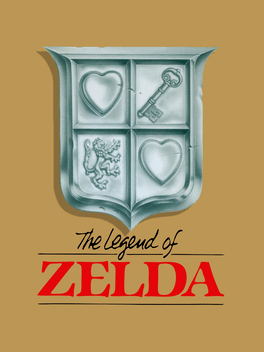
Holy Ocarina! examines The Legend of Zelda series through a religious-studies lens, asking how religion appears within the games' fictional world, how real-world religious traditions have shaped the series, and how fan communities mirror religious practice. Originating as a PAX East 2020 panel and conceived as an ongoing collaborative project, the work aims to recover the "big questions" that draw people to games, arguing that academic jargon and emotional detachment can obscure them. Its approach invites audiences into the inquiry, including through audience voting on discussion topics.
Within the games, the analysis identifies a Hylian religion centered less on communal worship spaces than on sacred objects such as the Triforce, lesser spiritual figures, and recurring legends of Zelda that summon players to action. The Hylian creation myth, involving three Golden Goddesses and the later goddess Hylia, anchors this framework, and the study observes that Hyrule's religious lore appears to diminish across the series' chronology. Real-world influences receive equal attention, ranging from Japanese emblems and Shinto-derived spirit and music practices to Orientalist and Islamophobic borrowings that the work treats critically.
The project's most distinctive claim is that fan communities function as religious communities in their own right. Gameplay serves a ritual function, narrative a mythological one, and gamer communities a social one. Fan canonization, the Hyrule Historia timeline, and the marginal status of Zelda as a player-controlled character parallel institutional religious structures, while fan projects such as female-perspective retellings and mods challenge dominant narratives much as lived practice diverges from doctrine. Nintendo's legal action keeps such "heretical" works marginal, yet fans continue to expand canon through speculation. The project, paused by Covid-19, is framed as an effort to compile resources for engaging the series through religious studies.
Each row is a game or company this document names, each column a document, oldest first. A mark means that document names it. Select a row to see those documents.
gamevironments · 2026
gamevironments · 2025
gamevironments · 2025
gamevironments · 2025
gamevironments · 2024
gamevironments · 2023
gamevironments · 2023
gamevironments · 2023
gamevironments · 2023

gamevironments · 2023

gamevironments · 2023
gamevironments · 2022
DiGRA · 2024