
GameMakers
F2P product management, game design, and monetization strategy by Joseph Kim.
Documents
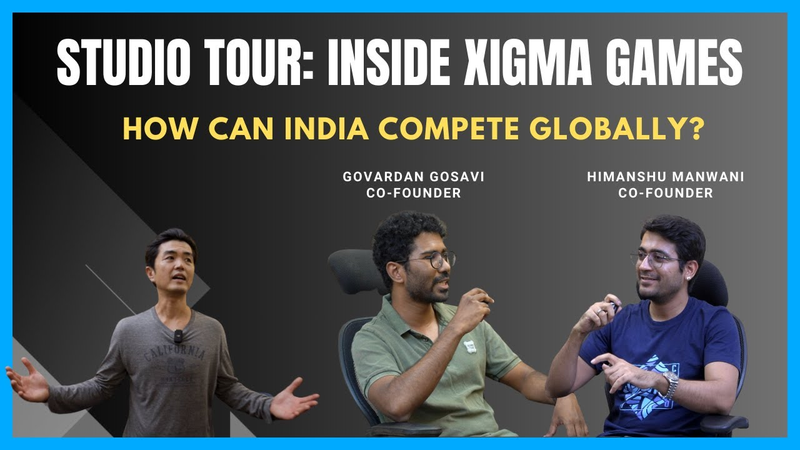
Inside Xigma Games: The Indie Studio Making Waves in Bangalore!
Xigma Games, a Bangalore-based independent studio, provides a case study in the evolution of the Indian game development ecosystem.
- Founded in 2016, Bangalore-based Xigma Games has operated for nine years as a bootstrapped studio, evolving from small-scale premium titles like 'The Bonfire' series to their current large-scale, free-to-play 4X strategy game, 'Metal Haven'.
- The studio maintains a lean, cross-functional team of nine employees, utilizing a product-driven culture that balances creative freedom with sustainable development practices to avoid burnout.
- Xigma Games’ growth trajectory demonstrates a scalable model for Indian indie studios, moving from an initial $10,000 prize-funded start to developing complex, globally competitive mobile strategy titles.

The Rise and Fall of Embracer Group
The decision to split Embracer Group into three independent, publicly traded entities—Asmodee, Coffee Stain, and Middle-earth Enterprises—signals the collapse of a decentralized corporate strategy that prioritized financial engineering over operational cohesion.
- Embracer Group is splitting into three independent, publicly traded entities—Asmodee, Coffee Stain, and Middle-earth Enterprises—marking the abandonment of its decentralized 'city-state' acquisition model.
- The 18-month restructuring process is a direct result of the company's failure to generate operational synergies from its debt-fueled acquisition spree, which prioritized financial engineering over organizational cohesion.
- The gaming industry is shifting away from large-scale consolidation toward a 'fewer, better, best' philosophy that emphasizes quality over quantity and light-touch parent company support.

How Hyperbeard Became Mexico's Top Game Publisher
HyperBeard has established itself as the leading mobile game publisher in Mexico by shifting the industry standard from individual title performance to a cohesive, ecosystem-based growth model.
- HyperBeard achieved market leadership in Mexico by shifting from individual title performance to a cohesive, ecosystem-based growth model targeting young adult females.
- The company utilizes a 'feeder' strategy that funnels users from low-acquisition-cost titles into higher-monetizing games to maximize total lifetime value across the entire portfolio.
- By treating their catalog as a unified brand, the studio bypasses the limitations of the post-IDFA landscape where traditional, isolated user acquisition has become prohibitively expensive.
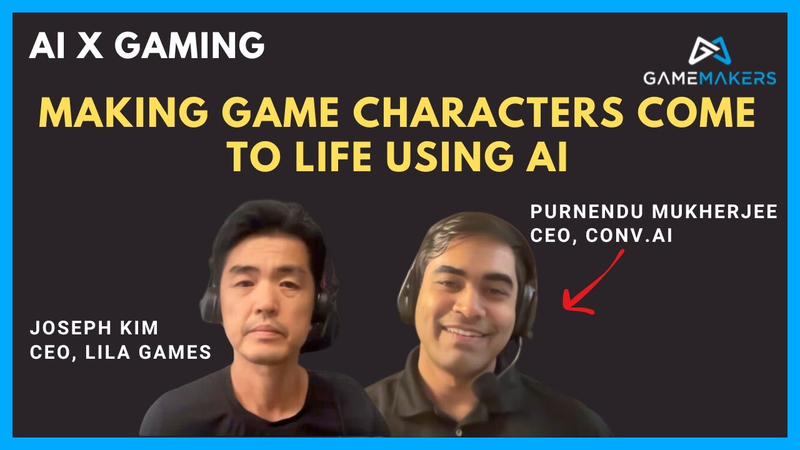
The Frontier of AI NPCs with Convai's CEO | Purnendu Mukherjee
The integration of artificial intelligence into non-player characters represents a fundamental shift in virtual interaction, moving away from rigid, scripted dialogue trees toward dynamic, autonomous agents.
- AI-driven NPCs are transitioning from scripted dialogue trees to autonomous agents that perceive 3D environments, maintain memory, and execute complex, evolving behaviors.
- While initial development labor remains high, the integration of AI agents is estimated to increase gameplay impact and interactivity by a factor of ten to one hundred compared to traditional methods.
- Developers are balancing open-ended AI interactions with narrative consistency by utilizing platforms that integrate LLMs with traditional behavior trees.

Embracer vs. Ubisoft: A Deep Dive into Two Struggling Gaming Giants (Pixels & Profits)
Embracer Group and Ubisoft represent two distinct archetypes of instability within the modern gaming industry.
- Embracer Group is managing a severe liquidity crisis by divesting major assets like Gearbox and Saber Interactive to satisfy debt covenants and avoid insolvency.
- Ubisoft recorded a 500 million euro loss in the 2022-2023 fiscal year, driven by operational inefficiencies and excessive organizational overhead.
- Embracer’s decentralized model has failed to achieve economies of scale despite its portfolio of over 850 intellectual properties, leaving the company dependent on the success of 135 active projects.
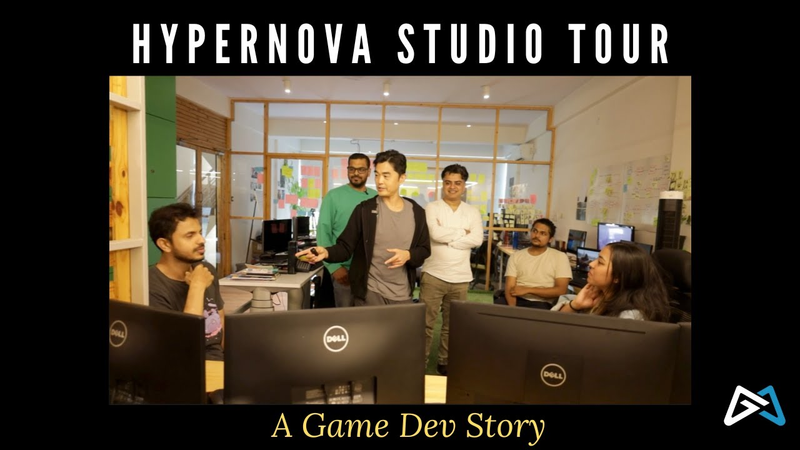
Hypernova Studio Tour - Building Mobile GTA for India (A Game Dev Story)
Hypernova Interactive, a Bangalore-based independent studio, is currently focused on the development of Mayanagri, an open-world mobile title designed specifically for the Indian market.
- Hypernova Interactive is developing 'Mayanagri,' an open-world mobile game tailored for the Indian market by incorporating localized cultural elements like Hindi music and Bollywood-inspired marketing.
- The studio operates with a lean team of approximately 30 professionals and has produced 52 games over its eight-year history.
- To maintain high-fidelity production, the studio utilizes an in-house motion capture facility that allows for an iterative workflow between art, animation, and engineering teams.

Game Developer Conference (GDC) 2024 Recap: Themes, GDC Talks, Takeaways, and Rumors
The gaming industry is currently undergoing a period of intense rationalization, characterized by a shift away from speculative, large-scale funding toward a model defined by operational efficiency and disciplined, milestone-based capital deployment.
- Venture capital funding for game studios has shifted from 'PowerPoint-based' raises to requiring tangible prototypes, following a period of overinvestment in 2021 and 2022.
- AI is not currently transforming core content pipelines, but its rapid evolution makes it a mandatory inclusion in funding pitch decks to remain competitive for future investment.
- Technical demonstrations at GDC showed that AI can reduce the time required for game designers to create new levels by approximately 65%, though this efficiency is leading to reduced headcount rather than increased production cadence.

Atomic Scaling with Ludovic Bodin | Lessons From the Games Industry to the World!
Atomic scaling functions as a strategic business framework that adapts the high-performance operational models of successful gaming companies, such as Supercell and Valve, for broader commercial application.
- Organizations maximize productivity and financial growth by maintaining minimal team sizes, specifically autonomous cells of three to seven individuals led by collaborative pairs.
- The atomic scaling framework replaces traditional top-down management with a 3Ps and 3Rs methodology: People, Prediction, Playbook, Revenue, Reach, and Retention.
- High-frequency hypothesis testing, or prediction, requires employees to quantify expectations and measure them against real-world outcomes to replace unsubstantiated goal-setting.

Nvidia (NVDA) to the moon! | Pixels & Profits #9
Nvidia has successfully pivoted from its origins as a gaming hardware manufacturer to become the primary architect of the global artificial intelligence infrastructure.
- Nvidia's revenue structure has shifted heavily toward data centers, which generated $18 billion in the quarter ending January 2024, accounting for over 80% of total revenue.
- Nvidia maintains a significant competitive moat due to the immense capital and hardware-focused infrastructure required for chip production, which is far more difficult to replicate than software-based competition.
- The company is successfully expanding its ecosystem beyond hardware through software SDKs and platforms like Maxine, Riva, NeMo, and Omniverse, which facilitate generative AI development and 3D world simulation.
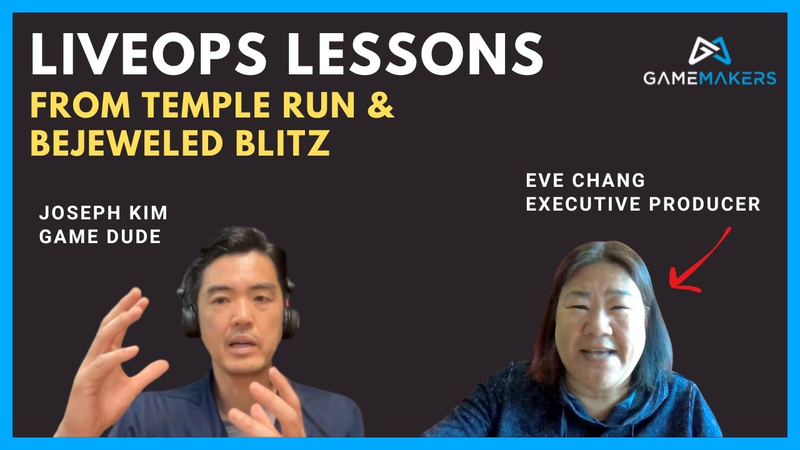
Liveops Lessons from Temple Run & Bejeweled Blitz ft. Eve Chang
The mobile gaming industry requires a strategic shift from aggressive monetization toward player-centric design to ensure long-term success.
- Prioritize player experience over purely data-driven decisions, as demonstrated by a 7% lift in retention for Temple Run after implementing visual cues that reduced player anxiety, despite initial internal skepticism.
- Successful LiveOps requires balancing quantitative data with qualitative player feedback, such as utilizing a dedicated 'Super Fan Club' of 80–100 NDA-bound players to validate features before a full rollout.
- Monetization should be naturally integrated into game design rather than forced; players are more likely to spend repeatedly when they feel they are receiving value rather than being 'squeezed' for revenue.

The Measurement Crisis (in mobile UA) | #1 of 5 in State of Measurement Series
The mobile user acquisition landscape is currently undergoing a profound transformation, driven by the deprecation of device identifiers like IDFA and the implementation of stringent privacy regulations.
- The deprecation of device identifiers like IDFA and stricter privacy regulations have rendered legacy last-touch attribution models obsolete and unreliable.
- The industry is experiencing a measurement crisis marked by fragmented data, declining performance metrics, and longer payback periods for marketing investments.
- Incrementality testing using holdout groups is now the primary method for isolating causal installs and determining true return on investment.
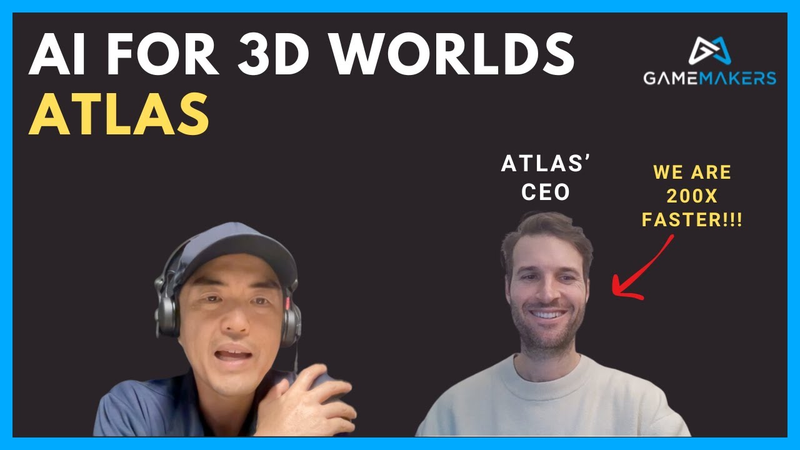
Gaming x AI: How Atlas makes models for 3D worlds 200X faster! (ft. CEO Ben James)
The integration of generative AI into 3D asset production marks a significant shift in game development, enabling the creation of complex, game-ready environments up to 200 times faster than traditional manual modeling.
- Generative AI tools can accelerate 3D asset production by up to 200 times compared to traditional manual modeling methods.
- The technology converts 2D inputs, such as sketches and photographs, into structured 3D geometry that integrates directly into Unity and Unreal Engine pipelines.
- AI-driven workflows are designed to be non-destructive, providing artists with editable, clean assets that allow for rapid iteration rather than replacing human designers.