
Game Developers Conference
Game Developers Conference (GDC, now the GDC Festival of Gaming) is the professional event for the games industry. It publishes recorded talks and interviews, annual industry survey reports such as the State of the Game Industry, and news articles.
Documents
Puzzle Game Magic Secrets
Effective puzzle game design centers on the strategic management of human cognition, specifically the limitations of working memory.
- Effective puzzle design requires managing human cognitive load by limiting working memory demands to facilitate a state of flow.
- Designers should act as curators who refine emergent solutions rather than building complex, multi-layered systems that overwhelm the player.
- Successful levels must be built around a single, core 'aha' moment or 'solution sentence' to ensure challenges remain unambiguous.
Making the Believable Horses of 'Red Dead Redemption II'
The development of Red Dead Redemption II prioritized the creation of a grounded, autonomous equine experience by abandoning traditional, rigid animation blend trees in favor of a sophisticated, data-driven locomotion system.
- Rockstar Games replaced manually authored state graphs with an automated locomotion system that extracts root motion and bone movement data to eliminate the need for human-intensive animation blending.
- The team implemented a 'drift' mechanic that uses indirect control, allowing horses to oversteer and skid naturally rather than relying on stiff, discrete turning animations.
- To ensure fluid movement across varying speeds, the developers moved away from fixed-range gait transitions in favor of a continuous control system that synchronizes foot strikes and playback speeds dynamically.
Adventures in III Audio: 'Yoku's Island Express'
The development of audio for the indie title Yoku’s Island Express demonstrates that applying AAA production standards to smaller-scale projects requires rigorous pre-production, clear communication workflows, and formalized contractual agreements.
- Applying AAA production standards to indie projects requires rigorous pre-production, formalized contracts, and clear communication workflows to manage technical risks.
- The integration of Wwise provided the necessary scalability to manage the technical limitations of the project's custom-built game engine.
- Strategic outsourcing to the Materia Collective enabled the inclusion of high-quality live musical performances despite the constraints of an indie budget.
Interactive Wind and Vegetation in 'God of War'
The development of God of War prioritized deep environmental immersion through a sophisticated, interactive wind and vegetation system.
- Sony Santa Monica implemented a spatial wind system for God of War that uses a 3D noise texture filled with random vectors, allowing wind to vary dynamically across both time and space rather than relying on a single global vector.
- To prevent visual popping when resetting noise textures, the team utilized a flow-map approach that fades between two textures phased out of sync, using logarithmic binning based on powers of two to keep wind speeds synchronized.
- The studio adopted the Beaufort scale, reducing its 12 wind categories to five standardized settings to ensure consistent environmental behavior and provide artists with a reliable reference for authoring vegetation models.
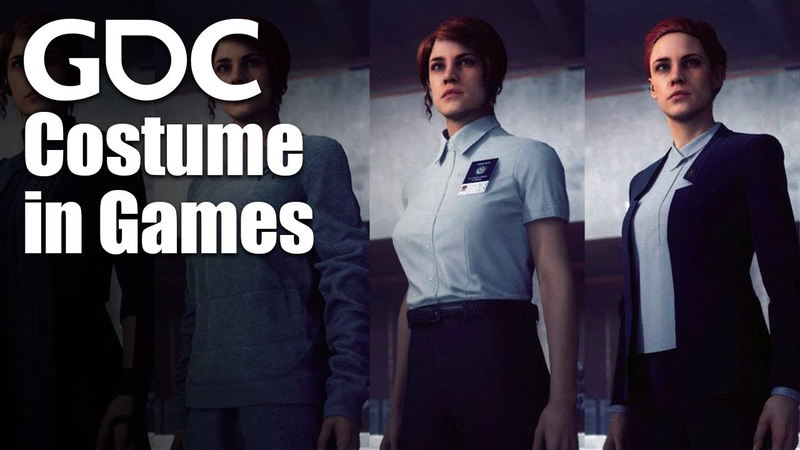
Costume in Games: Integrating a Costume Designer into the Character Pipeline
The integration of a professional costume designer into the character art pipeline offers significant benefits for narrative-driven, realistic game development.
- Integrating professional costume designers into the character pipeline enhances narrative depth by treating clothing as a functional storytelling element rather than purely aesthetic digital assets.
- The development of 'Control' demonstrated that pre-production phases for games and live-arts costume design align closely, both relying on script analysis, mood boards, and character bios.
- To bridge the gap between design and technical execution, the 'Control' team utilized physical garment testing and photo shoots to capture realistic motion and textile behavior for digital models.
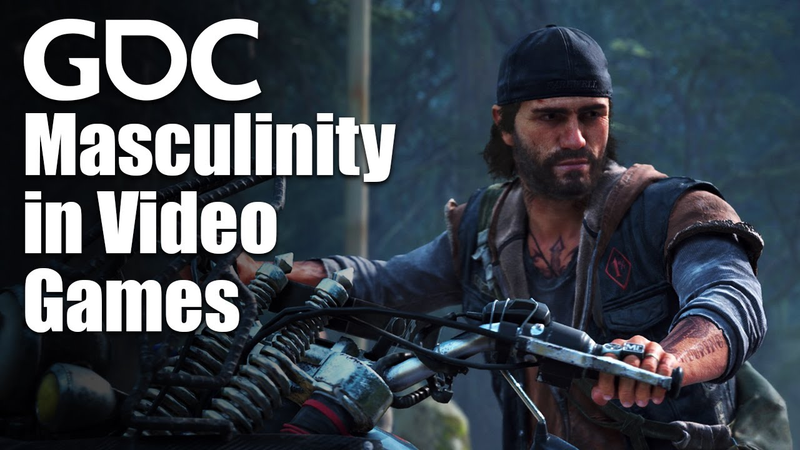
Geena Davis and Mitu Khandaker on Masculinity in Video Games and the Gaming Community
Popular video games and streaming platforms currently reinforce a rigid framework of hyper-masculinity, often referred to as the man box, which prioritizes aggression, violence, and self-sufficiency.
- Popular video games exhibit significant representation gaps, with male characters outnumbering female characters 4:1 and white characters outnumbering characters of color 3:1.
- White male characters in video games are twice as likely to carry weapons compared to male characters of color and are statistically more likely to be depicted as violent.
- LGBTQ+, disabled, and large body-type characters remain nearly non-existent in popular gaming content.
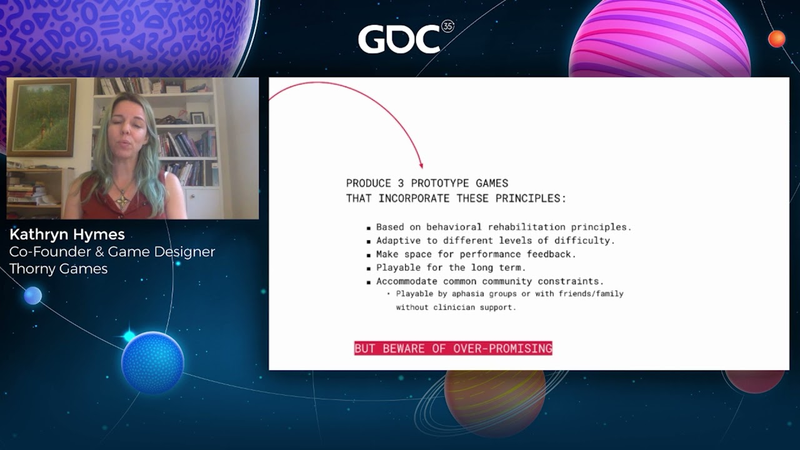
Games as Community Driven Care: A Case Study of Co-design for Aphasia
This analysis examines the potential for video games to serve as a community-driven, accessible form of therapeutic care, specifically through a case study of a co-design project for individuals with aphasia.
- Aphasia affects over 2 million people in the United States, yet access to traditional speech-language therapy often drops off significantly after the initial recovery period.
- The 'Aphasia Games for Health' project demonstrated that video games can provide a scalable, cost-effective, and social alternative to clinical therapy by allowing for home-based or group-based rehabilitation.
- The project utilized a year-long co-design methodology, including a three-month intensive phase of remote workshops and iterative playtesting involving speech-language pathologists, game designers, and patients.
Accessibility Best Practices: Mobility Considerations
This presentation outlines essential accessibility best practices for game developers, specifically focusing on supporting players with mobility-related impairments.
- Accessibility is a critical design consideration, as CDC data indicates that one in five people have a permanent disability, a figure that rises to one in two by the time individuals reach their mid-seventies.
- Developers should prioritize input flexibility by supporting multiple device types, such as keyboard-only gameplay in Minecraft or allowing remappable controller inputs to accommodate varying dexterity levels.
- Implementing granular control settings, such as adjustable analog stick dead zones and independent horizontal/vertical sensitivity, helps players compensate for motor control issues and controller drift.


State of the Game Industry 2022
The global game development landscape in 2022 is defined by a tension between technological tradition and evolving labor standards.
- PC remains the primary development platform for 63% of developers, while the PlayStation 5 is the leading console for current and future project cycles.
- Industry interest in decentralized technologies is low, with over 70% of studios expressing no interest in cryptocurrency or NFTs and one-third of professionals predicting the metaverse will fail.
- Workplace culture remains a critical challenge, as 62% of companies have failed to formally address reports of toxicity and misconduct, despite 60% of developers now working 40 hours or less per week.
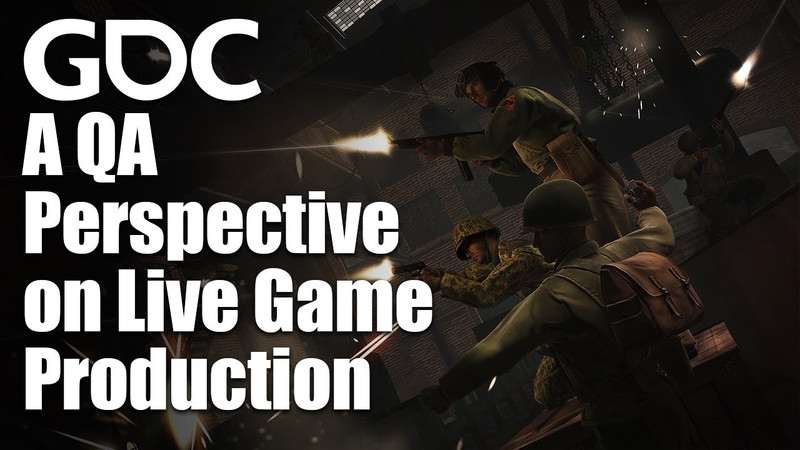
A QA Perspective on Live Game Production
The evolution of live service game production necessitates a fundamental shift in quality assurance, moving away from reactive testing toward an integrated, proactive development lifecycle.
- To maintain stability in a live service environment, isolate development features on dedicated streams rather than bundling them, which prevents cross-contamination of bugs and simplifies the testing process.
- Leverage a closed beta group of mature, dedicated players to provide early feedback and identify issues before pushing updates to the broader open-beta player base.
- Implement automated data visualization tools to compare item attributes across development streams, allowing QA to identify red flags and data discrepancies that would be impossible to catch manually.
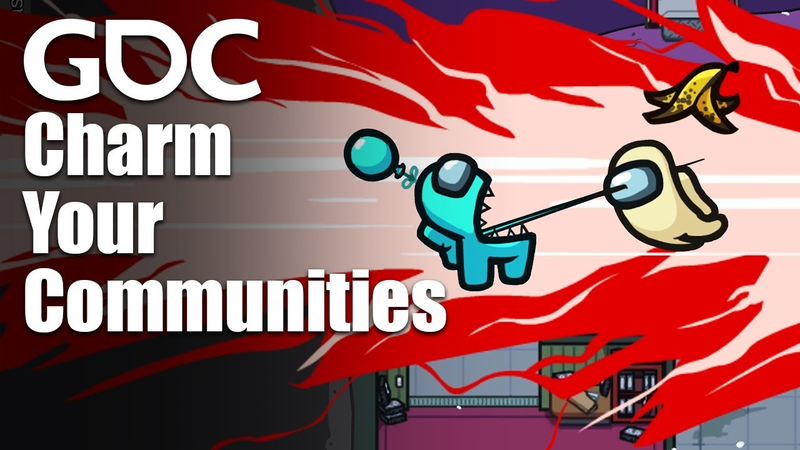
Charm Your Communities
Charming a gaming community involves shifting from a traditional top-down marketing funnel to a community-first approach that prioritizes authentic, human-centric connections.
- Charming a community requires moving beyond audience-building to create intentional, warm, and playful experiences that foster mutual connection rather than just passive consumption.
- Community members progress through four distinct stages—new, regular, loyal, and advocate—and developers must provide consistent, positive interactions to move them toward becoming advocates who contribute to the community's health.
- Small, daily, and authentic interactions are more effective at building community than grand, expensive gestures or metric-focused marketing campaigns.

Faking Mixed Reality: Building Reality Simulators
Developing for experimental hardware requires a strategic shift toward virtual simulation to mitigate the high costs and logistical friction associated with physical device dependency.
- Building a custom simulator for experimental hardware like the Magic Leap significantly reduces iteration bottlenecks by allowing developers to work without constant access to limited, specialized devices.
- To ensure high-fidelity simulation, developers should incorporate known hardware quirks—such as controller connection delays or tracking dropouts—directly into the simulator to catch bugs early in the development cycle.
- Using photogrammetry, specifically tools like Reality Capture, allows teams to create accurate 3D representations of physical office spaces to simulate real-world occlusion and environmental interaction.