
Game Developers Conference
Game Developers Conference (GDC, now the GDC Festival of Gaming) is the professional event for the games industry. It publishes recorded talks and interviews, annual industry survey reports such as the State of the Game Industry, and news articles.
Documents
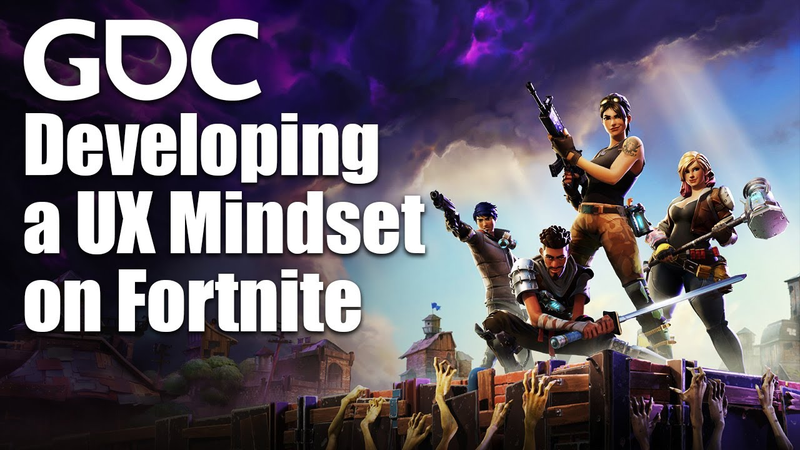
Developing a UX Mindset on Fortnite
Adopting a user experience mindset in game development functions as a collaborative philosophy rather than a rigid set of rules, requiring teams to integrate testing early to mitigate the risks associated with human cognitive limitations.
- UX testing should begin as early as possible, even with low-fidelity prototypes or paper models, to identify design friction before costly implementation.
- Human perception is subjective and limited; for example, approximately 8% of the male population is colorblind, necessitating that critical information is never conveyed through color alone.
- Cognitive load should be minimized by offloading memory tasks to the UI, such as pinning crafting recipes or providing on-screen prompts for interactable objects, rather than forcing players to memorize data.

Research Methods to Improve Live Game Retention, D1 to D100
Games user experience research serves as a critical bridge between raw telemetry data and actionable design improvements, specifically targeting the enhancement of player retention from the first day through the hundredth.
- Improving player retention from D1 to D100 requires a mixed-methodology approach that combines quantitative A/B testing with qualitative insights to identify the 'why' behind churn.
- Mobile titles like Design Home and Cooking Dash successfully improved retention by using granular funnel tracking to pinpoint specific usability hurdles.
- Longitudinal research tools, such as ten-day diary studies, are essential for observing player behavior over time and refining complex late-game systems.

The Resilient Job Hunt: Addressing the 'Well of Doubts'
Navigating the modern games industry requires a shift in perspective, moving away from the expectation of a linear career path toward a strategy defined by adaptability and proactive engagement.
- Prioritize direct outreach and referrals over traditional application methods, as personal connections significantly increase the probability of securing an interview.
- Shift focus from lengthy cover letters to concise communication and robust portfolios that provide direct evidence of skill and potential.
- Utilize digital platforms like Discord, LinkedIn, and Twitter as primary hubs for networking to uncover unadvertised job opportunities.

The Invisible Escape Room: Adapting Jack Ryan for Alexa
The development of interactive voice-based experiences, exemplified by the Jack Ryan Alexa project, requires a fundamental shift from traditional turn-based narrative structures toward open, exploration-focused gameplay.
- Voice-controlled narrative design requires avoiding direct or rhetorical questions, as the game must signal the player's turn through context rather than standard conversational prompts.
- Alexa skills impose strict time constraints, requiring users to respond within 10 seconds before the microphone shuts off and the session terminates.
- Developers must account for the 'parser problem' where the gap between natural language input and the game's addressable logic creates user frustration; using broad prompts like 'what do you want to do next?' helps manage this, though it increases the risk of false positives.
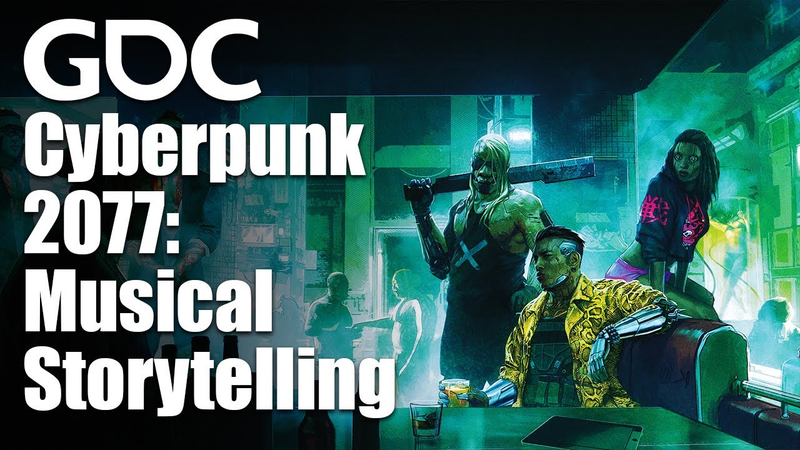
Immersing with Music: Approaches to Musical Storytelling in 'Cyberpunk 2077'
The musical architecture of Cyberpunk 2077 centers on the strategic use of bespoke, hand-placed audio assets to foster deep player immersion within a dystopian, first-person narrative.
- The development team adopted a 'hand-placed' music strategy, ensuring every piece of score, source, or diegetic music was intentionally positioned to maintain narrative control over the player's experience.
- To maintain high production quality for minor quests without excessive manual composition, the team edited existing cues and processed them through cassette tapes at half-speed with analog effects, allowing them to generate over one hour of ambient assets in a single day.
- The composers utilized short, flexible musical motifs as 'glue' to illustrate narrative arcs, ensuring themes were simple enough to be adapted across various contexts and quest lengths.

LUTious Color: Grading for Games
Color grading serves as a powerful narrative tool in game development, allowing creators to evoke specific emotional responses and establish visual consistency.
- Color grading must be treated as a deliberate, rule-driven narrative tool rather than a corrective measure for poor asset quality.
- Developers should establish a structured 'rule set' for hues, shadows, and highlights to ensure visual harmony and consistency across varying lighting conditions.
- Effective grading requires a research-based approach that references historical palettes, film stocks, or specific artistic styles to guide player perception.
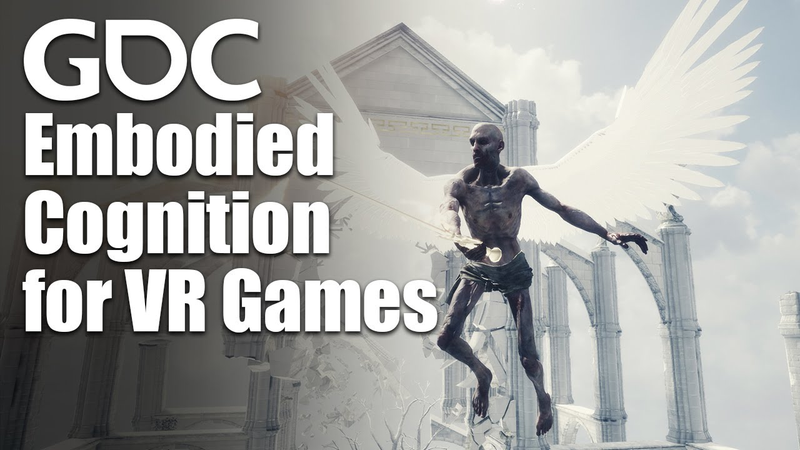
Beyond Gamification: Embodied Cognition for VR Games
The design of immersive virtual reality experiences relies on the integration of embodied cognition, where physical movement and kinesthetic engagement replace traditional controller-based inputs.
- Prioritize embodied cognition by replacing traditional controller inputs with naturalistic physical movements, such as leaning or specific hand gestures, to enhance player mastery and role-playing.
- Align virtual object interactions with real-world muscle memory by utilizing the cognitive science concept of 'marking,' where virtual items act as props that guide intuitive physical actions.
- Design haptic feedback using normalized animation curves to modulate intensity, treating the feedback with the precision of musical dramaturgy rather than relying on complex audio waveforms.
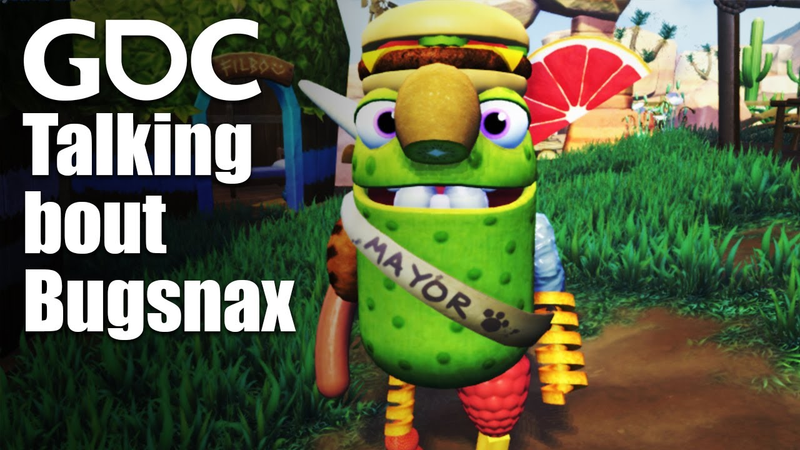
John Murphy, Kevin Zuhn and Adam Saltsman on 'Bugsnax'
The development of Bugsnax represents a deliberate pivot from a systemic, arcade-style prototype toward a character-focused narrative experience.
- The core narrative and mechanical theme of Bugsnax was built on the concept that the creatures are parasitic and harmful, despite the characters' desire to consume them.
- The development team spent the first year of production on a version of the game that was on-rails and featured a strict separation between town-based management and creature hunting, which they ultimately scrapped to allow for free-roaming exploration.
- Young Horses moved away from combat-based mechanics, instead focusing on a systemic approach where the player acts as a journalist and therapist helping Grumpuses resolve personal issues.
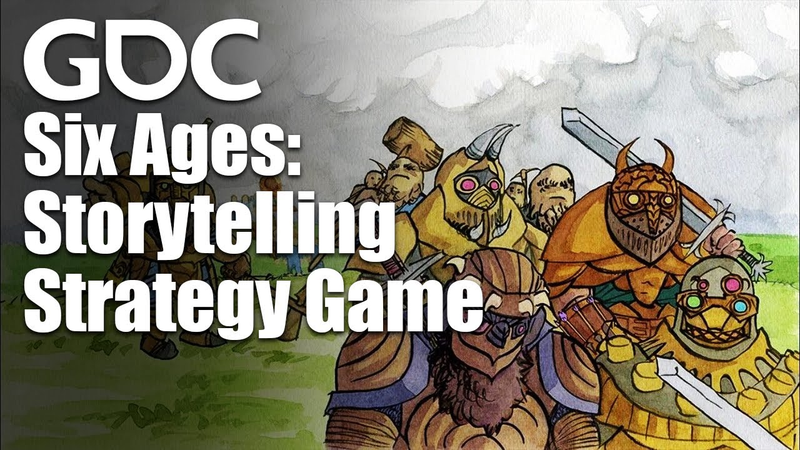
Designing 'Six Ages', a Storytelling Strategy Game
Six Ages: Ride Like the Wind functions as a sophisticated hybrid of strategy and interactive fiction, designed to immerse players in a mythology-driven clan management simulation.
- Six Ages uses a core loop that combines turn-based strategy actions, such as resource management, with emergent narrative events to create a 'strategy book' experience.
- The game utilizes a custom domain-specific language called 'Opal' to manage complex scripting, allowing writers to trigger conditional scenes, long-term story arcs, and time-limited bonuses.
- To maintain immersion, the game employs 135 unique tags to ensure that events and bonuses are context-sensitive, preventing irrelevant information from appearing to the player.
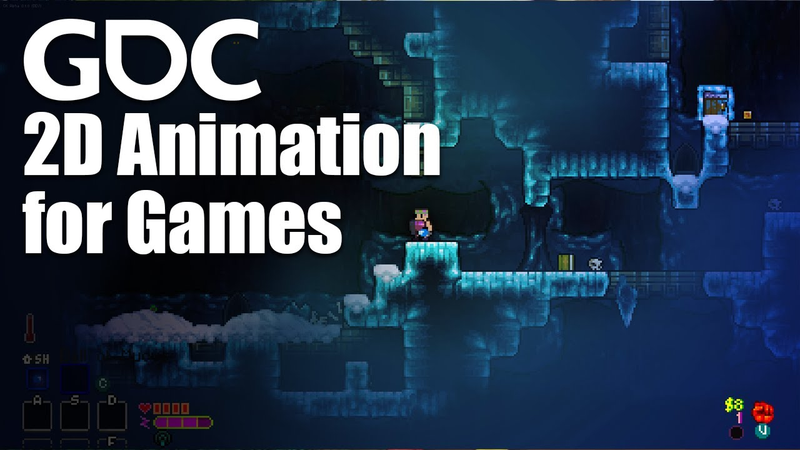
2D Animation for Games: A Primer
Effective 2D game animation functions as a critical bridge between aesthetic expression and technical performance.
- Effective 2D animation must prioritize gameplay readability—such as clearly communicating hitboxes and cooldowns—over purely aesthetic flair to ensure a responsive player experience.
- Animators should prioritize clear poses, strong silhouettes, and purposeful timing rather than high frame counts, which can introduce visual noise and input sluggishness.
- Techniques like squash and stretch, anticipation, and follow-through are essential for conveying character weight and intent while remaining subservient to game logic.
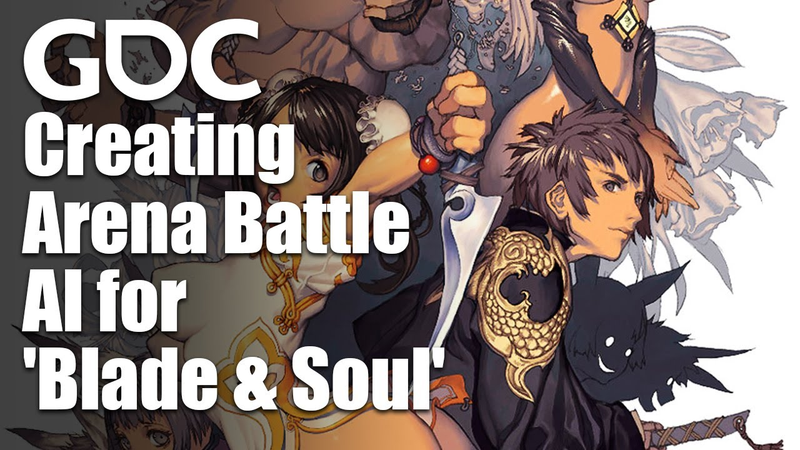
Reinforcement Learning in Action: Creating Arena Battle AI for 'Blade & Soul'
The development of professional-level artificial intelligence for the 1v1 arena battles in the MMORPG Blade & Soul demonstrates the successful application of reinforcement learning (RL) to complex, real-time fighting games.
- NCSOFT replaced traditional hand-written AI rules in 'Blade & Soul' with reinforcement learning (RL) to create pro-level agents capable of strategic, multi-stage combat sequences.
- To ensure robustness and generalization, the team implemented a 'self-play' method where agents were trained against a growing pool of diverse, previously trained sparring partners rather than a single fixed opponent.
- The AI was trained to exhibit specific fighting styles—such as aggressive or defensive—by adjusting reward signal weights, allowing the agents to prioritize either damage output or HP preservation without hard-coded logic.

How to Represent Mental Illness in Games
The gaming industry holds a significant moral responsibility to refine the representation of mental health, given that up to half of the global population will encounter mental health challenges during their lifetimes.
- Media portrayals of mental illness often rely on harmful tropes—such as the 'terrifying' asylum patient or the 'evil' psychotic—which discourage individuals from seeking professional help due to fear of institutionalization or personality-altering medication.
- When writing about mental health, developers should prioritize accuracy by conducting basic research, as even simple fact-checking can prevent the trivialization of complex conditions like OCD or anxiety.
- Accurate representation in games provides a significant benefit by allowing players to identify their own vulnerabilities, which can serve as a powerful tool for self-recognition and validation.