
European Conference on Games Based Learning (ECGBL)
Annual European conference on game-based learning and serious games; its proceedings are published open access (CC BY) by Academic Conferences International.
Documents
Entrepreneurship and Game-Based Learning in Higher Education: A Systematic Review
This systematic review examines how game-based learning, including serious games, gamified courses, and simulations, is applied to entrepreneurship education in higher education.
- A systematic review of Scopus and Web of Science searches (February 2023) screened 88 documents and selected 28 for full review, covering publications back to 2009 across multiple countries, including German student samples.
- The reviewed studies generally report positive effects of game-based learning on entrepreneurial knowledge, self-efficacy, attitudes, and intentions, as well as on innovation skills, engagement, and business-planning outcomes.
- Notable evaluated tools include a Facebook-based game tested with 2,706 participants, the Global Board Game Project, and the simulations Dynama (N=713) and Risk&RACE (N=120), though sample sizes vary considerably across studies.
Serious Game for Training to Escape from Disasters and Deal with Accidents
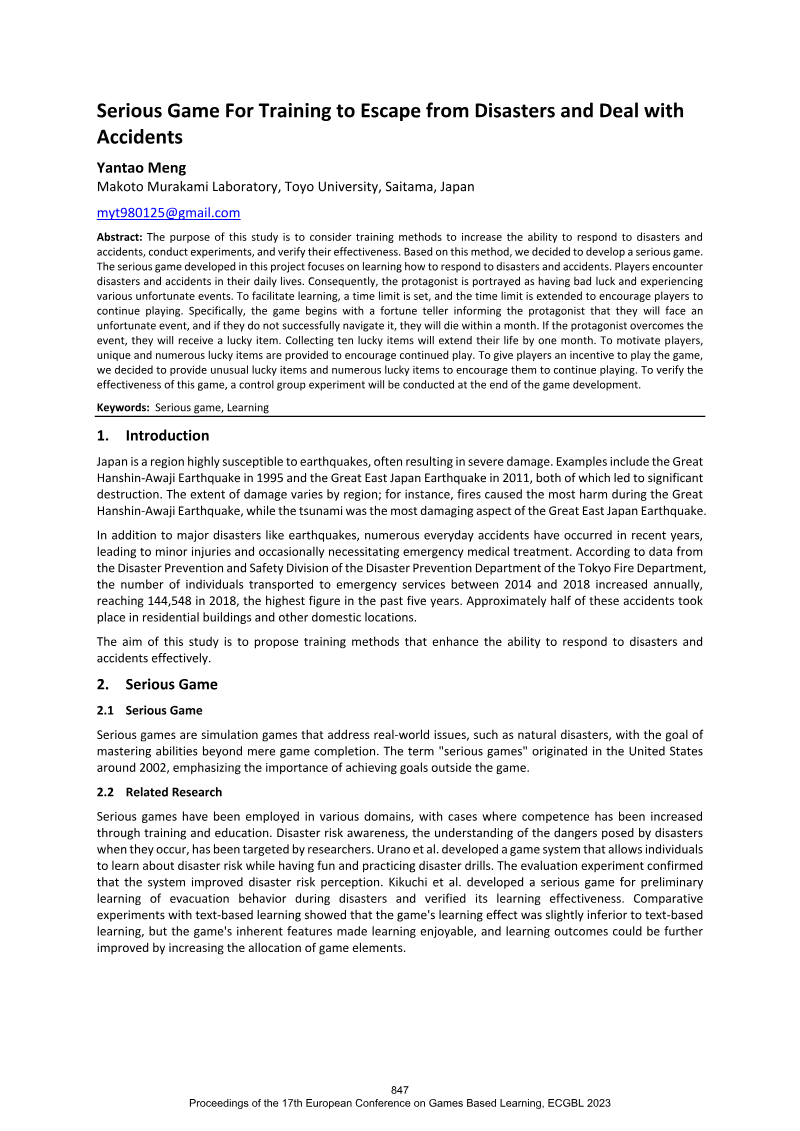
This paper presents the design and planned validation of a serious game intended to train players to respond to disasters and everyday accidents.
- The paper motivates a disaster-response serious game with Japan's high earthquake exposure and rising emergency transports, citing 144,548 people transported to emergency services in 2018, the highest level of the preceding five years, with roughly half of such incidents occurring in homes.
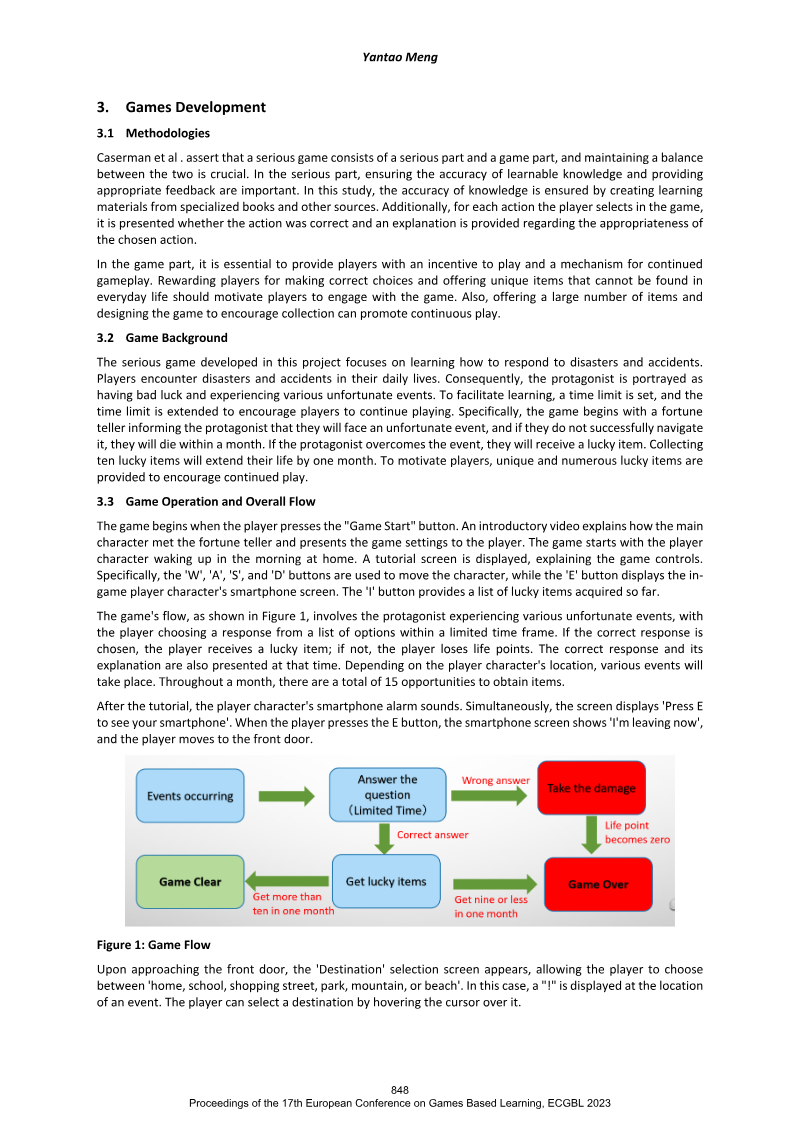
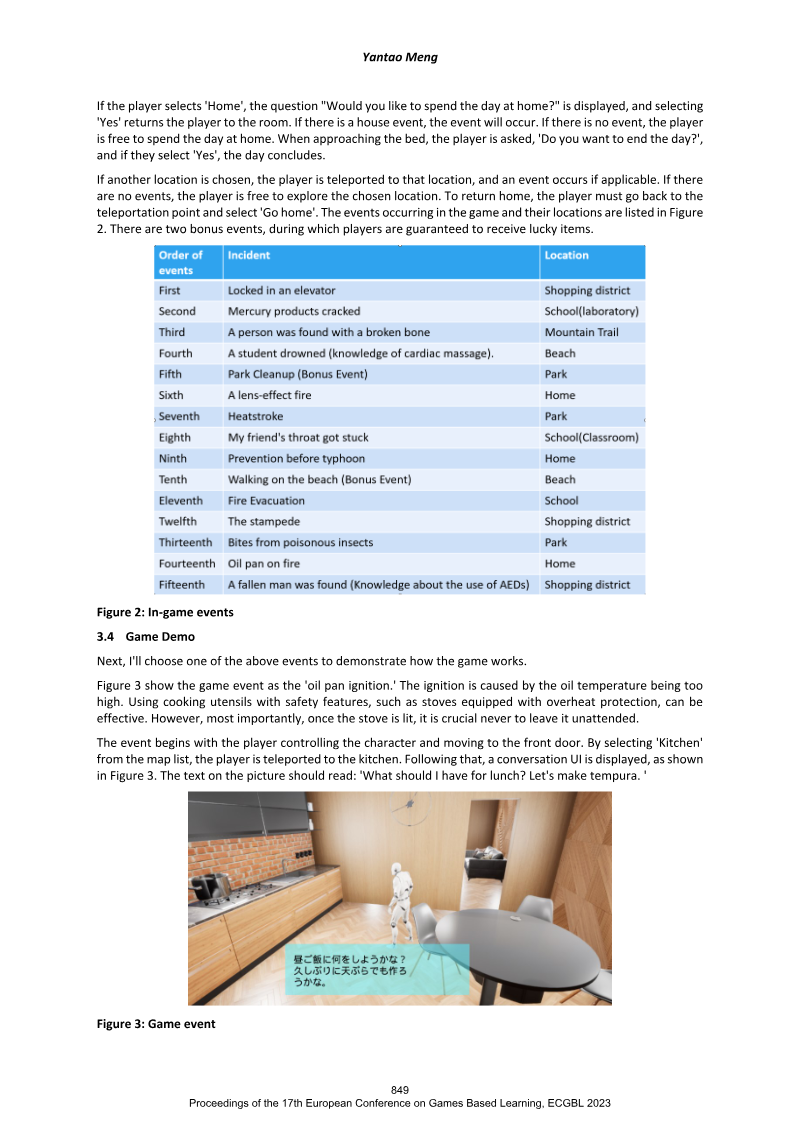
- The game casts a chronically unlucky protagonist who must survive fifteen unfortunate events across homes, schools, shopping districts, parks, mountains, and beaches within a one-month time limit, choosing from timed response options.
- Correct responses earn collectible lucky items that extend the protagonist's life, incorrect ones cost life points, and every choice is followed by an explanation, pairing learning content with motivation-sustaining rewards.
Microgames and Language Learning: Performance Before Competence?
This study examines whether playing a microgame in the first-grade classroom can accelerate English language learning, particularly for English language learners (ELLs), and whether performance during play can precede the underlying competence that standardized measures typically assess.
- A nine-week pilot in a first-grade classroom had students play WarioWare, a game built around rapid decoding of short verb command words such as "Hypnotize" and "Protect," to test whether gameplay can accelerate English language learning for ELL students.
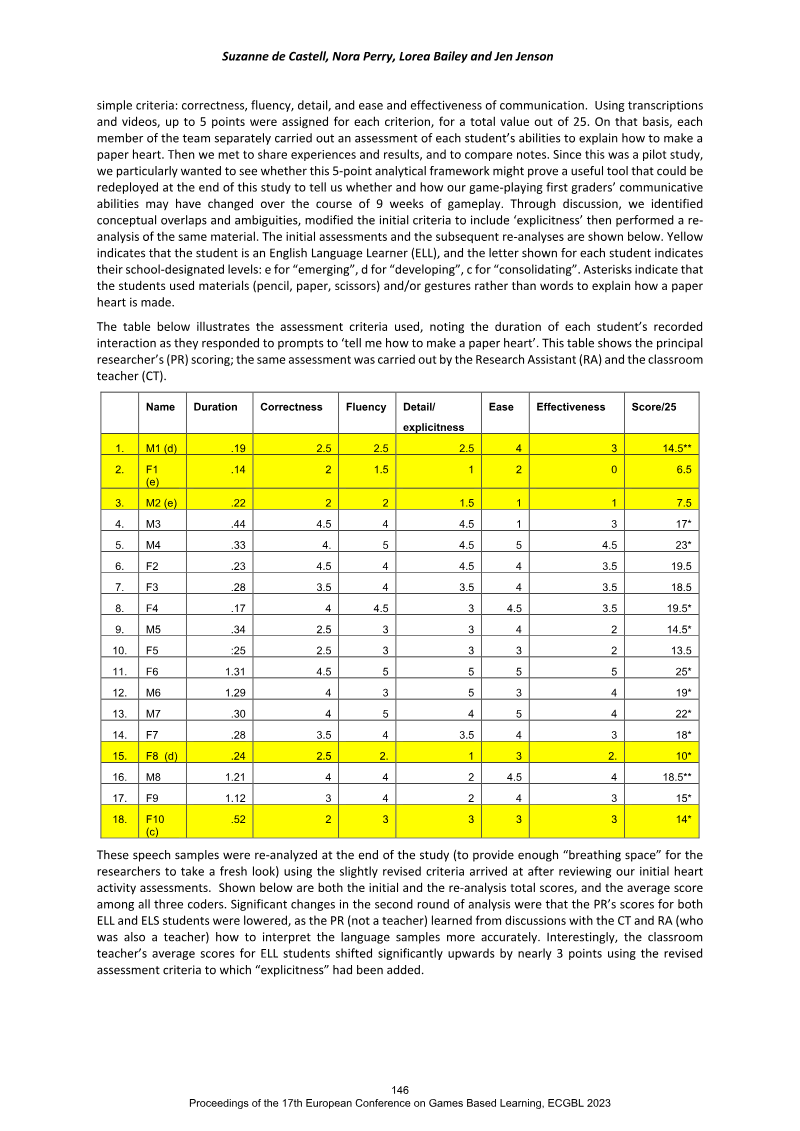
- Before the study, English language learners scored roughly half as well as English-speaking peers on a communicative competence task (about 10 versus 18 to 19 out of 25) and had an estimated reading level of 3.3 versus 8.7.
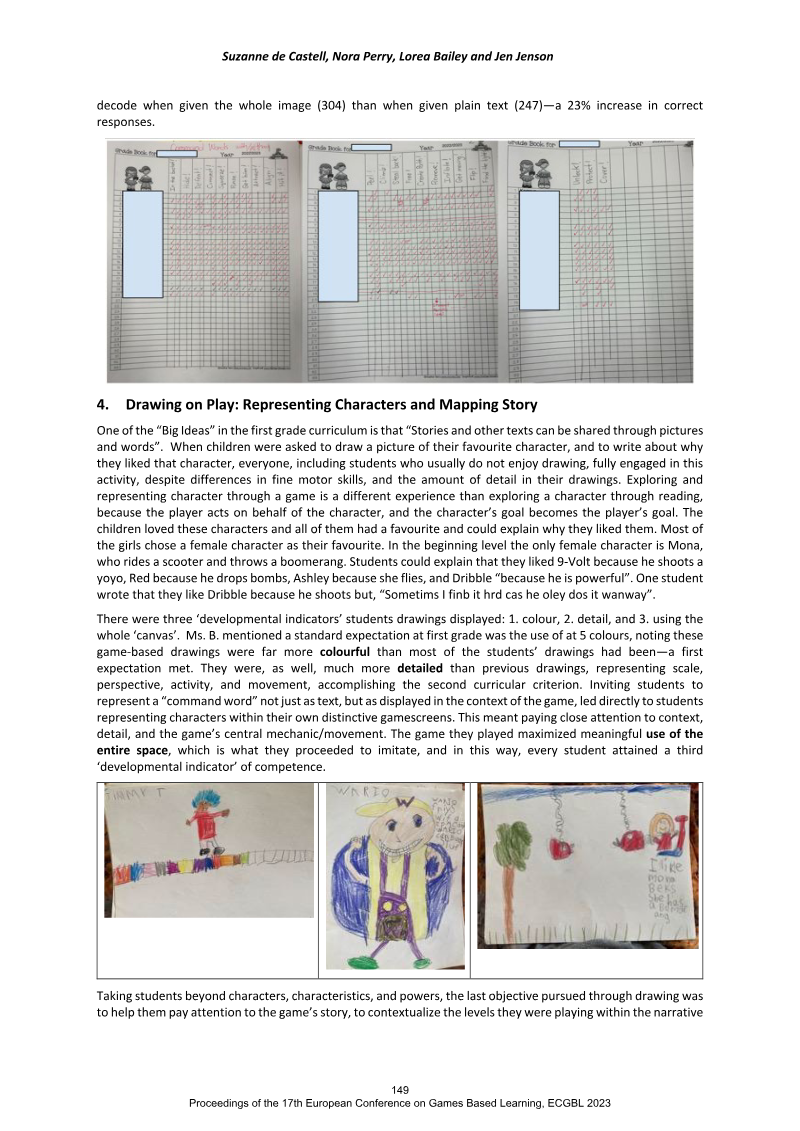
- Command-word recognition rose when words appeared in game-screen context: students decoded 304 instances in that setting versus 247 in plain text, a 23 percent increase, according to teacher-kept checklists.
Facilitating an Educational Board Game Jam: Analysing Different Game Design Strategies
This study examines how educators design co-operative board games during a one-day educational board game jam held at a Danish university college, with the aim of deriving practical principles for facilitating such events.
- A one-day educational board game jam at a Danish university college brought together 30 educators in groups of two to four, who moved through ideation, board-building, and playtesting phases.
- The central finding is that groups struggled to balance simplicity against complexity under time pressure and target-group constraints, with some designs drifting toward unwieldy complexity.
- Playtesting consistently generated productive discussion among participants, making it the phase that most reliably added value to the jam.
Unpacking Student Perceptions of Board Game Mechanics
"Unpacking Student Perceptions of Board Game Mechanics" examines how undergraduate students at the University of Johannesburg experienced the Boardroom Challenge, a custom board game used as a formative assessment in an accountancy-related business management course.
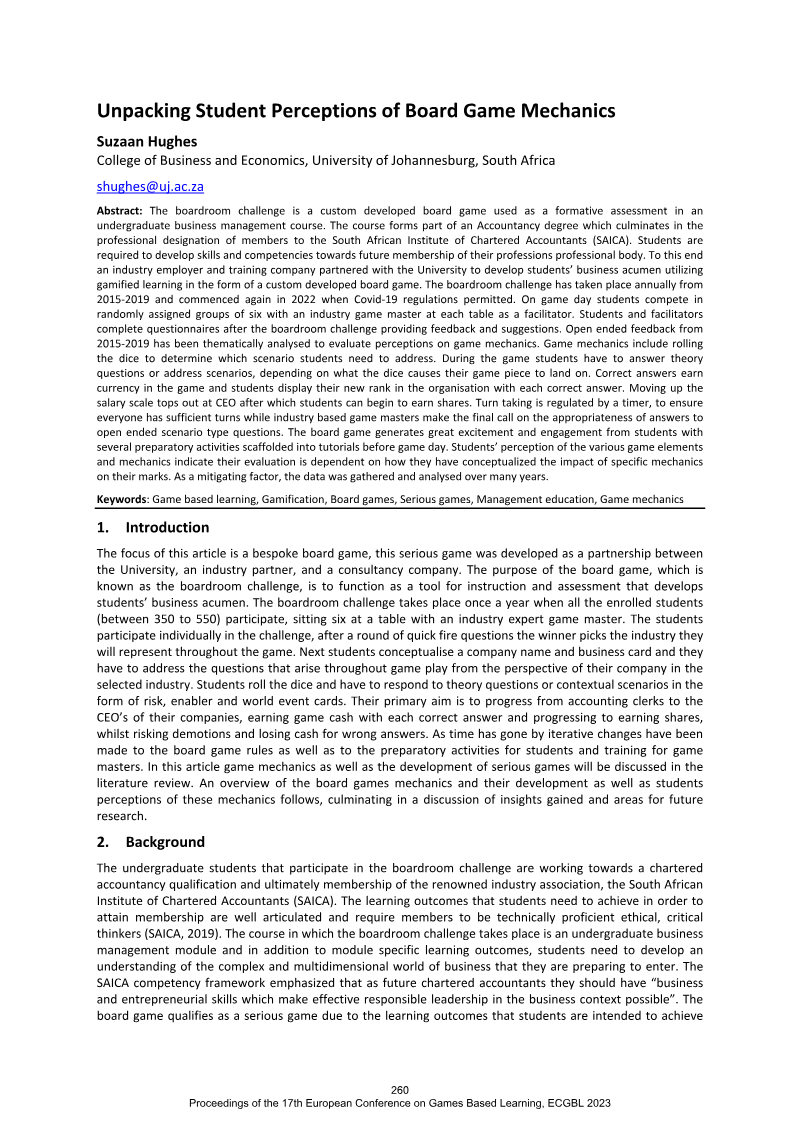
- The study examines the Boardroom Challenge, a custom board game used as formative assessment in an accountancy-related business management course at the University of Johannesburg, run annually from 2015 to 2019 and resumed in 2022.
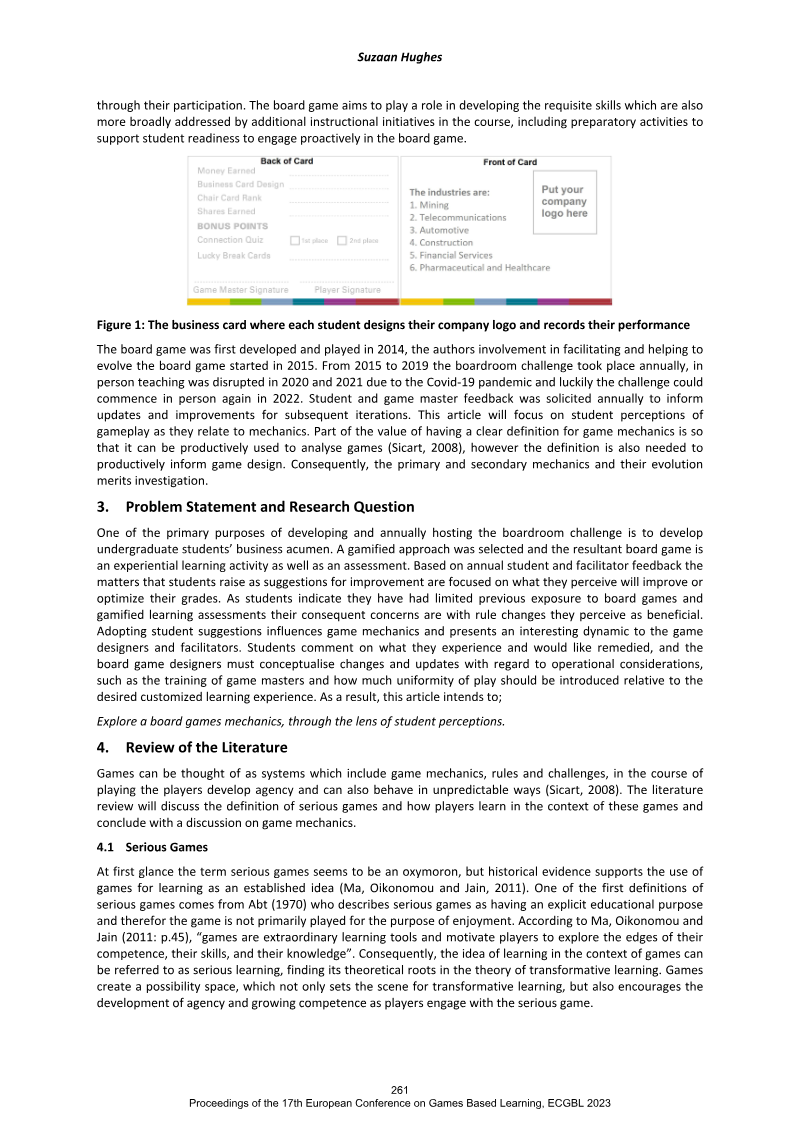
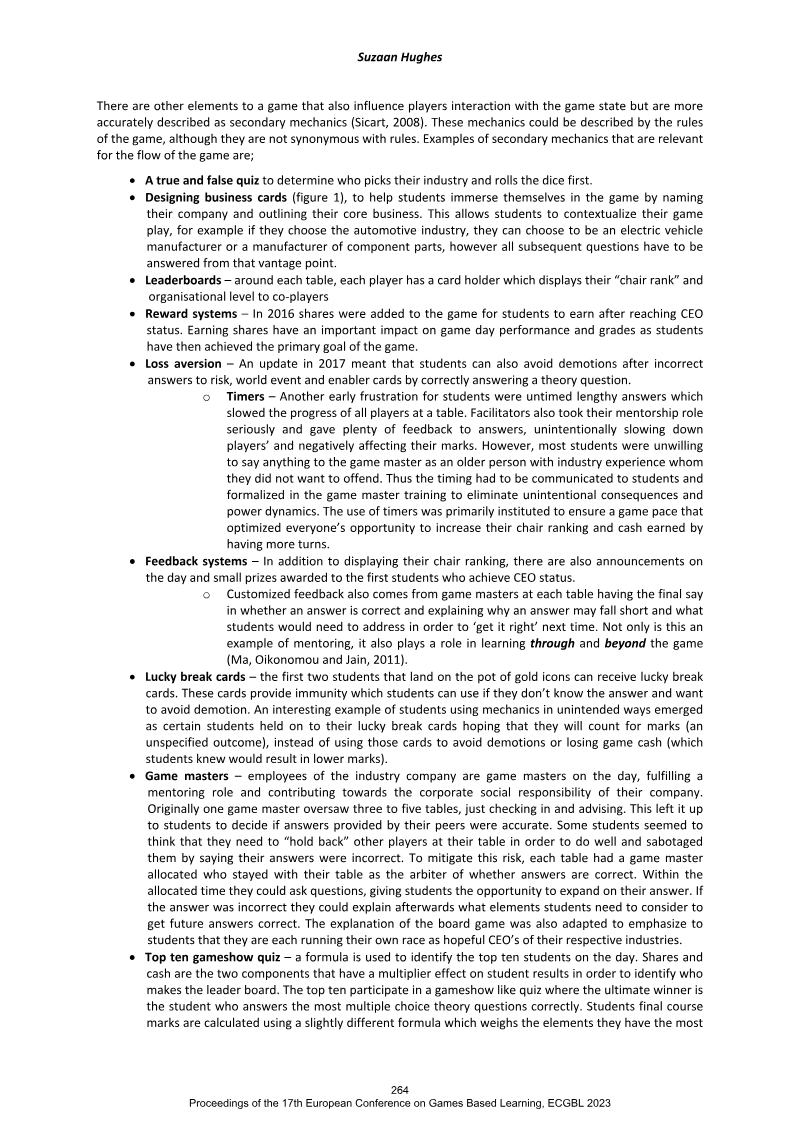
- Core mechanics are dice-driven scenario and theory questions, promotion up a corporate ladder to CEO, and game cash gained or lost based on answer accuracy, with secondary mechanics such as timers, lucky break cards, and game master roles added or refined through feedback.
- Thematic analysis of open-ended student feedback, supported by document analysis of rules, revisions, and training materials, surfaced three themes: perceptions of luck and unfairness, student agency in proposing improvements, and reflections on learning's future professional relevance.
Color Blindness in the Digital Gaming Landscape: Addressing Critical Issues and Research Gaps
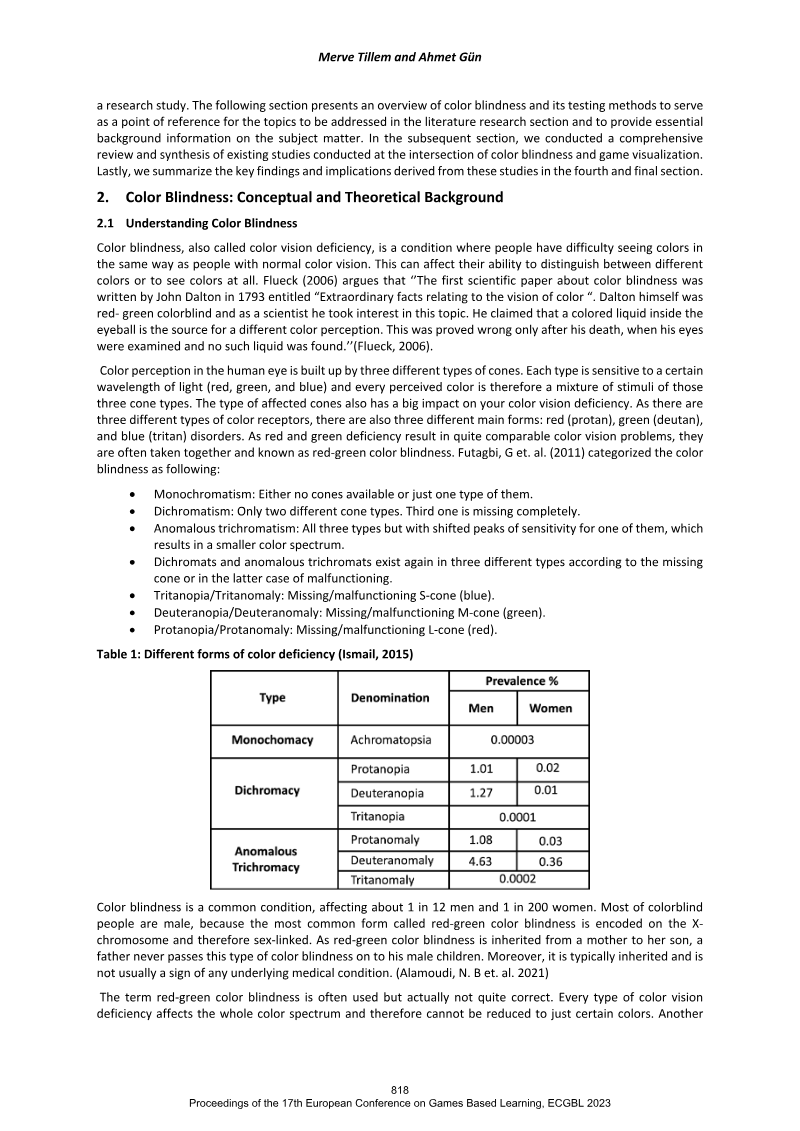
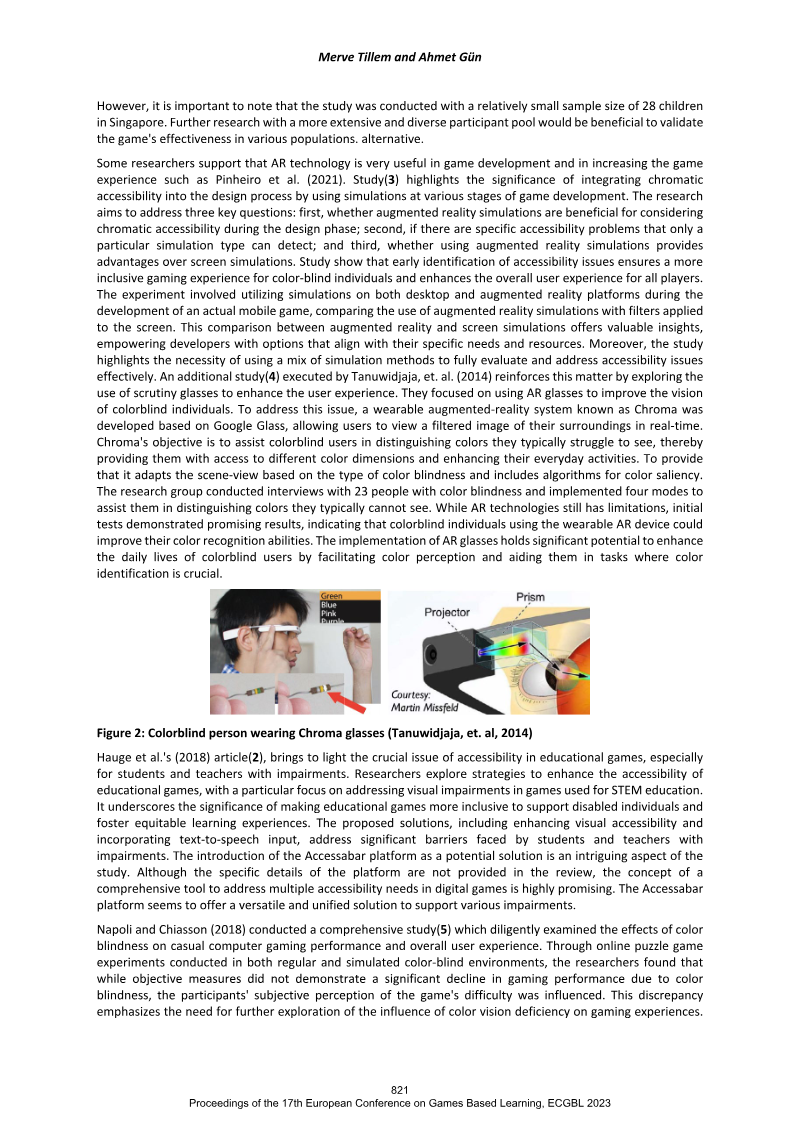
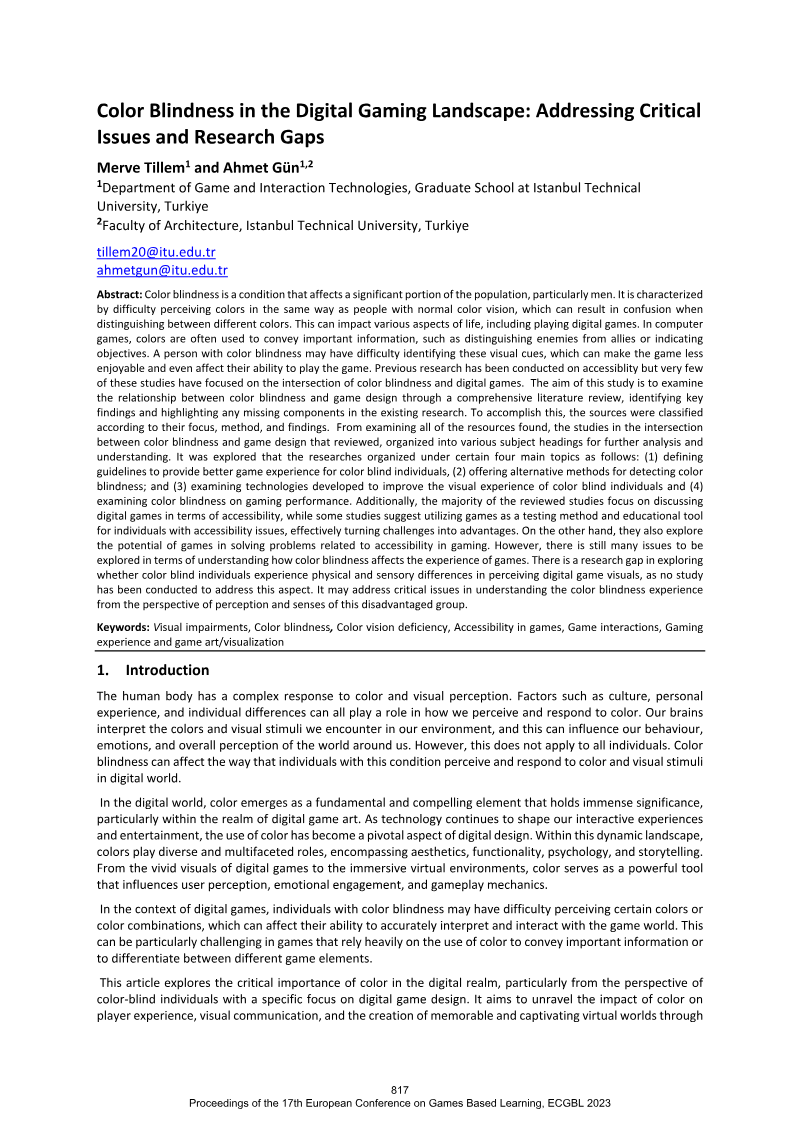
Color blindness, or color vision deficiency, affects roughly one in twelve men and one in two hundred women, yet its implications for digital gaming have received limited systematic attention.
- Roughly one in twelve men and one in two hundred women have color vision deficiency, yet its implications for digital gaming have received limited systematic attention.
- The review screened about 100 papers from Scopus, Web of Science, and ACM, and analyzed 11 after excluding off-topic and engineering-focused work.
- Tailored design and accessibility features can meaningfully improve the experience for color-blind players, according to studies on design patterns and screen-based simulations.
Students as Educational Board Game Designers: Learning Opportunities and Design Dilemmas
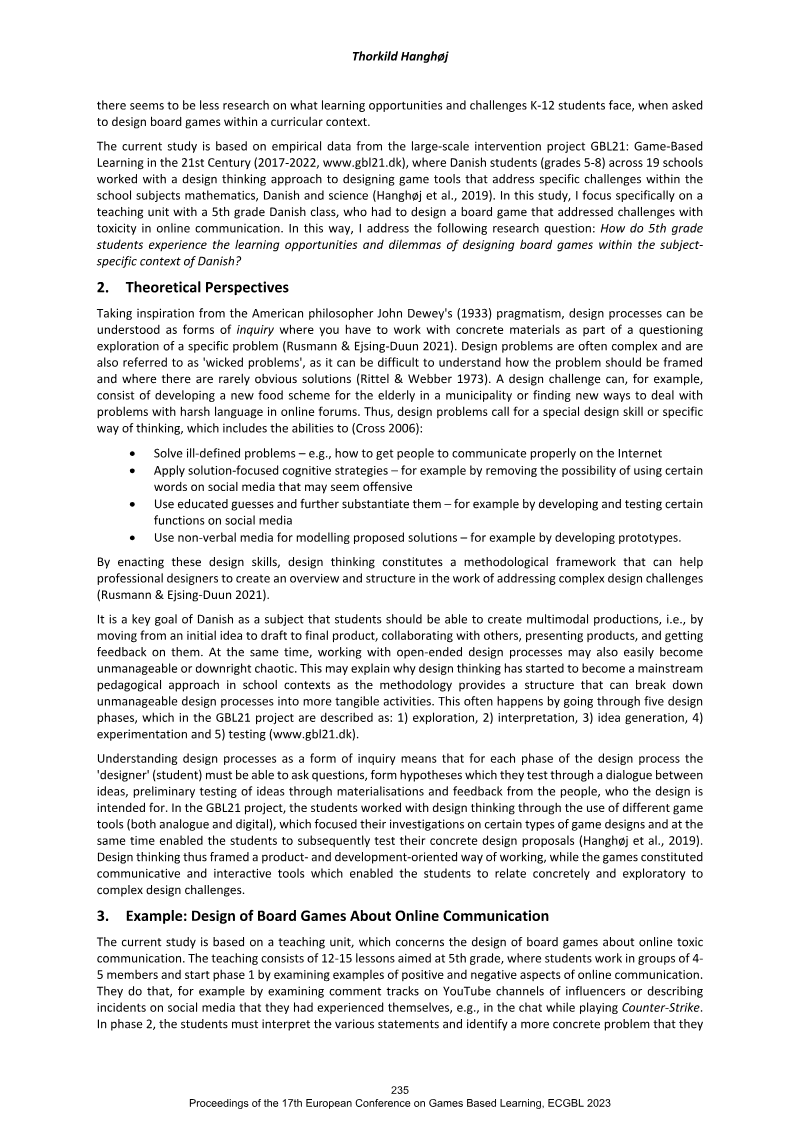
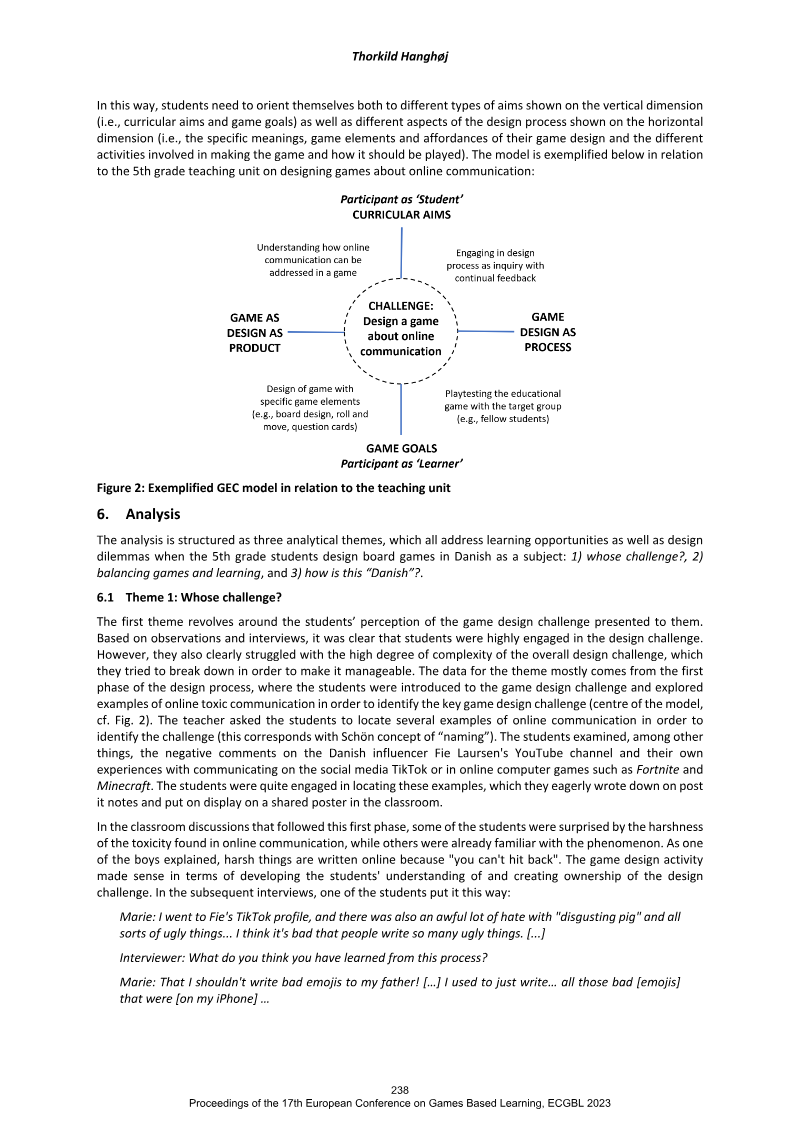
Hanghøj's study examines how a 5th-grade Danish class designed educational board games addressing online toxic communication, analyzed through the Games as Educational Challenge model.
- The study examines a single 5th-grade Danish class over roughly two weeks (about 18 lessons) in which students designed educational board games about online toxic communication, so its qualitative findings are context-specific and not broadly generalizable.
- Design-oriented board game activities create meaningful learning opportunities, but the author notes that such board-game design dilemmas remain underexplored because prior research has concentrated largely on digital games.
- Three recurring dilemmas emerged: uneven personal relevance, since students' varied experiences with online platforms shaped how meaningful the design challenge felt; tension between entertaining game mechanics and curricular learning goals; and students' perception that game design felt less recognizably 'Danish' than the written game guide they produced.
Overcoming Social Anxiety: How Virtual Reality and Game-Based Elements Are Revolutionizing Patient Therapy
This paper describes the design process and game-based elements behind a virtual reality tool for treating social anxiety disorder (SAD), intended for use within the Danish healthcare system as an adjunct to standard behavioral therapy and in-vivo exposure.
- The paper presents a virtual reality tool for social anxiety disorder, intended for use in the Danish healthcare system as an adjunct to standard behavioral therapy and in-vivo exposure rather than a replacement for them.
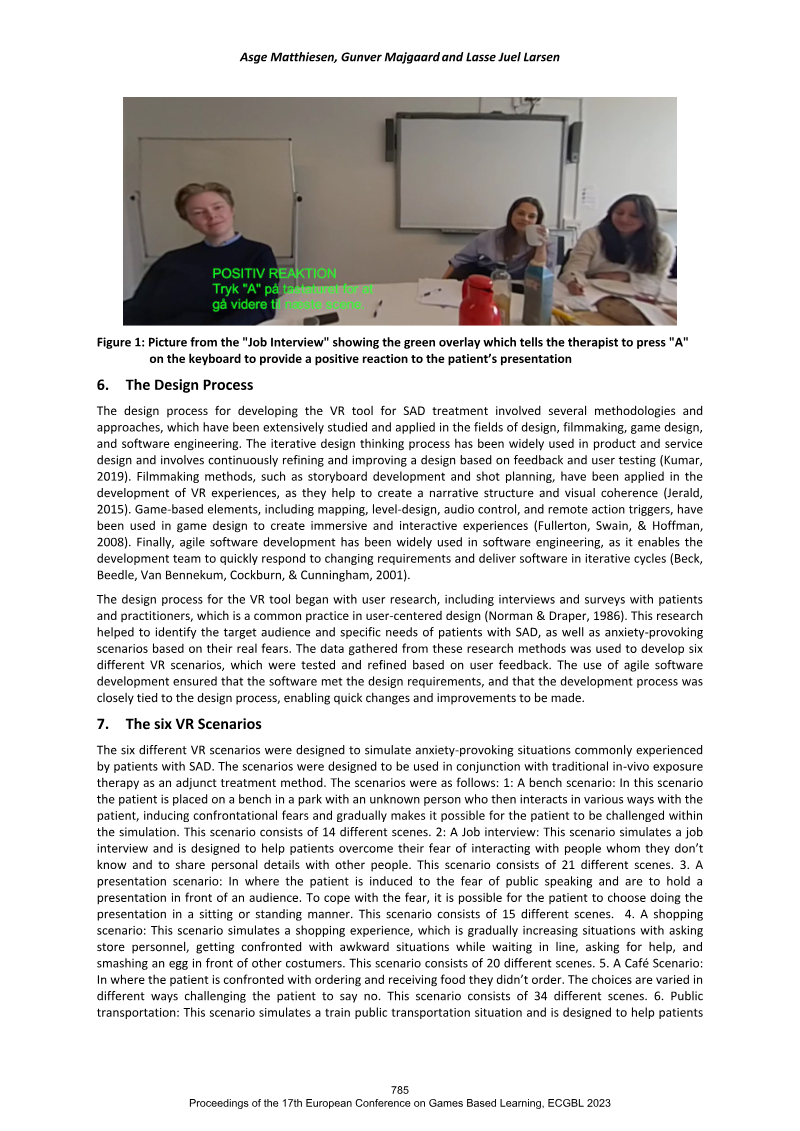
- The tool's six VR scenarios (park bench, job interview, public presentation, shopping, café ordering, and train journey) are designed to escalate anxiety triggers gradually, with 14 to 34 scenes per scenario.
- The authors argue VR's controlled, closed environment reduces the uncontrollable factors of physical exposure therapy, which often cause patients to drop out, while also lowering cost and time requirements.
First Steps to Improve Cybersecurity Behaviour: A Virtual Reality Experience
This paper presents VRCyberEducation, an immersive virtual reality training environment designed to reduce human-driven cybersecurity risks such as weak password practices and mishandling of removable USB devices.
- VRCyberEducation is an immersive VR training environment, built in NeosVR for the Oculus Quest 2, aimed at reducing human-driven cybersecurity risks such as weak password practices and mishandling of USB devices.
- In a pretest-posttest study of 16 participants, knowledge scores rose significantly after the VR session, from a mean of 47.5 to 54.75 (p < .001, Cohen's d = 1.46).
- Usability was rated at a SUS mean of 72.5, above the commonly cited threshold of 68 for acceptable usability.
SwageXR: Designing Gamified AR Applications for Industrial Training
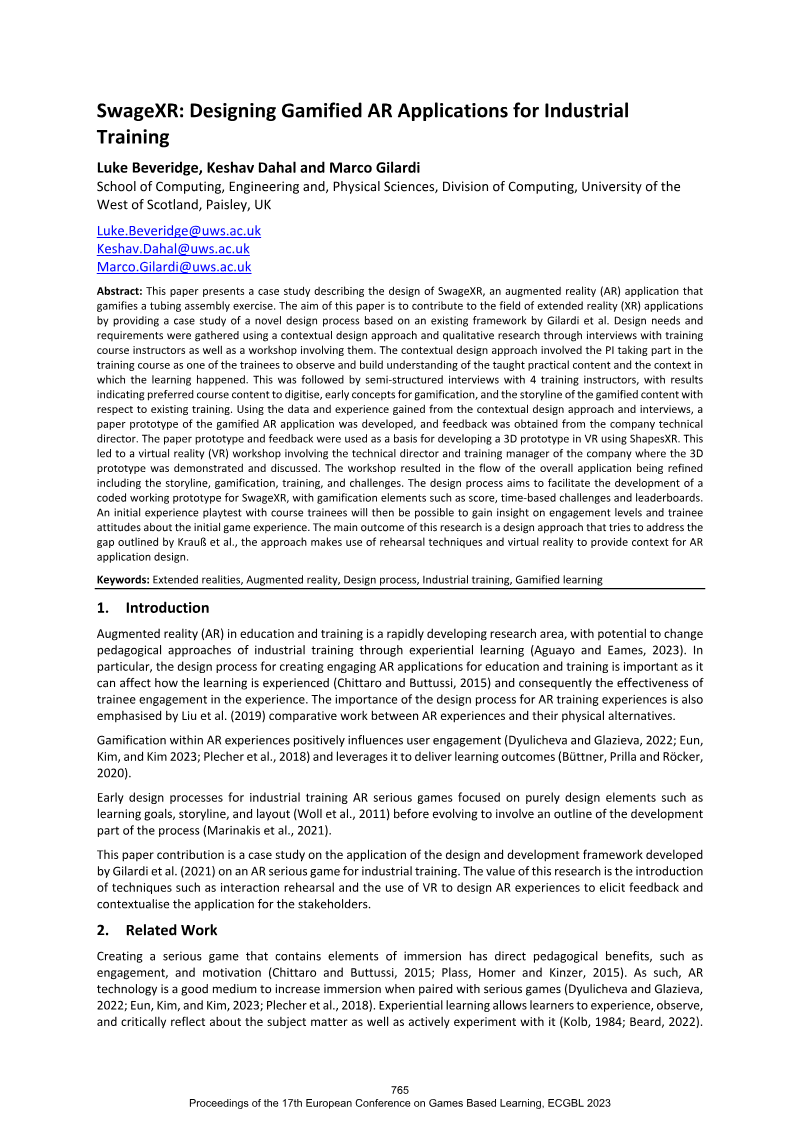
This paper presents a case study of SwageXR, an augmented reality application that gamifies a tubing assembly exercise in industrial training, and documents its design process.
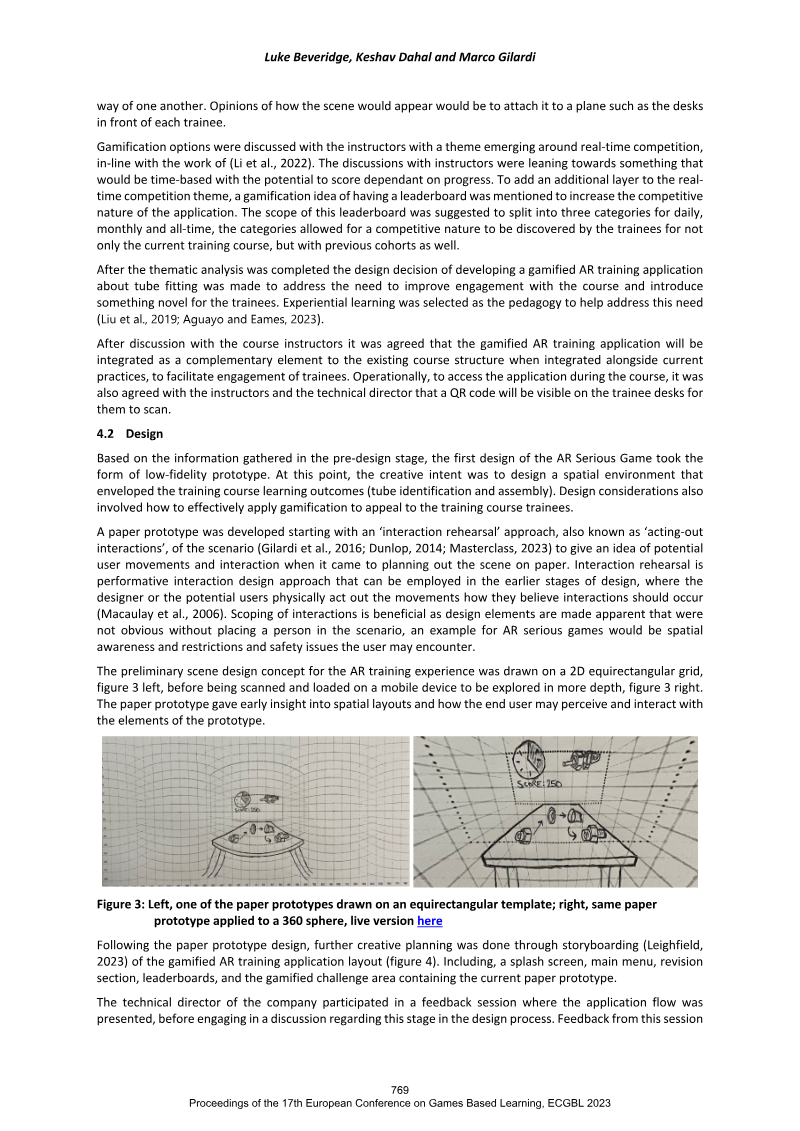
- The paper contributes a structured design approach for XR training apps by applying Gilardi et al.'s (2021) framework to industrial training, adding interaction rehearsal and VR-based pre-visualization as methods for giving stakeholders contextual understanding before coding begins.
- The SwageXR design process combined a contextual inquiry (the lead researcher took part as a trainee in a two-day course at an industrial training company) with semi-structured interviews of four training instructors, analysed via thematic analysis.
- Interviews revealed a need to boost trainee engagement, a preference for smartphone-delivered AR, and interest in time-based real-time competition with score leaderboards split into daily, monthly, and all-time categories.
Values-Based Transformative Games: From the Physical to the Digital
This paper presents a design framework and prototype for values-based transformative games aimed at children aged 0 to 8, using an adapted version of the traditional board game Snakes and Ladders.
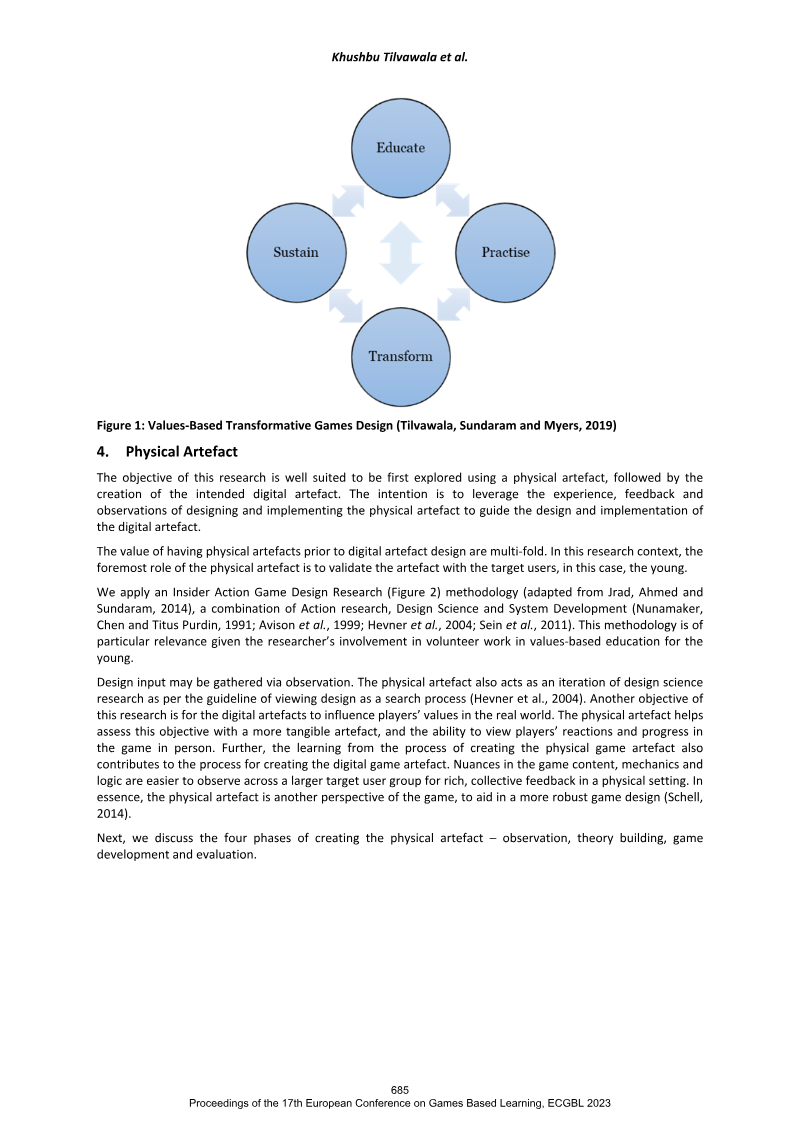
- The paper proposes a Values-based Transformative Games Design Model with four stages (educate, practise, transform, sustain), arguing that play is the primary medium through which young children absorb values and that embedding values in games can drive lasting behavioural change.
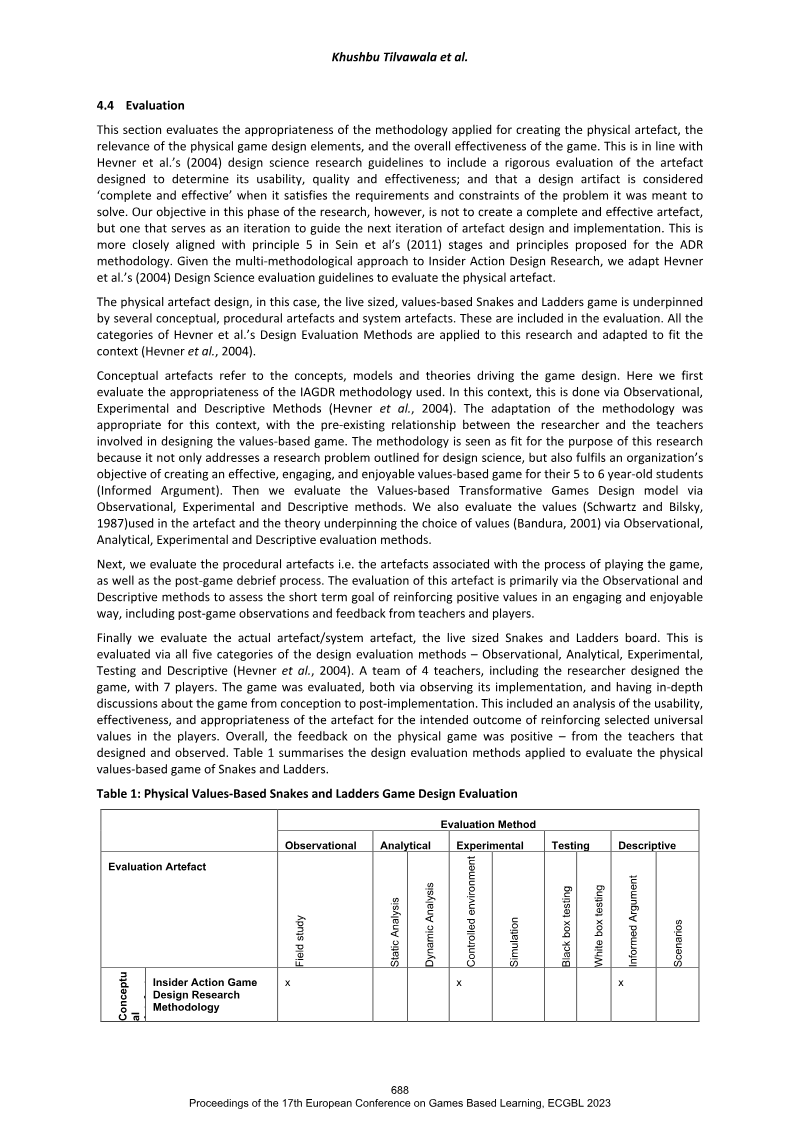
- The prototype is an adapted Snakes and Ladders game for children aged 0 to 8, where ladders represent positive values, snakes represent their absence, and each landing triggers a scenario card.
- The work was developed using Insider Action Game Design Research, combining action research, design science, and systems development, with authors who volunteered at a values-based school alongside four teachers and seven children.
Designing a 3D Serious Game About Career Pathways in the Games Industry
This paper presents the design and development of a 3D serious game intended to teach undergraduate game development students about career pathways in the games industry.
- The paper is a case study documenting the design of a 3D serious game teaching undergraduate game development students about games-industry career pathways, not an empirical evaluation, and it reports no outcome data because the game was still under development.
- The core design principle is embedding learning content intrinsically within gameplay rather than presenting it as separate material, using a Unity hub-and-spoke structure with a central studio hub and branching levels for roles such as design, programming, art and animation, and quality assurance.
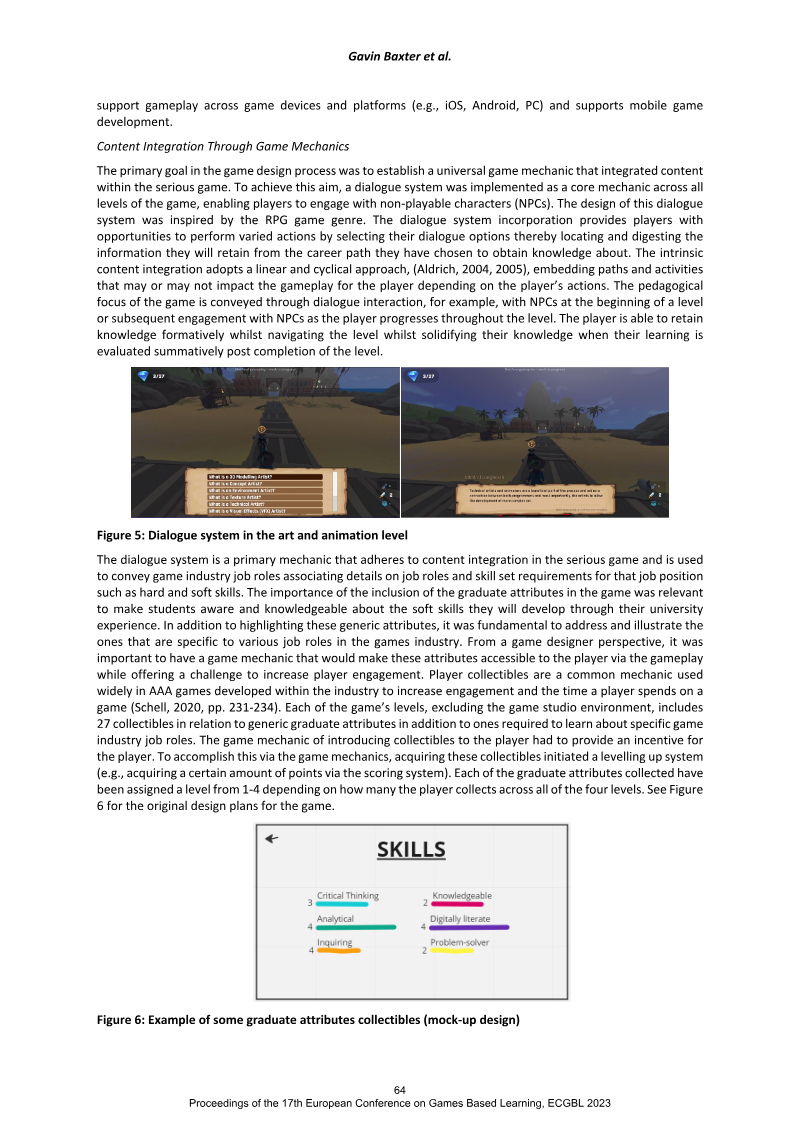
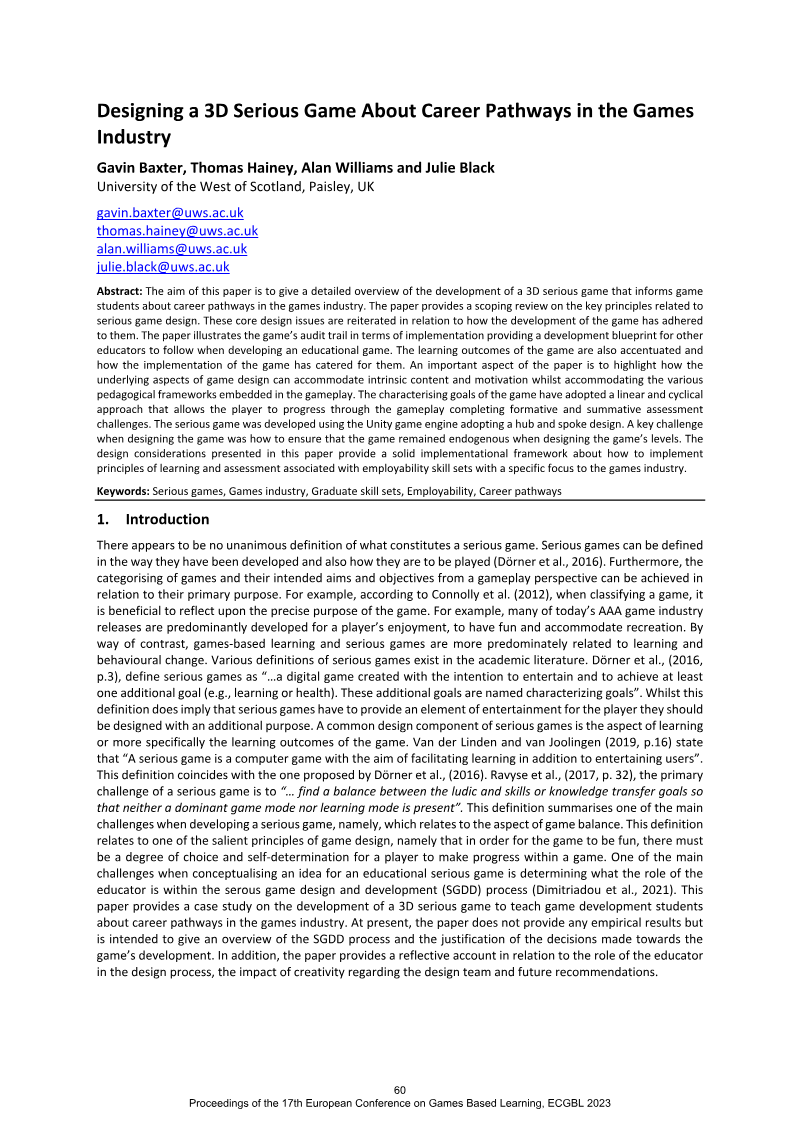
- Role details and hard and soft skill requirements are conveyed through a role-playing-genre dialogue system, while collectibles tied to graduate attributes serve as incentives and drive a levelling mechanic.