
European Conference on Games Based Learning (ECGBL)
Annual European conference on game-based learning and serious games; its proceedings are published open access (CC BY) by Academic Conferences International.
Documents
Combine DGBL with AI System: A Technical Guidance to Reduce Teacher's Burden in Digital Game-Based Learning
This paper proposes a technical guidance system that combines a large language model with blockchain technology to reduce the workload teachers face when designing digital game-based learning (DGBL).
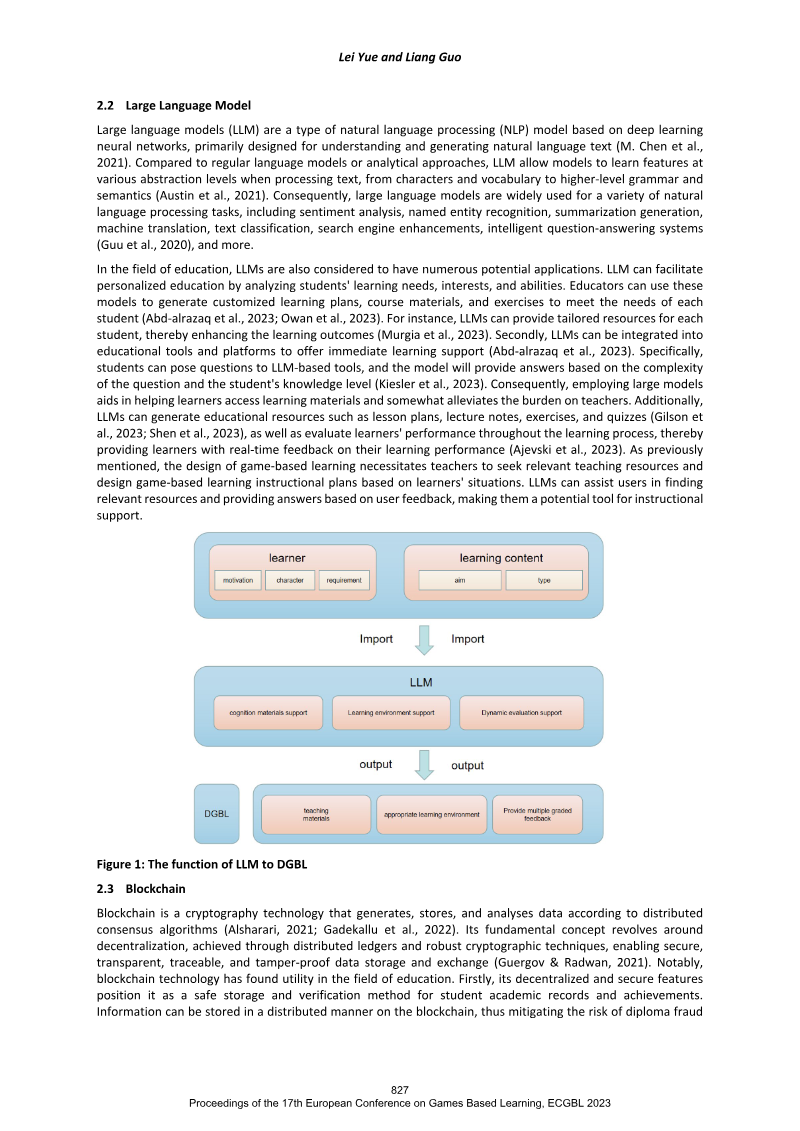
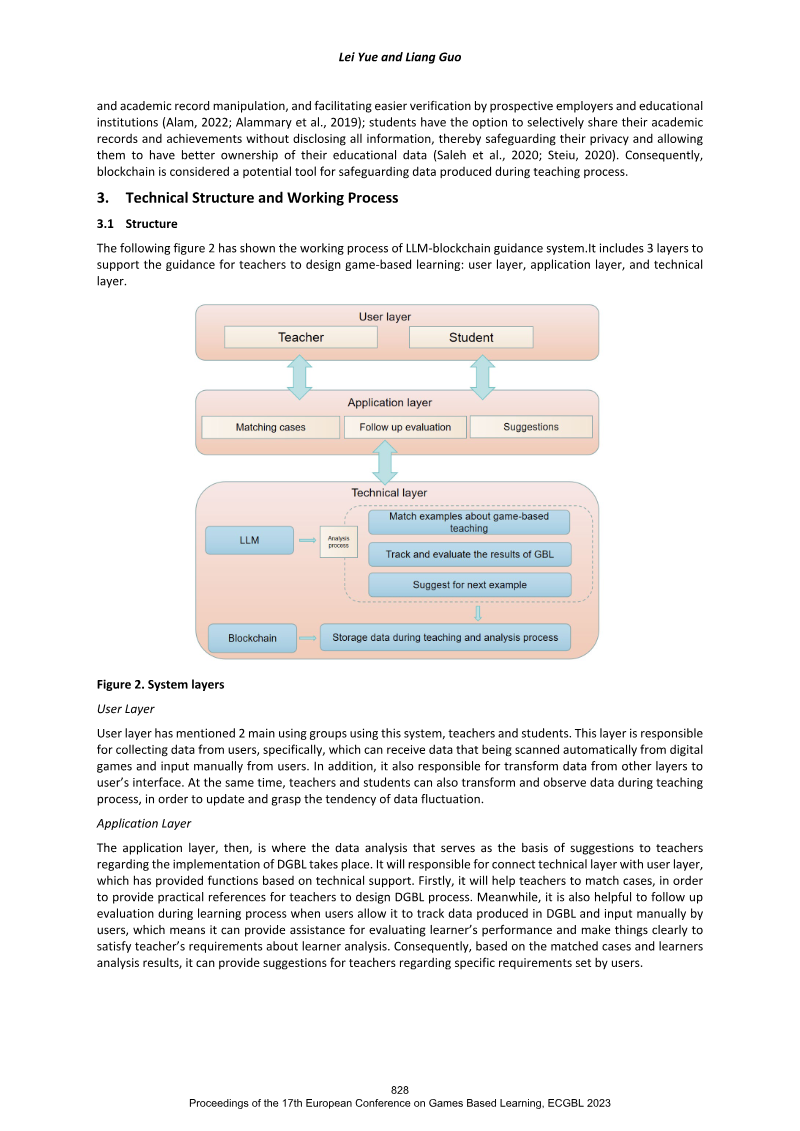
- The paper proposes a three-layer system (user, application, and technical layers) that combines a transformer-based large language model with blockchain storage to reduce teacher workload across the digital game-based learning cycle, from planning to post-class learner profiling.
- Teachers enter instructional plans and students create learner profiles, which are recorded on the blockchain for data integrity, while the LLM matches DGBL cases, supports personalized learning blueprints, and generates questionnaires and automated performance assessments.
- The blockchain layer is described as using private, public, and consortium chains to protect data, but the paper offers no implementation details, empirical testing, or quantitative evaluation of the system's effectiveness.
Designing Educational Escape Rooms with Generative AI: A Framework and ChatGPT Prompt Engineering Guide
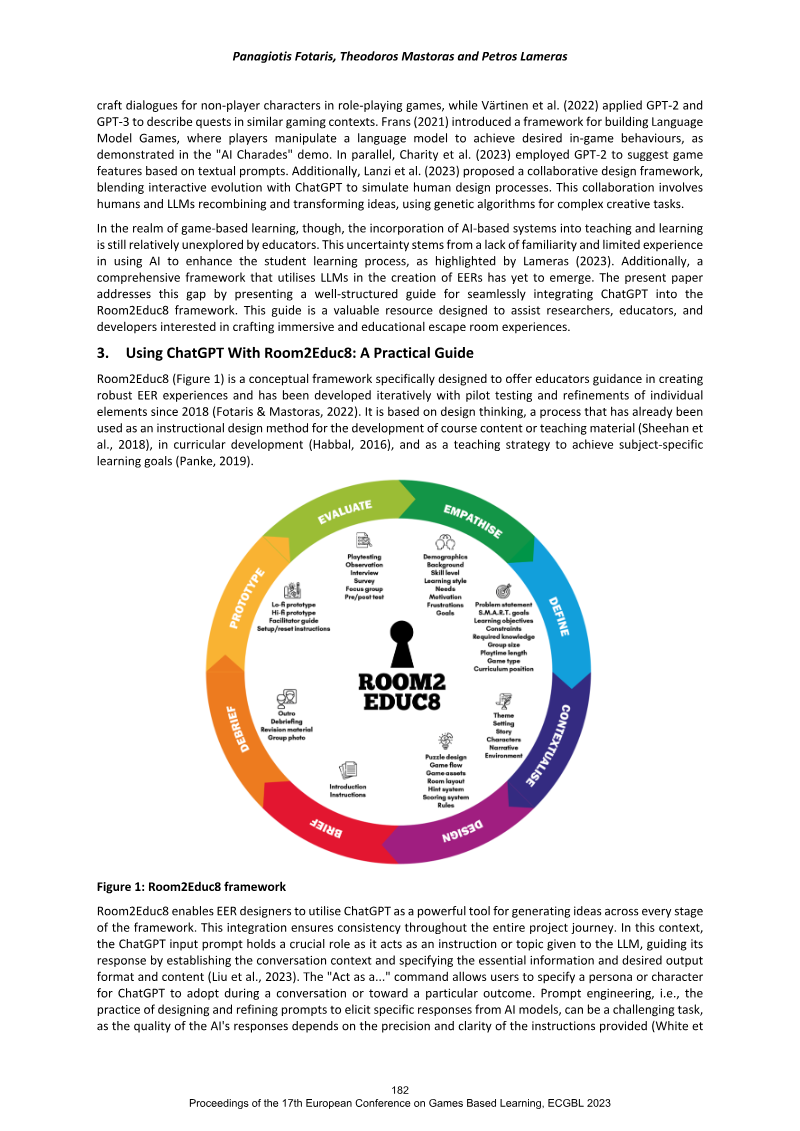
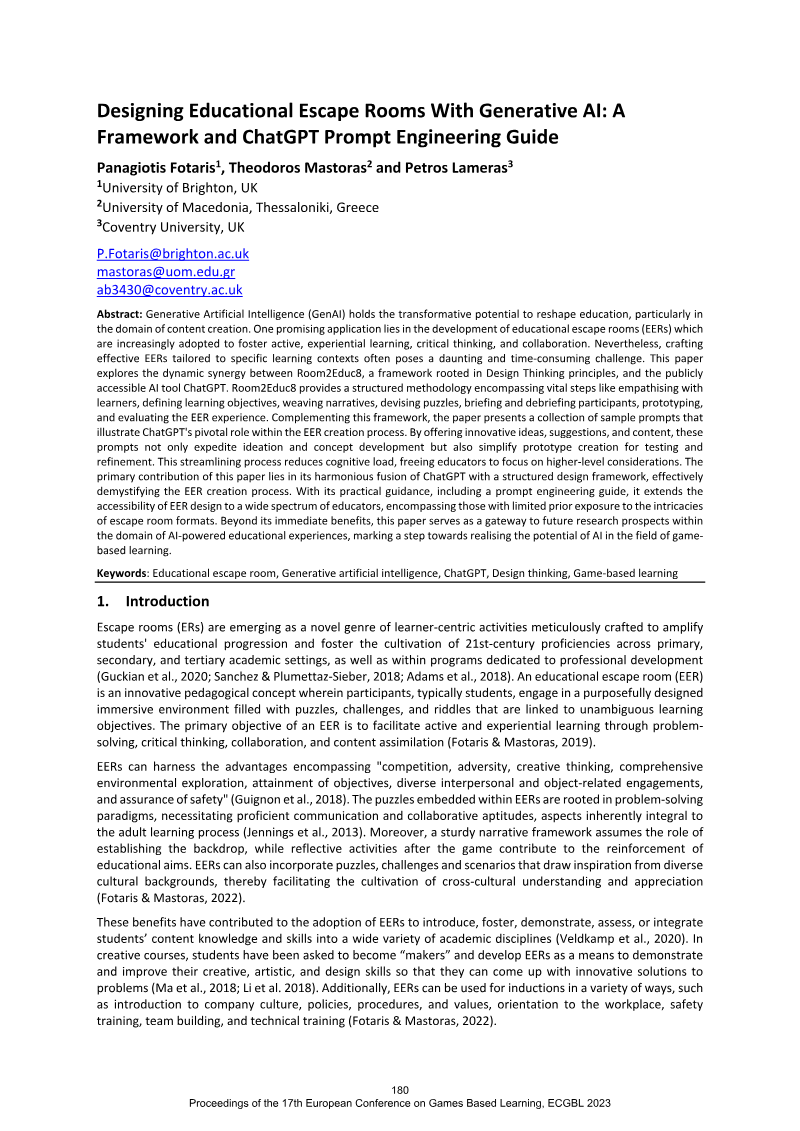
This work introduces Room2Educ8, a design-thinking framework for creating educational escape rooms with the help of ChatGPT.
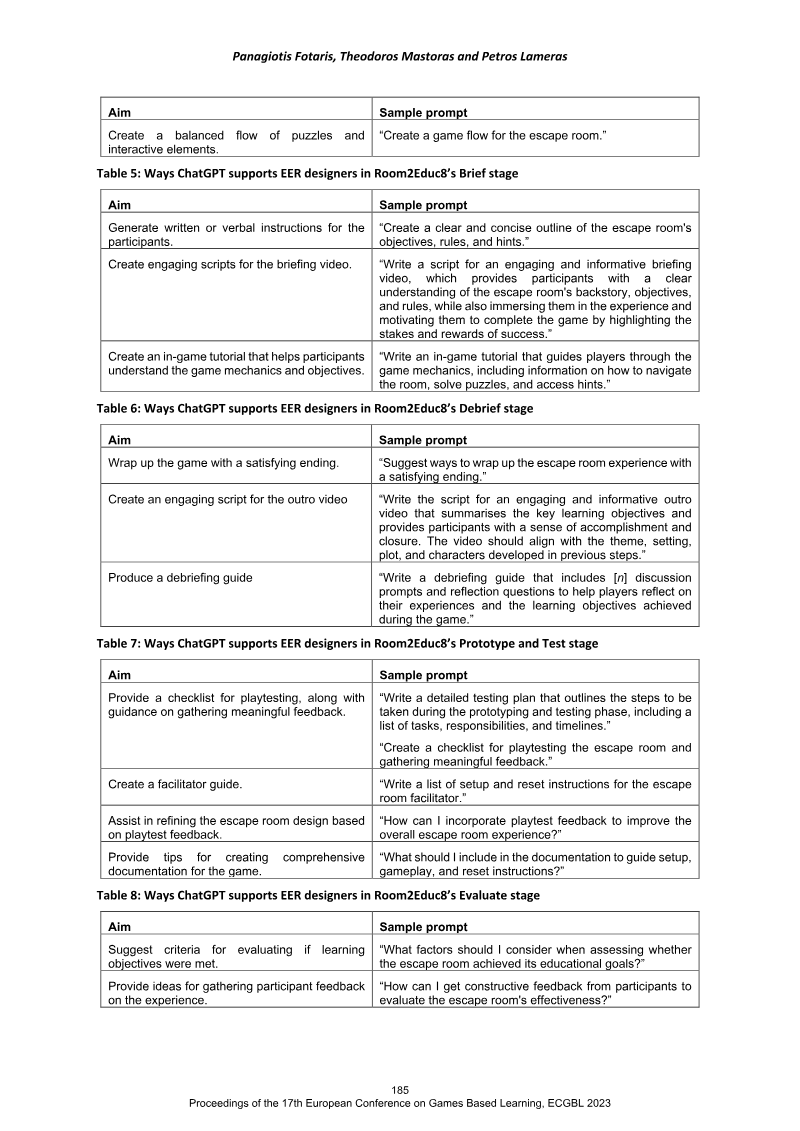
- Room2Educ8 is a design-thinking framework that uses structured ChatGPT prompts to help educators, especially those without game design experience, create educational escape rooms, moving through stages from Empathise to Evaluate with sample prompts for each.
- The framework is illustrated through a worked example: a periodic table escape room for first-year chemistry students, with the undergraduate science context serving as the primary illustrative setting.
- The central claim is qualitative: structured prompting is argued to reduce the time and cognitive burden of content creation, letting educators focus on learning objectives and user experience.
Fostering Employability Skills for Engineers With Serious Games: A Gamified GBL Concept
This paper presents FutureING, a serious-game-based learning concept developed at TH Köln's Faculty of Process Engineering, Energy, and Mechanical Systems to cultivate employability and "future skills" such as planning, communication, cooperation, adaptability, and conflict management among engineering students.
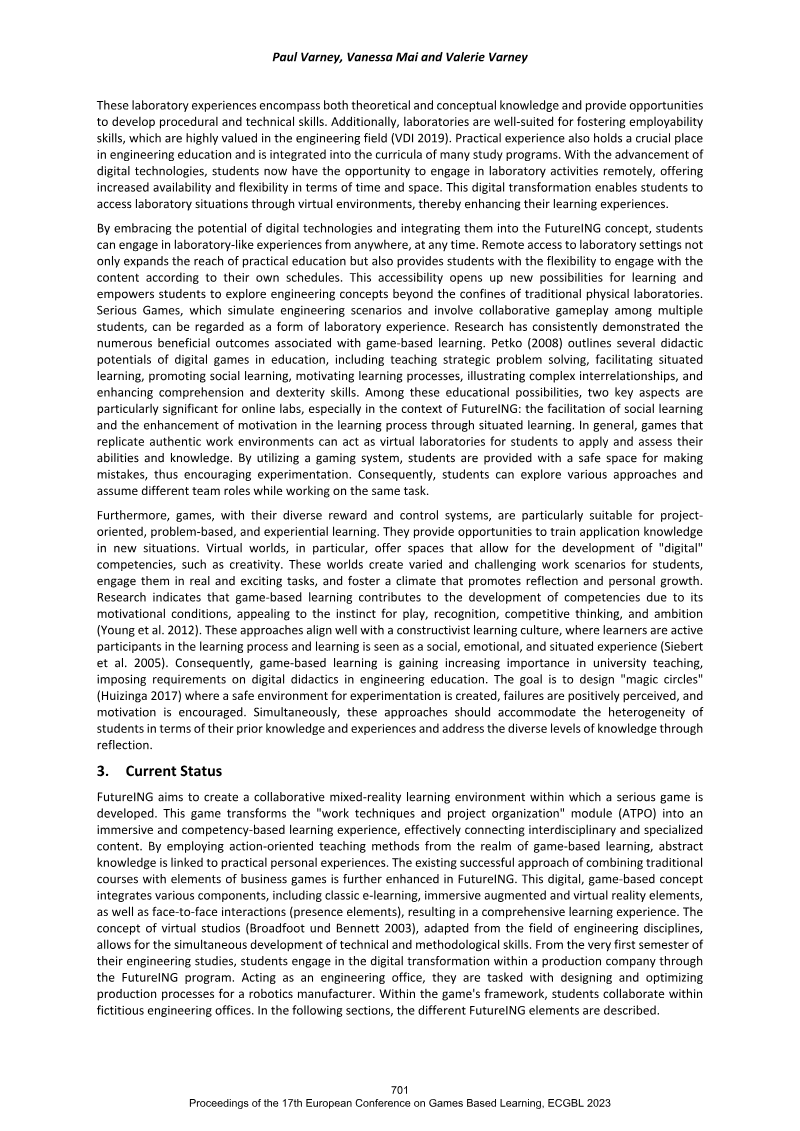
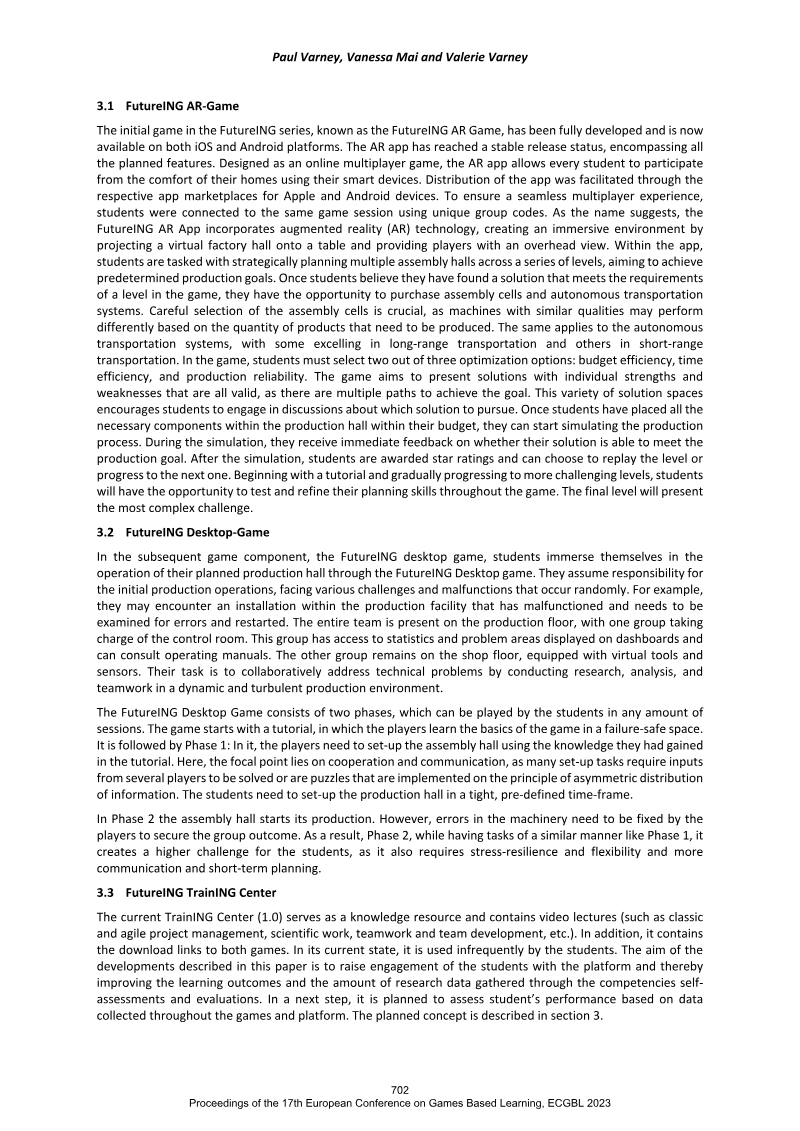
- FutureING combines three components developed at TH Köln's Faculty of Process Engineering, Energy, and Mechanical Systems: an augmented reality factory-layout design game under budget, time, and reliability trade-offs, a desktop game where teams run a production hall under randomized malfunctions, and a web-based TrainING Center with avatar progression, leaderboards, and quiz rewards.
- A self-assessment study of 267 students, surveyed three times across one semester, found ratings in planning and communication, cooperation and flexibility, organizational skills, and conflict skills rose consistently after each game component.
- The evidence is limited because it relies solely on self-reported measures with no control group and no independent performance assessment, so causal claims about skill development are not supported.
Sense-Making of Digital Game Technologies (DGT): Positive Instances of Children-Led Engagement With Chess
This paper argues that digital game technologies can bring chess into classrooms as a vehicle for children's systems thinking and STEM-related reasoning, positioning chess as a "drosophila of reasoning" that has been largely excluded from pre-collegiate education.
- The paper positions chess as a "drosophila of reasoning" that has been largely absent from pre-collegiate education, and argues digital game technologies can bring it into classrooms to build children's systems thinking and STEM-related reasoning.
- The evidence is mainly qualitative and anecdotal, drawn from seven case studies across Mongolia, Spain, Venezuela, Gibraltar, Wales, India, Sri Lanka, and the United States.
- Reported outcomes include six of 24 Sri Lankan children qualifying for a national championship within eight weeks, and Indian online learners progressing from beginner level through hundreds of exercises and games over several months.
Fostering Self-Regulation, Motivation, and Creativity Through Gamification Software iWrite
The paper introduces iWrite, a gamification writing software developed at gamelab.berlin, part of the Cluster of Excellence Image Knowledge Gestaltung at Humboldt University Berlin.
- iWrite is a gamification writing tool developed at gamelab.berlin (Humboldt University Berlin) that aims to help students and academics overcome motivational and self-regulatory barriers in long writing projects such as theses, dissertations, and monographs.
- The software evolved from an earlier macOS tool called Diary, which recorded work patterns, after interviews with colleagues revealed difficulty sustaining uninterrupted, concentrated work.
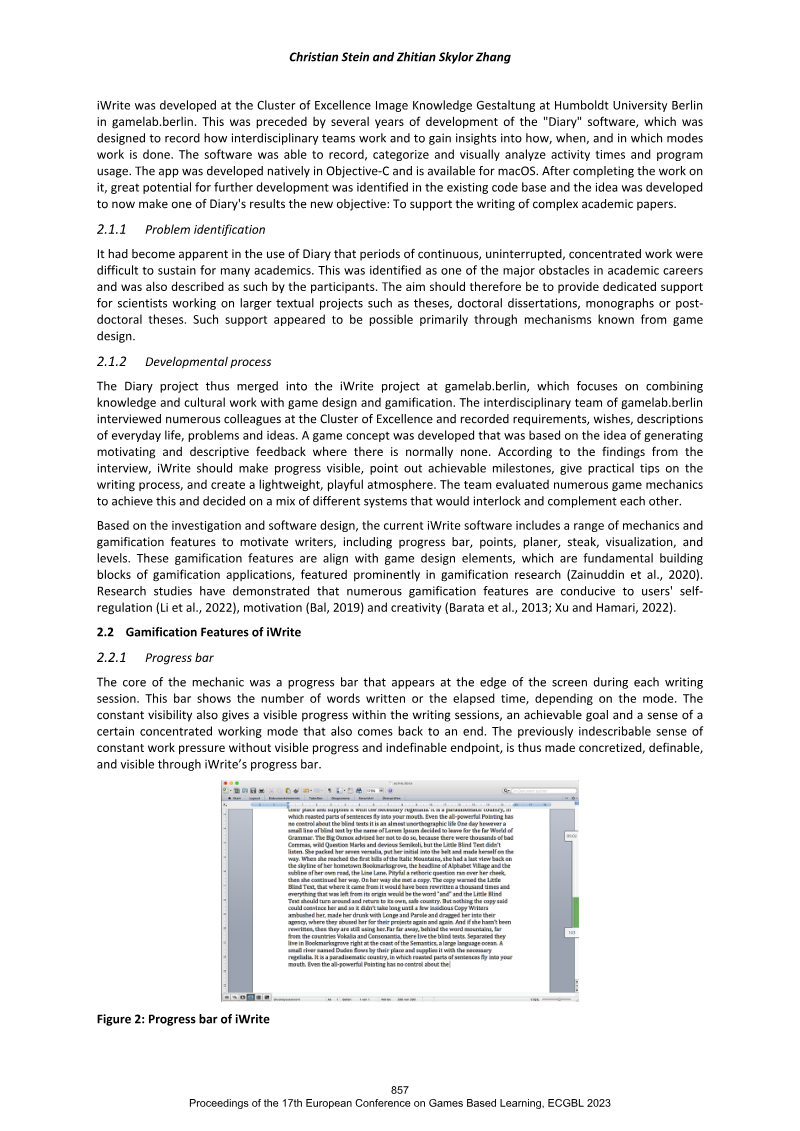
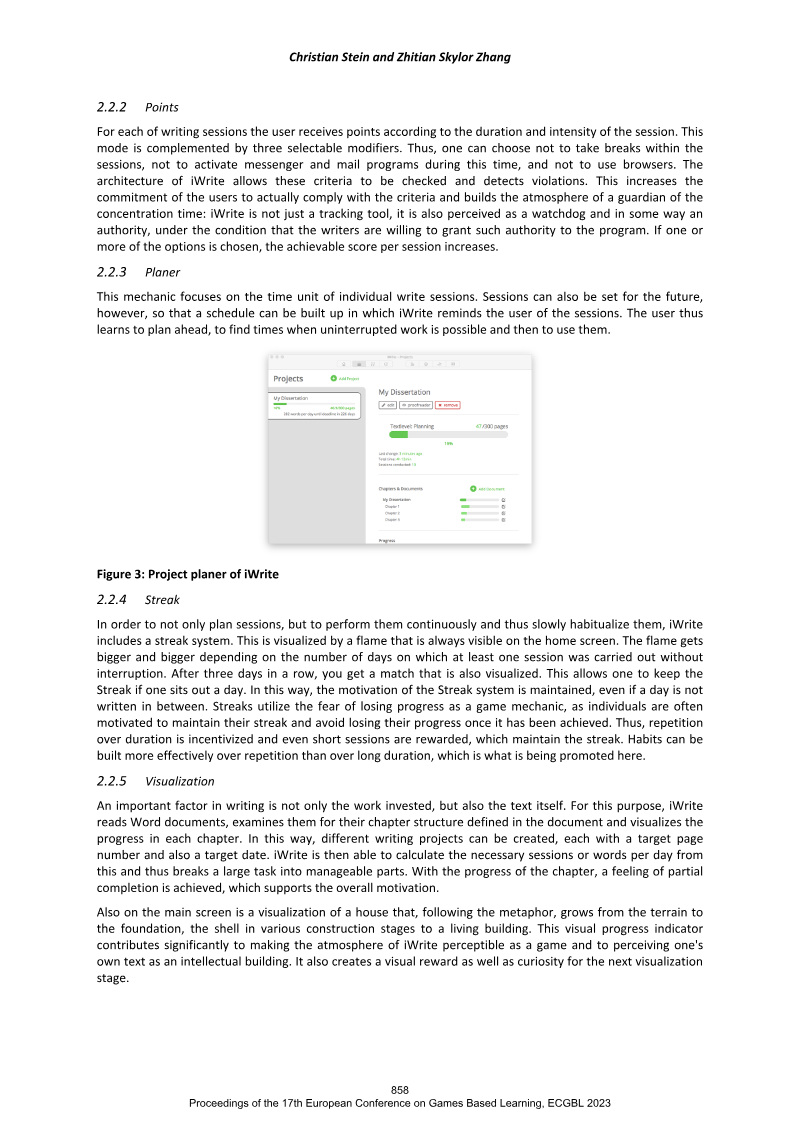
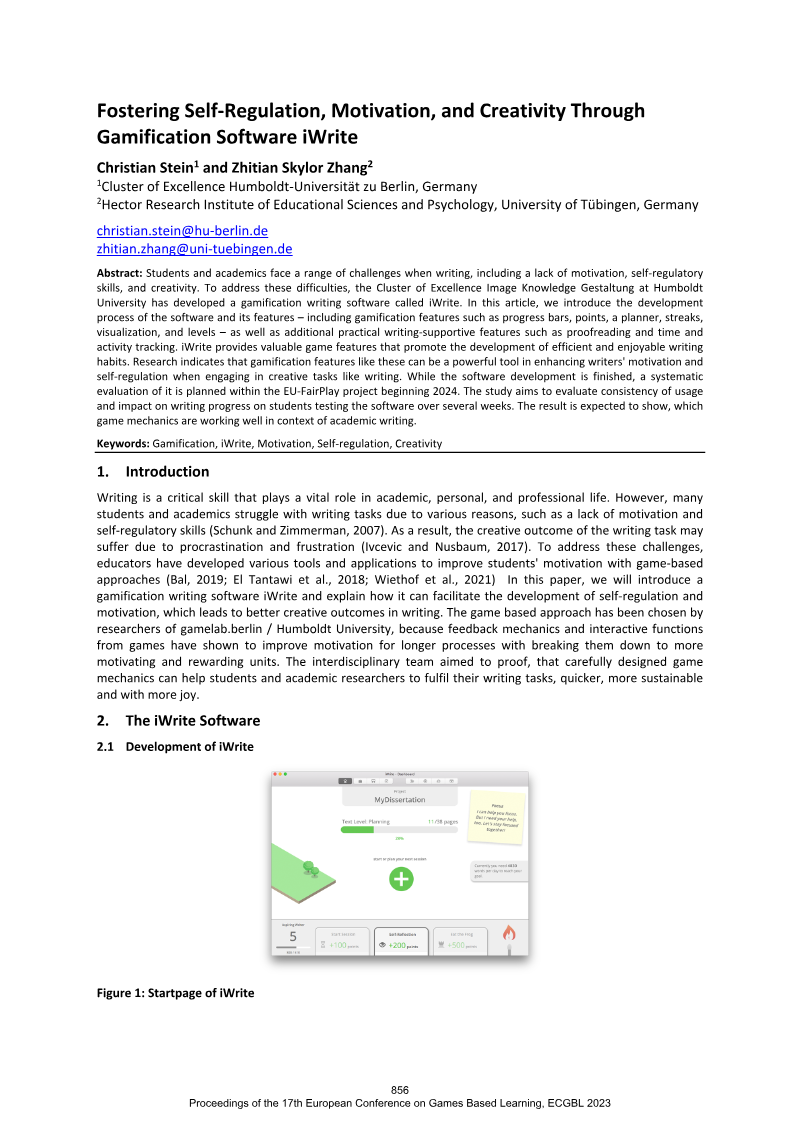
- Its gamification features include a persistent progress bar, per-session points with modifiers that detect breaks or distracting applications, a session planner, a daily-streak flame system, levels with unlockable expert tips, and daily task cards.
Chances and Limitations of Immersive Augmented Reality for Game-Based Learning in Museums
This paper examines the opportunities and limitations of immersive augmented reality delivered through head-mounted displays for game-based learning in museums.
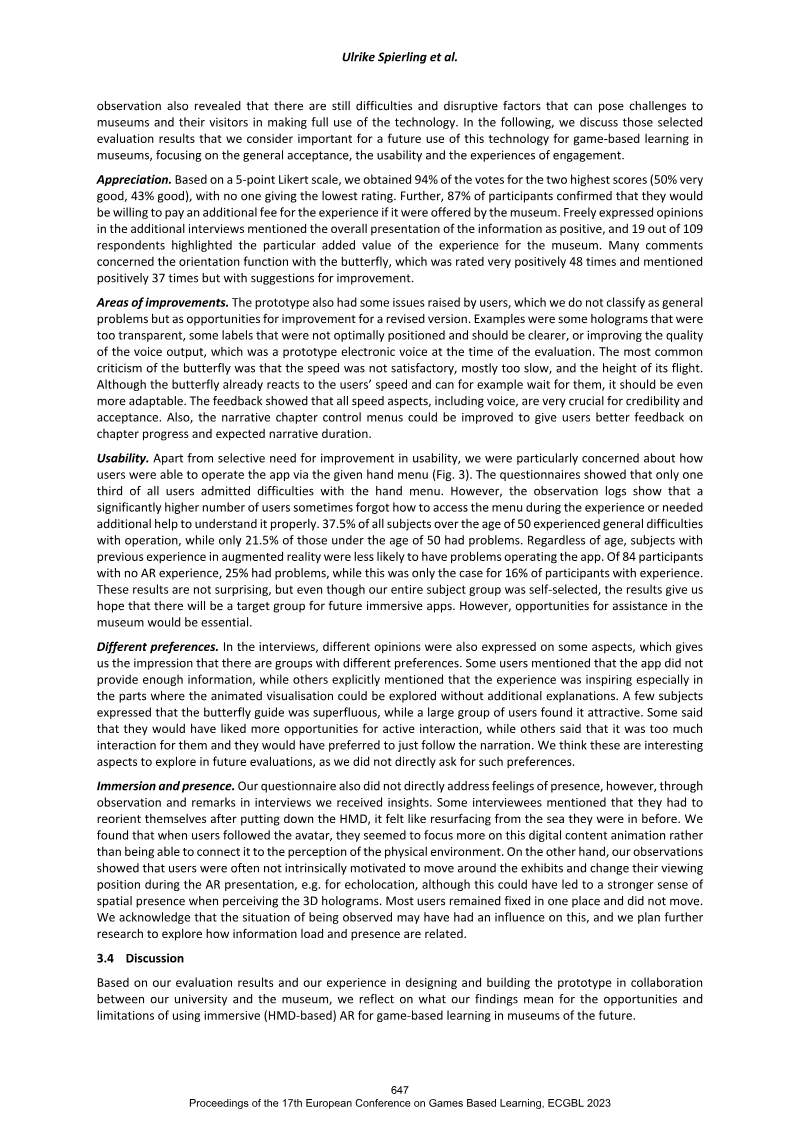
- Visitors responded very positively to the immersive AR prototype on the Microsoft HoloLens 2 at Frankfurt's Senckenberg Natural History Museum, with 94% of 109 adult participants rating it good or very good and 87% willing to pay an additional fee.
- Usability was the main weakness: about a third of users struggled with the hand menu, with difficulties reported by 37.5% of visitors over 50 versus 21.5% of those under 50, and by 25% of those without prior AR experience versus 16% of those with it.
- Other usability complaints centred on hologram transparency, label placement, voice quality, and the pacing of the animated butterfly guide.
Digital Educational Escape Rooms for Social Entrepreneurship: Identifying Design Choices for Educational Impact
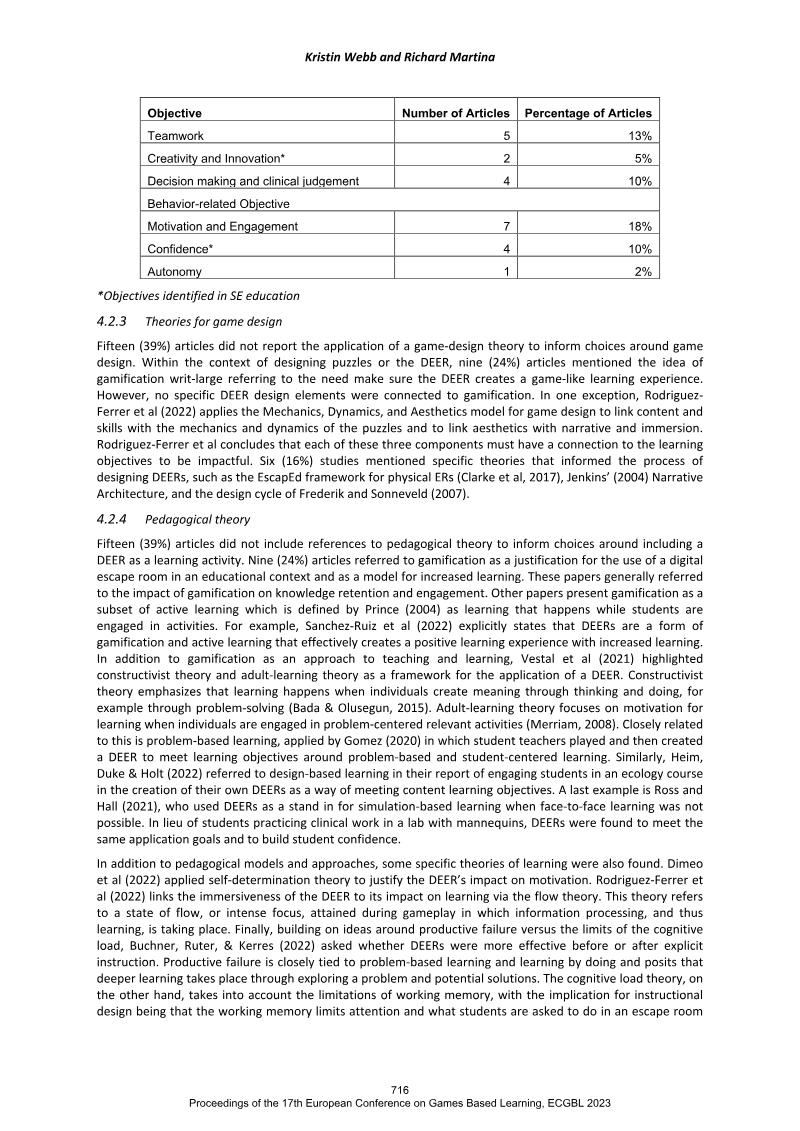
This paper examines how digital educational escape rooms (DEERs) can be designed to build social entrepreneurship competencies such as problem solving, interpersonal communication, creativity, confidence, and empathy.
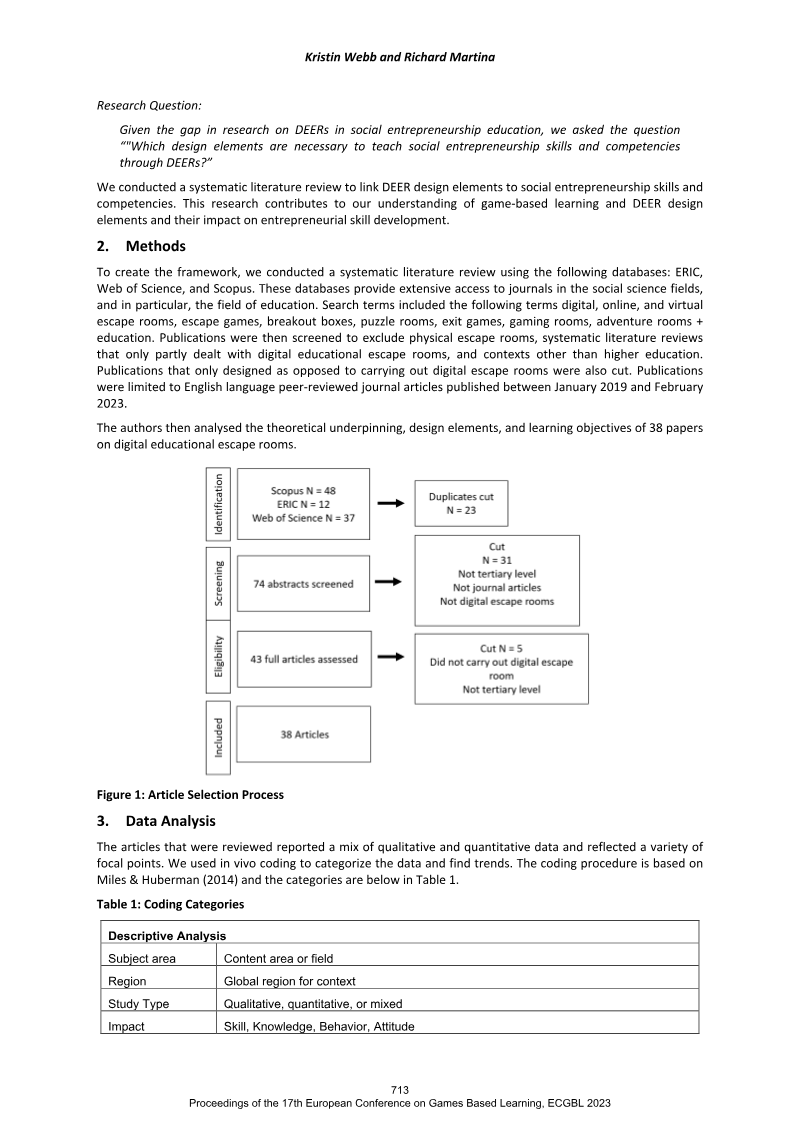
- A systematic review of 38 peer-reviewed articles (2019 to early 2023) found digital educational escape rooms (DEERs) overwhelmingly associated with positive outcomes for learning, motivation, engagement, and collaboration, with nearly all reporting successful online teamwork.
- No consistent evidence links specific design choices such as puzzle type, narrative style, team size, play length, or synchronous versus asynchronous format to particular social entrepreneurship skills; the gamified, team-based environment appears to drive impact more than individual design features.
- The evidence base is weighted toward higher education, with North American (47%) and European (45%) institutions dominating, and healthcare-related content accounting for 39% of studies, followed by science and engineering at 24%.
Work, Costs and the Unexpected in the Academic's Creation and Use of Games and Simulations in Teaching and Learning
This study examines the lived experience of management academics who create and use games and simulations in teaching, focusing on the actions, unexpected events, costs and risks they encounter.
- The study is grounded in a British Academy of Management-funded project covering thirteen cases of digital, in-person and mixed-media simulations, with three cases selected for detailed content analysis.
- The authors argue that management education research has focused on learning effects while neglecting the teacher's perspective, leaving academics exposed to uncontrolled risk and threatening the long-term sustainability of experiential teaching.
- Academics typically work alone from the moment of inspiration, and they carry substantial social labour in managing organisational stakeholders and resistance.
Challenges in Designing a Game for the Prevention of Intimate Partner Violence
The paper presents ongoing work on a serious game designed to support primary prevention of intimate partner violence (IPV) by educating adult players about long-term abusive relationships and the bystander role.
- The central contribution is an analysis of design dilemmas in building an interactive game about intimate partner violence: showing empathy for victims without implying leaving an abusive relationship is simple, and encouraging bystander action without blaming bystanders for violence that is the perpetrator's responsibility.
- The game targets primary prevention of IPV among adult players by educating them about long-term abusive relationships and the bystander role.
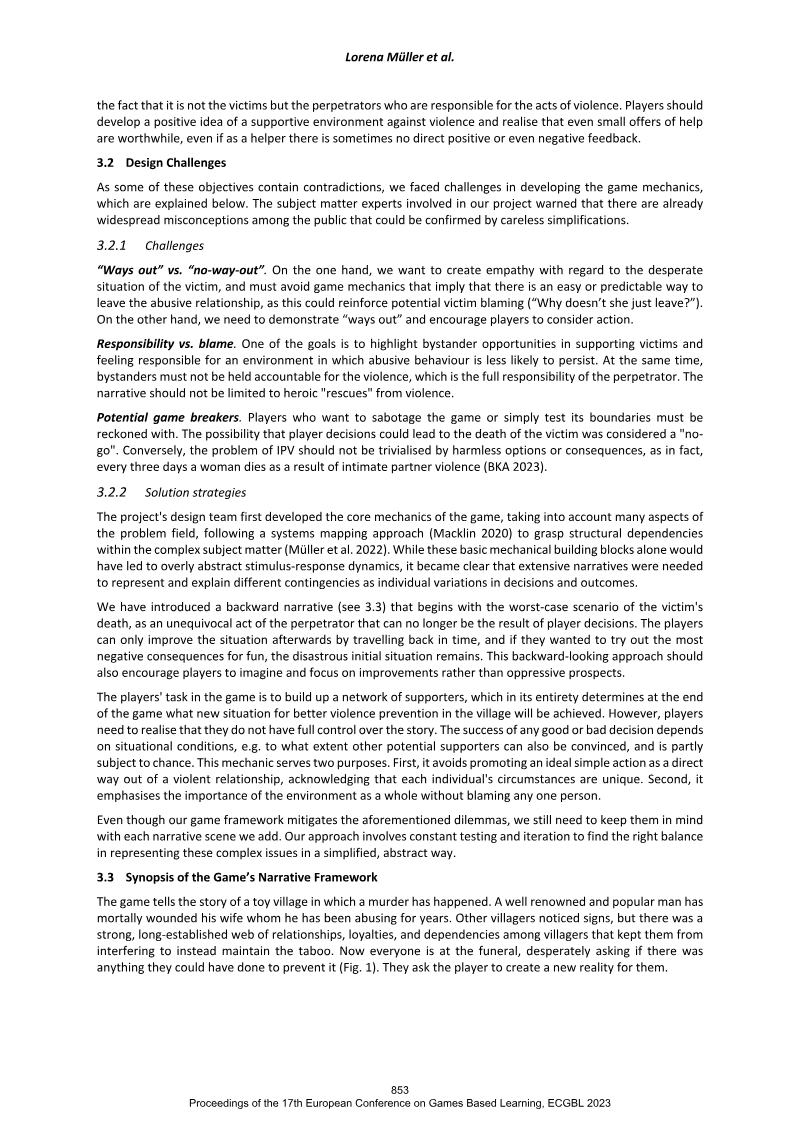
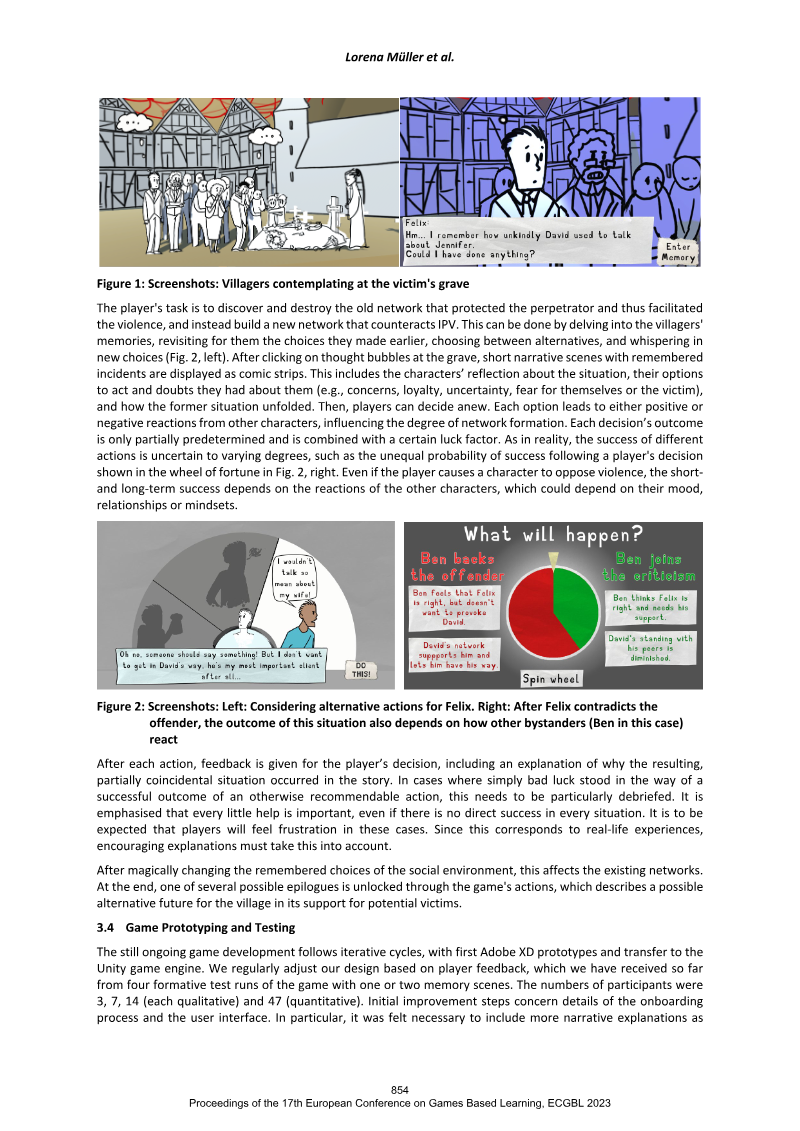
- Design solutions include a backward narrative opening with a victim's death, a systems-mapping approach to village social-network dependencies, a memory-revisiting mechanic for building a supporter network, and a chance-based "fortune wheel" that reflects real-life unpredictability.
Media Convergence and Game-Based Learning: Developing a Hypothesis of Film Education for the Post-Media Age
Atzori's paper argues that film education should adopt a broad, inclusive understanding of "film" that encompasses video games and participatory media, treating these forms as spaces for experimentation rather than peripheral objects of study.
- The paper argues film education should adopt a broad definition of "film" that includes video games and participatory media, treating them as spaces for experimentation rather than peripheral objects of study, grounded in Gee's semiotic domains and Eugeni's "post-media condition."
- Machinima, films produced by recording gameplay within game engines, is framed as "transformative play" that turns players into creators and is presented as a constructionist, practice-based alternative to conventional film education linking critical analysis with filmmaking.
- The central case study is the 2002–2003 Casablanca Interactive Performance Experiment at the University of Cambridge, in which students recreated a Casablanca scene in the Unreal engine, which the paper identifies as a founding example of machinima as a pedagogical method.
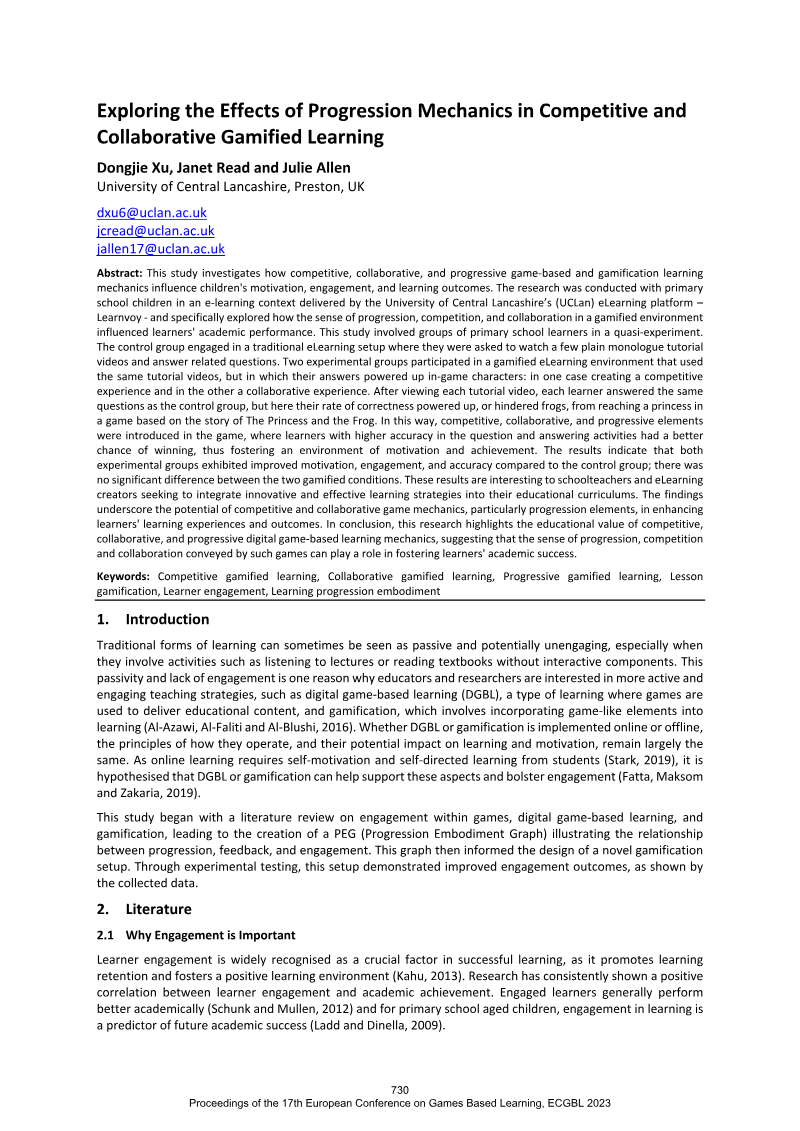
Exploring the Effects of Progression Mechanics in Competitive and Collaborative Gamified Learning
This study examines how competitive and collaborative gamification, combined with visible progression mechanics, affects primary school children's engagement and learning outcomes in an e-learning context.
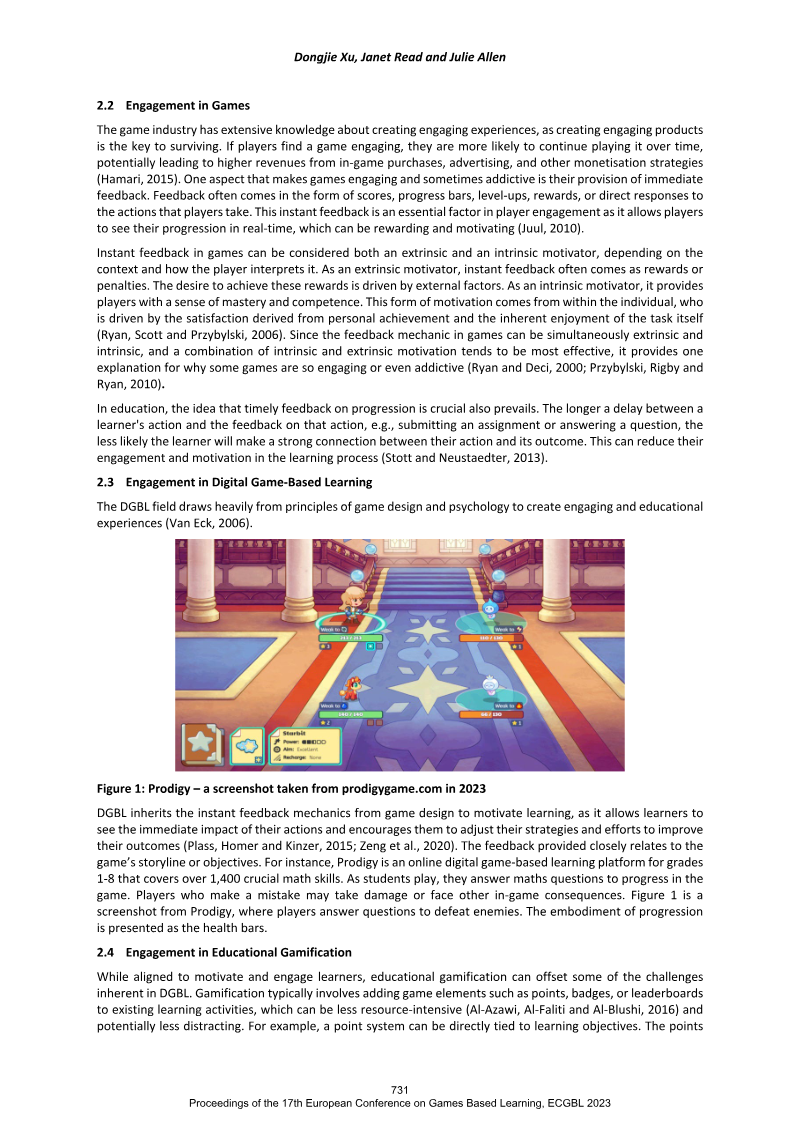
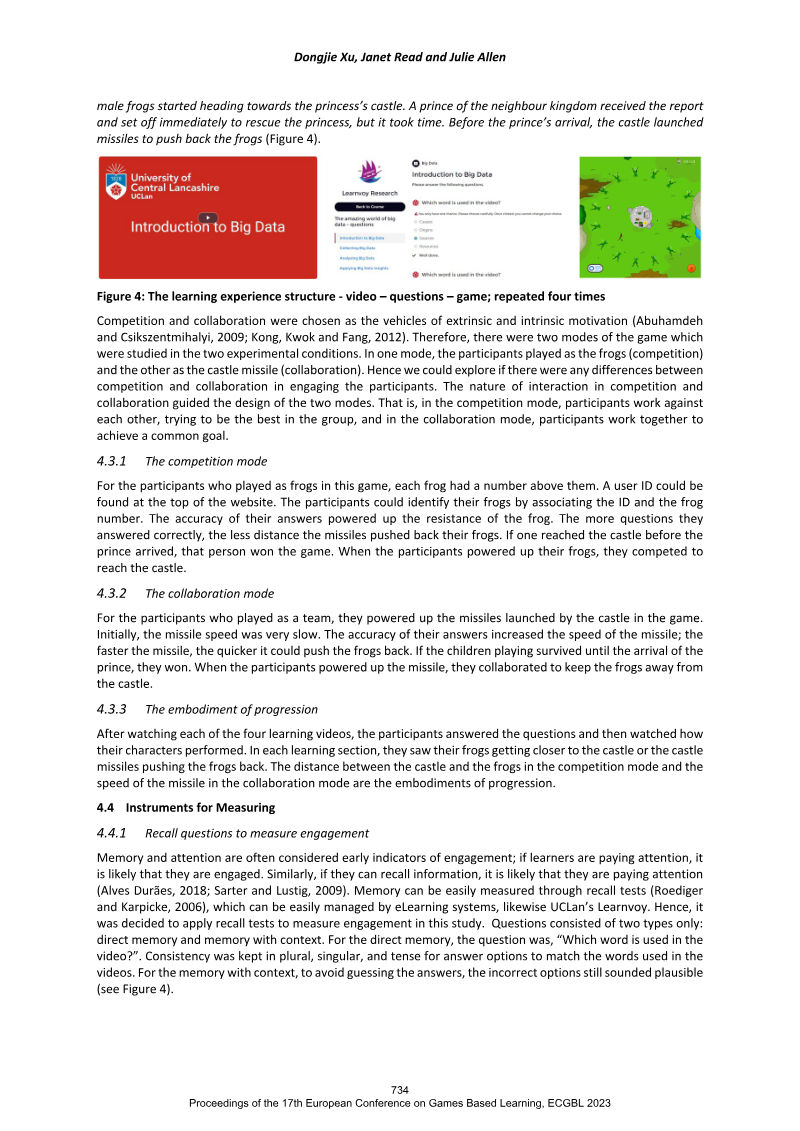
- A quasi-experimental study with 54 children aged 8 to 9 at the University of Central Lancashire found that both gamified conditions (competitive frog-racing and collaborative castle-missile versions) scored significantly higher than a control group that only watched tutorial videos on the final three sets of recall questions.
- No initial differences between groups appeared on the first recall set, suggesting the gamified advantage emerged over the course of the short intervention rather than from the start.
- The competitive group scored slightly higher on average than the collaborative group, but the difference was not statistically significant, so the two formats cannot be confidently ranked on learning outcomes.
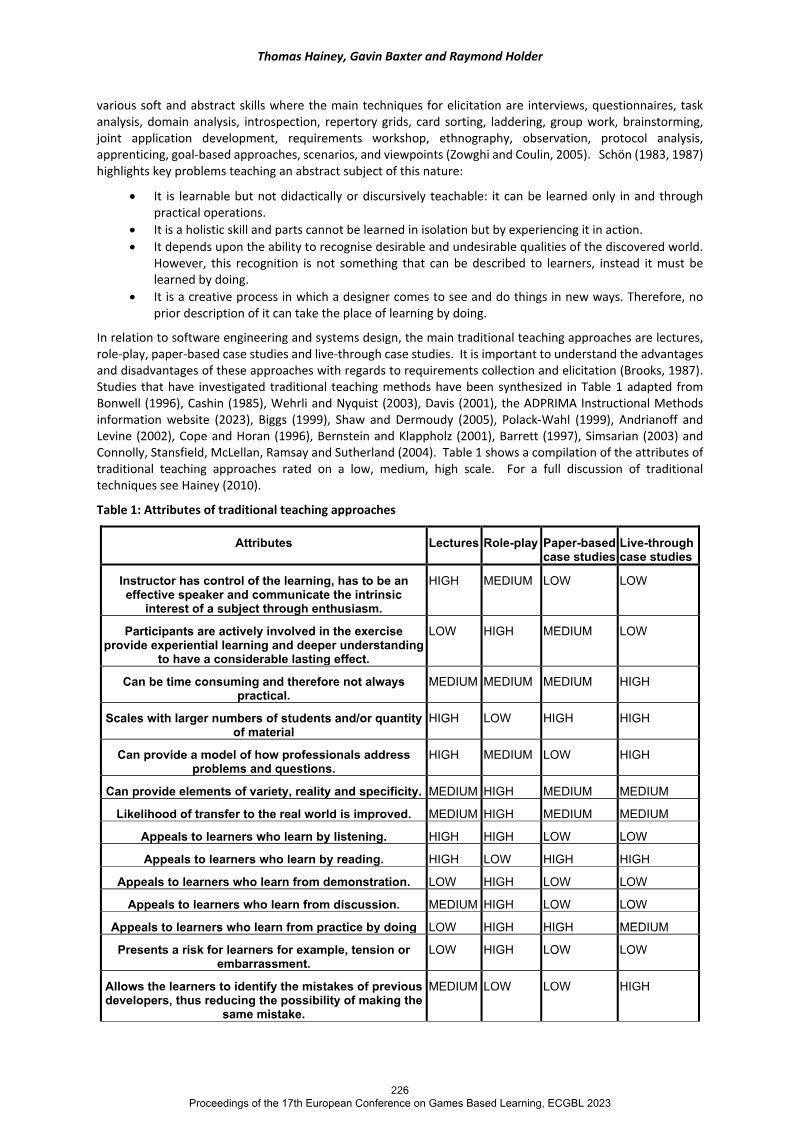
Development of a 3D Immersive Game for Games and Systems Requirements Capture
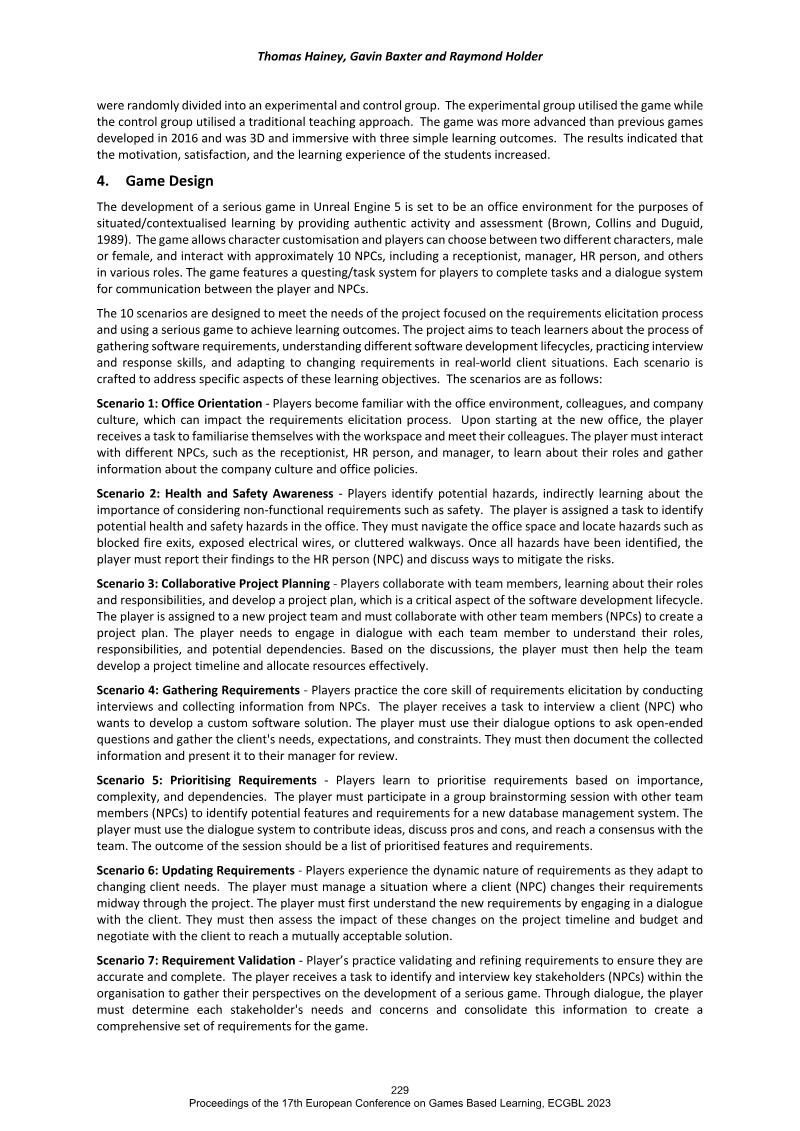
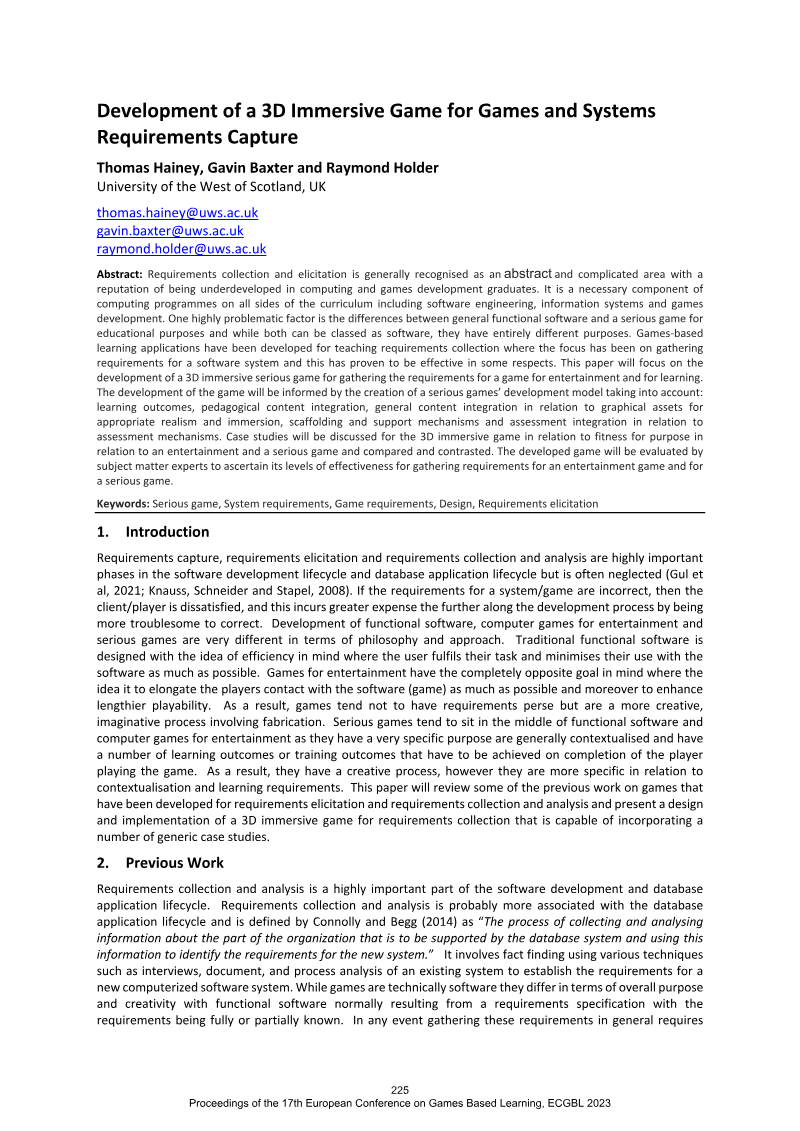
This study presents the design and development of "Cubicle Conundrums: Quest for Clarity," a 3D immersive serious game built in Unreal Engine 5 to teach requirements elicitation, a skill that is abstract and frequently underdeveloped among computing graduates.
- The paper presents 'Cubicle Conundrums: Quest for Clarity,' a 3D immersive serious game built in Unreal Engine 5 to teach requirements elicitation, a skill often underdeveloped among computing graduates.
- The authors note a scarcity of requirements-elicitation games produced since 2011, following prior literature that found most such games dated from 2003 to 2011.
- The game comprises ten office-based scenarios (e.g., hazard identification, stakeholder interviews, prioritisation, conflict resolution), each tied to specific learning outcomes and non-player character interactions.