1 free read left. Create a free account for unlimited reading + AI research.
Create free accountWhitepaper European Conference on Games Based Learning (ECGBL)
1 free read left. Create a free account for unlimited reading + AI research.
Create free accountWhitepaperEuropean Conference on Games Based Learning (ECGBL)
Sustainable Sip is a hybrid analogue-digital multiplayer game for university students. Players balance profit, waste reduction, and customer loyalty.
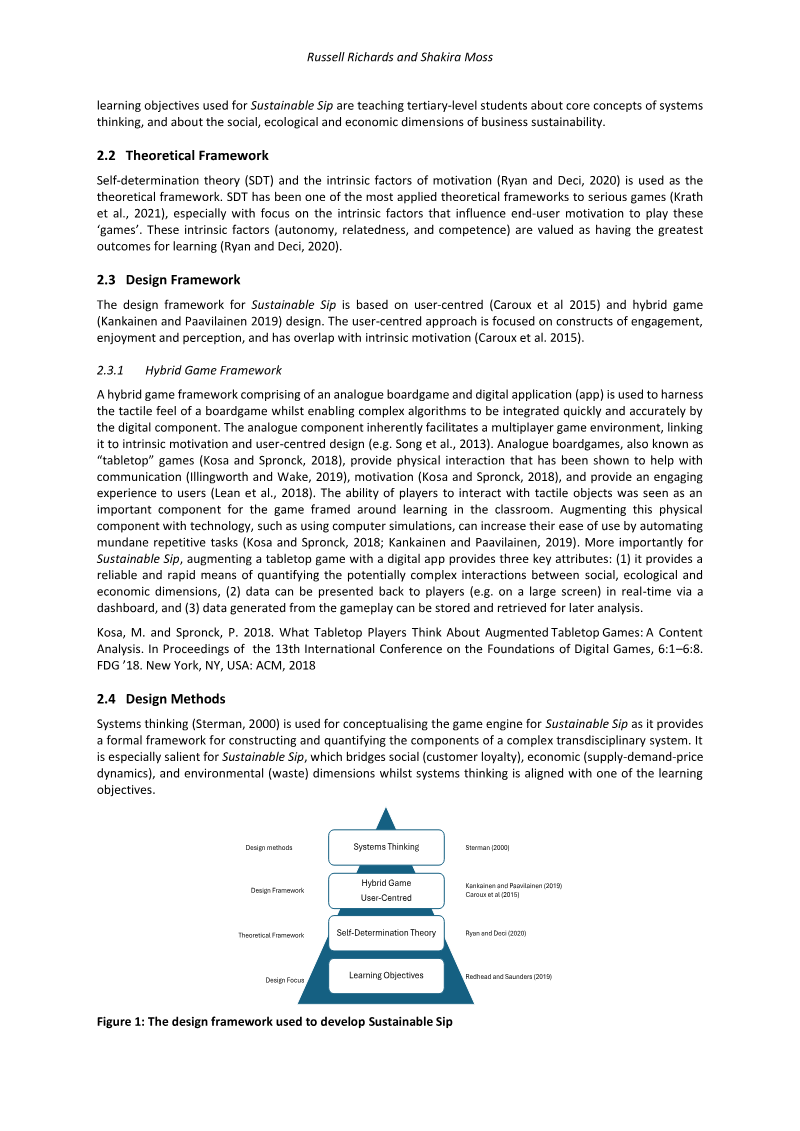
"Sustainable Sip" presents the design and early validation of a hybrid analogue-digital multiplayer game intended to teach university students systems thinking and the economic, social, and ecological dimensions of business sustainability. Set in a coffee shop simulation, the game asks players to balance profit, waste reduction, and customer loyalty. Its design draws on self-determination theory, user-centred design, and Sterman's systems thinking. The work reports only the first stage of development: design and beta testing. The impact on learning outcomes is explicitly deferred to a later stage, so claims about educational effectiveness remain untested.
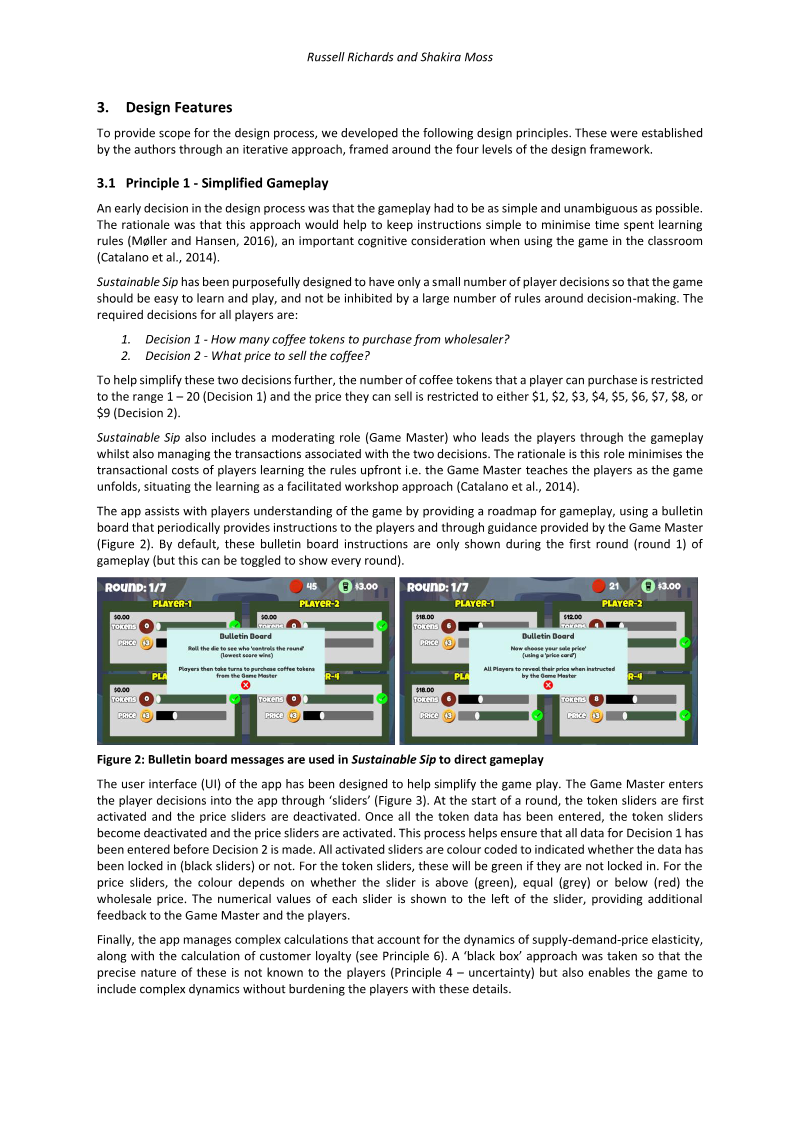
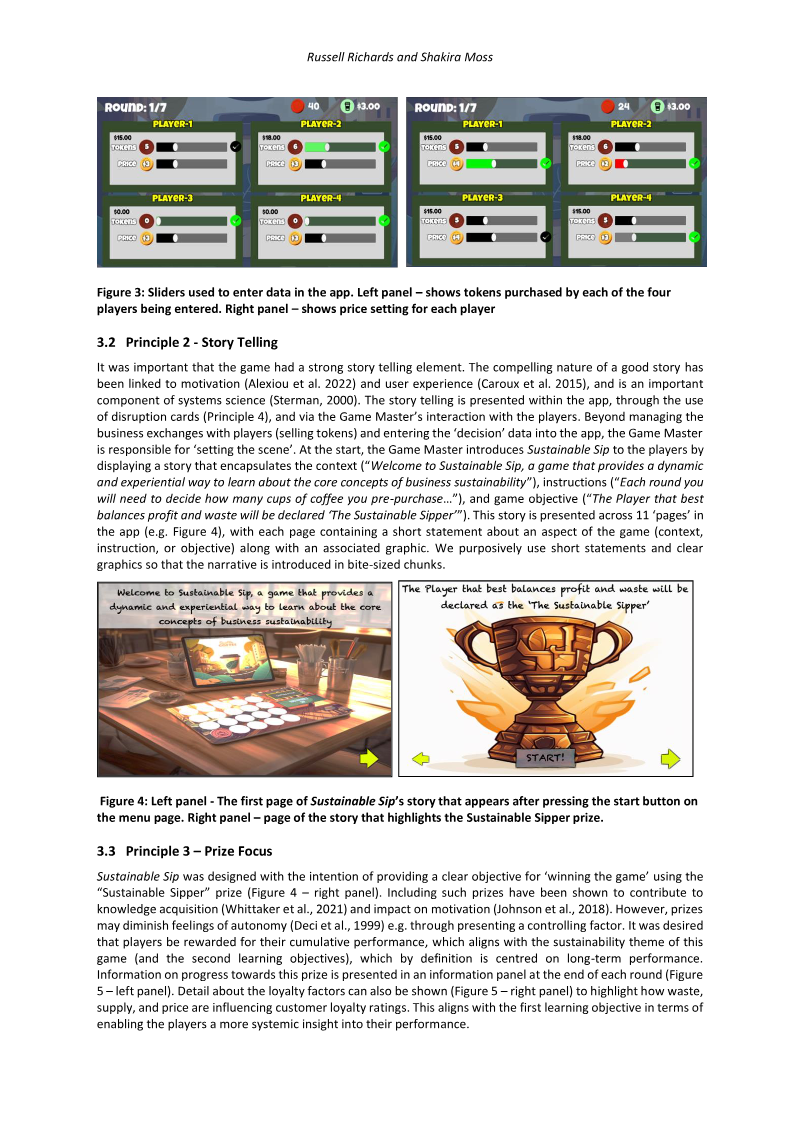
The game combines turn-based and simultaneous decisions, such as token purchasing and price setting, under deliberate uncertainty. Hidden customer-demand algorithms and randomly drawn disruption cards alter wholesale price, price factor, or waste factor, introducing the dynamic complexity that systems thinking requires. Beta testing with 77 students across eight tables, yielding 39 questionnaire responses, found the gameplay simple and intuitive. Testing prompted the removal of physical money and a reduction in awards to a single cumulative "Sustainable Sipper" prize. Observations also indicated that players' token purchases revealed their underlying pricing strategies.
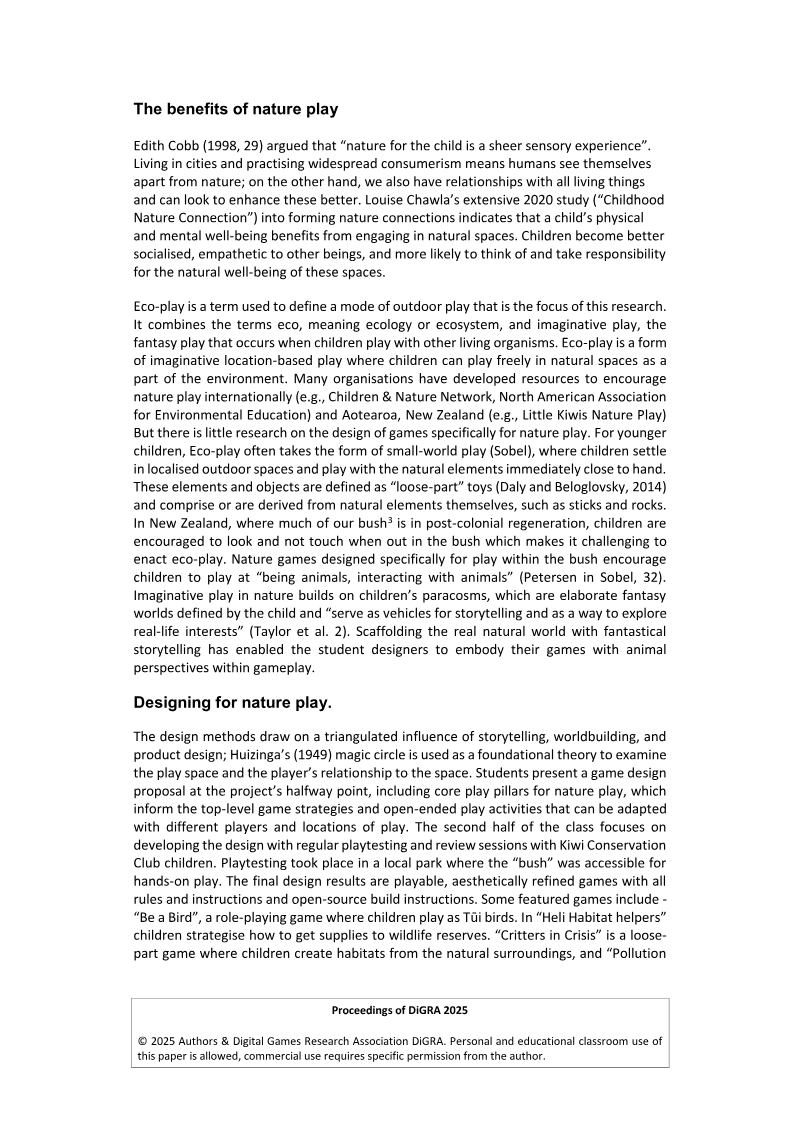
The design reflects a deliberate tradeoff. Simplicity and the prize support players' sense of competence and engagement, but omitting non-controlling instructions limits autonomy, a tension the authors identify through the lens of self-determination theory. The reference base, comprising more than forty sources, reflects this grounding in serious games, gamification, motivation research, and tabletop design, with particular reliance on Deci et al.'s meta-analysis of extrinsic rewards and Whittaker et al.'s comparison of reward-based and meaningful mechanics in sustainability games. Overall, the study contributes a prototype hybrid board game for sustainability education, with usability evidence but no established learning impact.
European Conference on Games Based Learning (ECGBL) · 2025
European Conference on Games Based Learning (ECGBL) · 2025
European Conference on Games Based Learning (ECGBL) · 2025
European Conference on Games Based Learning (ECGBL) · 2025
European Conference on Games Based Learning (ECGBL) · 2025
European Conference on Games Based Learning (ECGBL) · 2025
European Conference on Games Based Learning (ECGBL) · 2025
European Conference on Games Based Learning (ECGBL) · 2025
European Conference on Games Based Learning (ECGBL) · 2025
European Conference on Games Based Learning (ECGBL) · 2025
European Conference on Games Based Learning (ECGBL) · 2025
European Conference on Games Based Learning (ECGBL) · 2025
DiGRA · 2023