
DiGRA
The Digital Games Research Association: the international association of academics and professionals who study digital games. Its Digital Library holds the proceedings of the DiGRA conferences since 2002.
Documents
Designing Unconventional Use of Conventional Displays in Games: Some Assembly Required
This paper argues that unconventional spatial arrangements of conventional display hardware constitute an underexplored design space for social, installation-like games.
Playing RPG Maker?: Amateur Game Design and Video Gaming
Hurel's study examines amateur game makers who work with tools such as RPG Maker, arguing that their activity is best understood as an extension of video game play rather than as a path toward professionalization or formal education.
Game Essays as Critical Media and Research Praxis
"Game Essays as Critical Media and Research Praxis" argues that playable, interactive works can serve as a legitimate form of critical media and humanities research, analogous to the established video essay in film studies.
Who Am 'I' in the Game?: A Typology of the Modes of Ludic Subjectivity
Daniel Vella's paper proposes a typology of "ludic subject-positions," the modes through which digital games establish an "I-in-the-gameworld" for the player.
Selling Out the Magic Circle: Free-to-Play Games and Developer Ethics
This study examines how ongoing rule changes and monetization tactics in KingsRoad, a browser-based free-to-play MMORPG, affect player agency and perceptions of fairness.
Source Code and Formal Analysis: A Hermeneutic Reading of Passage
This analysis argues that the source code of video games can yield interpretive insight into their meaning without depending on the creator's stated intentions.
Critical Acclaim and Commercial Success in Mobile Free-to-Play Games
Critical acclaim does not reliably predict commercial success among mobile free-to-play games, according to an analysis of 3,360 iOS titles that merges Metacritic Metascores with Sensor Tower grossing data.
The Emancipated Player
"The Emancipated Player" argues that a distinct mode of player involvement, which the author terms "emancipated involvement," extends video game engagement beyond entertainment and immersion into critical reflection and the pursuit of significance.
- Gerald Farca proposes the 'emancipated player': a critical, open-minded player type who willingly engages in play and primarily seeks to experience play's aesthetic effect, rather than only basic entertainment or plot-level thrills.
- The emancipated player's involvement requires an interplay of inhabiting the gameworld and critically reflecting on it, and this engagement can occur both during play (micro and macro phases) and outside play as the player continues to reflect on the experience.
- Farca draws on Jacques Rancière's emancipated spectator, Wolfgang Iser's active reader and implied reader, Kendall Walton's make-believe framework, and Britta Neitzel's notion of play as a balance of proximity and distance to ground the concept.
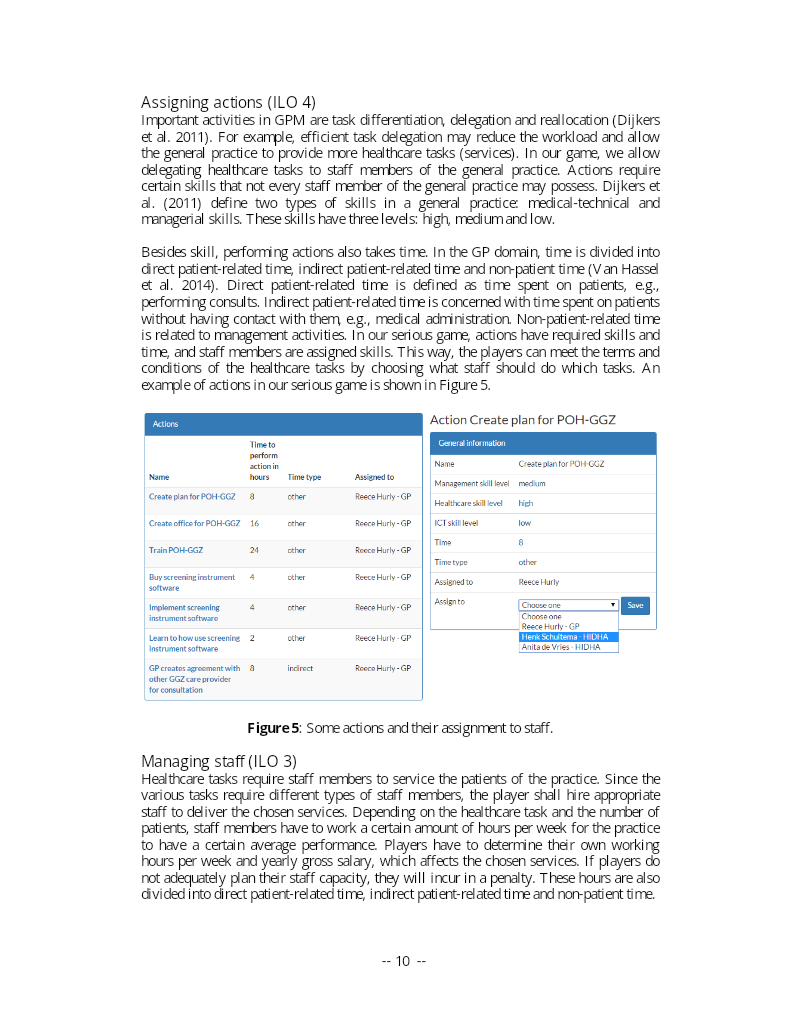
Designing a Serious Game for General Practice Management
This work presents RIDEVA, a three-phase framework for designing serious games in general practice management education, motivated by widespread dissatisfaction among Dutch GP students and alumni with textbook-driven learning of practice management.
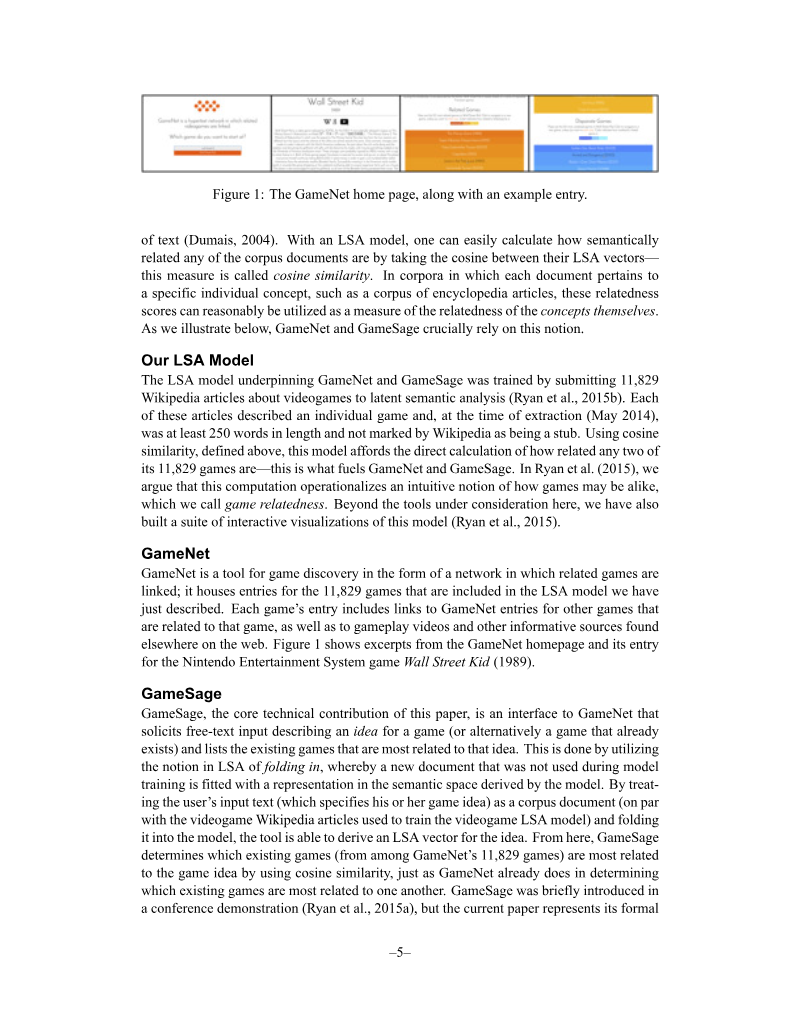
GameNet and GameSage: Videogame Discovery as Design Insight
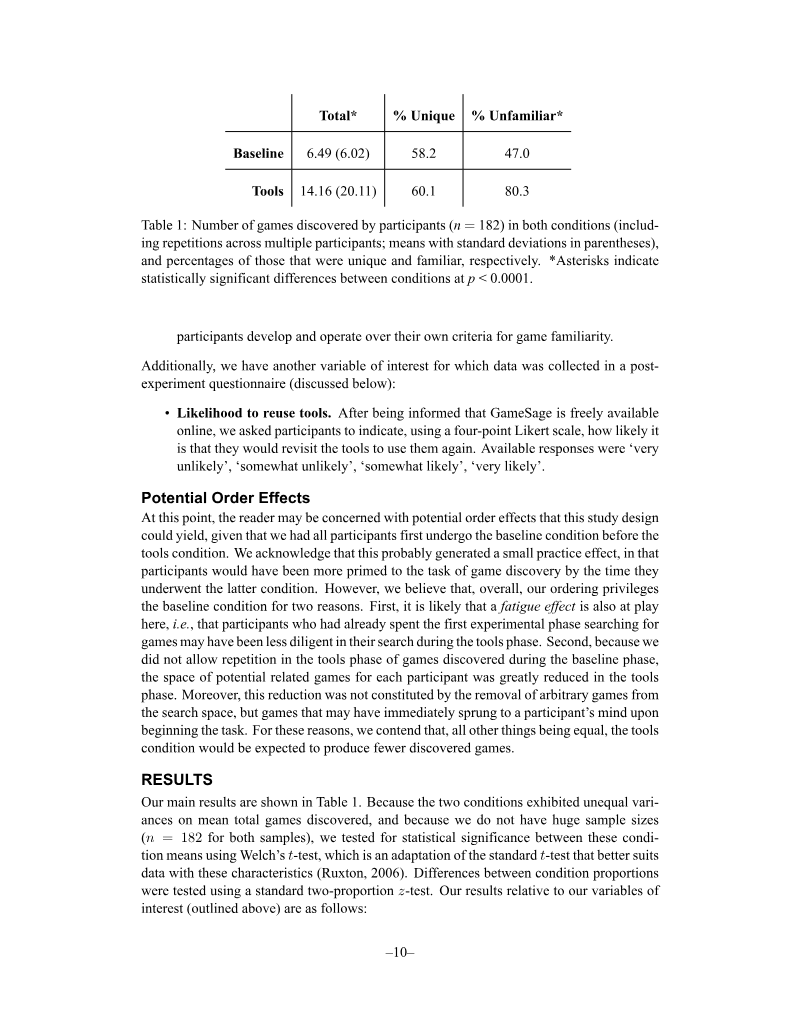
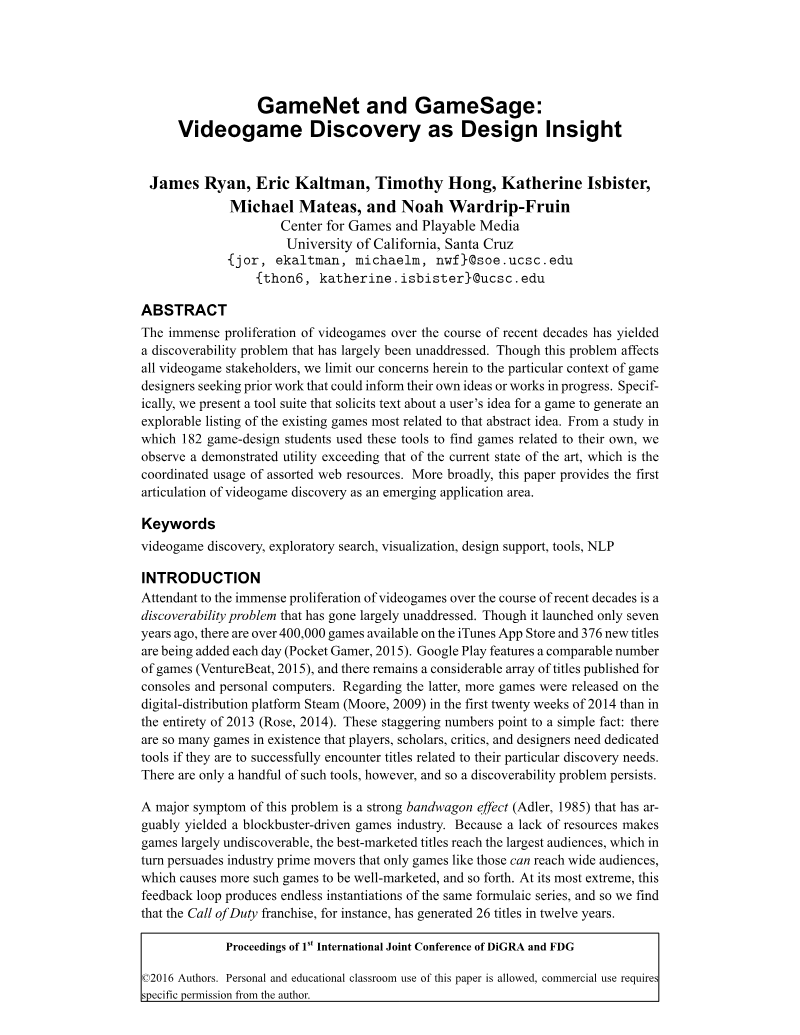
GameNet and GameSage present a videogame discovery system designed to help game designers locate related prior work in an industry where the volume of new releases has outpaced any individual's ability to survey existing games.
Discovering Social and Aesthetic Categories of Avatars: A Bottom-Up Artificial Intelligence Approach Using Image Clustering
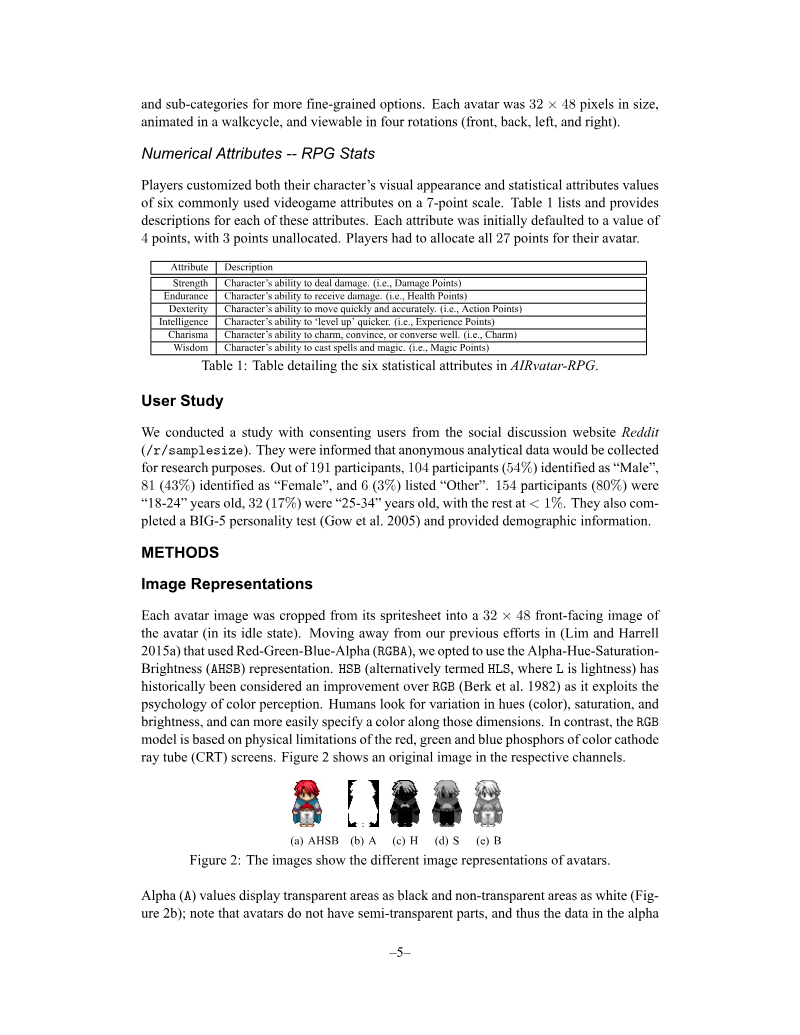
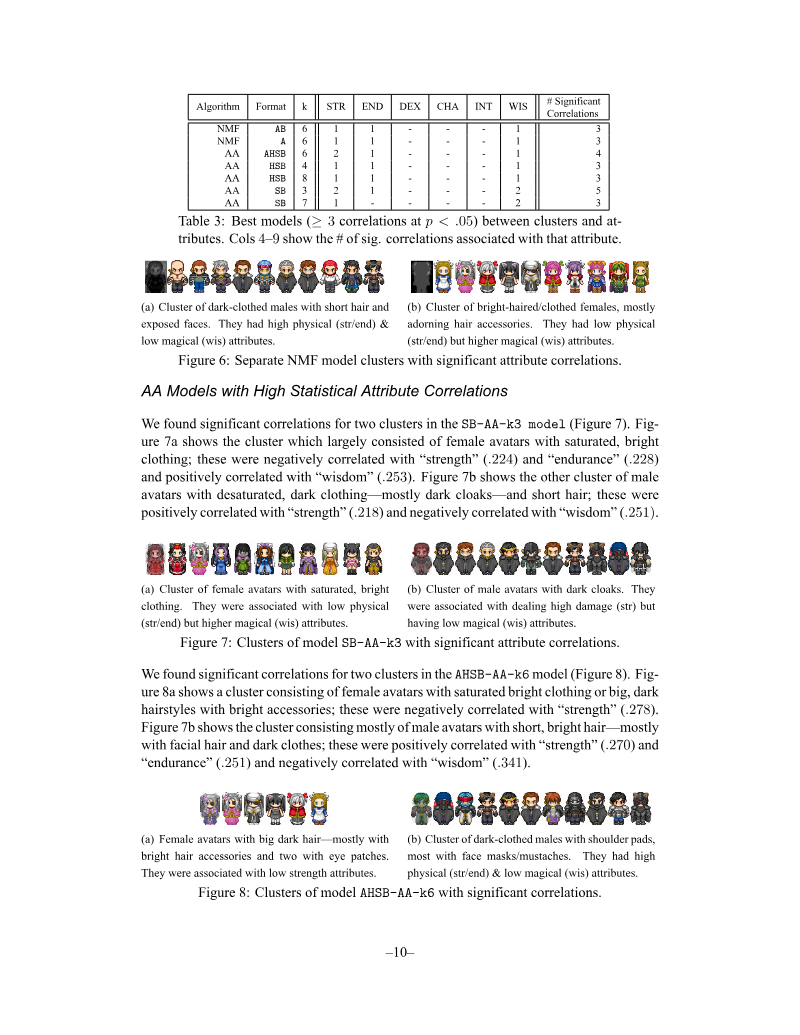
This study applies unsupervised image clustering to 191 player-created avatars from a custom RPG avatar creator, asking whether machine learning can uncover meaningful aesthetic and social categories without relying on predefined labels.
Combining Speech Intervention and Cooperative Game Design for Children with ASD
Feeling Factory is a two-player cooperative iPad game designed to train prosodic speech, meaning the emotional and grammatical intonation of language, in children with autism spectrum disorder.