1 free read left. Create a free account for unlimited reading + AI research.
Create free accountWhitepaper DiGRA
1 free read left. Create a free account for unlimited reading + AI research.
Create free accountWhitepaperDiGRA
Both are co-located multiplayer games that use horizontal and perpendicular multi-screen configurations. Each started at a game jam and was later refined for public exhibition.
This paper argues that unconventional spatial arrangements of conventional display hardware constitute an underexplored design space for social, installation-like games. Through an examination of two co-located experimental multiplayer games, Turnover and Where's My Spaceship, the authors show that the physical placement of screens, the positioning and movement of players, and layered spectator participation can shape both social dynamics and in-game strategy. Drawing on the MDA framework and embodied interaction theory, the work reframes these games as co-designed interactive systems in which players' bodies and surroundings are integral to play rather than peripheral to standalone software.
The research is grounded in informal playtests and public exhibitions rather than controlled experiments, and it focuses on games that occupy roughly 20 square meters and rely only on commercially available displays, controllers, and projectors. Both games originated in game jams and were later refined for exhibition, and they employ horizontal and perpendicular multi-screen configurations to produce multi-screen asymmetry without any custom sensing hardware. The system does not detect the body directly, yet bodily positioning and movement still meaningfully affect how players coordinate and compete.
The authors also highlight democratized, do-it-yourself design practices, in which players build their own cabinets and setups, as a notable feature of this approach. They identify the primary practical barrier as the large, autonomous physical space these games require, which is scarce in urban university settings and limits wider adoption. Overall, the paper positions socio-spatial play as a viable direction for game design that relies on accessible, conventional technology, while acknowledging that its evidence is exploratory and that spatial constraints remain a significant obstacle.
DiGRA · 2019
DiGRA · 2019
DiGRA · 2019
DiGRA · 2019
DiGRA · 2019
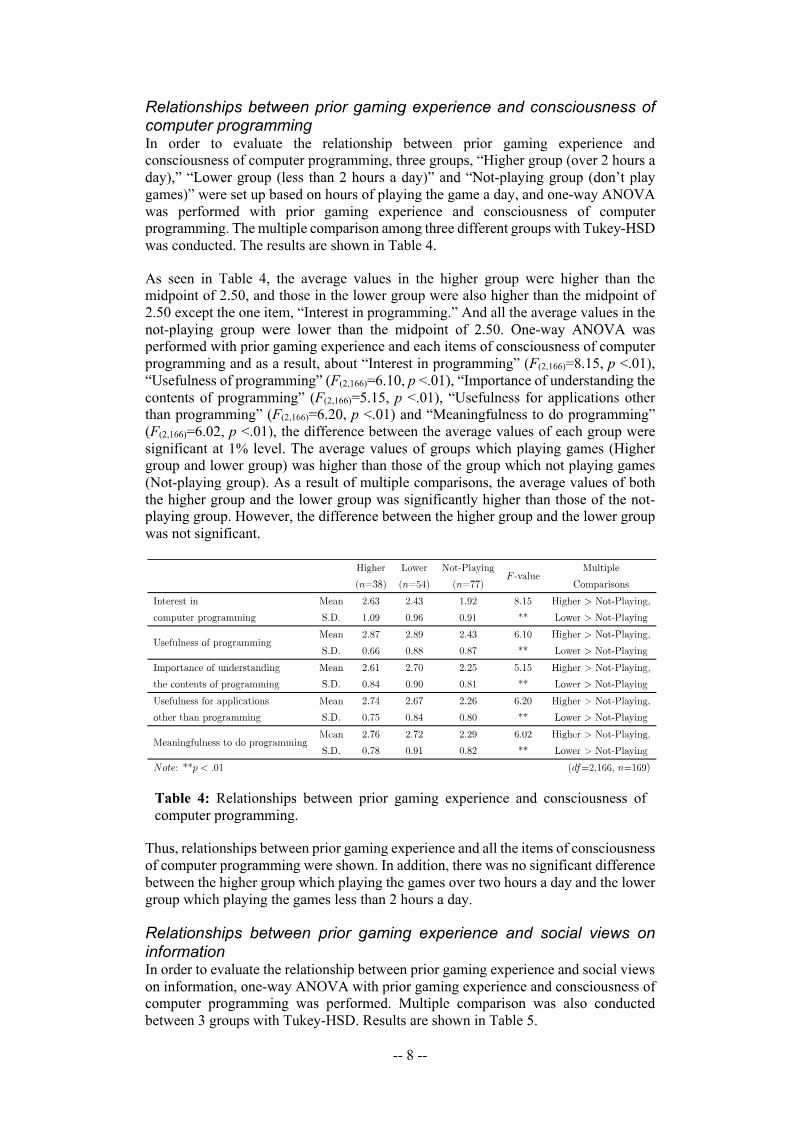
DiGRA · 2019
DiGRA · 2019
DiGRA · 2019
DiGRA · 2019
DiGRA · 2019
DiGRA · 2019
DiGRA · 2019

Jason Schreier · 2026










