Canadian Game Studies Association
63 reports, presentations and talks by Canadian Game Studies Association in the Game Industry Library, the newest “Good Moods: Outlook, Affect and Mood in Dynemotion and the Mind Module” (2009).
Documents

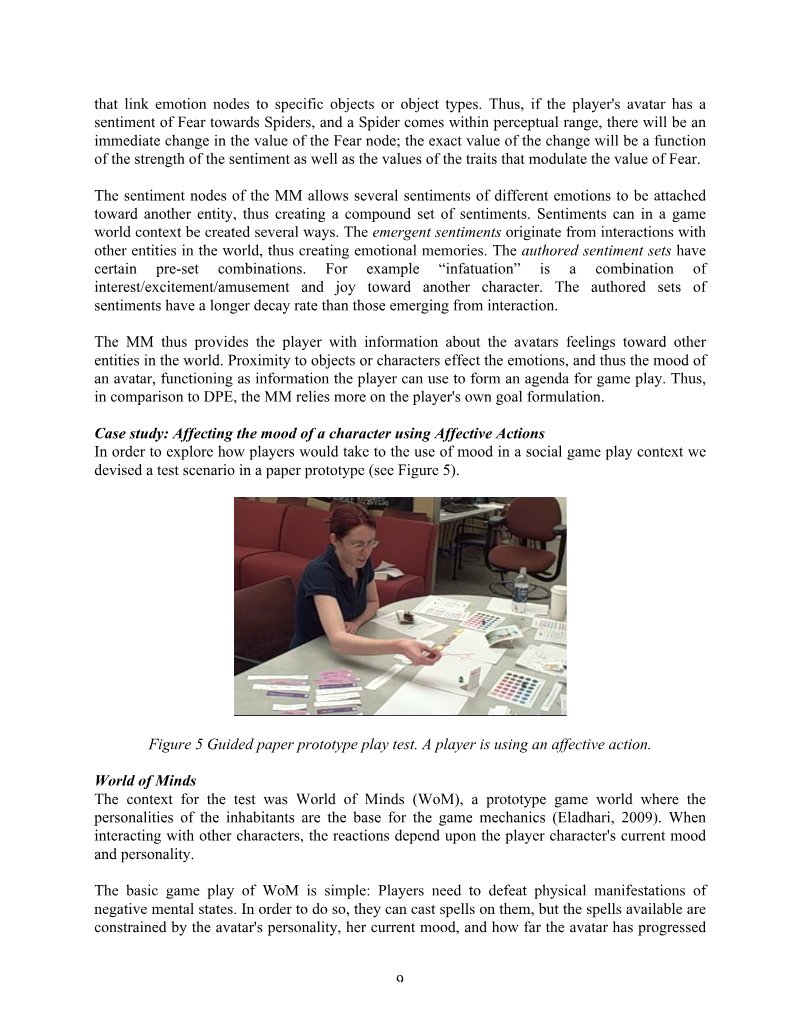

Good Moods: Outlook, Affect and Mood in Dynemotion and the Mind Module
The Dynemotion People Engine and the Mind Module represent a significant advancement in agent-based architectures by utilizing the Five Factor Model to simulate character personality and mood within virtual environments.
- The Dynemotion People Engine and Mind Module utilize the Five Factor Model to map character personality and mood across a two-dimensional matrix of valence (outlook) and energy (affect).
- In the World of Minds prototype, character internal states directly dictate the availability of specific gameplay mechanics, including spells and social interactions.
- Playtesting indicates that visualizing internal emotional states through color-coded matrices effectively guides user decision-making and social navigation.
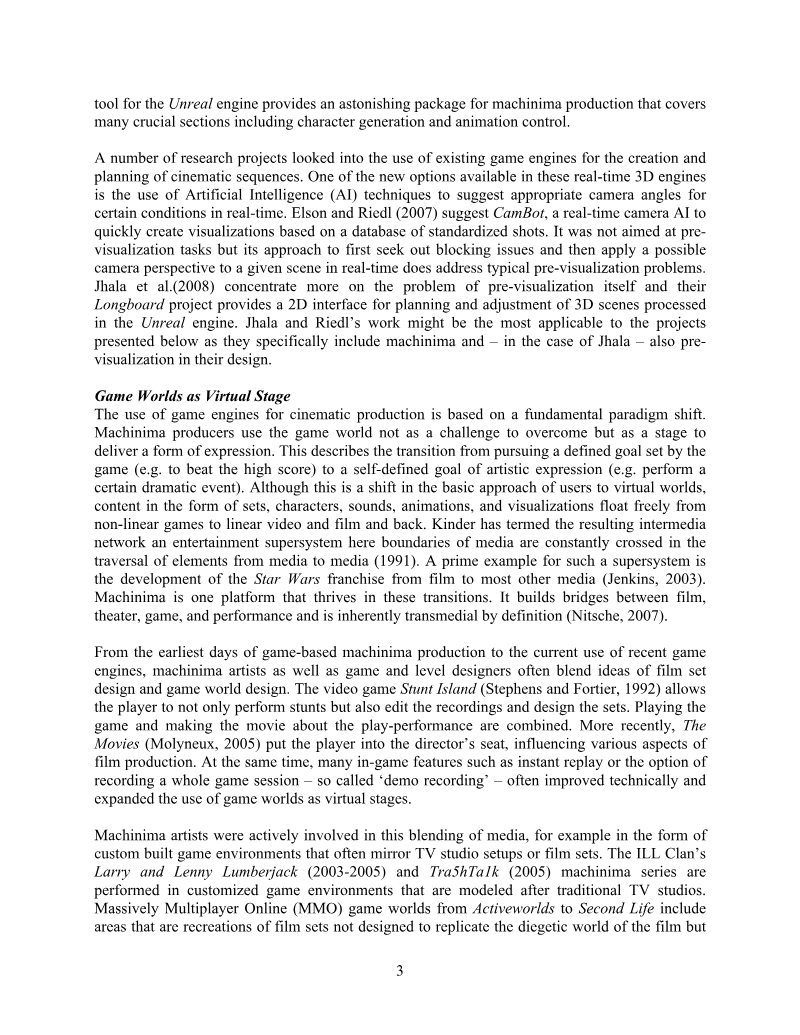
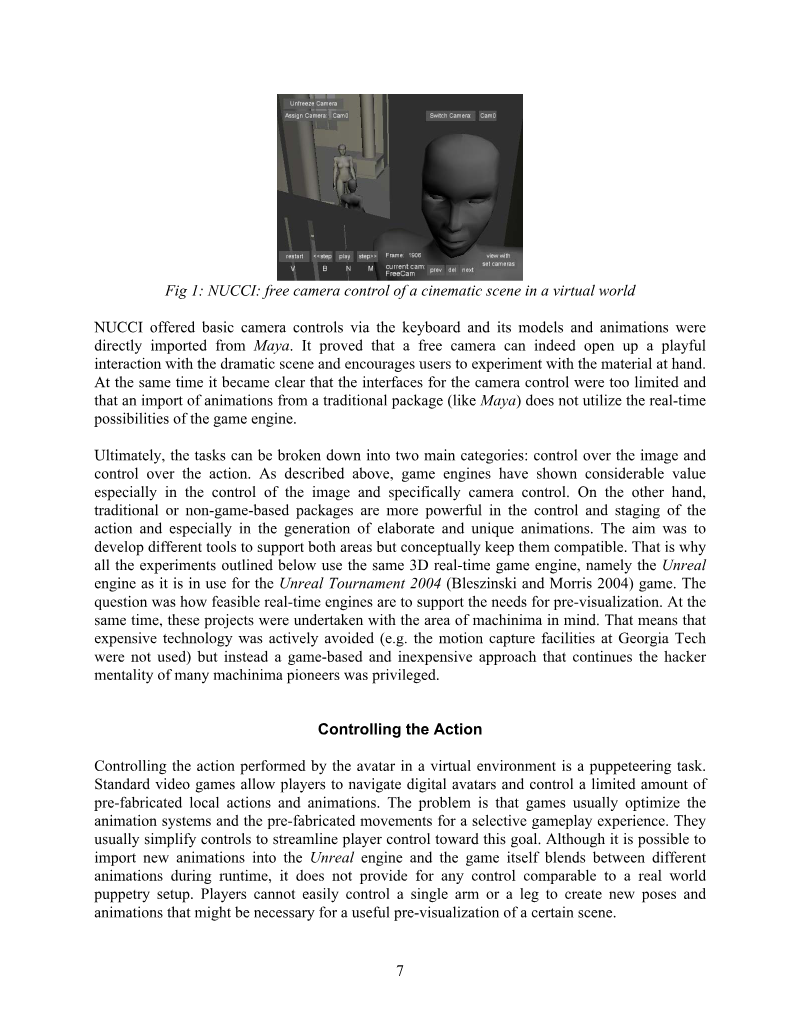
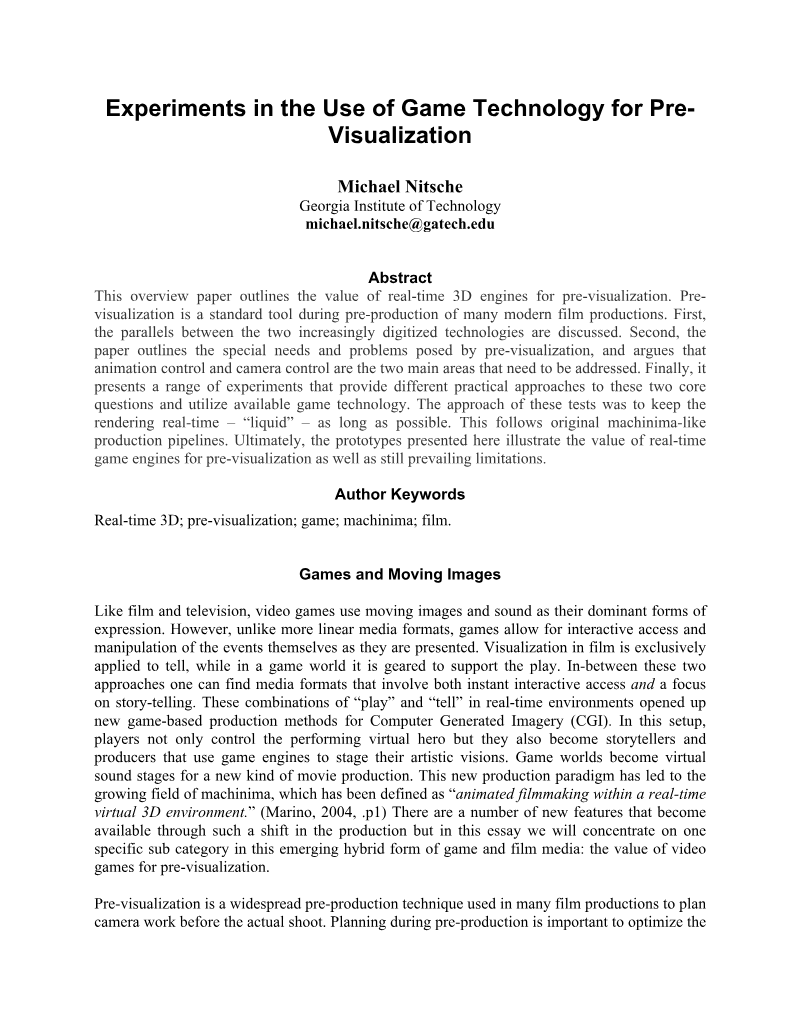
Experiments in the Use of Game Technology for Pre-Visualization
Real-time game engines are increasingly serving as virtual sound stages, transforming film pre-visualization by enabling highly iterative and flexible production planning.
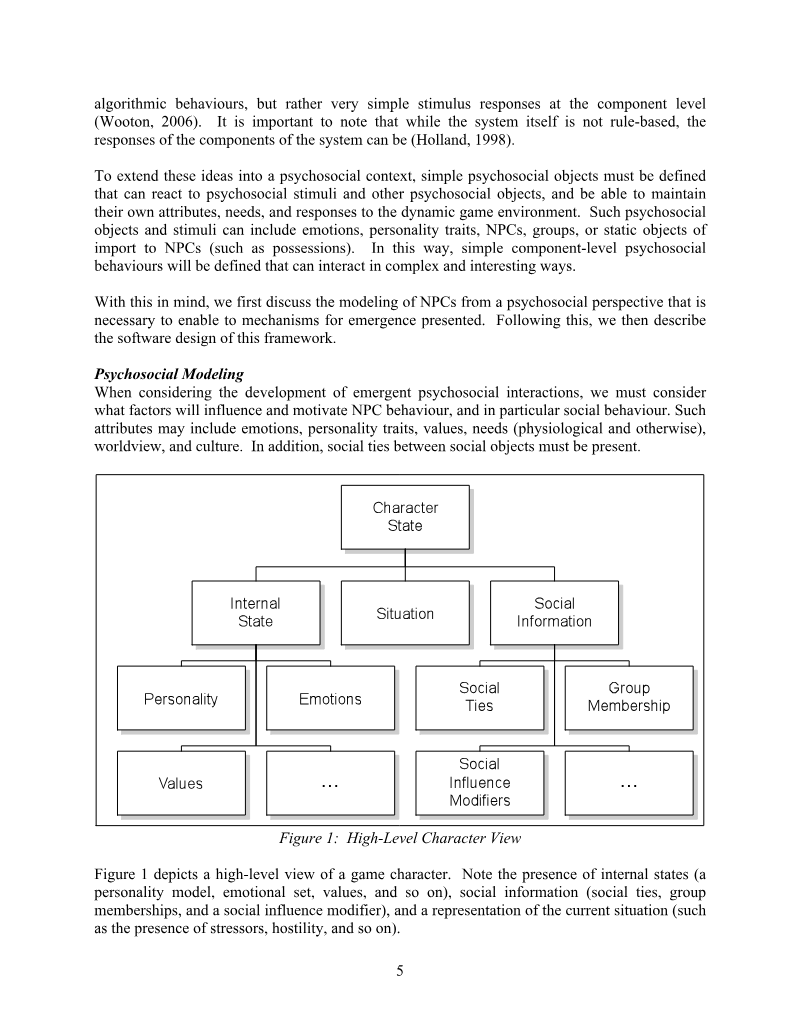
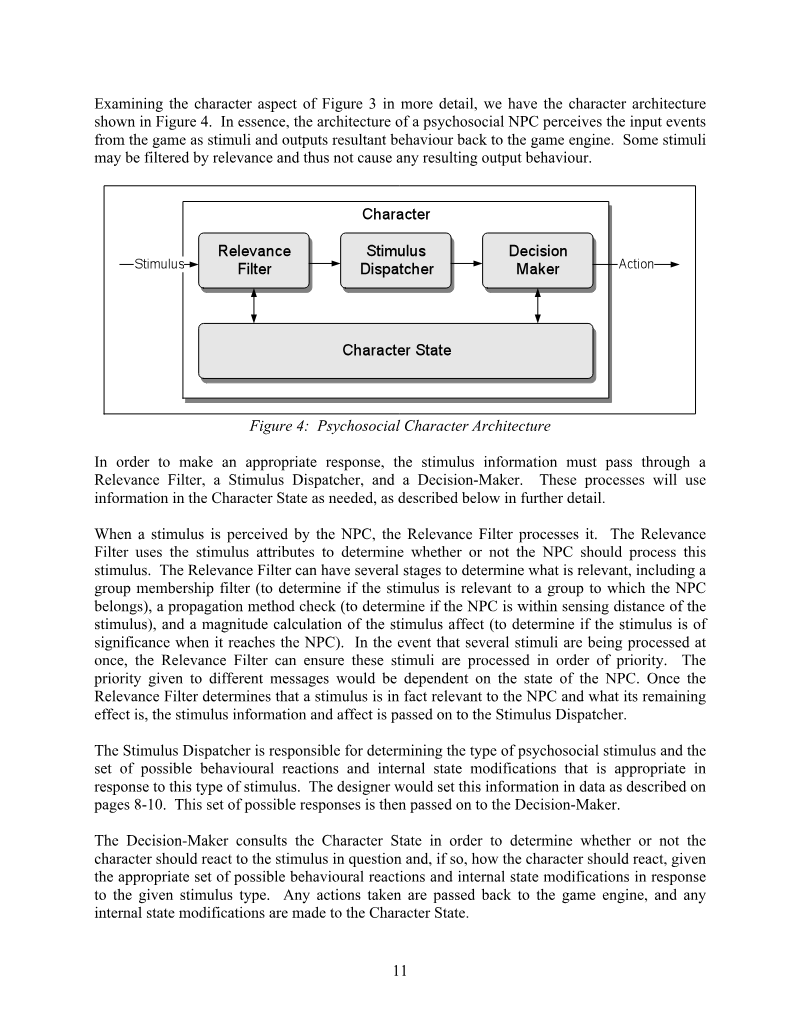
An Emergent Framework for Realistic Psychosocial Behaviour in Non Player Characters
The pursuit of authentic non-player character interaction is shifting from rigid, pre-scripted logic toward a unified, bottom-up framework based on stimulus-response mechanics.

Affective Ludology, Flow and Immersion in a First-Person Shooter: Measurement of Player Experience
Affective ludology establishes a rigorous, interdisciplinary framework for quantifying player experience by integrating subjective self-reporting with objective psychophysiological metrics.
- Affective ludology provides a scientific framework for game design by combining subjective self-reporting with objective psychophysiological metrics like electromyography and electrodermal activity.
- Physiological markers, specifically facial muscle activity and arousal levels, serve as reliable, scalable indicators of player psychological states such as flow, immersion, and boredom.
- Research using custom Half-Life 2 modifications confirms that specific level architectures can be engineered to consistently elicit and differentiate intended emotional states in players.
Wii Are out of Control: Bodies, Game Screens and the Production of Gestural Excess
The Nintendo Wii fundamentally redefined the gaming experience by shifting the primary site of engagement from the screen to the player’s own body.
Videogames and Complexity Theory: Learning through Game Play
This analysis explores video games as complex, adaptive, and self-organizing systems that facilitate sophisticated learning.
- Video games function as complex, adaptive systems that facilitate superior learning by coupling information with action, unlike traditional educational models that isolate tasks from their context.
- Games foster emergent learning by keeping players within a 'regime of competence' through well-ordered, pleasantly frustrating challenges that promote system thinking over rote memorization.
- The inherent instability and infinite, emergent possibilities within a game environment serve as the primary drivers for high levels of player engagement and skill acquisition.
Seeking the Embodied Mind in Video Game Theory: Embodiment in Cybernetics, Flow, and Rule Structures
This analysis examines the role of the human body within video game theory, specifically critiquing how cybernetics and flow theory conceptualize the player.
- Current game theory is overly reliant on formalist, rule-based frameworks that prioritize cognitive processes while neglecting the player's physical and material reality.
- Cybernetic models in game theory treat players as disembodied information processors, focusing exclusively on mechanical feedback loops rather than human experience.
- Flow theory creates a flawed, adversarial relationship between mind and body, requiring the player to condition their physical self to achieve immersion.

Close Reading Oblivion: Character Believability and Intelligent Personalization in Games
The Elder Scrolls: Oblivion serves as a primary case study for examining the tension between intelligent personalization and the psychological phenomenon of character believability in open-world role-playing games.
- Over-promising on the depth of interactive AI systems creates a dissonance between player expectations and technical execution, which ultimately undermines the perceived authenticity of the gameworld.
- The 'uncanny valley' effect in open-world RPGs is frequently triggered when sophisticated modeling attempts exceed the underlying technology's capacity to sustain consistent, human-like behavior.
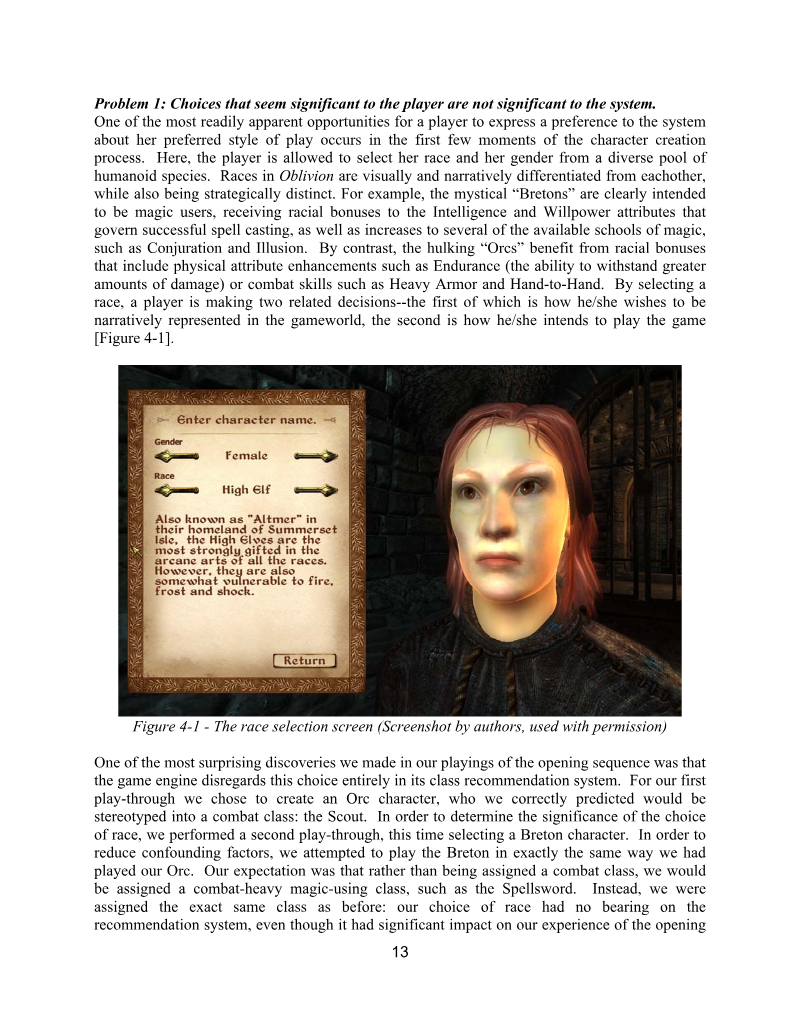
- Adaptive systems that rely on rigid stereotyping and class-recommendation algorithms often fail to account for the nuance of individual player choices, leading to biased or inconsistent NPC interactions.
Play and the Private
Traditional attempts to define play through rigid, ontological frameworks fail because they overlook the inherent subjectivity and fluidity of the experience.
- Play should be analyzed as a series of learnable, communal cues rather than a universal, rigid ontological concept.
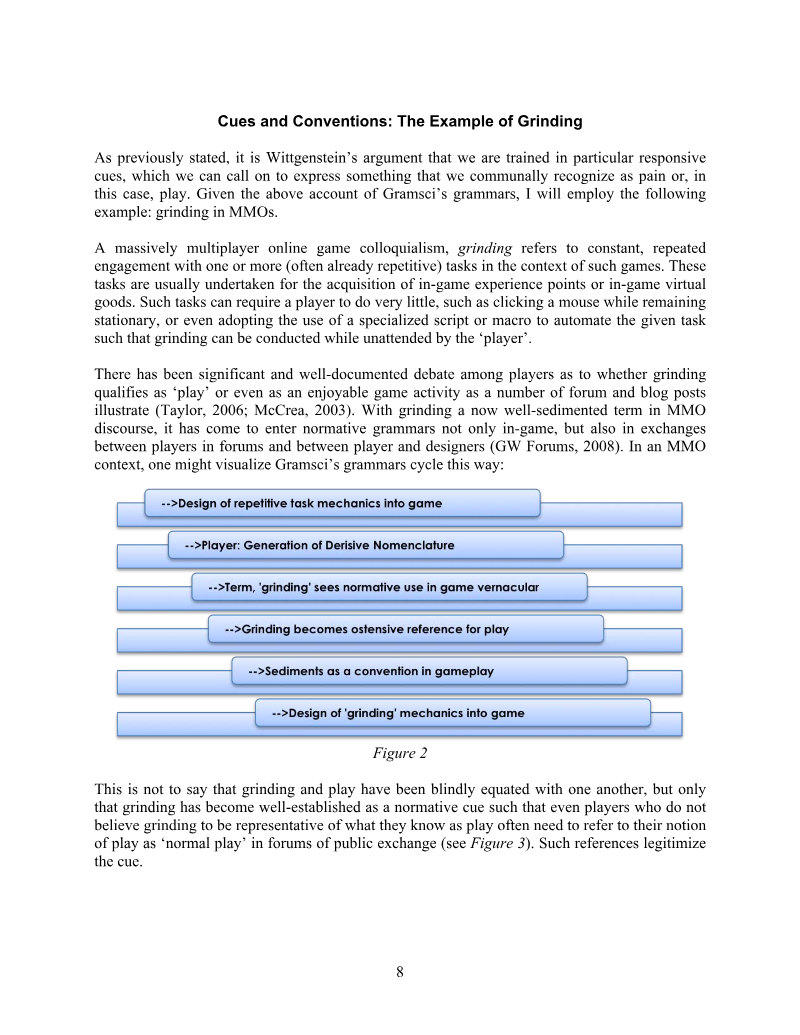
- Developers can better understand market dynamics and user engagement by analyzing player-generated linguistic grammars, such as the evolution of terms like 'grinding'.
- The industry must move away from binary frameworks like 'work versus play' in favor of studying how individuals subjectively label their experiences within social contexts.
The Creative and Reflexive Realms of Gamaturgy
Gamaturgy functions as a transformative framework that bridges the gap between theatrical dramaturgy and digital game design, specifically within the realm of serious, social-issue games.
- Gamaturgy integrates Augusto Boal’s Forum Theatre techniques into digital game design to transform games into interactive rehearsals for real-world social, political, and environmental challenges.
- The framework utilizes theatrical principles—including character analysis, image games, and multi-modal subtext—to shift players from passive consumers to active participants in exploring ideological alternatives.
- By creating transitive spaces for critical reflection, gamaturgy allows users to safely test and evaluate their personal obligations toward complex global issues.
The Significance of Jeep Tag: On Player-Imposed Rules in Video Games
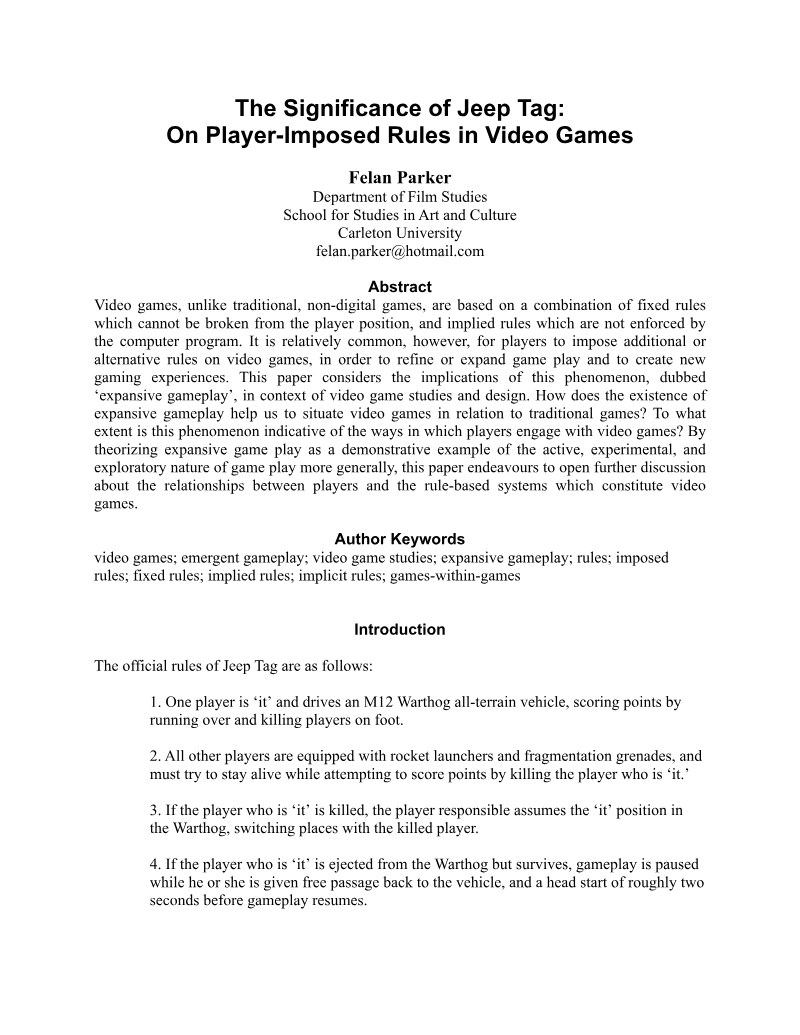
Expansive gameplay refers to the phenomenon where players impose self-defined rules upon existing video game systems to create new experiences.
- Expansive gameplay occurs when players create self-imposed rules within a game's existing, fixed architecture, distinct from modding which requires altering software code.
- Game rules are categorized into three types: fixed (hard-coded), implied (suggested by design), and imposed (created by players to refine or expand experiences).
- Players successfully transform standard game modes into new activities by manipulating implied rules, as seen in community-invented games like 'Jeep Tag' in Halo: Combat Evolved and 'Cat and Mouse' in Project Gotham Racing 2.
Periscopic Play: Re-positioning the Field in MMO Studies
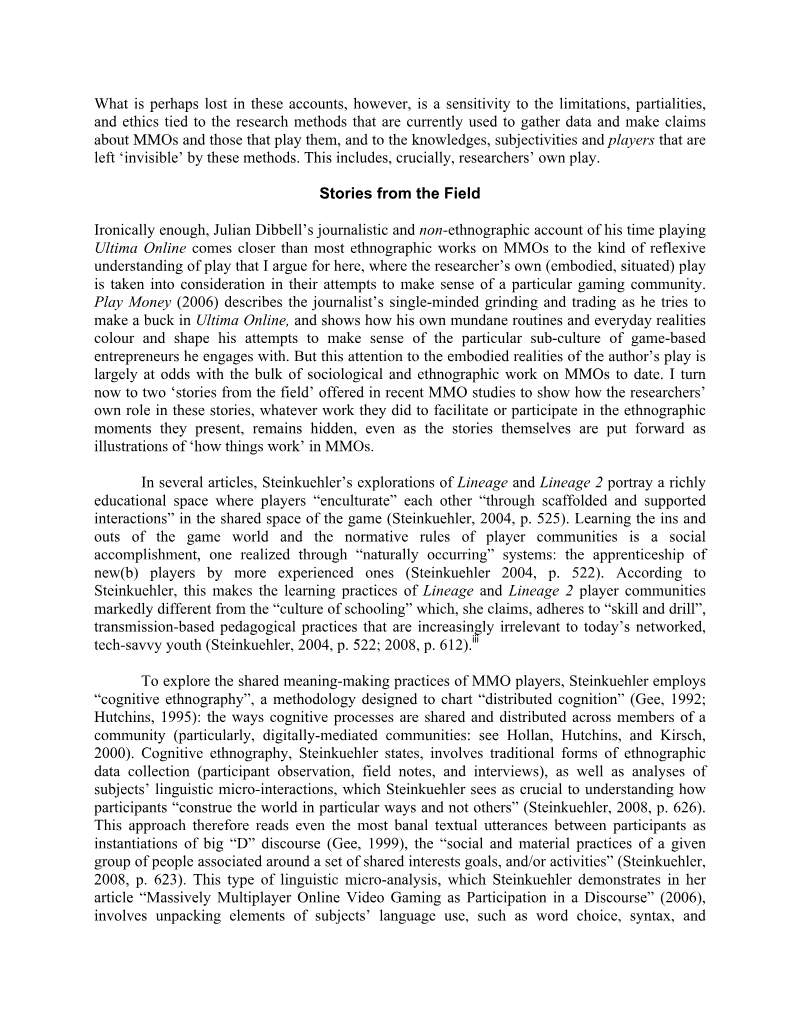
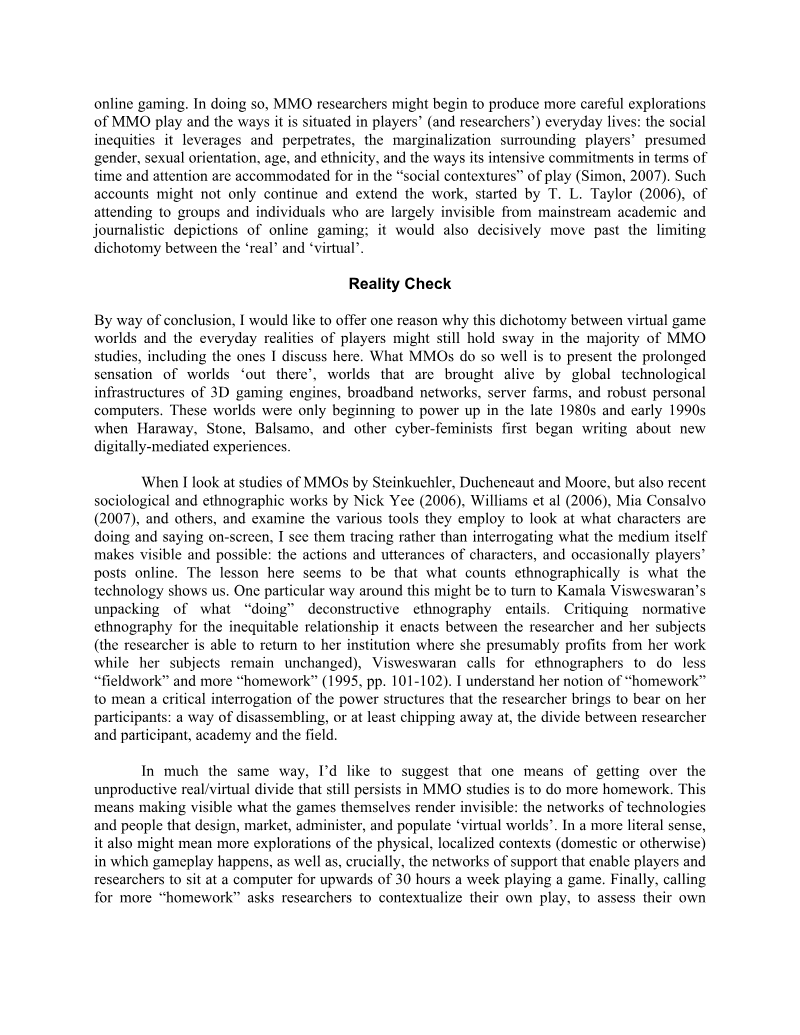
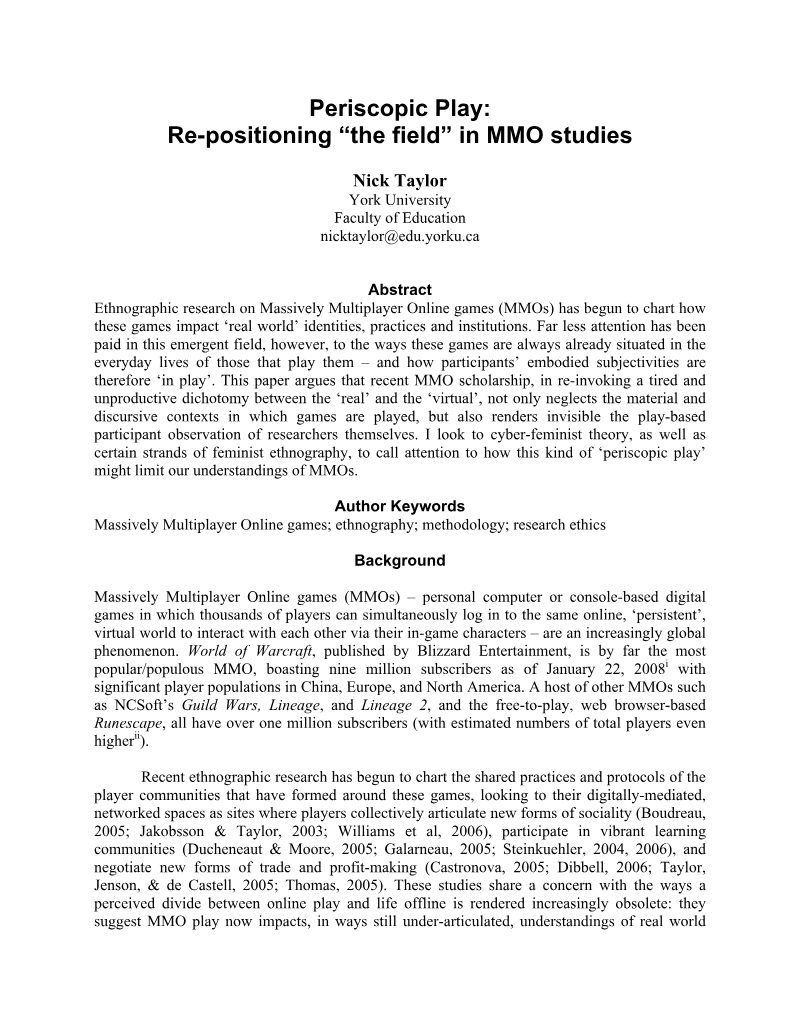
Contemporary research into Massively Multiplayer Online games suffers from a persistent reliance on an unproductive dichotomy between the real and the virtual.
- Current MMO research is hindered by an unproductive dichotomy between the real and virtual, which obscures the material and social contexts of digital play.
- Existing studies frequently overlook broader power structures, labor conditions, and domestic realities by disproportionately focusing on the actions of hardcore players.
- Researchers often employ a 'periscopic' approach that falsely presents them as invisible, objective observers while failing to account for their own influence on social dynamics.