Key insights
5 slides
Core issue
Game theory relies on formalist, rule-based frameworks.
These frameworks prioritize cognitive processes and systemic interactions. They often neglect the physical and material reality of the player.
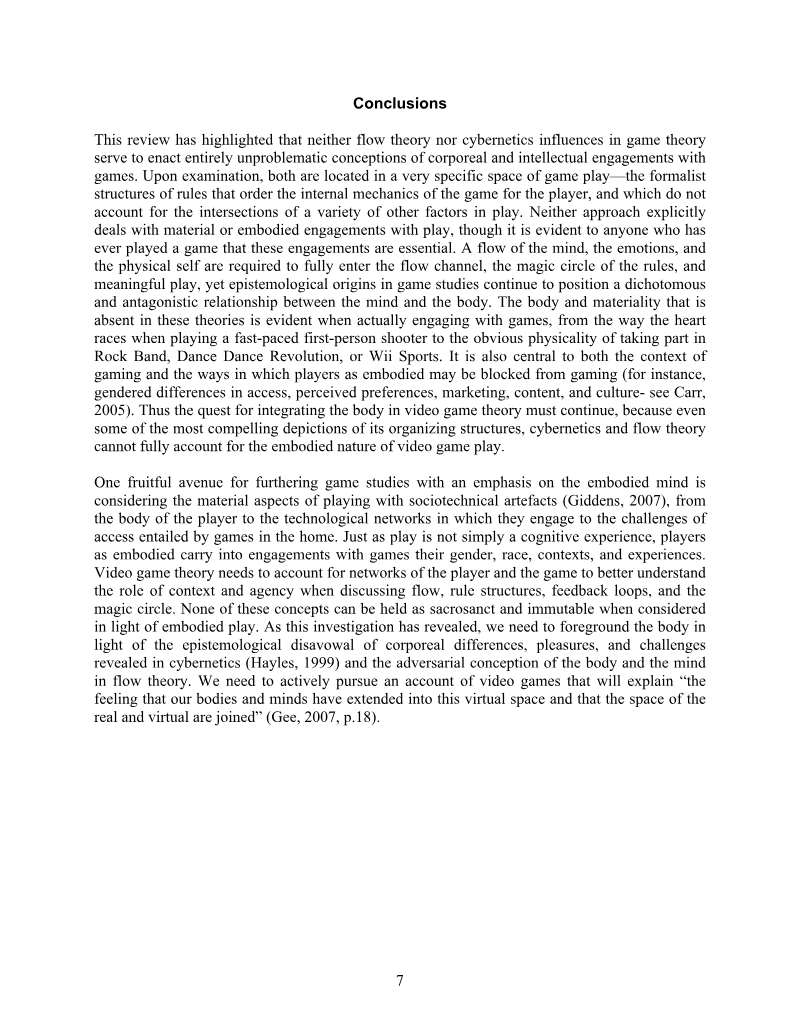
Key finding. Current game theory is overly reliant on formalist, rule-based frameworks that prioritize cognitive processes while neglecting the player's physical and material reality.
1 / 5
- 01Current game theory is overly reliant on formalist, rule-based frameworks that prioritize cognitive processes while neglecting the player's physical and material reality.See it on page 7
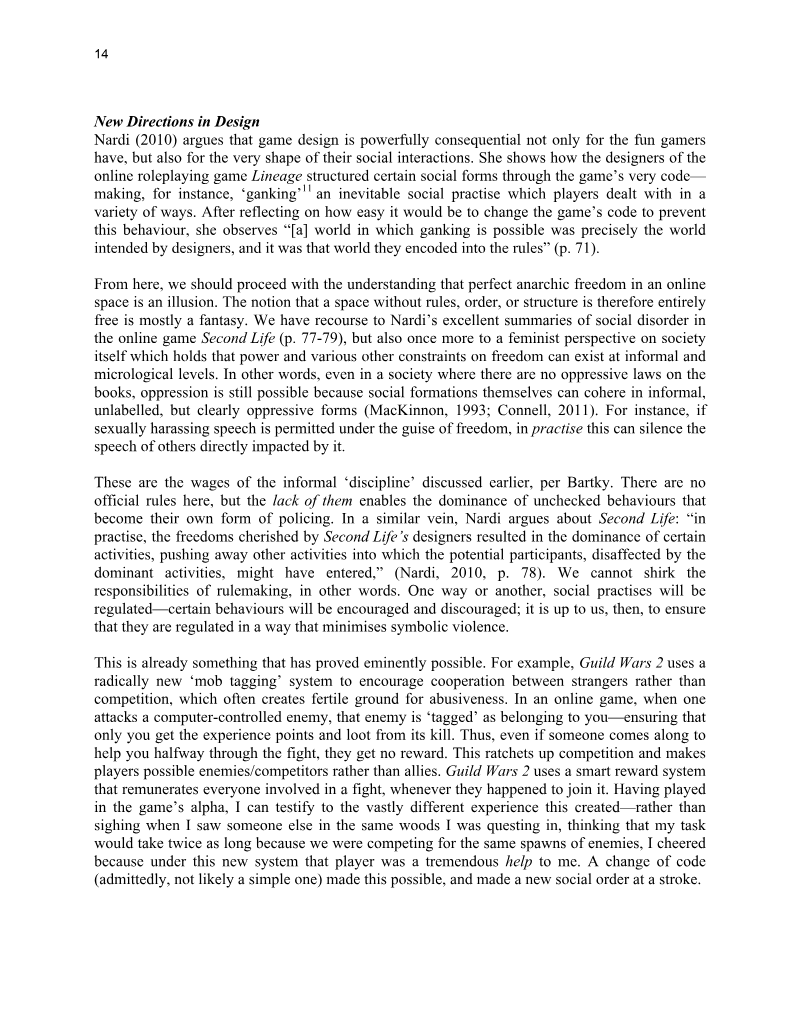
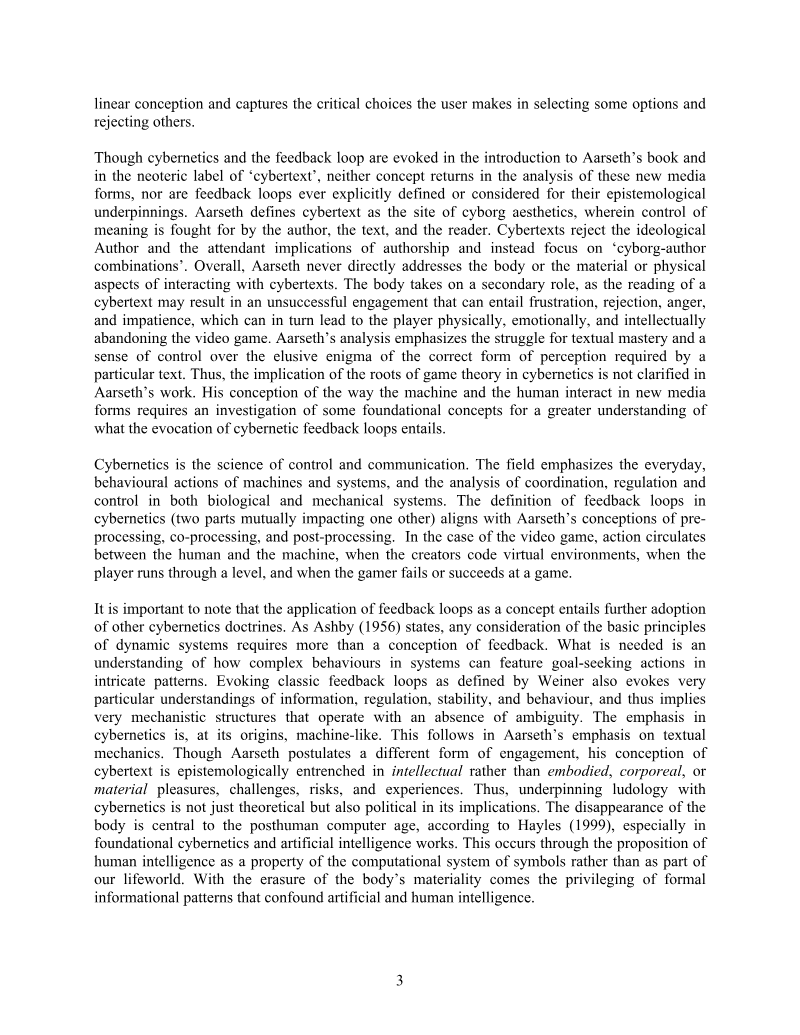
- 02Cybernetic models in game theory treat players as disembodied information processors, focusing exclusively on mechanical feedback loops rather than human experience.See it on page 3
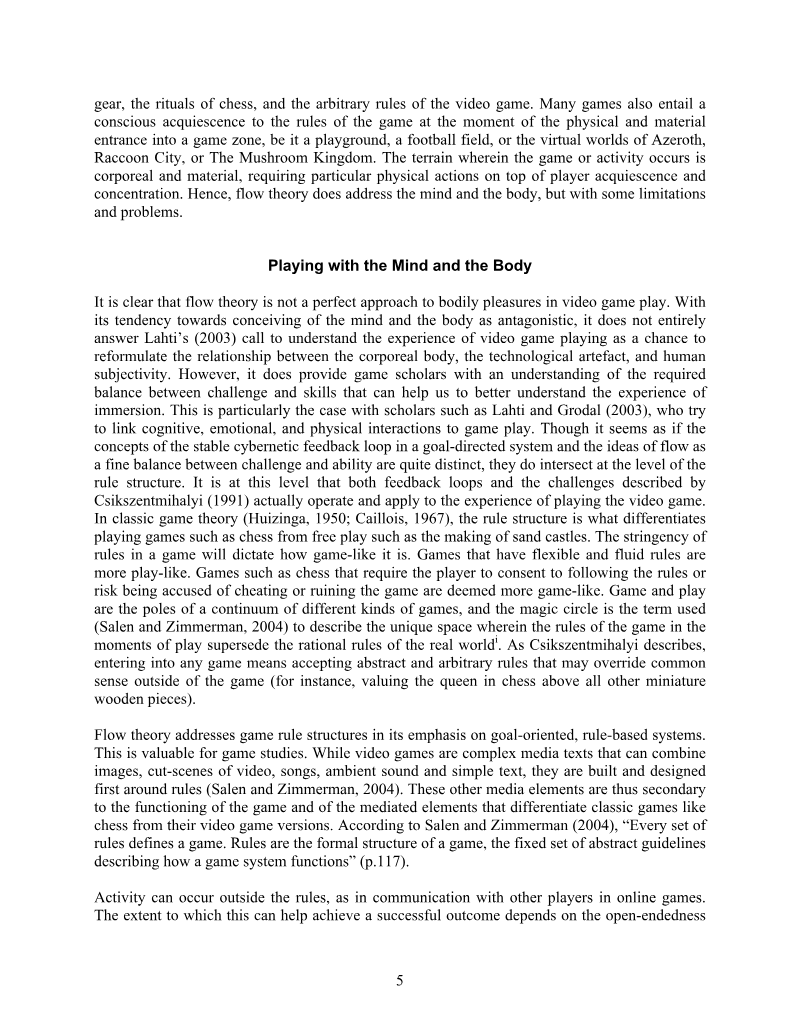
- 03Flow theory creates a flawed, adversarial relationship between mind and body, requiring the player to condition their physical self to achieve immersion.See it on page 5
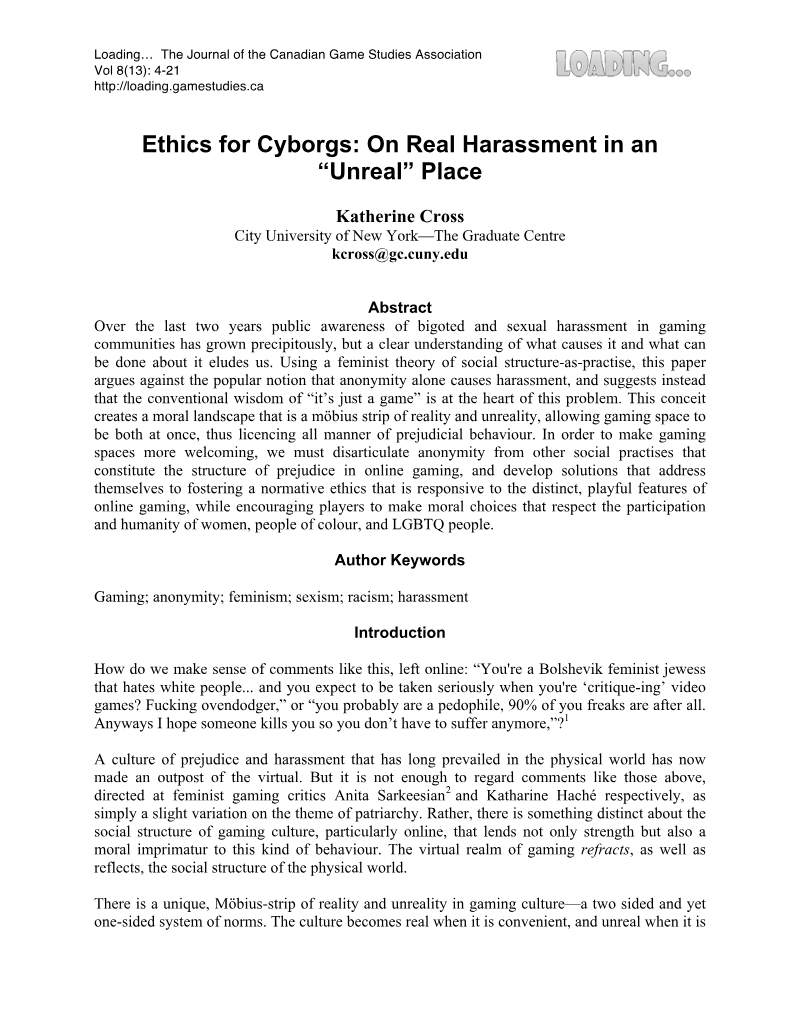
- 04Existing theoretical structures like the 'magic circle' perpetuate a Cartesian dualism that fails to account for the influence of gender, social environment, and material agency on gameplay.See it on page 7
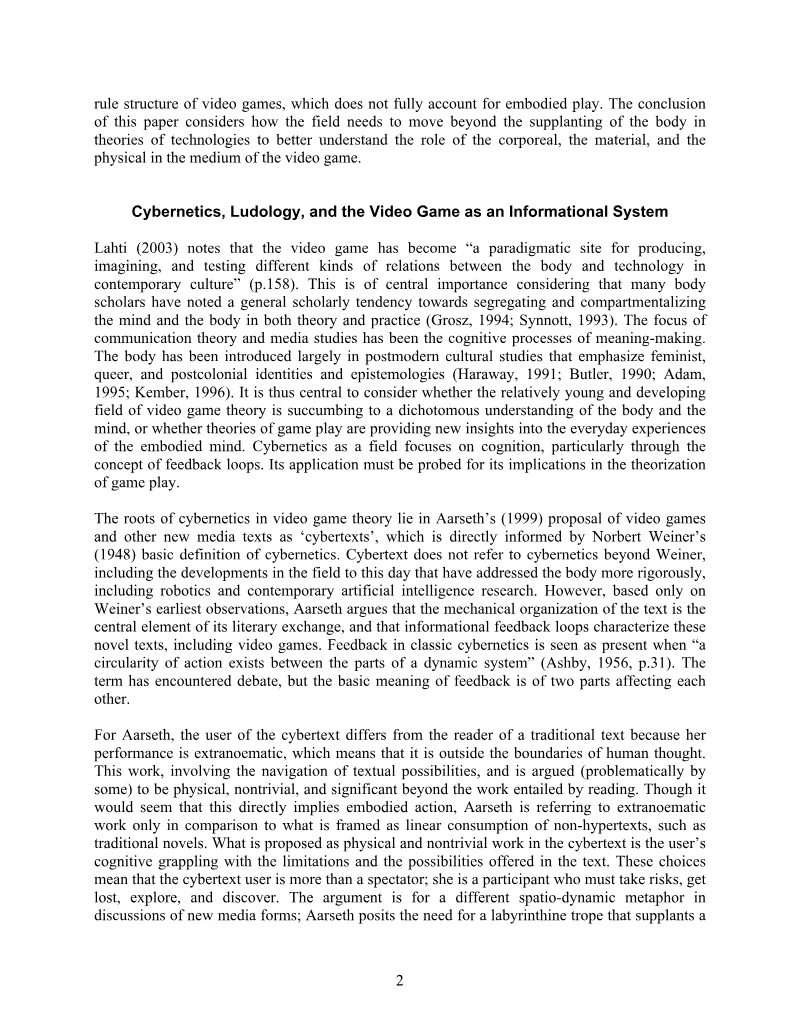
- 05Future game studies must shift toward a holistic 'embodied mind' framework that integrates sociotechnical artifacts and cultural factors into the analysis of digital environments.See it on page 2
Ask AI about this report
Summary
This analysis examines the role of the human body within video game theory, specifically critiquing how cybernetics and flow theory conceptualize the player. The central thesis argues that both frameworks rely on formalist, rule-based structures that prioritize cognitive and systemic processes while largely ignoring the material, corporeal, and lived experiences of the player. By grounding game studies in these theories, the field risks perpetuating a Cartesian dualism that separates the mind from the body, failing to account for the physical and emotional realities of gameplay.
Cybernetics, as applied to game theory, emphasizes informational feedback loops and mechanical organization. While this approach effectively describes the interaction between a player and a machine as a system of control, it often treats the human participant as a disembodied processor of information. Similarly, flow theory—which focuses on the balance between challenge and ability—posits an adversarial relationship where the mind must condition the body to achieve immersion. Both theories converge on the importance of rule structures and the magic circle, yet they remain limited by their inability to integrate the player’s physical context, such as gender, social environment, and material agency.
The analysis concludes that current game theory requires a shift toward a more holistic understanding of the embodied mind. Rather than relying on mechanistic models that treat the body as a secondary vessel, the field should embrace a framework that recognizes the player as an embodied subject. Future research must account for the complex networks of sociotechnical artifacts and the ways in which physical, emotional, and cultural factors intersect with virtual environments. By foregrounding the body, game studies can better explain the seamless integration of human experience within digital spaces.