VideoPocketGamer.biz
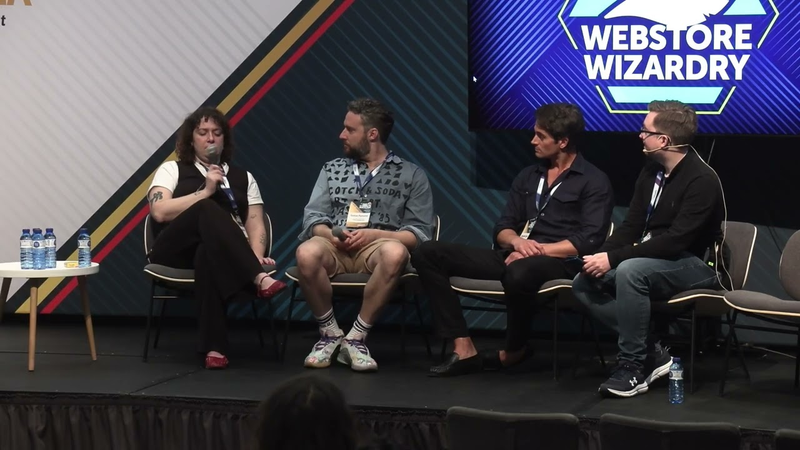
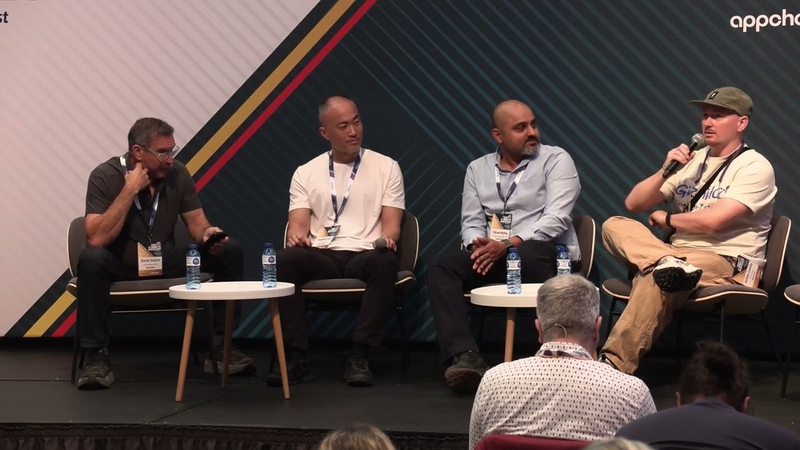
Panel/Workshop: Workshopping A Web Shop With Xsolla, A Thinking Ape & Lab Cave.
10 Feb 202638 min video
Transcript
And our next track is all about webshops and of course sponsored by the webshop specialist Solah. Um so perhaps you want to start with introducing yourselves and I will disappear off stage. That's okay. Perfect. Hi everyone. So this is Elida from Maxola. Uh I've been with the company for the past three years now and I had a very mobile background beforehand. Um actually uh this panel is going to be about some kind of like best practices around the
web shops. But of course beforehand I would like to start with a brief description. Um as you all know there has been a lot of buzz around the regulatory change as well as the uh direct to consumer strategies and of course that's for a very good reason. um across the US, Europe and Japan there has been so many change around the platforms and that gives us a lot of opportunities in terms of alternative billing in-game purchases as well as the web store. So right now developers have more opportunities to directly engage with their players and monetize them. But of course we all know that there is no one solution for all. Every uh team has their own dynamics, their run practices while Exola has tons of best practices for specific game genres and like markets. We all know that every team is different and they have their own methodologies and that's exactly why we are here today. So I'm joined by my
dear colleague Jane Staro here and then along with Jamie Wartner from LabCave and Terry Royer from a thinking ape. those teams are joining us with their web shop experiences considering their uh different types of like game genres, different size of the teams and areas of expertise. So this discussion is going to be about what works, what doesn't and what it really takes to launch, scale and operate a web shop uh in their own experiences. So let's jump in. Please tell us about yourselves, your companies, and your experiences with the web shops.
Hi, I'm Taber Voyer. I'm the CEO of A Thinking Ape Games and we make social strategy games. Our biggest game is called Party in My Dorm. And uh our company's been making games on mobile since 2008, 2009, so since the very beginning. Um, our company was one
of the first games to make APS. Um, actually before you could do APS, we had this thing where you could buy a separate app for $99 and it unlocked items in the first app because APS didn't exist. Um, yeah. So, I've been doing this for a while and uh, our team's been working with Exola for I think almost three years.
Three years. It's been three years. It feels more though.
Yeah. So, yeah, been doing this a while. happy to share some insight. Um, maybe before we start, how many of you are developers making games? Oh, sweet. And how many of you are like publishers or UA teams? What do the rest of you do?
Oh, an agency. Cool. Um, great. Yeah. Okay. So, uh, excited to share some insight and yeah, that's all I got to say now.
Excellent. Um, my name is Jamie Wardman and I am the COO of LabCave. Levcape is a mobile publisher and game developer based in Madrid. Uh LinkedIn just told me I've been there for eight years. So
I've been there for eight years. Thank you, LinkedIn. And uh started in business development and kind of worked my way up in the company. Uh really been a fantastic ride, a really really fun team all based in Madrid. And um we we focus on game acquisition and game publishing. So um for us web shops are relatively new. We started uh integrating a web shop in October. So, my experience is with a significantly smaller team um and much newer to the space, but um I'm really excited to talk to you about some of the incredible things that that we've had the opportunity to do with the web shop and the tools that Exola makes uh incredibly easy to use, which is is really nice for the small scrappy team that we are um and needing to to kind of do a variety of things in a small team and and the tools that help us do that. So, looking forward to having this conversation and with everyone.
Awesome. Thank you so much guys for introduction and as you guys can see we have a really nice variety of speakers today. We have bigger companies we have leaner teams so we can see how different teams from completely different games and different backgrounds can use the
same tool to their advantage. Uh jumping straight into the first question when I'm discussing web shops with a lot of partners and a lot of uh potential prospects one of the main questions people ask is not about the web shop itself but about the operation of it. what it's like to operate it. Do you need an additional ad count? People are quite afraid that they need to hire brand new team just to operate it, just to run it. And there sometimes there is this worry that all their additional margins that they make on web shop will be spent on an additional team. Uh would be great if both of you can share with us your experience. Uh Taber, maybe we can start with you.
Yeah, sure. So what we found is um when you're authoring in an IEP, so when you're generating the data to make it work in your game, the data that you have to submit to Apple and Google is roughly the same. There's a few differences, but it's more or less the same. And so doing an additional set of data for Exola was not really that much
of a lift. Um, and in fact, because you can publish an Isola offer much more quickly, it doesn't need like an app store approval, it's actually easier to do it uh with a web shop.
Did you hire at some point maybe when your web shop grew large enough an additional team member to take care maybe of the whales or your current team is just uh became more efficient, take more?
Yeah, great question. I think um you know as the user acquisition industry has become more and more difficult retaining and servicing your existing customers has become more important. And so for us at least it wasn't just because of the web shop but just in general wanting to do a better job of serving our customers. Um, we started a monetization team and it used to be that the product team would do all of the APS with the game design team and that was fine. Um, but because it's become so
important to service uh the existing customers, we've we've built a team that just does that and they also yeah work with the the VIP team. So we have a VIP manager from the community team that works really closely with the monetization team because the VIPs tend to uh want to spend a lot more money and so it's an important relationship.
Sure. And web shop is very interesting for VIP management tool. For sure that's really cool. And Jamie uh on your team your Lina team did you guys have similar experience to Taber or completely different? Uh can you please share a little bit with us? I think I think where Taber goes is is where you want to go in the industry. Uh you want to be able to have that team that is specifically focused on um you know your shop and monetization and making sure that you're you're understanding exactly what your users want. But because my team is smaller and we are um we're just just um you have to you have to work with what you have and and and where you are financially speaking um we we didn't hire an extra person. Um we used a
little bit of time from different departments to make the tool work. And one of the things that that um was really incredibly helpful for us in in doing that was that you can pre-program a lot of things into the tool. Um so we can look at our our cadence calendar coming out this year and say okay we know we're going to have events at this point. So what can we offer on the web shop? Um we know that we're going to have um you know a potential peak in our user acquisition spend during this month. So do we want to offer something extra? Um and you can program all of that in and then make adjustments along the way. So it's not that you pre-program and then you're stuck. It's you can pre-program so that the work is done when you have downtime and then make adjustments as the data tells you otherwise which is incredibly helpful. Um and you know you have members of the tech team who need to make adjustments also. Um make sure that the page looks good on mobile. Um but those tools are also already in in the Exola platform which is incredibly helpful. Um, and then you know a little bit from QA as well because you're always checking to make sure that everything functions and I'm very very happy for my QA team that they are able to get in uh with
different devices and make sure that that the shop looks like it should and that you know the the path is smooth for users. So not quite a dedicated team but a little bit of time from a variety of teams uh to make sure that we as a team come together to to make sure the web shop is is successful
using
yeah which is nice that it was provided that way. was really helpful again as a as a smaller team to be able to do that work that is already the exola has already thought about they've already thought about teams at different sizes and what could what could be helpful for for those different sized teams.
Yeah, that's great. And I think that gives us a great understanding of different sizes of teams can also like still work on web sharps and make them really efficient along the way. Um we do of course have bunch of tools and like press headings that could like help developers run their web shops but I think um while from a developers perspective we do understand the real value creating and monetizing through a web shop we still hear so much concern about whether web shops are cannibalizing the APS the revenue that
we are gathering from the um in game. So my question is um when you launched like three years ago Taber uh what was the reaction coming from your like players how did they react to having a web store and for Jamie you as well um how do you balance your monetization strategy along the game and within the web store itself.
That's those are some big questions. Uh I think we're in a unique position in that our games have really deep economies. So less of a concern about inflating the economy because we can just turn on more sinks if we need to. So we were able to pass a lot of value on to the customer and because we were doing that we would give them a better deal sometimes on offers on the web shop on bigger price points which they wanted. And um so for us it was really easy to get people to get excited about it. um they adopted it
relatively quickly. I think again we're in a unique spot in that most of our customers have been playing our games for a long time and we have a relationship with them
and so because your games are more more of like strategy oriented you already have the community so that it was kind of easy for you to redirect like traffic from the game to the store itself.
Yeah, correct. And we already had email login so we could already use like a trusted place for them to use their email to to make the purchase. So for us it was a really easy transition but we're unique in that way.
Yeah. I mean you you guys are quite unique in that way and you had the experience like working with top giants and like VIPs but um that's kind of quite similar that we've been like having these experience with the strategy forex social casino um kind of genres within the past uh I would say five to four years now. Um but for the past two years we started to also work with casual games and like hybrid casual
games. I think we've been also talking with you Jamie for the past two years I guess now. So I think this is also a great time for casual and like hybrid casual games to jump into the like web shop wagon and for you it's more on that side right you have a more of a casual audience but you also managed to launch the web shop and you are having slight like positive results. So what was your like strategy behind that decision having a web store?
So the start of the web store was kind of taking our hypothesis that there were users that we saw through our user acquisition campaign that were coming in and not spending. And so we were trying to find out is it because there's a problem in the game or because these users were coming from places where credit cards were not quite as common. Uh are we just not providing them a way to spend? So the the initial plan with the web shop was just to see is is this an opportunity to allow users to to progress to play to have a fun time in the game and spend when they wanted to in in a in a way that was comfortable for them in a way that they had access to. Um and and that's for us why it
doesn't right now cannibalize our economy because what we're what we're looking at is people who are not able to spend in our in our regular store but are able to spend on the web shop.
Yeah, that that's a great highlight actually. So what when we think of web stores we only think of uh like these online shops as a mirror and as an extension but we should also thinking about the extension of the monetization. So like you mentioned sometimes in some specific region in some specific markets we are not able to monetize the player itself due to some like restrictions or uh due to like payment options um liabilities. But when you have an online store, you are much more flexible and with the partners uh with the providers like Exola, you're actually able to provide so much more local payment options and you also mentioned that like it was a test for you to understand whether you have more engagement on the web store. So I think that raises a question of whether you guys also sense
um higher level of engagement and retention with the web shop implemented also in your game metrics. Is it something you already experienced Jamie? I know you just like started but like maybe for Taber as well have you had positive um results for the retention and engagement part after having a web shop?
I mean it's been positive for us. I actually want if you just give me a moment to go back to something else that you mentioned which was the payment options. Uh when we first started the web shop, we turned my my tech team turned on all the payment options. Like they didn't know.
Uh and I then had to download like a 9,000line spreadsheet to go through and be like, "Okay, this is not this is incredible amount and it's overwhelming for users." Um and and then I actually what I found out was that that was breaking it down by country because every option that was available per country. It was absolutely amazing the different payment options that Exola partners with. Um, and so from I finally was able to get down to like a 900 line
spreadsheet where I could go through and like take out the ones that were just um a higher percentage and didn't really make sense for our bottom line. Um, to make sure that we were getting a positive outcome from the web shop and that my CEO wasn't going to look at the numbers and be like, "What is this? What are you doing?
It doesn't crush your computer anymore." Right.
Exactly. Um, and so, so I mean, again, coming at it from from from all of that, uh, it just is not a huge offering to to to people coming in. And so it didn't, it didn't really, it didn't really have the the ruining of the of the in-game. It actually just added to it.
Yeah, that's great. And I think that's great to hear that is coming from like casual title which is like slightly considered as not relevant with the web stores but we all know that it's getting more and more relevant especially with like alternative payment methods and in-game alternative billing. So I'll first head it over to Taber to talk more about the engagement. Then maybe we can talk more about best practices. I actually don't have too much to say on that because the way that we operate our web shop is it is primarily a
um DTOC strategy for mature players. So we kind of think about it more like we have people who play you know our games for a very long time years and they play across multiple devices. So, something that I've said before on a Zola panel, I'll say it again, is if you're working with Apple or Google and you know, somebody comes into your game and in our games a whale might spend $100,000 and in the case where you're paying 30%. Then, you know, Apple or Google is taking $30,000 of that value, which
that's a lot.
It's a lot. But the the thing about it from a more philosophical or business strategy perspective is that the platforms see that as their customer and we see it as our customer. And so the goal and strategy for us is to find our customers wherever they are and engage with them and make that connection with them. And a web shop allows us to offer them things um in a
way where they're our customer. We own that relationship and Exola facilitates that. Um, so for us, we don't see a huge amount of retention engagement because we don't show um new users the the web shop. It's not part of our our strategy. We're more focused on how do we once we have a user engaged, how do we make that connection with them? And yeah, thank you so much for mentioning that because sometimes it's really more important about like playing with your like segments like focusing on some specific uh user levels like player levels and of course having more control over a platform gives you the opportunity to have that advantage right so I think that that gets us to the best practices and how we can do u much more efficient work throughout to like online stores
you just very interestingly talked about how you're the one owning the user, that is your user, and you want to make sure they're having the best experience possible, which I think everybody in this room and everybody in this building can really relate to. So, when you're
designing the web shop, what what is your strategy on making sure that it's as interesting for the user as possible? Because of course, if we're looking at web shop as just a way to extract ex, you know, incremental value for the developer, that can feel like you're not really valuing a user. So how do you guys make sure that webshop is exactly what user wants to use and user feeled to use? Especially segueing back to your VIP program that you guys are running.
Yeah. So the way that we approach that is, you know, we've got uh a web shop that has like an extra set of rewards. So kind of like bonus points. Um and that's something that when we built it, I don't think Zola had it yet, so we built it ourselves. I think you guys have it now. Yeah.
Yep. Yep. Um, yeah. And and then we use the um there's like a gifting system uh through we use that and generally just like giving them a good experience of like this is a place where you should check out because there's going to be good offers, there's going to be
exciting things for you to see. There's going to be um yeah, like gifts and and the more that you spend there, the better it is for you. So that's a big part of it. Um yeah. Does that answer your question? Oh, and then VIP. Um, and then because you can author um, offers so quickly, it's a really good channel if you have like items in your game that maybe or people in your game that want to buy things that you can have a relationship with them and you can ask them like, you know, what is it that you want from this?
Actually ask them like, "Hey guys, what do you want?" Because then it's easier to provide for them, right? When you talk to them
and now it's kind of like a habit where they're like, "Hey, I really like this pack, but it's got it doesn't have this one thing that I want.
Can you add it there?" Well, what we can do is say, "Okay, go and buy the pack." And then we don't even have to author a new IP. We can just give them through the CRM the items that they want.
Yeah. So, it's much easier to to have this more intimate relationship with with your users via web shop. I I had a few developers who also said that sometimes they can even design separate webops for specific whales, for specific
users who are spending hundreds and thousands of dollars per month. So they can literally create packs. So one guy, one developer said he's creating web shop unique skins just for one user because he's just such a high spender. So you have it's it's crazy like the things you can do, right?
And like part of it is the price point that you can use is better. So like I don't know who designed the price points on the app stores, but like
not the developers.
Yeah, definitely not. Um, so like part of it is just being able to give people what they want and we have the we have more tools to do that
for sure. And uh with with your game Jamie, uh you guys have a lot of skins, right? Like it's a very skin based game. Do you So do you sell the same stuff in your web shop that you sell in your game or do you sell a bit different uh different offer? It's quite interesting to hear what's your strategy when it comes to their, you know, selection of the items that you present in your web shop versus your game.
Yeah. What we found is our our game is very content based. So, you know, uh it the game is building a zoo. Okay. So, people want to buy animals. They want to buy unique habitats. They want to buy things to make their zoo look like what they want it to look like. And so, we offer all types of the different types of currency on the web shop just as a for users who are unable to to spend within the game itself. But then we've also taken on the idea that we have older animals in the game that maybe users who haven't been playing for six years might want access to. So what does it look like to offer those for sale um for users who want to do that spend? Um there's also a progression system in the game that requires you to have a certain amount of unique habitats. So um instead of having to grind for those, you can buy those and we do unique ones every month. and we uh have the challenge of letting users know that they can go to the web shop and that it is changing that it's not a static store that the store is really um it's it's going to change over time and and that's part of the planning. And something else that we're doing and then I promise I'll be quick
is uh is that we're we're now starting to think about decorations and bundle
packs that maybe users may want to buy as a set that have to do with events that are happening in the game. So, they're really themed as to what it is that we're trying to to connect the web shop back to the game. And so, it doesn't feel like a separate experience. It feels like just an additional experience.
It's an additional experience. Right. We have this very interesting case. Uh one of our partners uh has a very old game. It's like more five 10 year old games. So very very high TV very engaged users. It's um without naming them it's a it's a sim game with where they use also animals. You have your animal and it's it's a it's a sim and people really really dedicate themselves you know to that sim. And the way they monetize, they monetize mainly through different skins. And the skins are very unique to specific events, specific battle passes. And what they started doing, they started selling on the web shop, I think quite similar to you guys. They started selling items that are no longer available in the game or items that were available in the game like a year ago, two years ago, even five years ago. So
the users like collectors who missed out on some offers, but they still really want to have some special unique skins that will make the game to have it to continue selling there. They can still get it from the web shop. So there is this all like different mechanics uh they can you can use. I think it's quite cool.
Yeah. And we we tried a theory out in November where we had an event taking place about around Thanksgiving and at the end of it if you played through the whole event you could get this little turkey for your for your zoo. Uh and my producer had this theory of what if at the very end for the users who didn't make it all the way through we offered it as a purchase and and it was actually quite a big purchase um that we found that users um because they had to log in every day in order to get it and if you missed one day you wouldn't get it and those users were willing to pay
kind of Dolingo, right? And Dualingo if you miss if you if you miss a strike but you get like the premium you can kind of like get it back. So it's a similar similar idea.
Yeah. But we tried it only on the web shop. So we didn't offer it in our store. We offered it only on the web shop.
Yeah, I was going to highlight that. So, one of the greatest things about like having an online store that you have the control over is you are literally able
to test anything that you want and that wouldn't really hurt your in-game mechanics or like in-game economics. So, that's one of the things that we always um encourage our like partners, our uh studios to give it a try. Like you can always test something um that you are maybe wondering that we would like to consider within the game. You can come up with a new SQ. you can come up with a new bundle. Uh not only at like Sola but like web shop, web stores like Taber previously um created the feature for the like company like three years ago. Uh while we don't have that like feature right now we have bunch of live ops features which you can uh use to test, use to amplify, use to enhance your players monetizations and their like engagement. So this is also something you need to consider because you never get that chance within the game, but you can always give it a try on the outside
of the platform. So that's that's a huge opportunity. So that's a good point regarding the live apps. Uh Eli would be actually very curious to hear from you guys. Have you been using or do you consider to start using web shop as kind of like a playing field for AB testing different offers, different SKUs? Uh maybe you can start with you Taber.
Yeah. So we don't have the ability right now to AB test um on our web shop, but as I mentioned before because we can do we can author and get um offers approved much more quickly. It's a really good testing ground for just trying things out. Um and then the other part again is like the price point, just being able to test bigger offers. You just can't do that on the platform. So, um, it's a really good place to test and we we're trying to right now build some AB testing tools and work with the team to to be able to do that. Um, but you know, one thing one problem that you always have with AB testing is that you need to have the right sample size and the number of purchasers is always quite
small relative to the rest of the population. So, um, it's good for conversion testing but not always good for the the higher value like price point type testing. So, um, the bigger thing is the is the speed of iteration.
Sure. For sure. when it comes to the AB testing. And Jamie, how was how was your experience?
It it was I mean a little different because we're we're smaller and we don't we aren't testing the same way. We're using the web shop just as a different store, as a different opportunity, different options. Um actually in our prep for this panel, uh Taber mentioned using it as a higher price point and I thought I hadn't even that hadn't even crossed my mind yet. So now then I wrote I wrote a message to the team. I'm like, "Hey, uh can we throw together a bundle? Just test it. Shall we
try?" Right. No, I mean that's that's really a wonderful part about the industry is that we're able to share this kind of thing and you know you can't possibly think of everything. Um and so it's really nice to be able to connect and be like, "Oh yeah, that's a great idea. I'm gonna I'm gonna try that out too."
It works.
It does talking to each other. It really does. But also the conversion, I assume. Yes.
Yeah. Yeah. I mean, one thing that's hard is like, especially when you come into a game as a designer and you're trying to think about how much people want to pay for things is like it's really easy to get anchored in whatever your own like price index is, like whatever you think the price of something is. But like when you have an international audience of people that want to spend money, sometimes they have completely different wallet sizes than you, and the price point for them might be pocket change for you. It might be a house. like that that's the reality of of running a a live game. So, building a really deep economy is important, but also recognizing that you can try things that maybe seem absurd to you and sometimes it works.
No, there are definitely some cases where uh a purchase happens and you're like really that and you're like, did you have that moment? You were like really the time.
It's a bit of a tangent. We don't have a ton of time, but I one time when the Apple Watch was first launching, um I asked the team to design um an item in
the game that had no stats but was like the highest price point possible as a joke and then like
and it bought it and it worked and you were like, "Oh no,
that stuff happens."
Yeah. Another idea for Jamie for you. Um, I think we're like about to close very soon, but like just like a little bonus question. Now that you guys have like proper working in web stores and we talk about the regulatory chains in the industry, have you ever like considered having alternative billing within the game? Do you think of like considering placing an inapp abilities like inapp payment abilities for your early game players or is it just like a little taboo for you right now? I I guess I don't understand your question.
So, you know, like um with the Google and like Apple changing their policies and now that like we are able to place the alternative billing, alternative payment methods within the game itself, is it something you would also consider like in the future?
Uh I'd like to see some of the regulations pan out uh before we add things directly into the game. I think having the button, having the option, making sure users know about it, creating quests that let users know they can go to the store. Um, and making sure that the communication is there is is the first step and then let the lawyers, the regulators, the everybody else kind of figure out the rest of it before we take that step because as
I think you'll talk more about this like later on.
Oh yeah. I don't I don't want to take away from your other conversation, but just just thinking about it from again a small team's perspective. If we we change the payment methods within the game and then something changes legally, that's a lot of work for my team. And uh so I have to really think about how am I using their time in the most efficient way that gets the most out of the game and keeps everything staying revenue positive operations. That's what we we look at hours versus price.
Yeah, of course. And Taber, I think you you're going to jump on this like question later on with the panel. So maybe we can
No comment.
No comment. So maybe we can have um some questions from the audience if you guys have like any at the moment. Anyone publishers?
The red shirt. I think she has her hand
up in the red shirt. you have your hand up. Oh, sorry. I thought your hand was up.
Okay. Yeah, we also run out of time. So, um Jane,
well, yeah,
thank you.
I think that now both of you have webshops up and running. I think it would be great to look retrospectively back and like what would you have done differently if you were to do it again? or we're still new, so I don't feel like I'm very good at answering this question because it's still uh we're still testing out what it can do. I think um
I think if I looked at everything I try to look at at other people's web shops to get ideas um and to also talk to people at these events, you know, being able to say, you know, how do you how do you use your web shop? Is there a design that you're using? Is there is there a theory that you've had that you've tested out or is there any way that you want to move forward with that? And um so for me, it's we're still in the test phase of how does everything work? how do we get uh users to to convert. We're
happy to see the extra revenue coming in. You know, that's very nice part of the web shop. Um and it's easy. Um but also making sure that we're getting the most out of it. And uh and a lot of that is is looking at what other people are doing, getting ideas, and then how does that work within the theme of our of our game so it doesn't feel like, oh, I've taken this from someone else, but rather taken an idea and then used it um in a way that makes sense for our users.
It's quite similar to game development, right? Like we all watch each other's games. We see what's on the market. We we see what works, what doesn't. We feel personal to us. I think it's kind of like an extension of the game in that in that sense, right?
And letting your designer have fun, too. I mean, they get they get to play around.
Some crazy art as well that you won't be able to really put in in the game. You can really go wild there. Uh Taber, maybe actually changing question for you in the in a little bit because you did mention that you guys implemented features that were not available before, but now they are available. So, it seems like you guys are really like forwardlooking. Are there like new things or new features like new things
you really want to try and you're excited for 2026? Let's let's end it on a high note.
Um, yeah, I think there is a lot of like DTOC learnings in the general market that games just don't do because game customers are really engaged in the product anyway. So we get a lot of behavior for free by virtue of building that behavior. But we like as a consumer using you know buying stuff with my phone like there's so many cool features in DTOC in general like you know email reminders like you almost checked out and all of that kind of like
learning from the non-gaming from the fashion guys right? Yeah, the fashion like there's they have so many features and I'm always like I could spend so much more money as a consumer on these like little, you know, gotcha mechanics that they have. Um, so I think like I know your team's building a lot of these features and I think that we have to mature a little bit as a business.
you know, we've just relied on the on the platforms and they've been pretty restricted in how we do that type of um consumer behavior and and you know, as game designers like convince somebody to play your game for a decade and be really engaged, sort of like forget there's this whole other set of learnings that that that we can learn from. So, yeah, that's what I'm excited about is just to bring in some of those features and and bring them into the games and offer the the customers some more experiences and and better um offers. Yeah.
Yeah. more like looking like yeah I mean even outside of gaming like e-commerce is doing some really really cool stuff like I like that you brought up the forgotten basket I think all of this stuff is going to be implemented by all the web shops moving forward I think there's a lot of stuff we can definitely learn from the fashion guys from the tech guys like the way you know Spotify is you know also
I think we already made a great progress like with the loyalty programs rewarding systems the like card system we are like having uh right now so yeah I we'll
definitely look to the e-commerce um section and like add more features along the way. But thanks for the feedback,
right? I think we're about to close here. Do you guys have any last questions from the audience? And if not, I think we can wrap wrap it up today.
I have a question for the audience. Is anybody here building a game and then doesn't have a web shop and is just like trying to figure out what to do or is everybody here more like got a web shop?
Yeah, a sing gentleman over there. Do you have any like questions about where to get started? Oh yeah.
Well, I think we don't have necessarily limited testing capabilities. It's more that doing uh AB testing is difficult and partly due to the volume of transactions being relatively low overall for all games. Um so getting statistically relevant data can be quite difficult. However, you can measure simply the amount of purchases that are going to your web shop versus the platform and then you know you get a better margin. So getting generate figuring out how much revenue you're generating or added revenue you're generating is really easy. Yeah. and and having your data team add that how many people are clicking on the web shop to get an idea of these are how many users come into my game on a daily basis but then how many are actually clicking on the web shop will give you an idea of of how much of your of your time should be focused in this way as well and then trying to increase the clicking on that special button
and I think it's important to add that
webops are not static it's not like one each and every player is going to see exactly same page there is a lot of personalization which can be part of the web shop and segmentation just like a new game. So what you can also do, you can show different offers maybe to the same segment of users and just see which one you know improve the click-through rate or which one you know gets a better transaction like better transaction values and then that's your that's your winner. So it's quite similar to what you would do in the app.
Measurement isn't limited but um AB testing can but it's not even that AB testing can be and I can get into a whole spiel about whether you should even do AB testing that's a topic for another
that's a conversation for different panel. We can we can do a panel on that.
All right, perfect. Thank you so much for joining us again. I I do really hope that like this was inspiring and like giving you further information about how to build your own web stores or like building a direct to consumer strategy. Um thank you so much for our lovely panelists and my partner Jane. So we do
have a booth um right next to the tracking room. So if you have any further questions or if you would like to uh get any further information later on, please do let us know. And again, thank you so much for being
and we also have the best coffee at PGC, not my words, our partners words. Also feel free to come for coffee.
That's a good sale.
Thank you guys.
Auto-generated captions from YouTube — names and numbers may be misheard.
Key insights
Distilling the key insights…
Ask AI about this video
Cite this video
Citation
Generating citation…






















Comments