Updated Mar 23, 2026 by PCF Group
Report
Published by PCF Group
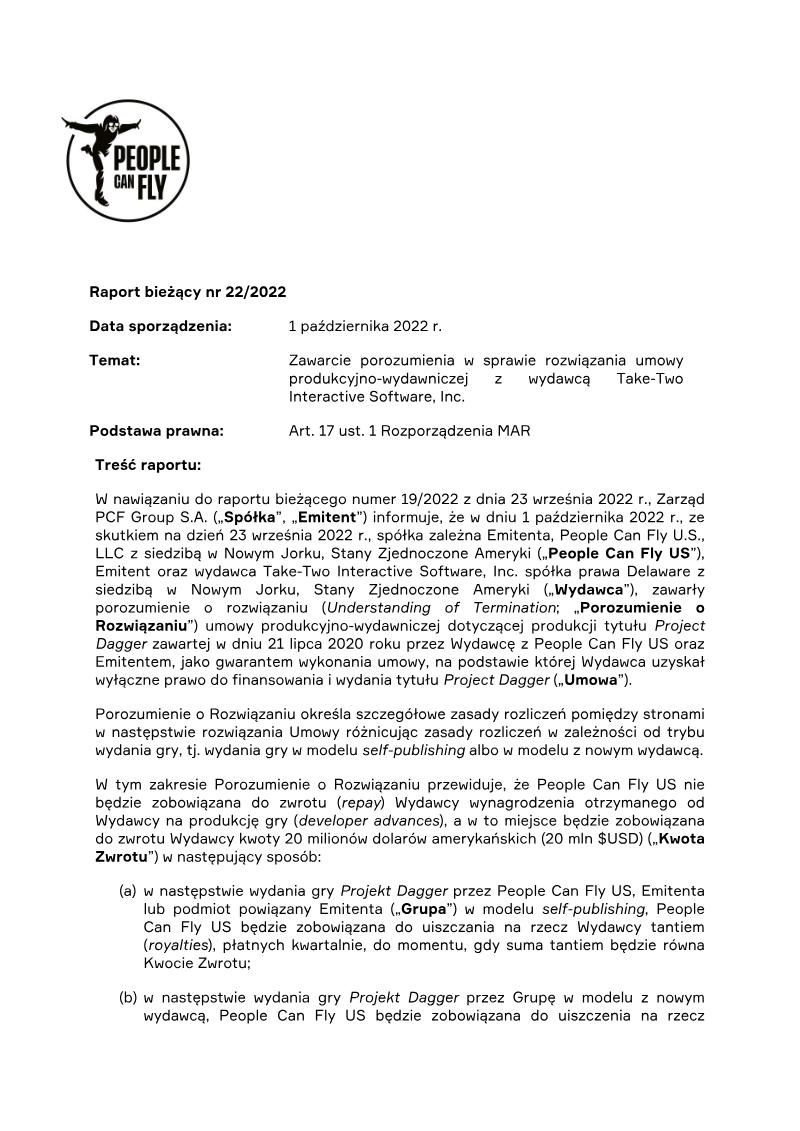
The report announces that on October 1, 2022, People Can Fly U.S., LLC and its parent PCF Group S.A. entered into a termination agreement with Take‑Two Interactive Software, Inc., ending the 2020 production and publishing contract for Project Dagger. The termination agreement specifies how financial obligations will be settled depending on the eventual release model of the title. If Project Dagger is released through self‑publishing by People Can Fly U.S., the company will pay royalties to Take‑Two on a quarterly basis until cumulative payments equal a predetermined repayment amount of $20 million. If the game is released with a new publisher, People Can Fly U.S. will repay the same $20 million in two equal installments due six and twelve months after launch. No repayment is required if the game never reaches commercial release, regardless of model. The agreement also confirms that Take‑Two did not exercise its option to acquire intellectual property rights under the original contract, and that the license granted to Take‑Two has expired. Consequently, People Can Fly U.S. retains exclusive ownership of Project Dagger’s intellectual property. Standard termination provisions accompany the agreement, covering general legal and procedural matters. The report covers a single geographic jurisdiction—both parties are headquartered in New York, USA—and pertains exclusively to the Project Dagger title within the video‑game development and publishing sector. No survey or external data sources are cited; the document is a straightforward corporate disclosure of contractual termination and financial settlement terms.
PEOPLE CAN FLY Raport bieżący nr 22/2022 Data sporządzenia: 1 października 2022 r. Temat: Zawarcie porozumienia w sprawie rozwiązania umowy produkcyjno-wydawniczej z wydawcą Take -Two Interactive Software, Inc. Podstawa prawna: Art. 17 ust. 1 Rozporządzenia MAR Treść raportu: W nawiązaniu do raportu bieżącego numer 19/2022 z dnia 23 września 2022 r. , Zarząd PCF Group S.A. („ Spółka”, „Emitent”) informuje, że w dniu 1 października 2022 r., ze skutkiem na dzień 23 września 2022 r., spółka zależna Emitenta, People Can Fly U.S., LLC z siedzibą w Nowym Jorku, Stany Zjednoczone Ameryki („ People Can Fly US”), Emitent oraz wydawca Take-Two Interactive Software, Inc. spółk a prawa Delaware z siedzibą w Nowym Jorku, Stany Zjednoczone Ameryki („Wydawca”), zawarły porozumienie o rozwiązaniu ( Understanding of Termination; „ Porozumienie o Rozwiązaniu”) umowy produkcyjno-wydawniczej dotyczącej produkcji tytułu Project Dagger zawartej w dniu 21 lipca 2020 r oku przez Wydawcę z People Can Fly US oraz Emitentem, jako gwarantem wykonania umowy, na podstawie której Wydawca uzyskał wyłączne prawo do finansowania i wydania tytułu Project Dagger („Umowa”). Porozumienie o Rozwiązaniu określa szczegółowe zasady rozliczeń pomiędzy stronami w następstwie rozwiązania Umowy różnicując zasady rozliczeń w zależności od trybu wydania gry, tj. wydania gry w modelu self-publishing albo w modelu z nowym wydawcą.
wania i wydania tytułu Project Dagger („Umowa”). Porozumienie o Rozwiązaniu określa szczegółowe zasady rozliczeń pomiędzy stronami w następstwie rozwiązania Umowy różnicując zasady rozliczeń w zależności od trybu wydania gry, tj. wydania gry w modelu self-publishing albo w modelu z nowym wydawcą. W tym zakresie Porozumienie o Rozwiązaniu przewiduje, że People Can Fly US nie będzie zobowiązana do zwrotu ( repay) Wydawcy wynagrodzenia otrzymanego od Wydawcy na produkcję gry ( developer advances ), a w to miejsce będzie zobowiązan a do zwrotu Wydawcy kwoty 20 milionów dolarów amerykańskich (20 mln $USD) („Kwota Zwrotu”) w następujący sposób: (a) w następstwie wydania gry Projekt Dagger przez People Can Fly US, Emitenta lub podmiot powiązany Emitenta („ Grupa”) w modelu self -publishing, People Can Fly US będzie zobowiązana do uiszcza nia na rzecz Wydawcy tantiem (royalties), płatnych kwartalnie, do m omentu, gdy suma tantiem będzie równa Kwocie Zwrotu; (b) w następstwie wydania gry Projekt Dagger przez Grupę w modelu z nowym wydawcą, People Can Fly US będzie zobowiązana do uiszczenia na rzecz
Wydawcy Kwoty Zwrotu w dwóch równych ratach płatnych najpóźniej w terminie 6 i 12 miesięcy od dnia premiery gry. Kwota Zwrotu nie przysługuje Wydawcy w sytuacji gdy nie dojdzie do wydania gry Project Dagger (commercial release) niezależnie od modelu. Wydawca nie skorzystał z przewidzianej w Umowie opcji wykupu praw własności intelektualnej do produktów wyprodukowanych na podstawie Umowy, a licencja udzielona Wydawcy wygasła. Tym samym, zgodnie z Umową, People Can Fly US zachowała, jako wyłączny właściciel, prawa własności intelektualnej do gry Project Dagger. Pozostałe postanowienia Porozumienia o Rozwiązaniu mają charakter standardowy ch postanowień odnoszących się do rozwiązania Umowy.
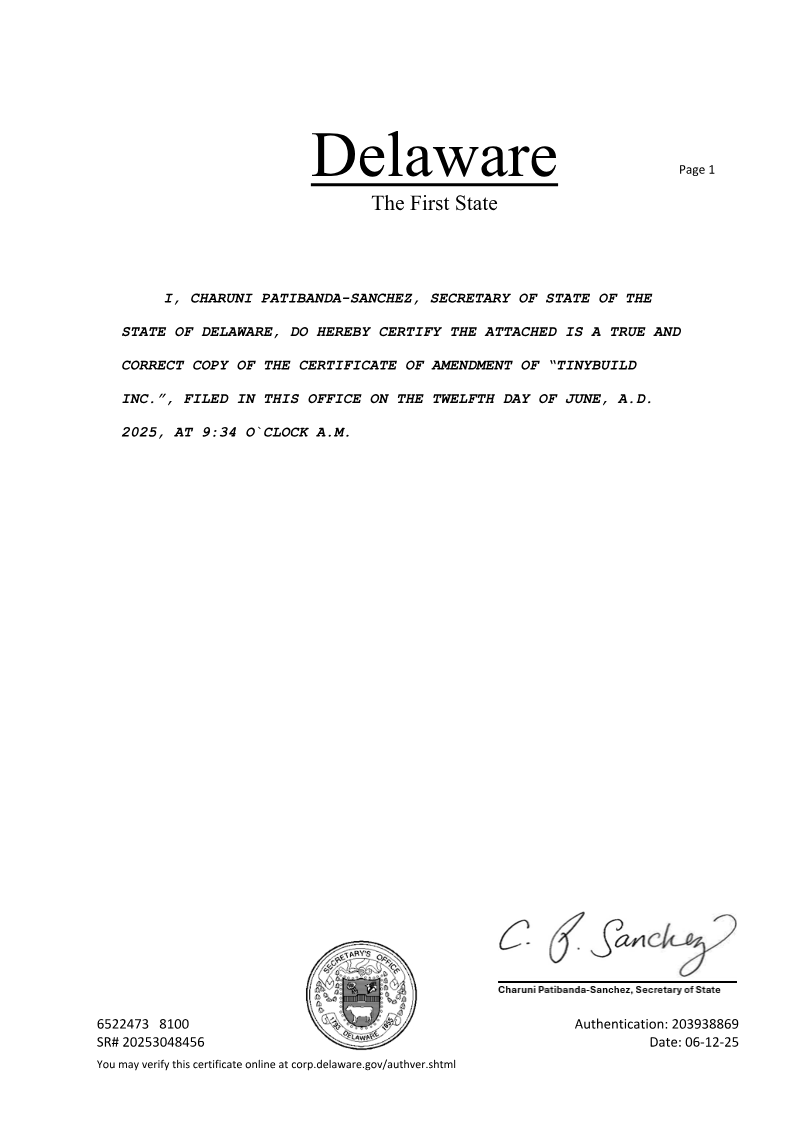
TinyBuild Inc., a Delaware-incorporated video game publisher, enacted significant structural changes to its corporate governance through a Certificate of Amendment filed on June 12, 2025. This legal filing formalizes a shift in the company’s internal leadership framework, specifically transitioning the Board of Directors toward a declassified structure. Under these new provisions, all directors will serve one-year terms expiring at the subsequent annual meeting of stockholders, effectively ending any previous multi-year staggered terms by the 2026 annual meeting. The amendments further centralize control over board composition within the board itself. The number of directors is now fixed exclusively by board resolution, and any vacancies or newly created positions must be filled by a majority of the remaining directors rather than by stockholders. While stockholders retain the power to remove directors with or without cause via a majority vote, the board maintains the sole authority to appoint replacements. Additionally, the company expanded its liability protections, stipulating that directors and officers are not personally liable for monetary damages resulting from breaches of fiduciary duty to the fullest extent permitted by the Delaware General Corporation Law. Geographically and legally, the scope of these changes establishes Delaware as the primary jurisdiction for corporate disputes. The amendment mandates that federal district courts serve as the exclusive forum for Securities Act of 1933 claims, while the Delaware Court of Chancery or the federal district court for the District of Delaware are designated as the sole venues for derivative claims under the Securities and Exchange Act of 1934. These updates, signed by CFO Gjasone Salati, align the company’s governing documents with modern Delaware corporate standards regarding executive indemnification and jurisdictional exclusivity.
GungHo Online Entertainment’s 2026 management policy outlines a strategic leadership transition designed to accelerate global growth and enhance capital efficiency. Under the new structure, former CEO Kazuki Morishita transitions to a role focused exclusively on game development and pipeline expansion, while Kazuya Sakai, formerly the CFO, assumes the role of Representative Director, President, and CEO. This shift aims to balance creative output with disciplined financial management and improved dialogue with the equity market. The strategy focuses on four primary pillars: realizing global hit products, optimizing company-wide costs, strengthening the collaborative relationship with subsidiary Gravity, and promoting capital market-attuned management. A key operational priority is restoring the frequency of IP collaboration events, which saw a significant decline in FY2025, to drive stable revenue. Additionally, the company is implementing a new HR system and cost-benefit analysis framework to improve resource allocation and talent development. Financially, the policy introduces aggressive shareholder return measures and a refined cash allocation strategy. GungHo has established a new dividend policy based on a 4% Dividend on Equity (DOE) ratio, targeting a minimum payout ratio of 50%. For FY2025, the company scheduled an ordinary dividend of 90 yen per share, a significant increase from 60 yen in FY2024. Furthermore, the company announced a 5 billion yen share buyback and the cancellation of approximately 23.1% of its outstanding treasury shares. The scope of this policy covers the company’s global operations with a specific emphasis on the Japanese market and its relationship with Gravity’s Ragnarok IP. Of the approximately 70 billion yen in non-consolidated cash and deposits, 50 billion yen is earmarked for development and maintenance over the next five years, with the remaining 20 billion yen split between growth investments, such as M&A, and shareholder returns. Governance is also being strengthened by increasing the proportion of independent outside directors to 50%.
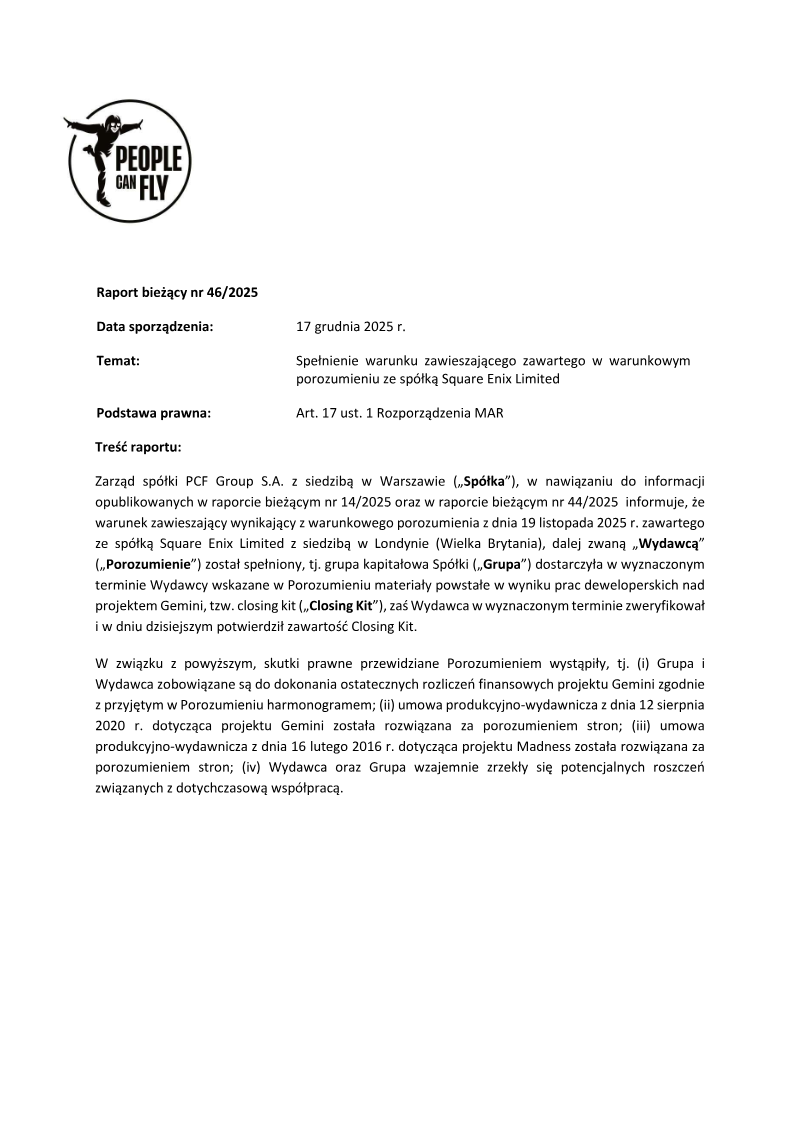
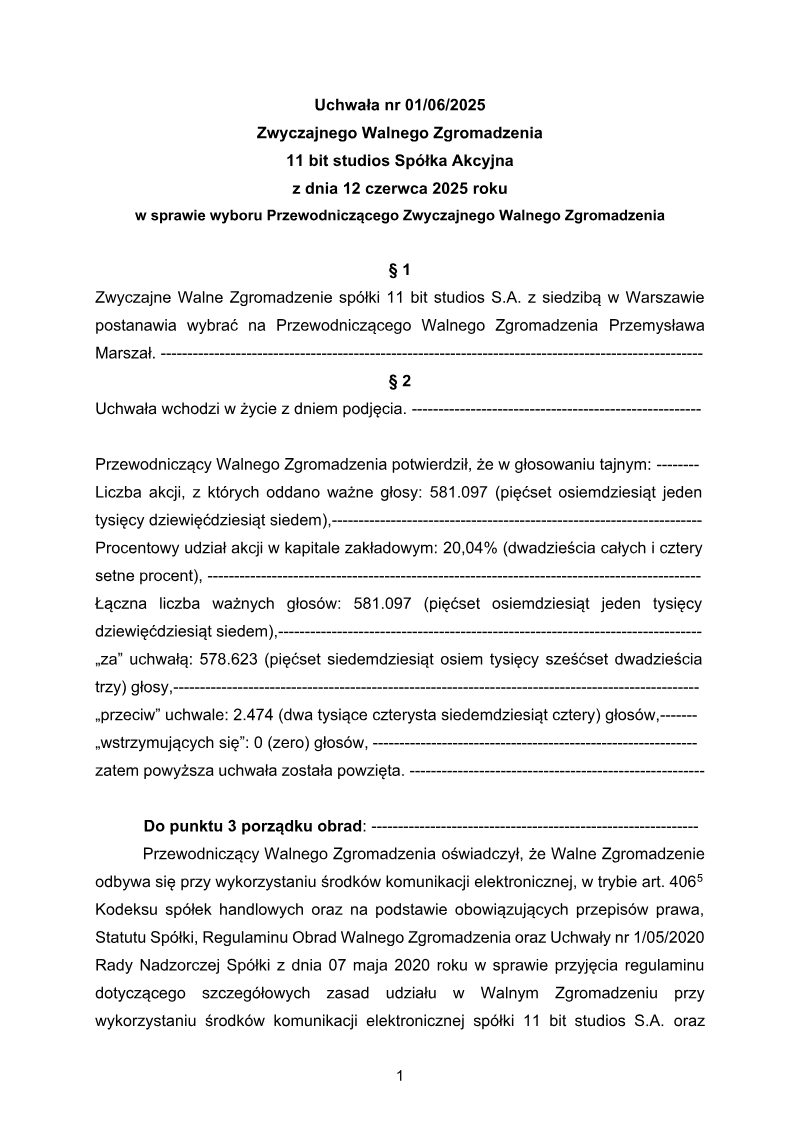
The filing announces that the conditional clause attached to the November 19 2025 agreement between PCF Group S.A., headquartered in Warsaw, and Square Enix Limited, based in London, has been satisfied. PCF’s capital group delivered the “Closing Kit” – the development assets for the Gemini project – within the stipulated deadline, and Square Enix confirmed the kit’s contents on the same day, triggering the contractual consequences outlined in the agreement. As a result, both parties are now bound to complete the final financial settlements for Gemini according to the pre‑agreed schedule. The production‑publishing contract for Gemini dated August 12 2020 has been mutually terminated, and the earlier production‑publishing contract for the Madness project dated February 16 2016 has also been dissolved by agreement. Additionally, Square Enix and PCF Group have mutually waived any further claims arising from their prior collaboration. The announcement references earlier interim reports (numbers 14/2025 and 44/2025) and cites Article 17(1) of the MAR Regulation as the legal basis. The scope is limited to the two corporate entities involved, covering contractual obligations and settlements for two specific game development projects, with all actions occurring within the European Union and United Kingdom jurisdictions during the 2025 reporting period.
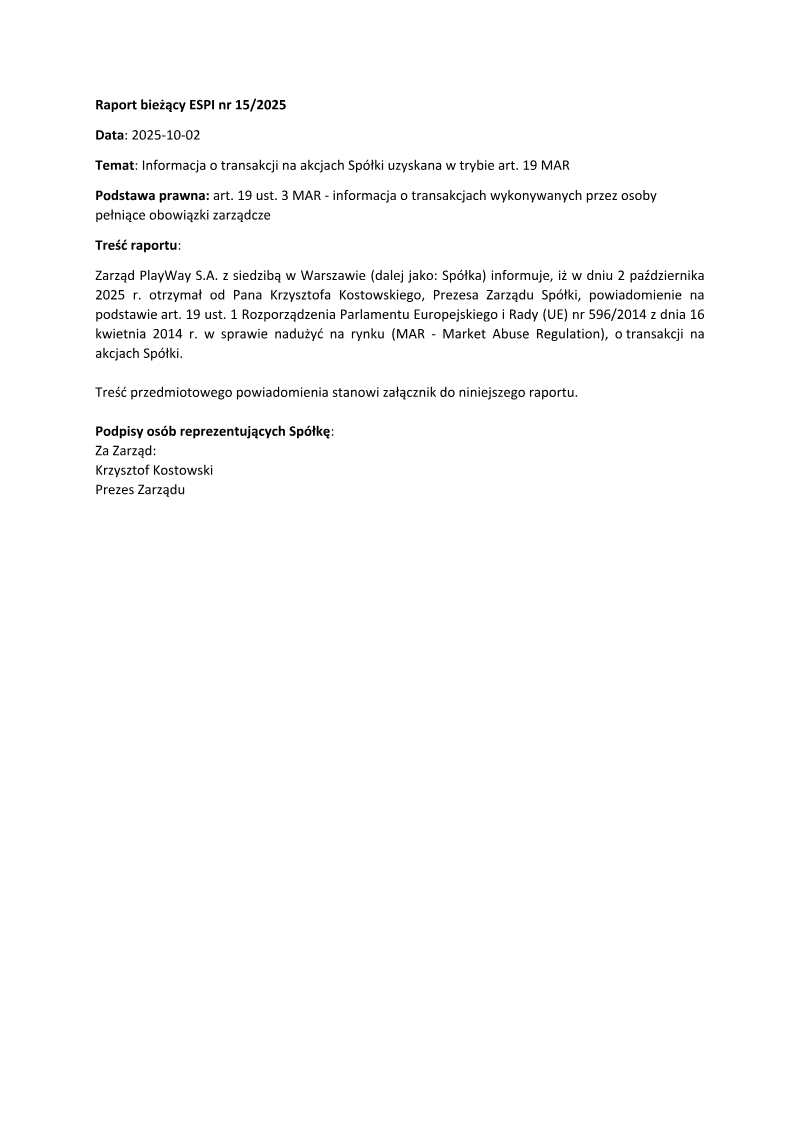
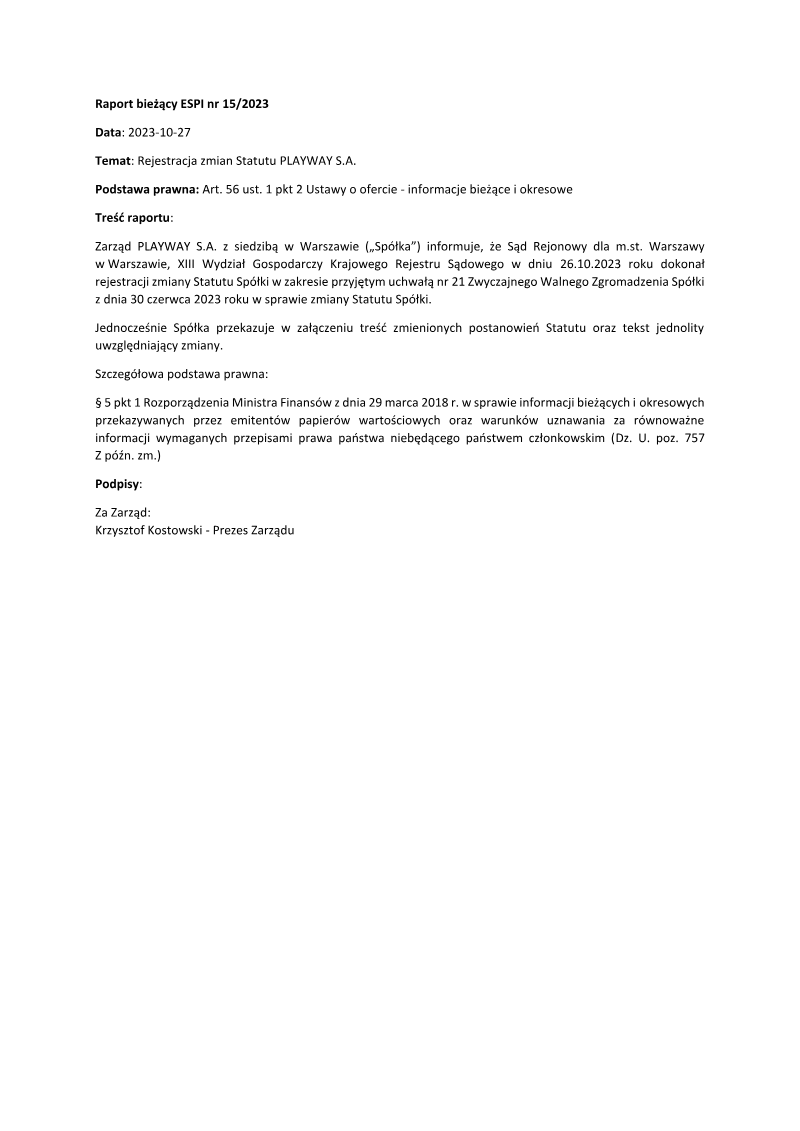
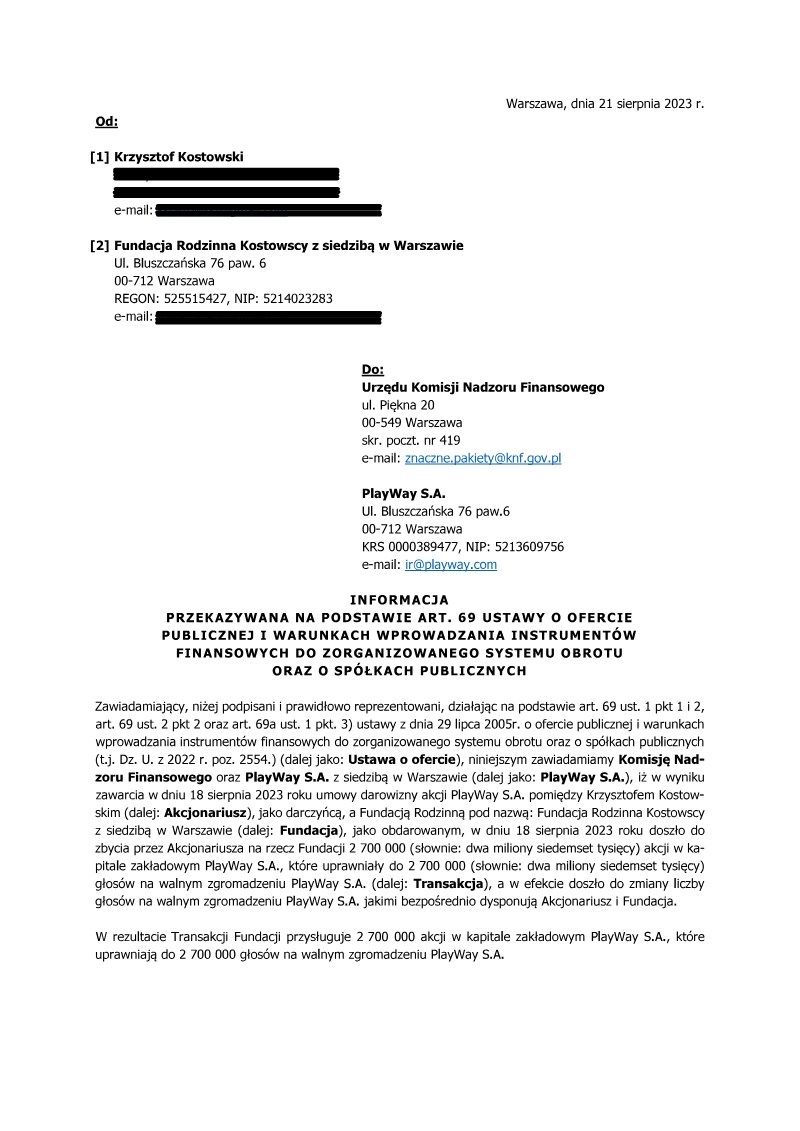
PlayWay S.A. issued a formal notification regarding a transaction involving its company shares conducted by a person discharging managerial responsibilities. The disclosure, released in October 2025, serves to fulfill regulatory transparency requirements under Article 19 of the European Union’s Market Abuse Regulation. This specific filing confirms that the company received a formal notification from Krzysztof Kostowski, who serves as the President of the Management Board, detailing his recent trading activity involving the issuer's equity. The scope of this disclosure is focused on the internal governance and financial transparency of the Warsaw-based game development and publishing group. While the summary report confirms the occurrence of the transaction on October 2, 2025, it functions as a legal bridge to the detailed notification required by market regulators. Such filings are standard practice for publicly traded entities on the Warsaw Stock Exchange to ensure that investors are informed of the investment behaviors of top-level executives, which can often serve as an indicator of internal confidence or liquidity needs. The methodology for this disclosure follows the standardized ESPI reporting system used by Polish listed companies to disseminate price-sensitive information. By adhering to the Market Abuse Regulation framework, the company ensures that all stakeholders have equal access to information regarding changes in the shareholding structure among its leadership. This specific announcement underscores the ongoing regulatory compliance of PlayWay S.A. within the broader European financial market landscape, focusing specifically on the actions of its primary executive leadership during the final quarter of 2025.