Retention reports and market data
Documents

Still Crushing It: Why Minecraft Refuses to Die
Minecraft remains a dominant global force in the gaming industry, having surpassed 550 million users.
- Minecraft has reached a global user base of over 550 million, maintaining long-term relevance by functioning as a cross-generational cultural phenomenon rather than a traditional gaming product.
- The franchise prioritizes long-term brand equity over aggressive in-game monetization, relying instead on a robust physical retail ecosystem including toys and apparel to capture market value.
- Analysts are divided on whether the brand should synchronize in-game content launches with major media events like film releases to drive immediate digital revenue.
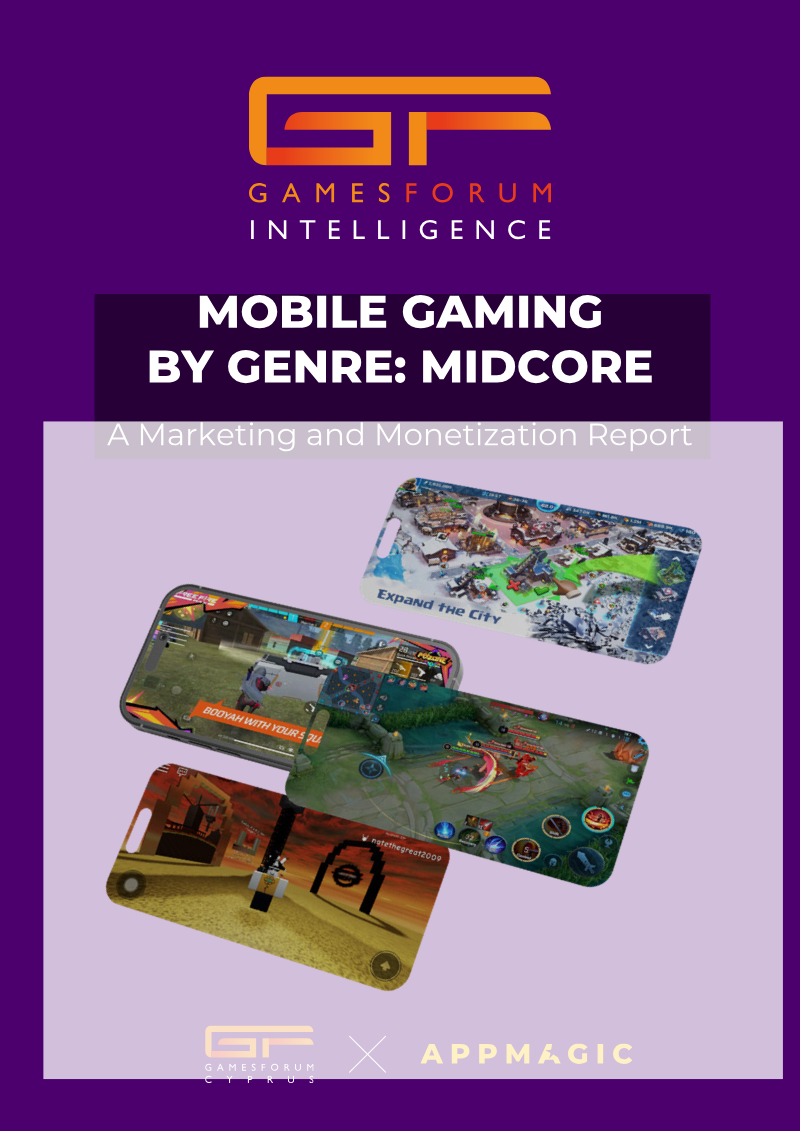
Mobile Gaming by Genre: Midcore
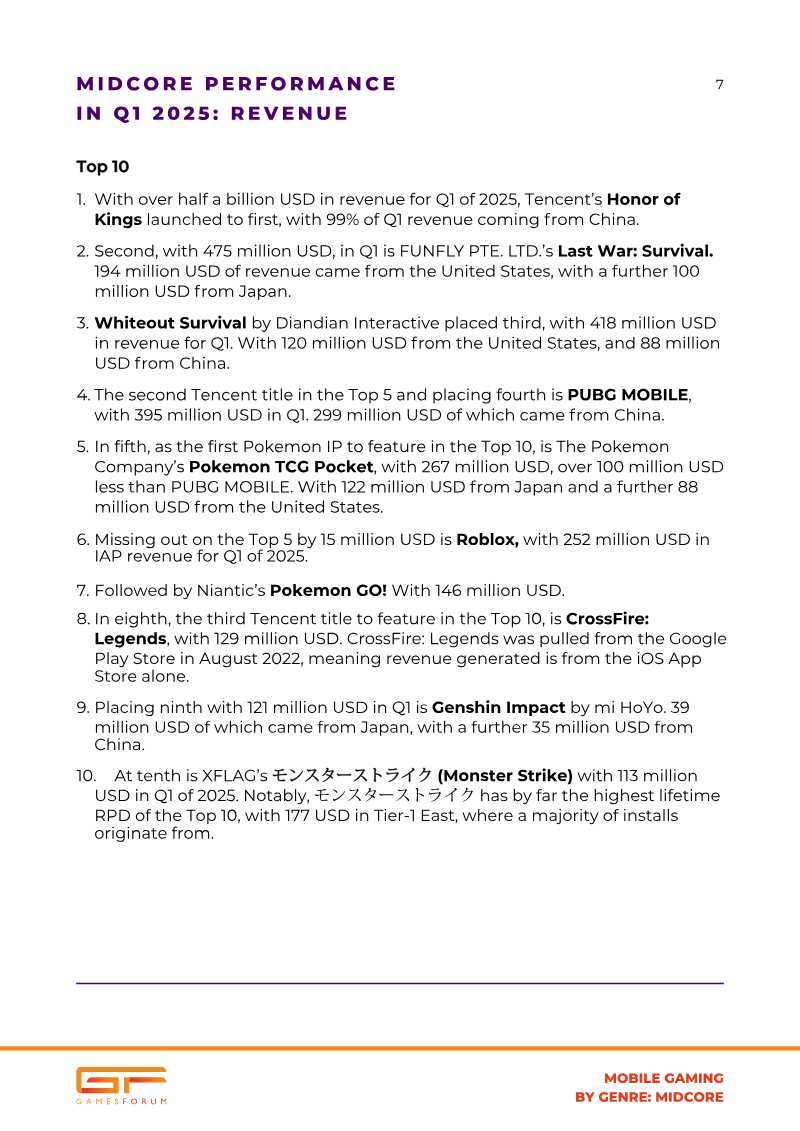
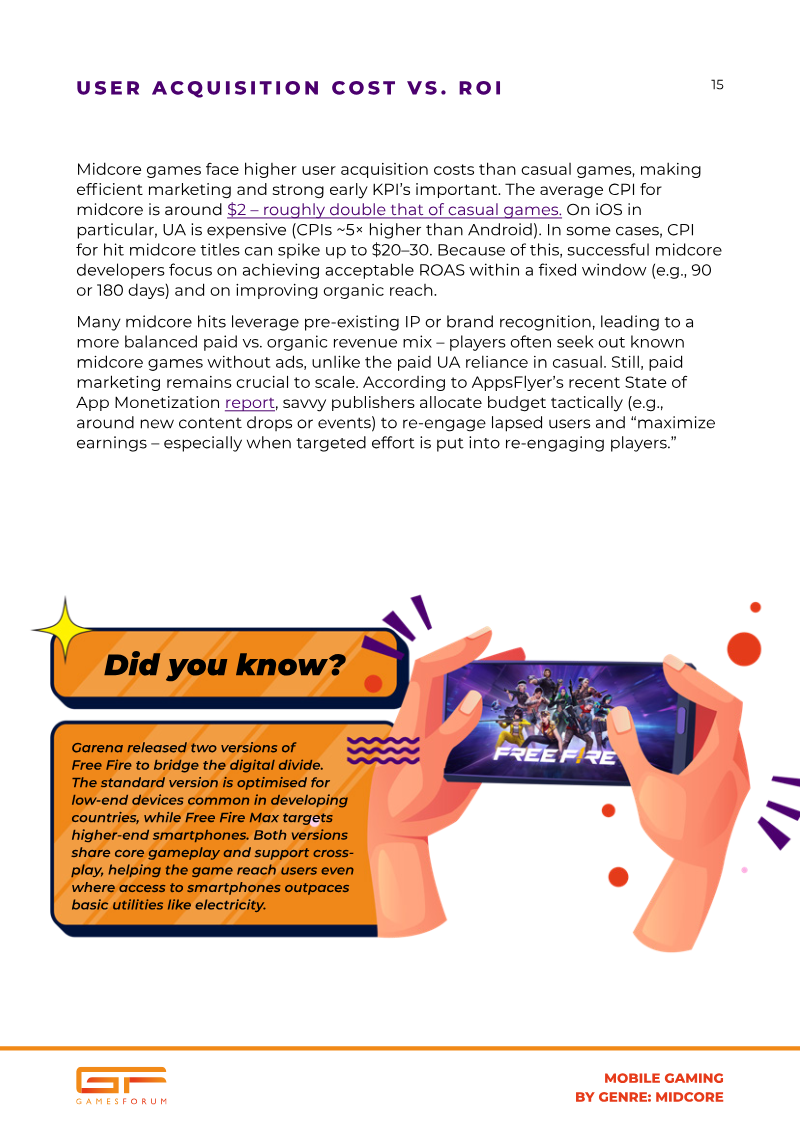
The analysis demonstrates that midcore mobile games—those offering depth while remaining accessible on handheld devices—are experiencing a post-pandemic rebound, with Q1 2025 downloads and revenue surpassing 2024 levels.
- Midcore mobile gaming is experiencing a post-pandemic rebound, with Q1 2025 revenue and download figures exceeding 2024 levels.
- Strategic rewarded video integration can significantly boost performance, as evidenced by Bytro Labs increasing ARPDAU by 32.9% and Day-3 iOS retention by 6.1%.
- Midcore titles achieve higher eCPMs than casual games, with Bytro Labs reaching eCPMs of 23 on iOS and 25 on Android through optimized ad placement.
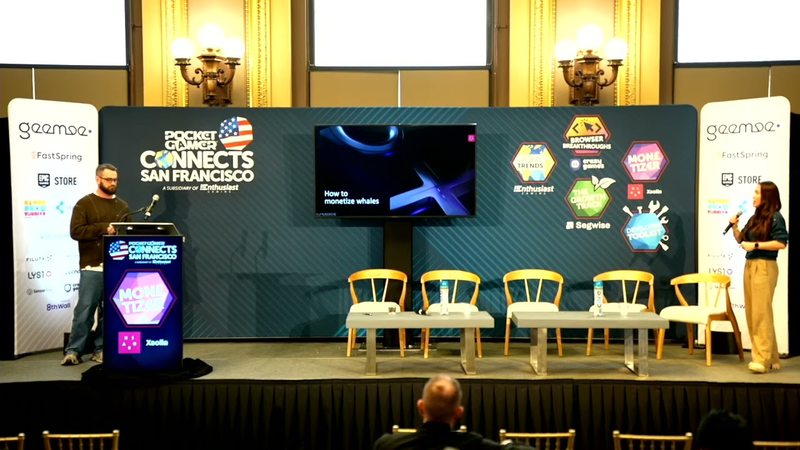
Session: Winning With Whales: How To Get, Retain & Monetize Them.
The primary objective of this analysis is to outline effective strategies for attracting, retaining, and monetizing high-value players, commonly referred to as whales, within the mobile gaming industry through the use of dedicated web shops.
- Whales represent a significant revenue driver for web shops, with an average spend of $847 per user and an average of 17 repeat purchases per month.
- Web shops should prioritize high-value, exclusive content that is difficult to obtain in-game, as whales consistently prefer added value over simple discounts.
- Direct communication channels—such as dedicated community managers and closed Discord channels—are essential for fostering the exclusivity and premium treatment that whales expect.

Personalization in Gaming: The Holy Grail of User Experience (and
Personalization represents the next frontier in gaming user experience, moving beyond static, rule-based segmentation toward dynamic, AI-driven environments.
- Gaming is shifting from static, rule-based segmentation to dynamic, AI-driven environments using contextual multi-armed bandit algorithms to automate difficulty, pricing, and ad frequency in real time.
- Machine learning replaces manual A/B testing, allowing studios to simultaneously optimize for conflicting goals like player retention and monetization without repetitive manual configuration.
- The mobile casual puzzle sector is currently the primary adopter, using these tools to refine rewarded video placements and prevent revenue cannibalization.

Is the Overwatch 2 Battle Pass Design Broken?
The current battle pass model in competitive shooters like Overwatch 2 faces significant friction due to its rigid, linear progression structure.
- Battle passes are estimated to generate between 30% and 60% of total revenue for modern shooter games.
- Overwatch 2 has surpassed 100 million total users since its October 2022 launch, with an estimated 20 million monthly active users.
- Successful battle pass designs are evolving from static, linear tracks toward page-based systems that offer players more choice in which content to unlock.
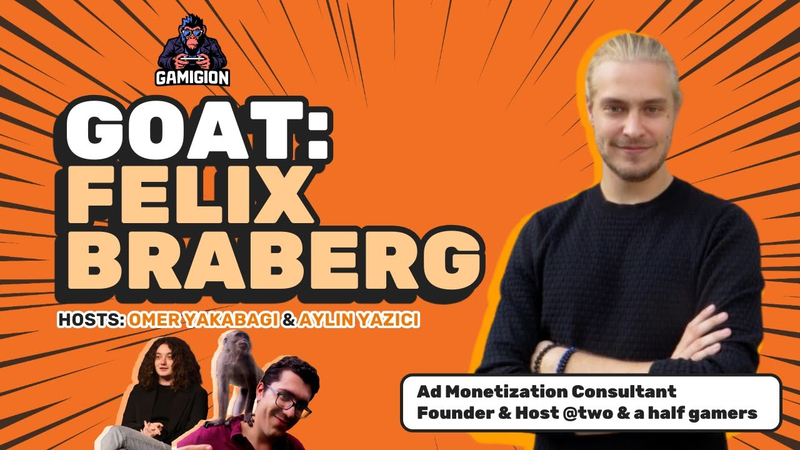
GOAT: Felix Braberg on Ad Monetization, and Fun | Full Interview
This analysis explores the current state of mobile game ad monetization, emphasizing the strategic balance between revenue generation and player retention.
- Implementing a mediation platform is the single most effective strategy for publishers, as it can double ad revenue by increasing competition among networks.
- Publishers should follow the '5% rule' for network integration: continue adding ad networks to a mediation stack as long as each network contributes at least 5% of total revenue.
- Successful hybrid-casual games like 'We Are Warriors' demonstrate that high ad frequency is viable, achieving 15–16 rewarded ad impressions per day for 82% of their user base.

The Smart Way to Extend Your Game's Lifecycle
The game industry is currently undergoing a strategic shift toward cross-platform development and direct-to-consumer monetization models to combat rising production costs and shrinking budgets.
- Developers can significantly increase profit margins by utilizing alternative web shops like Xsolla, which charge 5-6% in fees compared to the 30% commission standard on major mobile, Steam, and console platforms.
- Successful free-to-play monetization requires integrating revenue models—such as in-app purchases, subscriptions, or ads—into the core game design early to avoid player friction and ensure the economy feels natural.
- Extending a game's lifecycle can be achieved by porting titles to new platforms, transitioning premium games to free-to-play models, or adding multiplayer functionality to legacy titles to drive new sales.
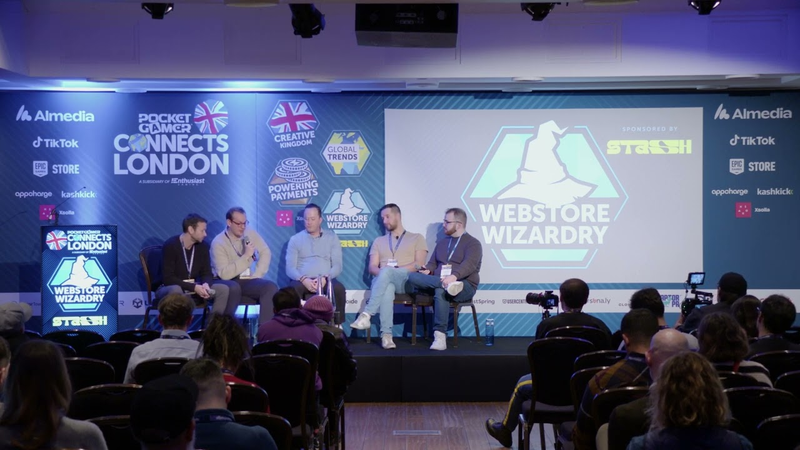
Panel: Championing Community – Building Player Connections Outside the App Stores
Mobile game developers are increasingly prioritizing direct-to-consumer strategies to mitigate the impact of rising user acquisition costs and the limitations imposed by platform-specific fee structures.
- Transitioning players to web shops can increase net revenue by approximately 31%, as developers retain 90% of revenue compared to the 70% typically realized through app store ecosystems.
- Leading developers are currently achieving 14% of their revenue off-platform on launch day, with expectations to reach 50% to 60% off-platform within three to six months.
- Web shops are viable across all game genres, including casual titles; one provider has processed over $1.5 billion in transactions across various genres over the past two years.
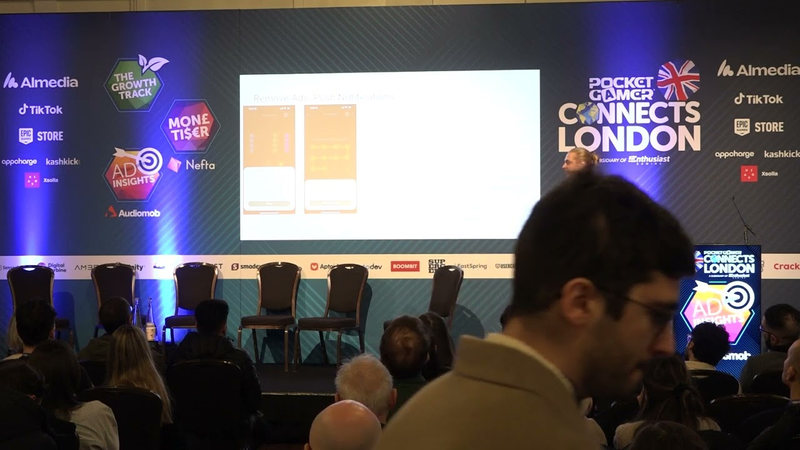
Session: Remove Ads Messaging – How To Use Ads To Drive IAPs & Subscriptions - Felix Braberg.
The mobile gaming industry is currently undergoing a significant shift in monetization strategy, increasingly adopting design patterns from non-gaming app developers to drive in-app purchases (IAPs) and subscriptions.
- Developers are increasingly leveraging user frustration with declining ad quality—specifically longer durations and intrusive end cards—to drive conversions toward IAPs and subscriptions.
- The 'remove ads' messaging strategy shifts perceived blame for poor ad experiences onto the ad network, positioning the developer as a partner in providing a premium, ad-free experience.
- Implementing 'double choice' pricing, which pairs a high-value lifetime purchase with a lower-cost subscription, uses psychological anchoring to increase the perceived value of premium offerings.
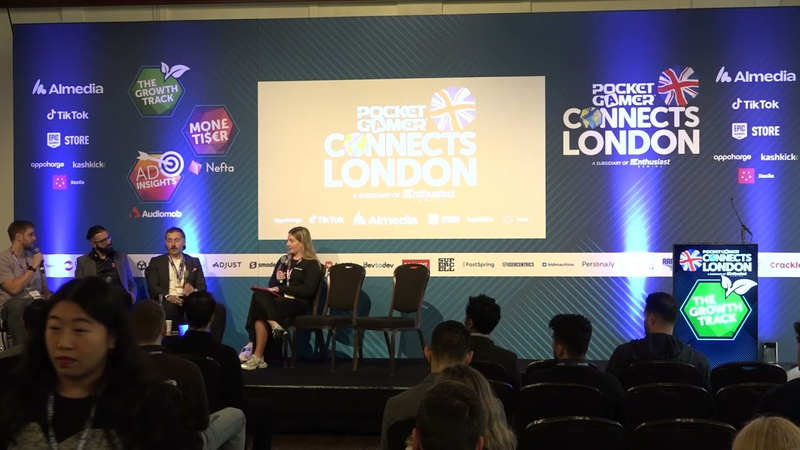
Curated Panel: How To Maximise Your ROAS & Retention Advertising On Rewarded Platforms.
Rewarded advertising platforms have emerged as a significant, reliable, and growing component of user acquisition strategies for mobile game developers.
- Rewarded platforms are a reliable scaling source for user acquisition, typically accounting for 10% to 15% of the total marketing spend for the participating companies.
- User retention metrics from rewarded platforms are often superior to traditional channels, making them a valuable data point when presenting performance to investors.
- To maximize return on ad spend (ROAS), advertisers should implement separate reporting and analysis for rewarded traffic, as user behavior differs significantly from organic or standard paid acquisition.
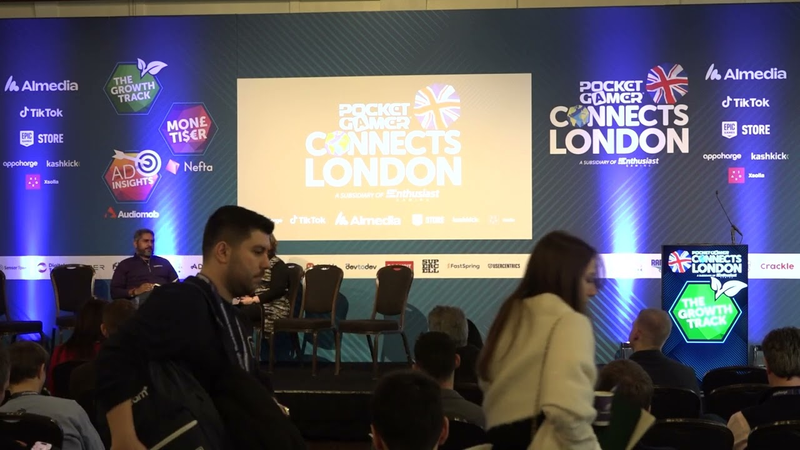
Session: From Players To Profits – Leveraging The Value Triangle For Enhanced ROI -Vishal Mahtani.
The value triangle framework serves as a strategic model for optimizing rewarded advertising by balancing the interests of three core stakeholders: the user, the advertiser, and the publisher.
- The 'Value Triangle' framework balances the interests of the user, the advertiser, and the publisher to move beyond purely transactional rewarded advertising toward higher user retention and engagement.
- Leveraging rich data from Mobile Measurement Partners (MMPs)—including in-app purchase data, recency, frequency, and time-on-platform—allows for more precise targeting and personalized user experiences.
- Machine learning and AI are essential for optimizing the 'Value Triangle,' enabling platforms to dynamically segment audiences into micro-groups and tailor rewards and timeframes to individual user habits.
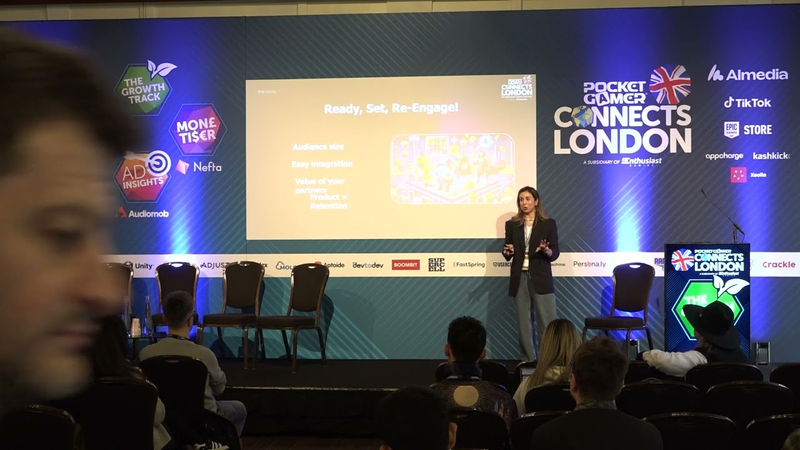
Session: Why Focusing Only On New Users Is Holding Back Your Mobile Game – Vera Manhoso, RTB
Mobile game developers often prioritize user acquisition (UA) at the expense of retargeting, a strategy that limits long-term growth and profitability.
- Only 1.83% of mobile game users typically make in-app purchases, making the retention of these high-value players through retargeting essential for long-term profitability.
- Retargeting is more cost-effective than user acquisition (UA) because it leverages existing data on player value, whereas UA requires spending to identify the value of new, unknown users.
- Retargeting campaigns can be initiated with an audience as small as 2,000 to 3,000 high-value players, and they do not need to run year-round to be effective.