PC reports and market data
Documents
10 Steps To Making a Successful Game
Achieving success in the independent game industry requires a disciplined, multi-faceted approach that balances creative vision with rigorous business management.
- The final 10% of the development process, specifically polishing and bug fixing, is the primary determinant of whether a game launch succeeds or fails.
- Developers should treat projects as businesses from the start by prioritizing low-cost operations and maintaining stable employment until the project achieves profitability.
- Success relies on an iterative development cycle that involves creating prototypes, testing them, analyzing feedback, and refining mechanics to ensure a polished final product.

David & Goliath: How a Newbie Solo Developer Landed on Xbox Game Pass
The journey of a solo developer securing a spot on Xbox Game Pass for the title She Dreams Elsewhere highlights the critical intersection of creative development, strategic networking, and business pragmatism.
- Securing a spot on Xbox Game Pass requires a unique, polished game identity that justifies its existence to platform holders like Microsoft.
- Active participation in industry events such as GDEX, DreamHack Atlanta, and GDC is essential for building the direct relationships with platform representatives necessary to secure publishing or distribution deals.
- The Xbox Game Pass deal provided the financial stability required to complete the four-year development of She Dreams Elsewhere without the need for a traditional third-party publisher.
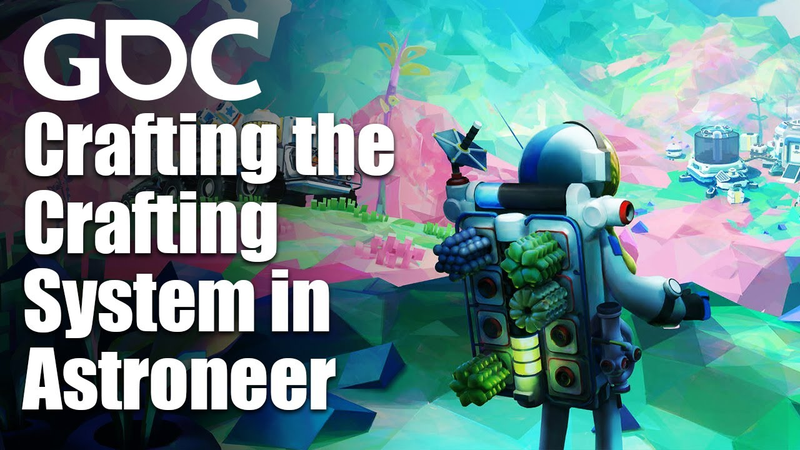
Mining Your Own Design: Crafting the Crafting System in Astroneer
The crafting system in Astroneer underwent a comprehensive structural overhaul to address declining player engagement caused by a repetitive core loop and a lack of meaningful progression.
- To avoid design paralysis in live games, treat existing systems like an archaeological dig to uncover the core intent behind original features rather than just iterating on surface-level mechanics.
- When team members have conflicting visions, explicitly map out specific subsets of the system to identify if the disagreement stems from different focuses, such as moment-to-moment tactile interaction versus long-term systemic complexity.
- Use the 'What’s This For' (WTF) thought exercise to strip away entrenched assumptions and clarify the ultimate goal of a feature, such as identifying that a module was intended as a resource sink rather than a resource generator.

Super Meat Boy, A Team Meat Meatmortem
Super Meat Boy emerged from a desire to create a responsive, physics-driven platformer that evolved from a modest project into an ambitious, feature-rich title.
- The development of Super Meat Boy relied on non-formulaic, 'duct-taped' physics, with the creators spending two months exclusively refining movement and controls before testing individual levels.
- The team faced extreme financial pressure, with Tommy Refenes reporting a bank balance of -$853 during the final stages of development.
- The final development phase involved a grueling cycle where the team attempted to fix 129 bugs daily, only to have testers uncover more issues overnight, resulting in a month and a half of constant crunch.

Enad Global 7 Q2 2020 Interim Report Presentation
Enad Global 7 operates as a diversified gaming group focused on the development, marketing, publishing, and distribution of PC, console, and mobile titles.
- Enad Global 7 operates a diversified business model integrating internal game development with external consultancy, marketing, and publishing services.
- The group employs approximately 200 staff members across eight international offices, with headquarters located in Stockholm.
- The marketing division, Petrol, has supported the release of over 1,500 titles, including major franchises such as Call of Duty, Destiny, and Dark Souls.
The Bystander Effect - Standing Up From the Crowd - Extra Credits
The bystander effect is a well-documented psychological phenomenon where individuals are less likely to offer assistance to someone in need when others are present.
- The bystander effect occurs when individuals fail to intervene in emergencies due to the diffusion of responsibility, where people assume others will act, and social mirroring, where observers look to the crowd to determine if a situation is serious.
- In multiplayer gaming environments, players often neglect to assist teammates because they rely on other group members to provide aid or fear their intervention is unnecessary.
- Individual willingness to help is frequently inhibited by personal biases related to race, gender, and socioeconomic status, as well as concerns regarding personal safety or a perceived lack of skill.

Destructible Environments in Control: Lessons in Procedural Destruction
The development of destructible environments in the game Control focused on creating a reactive, cinematic experience within the game’s primary setting, the Oldest House.
- Remedy implemented a procedural destruction system in Control using a three-layer approach: rigid body simulations (RBDs) for large chunks, mesh particles for smaller debris, and material-based decals for surface-level damage.
- The destruction pipeline relied on metadata tagging for all environmental assets, allowing the engine to apply specific physics rules based on material properties like concrete, wood, or metal.
- To manage performance, the team utilized collision delays, high sleeping thresholds for physics objects to prevent unnecessary movement, and Signed Distance Fields (SDFs) for efficient particle-to-environment collisions.
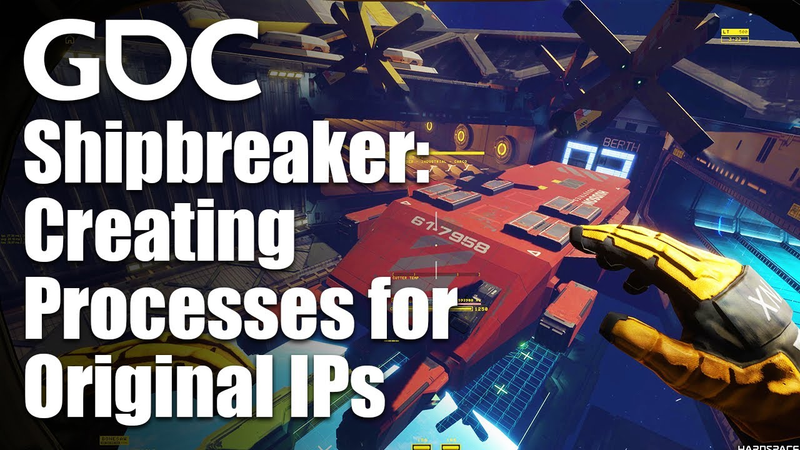
Forging Hardspace: Shipbreaker: Creating Processes for Original IPs
The development of Hardspace: Shipbreaker demonstrates the strategic necessity of balancing creative experimentation with rigorous production discipline when building original intellectual property.
- Blackbird Interactive maintained a small, stable core team of 10 to 15 members during the early development of Hardspace: Shipbreaker to ensure the game's core mechanics were fully validated before scaling production.
- The studio utilized a 'breadcrumb' iterative process, where successful mechanics from failed prototypes—such as the grapple gun and cutting tool—were retained and repurposed across multiple project pivots between 2016 and 2020.
- To avoid the 'clearance rate' trap where teams avoid difficult but necessary design changes to protect their metrics, the studio prioritized systemic design over handcrafted content, allowing the game to generate unique experiences procedurally.
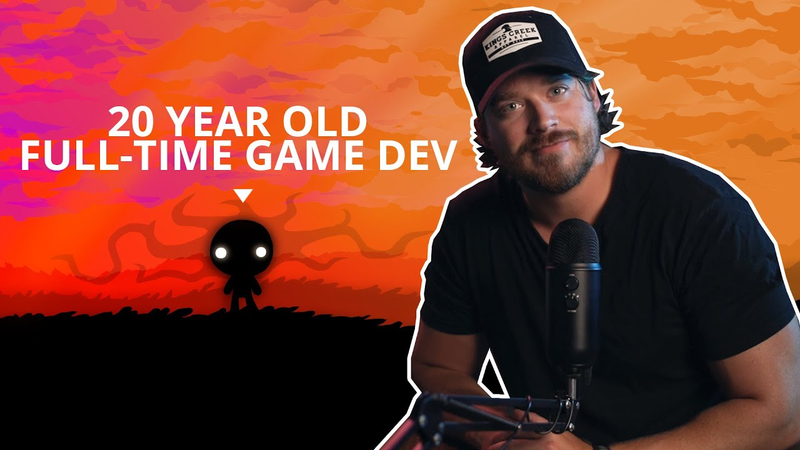
How This 20 Yr-Old Went Full Time Game Dev!
The transition to a full-time career in independent game development is increasingly achievable for young creators by diversifying revenue streams rather than relying solely on game sales.
- Achieving full-time independence in game development requires diversifying revenue streams beyond game sales, utilizing a mix of YouTube ad revenue, Patreon support, and educational content.
- Aspiring developers should treat game development as an entrepreneurial venture, layering multiple smaller income sources to ensure financial stability during the time-intensive production cycle.
- Building an audience by documenting the development process through video logs creates a sustainable brand and income stream that can support a developer before their games achieve commercial success.

I Made The Fastest Snail in The Multiverse (Devlog)
Will You Snail is an indie platformer featuring a fast-paced snail protagonist navigating a world governed by an antagonistic AI that predicts player movement in real-time.
- Will You Snail is a solo-developed, fast-paced platformer featuring an antagonistic AI that predicts player movement in real-time.
- The project has achieved a significant marketing milestone by surpassing 10,000 wishlists on the Steam platform.
- The game is designed for a four-hour runtime and incorporates a dual-tier progression system based on skill points from high-difficulty levels and exploration points from puzzles.
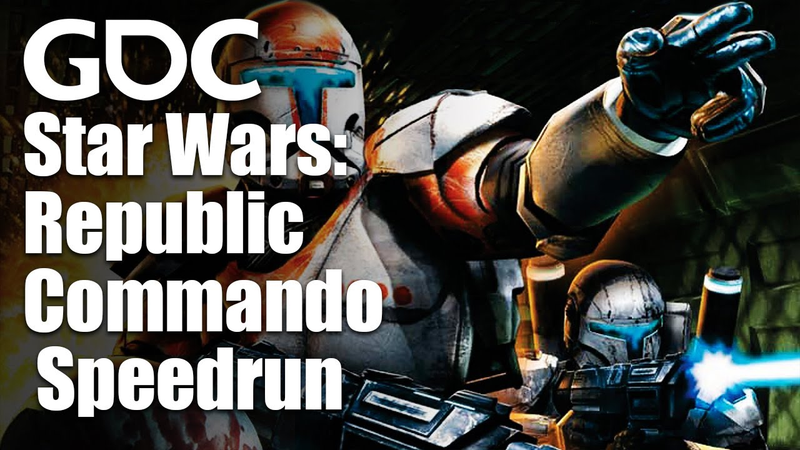
GDC Summer Dev Speedrun - Star Wars: Republic Commando With Harley Baldwin
The development of Star Wars: Republic Commando, released in 2005, serves as a case study in balancing ambitious squad-based mechanics with the severe hardware constraints of the original Xbox.
- To address player feedback that the game did not feel like a squad-based experience, the development team implemented a simple code change that defaulted the squad to 'search and destroy' behavior whenever the player entered a new area, ensuring the AI remained visible and active.
- Technical limitations in Unreal Engine 2 and the hardware of the era forced level designers to use short hallways to connect large arenas, as the engine struggled to render expansive environments alongside the necessary connective geometry.
- Early prototypes for vehicle-based or moving-platform gameplay were abandoned because the physics simulation costs were prohibitively expensive for the hardware available at the time of development.
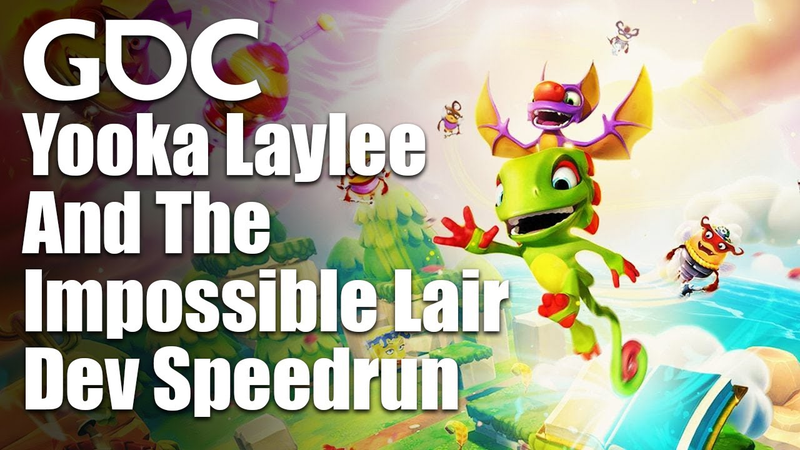
GDC Summer Dev Speedrun - Yooka Laylee And The Impossible Lair With Chris Sutherland
Yooka-Laylee and the Impossible Lair utilizes a unique health-based progression system where players collect bees to act as shields, allowing them to attempt the final, high-difficulty gauntlet at any point in the game.
- Yooka-Laylee and the Impossible Lair features a health system where players collect up to 48 'Bees' that act as a shield, allowing the game to become progressively easier as the player collects more items.
- Developers at Playtonic Games intentionally leave certain bugs and exploits in the game if they are difficult to encounter, do not corrupt save files, and provide excitement for speedrunners.
- The game utilizes the Unity engine, which differs from the development process of the Donkey Kong Country era by allowing for more modern, flexible workflows and physics-based interactions.