PC reports and market data
Documents
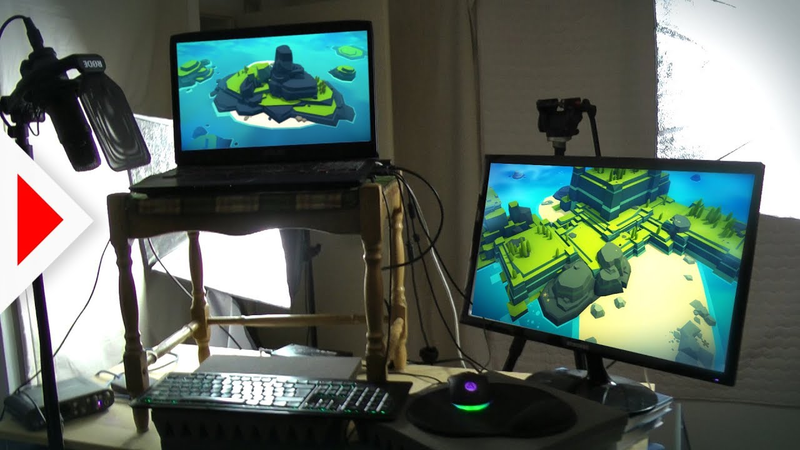
Game Dev: The Week Before Launch (Devlog)
The final week of development for the indie title Islanders highlights the technical and logistical hurdles inherent in preparing a game for a Steam launch.
- The final week of development for Islanders focused on critical technical stabilization, specifically resolving Linux build compatibility, dynamic batching failures from multiple light sources, and mesh transformation errors.
- The development team utilized Unity’s frame debugger, iterative testing, and community-sourced troubleshooting to address performance bottlenecks before the Steam launch.
- To maintain productivity and morale during the high-stress pre-launch period, the team employed a dual-project workflow, working on a separate platformer project during daily livestreams.

Tree's Company: Systemic AI Design in Just Cause 3
The systemic design of artificial intelligence in Just Cause 3 relies on a modular architecture that balances emergent, open-world behavior with the precise requirements of scripted mission content.
- Avalanche Studios utilized a hybrid AI architecture for Just Cause 3 that combined behavior trees for high-level logic with utility functions to rank and select optimal positions or targets based on environmental variables.
- Content designers were empowered to customize AI behavior by filling out exposed parameters in the engine, which were then dynamically read and utilized by the behavior trees at runtime.
- The team implemented modular 'micro-behaviors' as external tree objects, allowing designers to inject specific tasks—such as flying a helicopter to a point—into the main AI logic without requiring custom programming for every scenario.
How We Made ISLANDERS - (Indie Game)
The development of the indie game Islanders serves as a case study in the effectiveness of rapid prototyping and iterative design within small, focused teams.
- A three-person team developed Islanders in just four months as part of a bachelor program, proving that small, focused teams can produce polished titles through rapid iteration.
- The development process relied on short-term prototypes lasting only one to two days to test mechanics, allowing the team to discard complex features like real-time resource management and meteors.
- Transitioning from a real-time model to a turn-based system was a pivotal design choice that removed player pressure and prevented late-game economic inflation.
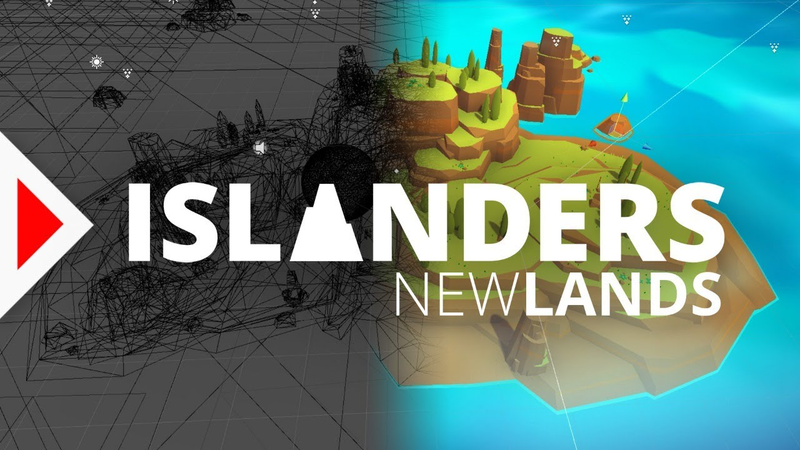
ISLANDERS - Making New Islands (Live)
The development of the strategy game Islanders centers on a sophisticated procedural generation system designed to produce infinite, aesthetically consistent island layouts.
- A three-person development team utilized a modular, step-by-step procedural generation system to create infinite, aesthetically consistent island layouts.
- The system employs specialized generators and heat maps to automate the placement of terrain, resources, and decorative elements while maintaining structural balance.
- Development focused on managing complex Unity engine variables, including mesh filtering, pivot points, and object clipping, to ensure visual coherence.
ISLANDERS - All you need to know. (Devlog)
Islanders is a minimalist, casual strategy game designed to be accessible to a broad audience while offering significant depth for players seeking a challenge.
- Islanders is a minimalist strategy game developed by a three-person team over a four-month period as a university project at HTW Berlin.
- The core gameplay loop centers on procedural island generation and a deck-building mechanic where players strategically place buildings to maximize scores based on proximity bonuses.
- The game features 30 distinct building types, each with unique environmental constraints and range-based scoring requirements.

Vehicle Audio of Mafia III: Recreating a Classic Era in Automotive History
The audio production for Mafia III centers on the challenge of recreating the authentic mechanical soundscape of 1968 New Orleans within the constraints of a high-octane, open-world action game.
- The development team recorded 30 distinct vehicle archetypes from 20 cars, two trucks, seven boats, and one electric vehicle to populate an expansive 1968 New Orleans setting.
- To ensure high-fidelity audio without environmental interference, the team used a Dyno-pack hydraulic braking system for controlled, silent recording sessions.
- The production scaled 30 original recordings across 90 total in-game car models by utilizing a flexible audio architecture that adapts to real-time physics data.
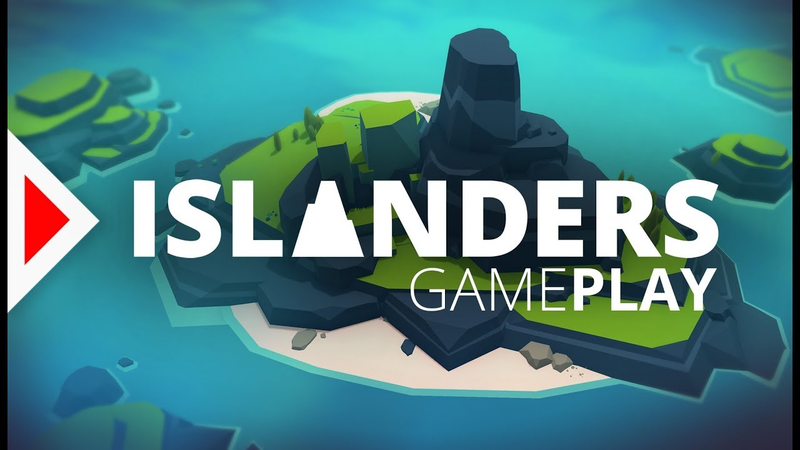
ISLANDERS Gameplay - (Developer Playing)
Islanders functions as a minimalist, procedurally generated strategy game that prioritizes accessible, high-score-driven city building over traditional resource management.
- Islanders is a minimalist, procedurally generated strategy game that replaces traditional resource management with a high-score-driven loop focused on spatial optimization and proximity bonuses.
- The game was developed by a three-person team over a five-month period, evolving from a university assignment into a commercial PC release.
- The technical architecture relies on the Unity engine for development and Blender for 3D asset creation, prioritizing a non-violent, aesthetic-focused gameplay experience.

The Great Divide: Unique Visuals and Deterministic Gameplay in Deserts of Kharak
Homeworld: Deserts of Kharak demonstrates a sophisticated architectural approach to real-time strategy development by enforcing a strict separation between the deterministic simulation layer and the Unity-based visual presentation layer.
- To achieve deterministic gameplay for multiplayer RTS, Blackbird Interactive separated the simulation layer from the presentation layer, ensuring the simulation never calls Unity APIs and uses internal scope to prevent accidental cross-layer dependencies.
- The team implemented a custom entity system using structs that act as indices into pre-allocated arrays, allowing for up to 5,000 entities without triggering the .NET garbage collector during gameplay.
- To maintain visual fidelity while keeping the simulation lightweight, the game uses a 2D driving model for physics calculations, while the 3D presentation layer handles complex visual elements like vehicle suspension, jumping, and terrain interaction.
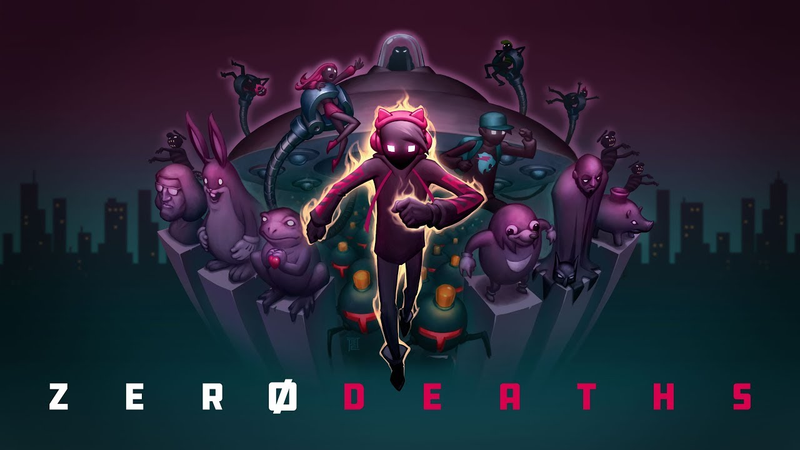
Zero Deaths Official Trailer (A Game-Jam Made In 14ish Days)
The development of the 2D platformer Zero Deaths serves as a case study in rapid game production and community-driven design.
- The 2D platformer Zero Deaths was successfully developed and released within a compressed 14-day timeframe.
- The project utilized real-time feedback loops by incorporating mechanics, narrative, and design concepts suggested by viewers during live-streamed development sessions.
- Rapid prototyping and game jams serve as viable alternatives to traditional long-term production cycles, allowing for the creation of functional software with minimal overhead.
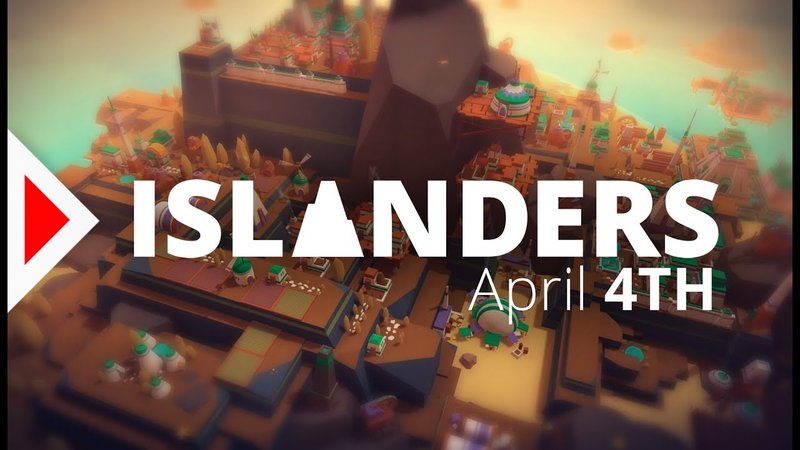
ISLANDERS - Surprise! We made a game.
Islanders is a strategy-based optimization game centered on the construction of aesthetic settlements across procedurally generated islands.
- Islanders is a strategy-based optimization game developed by a three-person team from the HTW Berlin game design program.
- The game is scheduled for a Steam release on April 4 with a target price point between five and ten dollars.
- The core gameplay loop focuses on earning points through the strategic placement of buildings within procedurally generated environments.

Make Your First Music Track! - (Full Tutorial)
Music production serves as an accessible creative endeavor when utilizing digital audio workstations like Reaper alongside external virtual instrument plugins.
- Music production is accessible to beginners by using digital audio workstations like Reaper in combination with external virtual instrument plugins.
- Composition should be grounded in basic music theory, specifically utilizing the C major scale and standard chord progressions to ensure harmonic consistency.
- Tracks are constructed systematically by layering drum beats, bass lines, and melodies through MIDI sequencing in a piano roll interface.

Where Do Your Fortnite Dollars Really Go? - The Origin Story of Tim Sweeney - Extra Credits
Tim Sweeney, the founder of Epic Games, has utilized his significant wealth generated from the success of titles like Fortnite to become one of the largest private landowners in North Carolina.
- Epic Games founder Tim Sweeney has utilized wealth from titles like Fortnite to acquire nearly 40,000 acres of land in North Carolina for conservation purposes.
- Sweeney’s land holdings exceed the total geographic size of the country of Liechtenstein.
- In 2016, Sweeney donated $15 million to reroute power lines away from the ecologically sensitive Box Creek Wilderness.