PC reports and market data
Documents

Why going 2D to 3D was an epic challenge in Risk of Rain 2
The transition from a 2D to a 3D environment in Risk of Rain 2 serves as a primary case study for the technical and design challenges inherent in evolving a successful indie franchise.
- The developers maintained the franchise's signature high-intensity chaos by utilizing a unified base class for players, enemies, and AI, which ensures consistent movement and inventory logic across all entities.
- To manage the computational load of dynamic lighting during combat, the game employs deferred rendering, which calculates lighting based on screen resolution rather than individual vertices.
- The transition to 3D movement necessitated a sprint mechanic and a lowered camera height to prevent the gameplay from feeling sluggish compared to the original 2D iteration.

How We Made a Game in 72 Hours! - (Devlog)
The development of the game Pew Pew Crew, created for the Ludum Dare 44 game jam, serves as a case study in the challenges of rapid prototyping and scope management within a 72-hour timeframe.
- Prioritize polish over feature density to elevate a project from merely functional to excellent, as over-scoping during a 72-hour development cycle often compromises final balance and quality.
- A robust core mechanic—such as the 'life as currency' system in Pew Pew Crew—allows for significant content variety and diverse level design even when using limited assets like a single enemy type.
- Inconsistent art direction, specifically mixing disparate styles between backgrounds and foreground assets, introduces unnecessary production complexity that hinders rapid development.
Playing Your Cards Right: The Hierarchical Portfolio Search AI of Prismata
The Hierarchical Portfolio Search system provides a robust framework for managing complex decision-making in strategy games like Prismata, where massive state spaces and multi-unit control requirements render traditional AI approaches insufficient.
- Hierarchical Portfolio Search (HPS) solves the state-space explosion problem in complex strategy games by decomposing game logic into a 'portfolio' of tactical algorithms, which are then combined and evaluated by a high-level search algorithm like Alpha-Beta.
- The HPS system allows for modular difficulty scaling by adjusting the search depth or the complexity of the tactical algorithms included in the portfolio, enabling developers to create everything from random-move bots to expert-level AI.
- By restricting the AI to a predefined set of tactical moves rather than allowing it to generate arbitrary actions, designers can prevent 'emergent' but undesirable behaviors while maintaining high-level strategic intelligence.

Here's how I stayed motivated for 5 YEARS while making a stupid game...
This analysis addresses the challenges of maintaining motivation and leadership within the game development industry, specifically focusing on independent projects and long-term career sustainability.
- Long-term project completion depends on treating development as a professional obligation with firm deadlines and external accountability rather than relying on fleeting creative inspiration.
- To prevent team attrition in unpaid or independent environments, leaders must establish clear goals, define revenue-sharing models, and foster a sense of shared purpose.
- Maintaining momentum in independent projects requires balancing financial incentives with non-monetary engagement, such as planning for industry showcases or public recognition.
Into the Breach Design Postmortem
The development of Into the Breach demonstrates the efficacy of a minimalist design philosophy, where the prioritization of core gameplay mechanics over technical or narrative complexity leads to a more cohesive experience.
- The core design philosophy of Into the Breach centered on 'telegraphed attacks,' where all enemy intentions are visible to the player, removing hit/miss chance to create a deterministic, puzzle-like combat experience.
- Subset Games prioritized 'collateral damage' as a central theme, shifting the player's focus from unit survival to defending immovable buildings, which serve as the primary fail-state condition.
- To maintain player hope in a deterministic system, the developers included a 'grid defense' mechanic—a low-percentage chance for buildings to resist damage—which acts as a necessary 'ugly pillar' to prevent the game from feeling unsolvable.

Game Dev Reviews A STUPID HARD Rogue-lite | Enter The Gungeon NEW UPDATE!
The development and commercial success of the roguelite game Enter the Gungeon serve as a case study for modern game design, specifically focusing on the intersection of technical execution, player engagement, and marketing strategy.
- Long-term profitability in the modern indie market relies on prioritizing streamability and replayability to foster organic marketing through consistent, long-form content creator coverage.
- Game feel, defined by immediate and responsive feedback to player inputs, is a critical technical requirement for maintaining player engagement in high-difficulty roguelite titles.
- Technical optimization, specifically the use of sprite sheets and efficient lighting, was essential for overcoming Unity engine performance limitations on consoles like the PlayStation 4 during the 2016 development cycle.
How to Market Your Indie Game!
Successful indie game marketing relies on a foundational strategy centered on product design, audience engagement, and strategic distribution.
- Marketing success is primarily determined by product design; developers should prioritize creating unique, watchable concepts that offer a clear, relatable fantasy to ensure organic interest from content creators.
- Establishing a Steam store page as early as possible is essential for accumulating wishlists, which serve as the primary driver for platform visibility and algorithm placement.
- High-quality trailers and store thumbnails are the most critical assets for maximizing click-through rates and should be the focus of visual marketing efforts.

So I got this email...
The provided text details the personal and professional struggles of an independent game developer navigating the financial and psychological pressures of the industry.
- Independent game developers should prioritize securing traditional, full-time employment to decouple creative output from immediate survival needs and financial desperation.
- Relying on viral success or influencer marketing is an unreliable business strategy, as even high-performing game launches often fail to generate sufficient revenue to cover living expenses and debt.
- The pressure to achieve commercial success to solve personal financial crises can stifle creativity, leading to the development of 'soulless' products that lack long-term engagement.
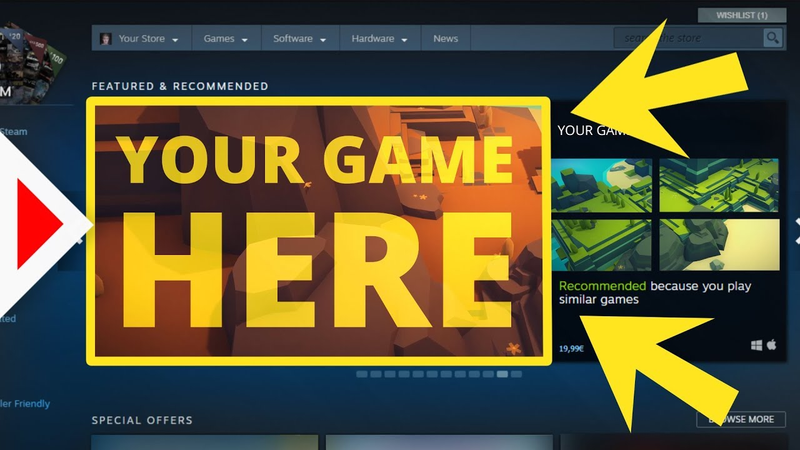
How to Sell Your Game on Steam!
Publishing a game on Steam has become significantly more accessible through the Steam Direct program, which allows developers to distribute titles by creating a Steam account, paying a $100 fee, and completing the necessary legal and administrative documentation via the Steamworks portal.
- Developers can access the Steam marketplace by paying a $100 fee and completing legal documentation through the Steam Direct program.
- Steam waives its revenue share on retail keys generated by developers for sale on third-party platforms or personal websites.
- Technical integration of Steam features like achievements and leaderboards is typically handled via the Steamworks API, often using wrappers such as Steamworks.NET for Unity.
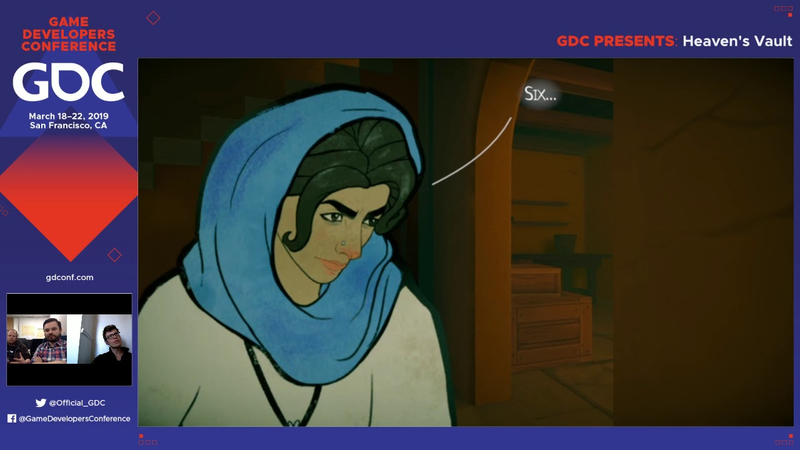
GDC Plays Heaven's Vault with Jon Ingold and Joseph Humfrey
Heaven’s Vault represents a significant evolution in narrative-driven game design, prioritizing a systemic approach to storytelling over traditional, rigid branching structures.
- Inkle developers prioritize narrative fluidity by avoiding formal planning processes like spreadsheets, instead opting for a reactive, scene-by-scene development approach that allows for constant refinement until launch.
- The studio uses their proprietary 'ink' engine to treat game scripts as interactive films, where each line of text functions as a command for camera shots, sound effects, or environmental triggers.
- To maintain high-quality writing, the developers intentionally avoid full voice acting, arguing that it forces players to read at an actor's pace and limits the team's ability to iterate on the script late in development.
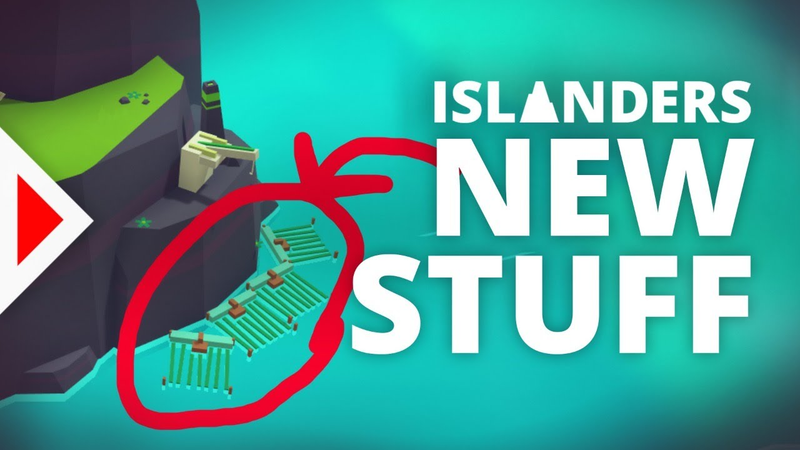
Making New ISLANDERS Content Live
The development of ISLANDERS centers on a minimalist, iterative design philosophy that prioritizes intuitive gameplay and strategic depth over complex mechanical systems.
- The development team prioritizes a minimalist design philosophy, focusing on adding new building types like seaweed fields and monuments that integrate into existing scoring systems without increasing core complexity.
- Technical stability is maintained by shifting from procedural generation seeds to object-position-based save states, which mitigates compatibility issues and ensures consistent player experiences.
- Performance is optimized through efficient asset handling and mesh baking, while resource-intensive features like road systems and mobile ports are intentionally excluded to keep development costs manageable.
Game Discoverability Day: Building a Community for Your Game from Scratch
Community building has emerged as the primary driver for game sales, effectively superseding traditional reliance on press coverage and influencer marketing.
- Community building has replaced traditional press and influencer marketing as the primary driver for game sales, making it the most reliable method for ensuring launch momentum.
- Developers should aim to accumulate 8,000 to 10,000 Steam wishlists by initiating community efforts four to six months before the official game release.
- Establishing a dedicated, game-specific Discord server is more effective than using a centralized company hub, as players form stronger attachments to individual titles.