PC reports and market data
Documents
Feeding the Maw: Managing a Live Narrative Game in Fallen London
Fallen London, a decade-old free-to-play browser game, serves as a critical financial and creative anchor for the London-based indie studio Failbetter Games.
- Failbetter Games uses the decade-old browser game Fallen London as a financial anchor, providing stable revenue that de-risks the development of standalone premium titles like Sunless Sea and Sunless Skies.
- The studio’s monetization strategy relies on the 'Exceptional Friendship' monthly subscription model, supplemented by 'Fate,' a premium currency used for one-off narrative purchases.
- To maintain subscriber retention, the studio produces approximately 100,000 words of exclusive narrative content annually, which is later sold individually to ensure long-term revenue.

Let's Dev | Episode 002: Once Upon a Coma (Highlights)
This technical walkthrough details the digital art production process for Once Upon a Coma, an indie game developed in the Unity engine.
- Environmental storytelling relies on visual composition techniques like using silhouettes for scale reference and framing elements such as trees and mist to direct player focus.
- Atmospheric depth is achieved in Unity-based projects by applying Gaussian and motion blur techniques to background layers within Adobe Photoshop.
- Character design for antagonists like 'Doctor Smile' prioritizes unsettling, elongated features inspired by horror literature while avoiding excessive detail until the primary silhouette is finalized.
Designing Path of Exile to Be Played Forever
Path of Exile achieves long-term player retention by adhering to five core design pillars: visceral combat, randomized levels, randomized items, a secure online economy, and deep character customization.
- Path of Exile maintains player retention through a rigid 13-week development cycle, which creates predictable return dates and manages burnout by allowing players to step away between cycles.
- The studio drives concurrent user growth by treating large-scale content expansions as the primary engine for re-engagement.
- Operational efficiency is achieved by using procedural generation and a strategic content library to repurpose existing assets, allowing for rapid assembly of new expansions within the 13-week window.
League of Legends Client Update: Art Directing a Consistent and Scalable Interactive Brand Identity
The League of Legends client update represents a strategic shift from fragmented, unstable architecture toward a unified, scalable design system.
- The League of Legends client update transitioned from a fragmented, unstable architecture to a unified, scalable design system to improve both developer efficiency and brand cohesion.
- The design team replaced generic aesthetics with a narrative-driven 'Hextech' theme, positioning the interface as a lore-integrated, magical partner within the game.
- To support decentralized feature teams, the studio deconstructed complex mechanical elements into a modular visual language based on geometric precision and metaphorical material rendering.
Let's Try: Godot Engine - Is it good?
The Godot engine serves as a viable, lightweight alternative to industry-standard tools like Unity and GameMaker Studio 2.
- Godot is a highly efficient, open-source alternative to Unity and GameMaker Studio 2, specifically optimized for 2D game development.
- The engine features a portable, lightweight design that requires no formal installation and offers rapid load times compared to resource-heavy industry standards.
- GDScript utilizes a Python-like syntax, significantly lowering the barrier to entry for developers transitioning from other platforms.
Let's Dev | Episode 001: Once Upon a Coma (Highlights)
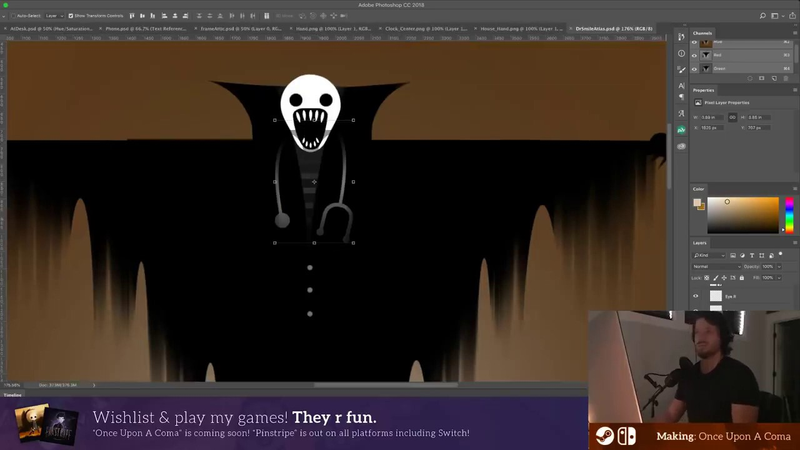
This account details the final stages of production for the indie game Once Upon a Coma, developed in Unity.
- The development of Once Upon a Coma utilizes environmental storytelling and visual cues in Unity to convey narrative depth without relying on explicit dialogue.
- The production process employs iterative asset design, incorporating real-time community feedback to refine aesthetic quality and world-building.
- Transitioning from alpha testing to final launch is a high-stress phase that requires managing both the logistical burden of fixing thousands of bugs and the emotional toll of critical feedback.
RimWorld: Contrarian, Ridiculous, and Impossible Game Design Methods
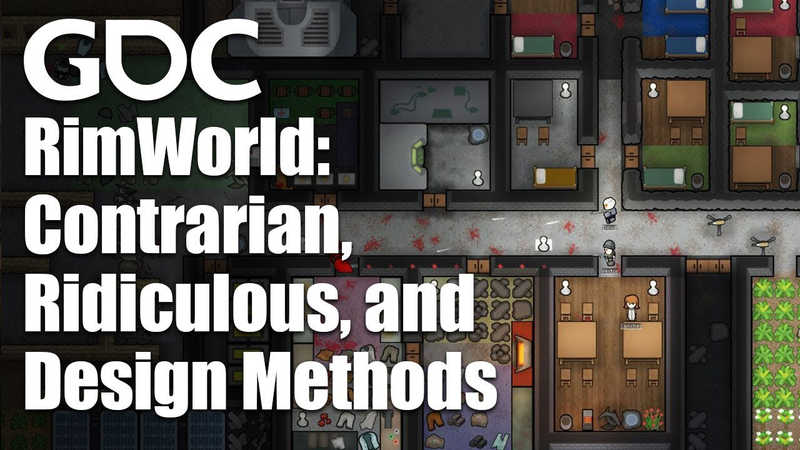
RimWorld succeeds by fundamentally rejecting the traditional game design framework that prioritizes skill-based progression and competitive balance.
- Shift the design focus from traditional 'game' mechanics—which prioritize competition and player victory—to a 'story generator' frame that allows for comical misfortune and emotional narrative development.
- Leverage the human tendency toward apophenia, where players naturally anthropomorphize and find deep social meaning in simple, abstracted symbols and events.
- Prioritize the 'coolness-to-cost' ratio when evaluating features rather than simply asking if an idea is cool, as many cool ideas are not worth the development effort.
Why Make Games? Lessons from Frostpunk and This War Of Mine
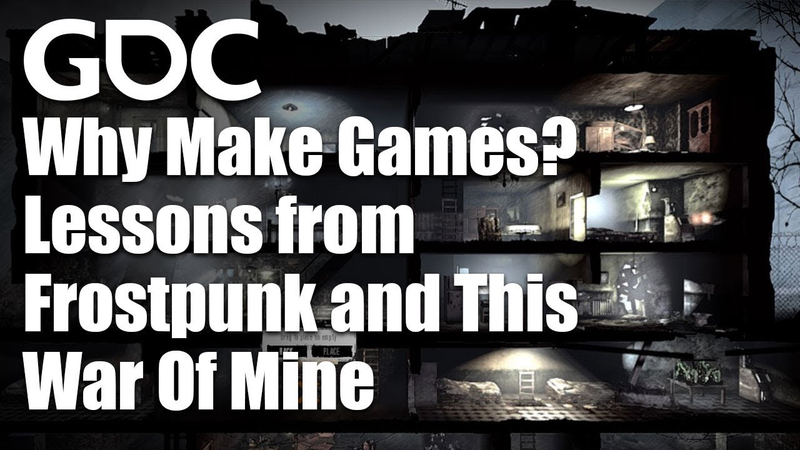
Meaningful game design centers on the creation of interactive experiences that prioritize emotional depth, social values, and complex moral decision-making over traditional mechanics like leveling systems or conventional reward loops.
- 11 bit studios shifted its development philosophy from mechanics-focused design to 'meaningful games' after scrapping a project called Shelter, concluding that games must convey a message and evoke strong emotions to align with the studio's DNA.
- The studio prioritizes 'mood' as the primary binding agent between gameplay, art, and music, rather than focusing on any single element as the most important component of the experience.
- In This War of Mine, the team utilized a community-focused perspective rather than individual character tracking to force players to consider the survival of a group, using chaotic combat and moral dilemmas to reflect the reality of war.
The Making of Divinity: Original Sin 2
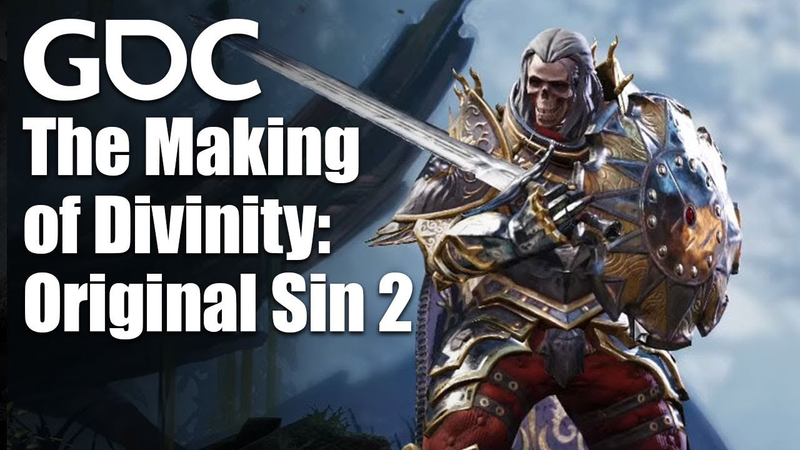
The development of Divinity: Original Sin 2 represents a pivotal transition for Larian Studios, as the company scaled from a single 40-person team in Belgium to a 200-employee international operation.
- Larian Studios scaled from a single 40-person team to a 200-employee international operation, necessitating a 'follow-the-sun' workflow to maintain productivity and reduce crunch.
- The 'n+1' design philosophy, which required the game to account for every possible player action including the killing of essential NPCs, resulted in a script exceeding one million words.
- The studio transitioned from a decentralized, overly collaborative leadership model to a centralized review process to resolve conflicting documentation and scope creep.
Games You Might Not Have Tried - ep 21 - Game Jam "Cycles" Edition! - Extra Credits
Game jams serve as a vital incubator for experimental game design, providing developers with a constrained timeframe—often around 100 hours—to prototype and refine unique mechanics.
- Game jams function as effective incubators for experimental design by forcing developers to prototype and refine unique mechanics within constrained timeframes, typically around 100 hours.
- The 'Cycles' theme demonstrates how developers translate abstract concepts into diverse genres, including puzzle-platformers, precision-based challenges, and social commentary.
- Limited development windows do not preclude high-quality output, as jam submissions frequently feature polished mechanics, effective tutorials, and cohesive aesthetic experiences.
Subnautica Postmortem
The development of Subnautica serves as a definitive case study in the efficacy of transparent, iterative production within the survival genre.
- Unknown Worlds Entertainment utilized an 'open development' model for Subnautica, releasing daily experimental builds to the public to facilitate free, continuous playtesting and rapid bug fixing by thousands of users.
- The development of Subnautica spanned five years with a team of 25 people and a total budget of $10 million, significantly exceeding the original scope and timeline.
- The studio prioritizes 'designing for emotions'—such as wonder, fear, and tension—as a core principle, using these feelings to guide development decisions rather than relying on traditional market research.
Building Games Around Humor: Lessons from The Haunted Island, a Frog Detective Game
Effective comedy in video games relies on the strategic subversion of established genre tropes, utilizing familiar aesthetic markers like noir cinematography or musical cues to ground the player before introducing absurd or mundane narrative twists.
- Subvert established genres by maintaining their visual and structural tropes—such as episodic formats or specific music—while intentionally misaligning the tone to create comedic friction.
- Base character writing on authentic, personal traits, including negative ones like anxiety or impatience, to ensure characters feel believable rather than relying on offensive stereotypes.
- Manage player expectations during marketing to avoid negative reviews; if a game is marketed as a detective genre, ensure the core gameplay loop actually includes detective mechanics.