VideoPocketGamer.biz
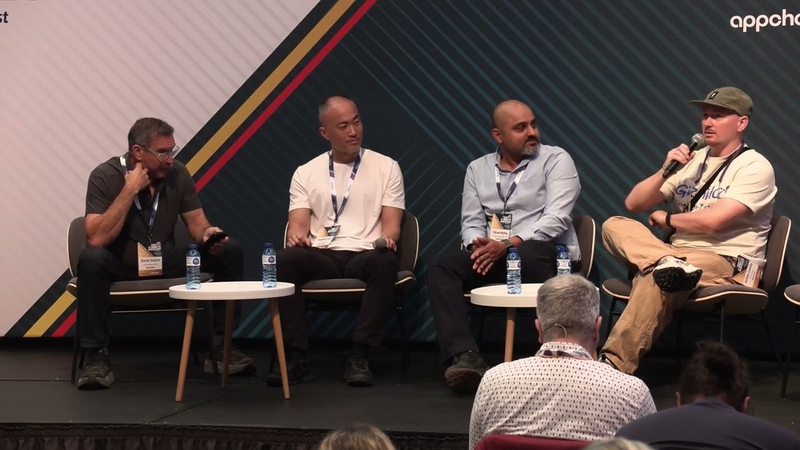
Session: You Grew D2c In 2025. Now What? How To Level Up D2c In 2026 Chip Thurston, FastSpring.
10 Feb 202619 min video
Transcript
Uh, wait. Chip is going to talk to us about DT to C direct to consumer. Uh if you grew direct to consumer in 2025, what now? So this is about how to level up in 2026. Go, go, go. Those are the instructions. All right. Well, thank you all for coming today. I'll be here to talk to you about direct to consumer revenue. I know we're a little behind schedule, so I'm just going to jump in here. Uh we'll talk about, you know, 2025 is a banner year for direct to consumer revenue. So what can you expect to do in 2026? How can you keep that momentum going? Uh, first a little bit
about me. So, I am the head of gaming at Fastpring. We're a direct to consumer payment platform. We have over 3,500 customers globally. We've been around for 20 years. Work with some of the biggest names in gaming from ROIO to Sega to Gameoft and others. Uh, and we love powering web stores. And for me personally, I uh come from the gaming industry. So, I worked spent a few years at Scopely. Before that, spent a few years at Sciplay. uh wore a number of hats across marketing and monetization, but most recently in that time I focused on direct to consumer, migrating players from the mobile game into the web store. Uh maximizing any revenue that we could get on our web channels. Uh and so my focus at Fastpring is to take that experience and help our customers and really the industry overall in talks like this to maximize to to market and monetize direct to consumer. I'm based out of Austin, Texas, so we're in the States. I'm a father of one awesome 8-year-old kiddo and I've become an honorary uh despite knowing nothing about boats, an honorary DTOC captain.
DTOC is our uh cringe-worthy name of our boat party series that we're doing at various events. And so, uh if you're interested in coming on a boat at a f we don't have one in London to be clear, but if you're interested in coming on a boat at a future event, let me know. Uh so, can't talk about the future without talking about the past, right? So, I'm going to talk a little bit briefly on the past, why 2025 was so transformative for direct to consumer, take a snapshot of today, where we are today with some of the moving parts of these rulings and regulations, and then ultimately what you can do in 2026, and that'll be the real meat of the presentation here. So, 2025, it was transformational, right? We had all these rulings, all these regulations come through that just really changed what was possible in direct to consumer marketing and monetization. Uh it really started in April with the Epic versus Apple ruling which said, okay, on Apple in the United States uh or on iOS in the United States, I should say, you could migrate players from the mobile game directly
into the web portal and Apple could not charge a fee on that. And really what was so impactful from that was that the ruling was immediate. It was overnight that uh developers and publishers could start migrating their players in and we saw increased adoption throughout the year and more optimization throughout the year and continued growth throughout the year in direct to consumer as a result of that. And so this ruling was extremely significant and then followed by in October the Epic versus Google ruling which said the same thing on Android. It's like okay now on Android in the United States you could migrate players from the mobile game into the web store uh without any platform fees. So very significant. And those are the rules still in place today in the United States. You can still be doing this. And that's exactly what I'm telling our publishers at Fastpring is, hey, keep keep migrating, keep steering because this is an incredible opportunity. And I say that because this window, we don't know how long this is going to be open, right? And I'll talk a little bit more about that in 2026, but specifically that window without fees. And I think that's the part that is most likely to change in the near future. But again,
2025, huge year, direct to consumer, especially stemming from these rulings. But how do we know that? Well, we did a survey. We did a survey in July, August last year, late last summer, uh, with our partners at Omdia. So, we surveyed over 100 key decision makers in gaming across North America and Europe. And we asked them dozens of questions about direct to consumer. You can read the full report on the fast spring blog, but I've cherrypicked a few slides here or a few charts here to uh take you through to tell a little bit about why I think aligns with why 2025 was so transformative. So, first we asked just do you have a web store? Basically, do you are you pursuing direct to consumer today? We saw 57% of respondents said yes. 43% said no. So, we kind of bifurcated the survey from there. We said, okay, if you don't have it today, are you planning to have it today? And so this is specifically of people who don't yet have it. On the right chart, you see that 96% said yes, they are planning to have it. So essentially what this told us is almost everybody either
had a web store or is planning to have a web store, a direct to consumer platform, right? It hasn't become optional anymore. It's become this necessary vector of monetization. And there's been this realization that multi-platform monetization is healthy. It's just a healthy business model. You're not beholden to only Apple and Google. That's not to say you want to go away from Apple and Google. I would never advocate for only having direct to consumer revenue. I would say understand them, respect them, cultivate the relationship with them, but also invest in a direct to consumer revenue channel. And that's what we've seen in this survey. So we said also, okay, uh, if you have a web store today on the left, has the Epic versus Apple ruling caused you to increase your investment? And again, we saw 95% of respondents here say yes. So it's clear that these rulings and regulations are what are really driving a lot of the investment uh both just monetarily but also just from a a roadmap standpoint. What why do you prioritize direct to consumer on your road map? Well, it's because these
regulations are really transforming what's possible and raising the ceiling for how much direct to consumer revenue you can drive. And then lastly, okay, what about your share of revenue? What about that direct to consumer direct to consumer revenue that you're driving for your game? Has that increased? And here we saw a little bit different. It's uh if you combine somewhat increased and greatly increased, you get 70%. So 70% out of like 70% of publishers saying that they grew direct to consumer revenue is significant. But if you contrast that with all the charts combined before, that's like 98% said they're either investing in it or investing more in it. And so there's a little bit of a gap there. So I think in that sense 2025 was a year of investment to reap the dividends that we'll see in 2026, right? We'll see this continue to grow and continue to advance. And so we're seeing growth, but I think there's still opportunity to see even more growth beyond that. That's enough about the past. Let's go a little bit to where we are today. So like I said, steering without fees in the United States.
That's like if I had to tell our sellers one thing, it's like act with urgency today because again, this is an incredible opportunity. You can push players from your game directly into your web store and you can get that revenue and you don't have to pay a percentage of that revenue to Apple or Google. You just pay your fee to Fastpring. Maybe it's like a 5% fee and you reap the rest of that as profit. That's great. And what we know about these direct to consumer purchasers is that they're sticky, right? Once a player purchases on your web store, once they make that initial conversion, well, they know that their web store is the right place to be for your game, they trust you with their payment information. They know that it's safe there because they made that initial purchase. And they know about the additional value that they can get from purchasing on the web store. Maybe it's 10% more gems or 20% more whatever your currency is. And so, you've already overcome all these hurdles with that initial purchase. So that regardless of what happens with these rulings in the future, those players are more sticky. They're they're more likely to come back
and make their future purchases on that web portal, especially if they're more engaged players, which are the ones you really want migrating over to your web store. So uh again, steering without fees today, that's great from these rulings. We also have steering with fees in Japan. Uh just last month, we had the mobile software competition act go into effect. And so this was just a few weeks ago where this is a new act that was established I want to say summer 2024. There was this long year and a half grace period of when it would actually take effect and then it rolled out a few weeks ago. And so I think we're still waiting to see the dust settle before we see a lot of adoption there. We haven't seen a ton of expansion in Japan yet. But it's I think an indicator of what's to come as I'll talk about in the future slides. And then beyond these rulings, we're seeing calls for regulation all across the world, right? Brazil, Spain, Colombia, UK, seeing all these places where uh they're saying what Apple and Google have done is anti-competitive, right? That they have had monopolistic behavior. And so we as a regulatory
agency want to curb that very similar to what's been done in the United States. So we're seeing this global momentum in all these different places. And that will also play into what we can expect in the future. But we have to recognize that there are these significant counterforces right in the form of Apple and Google. They are going to try to protect this revenue. They will try to do whatever they can to push back against the momentum that we've had on direct to consumer. And so that is coming in the form of what is this epic Google settlement that's been proposed in the United States. Again, not yet in effect, but it's been proposed there. And of course, Apple is appealing the ruling from April of last year. Appeals take a long time to play out. still hasn't played out yet, but that's something we're watching for in 2026 as well. So, if I had to pick two things to look for this year, it's these two cases. But as of today, they're pending. So, where are we going from here? Well, I've heard it in talking with publishers, it's interesting because I've heard it said like, wow, direct to consumer was this brand new thing coming into last year and then this year it's
it's mature. it's this incredible uh it's really found its footing as this necessary platform for monetization and like it's just here to stay. And I'm like I agree it's here to stay but I think it's actually still in this very nent state. It's like we're just at the beginning of direct to consumer. We need to find ways to optimize to continue to strategize to to get players from mobile games into web stores. And so I think it's important to have this perspective where we're not at what the final state of this will be. the rules will continue to change. These rulings will continue to change and so we as publishers need to keep that in mind and continue to adapt to maximize the direct to consumer revenue that comes from these channels. So first and foremost, I would say fees are coming, right? We'll say this no fee steering window will likely close. And I can say this with confidence because Google and Apple have told us as much. So if we look at this epic Google settlement, right, in this they've said they're going to implement a fee on
linked payments for direct to consumer. They'll do this via an API. You can look this up in the uh it's called the external content links program. You can Google it. ironically uh to read up on what this external content links program entails because with this if you link a player from your mobile game into your web store on Android you'll have to pay a percentage of that revenue to Google in that case and you would then pay your merchant of record like Fastpring a fee as well and so you start to have these different fees that you're paying to different providers right and again this is not yet in effect this is in this proposed settlement so we'll see if if and when this goes into effect. But we're seeing a very similar approach from Apple. Apple has said, "Okay, we're going to propose a fee to cover the quoteunquote cost of direct to consumer payments." And that's how they're approaching this, right? It's saying, "Hey, you're using our platform to distribute your product, using our platform to distribute installs, and players are engaging with our game or with your game on our platform as Apple.
And so we should have some way to to recoup that, to recoup those costs, which is fair, right? Um, so we're seeing these different approaches to implementing these fees from Apple and Google. And so the other way is on the mobile software competition act. Part of Apple and Google's compliance on that is to implement a fee to take a fee on that revenue. And so the fee is still to be determined, especially in the case of like the Epic Google settlement, right? We don't know exactly what that number will be. Let's say it's proposed at 20%. Could be 12%, 15%. And I've seen a number of numbers come about, but if it's 20%, right, and then you pay say a 5% to Fastpring, well, that's a 25% fee that you're paying on that direct to consumer revenue. That's pretty unappealing, right? That's not great. Um, so I think the impact this will have is it will just require us to be more strategic in how we drive direct to consumer revenue as publishers. Um, it won't be as simple as it may have been in 2025 where it's just this beautiful
no fee uh opportunity where we can migrate as many players into the web store as directly as possible and not have to worry about that and just have this uh unfiltered growth. It's saying okay well if we go on this very specific channel we have this significant fee that we have to pay to the platforms but if we go on other channels we don't. And so one example of that and one key thing to remember about these fees as they are currently proposed is that they are very limited in scope. They only apply to linked payments. And so when I worked on gaming and I had something new that I wanted to promote about my web store, what I would do is I would line up all the different vehicles we could use to communicate with our players. So that would include inapp communication for sure, like a pop-up in the game or maybe an inbox message in the game. Um, but it would also include our blog or our email communication. Do we want to send an email to players about this? It would include social media posts. It would include community forums. It would include Twitch, Reddit, Discord, all these other places we could reach games.
And these won't be applicable to every game. But think about what growth vectors you have for your what communication channels you have for your game. And then use the ones appropriate to that because the only place that the platform fee would apply is at the very tip of the spear here. It's on the in-app communication very specifically when you're linking in the app to your web store and then the API calls back and says, "Okay, we're going to apply a fee to that." Granted, that's the most frictionless path. That's definitely the path I would like to use, but if there's a fee there that's prohibitive. Okay, well, I'm going to look more at these other channels, too. Maybe I can go post on social media. If you're just linking from a social media post into your web store, well, there's not going to be a fee attached to that that you have to pay to the platforms, right? So you have all these other opportunities for growth that need to be considered. And so this is when I think about 2026. I think this is the direction we'll go is thinking, okay, we have these fees that are very impactful. So how can we circumvent those fees? Uh the other piece that's been on my mind and I think this is a bit of a loophole that might close, but leverage non-link text. So by
that I mean if you're in your game and normally you would have a link that would go directly to your web store. Well, maybe you just put that same uh text in your game, but don't make it a link. So, you get it say go to store.vaspring.com to go get 10% more gems or whatever whatever your bonus is, right? But you don't link it. Yes, you're adding a little bit friction there, but because there's no link, there's no tracking. And because there's no tracking, there's no fee. And so, it's a way to promote. It's certainly better than nothing. It's another way that you can continue to promote your web stores inside of your game without incurring those fees. And so again, just try to think about different ways. One other idea is to think of the fees as maybe an acquisition cost for a direct to consumer purchaser. So if I was on a game today and I was thinking about growing direct to consumer revenue, it's like, man, those fees are rough, but uh and if they go into effect as they're currently outlined, all the all these fees could change. Maybe, just maybe, I'll incur those fees. I'll eat that
cost for that first purchase. So, I have a segment of my players. It's everyone who has never purchased on my web store before. And I say, I'm going to hit them with all the buttons I can to tell them go to the web store. Go to the web store. Go to the web store inside the game. And then they click that and they go into the store and they make that purchase and I pay that fee. But as soon as they make that purchase on the web store, they're in a different segment where they're not getting any buttons in the game anymore. This goes back to what I said earlier. They made that initial conversion on the web store. They are a stickier purchaser now. They trust the web store. They're aware of the value that they get from purchasing on the web store. They know where the web store is. They know how to get there. Like, you've overcome all these things. So, all right, I've steered them in there for the first time and I've paid that cost, but I've acquired them now as a direct to consumer customer. And so, for future purchases, I'll rely on those other channels from the previous slide, social media, community, other places to get them back into the web store or just the inherent value of it to get them to migrate back in. And so I think we'll have to be creative, right, and think about ways like this where maybe we find
a way to do it, but at the end of the day once these fees go into effect, we'll have to find a way to live with them. And the last part is it's become clear like these rulings and regulations are fluid. This landscape is fluid. If I look at where direct to consumer is today versus 12 months ago when we last spoke at PGC London 2025, it is transformatively different. The rules changed all throughout the year. Even if I look at the first half of 2025 versus the second half versus where we are today keeps changing. And so you have to find a trusted source to help you stay on top of these regulations. Um here's a a snippet we posted on the Fast Spring blog about the Mobile Software Competition Act. That was a few days before it went live. Um but regardless of the source you have, there are three key questions that I ask myself that I would encourage you to ask yourself anytime you see a new regulation, which is what's within the scope of it? like what what exactly is this regulation regulating, right? Is this uh the landing page that can be used? Is this the language that can be used? Is this
having to do with a new fee that could be potentially rolling out or not? Um what exactly is within the language of that regulation? Secondarily, when does it take effect? Often we do see a grace period. Maybe it's a few days, maybe it's a few weeks, maybe it's a year and a half like we saw in Japan. The two examples I gave were one was in Japan where it went into effect a year and a half after it was established, but the other was Epic versus Apple where it went into effect immediately. And so as soon as it came out, we had to scramble. So make sure you understand just because you're reading that a regulation was established, maybe it's not yet in effect. And third is of course where does it have an impact, right? What countries are within the scope of that regulation to so ultimately the more responsive you can be, the higher your direct to consumer revenue will be. So try to act quickly on these. Uh but that's it. Right on time. So thank you for your time. You can find us. We have a booth just across the hall over there or of course you can find me on LinkedIn. Uh thank you for coming. [applause]
Auto-generated captions from YouTube — names and numbers may be misheard.
Key insights
Distilling the key insights…
Ask AI about this video
Cite this video
Citation
Generating citation…






















Comments