Mobile reports and market data
Documents

Why is Google policing how the world's top mobile games monetise? | Week in Mobile Games podcast E72
Google and Epic Games have proposed a tiered fee structure for the Play Store that distinguishes between cosmetic items, taxed at 9%, and gameplay-advantage items, taxed at 20%.
- Google and Epic Games have proposed a tiered Play Store fee structure that charges 9% for cosmetic items and 20% for items providing gameplay advantages.
- An analysis of the top 50 mobile games shows that every title currently employs monetization mechanics, such as loot boxes or boosters, that would trigger the higher 20% fee.
- Direct-to-consumer revenue streams are gaining traction, evidenced by Playtika reporting 20% growth in this sector during the third quarter through strategic entertainment brand partnerships.

Game Analytics 03 - Retaining Players
Retention serves as the primary metric for evaluating game health and long-term viability. The industry standard for a successful retention curve is often cited as 40% on day one, 20% on day seven, and 10% on day 30.
- The industry benchmark for a successful retention curve is 40% on day one, 20% on day seven, and 10% on day 30.
- Developers must use a cohorted approach to track user groups by install date, which isolates the performance of acquisition channels and the impact of specific game updates.
- Retention data must be contextualized against the specific game genre, monetization model, and development costs rather than relying solely on generic industry benchmarks.

Game Analytics 02 - Marketing
Marketability in the modern gaming landscape functions as a comprehensive, multi-stage lifecycle rather than a singular focus on cost-per-install metrics.
- Marketability must be treated as a multi-stage lifecycle, moving beyond simple cost-per-install metrics to focus on internal lifetime value (LTV) to customer acquisition cost (CAC) curves.
- Studios should prioritize data-driven insights from historical performance and genre expertise over speculative decision-making to avoid the risks of over-indexing on early-stage key performance indicators.
- Developers improve long-term growth and negotiation leverage by taking direct ownership of marketability testing and ensuring marketing strategies are tightly aligned with the actual in-game experience.

Game Analytics 04 - Monetizing
Monetization in the gaming industry is fundamentally an outcome of understanding player motivation rather than a technical layer added to a product.
- Monetization should be treated as an extension of player motivation rather than a technical layer, requiring a balanced hybrid model of IAP, subscriptions, and advertising.
- Advertising serves to raise the revenue floor by monetizing non-paying users, while rewarded video ads can be offered to all players to enhance retention without disrupting the user experience.
- Developers should avoid binary spender/non-spender classifications and instead analyze the spending spread between 'minnows' and 'whales' to cater to distinct segments like time-rich versus time-poor players.
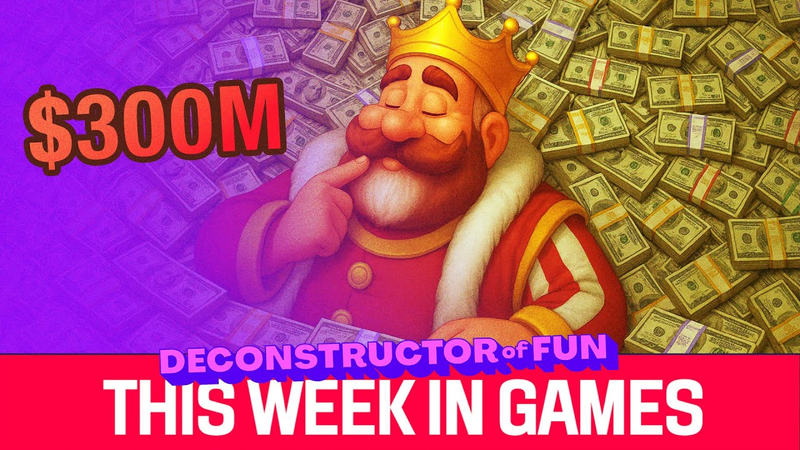
TWIG #357 Royal Match $200M Splurge, Arc Raiders AI Controversy and AI Duolingo's Broken Streak,
The current landscape of the interactive entertainment industry is defined by intense scrutiny over monetization strategies, corporate restructuring, and the integration of emerging technologies.
- The mobile puzzle market is facing diminishing returns, as evidenced by Dream Games' Royal Kingdom failing to see proportional growth despite massive user acquisition spending.
- The court rejected the Epic Games and Google settlement, signaling continued legal scrutiny over app store fee structures and concerns that such agreements stifle independent competition.
- Square Enix is centralizing operations through significant layoffs in its Western divisions, a move that risks weakening the cultural expertise required for effective product localization.
Epic-Google shenanigans, EA payouts, Squad Busters, Take-Two, Playtika, Rainbow 6, Horizon, more
The mobile gaming industry is currently navigating a period of significant structural and financial shifts, characterized by high-stakes legal developments, major executive compensation disclosures, and evolving platform strategies.
- Take-Two Interactive's mobile segment accounted for 46% of its net revenue in Q3 2025, signaling a shift where mobile performance is outpacing the company's console portfolio.
- Gaming-related digital advertising spend reached $8.7 billion during the first three quarters of 2025, highlighting the growing importance of ad-based revenue streams.
- Legal proceedings indicate that the proposed Epic Games-Google settlement is unlikely to be approved, as critics argue the terms disproportionately favor Epic's business model over broader industry reform.

Supercell's New "BOAT GAME" - First Impressions. Cool Idea or Dead on Arrival?
Supercell’s latest experimental project, a twin-stick shooter centered on maritime exploration and resource extraction, represents a pivot toward a PvE-to-PvPvE gameplay loop.
- Supercell's new maritime twin-stick shooter is currently struggling with imprecise mobile controls, shallow progression systems, and an underdeveloped economy that lacks clear monetization features.
- The project utilizes a PvE-to-PvPvE gameplay loop where players extract resources and face high-stakes theft, but it currently prioritizes short-term engagement over the long-term retention strategies required for a global launch.
- Supercell is facing a strategic crossroads as it struggles to replicate the success of legacy titles like Clash of Clans and Clash Royale in an increasingly competitive mobile market.
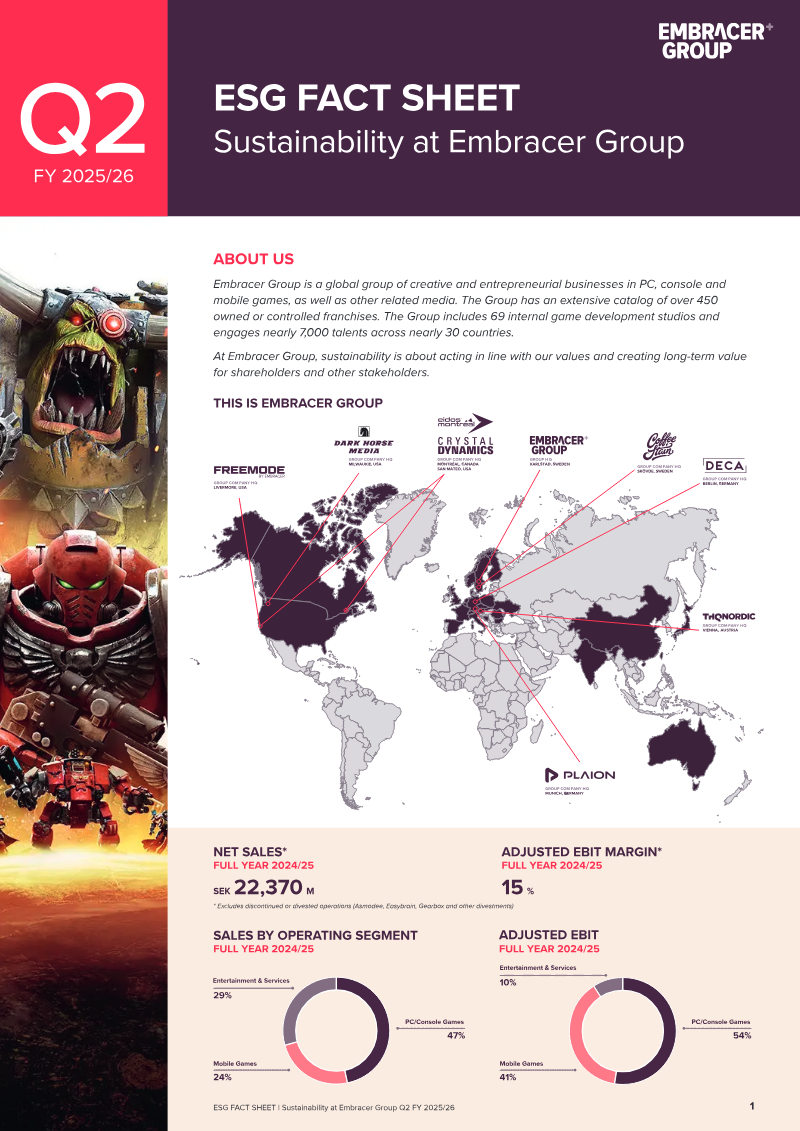
Sustainability at Embracer Group: FY 2025/26 ESG Fact Sheet
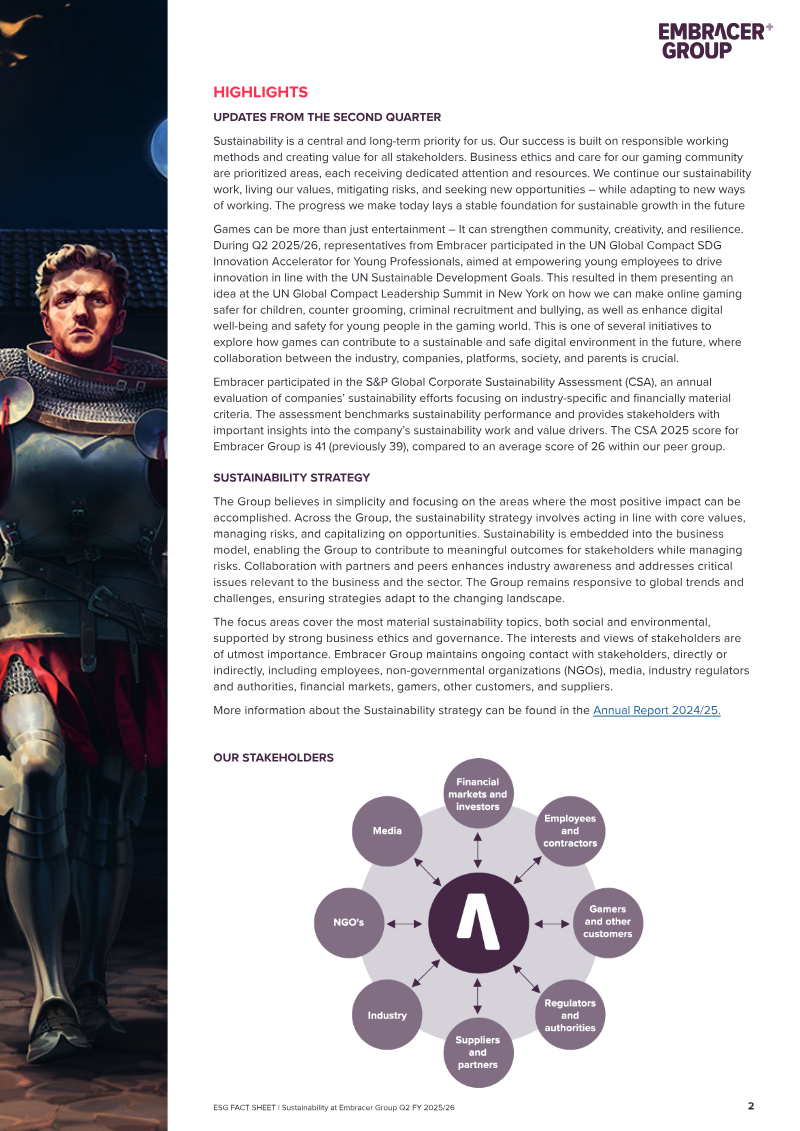
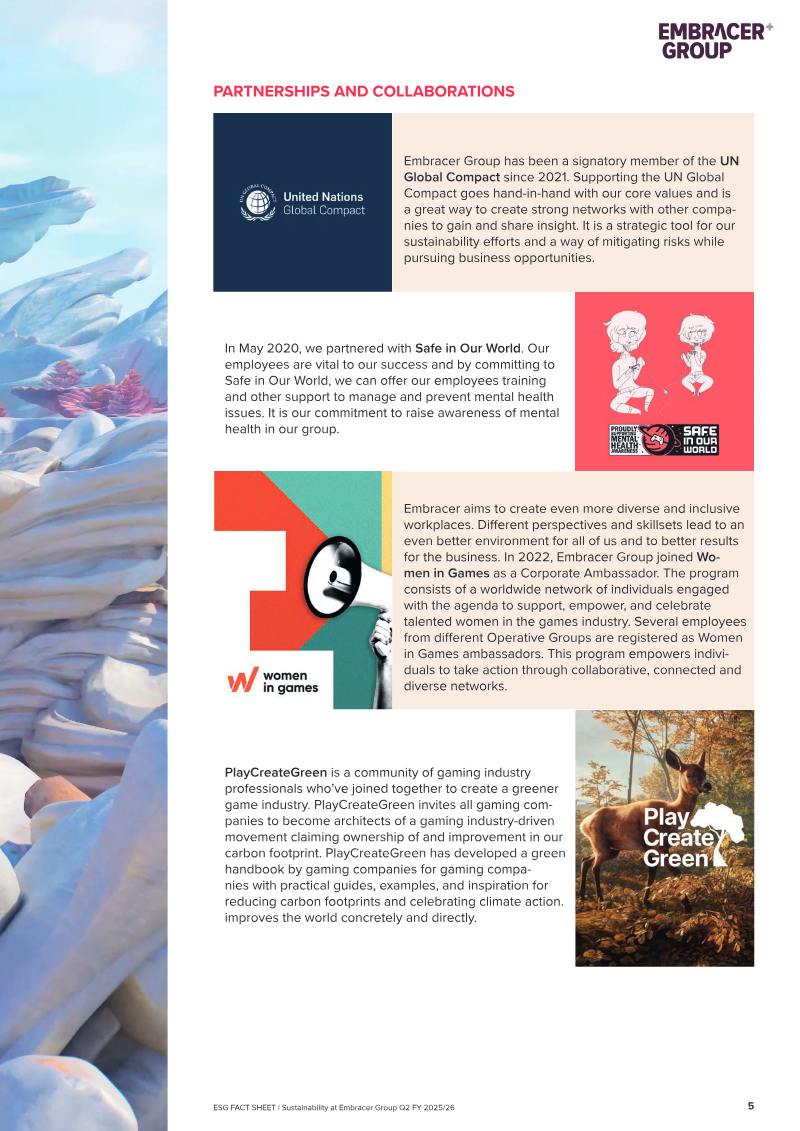
The Embracer Group’s FY 2025/26 ESG Fact Sheet outlines the organization’s commitment to integrating sustainability into its core business model, which spans PC, console, and mobile gaming, as well as media and retail operations.
- Embracer Group achieved a score of 41 in the 2025 S&P Global Corporate Sustainability Assessment, significantly outperforming the industry peer average of 26.
- The organization maintains a workforce of nearly 7,000 employees across 69 internal studios, with a geographic distribution of 64% in Europe, 31% in North America, and 5% in other regions.
- Internal governance is supported by 17 group policies, featuring high compliance implementation rates of 99% for codes of conduct and 96% for anti-corruption measures.

Why are sticker albums taking over? From Royal Match to Mid-Core by Jakub Remiar
The sticker album mechanic has emerged as a dominant engagement and monetization feature across the mobile gaming industry, particularly within the casual genre.
- Sticker albums have become a primary engagement and monetization driver in mobile gaming, popularized at scale by Monopoly Go starting in April 2023.
- The mechanic adds depth to shallow game economies by using gacha-style booster packs, duplicate card sinks, and high-value grand prizes to incentivize whale spending and retention.
- Standard sticker albums typically feature 135 to 200 cards over a 30- to 60-day seasonal cycle, utilizing recurring art assets to minimize technical and design complexity.

Google and Epic upend Android mobile game monetisation | Week in Mobile Games podcast E71
The mobile gaming landscape is undergoing a structural transformation driven by significant legal settlements and shifting consumer engagement patterns.
- A Google and Epic Games antitrust settlement mandates a new Android fee structure through 2032, capping fees at 9% for cosmetic items and non-game apps while imposing a 20% fee on gameplay-impacting purchases and loot boxes starting in late 2025.
- Pokémon Trading Card Game Pocket has achieved significant market success, reaching 150 million installs and generating $1.3 billion in its first year through nostalgia-driven content.
- The Nintendo Switch 2 has set a new industry sales benchmark, selling 10.36 million units in 118 days and outpacing the launch trajectories of both the original Switch and the PlayStation 5.
That Epic-Google deal, Supercell's mo.co revamp, Sandsoft, October's top games, more
The mobile game industry is currently navigating significant shifts in platform regulation, studio stability, and market performance.
- A proposed Epic Games-Google agreement could reshape the Android ecosystem by enabling alternative app stores and introducing a tiered commission structure from March 2026 to June 2032, charging 20% on gameplay-advantage purchases and 9% on non-power content.
- Market volatility persists among top titles, with Honor of Kings leading October revenue at $34 million, Last War holding steady at $125 million, and White Out Survival dropping below the $100 million monthly revenue threshold.
- The squad battler X Clash saw a massive surge to 18.5 million installs in October, a growth spike attributed to aggressive user acquisition strategies involving misleading mini-game advertisements.
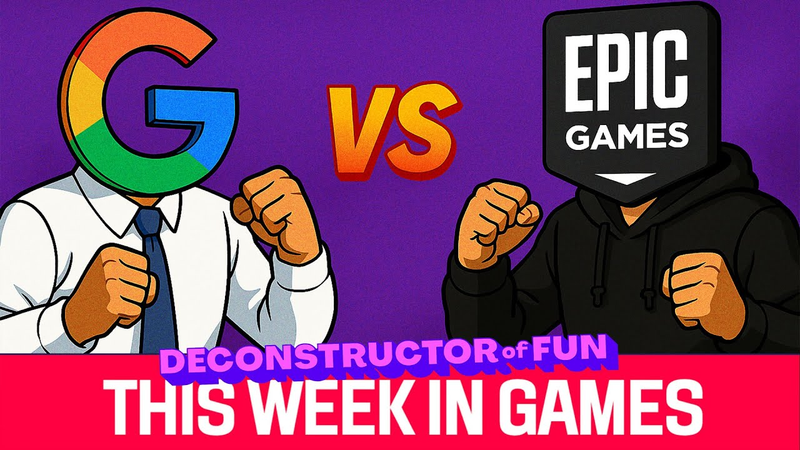
TWIG #356 Epic vs Google, Roblox’s Rough Quarter, Supercell Pulls the Plug
The mobile gaming landscape is undergoing a significant structural shift following the settlement between Epic Games and Google, which concludes five years of litigation.
- The Epic Games vs. Google settlement mandates a tiered fee structure through 2032, charging 9% for non-gameplay items and 20% for gameplay-affecting purchases, which incentivizes developers to shift toward direct-to-consumer billing.
- Supercell canceled Squad Busters despite the title generating $100 million in gross revenue, as it failed to meet long-term viability standards after an estimated $150 million investment in development and marketing.
- Roblox reached 151 million daily active users and record bookings in Q3 2025, yet continues to face investor skepticism due to margin compression caused by rising infrastructure costs and expensive international user acquisition.