Metroidvania
15 documents·4 publishers
Documents

Video19 min
Why Hollow Knight: Silksong Took Seven Years To Make
- Team Cherry's seven-year development cycle for Hollow Knight: Silksong was driven by a lack of financial pressure, as the original Hollow Knight achieved 15 million copies sold, providing the developers with generational wealth.
- The studio maintained a highly efficient internal development pipeline that allowed for rapid iteration, enabling the team to implement and test new ideas within minutes rather than hours.
- Development was characterized by continuous 'over-scoping' and a commitment to quality over deadlines, with the team intentionally avoiding public release dates to ensure the sequel matched the scale of the original.
- The prolonged silence from the developers, while not a calculated marketing strategy, inadvertently fueled massive community anticipation and sustained interest in the franchise through recurring speculation.
- The team operated as a small, focused group in Adelaide, prioritizing creative freedom and personal enjoyment over the industry-standard pressures of rigid production schedules or external growth.
Jason SchreierJul 2026
Video22 min
How Mina The Hollower Became A 'Make Or Break' Moment For Yacht Club Games
Jason SchreierMay 2026
Video13 min
I Tried To Remake Silksong In 10 Hours (Hint: It Was Brutal)
- Achieving the Hollow Knight visual style requires a perspective camera rather than a standard orthographic camera to accommodate complex, multi-layered parallaxing.
- To maintain visual consistency across varying depths, a custom sprite shader is necessary to integrate Z-buffer depth for post-processing blur, depth-based darkening, and interaction with Unity's global 3D fog.
- Importing artwork as PSB files into Unity allows for the automatic breakdown of Photoshop layers into individual sprites, which can then be organized into prefabs for efficient reuse and animation.
- GPU performance remains high (up to 800 FPS) despite hundreds of game objects because all assets are consolidated onto a single sprite atlas, minimizing draw calls.
- Maintaining consistent line weight across assets is critical; drawing all elements in a single scene relative to the player character ensures proper scaling and prevents disorienting visual inconsistencies.
Thomas BrushMar 2026
Video141 min
How To Make A Hollow Knight Style Game (Live Workshop Day 2)
- Achieving a Hollow Knight-style aesthetic relies on using Unity shaders and color-shifting layers to create depth and parallax effects, rather than relying on blurring background artwork.
- Establishing a reference sprite at the start of development—sized to the grid (one unit high by one unit wide)—is essential for maintaining consistent scale between the player character and environmental assets.
- Parallax depth can be simulated by manually adjusting the color values of background elements, making distant objects darker to blend them into the scene's atmospheric fog.
- Unity's 2D lighting or gradient overlays can be used to replicate the shadowed, high-contrast visual style characteristic of Hollow Knight environments.
- Prefab variants allow for the efficient reuse of environmental assets, such as bush clusters, while enabling individual tweaks to prevent repetitive visual patterns.
Thomas BrushMar 2026
Video145 min
Let's Play (And Recreate) Hollow Knight: Silksong
- Hollow Knight's character movement is designed for immediate responsiveness, utilizing specific animation transitions at the peak of an arc to convey a sense of weight and physical presence.
- The game uses a deliberate color palette—often incorporating subtle, desaturated tints like creamy grays—to ensure the player character remains visually distinct from the background environment.
- Post-processing effects are likely used in conjunction with base artwork to achieve the game's final aesthetic, rather than relying solely on manual painting in software like Photoshop.
- Sun shafts can be simulated efficiently by applying a 45-degree gradient to a layer, followed by a motion or Gaussian blur and layer duplication to create a bloom effect.
- Using smart objects in 2D game art workflows allows for non-destructive editing, enabling developers to adjust saturation, highlights, and textures iteratively without losing original image data.
Thomas BrushSept 2025

Video8 min
How I Made $174,000 With My Game (In A Year)
- Prioritize defining a clear, marketable 'hook' for your game before focusing on technical development or coding, as this is the primary driver for sales and potential funding.
- Chris Stair achieved $174,000 in revenue within approximately one year of working on his game, 'Bō: Path of the Teal Lotus'.
- Securing a mentor or joining a community of like-minded developers can accelerate the learning process and provide necessary guidance for those transitioning into full-time game development.
- Avoid getting bogged down by rigid 'best practices' in coding; focusing on creative execution and finishing the game is more important than adhering to technical dogmas that often lead to development paralysis.
- Leverage your personal strengths by outsourcing technical tasks when necessary, as seen when Stair brought on a lead programmer to handle coding while he focused on the creative and artistic direction.
Thomas BrushJun 2024
Video65 min
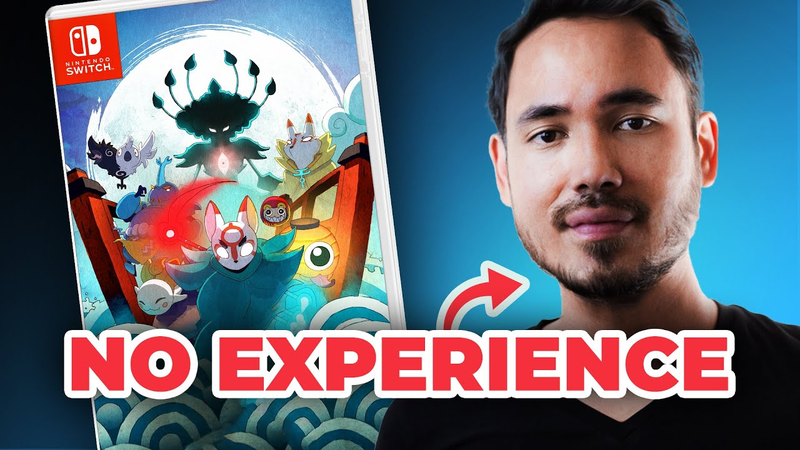
How My Game Made $150,000 With NO EXPERIENCE — Full Time Game Dev Podcast Ep. 012
- Chris Stair successfully funded the development of his game, Bō: Path of the Teal Lotus, through a combination of a Kickstarter campaign and a subsequent publishing deal with Humble Games.
- The developer emphasizes the importance of a clear, one-sentence 'hook' to define a game's market appeal, using the shorthand 'Hollow Knight but in Japan' to position his project.
- Maintaining a sustainable indie career requires treating game development as a professional identity and managing the psychological challenge of balancing creative focus with personal life.
- Creative directors can manage 'wild-minded' or chaotic development processes by utilizing a 'gatekeeper'—a team member responsible for organizing and funneling creative ideas into a structured production pipeline.
- Developing a strong sense of taste through consistent consumption of diverse media, such as anime, film, and literature, helps align a developer's creative output with audience preferences.
Thomas BrushJun 2024
Video50 min
'Yar's Rising' and Reimagining Classics for Game Development with James Montagna | 347
Game Dev UnchainedMay 2024
Video63 min
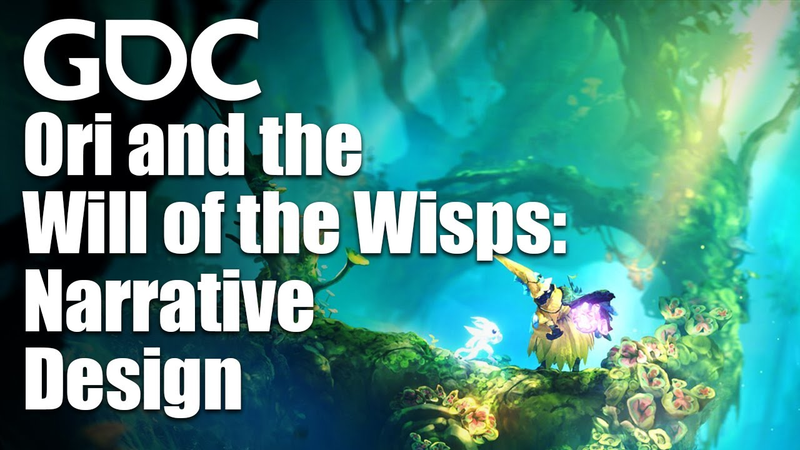
'Ori and the Will of the Wisps': Narrative Design and Visual Storytelling
- Moon Studios used the passage of seasons in 'Ori and the Will of the Wisps' to balance nostalgia for the first game with fresh environmental aesthetics, allowing players to revisit familiar spaces through a new lens.
- The team utilized 'environmental state as emotional state' as a core design device, such as tying the visual progression of flight sequences to the character's growing confidence and mastery.
- Collaborative narrative design led to significant creative pivots, such as the decision to have the character Shriek kill Ku to create a major emotional mid-game beat, despite initial concerns about player motivation.
- Playtesting revealed that early versions of the Silent Woods environment were too claustrophobic and focused on precision platforming, prompting the team to integrate five new story beats to improve pacing and emotional resonance.
- The developers used subtle visual breadcrumbs, such as the Stink Spirit appearing in the background of cutscenes, to foreshadow later narrative developments and maintain continuity for observant players.
Game Developers ConferenceMar 2022
Video34 min
Dead Cells: What the F*n!?
- To mitigate the frustration of permadeath, Dead Cells implements a 'cells' currency system where players lose resources upon death but retain permanent progress toward weapon and skill unlocks.
- The game minimizes downtime by keeping the post-death loop to approximately 10 seconds, removing unnecessary stat screens and forcing an immediate return to action.
- To ensure combat and movement feel fair rather than punishing, the developers implemented 'coyote time' mechanics, such as auto-teleporting players to platforms if they are within a few pixels of success.
- The combat system utilizes an intelligent targeting priority, where fast weapons automatically focus on low-health or small enemies, while slow, high-damage weapons prioritize large, high-threat targets.
- Motion Twin utilized Early Access to refine the game, specifically using visual patch notes to detail how community feedback directly influenced gameplay changes, which fostered player investment.
Game Developers ConferenceJun 2019