Market Analysis
Documents

SensorTower The State of Mobile Gaming 2023
The 2023 SensorTower analysis demonstrates a pronounced shift in mobile gaming dynamics, with hyper‑casual titles experiencing a 24 % year‑over‑year decline in Q4 2022, while hybrid‑casual games grow 13 % and exclusive‑access titles surge 54 %. Revenue patterns echo this trend: action and tabletop genres record modest gains, whereas shooter, RPG, and casino segments suffer double‑digit drops. Geographic revenue distribution shows RPG dominance in Asia (39 %) but a more balanced genre mix across North America and Europe, each contributing at least 12 % of total earnings.
Hybrid‑casual games differentiate themselves through the adoption of meta‑features. Thirty percent of leading hybrid‑casual titles embed at least one such feature, compared with only five percent of hyper‑casuals. Character collection is the most prevalent meta‑feature, present in 18 % of hybrid‑casuals and boosting average playtime by 122 %. Downloads for hybrid‑casual games rose 17 % in Europe and a striking 124 % in Asia during 2022, while the global market grew 4 % YoY.
Live‑Ops events prove highly lucrative for flagship titles. Marvel Snap’s themed events generated between $670 k and $746 k on launch day, illustrating the monetization power of well‑timed in‑app events. SensorTower’s event‑tracking tool offers publishers granular revenue attribution, facilitating competitive benchmarking and schedule optimization.
Regional performance highlights divergent trends. Europe’s top five markets—Germany, the U.K., France, Russia, and Italy—saw a collective 6 % revenue decline to $700 million in Q4 2022, with Russia’s market plummeting 72 % YoY after the Ukraine conflict. Despite an 8 % overall download drop, Russia remained Europe’s largest volume market with 673 million downloads (24 % of the region). In contrast, Asia’s quarterly gross fell 15 % to $9.5 billion, largely due to a 20 % Google Play decline, while downloads stayed flat above 5.5 billion per quarter; India led the region by a wide margin.
- The mobile gaming market is shifting away from hyper-casual titles, which saw a 24% year-over-year decline in Q4 2022, toward hybrid-casual games that grew 13% and exclusive-access titles that surged 54%.
- Hybrid-casual games are successfully utilizing meta-features to drive engagement, with 30% of top titles embedding these features and character collection specifically boosting average playtime by 122%.
- Regional revenue performance is diverging, with Asia’s quarterly gross falling 15% to $9.5 billion and Europe’s top five markets experiencing a collective 6% revenue decline to $700 million in Q4 2022.
- Live-Ops events remain a primary monetization driver, evidenced by Marvel Snap’s themed events generating between $670,000 and $746,000 on their respective launch days.
- While global market downloads grew 4% year-over-year, hybrid-casual games significantly outperformed this average with download growth of 17% in Europe and 124% in Asia during 2022.

2023 Serbian Gaming Industry Report
The report demonstrates that Serbia’s gaming sector has experienced a dramatic expansion in 2023, with the workforce more than doubling from roughly 1,700 to over 4,300 employees. Revenue climbed 17 % year‑on‑year to €175 million, largely driven by mobile titles and original intellectual property, while about a third of earnings originate from overseas markets. The growth is underpinned by an influx of talent from Russia, Ukraine and Belarus, a robust mix of large international studios—such as Ubisoft Belgrade, Playrix Serbia and Wargaming—and a vibrant indie scene that includes boutique developers like Yboga, Art Bully and Flat Hill Games.
Key findings reveal that mobile gaming dominates the revenue landscape, with Android accounting for 60 % of market share and large studios (40+ staff) capturing the majority of profits. Smaller firms, though experiencing higher employee growth, face heightened client concentration and single‑client risk. The industry’s service arm also flourishes; firms such as GameBiz Consulting manage substantial revenue streams and provide financial, tax and user‑acquisition support to local studios.
Serbia’s strategic positioning on the European stage is evident through participation in mentoring programs, visibility at Gamescom, and targeted funding from Creative Europe’s €16 million grant pool. Partnerships with global players like Google, Epic Games and major publishers reinforce the country’s reputation as a regional hub.
Education and talent pipelines have expanded markedly, with universities, technical schools and informal hubs offering comprehensive programs that feed a growing workforce. Initiatives such as the Serbian Games Association’s “Playing Narratives” and Shift2Games demonstrate successful placement of graduates into industry roles.
Overall, the sector’s rapid growth is tempered by regulatory complexity, limited funding access and emerging legal challenges around AI‑generated content. Continued policy support and diversification of revenue sources will be essential to sustain Serbia’s ascent as a leading contributor to AAA, mobile F2P and emerging VR experiences across Europe.
- Serbia’s gaming workforce grew significantly in 2023, more than doubling from approximately 1,700 to over 4,300 employees.
- Industry revenue reached €175 million in 2023, a 17% year-on-year increase driven primarily by mobile titles and original intellectual property.
- Mobile gaming dominates the market with a 60% share on Android, while large studios with 40+ staff capture the majority of industry profits.
- The sector is bolstered by a mix of major international studios like Ubisoft Belgrade, Playrix Serbia, and Wargaming, alongside a growing indie scene and specialized service firms like GameBiz Consulting.
- Growth is supported by an influx of talent from Russia, Ukraine, and Belarus, paired with expanded local educational pipelines like the 'Playing Narratives' initiative.

State of Mobile Games: Cognitive and Psychological Benefits
The report investigates how mobile games influence cognitive and psychological well‑being, drawing on a large U.S. sample of 483 participants (252 men, 213 women, 18 non‑binary) and a series of 28 individual game studies. Personality was measured with the Big 5 inventory, while gaming habits included frequency, genre preference and primary motivations. The study found that personality traits significantly moderate game effects: extraverts gravitate toward social and action games, while introverts prefer relaxation‑oriented titles; openness predicts immersion and inspiration motives.
Mood impact was quantified using Cohen’s d effect sizes for pre‑ to post‑play changes. Several games produced moderate to large positive effects on focus (e.g., Sound Sky, d = 0.90), creativity (Colorize, d = 1.17), determination (Nature Video, d = 0.76) and calmness (Color Breathing, d = 0.61). Puzzle‑centric titles consistently boosted creativity and curiosity, whereas timed or competitive games enhanced focus and grit. Non‑game controls such as a dripping faucet video yielded negative mood shifts, underscoring the relative benefit of game interventions.
The findings suggest that mobile games can serve as low‑cost, scalable tools for improving mental well‑being, particularly when game design incorporates personalization to match diverse personality profiles. Recommendations target developers (to broaden appeal through adjustable difficulty and genre alignment), players (to select games aligned with desired emotional outcomes), and health professionals (to consider mobile gaming as adjunct therapy for mood disorders or attention deficits). The report calls for future research incorporating real‑time behavioral metrics to refine these insights.
- Mobile games function as effective, scalable tools for mental well-being, with specific titles demonstrating significant positive effects on creativity (Colorize, d=1.17), focus (Sound Sky, d=0.90), determination (Nature Video, d=0.76), and calmness (Color Breathing, d=0.61).
- Personality traits significantly dictate user engagement, as extraverts favor social and action-oriented games while introverts prefer relaxation-focused titles, and openness correlates with immersion and inspiration motives.
- Game mechanics directly influence psychological outcomes: puzzle-centric titles consistently boost creativity and curiosity, whereas timed or competitive games are more effective at enhancing focus and grit.
- Mobile gaming interventions outperform passive non-game stimuli, as evidenced by negative mood shifts observed in control groups watching neutral content like a dripping faucet video.
- Developers can maximize user retention and therapeutic impact by incorporating personalization features, such as adjustable difficulty settings and genre-alignment options, to cater to diverse personality profiles.

Gaming Spotlight 2023
Mobile gaming continues to dominate the industry’s growth trajectory, yet recent regulatory tightening and rising acquisition costs are poised to curb spend by roughly 2 % in 2023. The analysis underscores that creative optimization, diversified monetization models—including ads, subscriptions, and battle‑passes—and data‑driven partner insights are essential to counter ad fatigue and maintain daily active users, stickiness, and revenue in an increasingly fragmented market. Contextual market data is highlighted as a critical tool for staying ahead of evolving consumer preferences and macroeconomic headwinds.
First‑half 2023 data reveal that free‑to‑play titles remain the most influential drivers of downloads and in‑app purchase (IAP) revenue. “Monopoly GO” led mobile downloads with over 45 million installs and $232 million in IAP, attracting a slightly higher female audience and players aged 25‑34. “Honkai: Star Rail” achieved 62 million downloads and $457 million in spend, largely fueled by a high‑price bundle that accounted for 61 % of May revenue; it appeals more to male players but enjoys strong traction among Gen‑Z gamers. “Royal Match” secured the second spot in global spend with $1.7 billion, driven by a 20 % female skew and significant engagement from players aged 45 and older. These findings illustrate a demographic shift: match‑3 games are increasingly monetized by female and older players, while high‑ticket RPGs continue to attract Gen‑Z consumers.
Survey results indicate a sharp decline in U.S. mobile gamers’ positive sentiment toward in‑game video ads—from 50 % “like” in Q3 2020 to 30 % by Q3 2022—while rewarded‑video ads maintain a more favorable reception at around 40 %. The drop aligns with the rollout of Apple’s ATT framework, yet ad fatigue and oversaturation are identified as primary drivers rather than regulatory causation. The recommendation is to diversify ad formats, prioritizing rewarded videos and playable ads, and to tailor these experiences to specific demographic segments to mitigate fatigue and sustain growth.
- Mobile gaming spending is projected to decline by approximately 2% in 2023 due to rising acquisition costs and increased regulatory pressure.
- High-performing titles demonstrate distinct demographic trends: 'Royal Match' generated $1.7 billion in revenue with a strong base of players aged 45+, while 'Honkai: Star Rail' captured $457 million by targeting Gen-Z with high-price bundles.
- Consumer sentiment toward standard in-game video ads has dropped significantly, falling from 50% positive in Q3 2020 to 30% by Q3 2022, largely due to ad fatigue and market oversaturation.
- Rewarded video ads remain more effective than standard video ads, maintaining a 40% favorability rating among U.S. mobile gamers.
- 'Monopoly GO' emerged as a top performer in early 2023, securing 45 million installs and $232 million in IAP revenue, particularly among the 25-34 age demographic.

Developer's Guide to the Chinese Market
DEVELOPER'S Table of contents Damian Jaskowski is a Chinese gaming market expert working as Expert PR Manager for East Asia at 1l bit studios and Chinese Market Coordinator at the Indie Games Poland Foundation. 3 PART II – A STEP BY STEP GUIDE TO PART III – REACHING OUT TO YOUR FANBASE 20 4 MARKET 12 3.1 Chines...
- The Chinese gaming market reached 668 million players by June 2023, constituting roughly half of the Chinese population. Sales revenue for the first half of 2023 was 144.263 billion Chinese yuan ($20.23 billion), showing a 22.2% increase QoQ, indicating market recovery.
- PC/console games should prioritize global distribution with local PR, while mobile games require local distribution due to Google Play's unavailability and the App Store's ISBN requirement in Mainland China.
- Localization is crucial and involves translating into Simplified Chinese (ZHCN), localizing the game's title, and adapting game features by removing inaccessible foreign services (e.g., Facebook, Instagram, Google services) and adding local payment methods.
- The Chinese console gaming market had 16.7 million gamers by the end of 2022, generating $2.3 billion in hardware and software, with Niko Partners projecting growth to 23 million gamers by 2027.
- Hiring a Chinese native-speaker with game promotion experience is recommended once annual revenue from the Chinese market reaches around $180,000, with average salaries ranging from 20,000 to 30,000 CNY ($2,800 to $4,200) per month.
2023 European Video Games Industry Insight Report
By European Games Developer Federation (EGDF) Supported by Video Games Europe European Video Games Industry Data 5 Number of game developer studios 7 Number of people working in the video games industry 8 Percentage of women working in the industry 9 Main European game dev hubs by the number of employees ...
- In 2023, the EU was home to 5,900 game developer studios.
- Public funding plays a crucial role in financing new game studios and supporting research and development across Europe.
- Each European country exhibits unique platform preferences for game development.
- The Czech Republic's video game industry saw its number of studios grow from 110 in 2019 to 1748 in 2022, with turnover reaching 226 million euros in 2022.
- Norway's video game industry had 24 studios in 2022, employing 824 people, and generated 55 million euros in turnover in 2022.

5 Mobile App Predictions for 2024
The mobile app market is poised for a transformative year in 2024, characterized by the integration of artificial intelligence, a shift in social media monetization, and a rebound in gaming expenditures. This analysis, based on proprietary market estimates and historical data, identifies five critical trends that will define the industry landscape. The findings suggest that while macroeconomic headwinds have previously constrained growth, strategic pivots toward direct consumer monetization and AI-driven functionality are creating new avenues for revenue.
A primary driver of 2024 growth is the proliferation of generative AI, with 2.3 billion downloads expected to feature AI-integrated functionality. This represents a 40% year-over-year increase, fueled by the rapid adoption of chatbots and photo-editing tools. Simultaneously, the mobile gaming sector is projected to recover from recent declines, with consumer spending expected to reach $111.4 billion—a 4% year-over-year increase. The United States, Japan, and South Korea are identified as the primary engines for this recovery, with RPG and match-based genres leading the growth.
The social media landscape is undergoing a structural shift as microblogging platforms face declining daily active users in favor of video-first platforms. TikTok is positioned to become the highest-grossing app in history, projected to surpass $14.6 billion in lifetime consumer spend. This success is driving a broader industry trend where social networks are moving away from pure ad-based models toward in-app purchases and creator-tipping features. Media-sharing networks are expected to see a 152% increase in consumer spend, reaching $1.3 billion as platforms increasingly shift costs from advertisers to end-users. These trends collectively indicate a move toward more diversified, direct-to-consumer revenue streams across the global mobile ecosystem.
- Mobile gaming consumer spending is projected to recover in 2024, reaching $111.4 billion, a 4% year-over-year increase led by the U.S., Japan, and South Korea.
- Generative AI integration is accelerating rapidly, with 2.3 billion app downloads expected to feature AI functionality in 2024, a 40% year-over-year increase.
- TikTok is set to become the highest-grossing app in history, with lifetime consumer spending projected to surpass $14.6 billion.
- Social media platforms are shifting from ad-based models to direct-to-consumer revenue, with media-sharing networks expected to see a 152% increase in consumer spend to $1.3 billion.
- RPG and match-based genres are identified as the primary drivers for the projected growth in the mobile gaming sector.
Video Game Streaming Trends 2022 Yearly Report
Western live streaming viewership experienced a 13.5% year-over-year decline in 2022, totaling 29.5 billion hours watched. This contraction was primarily driven by a 14% reduction in unique active channels, suggesting that streamer burnout impacted content supply more significantly than a lack of audience demand. While Facebook Gaming suffered a substantial 56% drop in viewership, Twitch maintained its market dominance, and YouTube Gaming solidified its status as the second-largest platform. Notably, non-gaming content reached new heights, with the "Just Chatting" category leading Twitch and female creator representation expanding across YouTube and Facebook.
The industry landscape shifted toward creator-driven events and original programming, which frequently outperformed traditional AAA game launches. High-profile spectacles like Ludwig’s Chessboxing and Ibai’s boxing matches demonstrated the immense power of individual personalities to command massive audiences. This trend extended to esports organizations, which generated 1.6 billion hours watched; however, more than half of that engagement was attributed to their rosters of content creators rather than professional competitive matches. Marketing strategies evolved accordingly, as brands prioritized long-term sponsorships with mid-sized influencers and publishers utilized "drops" campaigns to boost game viewership by as much as 412%.
Engagement metrics from 2022 highlight the continued dominance of established titles such as Counter-Strike: Global Offensive and Escape From Tarkov, alongside the rise of international creators like the Portuguese streamer Gaules. As the ecosystem matures, the integration of business intelligence, social analytics, and programmatic advertising has become essential for stakeholders. These tools allow brand marketers and media publishers to navigate a complex market where influencer management and creator-led events serve as the primary engines for revenue growth and audience retention.
- Western live streaming viewership fell 13.5% year-over-year in 2022 to 29.5 billion hours, driven largely by a 14% reduction in unique active channels.
- Twitch maintained market dominance while YouTube Gaming solidified its position as the second-largest platform, despite Facebook Gaming suffering a 56% viewership decline.
- Creator-driven events and original programming frequently outperformed traditional AAA game launches, with individual personalities proving more effective at driving engagement than professional esports matches.
- Marketing strategies shifted toward long-term sponsorships with mid-sized influencers and the use of 'drops' campaigns, which can boost game viewership by up to 412%.
- Non-gaming content, led by the 'Just Chatting' category on Twitch, reached new heights while female creator representation expanded across YouTube and Facebook.
Video Game Live Streaming Trends Report: Q3 2023
The Q3 2023 Video Game Live Streaming Trends Report provides a comprehensive analysis of the global live-streaming market, covering major platforms including Twitch, YouTube Gaming, Facebook Live, Kick, and AfreecaTV. Utilizing data from a consortium of industry analysts, the findings indicate that the market has entered a period of stabilization. Total viewership reached 7.6 billion hours watched, representing a minor 4% year-over-year decline but remaining 90% higher than pre-pandemic levels in 2019.
A significant shift in the platform landscape is highlighted by the rapid ascent of Kick, which surpassed Facebook Live and AfreecaTV to become the third most-watched platform. Kick’s growth is largely driven by non-gaming content, which accounts for 66% of its viewership, compared to 27% on Twitch. While Twitch maintains a dominant 71% market share, its esports viewership saw an 18% year-over-year decrease. Despite this, mobile titles remain strong, with MPL Indonesia Season 12 ranking as the quarter's top esports event.
The report identifies creator-driven events as a primary engine for high engagement. Events like ibai’s La Velada del Año III and Squeezie’s GP Explorer 2 generated tens of millions of hours watched and record-breaking peak viewership. In the software sector, Grand Theft Auto V reclaimed the top spot for most-watched game, while new role-playing releases Baldur’s Gate 3 and Starfield emerged as the most successful launches of the quarter, collectively generating nearly 100 million hours watched in their first months. The analysis concludes that while overall growth has slowed, the industry is sustained by high-profile creator events and the continued popularity of role-playing and variety content.
- The live-streaming market has stabilized with 7.6 billion hours watched in Q3 2023, a 4% year-over-year decline but still 90% higher than 2019 levels.
- Kick has emerged as the third most-watched platform, surpassing Facebook Live and AfreecaTV, with 66% of its viewership driven by non-gaming content.
- Twitch maintains a dominant 71% market share, though its esports viewership experienced an 18% year-over-year decrease.
- Creator-led events are primary engagement drivers, exemplified by La Velada del Año III and GP Explorer 2, which generated tens of millions of hours watched.
- Grand Theft Auto V reclaimed the top spot for most-watched game, while new releases Baldur’s Gate 3 and Starfield generated nearly 100 million hours watched in their debut months.
Video Game Streaming Trends Report: Q2 2023
This analysis of the video game live-streaming market for Q2 2023 highlights a period of stabilization and strategic shifts following the post-pandemic boom. While overall viewership declined by 9% compared to the previous quarter, the industry remains significantly larger than its pre-pandemic state, with total hours watched up 97% over Q2 2019. The data covers major global platforms including Twitch, YouTube Gaming, Facebook Live, and the emerging competitor Kick, utilizing data aggregated through third-party APIs and manual classification.
A primary finding is the rapid ascent of Kick, which secured a 2% market share to become the fifth most-watched platform. Kick’s growth was driven by a creator-friendly 95-5 revenue split and high-profile signings like xQc and Amouranth, leading to a 204% increase in unique channels. Notably, Kick’s content mix differs from Twitch; while Twitch remains 74% gaming-focused, over two-thirds of Kick’s viewership comes from non-gaming categories, specifically "Just Chatting" and "Slots & Casino."
In the gaming sector, League of Legends reclaimed the top spot for hours watched, followed by Grand Theft Auto V and VALORANT. The report emphasizes the impact of new releases, specifically Diablo IV, which generated 164 million hours watched in its first month. Blizzard’s use of a "Hardcore Mode" challenge demonstrated the efficacy of creator-led marketing, as 29% of the game's first-week viewership was tied to this specific challenge.
The esports segment showed resilience, growing 4.1% year-over-year despite the broader market cooling. The analysis also notes the continued dominance of female VTubers on YouTube and the trend of esports organizations relying heavily on content creators for viewership, with eight of the top ten teams drawing over 50% of their audience from creators rather than competitive matches.
- Despite a 9% quarterly viewership decline in Q2 2023, the live-streaming market remains 97% larger than pre-pandemic levels from Q2 2019.
- New platform Kick captured a 2% market share in Q2 2023, driven by a 204% increase in unique channels and a creator-friendly 95-5 revenue split.
- Kick’s content strategy diverges from Twitch, with over two-thirds of its viewership originating from non-gaming categories like 'Just Chatting' and 'Slots & Casino' rather than gaming.
- Diablo IV generated 164 million hours watched in its first month, with 29% of its first-week viewership directly attributed to the 'Hardcore Mode' creator-led marketing challenge.
- Esports viewership grew 4.1% year-over-year, with top organizations increasingly reliant on content creators, who account for over 50% of the audience for eight of the top ten teams.
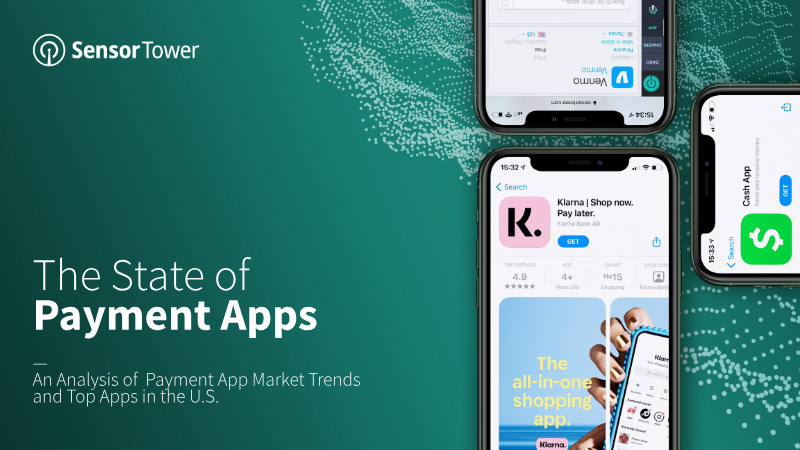
The State of Payment Apps: An Analysis of Payment App Market Trends and Top Apps in the U.S.
The United States payment application market underwent a period of unprecedented expansion between 2020 and early 2021, catalyzed by the COVID-19 pandemic and the distribution of federal stimulus payments. Total downloads reached a record 35 million in the second quarter of 2020 as consumers transitioned toward digital-first financial tools and safer, contactless payment methods. While established platforms like Cash App maintained overall market leadership, the landscape became increasingly competitive due to aggressive promotional strategies and significant app relaunches. Google Pay, for instance, achieved a 347% year-over-year surge in early 2021 by leveraging referral incentives and expanded feature sets including cryptocurrency integration and cashback rewards.
The "Buy Now, Pay Later" (BNPL) segment emerged as a primary driver of industry growth, particularly during the 2020 holiday season. Services such as Klarna and Afterpay saw exceptional adoption rates, with Klarna surpassing one million monthly installs by optimizing its App Store presence and pivoting toward influencer-led video advertising and gaming-related messaging. This growth was further bolstered by deep integrations with major retail applications, positioning BNPL as a mainstream alternative to traditional credit. Simultaneously, money transfer services like Western Union and Remitly experienced a peak in adoption in April 2020, growing 85% over the previous year as users sought reliable digital channels for domestic and international remittances.
As the market continues to diversify, leading payment applications are evolving into comprehensive financial ecosystems. The integration of advanced financial management tools and cryptocurrency support reflects a broader shift in consumer expectations. To maintain dominance, top-tier apps are increasingly relying on strategic keyword bidding and multi-channel marketing to capture a user base that now prioritizes versatility and digital integration in their financial transactions. This evolution signifies a permanent shift in the American financial landscape toward decentralized and flexible payment solutions.
- The U.S. payment app market peaked at 35 million downloads in Q2 2020, driven by pandemic-related shifts toward digital-first and contactless financial tools.
- Google Pay achieved a 347% year-over-year growth in early 2021 by utilizing referral incentives, cryptocurrency integration, and cashback rewards.
- Buy Now, Pay Later (BNPL) services like Klarna and Afterpay became a primary growth driver, with Klarna exceeding one million monthly installs through influencer-led marketing and retail integrations.
- Money transfer services, including Western Union and Remitly, saw an 85% year-over-year adoption increase in April 2020 as users prioritized reliable digital remittance channels.
- Leading payment platforms are evolving into comprehensive financial ecosystems by integrating advanced management tools, cryptocurrency support, and strategic multi-channel marketing to maintain market share.
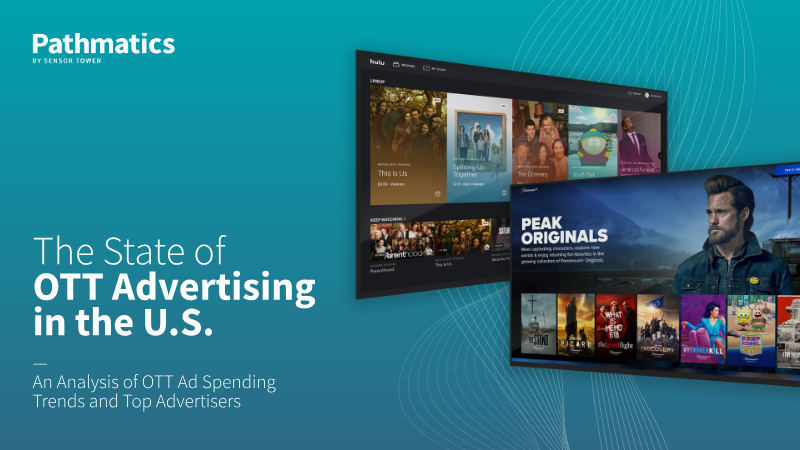
The State of OTT Advertising in the U.S.: An Analysis of OTT Ad Spending Trends and Top Advertisers
Over the course of late 2021 through 2022, the United States Over-the-Top (OTT) advertising market solidified its position as a critical component of the digital landscape, averaging $3.26 billion in quarterly expenditures. This investment represents nearly 15% of all digital advertising spend, signaling a maturation of the sector. While Financial Services previously led the market, Consumer Packaged Goods emerged as the primary spending category by mid-2022. Simultaneously, the automotive industry demonstrated aggressive expansion with a 74% year-over-year increase in ad spend, reflecting a broader trend of traditional industries pivoting toward streaming platforms to capture shifting consumer attention.
Platform dynamics reveal a competitive environment where established services and rising challengers cater to distinct demographics. Hulu and Peacock maintain a strong foothold among viewers under the age of 35, while Tubi has distinguished itself as the fastest-growing publisher, recording a 37% increase in ad revenue. This growth is mirrored by specific service sectors, particularly travel and food delivery, which utilized OTT to drive direct consumer actions. For instance, strategic campaigns from brands like Booking.com and UberEats resulted in measurable performance gains, such as significant spikes in mobile app installations following targeted high-spend periods.
The transportation and grocery sectors further illustrate the shift toward OTT-centric digital strategies. Companies like Turo now allocate more than half of their total digital budgets to streaming advertisements, while grocery delivery services saw a 14% year-over-year increase in investment. These trends underscore a broader industry conclusion: OTT has evolved from a secondary experimental channel into a primary driver for brand visibility and user acquisition across the American economy. As brands like United Airlines and Instacart dominate their respective niches, the ability to track creative impressions and seasonal spikes remains essential for navigating this high-growth advertising vertical.
- The U.S. OTT advertising market reached a mature state between late 2021 and 2022, averaging $3.26 billion in quarterly spend and accounting for nearly 15% of total digital advertising investment.
- Consumer Packaged Goods replaced Financial Services as the leading spending category by mid-2022, while the automotive industry increased its OTT ad spend by 74% year-over-year.
- Tubi emerged as the fastest-growing publisher with a 37% increase in ad revenue, while Hulu and Peacock remain the dominant platforms for reaching viewers under the age of 35.
- OTT has transitioned from an experimental channel to a primary driver for user acquisition, evidenced by brands like Turo allocating over 50% of their total digital budgets to streaming ads.
- Grocery delivery services increased their OTT investment by 14% year-over-year, contributing to a broader trend where sectors like food delivery and travel use streaming to drive measurable mobile app installations.