Live Ops reports and market data
Documents
Game Economy Design: How to ensure player satisfaction and commitment, with Oscar Clark
Game economy design functions as a dynamic, mathematical system of sinks and sources rather than a static progression model.
- Game economy design relies on balancing 'sinks and sources' to maintain player momentum, ensuring that the flow of resources creates a dynamic equilibrium between progression and grind.
- Power progression should follow an S-curve model, where power grows rapidly to provide immediate excitement but tapers off to prevent power creep and maintain long-term balance.
- Retention is driven by providing players with meaningful choices, which requires a design loop of mastery, introduced challenge, potential for failure, and foreshadowing of future rewards.
Gameloft's Cross Platform Live Services: Past, Present, and Future with Dima Dimov, VP of Live Ops
Gameloft’s approach to live operations centers on the transition from siloed, monetization-heavy models to a cross-functional, product-centric discipline.
- Gameloft has shifted from siloed, monetization-focused operations to a cross-functional model that integrates marketing, community management, and development to prioritize long-term player lifetime value over short-term acquisition spikes.
- Operational efficiency is driven by team autonomy, replacing rigid executive-led quarterly reviews with lightweight, team-led forecasting and internal dashboards that allow for real-time adjustments to game features.
- The company manages the complexities of cross-platform live services by synchronizing update cycles across mobile and console certification processes through a hybrid of internal infrastructure and third-party solutions.
Game Monetisation Design: Strategies, Trends, and Best Practices with Oscar Clark
Sustainable game monetization centers on the principle that revenue should be a byproduct of player value rather than an end in itself.
- Prioritize player value over immediate revenue, as viewing money as the sole driver causes designers to miss the psychological factors that influence engagement and retention.
- Design monetization around 'shortcuts'—tools that allow players to play longer, perform better, or maximize rewards—while distinguishing between temporary consumables and permanent aspirational items.
- Understand the 'fan' economy by recognizing that a player's willingness to spend is not directly correlated to their disposable income; developers should value all fans regardless of their monthly spend level.

TWiG 288: Fortnite in Trouble, Anime Girl Horse Racing Game, and Switch’s New Life
The global gaming industry is currently navigating a period of significant regulatory pressure and shifting market dynamics.
- Apple faces potential fines of up to 10% of its global revenue following formal European Commission charges regarding Digital Markets Act violations related to restrictive app store practices.
- Fortnite is recording its lowest player counts since late 2023, prompting Epic Games to pivot toward a 2025 re-entry into the Japanese mobile market.
- Netflix has invested $3 billion into its gaming division, yet the initiative continues to struggle with demonstrating a clear return on investment.
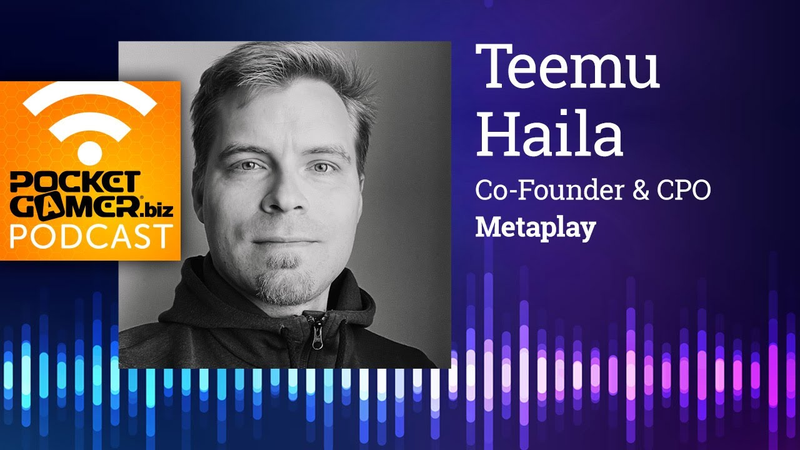
Metaplay’s Teemu Haila On Scaling And Saving Smaller Studios $1 Million/Year With One SDK
Smaller game studios face significant operational hurdles when transitioning to live-service models, often struggling to balance rapid player growth with the technical demands of backend infrastructure.
- Developing a custom backend for a mobile game typically requires three years and an investment of approximately $21 million.
- Metaplay’s SDK aims to reduce the time-to-scale for live-service Unity C# games from years to two weeks, potentially saving studios $1 million annually.
- To prevent cheating and bot activity, developers should move the game logic to a server-side architecture, ensuring the server runs a full copy of the game rather than trusting data from the player's device.

TWIG #287 Trouble in Paradise: Squad Busters and Netflix Games
The mobile gaming industry is currently navigating a period of stagnation and strategic recalibration, characterized by flat inflation-adjusted spending and a shift in how companies manage growth and valuation.
- Mobile gaming is experiencing a period of stagnation with flat inflation-adjusted spending, forcing companies to pivot toward social network valuations to escape lower gaming-sector multiples.
- Voodoo’s acquisition of BeReal for $100–$120 million fell significantly below initial market expectations, illustrating the difficulty of achieving high-valuation exits in the current climate.
- Supercell’s Squad Busters is failing to convert high download volumes into sustainable long-term retention and monetization, highlighting a broader industry struggle with 'leaky bucket' user acquisition.

The Business of Cloud and Game Servers
Modern game development relies heavily on sophisticated backend infrastructure to ensure high-performance, low-latency experiences for global player bases.
- Studios optimize long-term profitability by transitioning from variable-cost public cloud providers to hybrid models incorporating bare metal servers once player populations stabilize.
- Server-authoritative architecture is the industry standard for competitive gaming, serving as the primary mechanism for enforcing security and anti-cheat validation.
- Effective backend orchestration relies on abstraction layers to manage complex services like matchmaking and identity management, allowing developers to focus resources on core gameplay.
TWIG #285 Squad Busters Busted? Destiny 2, Too?
The gaming industry is currently defined by a tension between aggressive transmedia expansion and a fragile economic landscape characterized by studio closures and workforce reductions.
- The gaming industry is facing a business model crisis where cosmetic-only monetization often fails to generate sufficient revenue to sustain live-service operations for titles like Concord and Marvel Rivals.
- Supercell’s Squad Busters is experiencing a rapid decline in daily active users despite high lifetime download figures, driven by an over-reliance on pre-registration incentives and a user base skewed toward lower-revenue markets.
- Sony’s PlayStation 5 install base remains split evenly with the aging PlayStation 4, indicating a stagnant hardware upgrade cycle caused by bloated development costs and a lack of compelling software.

Brawl Stars to the Moon? A monetization deepdive! GameMakers x 2.5 gamers crossover
Brawl Stars has experienced a notable revenue resurgence, successfully reversing a period of decline between 2022 and 2023 to surpass the performance of Clash Royale.
- Brawl Stars experienced a significant revenue surge in December 2023, reaching $20 million compared to $12 million in November, effectively surpassing Clash Royale's $19 million performance.
- The game's recent growth is primarily driven by structural changes to the in-game economy, aggressive sales promotions, and the introduction of 'Hypercharges'—a new power progression layer at level 11 that costs 5,000 coins per unit.
- Supercell is shifting its operational model by increasing team sizes, with the Brawl Stars team expanding toward 45 members to support more intensive LiveOps and content production.
two & a half gamers session #40 - Q4 Live ops tips, Q4 UA Budget optimisations, Admon bidder updates
The mobile gaming industry is currently navigating a complex landscape defined by shifting advertising dynamics and seasonal volatility.
- The Google AdMob bidder has shown significant performance improvements, delivering an average ARPU uplift of 10% to 12% for previously underperforming games and effectively capturing market share from Meta demand on Android.
- During the Q4 holiday season, rising CPIs driven by e-commerce competition make it necessary to narrow UA focus to core audiences and pause underperforming campaigns to maintain profitability, even if it results in lower overall revenue.
- Despite budget cuts in Q4, developers should maintain a 10% to 20% allocation for creative testing to ensure a pipeline of winning assets for rapid scaling in January.
two & a half gamers honest interviews #5 - Rafael Vivas (How to monetise digital items?)
The mobile gaming industry is currently undergoing a significant shift in monetization strategy, moving away from niche-targeted, high-spending user models toward broader, higher-quality content.
- Privacy-focused tracking changes like Apple’s ATT have forced a shift from whale-dependent monetization to broader models requiring purchaser rates of 10% to 20% of the total audience.
- Vessel provides a centralized, non-crypto marketplace for trading in-game assets, aiming to generate an incremental 20% to 30% of a game’s total revenue.
- The platform utilizes a revenue-share model where developers retain 90% of transaction value, with the marketplace taking a 10% cut on both primary and secondary sales.
two & a half gamers session #31 - survivor.io redemption story, You scaled your game, now what?
Survivor.io serves as a primary case study for modern mobile monetization, demonstrating the efficacy of a hybrid model that blends hyper-casual accessibility with deep, long-term progression.
- Survivor.io achieves over $1 million in daily in-app purchase revenue by utilizing a hybrid monetization model that combines hyper-casual accessibility with deep, long-term progression systems.
- To maximize monetization without sacrificing retention, developers should target a 45% to 70% rewarded video viewer rate with four to five impressions per daily active user.
- Long-term player engagement is best sustained by introducing secondary progression layers and new currency tracks, which prevent unsustainable spending gaps caused by simple stat-based scaling.