VideoDeconstructor of Fun
Gameloft's Cross Platform Live Services: Past, Present, and Future with Dima Dimov, VP of Live Ops
2 Sept 202474 min video
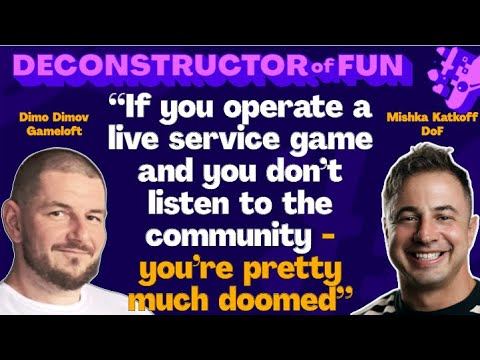
hey folks and welcome to the deconstructor of fun podcast I'm your host Mishi katkov and in this episode we are going to talk about live operations now shipping new games I'm sure this is not a surprise to anybody but shipping new games is very very difficult especially with the current market with the limitations of the privacy and the saturations etc etc so we've known this for a long time that operating and growing games is really the Cornerstone of freeo play and and we've also known that even even up rating and growing games on a single platform is pretty tough but how about when you expand this across different platforms at PC at Xbox at PlayStation Nintendo Switch Mobile how do you run a game across all these platforms so to answer this question we got Dimo Deo who's a vice president of live games at Gameloft joining the podcast now Deo in the beginning we're going to talk about of course deo's background he's been with game La for no 17 years 17 years all the way from QA to
VP of liveops um we're going to talk about the evolution of live operations the importance of community feedback the challenges of managing cross platform games like Disney speed storm and ASA Legends unite which are both under um demo Demo's responsibility uh we're going to explore the role of AI and the future of gaming and of course talk about the exciting new titles in the development of Game Loft I'm personally always very interested in asking um very basic questions of like how do you as a VP run multiple games like what do you do in your day-to-day life um so I hope you enjoy this conversation I hope you get a lot of insights from this as many of you are planning working uh developing live Ops games for multiple different platforms and um if I may ask something if you're watching this on YouTube we'd love to have you as a subscriber so uh tap on click on wherever the button is
we want to get as as as big of an audience as possible to get more guests like demo on um and and give you these insights so anyways without further Ado thank you for listening and ladies and gentlemen demo [Music] demo this podcast is brought to you by apps flyer in today's Digital World understanding your apps Journey from Discovery to download is more than just insightful it's essential enter apps flyer the leader in Mobile attribution and marketing analytics that allows you to measure the full potential of your marketing efforts making every ad dollar work smarter with apps flyer that's your new reality dive deep into Data driven insights that reveal exactly where your users come from and how they interact with your app app sler where your app's potential meets performance
Deo Deo welcome to the podcast thanks for inviting me Mishka much appreciated and uh just a quick introduction of you you're a vice president of live games at Gameloft and you've been with Gameloft a long time longer than I've been doing games 17 years going all the way from traditional QA up to a VP levels tells about game loft's career progression is pretty Point uh can you tell you a little bit about your career like 17 years of game off that's a that's a whole career yeah that that feels nowadays it feels like a lifetime uh I joined in 2007 I was 20 years old back in those days and uh I would say I it was just kind of lucky that I ended up here uh and I I I was not making games for first 10 games of my career I was part of uh I started as a part of eCommerce so
I was the witness of this Java Games boom doing the websites for all of the all the mobile operators then I've went through a different Online technical departments uh the life op Solutions team the CRM and yeah luckily for me I ended up in a production doing games this one was not a coincidence yeah and um lot of questions you're not French that's that's a unique thing because often times when we think about French companies if you're VP you must be fluent at French at least yeah I'm I'm very far away from flu in French I'm not going to say anything in French here CU I don't want to embarrass the company and myself uh now nowadays we have uh we have a few Executives which are not French uh as a matter of fact fact uh we have uh also another VP of live games so our portfolio is split in two and he's
Ukrainian he doesn't speak French so uh it's it's no longer mandatory to speak French in order to be a on Executive position at least in Game of yeah it's it's the same thing at at I believe woo as well like French companies are becoming more International that's good I love it yes that's amazing that's uh that's fantastic yeah for a long time that that didn't happen in Europe French were French until the uh anyways we're not here to talk about the the executives French companies we're here to talk about live services and as a head of live services at gameel like what is your day-to-day job what do you do um in my day-to-day job I try to spend uh as much time as possible with uh the game teams um we have a structure how our game teams are distributed uh right now I'm working closely with a dis speed storm which is going live Going Global on mobile on 11th of July so when this podcast goes out it will be already global but uh as of now it's in the
final weeks uh I also work on asphal 9 which is soon to be known as asphalt Legends tonight another big update uh basically rebranding of the game it's going to be the same game people keep their progress but it's going to be something different so I I'm trying to spend as much time as possible with those team uh teams working on the product monetization strategy design uh doing play test I just went out from a play test I have a PlayStation here and we're playing this in speed storm um being kicked by the top players uh along with this uh of course um I do need to focus also on some more strategical uh some tasks let's say uh in um in regards to the the analysis of the performance analysis of the company's road map uh forecasting the profitability of the game the p&l just so that we make sure that the team composition the team structure um corresponds to uh to its
ambition uh now it's more it's more important than ever to have a financially sustainable game uh we going to speak about it later in the podcast cuz I have a very strong opinion about this and uh yeah it's it's it's part of a of the job when you have a a profitable game you you get the freedom to do pretty much anything with it yeah I I agree when you're on green you're safe when you're red You're Not Safe no you're absolutely not that's the uh those are the rules of the game really really simple and um how do you how do you manage your I wouldn't even say work but you're a focus two different games both are crossplatform games right Asal Legends unite is a so you have multiple platforms two games two big teams I would assume asalt is made out of Barcelona uh and both these games are as
a matter of fact developed primary by Barcelona uh Asal unite is developed in C development uh with a small team here in Sofia as well so we expanded the team for this uh for this big update and we'll probably keep it with that size because uh this C development seems to be working out quite nicely yeah but yeah both of these it's it's a lot of management it's a lot of management it's like uh for for people outside Europe um Barcelona is on the other side of Europe than sofhia literally different Seas so it's it's as far as you can get on Wern barcel in Europe maybe if you go to Portugal that's the furthest point uh it's a three-hour flight uh to me that uh it it takes me more time to go to my home time nowadays so um I'm trying also to yeah I'm trying to um to travel as as often as possible uh I I would say that I'm sort of a remote for the team but we know each other very
well we've been working together for years and um as um as part of the management I'm I'm not alone in this uh there is uh we have a game manager for each we have fantastic game managers for these games there's also producers were helping them so uh of course they're making my life much easier uh so that I'm um interfering only when uh we are speaking about the strategical decisions uh testing new features of course monetization operations is more in my garden but I also have some fantastic product managers there and uh it's just Kos for them yeah they they're amazing but I'm I'm interested in how do you add value as an executive because this is this is often times challenging because you don't want to interfere or micromanage but then again you are technically in charge of these products succeeding so you have to have some kind of influence but you don't want to have too much influence where you take the
agency aways from the people who are also responsible of the product like how do you how do you manage that part I'm I'm trying not to influence directly what uh what the team is doing and what the team is going to do uh it's more about um creating this environment of creativity this framework uh what the team can do and uh if I am just facilitating stuff here and there then I'm doing my job good if I have to interfere and say okay now you have to do this this and this feature uh that's uh that's a bad executive because people they need to feel that they are owners of what they are doing they're owners of uh of their games so uh to me it's really important to empower the teams to give them the right platform to speak for themselves uh we are we're doing some very interesting events nowadays uh it started here in Sophia and now also Barcelona other studios are doing it we have this uh event called yearly road
map Workshop it usually happens once per year a day dedicated for the whole team uh it's just the culmination of whole process we are obviously benchmarking gathering information throughout the whole year but that's the moment when We Gather 5070 up to I think Nal it was 170 and and something people event last uh last year of outside of the studio and um we're brainstorming on different Topics in regards to the future of the game game essentially trying to narrow down um what uh what would be the direction and uh nowadays maybe 70 80% of the road map comes out from these workshops even if we had them in mind it's completely different story when the team has brainstorming they propos it they get to presented at the end of these uh sessions every single group is making short presentation and stating this this and these are our ideas and uh we we got some amazing results out of it h so so you plan a full year ahead in uh
in these road map meetings sometimes we might even plan stuff for more than a full years but uh road map is a living artifact so it's more of a direction uh and it's just the first step we get a bunch of ideas then the the product team the cor team they're refining them and uh we use them as a sort of a back walk of backwalk of ideas uh We've even had some exercises uh trying to uh to think three years ahead that's how tonight actually came up uh during this exercise and we were discussing okay maybe we should have the develop the working progress name was asle forever so we decided okay that's going to be the forever assle franchise what do we do with it and uh whether it um it comes a year ahead or just a few months ahead it really doesn't matter uh as long as you have a solid feature solid plan that comes from the team and it's uh it it's not just put uh top bottom yeah I've uh
I've actually seen I've actually seen uh one of those 160 page decks from game off and I've seen actually the asphalt deck from years back so I it looks like it takes a lot of time to make one of those decks like they are wellmade they're very perable it's not just random ideas thrown in it is it's a lot of work and it's very unique I don't know any other companies that does a full year I usually know orderly planning but a full year is uh is a lot of work from the team and you find that useful uh yeah I do absolutely and again uh it's not a setting stone for an year it's just you got so many ideas that usually it fits into your yearly early road map of course it's uh it's being refined on quarterly and sometimes on monthly basis depending on if we see something that uh we got for instance a community feedback if they propose something that makes sense for us yeah we are absolutely put it uh in the game
uh we we do we do listen and nowadays if you have a life service game and you don't listen to your community uh you pretty much doomed uh these people they're very loyal to their games and we are obliged to uh to listen to their voice you've heard of heroic Labs by now and we keep talking about them because in today's mature Market you need every Edge to be successful rather than spending those precious company dollars on building game Tech focus on building your game and ship it get into your players hands faster and grow your community heroic Labs is Battle tested partner and friend of the podcast their Tech enables you to be flexible creative and scale for Success heroic Labs has your Tech stack covered whether you're looking for world class backend game server an amazing game development framework Fantastic live Ops to wiing or reliable Mass scalability heroic Labs has solutions for all of these challenges and it's not just us a deconstructor of fun praising heroic labs the company works with some of the
world's biggest Publishers on many of the Beloved games focus on your game save a big chunk of cheese and avoid Tech risks with heroic [Music] Labs yeah so tell me about um there's so many questions um how has the liveops evolved at gameof because what we've known is that gamelof used to be for almost forever just a purely mobile publisher and last few years it has really focused much more on PC console and as you saying bringing in cross-platform games and that brings in a plethora of challenges of live operations with multiple platforms and multiple versions and and so forth like like how has the live Ops evolved I would say uh when I started working with the game production like six or seven years ago I don't even remember um wife HS was purely a monetization responsibility so at that
times uh crossplay crossplatform was not even a thing uh you have the liveops calendar and it's the either the product manager back in those days they were called monetization manager they responsible for day executed uh they are preparing some requests for the game team but uh at that moment they were not really perceived as part of it even though they should nowadays uh wife operation is um life op's responsibility is widely spread across the team uh we want first the first um ler is we want to keep everyone in the team no matter if you're an artist a developer QA um to be aware of um the vital kpis of the game where it stands and more importantly how the job the features they worked on are affecting these games so um now when when it comes to uh life Services everyone is involved to some extent uh let's say if we are um
preparing a new feature no matter it size um or any small uh any sort of change in the in the game uh it should um it should have a dashboard so you always stick a dashboard to your idea and you follow carefully how it is supposed to perform uh we we kind of look um at it from the Prisma of product mindset you had a great podcast and an article about Pro mindset I believe it was with Constantine from uh Bela yes and it was very influential for us by the way we even have an internal article based on it uh so yeah kudos for that and um indeed now um when you're pitching for a feature your feature owner usually designer not necessary uh you know from day one how your dashboard should look like and all these proxy kpis that the fature should achieve in order to complement the strategy of the game the pillers that you have in uh the let's say the early strategy H and and
how do you how do you change like I'm I'm interested in because you have these strategic responsibilities and how the the company runs liveops and then you have two direct product responsibilities with big product teams working on it and so forth like how do you how are you able to focus on each of the three key vectors in your work do you separate it on days like on Tuesday I'm going to Asphalt on Wednesday I'm going to be in speed storm on on Friday I would say uh it is plant wayhe I I know exactly when I'm supposed to be with the asold with ptor Team uh or with my strategical team uh besides of these two games I also have a bunch of other games under my scope but uh we do have Global directors of produ who are um directly reporting to me but in charge in of these games both of them are also based in Sofia so it's not just France nowadays running the company uh but um
when it comes to uh to planning um I'm still trying to focus more on the day-to-day work with the teams uh I have two or three calls Focus particularly on working with those teams and uh the Strategic part of it it's a little bit easier to predict um when you have the Strategic goals we do have Tuesdays EXO meetings or um some Thursday syn clubs with the whole wops H essentially it's a it's a matter of planning uh when I Monday morning first thing I do my first task Monday morning is to take a look at my calendar see what I got see which are the green zones and uh trying trying to plan the week a little bit ahead yeah yeah it never works cuz uh with live games there are things are coming up every day even yesterday we got a me crisis so we were figuring it out at the end of the day but I I would say uh yeah that that's
challenging but also very rewarding when you overcome these programs you see any you directly see it in the dashboard so then you see you're improving your generate your uh monetization kpis yeah we're doing something yeah yes or you're doing something and it doesn't resonate that's also what can often happen and that's the Challen that's the most challenging part yeah uh uh in that regard I have I have a very interesting story uh right now we're on the finish line of soft launching this speed storm and um obviously when you are soft Laing a game your primary kpi is uh early retention so you're working retention day one day three in our case it goes through a bunch of proxy kpis uh following the onboarding CH rate so we have about in just in the first five races we have more than 100 tracking events who are showing us exactly how the journey is um
the player journey is looking and we're constantly improving so we decide okay we're totally fine we're going global and out of a sudden we get a report that uh we had a huge increase in ch rate after race one and race two and this is literally 3 weeks before Global we announced it then uh you you go through the dashboard you go through all sorts of analysis and we realized that it's just a problem with the boat difficulty where the bats for these first two races were way too challenging and people winning only about 50% of them while we are aiming at 20 at 95 and um and upwards so boom you just make a simple change server site and it's all done but up until the moment we figured it out these were the three most critical hours in our soft one I'd say because out of a sudden everything we've been doing for 6 months was it it looked like it disappeared yeah what the what did we do wrong well well there's another point in that
so with the the sudden change of KPS of course like this type of a sudden change of kpis is is too sudden and it it kind of tells you that there's a a major crisis point but what I've seen in live games um or games in soft launch is oh actually soft launch but both games that are beginning to scale is the rapid deterioration of cohorts and you were kind of finding some kind of a base line in your soft launch and and basing your projections on it and what you see is like every cohort is coming in like when you basically I like the uh the sort of a um monthly view of where you can see uh payback um as a as a sort of a threshold on the top and then you see a line climbing towards that payback which is the uh the LTV and so you're basically looking at LTV cat and there you're looking at at at not only like how soon we get to the payback but
you're really looking at the at the form of the curve in the sense that if the curve is plateauing that means it doesn't matter how long you push the LTV it's not going to be substantially bigger and payers are not either paying more or they are not doing repeat purchases and and when you start putting in and kind of like putting in those cohorts in in order you can start seeing that every subsequent graph of the new month is coming in lower than before so the money is less and less and less while the uh the payback is further and further away like have you seen those type of graphs and what do you what are you do yeah that that happen U that's actually this is the normal distribution of those graphs you know that your first month would be the the the most successful one okay you might influence this with user acquisition uh we we did some test uh with partners of us who are heav investing in a small project and uh we suddenly see see like retention going from 35% to 55 what are you doing guys
but uh it's just a matter of buying those users and it's abnormal when uh when you count out those conditions usually um the lifetime value of your cohort it's going down with time and again you should anticipate this so uh based on the first couple of months okay maybe not a couple but uh if you look it on weekly basis we can more or less forecast how our cohorts are going to evolve and uh based on this we are also uh narrowing down the level of investment that um that we should put into this game um we we we call this um this period few months after you're going global uh this is our Lunch phase when we are trying to get as high as possible and we see exactly the evolution of um of those cohorts uh and even if you put it uh so cuz it's one thing to put it from the perspective of weeks and months but when you look at years it's even more drastical uh we
have a a strategy game March finar who is on the market for 9 years and it's by far our most successful strategy game it's a top three or top four in the company overall uh and um I I know these numbers because we just did the early Workshop so I Was preparing uh 86% of uh revenues in this game are from cohor that are one year or more older so essentially uh you have all these very veteran players and um this also defines the strategy of this game obviously when you have uh this um this type of cohorts and this type of game Evolution you're focusing on those players these are the guys that you want to keep into the game and here retention day one day three day 14 it doesn't really matter it's it's m nuts in the whole scheme that's a good quot uh but but that's exactly the the point uh that you made because a lot of the times when you
know when companies would would talk to them they would fla at me like day one day three and and you're like no that's I'm I'm happy for you but that doesn't mean anything it's a it's like a moment in time and it could be a false flag it could be true what I really like about is is the uh like looking at the shape of the curve because as you said in March of Empire is like March of Empires March of Empires yes yeah March of Empires I would assume that the the LTB curve is like not stopping it's just slowly increasing and increasing increasing as the go until it passes through the uh the the uh the customer acquisition cost just continues to go for years up up up and right and and that's what you're looking for and not essentially like you know High retention and and early paybacks especially in those type of games uh they're mostly well Krakens driven so uh your early indication doesn't give you that much of infu information out of a sudden you get a
player who spends 9,000 in a day and okay how do you optimize your user acquisition strategy based on this you you just can't you're you keep on grinding and you're hoping to get another player like this but what matters down the line is the big picture and how the overall cohorts are maturing yeah and how you keep those players engaged exactly exactly and then you're you're you know you're the whole live Ops the way of traditionally seen it is just stacking payer cohorts on top of each other and creating a sustainable business through that um so we've talked a lot about the paybacks and and so forth like how do you work with marketing like what is what is that relationship because I I've seen all kinds of relationships I've seen non-existing relationship where there's a studio that works on the game and marketing sits on a different continent and you know they exchange emails and calls but that's not a very functional relationship and they kind of both work in a vacuum while you know the the team
is tied to a product and the marketing is not to tied to a product they just this is one of the products they are marketing and then I've seen uh sort of a contraria relationships where product and marketing are fighting constantly each other with a product accusing marketing for being bringing too bad of a users that are collapsing the kpis and marketing is saying no your your monetization or whatever is so low or your LTV is so low that we cannot bring better users and there that battle and then I've seen marketers being a part of the game team and Ry or die with that game team how is marketing set up at Game Loft uh back in the days the evolution of marketing in gameof is very similar to the evolution of Life Services back in the days marketing was a completely separate vertical so it's five or six years ago and U they're working in AO their targets are based on dni they usually PR those targets since they put a lot of a lot of efforts into getting users from India or Indonesia
and you reach your dni target but that brings I would say zero value to the game then um we started working more closely with marketing people changed uh nowadays uh marketing is considered part of product it is considered part of the game team uh our marketing experts are involved uh basically on every single day-to-day uh basis uh today we have a big play test here in the studio and uh everyone who is involved in marketing is part of this um of this play test uh CU um we are truly trying to narrow down marketing's objectives to the game's objectives since down the line the game is what matters yes you do have your marketing vertical of course you have some experts who are on the top of it but um what matters is the game and uh essentially every single marketing activation or even the user acquisition strategy are they're considered as part of the product Ro map uh of the the game uh when you when you're making um an
activation it is carefully aligned with the life operations calendar uh right now when you have let's say a big activation you spend million of U of dollars for it uh you really want to um to get some very quick quick cash back and the way to do it in first place is uh enhance enhance your life operations with this then of course you're going to get users you're going to get extra value over time but you really need this quick pay payback and for us uh what what really what really works is have marketing completely embedded within the game teams no matter if you are um ASO specialist activations user acquisition game Community especially game Community managers uh that they're very very important for us and that's where the power of your road maps kind of comes in because when you invest so much time and effort into creating these massive road map documents there're also tools for aligning not only the executives but
also all the uh support teams around what the game is doing and how is it evolving during the the upcoming year yeah exactly this podcast is brought to you by data AI now you're asking didn't they get acquired by sensor Tower they did and that's awesome here's why what do you loved using data. a or sensor Tower the combined company will offer customers even stronger and and more detailed insights on the full Digital customer Journey exciting times lie ahead as sensor Tower and data I Jo en forces go to data. a or sensor tower.com and get on board with undeniably the best data partner in the business now back to the episode I just thought of an example about uh marketing and game Community managers since they're getting more and more important now with the evolution of the web stores but that that's a different story um um with asphal we have Community
manager who is very well um let's say embedded within the produ team uh we have this twice per week course exactly focused on the W calendar and he he was giving so many suggestions he used to be a pro player that at some point uh the team decided to have uh his name is codin so he's an amazing guy and we we had codin event once per month coding section in the shop because these are the promotions that um he's suggesting B on players feedback and so for once actually our players liked our promotions because more or less they were coming from them yeah of course they don't like the pricing they things that they don't really appreciate but what they appreciate is that they are hurt and that they are guy is um speaking together with the monetization team and being cable and these are still one of the most successful promotion at that time we really rapidly trying to catch up to Target and I I would say that it it play a big role to catch it
one day before the end of the year that's awesome and I I I you know I've been seeing this for for years in live operations it's like data is in you know it's vital but I think the other two channels of of decision making is not only the analytics that you're seeing but also the gut feeling of the team that should be experts in this genre and and in the game that they're making but also the voice of the community and when you combine these like you don't even need to necessarily combine this information together the data the community and the gut feeling but as you're addressing the input from all three sources of information I think you make the the best possible live operations decisions yes it's an aspect that I didn't mention to me it's very important for gings to know very well their game to play it and not just for the gings I believe Executives should be doing it uh I'm trying to be involved as in as many play sessions um as possible uh play test sessions uh I've been a competitive gamer my entire life maybe for 22 years
so I've started with Warcraft 3 that paid for my University then Clash Royale braw star um broadcasting brw star tournaments from time to time so I I really want and I believe that um even though yes we do have a strategic role we should get down to this of knowing very well our games of understanding what are the players need if I put a bundle or a promotion and I don't like it no one else will like it if I I don't buy my own stuff who's going to do it how much do you play your own games like in a week like how how many hours do you spend playing the games hour I have I can put a very clear statistic so I have 200 hours for the past six months on Disney speed storm just Disney speed storm uh so yeah that's on average it's an hour and a half per day but I have a joker card my my stepson loves the game so we are playing together a lot and uh now we introduced a team mode
where we can play together and uh that increased the engage our family engagement within the game substantially uh but I actually yeah I really like the game I'm working on this game for exactly six months uh just after soft launch and I decided okay I I need to be at least as good as the game team then I decid I need to be at least as good as a top 100 player uh to really understand what what we are going to do um have there been any games that you've live operated not necessarily now that you really did not want to play and you still played them I've I've operated more than 50 games back in the days I've uh essentially my uh my career started by um making a unit dedicated to games that are no longer supported so this is a bunch of 30 35 games uh I would say played a fair amount of them the big ones at least um yeah I I I do recall a game or two that I really didn't want to play and I was
desperately trying to uh find a person who takes care of them and I'm I'm just a dashboard guy who is uh invited to some meetings and trying to be silent because you don't really know the game uh but when it comes to the to the big games to the games that matter uh we're also discussing between me and see the other VP okay which games uh does he like which games I like so that when we choose a game we we know that we we are going to invest 100% of us Lu for uh for me U he's not that much into the competitive side of uh the gaming so I'm getting uh all these um these titles and they're mostly based in Sofia Barcelona L to some extent nice but yeah that's that's the challenging part if you if you would be working on a game that that you're not I'm not into uh I don't remember if I worked on games that I didn't like playing but I remember were working on games that I didn't want to play more
like you know like like yeah it's it's fine but I can't imagine playing this game every single day for an hour and and then it becomes kind of challenging when you feel like you're not the right person to to drive this product and you're kind of like trying to take a a very sort of a product focused mindset which is wrong because you have to take a holistic mindset for the uh for the for the whole game and not just the dashboards so yeah but you have a QA mindset I like that you're you're able to put an work into into anything yeah I I like I would like that like one of the one of the challenging part about live operations and just you know uh managing a live game is new content coming in um how do you structure that because Let me Give an example like like Zinga is a was was quite good at this is that it kind of broke down the new content into something that is coming in all the time
kind of like the Small Things the live events that that normal stuff and then there was always these bold beats what was called it's kind of like the the the the type of a Content that significantly changes and creates that big uplift or the goal is to create that big uplift in a game like how do you structure your content pipeline for for for the year as you're making those uh it's a great question that's by far the biggest challenge right now in life Services games uh it starts all by the fact that you should know your game very well uh and by knowing uh it's either playing and also analyzing so what matters to us is to examine the I would call it the exhaust rate of the content that you put into a game so U it starts usually at the top of the value and gradually U diminishes uh I think it's uh it's called Net Present lifetime value and um then um by examining this content you can create a very clear
pipeline it's all about the pace of adding new content and uh the pace of exhausting it and um this one is very important some teams we have a dedicated scrum team just for um new monetizable uh content it could be Racers cards uh Pro progressions items anything uh but things that we know they're going to sell they're going to monetize very well and uh down the line all about optimizing um this Pipeline and it is very important to optimize this pipeline because it um it opens freedom and resources to work on an actual um Flagship feature development things that are exciting that we believe are going to bring value but uh of course there is a higher chance of uh risking it you might work on a feature for one year and people don't play or play but they don't pay anything on it uh so um again when it comes to Features it is very important for us to align them with the
Strategic kpis of the game whether it is it depends on the state of the game if it's a new game obviously you're focusing on things that are going to improve on boarding mid to game uh M to game LTV and when it comes to uh old games it is all about um making your veterans happy engaging them uh and it goes through this uh product mindset um Prisma uh down the line it should lead to an incremental value usually calculated in Revenue uh for um for your game and and so if if we're going on a very like concrete level do you have the team investing into kind of like the day-to-day week toe operations and at the same time there's different pod or existing pod that is investing into that big feature that is coming down the line or how is it structured uh it is a little bit different from
Team to team uh but um usually um each of the team is split into some scrim teams or strike teams whatever uh whatever you put it and uh there there are teams who are focused on uh long-term development so they know that their feuture is uh getting out in 6 months or in a year or if it's a technical Improvement we have a live game that is now migrated to Unreal so it's um it's and this is it's marir actually 9 years old on the market 20 12 years in development uh it takes uh it takes a year to do it so it's a separate team however uh all these teams they are part of the big team uh they have this event at the end of every Sprint the product review the Sprint review is done by the entire team so every scrum team presents what they did but still their primary focus is either the content or those features that are part of their particular role up and and you're talking about the
teams presenting what they did and so forth how how is the reporting structured like I've worked at mostly American companies and and we would have like weekly when I was a PM we would have you know weekly Americans love to call them War meetings War meetings okay yeah I think they were called War me Americans love war we know uh but yeah like we we had these meetings with the executives that were like weekly you know very numbers driven product people and Executives would go through the latest numbers and of course the big Focus was on the key games but those were kind of like the weekly meetings then we' naturally have these quarterly meetings that were more focused about you know bigger growth incentives and that would bring in the auel teams how do you structure your your your meetings the reporting of it on a very du level uh at the end of each Sprint we have the Sprint um review it's not done by all the teams but most of
them do and um by by definition everyone in the compan is invited to this so um VPS are invited SE levels Executives they're invited uh when they come it's great because they see the progress they see the Dynamics of the team uh of course we have a dedicated sessions just for the team leadership um usually done for the big games it's done once per quarter sometimes you might do it um more often uh but um indeed uh depending also on the autonomous of the team we have some teams that are being called uh called out to these discussions one per year once per year because um you see that a game is solid solidly performance for the past four or five years they know what they're doing so no one questions them you just let them do what they do cuz uh again the more successful you are the less pressure you you feel from uh Executives or from
stakeholders we used to have uh we used to have quarterly product reviews for every single game and uh it was way too um exhausting especially for the executives because uh at some at some point we were spending two weeks every quarter just preparing listening to these presentations and uh also teams they shareed their Fe feedback that they most of the people stopped working just to prepare those presentation come on no we want to we want this to be white weighted so yeah you do your product reviews for your team and everyone is invited if they join they join that's that's awesome uh I remember like my first product job my first job in gaming was a product job and every Tuesday we had a war meeting War Room meeting and every month Monday was uh was a day when you kind of almost like
mentally prepared and started doing the numbers and then Tuesday you went until evening kind of preparing the documents and the presentations and so you had a hard that hardish Monday hard Tuesday that went really late in the evening and then for the rest of you the week you were kind of burned and already preparing for the next week so you didn't really focus on improving the product that much you focused on delivering the uh the report every week to the management team and that is not the best way to operate this was over a decade ago like but but still it's uh it's it's understand but I wanted to ask you the question on on like you know you try to be very smart about the requests and the need to report but what do you do in a situation where you see that the game team is just unable to execute hit the target they're they're flirting with the red so what's what's going on then uh that that's usually the moment when um first I'm I'm getting the game manager the the top
leadership and we we're starting to discuss what uh what what do they believe is missing in the team uh usually they have a very clear idea of of what's wrong uh but uh it sometimes it gets into this micromanagement um situation um I I've done the this once with with usful Team uh when uh we were not performing very well and it felt like the team is a little bit lost uh no it was just a matter of communication this was the moment when we've created our I think we called It Strike Force group or stuff like this where we gathered monetization marketing um e economists uh and the leadership of course so and we start focusing okay what's working in the wobs calendar what's not working why are we underperforming uh what will be okay we have this calendar what are our expectations of the revenue and in the beginning everyone is freaking out how how do we forecast our Revenue what if we if we missed it and it doesn't matter
if you missed it you're getting better and better with this forecast the more you doing it uh nowadays uh actually we keep on doing it not with this pace uh but for them it's a walk in the park they they share the calendar say this is going to do that much that this compan is going to and then down the line we will end up with um this amount of Revenue and this evolution of the kpis and then usually the margin of error is less than 5% uh so um that creates this uh Bas of reporting they report to to themselves most of the time you don't need Executives for this uh but yeah a couple of times I I do jump in in such situation usually it happens once per game and then then you see people organizing themselves and uh yeah that's uh when when I see that they actually can manage this stuff by themselves I I realize okay I'm doing a good job that's what I wanted to do I don't want to micromanage those guys and uh also it creates this trust between Executives and the team if they are in some kind of
doubt they just come and say can you can you join us and share your opinion uh and uh hopefully hopefully they're not afraid of asking I know that some guys are but it's just that I usually work angry and I don't know how to change this step into the future of game monetization with exola exola empowers developers and Publishers to market sell connect and optimize their games globally from payment solution to a full suit of tools designed to grow your games Revenue while fostering a lawyer player base exola is your game's gateway to worldwide success with exola the world is your playground visit exa.com today and find all the solutions that will help you to power your games into success everywhere that's uh so you mentioned one thing that I think is also very important is I mean we've been talking about reporting in various different ways but you basically talked about that the teams are doing reporting themselves
not for executives but for themselves and they're doing forecasting for themselves and I think that is really really important because again I worked at Studios where it was contrary to that where teams were allergic to any kind of reporting any kind of forecasting and I think it made them worse because they were never forced to think about the impact of the work that they are doing and when you're doing the forecasting or reporting it's not per se the report that matters it's the work and the thinking that you put in into like like thinking about the effect the product effect of your work rather than like oh I don't want to present to Executives it's a waste of time and so forth like no no no you need to think about what you're doing and put a number on it and then measure did it deliver and what you can do differently that's the only way to learn is by measurement yeah abely absolutely and um when reporting to your teammates it's uh
much more lightweighted because sometimes all you do is open a looker dashboard and you report based on this dashboard then when an executive is coming I'm telling them do the same reporting it's an awesome report you don't need to put s days of work into creating a nice presentation I know you can but all that matters is to report in the lightest possible way so that you don't waste your time and also stress yourself did I put the right font or maybe maybe the colors are not correct come on that that's why we have this wer the dashboards use them well since we're talking about different tools the local dashboards and so forth like um what type of a actually I was just going to add like basically what I'm trying to ask is AI machine learning live service operator like how are you looking at at the sort of a the latest uh enhancement to the tooling is Game Loft on the on
the Forefront is it more kind of like strategically looking at at what they could employ from these AI advancements like what's your what's your position on on on the tool set and platforms we're constantly experimenting let's it I don't know if uh you if we are pioneers or behind uh companies don't speak that much about it and uh usually companies that are very vocal about how they use AI uh they don't do this but um in in our case yeah we figured out that there's certain areas where AI could help uh of course it's it's just another tool to put it simply at least at this moment you said it very well it's a tool if you use it correctly you can get some value uh artwork yeah it it could work uh but again you have constraints it works only if you have this huge pool of existing assets and again if there is a 10 year uh 10 year old game yeah you absolutely have it you have uh tens of thousands of asset and
you could get some stuff when it's a new game it's a little bit uh it's a little bit trickier um however uh what I believe is that uh in future the most successful game companies uh they will find a way to take leverage of it it will evolve and uh that's for sure and we should evolve uh with um with the AI and use its capabilities to it why do you think that the companies who are experimenting and investing into AI don't want to talk about their work with AI because this is not this is I I down you know not on the microphone I have these conversations a lot where companies are investing into a but just CEOs don't want to talk about it um I I know mostly based on the friends I have in the industry uh this is not exactly scientifical uh approach but um I know what they're doing and they just said no I don't want to talk
about it yeah once we get something substantial yeah I'm going to be bragging about it but right now it it's not if it's not a game changer let's let's say there we we'll be testing we'll be trying it out um maybe there there is also another aspect of it based on other Financial results but yeah well and and when you're using different uh tools and platforms for live operations are you using primarily internally developed ones or are you using third party tools or is it in between CU some companies think this is strategic core competence is to have your central tool set your Central Tech for your dashboards and we cannot use third party tools and the other ones are like no the making of the games and the uh the ability to deliver to our key players is is our core competence not the dashboards and the tool sets like what's what's the position in Game of uh back in the days
uh we were in all everything we use in terms of reporting and tooling was entirely developed by us uh game off is a massive company for the standards of gaming industry so you can always find someone who will do something for you uh however uh nowadays especially when it comes to reporting to all these dashboards U we were looking into the standards and we figur out that they can they can do much better than um than our internal tools uh however still in some aspects uh for instance lifeof Solutions the our CRM tools the tools that are managing the events uh we are we're using our own tools uh mostly because we believe that the capabilities of these tools the variation of narrowing down cohor is uh way better than what um is on the market uh and also if you want to integrate something the third party is going to take way too much time uh because we do have our own
infrastructure also yeah I was heavily involved in the development of our life of solutions so I kind of might be S sentimental about it and I'm not trying to be too vocal about the Direction Where We should go because yeah that's my baby I like it um but yeah in in some aspects we're moving more towards some third party Solutions um still uh let's say for the web stores uh we buy our own like completely which yeah that that's the challenge of big companies is like as you said there's always a team though that is more than happy to do this tool internally and they always underestimate the amount of work that goes to making this tool and they always underestimate the amount of Maintenance work that will needs to happen after the tool is dump and then uh quite often in my experience at least I I much more enjoyed working with potty tools because they were you know somebody was actually selling it
and through that they had customers and through customers there they have you know real clients that they have to keep happy and deliver to them versus a Central Tech Tool you know they're they will get you when they get to you down the line I I do agree that uh it is more convenient to work with third party TOS again maybe it's just me because I here for 17 years I know pretty much everyone in this company I know what they're capable of and I can rely to certain extent on on those people some of them I can R completely so if they say they going to do it they're doing it uh but it's more about knowing who are working with rather than um deciding should it be third party or extern internal understood um let's talk about kind of like the future of of live operations and where do you see kind of live Services evolving in the next couple of years especially looking at
from your perspective of of running live services for crossplatform titles um crossplatform titles would be the key element to me uh what um what would really matter in the upcoming years uh the again the successful games they would Master life operating their cross platform titles uh you have different platforms you have different type of players and uh still somehow you would need to have your life of strategy fulfilling all needs nowadays indeed uh phones they are uh almost as powerful as PCS and actually some of them are more powerful than uh than PCS and consoles so pretty much um okay you you can deliver your game everywhere but then uh narrowing down your life operations towards the need of the particular platform that's uh that would be the tricky part and uh uh the the more I'm working with the cross platforms uh now with especially with consoles uh I
realize how difficult it is to find the balance so to me the the companies that are able to nail this they they will be very successful the race will copy but the Pioneers will will get the I would say substantial Advantage yeah yeah I I I can only agree it's a it's a the cross platform is challenging because isn't it so that you have to run the same same update through all the Platforms in the same day because they can't be s yes and you have different certification processes uh so essentially your your update is uh is ready a month and a half before it goes live and you have to constantly think of uh okay uh what um what we should do now uh so that we're absolutely sure that in a month and a half it's going to be fine and you also need to create your te in a way that it is easy to be manipulated servers side I I have a story of an asset being only um being hardcore in
the client and we realize it 24 hours before going live and we have the wrong season thingy So based on this asset we redesigned the whole season the whole life operation season so it it fits otherwise we we have to postpone the next season with two or three weeks and we're okay guys the rest is server side we're going to do it you're are amazing so 22 hours booking campaigns booking events making sure they work damn things like this happens and uh we have we have to expect it failures they will happen and uh we just need to adapt to it yeah yeah yeah that's a it's it's such a different mindset to a traditional mobile updates where you know if you up something let's just do a heart fix really quickly and get it
going yeah and also when it comes to the monetization aspect of it uh you need to have your plat uh your campaigns running on all platforms and that that creates um creates some obstacles it's not like mobile yeah we just add 100 more packs and we can cover everything literally everything so you could have a separate pack for almost every single item in your game and that's that's fine on um cross platform it's it's a different story and in addition to kind of like the trends uh or or what you're seeing as as the future of Life Services as the crossplatform is there anything else that that you are some kind of a Trends in life services that you're particularly excited about or you know otherwise follow I've already mentioned it I think a couple of times uh speaking about web stores uh now that they're really hot uh and um and I mentioning mostly because
this was one of my side projects we we just released our game wolf Club loyalty system which is essentially a web store uh and uh I do it's a web store for now but I do see their their role is way more embedded into the games ecosystem and uh being part of the wobs meta uh they're actually there companies right now on the on the market that that are already doing it you you see some events uh that are run um only on the web store so you go into the game you're playing your game but you have to go to the web store to gain your rewards so it's about it's all about mastering uh the traffic to towards this web store without being um obviously you cannot um you canot put a direct link so it goes through a proxy it goes to your community uh and um managing your community having Community managers that understand what is their purpose is also crucial but without them you you can't you can't run your um your
stores and and part of the game stores are you also thinking about owning basically your customer relationship um you know through a an ID or some kind of a subscription service or Not subscription but some kind of a service that allows you to get their email addresses or phone numbers or stuff like that like I is that is that also something that you're thinking of uh thinking of definitely uh it's a matter of um convincing our legal department what we can do so these fights between game teams and Lego they're always there but um yeah I very much appreciate our Leo stopping us from doing something stupid because I I think during this past year while we were developing the whole game of Club system I had a couple of very stupid ideas and they put us in some trouble uh but luckily for me um we were able to mitigate it earlier so um a lot of a lot of
possibilities indeed and it will depend also on the relationships between the stores and the Publishers so yeah and I mean like as as as I'm running out of the the topical questions what are what are some of the things that that because you've been at game lot for 17 years you've been heading live operations for how long now uh I'm heading live operations for about about 2 years I I was in charge of some of the of the life of games different games for six years yeah and and what what would be sort of a learnings from the last 17 years that are you know applicable today as well um it's a great question it's a very open one I I would say uh thinking out while the first one that comes to my mind is uh uh do not be afraid of failing uh the history in my care here in Game World basically it starts with the sentence demo this can't happen drop
it and then since yeah I I used to have a boss who said I'm tough headed uh and since I'm trying to explore this worst thing that could happen is inde you going to fail you want to take your lessons and you you keep on doing it uh and especially in live games uh sometimes individuals are very afraid into pushing their idea their ideas because they ask okay if it fails what would uh what would happen we might run the I RN the whole game usually it doesn't happen so you should be very you should be prepared to fail and also you should be prepared to apologize to your players yeah you go you go out publicly say guys we screw up this was a very bad idea thanks for pointing it to us and we're going to do this and this and this to compensate you can always find a way to say sorry to um to your player base and um it's not the end of the world if you remove a feature or if you remove
half of your game which it happened in our industry uh the second uh maybe most important lesson is uh we covered it but still Financial stability of the game um I would say uh that um here monetization is key so uh I know many people don't like monetization especially in our industry IND uh but uh monetization is the liberation of uh of the gaming industry it's uh it's what drives us towards um being more creative cuz once we have this financially stable product uh we we can go nuts we we are going there and um you gain trust into your stakeholders you when you're are in green you gain more and more trust and then you just say okay I'm going to try this is a very crazy idea let's see what happens I like that monetization is Del liberation because we uh we have some merch and the number one sold
merchandise for deconstructor fund is a mug that says monetize or die yeah I I think I've uh I've heard this um this quote from uh the Constructor of fation in know the shackles of gaming industry is Del Liberation yeah it's it's it's a it's an awesome quote maybe this is the uh the the the title of the podcast monetization is deliberation well at least the other quote um I have to agree I have to agree so kind of like going through your kind of like these three key learnings at least what you mentioned is like number one is don't let fear to stop you from trying um I kind of put it away from from the other one and then you said apologize and compensate to players which is good because it creates an interactive relationship and the players can after what after that trust you even if you do something wrong they trust you to correct if they see you doing something wrong that builds a good relationship and of course monetization is The Liberation and that that goes to
you know we've seen a lot of layoffs happening right now and the industry is definitely in the downturn and and sometimes I get you know people asking me should I join this studio or that studio it's like if you want to be on the safe side join a studio with a live product that are profitable that are generating their own their own you know profits their own revenues that are not tied to the decision making of the corporation whether they want to continue investing or not after which your studio will be cut so that's uh that's at least my advice to to people asking it's a very good advice indeed uh when you what what matters to investors to stakeholders um it's uh is a direct margin of the game and when you have a stable direct margin you know that you're safe of course from time to time you you need some challenges you need to start with something very red and turn it into a successful product that's um that's
way more rewarding even on a personal level but there are certain risks with it there are plenty of risk with it and especially with um with startups it's a normal it's a you know it kind of that that risks makes sense and there's certain amount of stability that comes from how much funding the startup has raised and how much runway they have left Etc but with companies especially if they invested during the booming 21 2020 2021 when they thought that whatever games they will make will have insane appetite from players and now they're pulling back their Investments because they want to be more profitable and so forth so that's a that's a little bit of a different because often times we see people getting angry that a profitable company is closing down games or games in development or doing some kind of a cost cutting without realizing that the company you looks at things as business units it looks at return on the investment uh rather than than looking at the end of the balance sheet like
okay we're still profitable let's let's keep going and let's keep investing on something that that we don't even believe in anymore like it's uh you and that will probably never pay off exactly usually have very early indication if a product would pay off or not yeah and and Market changes uh demands change genres change there are games that are launched that suddenly conquer the genre or there games launched that are close to yours and you're seeing that they are not doing well and the thesises that you had is pretty much what the competitor had already launching that game so even another game can be a sort of a death blow to your own project in tough times or at least it means a pivot so there's a lot of things that can that can influence um talking about Game Loft what is the new and exciting coming in from gameel apart from asphalt unite and the launch of Disney speed storm speed storm uh we have um a very ambitious
road map of New titles um we're releasing um okay about to release uh in near future uh dungeon and Dragons title is going to be a PC console uh game uh action RPG with some live simulation aspect it will be developed in uh Montreal so one of our topn Studios uh and uh really excited about this there are also um a bunch of other games in development again major IPS which are yet to be uh disclosed and um indeed uh we will try to keep this balance between uh having PC console titles and mobile first uh CU right now it seems to be the safest approach but um yeah there some quite big names coming up maybe not that soon but soonish yeah in development closing in they will launch when they are ready to be scaled that's how that's how it
tends to go uh well demo it was a pleasure thank you so much for you're I think you're our first guest ever from Game Loft so is it I think I thought I'm the first Bulgarian but I'm I'm not sure I'm the first game lter you might be two for two okay well done I don't recall bulgarians and I I definitely don't recall game off people we've had people who who Kieran oi for example but he's currently in game L but wasn't on game off when he was on this podcast so so yeah yeah k k is a great guy he he was in roio he was in roio he was uh he was at one point he was a COO of roio and um yeah shout out to Kieran we're not going to talk about him now that he's not on the podcast but Kieran if you want to come on the podcast be my pleasure so Deo anything you want to you know
tell our audience um other than play your games um be brave be the do the games that you love play your games believe in your games uh don't give up unless the numbers are absolutely convincing yes well I couldn't agree more uh thank you demo for for joining the podcast and thank you everybody for listening for more live Ops learnings um connect with demo that's it thanks a lot for inviting me m thank you been a pleasure thank you you did it you made it to the end of the episode as a fan of the show it would help us out if you subscribe and leave us a review on the podcast service of your choice more importantly are you a member of the deconstructor of fund slack group if you have 5 years or more of games industry experience go to deconstructor of fun.com slack and apply to join join the games industry best professional Community filled with peers always willing to lend a hand or subscribe to our newsletter to get all
the latest insights from the deconstructor of fund content creators thanks for listening [Music]
Auto-generated captions from YouTube — names and numbers may be misheard.
Gameloft’s approach to live operations centers on the transition from siloed, monetization-heavy models to a cross-functional, product-centric discipline. By integrating marketing, community management, and development teams, the company ensures that all activations align with core game objectives and long-term player value. This strategy prioritizes the health of veteran player cohorts over short-term retention metrics, recognizing that sustainable growth in mature titles relies on deep engagement and long-term lifetime value rather than initial acquisition spikes.
Operational efficiency is maintained through a culture of team autonomy and data-driven accountability. By replacing rigid, executive-led quarterly reviews with lightweight, team-led forecasting and internal dashboards, the organization empowers staff to make real-time adjustments to server-side configurations and game features. This collaborative framework, supported by regular roadmap workshops, fosters a sense of ownership that allows teams to balance day-to-day monetization with the development of complex, long-term features.
The primary challenge in the current gaming landscape involves mastering cross-platform live services, which require navigating the synchronized update demands of console and mobile certification processes. To address this, the company leverages a hybrid of internal infrastructure and third-party solutions, while increasingly utilizing web stores to deepen direct customer relationships. Ultimately, the strategy posits that financial stability is the foundation for creative freedom. By embracing transparency, learning from failure, and maintaining a rigorous focus on profitable, adaptable live products, the company aims to sustain long-term success across diverse and volatile gaming ecosystems.

Deconstructor of Fun · 2026

Deconstructor of Fun · 2026

Deconstructor of Fun · 2026

Deconstructor of Fun · 2026

Deconstructor of Fun · 2026

Deconstructor of Fun · 2026

Deconstructor of Fun · 2026

Deconstructor of Fun · 2026

Deconstructor of Fun · 2026

Deconstructor of Fun · 2026

Deconstructor of Fun · 2026

Deconstructor of Fun · 2026

Deconstructor of Fun · 2026

Deconstructor of Fun · 2026

Deconstructor of Fun · 2024

Deconstructor of Fun · 2024
GREE

The Game Business · 2026

The Game Business · 2026

The Game Business · 2026

CD Projekt · 2026
The Game Business · 2026

The Game Business · 2026

The Game Business · 2026
Comments