In-Game Advertising reports and market data
Documents
Week in Mobile Games E63 - The Esports World Cup unpacked and lightning strikes twice for Supercell
The global mobile gaming landscape is currently defined by a strategic shift toward long-term player retention and the professionalization of esports.
- AppLovin maintains a dominant market position in mobile monetization, reporting a 77% year-over-year revenue increase as it competes with Unity’s new Vector AI ad platform.
- The Saudi Arabian gaming market is projected to reach $6.8 billion in consumption by 2030, driven by government-backed initiatives and the professionalization of mobile esports.
- Supercell’s Clash Royale achieved its most lucrative month in nearly eight years, highlighting the continued revenue potential of revitalizing established intellectual property.
The Walled Garden Stack: Why no new Mediation platform has Survived Since 2017 by Felix Braberg
The mobile ad monetization landscape in 2025 is defined by a rigid, consolidated mediation market and a strategic shift among top publishers toward in-app purchase (IAP) revenue.
- The mobile mediation market is a closed ecosystem dominated by AppLovin MAX, Unity LevelPlay, and Google AdMob, with no successful new entrants since 2017 due to high barriers to accessing essential bidding demand.
- Top studios like Habby and Rollic are shifting toward IAP-first monetization, with ad revenue now accounting for as little as 11% to 20% of total earnings in recent titles.
- Effective cost-per-mille (eCPM) rates have declined by approximately 20% from pandemic-era peaks due to privacy-related targeting limitations, market corrections, and the transition to automated bidding.
Top Ad Monetization Channels for Mobile Games in 2025
The mobile game ad monetization landscape in the first half of 2025 reflects a market defined by platform-specific strategies and the dominance of integrated ad networks.
- AppLovin currently dominates the mobile gaming ad sector with a 43% revenue share, driven by its integrated user acquisition and monetization capabilities.
- Android remains the primary platform for ad-based monetization due to its global scale, while iOS continues to prioritize hybrid models and in-app purchases following privacy-related tracking shifts.
- Google AdMob, Unity, Liftoff, and Integral join AppLovin as the top five ad networks, with Google AdMob maintaining a particularly strong foothold in the Android ecosystem.
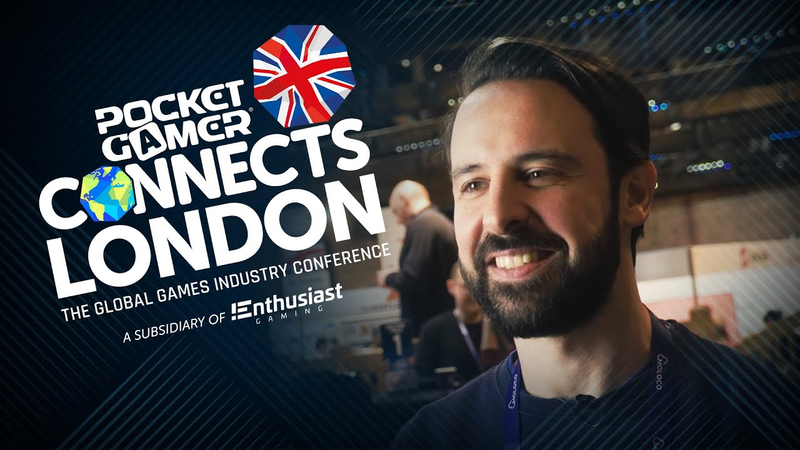
Pushing value into a digital ad ecosystem - Ben Jeger from Moloco
Moloco, a demand-side platform (DSP) specializing in user acquisition and ad monetization, has established itself as a significant player in the global gaming ecosystem.
- Moloco’s monetization SDK, launched in early 2024, became one of the fastest-growing in industry history, leading the company to temporarily pause onboarding new publishers to focus on product development.
- Moloco differentiates its monetization offering by leveraging its existing position as a major buyer on ad exchanges, allowing it to drive value to advertisers without acting as a traditional middleman.
- The gaming industry has experienced a recent revenue flattening, with stagnation more prominent on Android while iOS continues to show growth, particularly among high-value payers in the US.
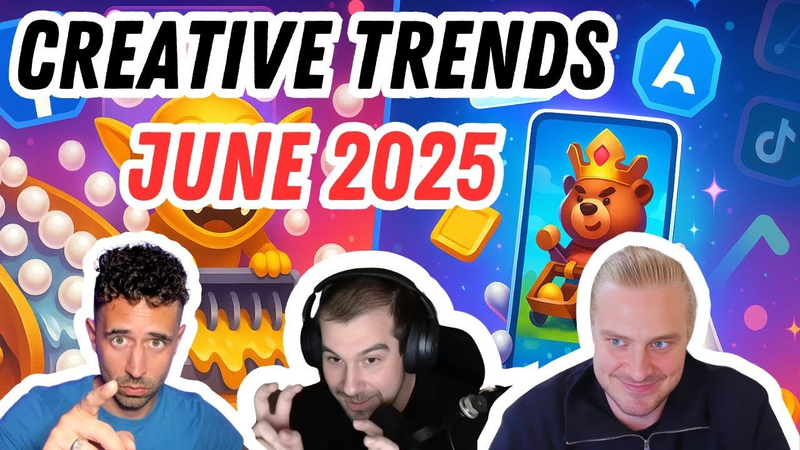
🎬 Creative Trends June 2025: Why AI, ASMR & Copy-Paste Are Redefining Mobile Ads
The mobile gaming advertising landscape in mid-2025 is defined by a strategic shift toward long-form video content and the aggressive iteration of proven creative concepts.
- Mobile gaming ads are shifting toward long-form content ranging from 50 seconds to five minutes to improve user pre-qualification and secure better auction placement.
- AI tools like Topaz AI are now the primary engine for mobile ad production, enabling rapid generation and upscaling of assets to mimic user-generated content styles.
- Developers are increasingly utilizing a 'copy-paste' strategy by re-skinning proven mechanics like resource management and character-saving puzzles to minimize innovation risk.
How to serve SSP and DSP in advertising - Keisuke Terada from Geniee International
Geniee International, a Japanese ad tech firm, operates a dual-sided business model providing both Supply-Side Platform (SSP) and Demand-Side Platform (DSP) services.
- Geniee International operates a dual-sided ad tech model, providing both SSP and DSP services to create a streamlined ecosystem that lowers CPC and CPM rates for advertisers while increasing revenue for publishers.
- The company is aggressively expanding into US and European markets following its acquisition of AdPushup, building upon its existing strong presence in Japan and Southeast Asia.
- Internal operations and client services are being enhanced through Japan AI, a subsidiary that deploys generative AI to automate labor-intensive tasks like floor price control and creative banner generation.
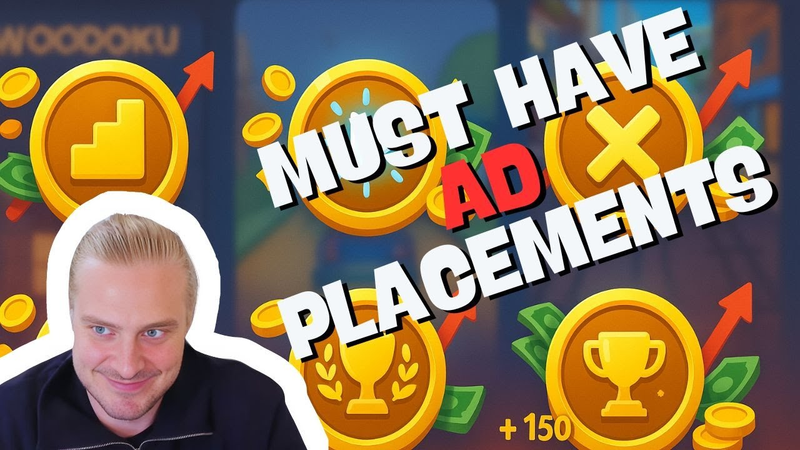
Stop Ignoring these 6 ad placements in 2025 by Felix Braberg
Effective ad monetization in mobile gaming relies on strategic placement and sequencing to maximize average revenue per daily active user (ARPDAU) and drive engagement from both non-payers and high-volume ad viewers.
- Implement a 'convert-or-die' sequence at natural gameplay breaks by offering a rewarded ad first, defaulting to an interstitial only if the user declines, to train users toward higher-value rewarded engagement.
- Utilize step-offer chains that sequence free items, a rewarded ad, and a paid offer to create a mental ladder that nudges users toward monetization.
- Capture lost revenue from non-payers by triggering a rewarded ad pop-up specifically when a user exits the in-game store without completing a purchase.
Scaling your monetisation efforts - Paul Childs from BidMachine
BidMachine operates as a global ad exchange platform designed to assist mobile application developers in scaling their monetization efforts.
- BidMachine functions as a global ad exchange that connects mobile publishers with direct demand to diversify revenue streams and balance performance-based ads with branding.
- Advanced machine learning is considered a fundamental operational requirement for competitive monetization rather than a novel trend.
- The Chinese market requires a specialized strategy based on physical presence and relationship-building via regional platforms like WeChat, contrasting with the standardized practices of Western and EMEA markets.
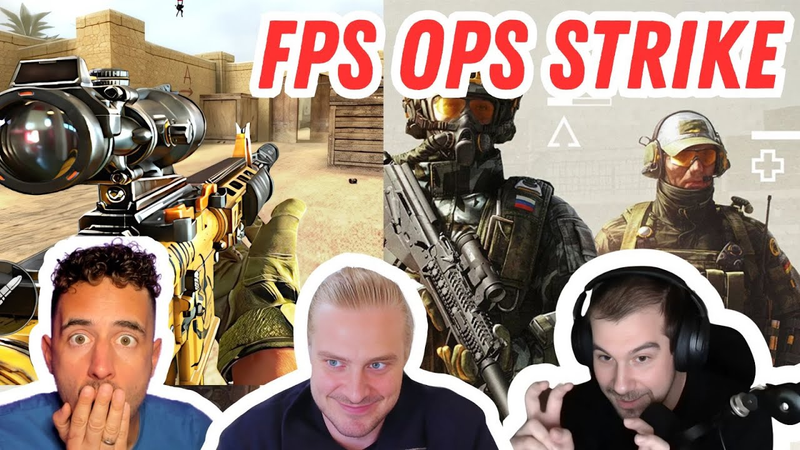
FPS Strike Ops: Modern Arena gameplay breakdown - PvP Offline Shooter FTW!
FPS Strike Ops: Modern Arena functions as a high-volume mobile shooter that captures a massive audience by prioritizing accessibility and performance on low-end hardware.
- FPS Strike generates $30,000 to $50,000 daily with over 4 million DAU, primarily through video and interstitial ads, despite having almost zero IAP revenue.
- The game’s ad stack is significantly under-optimized, missing key networks like AppLovin, Mintegral, Imobi, and Yandex, which could increase revenue by 30% to 100%.
- Growth is driven almost entirely by organic reach—including millions of TikTok and YouTube videos—rather than paid user acquisition or formal creative testing.

Inside In-App Ads: Past, Present, and What’s Next?
Mobile advertising has undergone a profound transformation, evolving from rudimentary banner placements and incentivized installs into a sophisticated, machine-learning-driven ecosystem.
- The global mobile advertising market is projected to reach an annual spend of $1 trillion by 2030.
- Publishers can achieve revenue uplifts of 8% to 20% by implementing specialized solutions to streamline the bidding process.
- Intermediary costs and platform fees can consume up to 30% of a publisher's total revenue, necessitating a shift toward direct SDK integrations and data ownership.
The BitLife Blueprint: 7 Years Old & Still Crushing it
BitLife maintains a dominant position in the mobile simulation market seven years post-launch, serving as a primary case study for evergreen success through aggressive monetization and high-volume user acquisition.
- BitLife generates over $110,000 in daily revenue, with ad monetization—specifically interstitial and banner ads—accounting for approximately 50% of its total income.
- The game has demonstrated significant longevity and growth after seven years, recently posting a 90% increase in monthly downloads and a 27% increase in revenue.
- Monetization is driven by an aggressive hybrid model that combines high-frequency interstitial ads (70-second cooldowns), banner refreshes every five seconds, and a complex web of IAPs, subscriptions, and one-time purchases like 'God Mode'.
Unity's $81 BILLION Opportunity: The Mobile Gaming War Nobody's Talking About 🎮
Unity is currently undergoing a strategic pivot to stabilize its financial position by prioritizing operational efficiency and scaling its advertising monetization segment.
- Unity is pivoting its business model to prioritize the 'Grow' division, aiming to transform its core engine business into a strategic loss leader that fuels a high-margin advertising platform.
- Unity is directly challenging AppLovin’s near-monopolistic dominance in mobile ad-tech by leveraging its massive market share and proprietary engine-level data to improve user acquisition and in-app purchase targeting.
- The company is integrating first-party engine data with advanced tools like its Vector technology to provide developers with more effective, data-driven monetization solutions.