In-Game Advertising reports and market data
Documents

Week in Mobile Games E44 - AppLovin vs. short-sellers
AppLovin currently faces scrutiny following allegations from short-sellers regarding metric inflation and data tracking practices.
- AppLovin leadership has formally refuted short-seller allegations concerning metric inflation and data tracking practices, which had caused temporary volatility in the company's share price.
- The mobile gaming industry is currently defined by a cautious investment climate and ongoing layoffs, making mid-to-late-stage funding difficult to secure.
- Despite broader funding challenges, there is a notable resurgence in early-stage studio formation as developers seek to mitigate rising user acquisition costs.
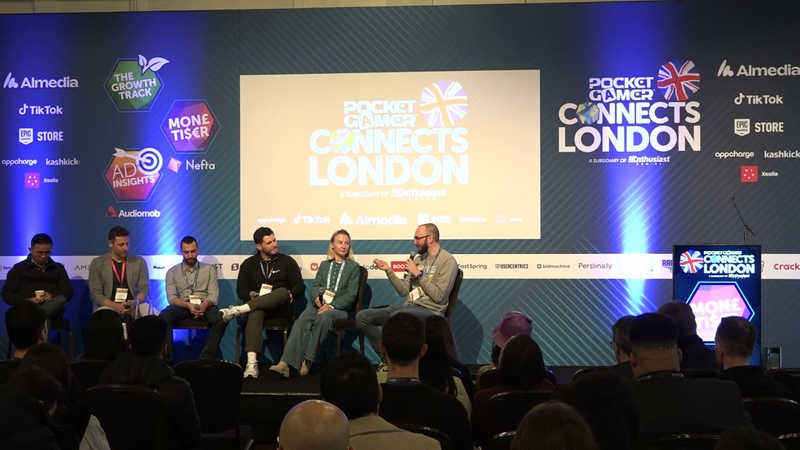
Panel: Monetisation In 2025 – Navigating The Evolving Landscape.
The mobile gaming industry is undergoing a fundamental shift toward hybrid monetization models, where the integration of both in-app purchases and advertising has transitioned from a strategic option to a requirement for sustainable growth.
- Hybrid monetization models, combining in-app purchases and advertising, are now a mandatory requirement for sustainable growth in mobile gaming due to increased competition and privacy regulations.
- Developers must shift from broad demographic segmentation to predictive lifetime value modeling using machine learning and AI to achieve hyper-personalization by 2025.
- To counter the industry-wide trend of sacrificing long-term retention for immediate ad revenue, developers must prioritize transparency and implement real-time monitoring of ad inventory.
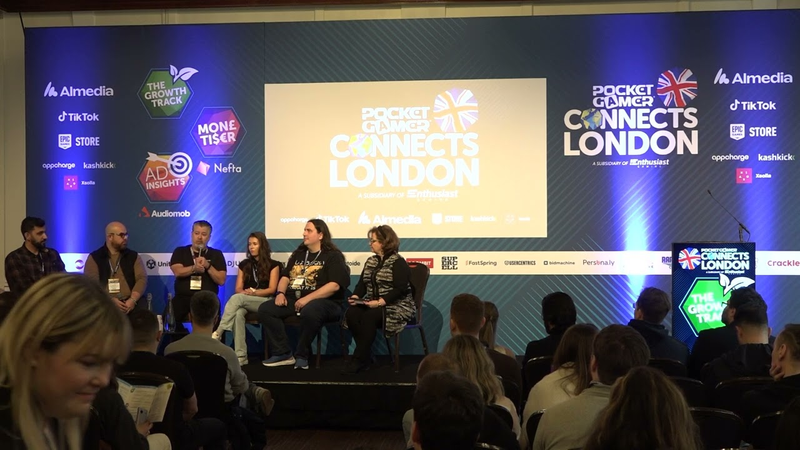
Panel: The Rise Of Rewarded UA – How To Take Advantage Of The Marketing Revolution.
Rewarded user acquisition has transitioned from a marginalized marketing tactic into a foundational growth strategy for the mobile gaming industry.
- Data indicates that 51% of users spend more money within mobile games when they are incentivized or rewarded for their purchases.
- Rewarded UA platforms require a distinct approach from traditional networks, as users are highly motivated to play through specific milestones to earn rewards, necessitating deep-funnel optimization.
- Successful rewarded UA strategies rely on integrating live ops with loyalty programs, allowing publishers to use user data to trigger personalized messaging and promotions during specific in-game events.

How to Monetise Your Game Smarter in 2025
The mobile gaming industry is shifting toward a more holistic, data-driven approach to monetization in 2025, moving away from the hyper-growth strategies of the past toward sustainable, long-term revenue generation.
- Monetization strategy in 2025 must shift from aggressive hyper-growth to sustainable, long-term revenue generation by balancing ad revenue with user retention.
- Publishers should adopt a product-management mindset, utilizing ad quality controls, frequency capping, and sophisticated auction strategies to improve ARPDAU without degrading player experience.
- Nuanced user segmentation based on player tenure and behavior is essential, replacing uniform floor pricing across geographies and cohorts.
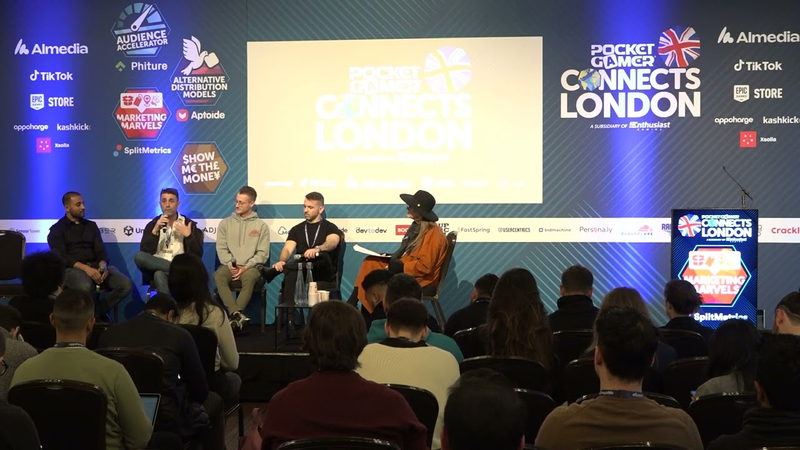
Curated Panel: How First-Party Data Creates More Valuable Players In-Game.
The mobile gaming industry is currently navigating a fundamental transition as privacy regulations evolve from mere legal compliance requirements into essential pillars of performance marketing.
- Failure to implement proper consent signals, such as Google Consent Mode, can result in revenue losses of up to 50% due to poor ad attribution and inability to run campaigns in the EEA and Switzerland.
- Proper implementation of consent signals and TCF strings can drive significant financial performance, with some large publishers reporting up to a 400% increase in ROAS and others seeing ARPU uplifts ranging from 10% to 200%.
- Privacy compliance has shifted from a legal-only concern to a critical Performance Marketing requirement, necessitating collaboration between legal, product, and marketing teams to ensure data-driven growth.

Wilfrid Obeng on Scaling a $100M Startup and Choosing Abu Dhabi over Silicon Valley
AudioMob has established itself as a significant player in the mobile gaming sector by pioneering non-disruptive, opt-in audio advertising.
- AudioMob has achieved a $100 million valuation by pioneering non-disruptive, opt-in audio advertising that bypasses privacy-related challenges affecting hyper-personalized ad models.
- The company has successfully transitioned from an outbound sales model to an inbound demand-driven business, facilitating expansion into connected devices and music discovery.
- Abu Dhabi provides a strategic advantage over Silicon Valley through government subsidies, tax-free incentives, and proximity to industry partners like Ubisoft and Unity.
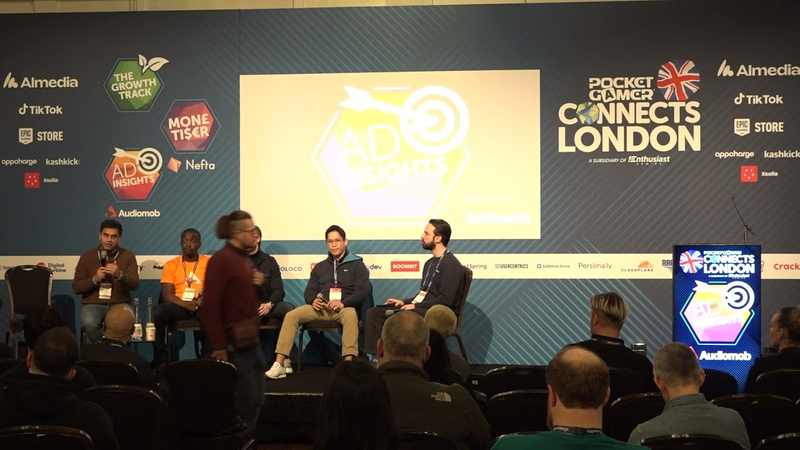
Panel: Into The Ad-Verse – How To Effectively Integrate Ads Into Your Game.
Effective game monetization requires integrating advertising into the design process from the earliest conceptual stages to ensure a seamless balance between revenue generation and user experience.
- Effective ad monetization requires integrating ad strategy into the game design process from the very beginning, rather than treating it as an afterthought.
- Data-driven optimization is critical for scaling; for example, a large publisher found that a mere one-second delay in ad latency resulted in a 7% drop in revenue.
- Ad monetization and In-App Purchases (IAP) should be viewed as complementary revenue streams rather than conflicting models, with the goal being to monetize the user rather than just the game.
Session: How To Boost Your Ad Revenue By Implementing Offerwall – Best & Worst Practices.
The primary purpose of this presentation is to outline best practices for implementing and optimizing offerwalls within mobile games to maximize ad revenue.
- Offerwalls typically engage a niche audience of 2% to 5% of daily active users, making them a targeted monetization tool rather than a broad-reach solution like rewarded video.
- Successful offerwall integration requires a robust in-app purchase (IAP) economy, making the format best suited for casual, mid-core, and hardcore games rather than hyper-casual titles.
- Developers should include both paying and non-paying users in offerwall campaigns, as data indicates this approach boosts total revenue without cannibalizing existing IAP sales.
Session: Ad Monetization Tips & Tricks! - Claire Rozain, Rzain.
Ad monetization has evolved into a critical, complementary revenue stream for mobile game developers, increasingly serving as a strategic partner to in-app purchases (IAP) rather than a cannibalizing force.
- Over 80% of current ad revenue is generated through real-time bidding (RTB), making technical mastery of automated bidding essential for monetization success.
- Ad monetization should be treated as a core product feature rather than a secondary revenue stream, utilizing AI to predict eCPM trends and manage seasonal fluctuations.
- Context-sensitive rewarded video placements, such as those offering extra moves or resources, consistently outperform intrusive ad formats by enhancing rather than disrupting the user experience.
Session: Remove Ads Messaging – How To Use Ads To Drive IAPs & Subscriptions - Felix Braberg.
The mobile gaming industry is currently undergoing a significant shift in monetization strategy, increasingly adopting design patterns from non-gaming app developers to drive in-app purchases (IAPs) and subscriptions.
- Developers are increasingly leveraging user frustration with declining ad quality—specifically longer durations and intrusive end cards—to drive conversions toward IAPs and subscriptions.
- The 'remove ads' messaging strategy shifts perceived blame for poor ad experiences onto the ad network, positioning the developer as a partner in providing a premium, ad-free experience.
- Implementing 'double choice' pricing, which pairs a high-value lifetime purchase with a lower-cost subscription, uses psychological anchoring to increase the perceived value of premium offerings.
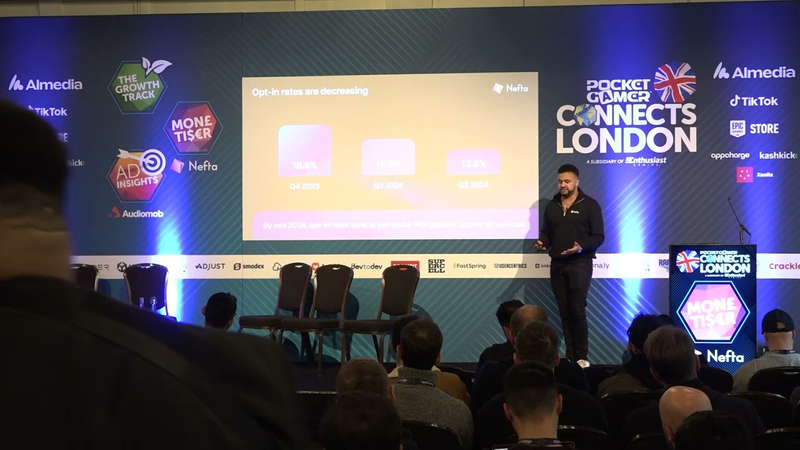
Session: Embracing New Technologies – A Must-Have For Ad Monetisation And UA Managers - Dan Bowen.
The mobile gaming industry faces significant challenges in ad monetization and user acquisition (UA) following the widespread implementation of App Tracking Transparency (ATT) and the subsequent rise in user opt-out rates.
- Publishers can achieve a 20% to 30% increase in eCPM for opt-out users by leveraging first-party data to restore value to audiences previously obscured by ATT and privacy restrictions.
- Combining first-party data with machine learning and AI allows publishers to create actionable behavioral insights, such as churn prediction, conversion modeling, and real-time bid optimization.
- First-party data serves as the foundation for modern ad monetization, enabling publishers to group users into behavioral cohorts that increase the value of inventory for advertisers.

The State of Mobile Gaming in Brazil 2025: Data, Trends, and Market Analysis
Brazil has established itself as the largest gaming market in Latin America, characterized by a robust development ecosystem and high consumer engagement.
- Brazil is the largest gaming market in Latin America with 103 million players and approximately 1,000 game studios, ranking fifth globally in total online players.
- Android dominates the mobile landscape with an 83% market share, compared to 17% for iOS.
- Brazil ranks third globally in Android ad spend, fourth in Android ad revenue, and fifth in Android in-app purchase revenue.