In-Game Advertising reports and market data
Documents

How to Unlock Hidden Ad Revenue in Google AdMob. Step-by-Step Walkthrough by Felix Braberg
This guide provides a comprehensive walkthrough for optimizing ad revenue within Google AdMob, a long-standing mediation platform in the mobile gaming industry.
- Consolidate ad units by creating one single unit for all rewarded ads, one for all interstitials, and one for all banners to avoid excessive manual mapping and configuration time.
- For games earning between $0 and $500 per day, prioritize integrating Meta (Android), Mintegral, Unity, Liftoff, and Digital Turbine as the primary ad networks within your mediation groups.
- Perform a 'share of revenue' analysis every 30 days by calculating the percentage of earnings per waterfall instance to identify underperforming price points.

Roblox Launches Rewarded Ads – Here's What it Means
Roblox has introduced rewarded video ads to its platform, marking a significant strategic shift toward hypercasual-style monetization.
- Roblox has launched a programmatic rewarded video ad system via Google Ad Manager, allowing players to watch 30-second ads in exchange for in-game rewards.
- The initiative aims to improve monetization for the platform, which has historically stagnated at approximately $20 in average bookings per monthly unique payer.
- Early testing shows high player engagement, with rewarded ad completion rates reaching between 80% and 90%.

AppLovin Hit by Short Sellers – Behind the $54B Market Cap Drop
AppLovin has faced significant financial volatility following a series of short-seller reports that alleged the company engaged in unauthorized data collection, misleading advertising, and violations of platform policies.
- AppLovin’s market capitalization dropped by 36%, or approximately $54 billion, falling from $150 billion to $96.11 billion between February and April following short-seller allegations.
- The short-seller reports accused AppLovin of unauthorized data collection, misleading advertising, and violations of platform policies, including the targeting of children.
- AppLovin has launched an independent investigation led by the law firm Quinn Emanuel and issued executive rebuttals to defend the integrity of its AXON advertising technology.

TWIG #325 Ubisoft Bails Out, AppLovin Fights Back, Roblox Becomes an Ad Network
The global gaming industry is currently navigating a period of intense structural realignment, characterized by aggressive monetization shifts, strategic corporate restructuring, and evolving regulatory landscapes.
- Ubisoft has secured a $1.25 billion investment from Tencent, a defensive move designed to maintain founder control and bypass regulatory scrutiny through a subsidiary structure.
- Roblox is scaling its advertising business via programmatic partnerships with Google to monetize its Gen Alpha user base, though it continues to struggle with regional CPM disparities.
- Mobile developers are increasingly bypassing platform fees by pivoting to direct-to-consumer web stores and rewarded advertising to offset the impact of post-IDFA data limitations.
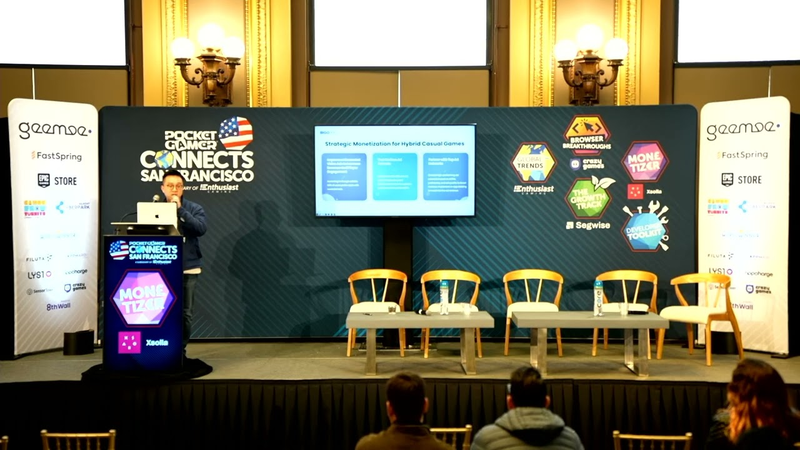
Session: Key Trends & Monetization Strategies In Mobile Gaming - Eden Liu, BIGO Ads.
The mobile gaming industry is currently undergoing a significant shift from hyper-casual titles toward casual games, driven by market saturation, rising user acquisition costs, and the impact of Apple’s privacy policies on traditional monetization models.
- The hyper-casual gaming sector is in decline, with global downloads dropping 12% quarter-over-quarter in 2024 and year-on-year declines of 18% in Western markets and 16% in Eastern tier-one markets.
- Developers are pivoting to casual subcategories like puzzles and match-three games, which achieve higher retention rates of 50% on day one and 15% on day seven.
- Casual games are shifting toward a hybrid monetization model that combines in-app purchases (IAP) with in-app advertising (IAA), specifically rewarded video ads preferred by 50% of users.
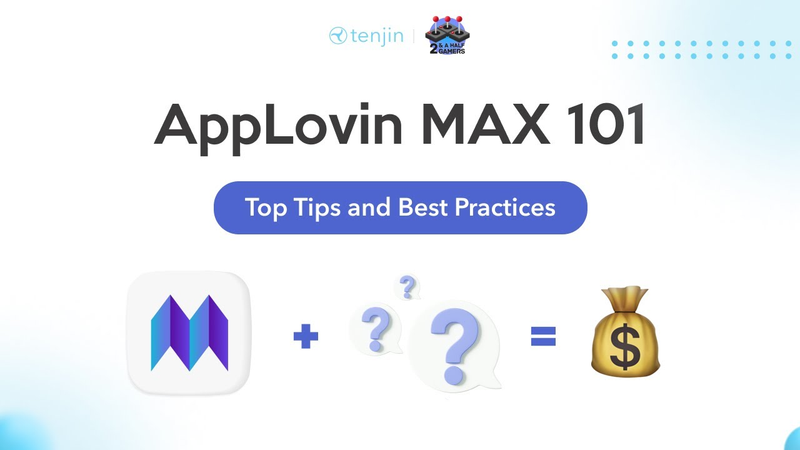
AppLovin Max Mediation: Top Tips and Best Practices
AppLovin Max functions as a critical mediation platform designed to maximize effective cost per mille (eCPM) through extensive network reach and integrated user acquisition tools.
- For emerging studios, maximize performance by configuring three to four primary networks—specifically Google, Meta, and Unity—with only one ad unit per format to ensure clear tracking.
- Publishers must integrate network APIs directly into the AppLovin Max dashboard to enable real-time discrepancy tracking between reported revenue and actual payouts.
- Maintain an accurate app-ads.txt file, increasing update frequency from quarterly to bi-weekly as revenue scales to ensure full demand partner participation.
A Beginners Guide to Ad Monetization: The Fundamentals by Felix Braberg
Mobile ad monetization relies on the interplay between effective cost per mille (eCPM) and fill rates to drive sustainable revenue.
- Ad Revenue per Daily Active User (Ad ARPDAU) is the primary metric for evaluating monetization performance, providing a stable baseline independent of user acquisition fluctuations.
- A healthy monetization ecosystem requires a balanced demand distribution where no single ad network accounts for more than 40 percent of total earnings.
- During the soft launch phase, developers should prioritize maximizing ad viewer rates and impressions per DAU rather than focusing exclusively on eCPM.

Who is Tripledot & what do they do? The History, games portfolio & estimated profits
Tripledot Studios, a UK-based developer founded in 2017, has established itself as a dominant force in the casual gaming sector by prioritizing high-volume, ad-monetized titles.
- Tripledot Studios generates an estimated $320 to $380 million in annual revenue with profit margins of approximately 40%, resulting in $150 to $200 million in yearly profit.
- The company maintains a dominant position in the casual gaming market with 10 million monthly downloads and 8.3 million daily active users.
- Tripledot’s core business model relies on high-volume, ad-monetized evergreen puzzle games like Woodoku, Triple Tile, and Math Crossword, which bypass the 30% platform tax associated with in-app purchases.

"Unity's AI AD Platform Vector is Total Vaporware"
Unity’s recent announcement of its new artificial intelligence advertising platform, Vector, is characterized as a strategic misdirection intended to distract investors from poor quarterly guidance.
- Unity’s 'Vector' AI advertising platform is characterized as a strategic misdirection intended to stabilize stock prices following poor quarterly guidance rather than a functional technological breakthrough.
- Unity significantly trails industry leader AppLovin, which successfully captured market share by leveraging fingerprinting techniques after the deprecation of IDFA.
- The platform faces a 'garbage in, garbage out' data deficit because major third-party developers are unlikely to grant Unity access to the proprietary user data required to train competitive AI models.

Ad tech that optimises for publishers | Jaivir Nagi from Crackle Technologies #pgconnects
Crackle Technologies focuses on optimizing ad monetization for game publishers, addressing a significant imbalance in the industry where investment in user acquisition has historically outpaced investment in monetization tools.
- Game publishers are currently losing revenue by relying on manual, cohort-based pricing instead of utilizing machine learning to determine the personalized value of individual users.
- The gaming industry faces a critical supply-demand imbalance where time spent in games has grown significantly faster than available advertising budgets, putting downward pressure on yields.
- While the buy-side of the advertising ecosystem has already widely adopted AI to identify user value, the sell-side remains under-resourced and reliant on manual management.
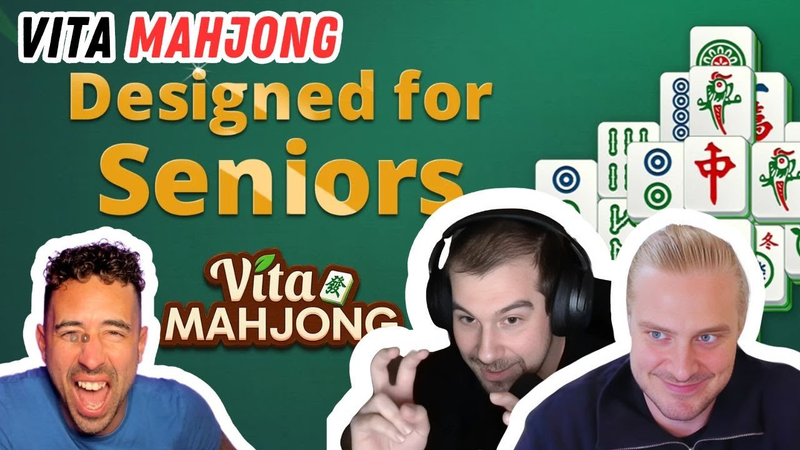
Vita Mahjong Game Review: Ads in Gaming? Yes!
Vita Mahjong serves as a prime example of a high-volume, ad-centric mobile gaming model that prioritizes aggressive monetization and scale over complex gameplay mechanics.
- Vita Mahjong generates $55 million in annual revenue, with 70% of that income derived from interstitial advertising rather than in-app purchases.
- The game maintains a massive scale of 3.4 million daily active users by reinvesting 70% to 80% of its $146,000 daily revenue back into aggressive user acquisition.
- Marketing strategy relies on high-velocity creative testing, including AI-generated content and health-focused claims regarding Alzheimer’s prevention and sleep improvement.
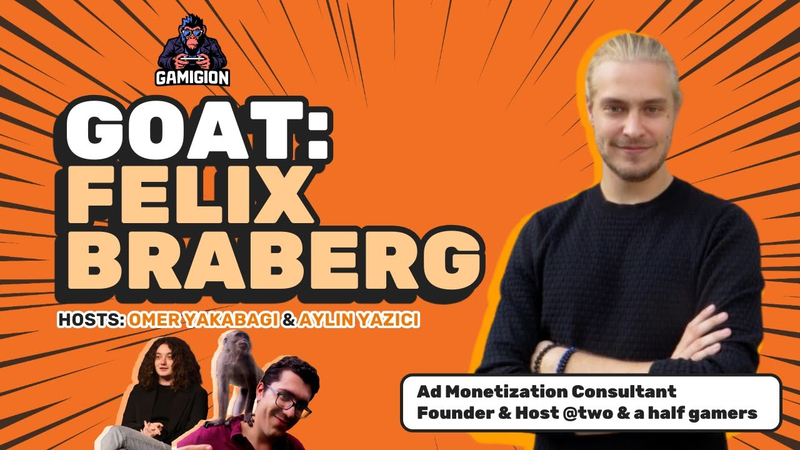
GOAT: Felix Braberg on Ad Monetization, and Fun | Full Interview
This analysis explores the current state of mobile game ad monetization, emphasizing the strategic balance between revenue generation and player retention.
- Implementing a mediation platform is the single most effective strategy for publishers, as it can double ad revenue by increasing competition among networks.
- Publishers should follow the '5% rule' for network integration: continue adding ad networks to a mediation stack as long as each network contributes at least 5% of total revenue.
- Successful hybrid-casual games like 'We Are Warriors' demonstrate that high ad frequency is viable, achieving 15–16 rewarded ad impressions per day for 82% of their user base.