Global
Documents
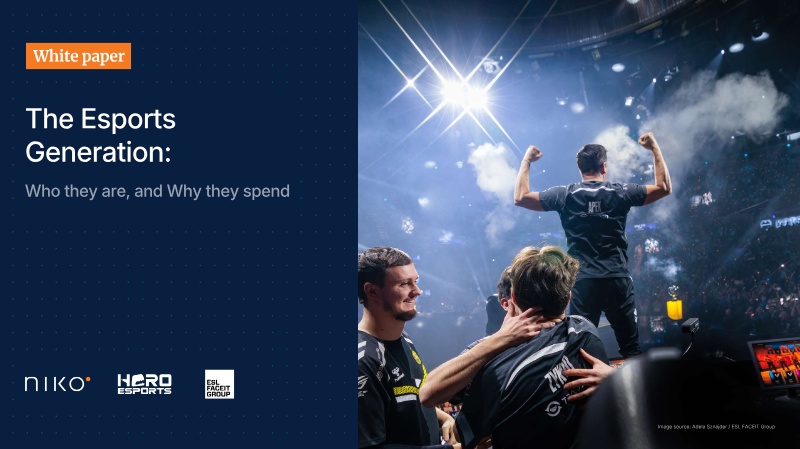
The Esports Generation: Who They Are, and Why They Spend
The global esports industry has matured into a significant economic force, reaching an estimated 640 million fans and generating $3 billion in annual revenue by 2026. This ecosystem functions as a primary cultural touchpoint for Generation Z, a digitally native demographic that views competitive gaming with the same level of emotional investment and community identity traditionally reserved for professional sports. Because this audience is currently in a formative stage of brand loyalty, the industry represents a critical environment for companies seeking to establish long-term relationships with high-value consumers.
Engagement within this space is driven less by the games themselves and more by social connectivity, the influence of professional players, and high-quality production standards. Fans demonstrate a high propensity for commercial activity, with over 76 percent having made esports-related purchases within the past year. This demographic is particularly receptive to brand integration, as 85 percent of fans actively notice esports branding, and nearly three-quarters report that these sponsorships directly influence their purchasing decisions. The effectiveness of this channel extends across diverse sectors, including electronics, fashion, and food and beverage, proving that esports serves as a highly efficient gateway for cross-industry marketing.
Ultimately, the esports landscape offers a unique opportunity for brands to leverage the intersection of gaming, music, and streaming to capture a highly engaged audience. By prioritizing authentic engagement strategies that respect the publisher-driven nature of the ecosystem, brands can successfully convert digital interest into tangible loyalty. As these fans continue to prioritize in-game spending and subscription-based services, the industry remains a proven, high-value environment for sustained commercial growth and brand association on a global scale.
- Gen Z esports fans represent a massive, high-value demographic of 400 million potential global viewers, with 76.3% of fans having made an esports-related purchase in the past year.
- The esports industry generates $3 billion in annual revenue, driven by a global audience of 640 million and high engagement from a cohort that is largely employed and well-educated.
- Esports fans are highly receptive to brand partnerships, with 47.1% of fans stating that brand collaborations with teams or athletes positively influence their purchase behavior.
- Digital items like skins and cosmetics are the most popular esports-related purchase (50%), followed by physical merchandise (40.9%) and branded peripherals (33%).
- YouTube (81.8%) and TikTok (56.6%) are the primary international broadcast platforms for esports, while China relies on domestic giants like Bilibili (48.1%) and Douyu (36.2%).
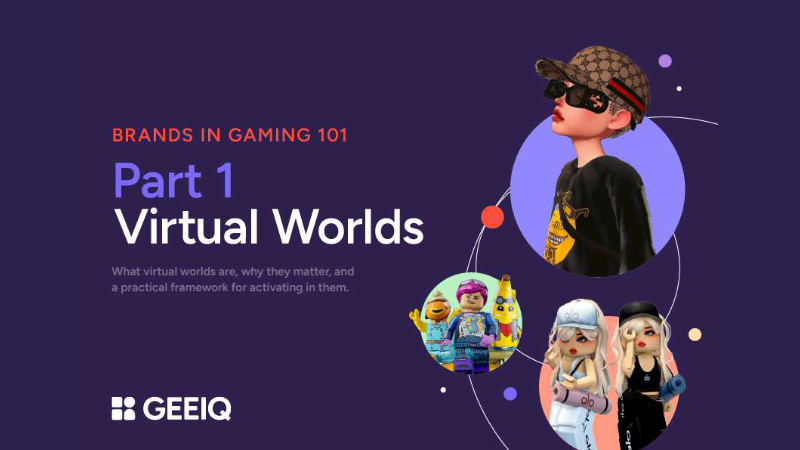
Brands in Gaming 101: Virtual Worlds
Virtual worlds have emerged as a critical marketing frontier, fundamentally reshaping how brands engage with younger demographics. As Gen Z increasingly prioritizes immersive gaming platforms over traditional social media, these environments offer a unique opportunity to capture sustained, high-level attention. This shift necessitates that brands transition from viewing gaming as a peripheral experiment to integrating it as a core component of their broader omnichannel marketing strategies.
The current landscape is defined by rapid expansion, with over 2,800 brand experiences launched to date and a notable trend toward high-impact, lower-commitment integrations. While activity is heavily concentrated within Roblox and Fortnite, success depends on selecting platforms that align with specific audience demographics rather than pursuing scale alone. By moving away from standalone owned worlds toward more agile, targeted activations, brands can better navigate the complexities of these digital ecosystems while maintaining consistent engagement levels.
Effective participation in virtual worlds requires a rigorous, data-driven approach that bridges the gap between on-platform interaction and tangible business outcomes. Brands must implement comprehensive measurement frameworks that track performance across the entire marketing funnel, linking virtual engagement to off-platform metrics such as sales uplift and brand search volume. When executed through bespoke strategies and strategic partnerships, these activations move beyond mere visibility, delivering measurable value that justifies the investment in immersive digital experiences. This evolution reflects a broader industry maturation, where the focus has shifted from simple presence to the strategic optimization of virtual environments as high-performing commercial channels.
- Virtual worlds command higher user attention than other channels, with 73% of players in a focused state compared to 57% for video streaming and 40% for social media.
- Gaming is a primary social space for Gen Z, as 92% of women and 93% of men aged 16 to 24 play video games, and 17.7% have engaged with a branded game in the past month.
- The virtual world market is dominated by four platforms: Roblox (380 million monthly active users), Minecraft (200 million), Fortnite (130 million), and ZEPETO (33 million).
- Brand activity is highly concentrated, with 88% of all brand activations occurring on Roblox and Fortnite.
- Integrations are currently more common than owned worlds (337 vs 252) because they offer a faster, lower-cost entry point that can be launched in weeks rather than quarters.
Farming Sims: Cultivating Long-term Engagement
Farming simulation games have established themselves as a dominant and enduring genre within the global mobile gaming market. By analyzing data from a survey of 1,000 US mobile gamers aged 18 to 55, it is evident that these titles possess significant staying power, with 60% of mobile gamers having played at least one of the top ten farming sims. The genre’s success transcends casual demographics, attracting a broad audience that includes players of complex genres like RPGs, shooters, and strategy games, as well as those who primarily play on PC and consoles.
The core appeal of farming sims lies in their ability to satisfy fundamental human motivations defined by Self-Determination Theory: autonomy, competence, and relatedness. Unlike many other genres, farming sims excel at providing players with a sense of control through farm layout planning, a feeling of mastery via task completion and progression, and social connection through cooperative play and community interaction. These psychological drivers, combined with the "work-as-play" trend, foster long-term engagement through daily rituals, creative expression, and the evolution of virtual spaces.
To maintain this momentum, developers must navigate a saturated market by prioritizing consistent live-ops, community-driven content, and user-generated features. While the genre offers high accessibility and flexible session lengths, it faces challenges regarding content cadence and the risk of undermining the low-pressure experience through aggressive monetization. Ultimately, the longevity of farming sims serves as a blueprint for other genres, demonstrating that combining low-stress gameplay with deep, meaningful progression and social mechanics is a highly effective strategy for cultivating a dedicated, long-term player base.
- Farming simulation games maintain high long-term engagement by satisfying core human motivations defined by Self-Determination Theory: autonomy, competence, and relatedness.
- The genre appeals to a broad demographic, with 60% of mobile gamers having played a top farming title, including 73% of RPG players and 65% of console gamers.
- Farming sims demonstrate exceptional longevity, as evidenced by titles like Township, Hay Day, and FarmVille 2, which were released in 2012 and continue to command massive player bases with over 100 million to 500 million downloads each.
- Players prioritize building, experimentation, and daily rituals, with 36% of farming sim players citing 'building and evolving my farm' as a top motivation compared to only 7% in other genres.
- The 'work-as-play' trend is expanding beyond traditional farming, with job-based simulators like Truck Simulator and My Supermarket Simulator achieving over 100 million downloads each.

Rewarded UA Handbook: 2026
Rewarded user acquisition (UA) has evolved into a foundational component of the mobile marketing mix, serving as a critical solution to the industry’s ongoing challenges of rising acquisition costs and high user churn. As the global mobile gaming market matures and user growth plateaus, rewarded UA provides a mechanism to drive long-term engagement and retention by incentivizing users to reach specific in-game milestones. The practice is now standard, with 93% of surveyed developers across 10 tier-1 markets currently utilizing rewarded channels, and 61% planning to increase their budget allocations in 2026.
The methodology behind this analysis involved an online survey of 912 mobile game developers conducted between December 2025 and January 2026, supplemented by performance data from over 1,200 advertisers on the Freecash platform. Findings indicate that successful campaigns are no longer treated as experimental, with 31% of studios classifying rewarded UA as an always-on, core channel. High-performing studios typically allocate between 11% and 50% of their total UA budget to these efforts, often managing a portfolio of four or more channels to optimize reach and performance.
Strategic implementation requires a shift toward long-term event architecture. Data shows that campaigns optimizing for multiple, layered events—such as daily streaks, VIP tiers, and repeat purchases—consistently outperform single-event models. By extending reward structures to 90 or 180 days, developers can significantly improve retention and return on ad spend (ROAS). Furthermore, the industry is increasingly adopting automated bidding technologies, such as dynamic ROAS-based bidding, to replace fixed cost-per-install models. While gaming remains the primary sector, the model is rapidly expanding into non-gaming verticals like fintech and e-commerce, where gamification features are being leveraged to drive similar habit-forming behaviors and sustainable user value.
- Rewarded UA is now a core marketing channel, with 61% of surveyed studios planning to increase their budget in 2026 and 65% of studios allocating between 11% and 50% of their total UA spend to the channel.
- Extending reward structures beyond traditional short-term windows is critical for retention; for example, Candivore increased their Match Masters reward structure from 50 to 90 days, resulting in a 50% increase in D60 retention and a 70% uplift in D90 ROAS.
- Campaigns that layer multiple event types outperform single-event campaigns, with IAP/hybrid games utilizing an average of 3.25 distinct event types per campaign to drive long-term engagement.
- Automation is a primary industry focus, as evidenced by Almedia’s MaxROAS system, which has delivered up to a 35% ROAS uplift and a 100% increase in spending for participating advertisers since December 2025.
- Rewarded UA is increasingly viewed as a go-to-market strategy, with 93% of studios launching rewarded campaigns within the first year of their game's lifecycle and 46% implementing them within the first three months of global launch.

2026 Mobile & PC Gaming Benchmarks
The global gaming landscape in 2026 is defined by a widening performance gap between a small elite of top-tier titles and the broader market. Data derived from over 16,000 live mobile games indicates that retention metrics, including D1, D7, and D30, are in a state of decline. With median D30 retention falling below 1%, the industry has become increasingly unforgiving, necessitating a strategic shift toward immediate, high-quality onboarding and the refinement of core gameplay loops to mitigate rising churn rates.
Mobile gaming engagement remains characterized by high-frequency, habitual daily play, yet the industry suffers from a stagnation in innovation and an over-reliance on monetization at the expense of genuine engagement. Success in this segment requires developers to move beyond generic feature sets and instead prioritize behavioral loops that foster long-term habit formation. Conversely, the PC gaming sector operates on a different paradigm, where success is measured by depth, session length, and content longevity. On this platform, retention and engagement metrics serve as indicators of long-term player commitment and the intrinsic value of immersive, long-form experiences rather than simple return frequency.
To navigate these challenges, studios are increasingly turning to advanced data-driven infrastructure to optimize player experiences. By leveraging real-time insights and sophisticated market intelligence, developers can better align their growth strategies with evolving player behaviors. Ultimately, the ability to sustain a competitive advantage in both mobile and PC markets depends on a rigorous focus on content quality and the implementation of robust, data-informed engagement strategies that cater to the specific demands of each platform.
- Mobile gaming retention is in decline, with median D30 retention rates falling below 1% across a sample of over 16,000 live titles.
- The gaming market is experiencing a widening performance gap where a small elite of top-tier titles increasingly dominates the broader landscape.
- Mobile success now requires a strategic pivot toward immediate, high-quality onboarding and core gameplay loops to counter rising churn rates.
- Mobile engagement is currently stagnant due to an over-reliance on monetization, necessitating a shift toward behavioral loops that foster long-term habit formation.
- PC gaming success is defined by long-form, immersive experiences where metrics like session length and content longevity are the primary indicators of value.

For the Game: Data Fusion Sheds a New Light on Players
Gaming is projected to reach 3.5 billion players and generate over US$225 billion in revenue by 2025, establishing the medium as a mass‑scale platform with extensive brand opportunities. Dentsu’s data‑fusion approach merges a 420,000‑respondent consumer panel with GWI gaming insights across 21 markets to create high‑fidelity gamer portraits that link lifestyle, media habits and in‑game behaviors. This methodology enables brands to segment audiences by motivation rather than device or genre, a strategy shown to produce the most authentic and attention‑driven brand experiences.
Key demographic insights reveal that 57 % of gamers are female, with gaming serving as a tool for identity reinvention and social bonding. Shooters dominate play preferences (63 %), while sports and puzzle/strategy titles attract 16 %. Device usage is nearly evenly split among console, handheld, and a growing smartphone/tablet share. Community engagement is strong: 40 % of U.S. gamers play to belong, and 63 % rely on friends for game information, with platforms such as Discord, Reddit, and Twitch amplifying fandoms.
Commercially, 71 % of gamers consume gaming content across multiple devices and 55 % of esports fans welcome sponsorships, underscoring high engagement. Brands that add genuine value—through exclusive rewards, immersive metaverse experiences, or AR scavenger hunts—achieve near‑perfect ad completion rates (96 %) and significant click‑throughs. Successful activations require clear brand rules, diversity inclusion, strategic partnerships with publishers or esports teams, and a focus on authentic integration rather than intrusive advertising. The analysis spans 22 global markets, including Australia, Brazil, Canada, China and the United States, offering a comprehensive framework for brands to identify entry points and growth opportunities within the evolving gaming ecosystem.
- The global gaming market is projected to reach 3.5 billion players and generate over US$225 billion in revenue by 2025.
- Brands that integrate value-add experiences like exclusive rewards or AR scavenger hunts achieve a 96% ad completion rate.
- Gamer demographics show that 57% of players are female, with 40% of U.S. gamers citing social belonging as a primary motivation for play.
- Shooters remain the dominant genre at 63% of play preferences, while sports and puzzle/strategy titles account for 16%.
- Consumer engagement is high, with 71% of gamers using multiple devices and 55% of esports fans expressing openness to brand sponsorships.

Is There a Shift from Content to Tech Startups Among Gaming VCs?
The analysis examines venture capital activity in the gaming sector from 2020 to early 2024, focusing on whether investment priorities are shifting from traditional content creation and publishing toward technology‑driven startups. Data show that, across all stages, content creators and publishers continue to dominate VC allocations, representing over half of both capital deployed (≈$1.76 billion) and the number of deals in early‑, mid‑, and late‑stage rounds. However, a closer look at seed and Series A financing reveals a notable trend: PC and console studios now secure more funding than mobile startups, indicating a pivot toward higher‑budget, platform‑centric projects.
In the last twelve months, gaming‑focused VC funds have increased their exposure to technology and platform companies. Capital deployed by select funds such as VENTURES, BEHOLD Venture, and Lightspeed Lvp. rose from roughly $1.3 billion in early 2020 to over $2.4 billion by H1 2024, while the number of rounds led by these funds grew from 67 to 289. This shift is evident across multiple funds, with several moving a larger share of their capital into tech‑centric ventures rather than pure content studios.
Geographically, the data encompass global markets with a concentration in North America and Europe, covering all major gaming segments—mobile, PC, console, and emerging platform technologies. The methodology aggregates publicly disclosed VC‑led rounds from 2020 through H1 2024, using capital deployed and round counts as primary metrics. The findings suggest that while content remains the core focus, gaming VCs are progressively allocating more resources to technology and platform innovations, reflecting an evolving investment landscape in the industry.
- Content creators and publishers remain the primary focus of gaming VC, accounting for over half of all capital deployed (approximately $1.76 billion) and the majority of deal volume across all stages.
- Gaming-focused VC funds, including VENTURES, BEHOLD Venture, and Lightspeed Lvp., significantly increased their activity between 2020 and H1 2024, with capital deployed rising from $1.3 billion to over $2.4 billion.
- The number of VC-led funding rounds grew substantially from 67 in early 2020 to 289 by H1 2024, reflecting an overall increase in investment activity.
- While content dominates total funding, there is a clear strategic pivot among VCs toward technology and platform-centric startups, particularly within seed and Series A financing.
- Within the content sector, investment is shifting toward higher-budget, platform-centric projects, as evidenced by PC and console studios now securing more funding than mobile startups.

The Alumni Effect: Studios Founded by Ex-Activision, Blizzard, and King Employees
The analysis examines venture capital activity directed toward studios founded by former Activision Blizzard employees between 2020 and 2024. It identifies 30 such startups that secured a total of approximately $0.7 billion across 45 VC‑led funding rounds, compared with 27 alumni studios from Riot Games that raised $0.5 billion in 38 rounds. Funding is concentrated in early‑stage rounds, with an average check size of $15.8 million for ex‑Activision studios versus $13.1 million for ex‑Riot ventures, and a notable skew toward PC & console and multiplatform projects. Web3 gaming represents a smaller share of the portfolio.
The study highlights a “first‑round momentum” effect: ex‑Activision studios are roughly twice as likely to secure a second round of financing within the same calendar year as other VC‑backed gaming startups. In 2021, 43 % of ex‑Activision studios raised a subsequent round versus only 9 % of peers; by 2023 the gap narrowed to 33 % versus 8 %. This pattern suggests stronger investor confidence in alumni teams during the 2021‑2022 peak.
Key investors include gaming‑focused funds such as GRIFFIN, PARTNERS COLLECTIVE, and SSSU, which together accounted for more than half of the capital deployed. Notable portfolio companies include Mythical Games (Series C, $262 million), Second Enap (Series B, $100 million), and TheoryCraft (Series A, $87.5 million). While many projects remain in development, releases such as Marvel Snap and Stormgate demonstrate commercial viability, whereas titles like Lightforge’s Project O.R.C.S. were shut down due to lack of traction.
Overall, the report underscores a robust investment climate for studios led by former Activision Blizzard talent, driven by early‑stage funding success and a higher likelihood of follow‑on rounds compared to broader gaming startup cohorts.
- Between 2020 and 2024, 30 studios founded by former Activision Blizzard employees secured approximately $0.7 billion in venture capital across 45 funding rounds.
- Ex-Activision studios demonstrate a 'first-round momentum' effect, being roughly four times more likely than peer startups to secure a second round of financing within the same calendar year.
- Investor confidence in alumni teams peaked in 2021, when 43% of ex-Activision studios raised a subsequent round compared to only 9% of broader gaming startups.
- Funding for ex-Activision alumni is primarily concentrated in early-stage rounds for PC, console, and multiplatform projects, with an average check size of $15.8 million.
- GRIFFIN, PARTNERS COLLECTIVE, and SSSU are the primary investors in this sector, collectively deploying more than 50% of the total capital.

Corporate Overhaul: Why Does CVC Play a Bigger Role Than Ever?
The analysis demonstrates that corporate venture capital (CVC) has become the dominant force in gaming investment from 2020 to 2024, accounting for more than half of all capital raised in the sector. CVC‑led rounds total $4.0 billion across 93 deals, while VC‑only and joint VC‑CVC rounds raise $3.5 billion in 80 deals, indicating a strategic shift toward co‑investment models that spread risk and access higher‑profile startups. Geographic focus is heavily weighted toward Asian strategics, with South Korean and Japanese firms such as Riot, NetEase, and Gigaom leading the pack; these investors collectively completed 105 deals worth $1.8 billion, surpassing Western peers in volume but not always in value.
The largest disclosed CVC‑led investments target mature gaming studios and multiplatform developers, with EPIC Games securing $2.0 billion in April 2022 and Roblox raising $150 million in February 2020. In contrast, VC‑CVC co‑investments concentrate on platform and technology (“picks and shovels”) startups, exemplified by GreenOak’s $500 million Series I in September 2021 and Samsung‑backed CENVID’s $113 million Series C in July 2021. Mobile segments have seen a decline, with CVC interest shifting toward PC and multiplatform titles; mobile deals now represent only 10–15 % of total CVC activity.
Methodologically, the study aggregates public funding announcements from 2020‑2024, categorizing deals by investor type (CVC only, VC only, or joint), segment (studio, platform/tech, mobile, PC/console), and geographic origin. Deal counts and capital raised are sourced from press releases, regulatory filings, and secondary databases, providing a comprehensive view of investment flows. The findings suggest that corporates are increasingly willing to share risk with traditional VCs, enabling larger funding rounds for gaming studios while maintaining strategic alignment and access to emerging technologies.
- Corporate venture capital (CVC) has become the dominant force in gaming investment from 2020 to 2024, accounting for over half of all capital raised with $4.0 billion across 93 CVC-led deals.
- Investment strategies have shifted toward co-investment models between CVCs and traditional VCs, which collectively raised $3.5 billion across 80 deals to spread risk and access high-profile startups.
- Asian firms, specifically from South Korea and Japan, are the most active investors, completing 105 deals worth $1.8 billion and surpassing Western peers in total deal volume.
- CVC-led investments prioritize mature studios and multiplatform developers, highlighted by major capital injections such as the $2.0 billion raised by Epic Games in April 2022.
- VC-CVC co-investments are primarily focused on 'picks and shovels' platform and technology startups, exemplified by the $500 million Series I round for GreenOak in September 2021.
Game & Network Services Segment Presentation
Sony Interactive Entertainment’s Game & Network Services segment demonstrates a clear trajectory of growth and increasing operating leverage. Console sales have risen from $24 B in 2000 to $136 B in 2024, while operating income has shifted from a –$4 B loss to $13 B. The PlayStation ecosystem now supports 124 million monthly active users, a 14% year‑over‑year increase, and generates $846 in life‑to‑date spend per console. A diversified content mix of over 12 000 titles and high‑engagement live‑service games underpins this momentum, with revenue increasingly driven by services such as PlayStation Plus, the Store, and peripherals—accounting for roughly 52–54 % of total revenue.
Strategically, Sony is building a multi‑device ecosystem that expands single‑player franchises to PC, television, film, and location‑based entertainment while reinforcing live‑service titles like HellDivers and Astro. The company leverages artificial intelligence, cloud computing, and cross‑Sony Group partnerships to broaden audience reach and enhance operational efficiency. Portfolio diversification, rigorous development processes, and strategic collaborations are central to capitalizing on the current console generation’s momentum.
The company’s roadmap balances sustainability initiatives—“Road to Zero & Safety & Community”—with profitable growth. Projected platform revenue of $26.8 B and operating income rising from $1.8 B to $2.7 B reflect disciplined investment in intellectual property, content, and services within an agile cost structure. Sony aims to maintain its leading market position while extending franchise reach across PC, television, and media, ensuring long‑term profitability in a rapidly evolving industry.
- Sony’s Game & Network Services segment has achieved a significant financial turnaround, growing from a $4 billion operating loss in 2000 to $13 billion in operating income by 2024.
- Revenue is increasingly driven by services, the PlayStation Store, and peripherals, which now account for 52–54% of the segment's total revenue.
- The PlayStation ecosystem has reached 124 million monthly active users, representing a 14% year-over-year increase, with a life-to-date spend of $846 per console.
- Sony is projecting platform revenue of $26.8 billion and an increase in operating income from $1.8 billion to $2.7 billion through disciplined investment in IP and content.
- The company is executing a multi-device strategy that expands single-player franchises to PC, film, television, and location-based entertainment to broaden audience reach.

The Great Mobile Reversal: Why Buyers Pay Billions for What VCs Abandoned
The analysis examines the evolution of mobile gaming investment and M&A activity from 2020 through the first half of 2025. Mobile platforms have dominated the sector, accounting for 61 % of total gaming deal value (excluding ATVI) and nearly all first‑half 2025 volume, driven by strategic and private‑equity deals. Venture capital enthusiasm peaked in 2021 with 137 rounds totaling $2.2 B, but post‑2021 the focus shifted toward profitability and sustainable unit economics, leading to a sharp decline in mid‑core deals—from 49 in 2021 to only eight by H1 25—while casual studios captured 65 % of all deals due to faster iteration and broader audience reach.
Geographically, Turkey led casual gaming with 27 % of deals, whereas Europe and Asia dominated mid‑core, contributing 66 % of transactions in 4X, RPGs, and shooters. Early‑stage activity remained steady at pre‑seed/seed levels, yet Series A and later rounds became rarer as scaling challenges intensified. Median early‑stage check sizes hovered around $10 M, with notable large rounds such as Spyke’s $55 M seed and Scopely’s $340 M Series E.
Strategic buyers intensified their presence, executing $7 B in mobile M&A across six deals within a year. The largest acquisitions include Af’s $12.7 B purchase of 2yga (casual) and Scopely’s $4.9 B takeover of GamesGroup (mid‑core). Overall, the data illustrate a market shift from VC‑led growth to strategic consolidation, with casual titles and recurring revenue models becoming the primary drivers of investment value.
- Mobile gaming accounted for 61% of total gaming deal value (excluding ATVI) between 2020 and H1 2025, with strategic buyers and private equity firms driving nearly all deal volume in the first half of 2025.
- Strategic consolidation has replaced VC-led growth, highlighted by $7 billion in mobile M&A activity across six major deals, including Af’s $12.7 billion acquisition of 2yga and Scopely’s $4.9 billion purchase of GamesGroup.
- Venture capital interest has shifted heavily toward casual gaming, which now captures 65% of all deals due to its broader audience reach and faster iteration cycles.
- Mid-core gaming investment has collapsed, with deal volume falling from 49 rounds in 2021 to only eight by H1 2025 as investors prioritize sustainable unit economics over high-growth scaling.
- While early-stage funding remains stable with median check sizes around $10 million, Series A and later-stage rounds have become increasingly rare due to heightened scaling challenges.

Public Mobile Gaming Publishers: Resilience & Adaptation in a Shifting Landscape
The analysis examines the post‑IDFA mobile gaming landscape, focusing on revenue dynamics, user acquisition spending, profitability trends, and market valuation shifts across key publishers. Data reveal that annual reported revenue growth has slowed markedly, with many companies experiencing negative organic revenue and overall declines in 2023‑24. User acquisition expenses have surged, reaching peaks of $40 million for some firms, yet returns from these campaigns have weakened, driving higher operating expenses and compressing EBITDA margins. Consequently, publishers are pivoting from aggressive scaling toward profitability, reflected in tighter cost controls and a renewed emphasis on player retention and lifetime value.
Daily active user metrics illustrate the broader market contraction, with average DAU figures falling across the sector. Valuation impacts are stark: aggregate market capitalisation for major publishers has fallen by more than 50 % since January 2022, and most stocks remain below their pre‑IDFA peaks. An exception is MTG, whose disciplined mergers and acquisitions strategy and operational efficiency yielded 9 % organic growth in Q4 2024, translating into a 50 %+ share price increase and outperforming the S&P 500.
The study covers global mobile gaming publishers over a 2022‑2025 timeframe, drawing on quarterly financial statements and market data. Methodology includes analysis of reported revenue, user acquisition spend, EBITDA adjustments for capitalised development costs, and market cap changes. The findings underscore a sector in transition, where resilience hinges on profitability focus, retention strategies, and disciplined capital allocation.
- Aggregate market capitalization for major mobile gaming publishers has plummeted by more than 50% since January 2022, with most stocks remaining below pre-IDFA valuation peaks.
- User acquisition costs have surged to as high as $40 million per firm, while diminishing returns on these campaigns have compressed EBITDA margins and forced a shift toward cost control.
- MTG outperformed the broader market with a 50%+ share price increase and 9% organic growth in Q4 2024, driven by disciplined M&A and operational efficiency.
- Annual revenue growth across the sector has slowed significantly, with many publishers reporting negative organic revenue and overall declines throughout 2023 and 2024.
- The mobile gaming sector is experiencing a broad contraction in engagement, evidenced by a decline in average daily active user (DAU) metrics across the industry.