Game Publishing reports and market data
Documents

My.Games' $50m a year benchmark for new forever franchises
My.Games maintains a robust portfolio of over 40 live titles by balancing the long-term management of established franchises like War Robots and Rush Royale with a rigorous, data-driven approach to new product development.
- My.Games sets a $50 million annual revenue benchmark as the minimum threshold for any new game development project.
- The company maintains a portfolio of over 40 live titles, including War Robots and Rush Royale, with War Robots recently achieving its best performance in nearly 20 years of operation.
- My.Games has transitioned to a centralized R&D process that utilizes small teams, rapid prototyping, and shared success criteria to validate market potential before committing to full-scale investment.

Let's Review Your Games — Ep. 056
Indie game development often hinges on the delicate balance between atmospheric immersion and mechanical clarity.
- A high-quality, responsive menu system significantly impacts player perception, with the reviewer noting a willingness to pay $15 for a game based solely on the quality of its menu and sound design.
- Inconsistent world scale, such as railings being neck-high or objects being disproportionately sized, negatively affects player immersion and should be addressed to maintain a cohesive environment.
- Player character controllers must feel solid and grounded; adding visual feedback like ripples or decals underfoot is essential to prevent movement from feeling 'floaty' in water-based or platforming segments.
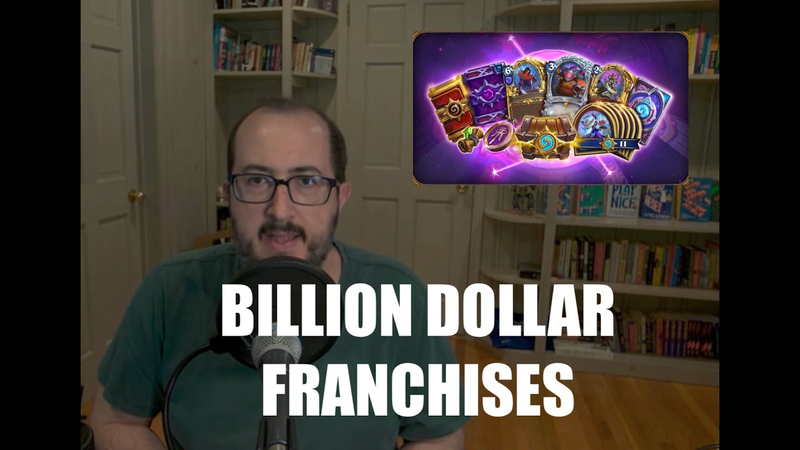
Why Big Game Companies Don't Make Small Games
Large game publishers frequently face criticism for prioritizing massive, high-budget projects over smaller, experimental titles.
- Publicly traded publishers prioritize established franchises like Call of Duty and World of Warcraft because they offer the predictable, scalable revenue required to satisfy corporate mandates for high ROI.
- Large companies view smaller, experimental projects as inefficient uses of resources because they lack the potential to become billion-dollar franchises that justify massive marketing and technical infrastructure investments.
- The industry’s shift toward 'engagement-first' design metrics, such as daily active users, penalizes shorter or experimental games that cannot sustain the long-term retention levels of live-service models.
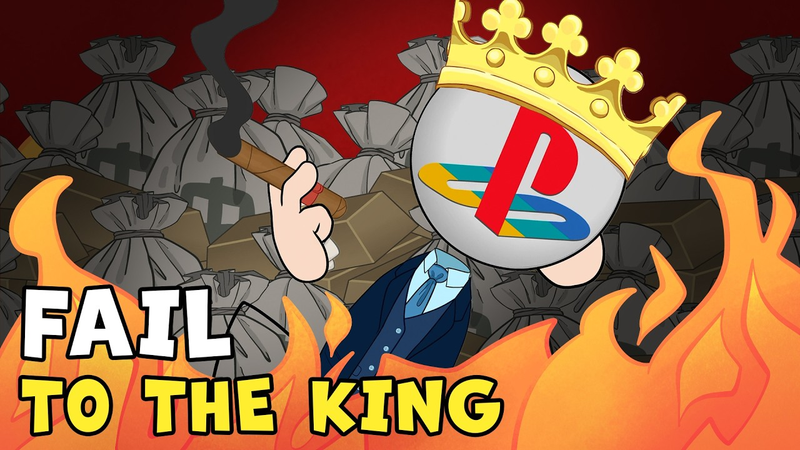
What PlayStation Needs To Do Next | Extra Credits Gaming
Sony’s strategic pivot toward an all-digital console ecosystem, specifically the reported transition to disc-less hardware by 2028, represents a significant point of contention regarding consumer rights and industry standards.
- Sony plans to transition to an all-digital console model by 2028, effectively eliminating physical media and the associated secondary market for games.
- The shift to digital-only hardware removes the ability to use physical discs for backwards compatibility, limiting the console's utility as a multimedia hub.
- Sony's digital-only strategy faces criticism for lacking true consumer ownership, as users merely license content that can be revoked, as evidenced by the recent removal of 551 purchased movies due to expired licensing deals.

The Cruelest Part Of Xbox's Layoffs
The recent restructuring at Xbox, characterized by a massive reduction in workforce and the divestment of five studios, has created a climate of profound instability and anxiety for remaining employees.
- Microsoft has announced a major restructuring of its Xbox division, involving the layoff of 3,200 employees and the divestment of five game studios.
- Beyond the primary layoffs, Xbox is cutting its vendor spend by 50%, which will result in significant job losses for contract workers who are not included in the official 3,200-person headcount.
- Employees across Xbox, Blizzard, and ZeniMax are facing prolonged uncertainty, as a second wave of approximately 1,250 layoffs remains pending with no clear timeline for implementation.
Inside Vietnam’s Mobile Gaming Industry | Flappy Bird, Hybrid-Casual Games & D2C Payments
Vietnam has established itself as a formidable global force in mobile gaming, currently ranking second worldwide in export volume with nearly five billion annual downloads.
- Vietnam is a top-five global publisher by volume, with nearly 5 billion mobile game downloads and a strong focus on simulation, puzzle, and arcade genres.
- The industry is primarily bootstrapped, with founders retaining ownership and avoiding external capital, which allows studios to prioritize long-term development over rapid exits.
- Most Vietnamese mobile games currently monetize through advertisements rather than in-app purchases, resulting in a reliance on tier-three markets in Latin America and the Middle East rather than tier-one countries.

Why PlayStation Is Killing Discs (Despite The Fan Revolt)
PlayStation’s decision to discontinue physical disc production by 2028 has triggered significant consumer backlash, highlighting deep-seated concerns regarding digital game ownership, preservation, and the loss of the secondary market.
- Sony will discontinue the production of physical PlayStation game discs starting in January 2028.
- Transitioning to an all-digital model significantly increases Sony's profit margins; for a $70 first-party game, Sony keeps $70 on a digital sale compared to approximately $45.50 on a physical sale after retail cuts and manufacturing fees.
- For third-party games sold on the PlayStation Store, Sony captures a 30% platform fee (roughly $21 per $70 game), whereas they only receive a $10.50 licensing fee for physical discs sold at retail.

In the Hot Seat: Mattel163 COO Devin Nambiar on Uno and life after the NetEase deal
Mattel163, a mobile game publisher, recently transitioned from a joint venture between Mattel and NetEase to a wholly-owned internal development and publishing division of Mattel.
- Mattel acquired NetEase's 50% stake in their joint venture, Mattel163, in February 2024 for $318 million, transitioning the studio into its internal game development and publishing division.
- Mattel163 has achieved over $1 billion in lifetime revenue, nearly $250 million in annual recurring revenue (ARR), and 20 million monthly active users (MAUs) across its four live titles.
- Successful cross-border game expansion requires significant product tailoring, as evidenced by the failure of major titles like Honor of Kings and Monster Strike when launched globally without sufficient culturalization.

Epic CEO says AI disclosures are bad, Sony Says Disks are Dead, and other Shenanigans | Design Club
The gaming industry is currently undergoing a structural transformation characterized by a transition toward digital-only distribution and the integration of artificial intelligence in development workflows.
- The shift toward a digital-only gaming ecosystem faces significant consumer backlash due to concerns over game preservation, archival access, and the lack of a robust digital ownership model.
- Steam has implemented a disclosure policy requiring developers to specify the use of generative AI in their games, leading to a noticeable increase in such disclosures during the Summer 2024 Steam NextFest.
- Industry experts distinguish between analytical AI, which has been used for decades in game development, and generative AI, which remains a point of contention regarding its impact on artistic integrity and labor.

TWIG #390: Destiny Ends, Xbox's Biggest Layoff Ever, and Google Play's New Fee Chaos
The global video game industry is currently undergoing a painful period of structural realignment, characterized by the collapse of overly ambitious acquisition strategies and a pivot toward extreme fiscal conservatism.
- Sony’s $3.6 billion acquisition of Bungie has resulted in $766 million in impairment charges and the loss of over 600 jobs, highlighting the failure of the strategy to integrate independent studios into live-service operations.
- Microsoft is pivoting the Xbox division toward a 'fewer, bigger, better' strategy, prioritizing high-performing blockbuster franchises over niche titles to satisfy investor demands for immediate financial sustainability.
- The Xbox Series X has seen its pricing rise to $800, a move that effectively cedes competitive advantage to the PlayStation 5 as Microsoft shifts toward a digital-first, high-margin model.
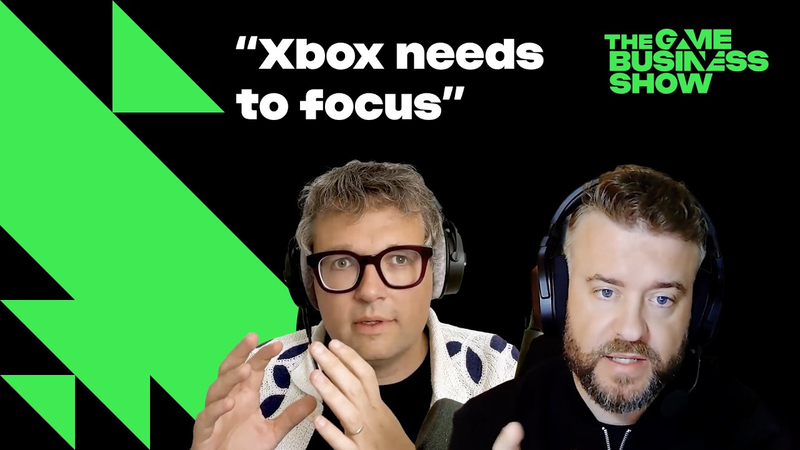
Xbox divided over its future, and do people even buy physical PlayStation games?
The gaming industry is currently undergoing a structural transformation characterized by a transition toward digital-first distribution and a move away from traditional, rigid publishing models.
- Sony plans to cease physical disc production by 2028, marking a definitive shift toward a digital-only distribution model.
- Publishers are moving away from fixed, long-term headcount toward decentralized, scalable partnerships to improve operational agility and reduce costs.
- The industry is pivoting toward a middle-market model that prioritizes realistic, genre-specific budgeting over the pursuit of unpredictable, high-budget outlier successes.
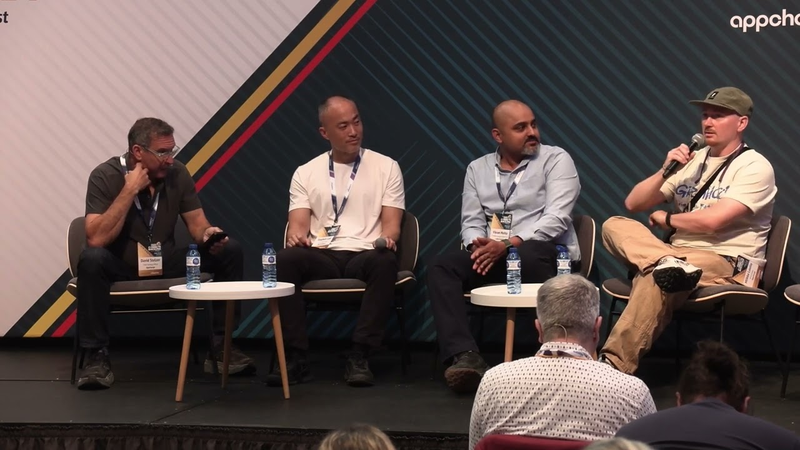
NEW ** Panel: Payment Links vs. Web Stores: What Actually Drives Incremental DTC Revenue?
Direct-to-consumer (DTC) strategies have evolved into a critical component of the global mobile gaming market, which currently stands at $81.8 billion.
- Direct-to-consumer (DTC) revenue in the gaming industry has reached a $12 billion market size, with successful studios currently achieving between 15% and 30% of their total revenue through these channels.
- Industry leaders, including those at DECA, report that mature titles can reach up to 40% or more of their revenue through DTC, with expectations that large studios could reach 50% within a few years.
- DTC strategies should be viewed as a funnel where payment links are used for high-conversion in-game transactions, eventually transitioning players to web stores that offer better value and long-term loyalty.