Game Publishing reports and market data
Documents

Google Play's New Era. Here's Why This is Important...
Google Play has introduced a significant restructuring of its service fee model, effective June 30, 2024, in the US, UK, and Europe, with a phased global rollout continuing through 2027.
- Effective June 30, 2024, Google Play is restructuring service fees for games earning over $1 million annually, charging 20% for new installs and 25% for existing installs.
- Developers can reduce these service fees by 5 percentage points by joining the 'Level Up' program, which requires meeting technical benchmarks like cross-screen support and high-performance rendering.
- Alternative billing methods are now formalized, allowing developers to use external links or web shops at a 20% service fee (15% with Level Up), effectively removing the standard 5% Google Play billing fee.
Shooter Monthly #8: The Bungie Eulogy, Why Destiny Fell Off, and Can Marathon Save the Studio
Bungie’s trajectory serves as a definitive case study in the volatility of the live-service model, illustrating how a studio can pioneer a genre while simultaneously struggling with the sustainability of long-term engagement.
- Bungie generated between $1.5 and $2 billion in revenue by successfully blending high-fidelity gunplay with deep RPG progression.
- The decline of Destiny is attributed to the exhaustion of its ten-year narrative arc and a seasonal content model that made player progress feel temporary.
- Bungie failed to transition Destiny into a smaller, long-term maintenance phase, a strategy that successfully sustained competitors like Rainbow Six Siege.

In the Hot Seat: Three ways Western developers are leaving a fortune on the table in China
Western game developers often struggle to penetrate the Chinese market due to a fundamental misunderstanding of its unique operational landscape, which frequently results in significant lost revenue.
- China represents approximately 20% of global player spending and 38% of total market growth, yet many Western studios fail to enter the market due to a lack of dedicated local resources.
- Successful entry into the Chinese mobile market requires a dedicated team of three to five people to manage the significant technical support and localization work necessary for local partnerships.
- Unlike the Western model of soft-launching to improve metrics, the Chinese market utilizes a 'wishlist' system where games build massive pre-launch interest over six months to trigger millions of day-one downloads.

This Sucks: Why We Think Disney Will Buy Epic Games | Extra Credits Gaming
The potential acquisition of Epic Games by Disney is driven by a strategic shift in the entertainment industry, where the primary objective is no longer just content production but the creation of persistent, immersive digital environments.
- Disney’s core business model is the creation of immersive environments that foster emotional attachment, making them a direct competitor to companies like Nintendo that build persistent digital worlds.
- Epic Games provides three strategic assets Disney lacks: a direct relationship with gamers via the Epic Games Store, the infrastructure of the Unreal Engine, and a massive, persistent social space in Fortnite.
- Acquiring Epic would allow Disney to bypass third-party platforms like Sony, Valve, or Microsoft, enabling them to control the entire ecosystem from content discovery to in-game transactions.

His Dream Game Crashed And Burned... But He Sold 1 MILLION Copies... (w/ Indie Game Joe) — Ep 72
The independent game development landscape requires a fundamental shift in perspective, where marketing is not a post-production task but an intrinsic element of game design.
- Indie Game Joe’s 'Don't Scream' franchise has achieved a combined total of 1 million copies sold, despite significant technical challenges and negative launch-day reviews for the sequel, 'Don't Scream Together'.
- The 'Don't Scream' sequel, 'Don't Scream Together', has reached 600,000 copies sold and continues to maintain daily sales volume despite initial community frustration over bugs and microphone calibration issues.
- Effective marketing hooks must function as a 'promise' of a specific player fantasy; when a hook is disconnected from the actual gameplay experience, it leads to poor reception and high refund rates.

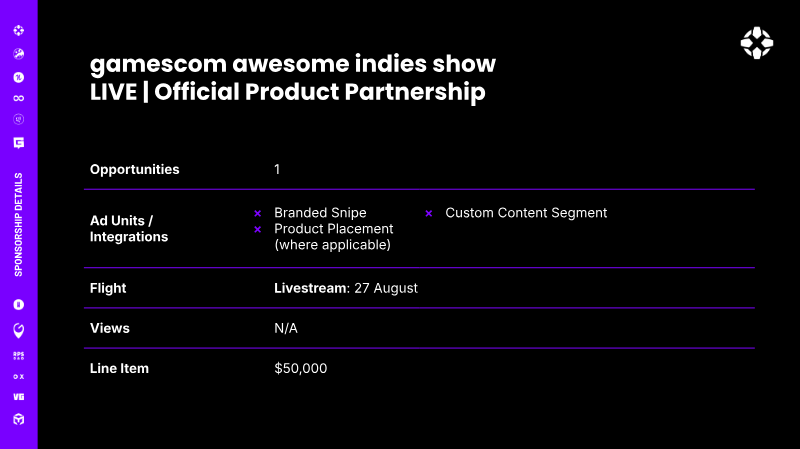

Gamescom Awesome Indies Show: 2025 by the Numbers
The Gamescom Awesome Indies Show serves as a premier international platform for independent developers, studios, and publishers to debut new titles, gameplay, and trailers.
- The 2025 Gamescom Awesome Indies Show featured 24 independent titles and reached a peak of 44,000 concurrent viewers during its live broadcast.
- The event generated 36,500 hours of live watch time and secured 57,800 views on video-on-demand platforms, indicating strong sustained interest.
- The broadcast achieved significant distribution through 116 co-streams, amplifying the reach of the indie-focused content.

What Game Studios Still Get Wrong About DTC
The mobile gaming industry is undergoing a fundamental shift toward direct-to-consumer (DTC) monetization, a sector that has already reached a $17 billion valuation.
- Direct-to-consumer (DTC) monetization in mobile gaming has grown into a $17 billion market, yet 52% of studios have not made significant changes to their existing monetization strategies.
- Successful DTC implementation requires studios to build dedicated, cross-functional teams that blend marketing, product, and user acquisition expertise rather than relying on traditional app store-focused workflows.
- Moving players to web stores allows developers to capture higher net revenue by bypassing platform fees while simultaneously gaining direct access to player data for better segmentation and personalized offers.
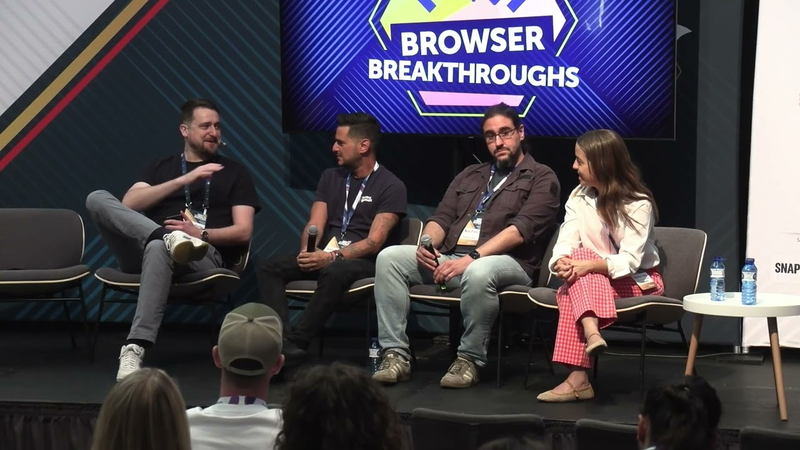
Panel: Browser Renaissance: Can Web Games Be The Driver For Growth?
The browser gaming sector is undergoing a significant renaissance, driven by the strategic necessity for mobile publishers to diversify distribution channels and circumvent the restrictive policies of mobile app store ecosystems.
- Web gaming is evolving into a critical distribution channel for mobile publishers to reach new audiences, particularly younger demographics, without the friction of app store installs.
- Third-party platforms like Crazy Games allow mobile developers to validate game performance and audience interest on the web before investing in proprietary web-based infrastructure or marketing.
- Modern web gaming infrastructure has matured significantly, with reliable payment providers like Xsolla enabling secure in-app purchases that build user trust comparable to mobile environments.
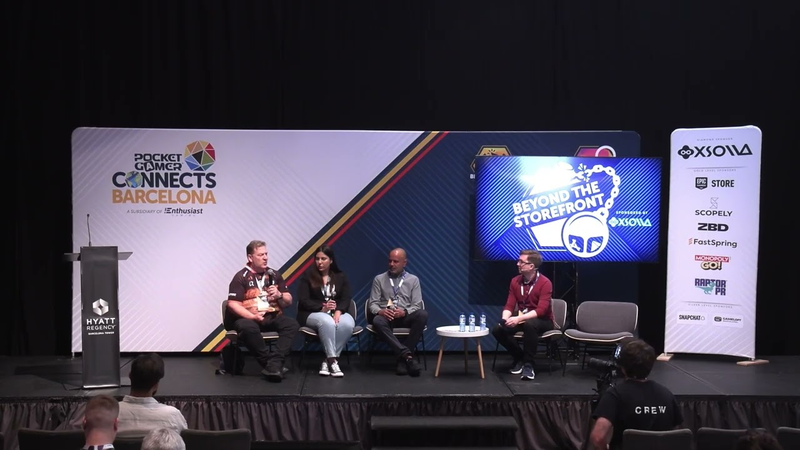
Panel: Direct-To-Consumer In Games: Promise vs. Reality.
Direct-to-consumer strategies in the gaming industry represent a fundamental shift toward owning player relationships rather than relying exclusively on traditional platform ecosystems.
- Direct-to-consumer (D2C) strategies are not a simple alternative to platform fees, as bypassing Apple and Google stores involves processing costs of 3% to 7%, plus additional expenses for tax compliance, cross-border regulation, and user acquisition.
- Successful D2C implementation requires partnering with a Merchant of Record or payment service provider to manage the high complexity of global tax laws and regional payment regulations, rather than attempting to build these capabilities in-house.
- Large-scale publishers are seeing significant financial returns from D2C, with Playtika reaching an annual run rate of $1.2 billion and Modern Times Group reporting that D2C accounted for 39% of group revenue in Q1 2026.

King dodges Xbox cuts, Destiny Rising, Google's store fees, Ustwo slams platforms, more
The mobile games industry is currently navigating a period of significant structural adjustment, characterized by platform-level policy shifts, studio restructuring, and evolving monetization strategies.
- King has largely avoided the recent Xbox layoffs, with the studio now reporting directly to Xbox leadership due to its high monthly active player counts, though internal uncertainty remains regarding future financial performance.
- Destiny Rising appears to be in a 'death spiral' with declining revenue, dropping from $6 million in its launch month to approximately $300,000 in monthly in-app purchase revenue over the last three to four months.
- Ustwo Games has shifted its focus away from mobile platforms like Apple Arcade and Netflix, citing the inability to make their single-player titles profitable on mobile and criticizing platform holders for failing to solve game discoverability issues.

In the Hot Seat: Stefan Lampinen on how Chinese publishers are outpacing the West
Stefan Lampinen, founder of Game Advisor Ltd and a veteran of the global gaming industry, provides a strategic analysis of the evolving dynamics between Western and Chinese game markets.
- European markets should not be treated as a single entity; successful expansion requires a granular approach that accounts for distinct legal, cultural, and regional differences, such as the specific nuances between cities like Berlin, Munich, and Cologne.
- Chinese publishers like Tencent and NetEase are demonstrating high levels of sophistication by conducting deep-dive research into specific European micro-markets, including identifying individual studios in cities with populations over 100,000.
- Entering the European market requires rigorous preparation and strategic planning rather than rushed execution, as historical data shows that many large companies have failed due to a lack of localized positioning and messaging.
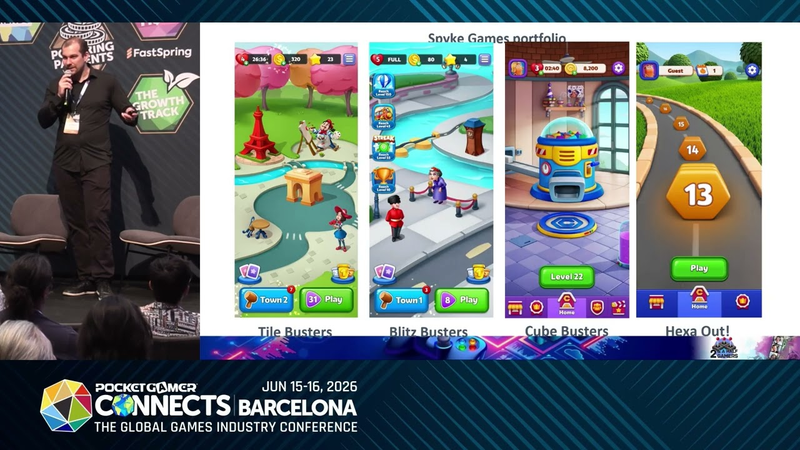
Session: Winning Portfolio Strategies Of 2026 - Jakub Remiar, two & half gamers.
The current mobile gaming landscape is defined by a shift toward systematic, data-driven portfolio management rather than reliance on individual hit titles.
- Successful mobile game portfolios rely on 'template-ization,' where developers build a reusable engine for a specific genre, allowing them to salvage work from failed projects to accelerate the development of future titles.
- Companies like Gram Games operate like the 'Warren Buffett of puzzle games' by identifying high-traffic, ad-monetized genres and converting them into high-revenue IAP (in-app purchase) models through superior execution and polish.
- Radical innovation, such as the mechanics seen in 'Pixel Flow' or 'Screw Jam,' offers the highest potential for success but requires deep, long-term genre expertise to identify and implement meaningful improvements to existing core loops.