Game Publishing reports and market data
Documents
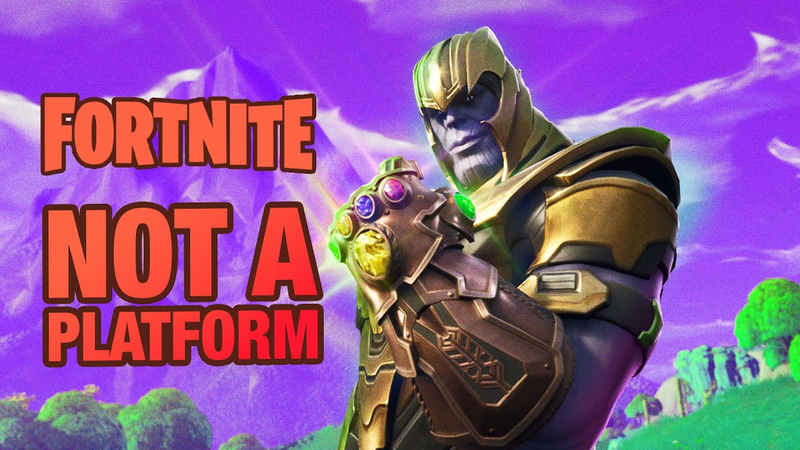
Fortnite’s Platform Problem (It’s Not What You Think)
Fortnite functions primarily as a centralized licensing powerhouse rather than a true open platform.
- Fortnite functions as a centralized licensing powerhouse that absorbs external IP, such as Ferrari and James Bond, rather than operating as a decentralized platform for third-party creators.
- Despite reaching 9 million concurrent users during the Chapter 7 launch, Fortnite struggles to translate these spikes into significant growth or engagement for the Unreal Editor for Fortnite (UEFN) ecosystem.
- Fortnite maintains a superior financial position compared to Roblox by prioritizing monetization efficiency and higher average revenue per user, despite Roblox’s significantly higher concurrent user count of 21 million versus Fortnite’s 3 million.
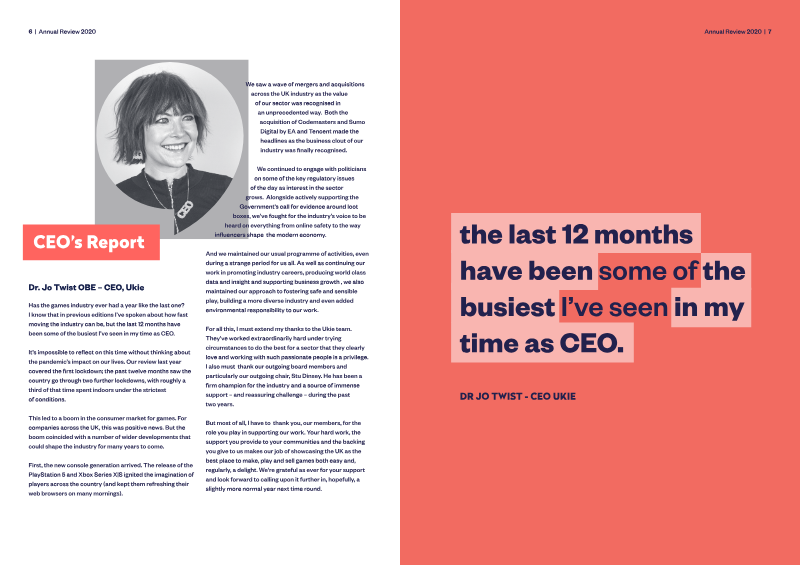

Annual Review 2021: Ukie
The United Kingdom games industry experienced a period of profound expansion and heightened public visibility throughout 2021, underpinned by a record valuation of £7 billion in the preceding year.
- The UK games industry reached a record valuation of £7 billion, bolstered by a 30 percent surge in consumer spending during 2021 lockdowns.
- Ukie expanded its membership to a record 526 companies while actively managing regulatory challenges, including loot box inquiries and the Online Safety Bill.
- Despite an 11 percent decline in B2B event revenue, Ukie maintained financial stability, reporting a profit of £130,154 for the year.


Annual Review: UK
The United Kingdom games industry has solidified its status as the nation’s preeminent creative sector, achieving a valuation of £5.2 billion and a total consumer market value of £7 billion.
- The UK games industry has reached a valuation of £5.2 billion, with a total consumer market value of £7 billion.
- The sector is supported by a network of over 600 member organizations focused on maintaining global competitiveness.
- Industry policy has shifted from Video Games Tax Relief to the Video Games Expenditure Credit to improve financial effectiveness.

Fallout Season 2 Interview: How Todd Howard and Bethesda are capitalising on the TV show
The success of the Fallout television series on Amazon Prime has catalyzed a strategic shift in how Bethesda Game Studios manages its intellectual property, moving toward a model where linear media and interactive gaming experiences are tightly integrated.
- The Fallout television series reached over 100 million viewers, triggering a five-to-sixfold increase in player engagement across Fallout 4, Fallout 76, and Fallout Shelter.
- Bethesda is shifting to a strategy of tightly integrating linear media with interactive gaming, treating the television show as a new, canonical entry in the franchise timeline rather than a simple adaptation.
- To lower barriers for non-traditional gamers, Bethesda is leveraging cloud streaming platforms like Samsung Gaming Hub, Xbox Game Pass, and Amazon Luna to allow immediate gameplay without dedicated hardware or downloads.

Meet the developer behind Bradley The Badger, The Game Awards’ most bonkers reveal
Day for Night, a game development studio founded by industry veterans Davide Soliani and Christian Cantamessa, recently debuted their upcoming title, Bradley the Badger, at The Game Awards.
- Day for Night, a studio founded by Mario + Rabbids and Red Dead Redemption veterans Davide Soliani and Christian Cantamessa, has debuted its first title, Bradley the Badger.
- The studio operates with a lean team of approximately 24 employees, prioritizing an agile, collaborative structure over the fragmented models typical of AAA development.
- The project has successfully secured funding from 1Up Ventures and Krafton, despite the current challenging global economic climate for game development investment.

Steam Demos Are the New Early Access
Modern indie game development prioritizes a marketing-first philosophy where high-quality, polished demos serve as the primary vehicle for market validation and wishlist acquisition.
- Game developers should prioritize the 'ugabooga' solution—the lowest-investment, simplest implementation—to test core mechanics before building complex systems.
- Steam's 'New and Trending' tab remains a critical discovery metric, with an estimated threshold of approximately $8,000 in sales required to gain visibility.
- The quality of a game is validated when playtesters continue playing for hours after a scheduled session ends, indicating the presence of 'secret sauce' beyond just a compelling trailer.

TWIG #361 WB Games’ Fate, CoD’s Apology Tour & the UA Financing Trap
The global gaming industry is currently navigating a period of intense structural realignment, characterized by aggressive media consolidation, shifting advertising paradigms, and evolving hardware strategies.
- Large-scale media consolidation, exemplified by potential sales of Warner Bros. Discovery and PIF interest in Electronic Arts, is treating gaming assets as secondary to broader streaming and sports ecosystems, threatening the stability of studios like Avalanche and TT Games.
- The mobile gaming user acquisition landscape is shifting as e-commerce brands increasingly outbid game studios for ad inventory, forcing developers to contend with higher costs and more complex financial leverage.
- Platforms like AppLovin are fundamentally altering mobile monetization by displacing rival game studios in ad space, which paradoxically helps developers by reducing player cannibalization while simultaneously driving up acquisition costs.
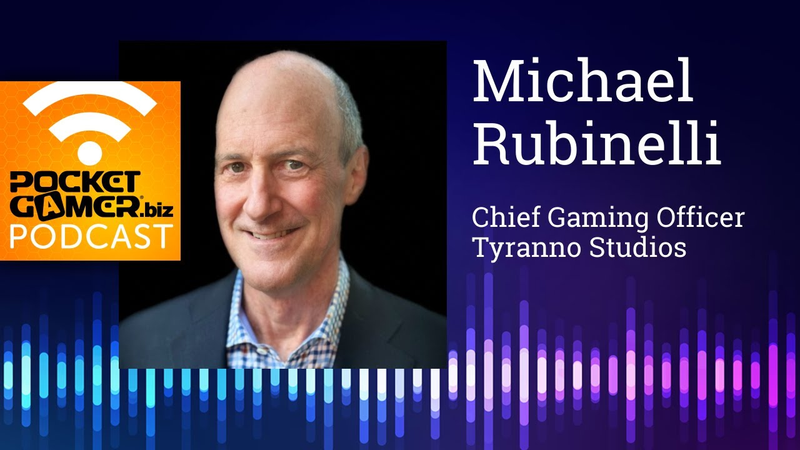
Surviving "extinction events" in the games industry with Tyranno Studios' Michael Rubinelli
The games industry is defined by recurring extinction events, such as the transitions from 2D to 3D, console to online multiplayer, and premium to free-to-play models.
- The mobile games market is dominated by long-standing titles, with top-performing strategy games like Clash of Clans maintaining market leadership 13 years after their initial launch.
- Transitioning to new business models like free-to-play requires a shift from relying on personal creative intuition to a data-driven mindset where product decisions are validated by user behavior, churn rates, and testing.
- AI should be utilized to compress production schedules and accelerate the testing of ideas rather than as a replacement for human oversight; it makes good ideas testable faster but cannot turn bad ideas into good ones.

Digital Chocolate’s diaspora, Destiny: Rising woes, EA’s shooter revival, November’s top games, more
The mobile games industry continues to be shaped by the legacy of Digital Chocolate, a foundational company whose alumni—often referred to as the "D-Choc Mafia"—now hold significant leadership roles across the global gaming landscape.
- EA is actively recruiting a VP of mobile shooters to report to Vince Zampella, signaling a potential revival of mobile titles for the Apex Legends and Battlefield franchises.
- Destiny: Rising is struggling post-launch, with daily earnings dropping from a $300,000 peak in September to approximately $25,000, despite 4.4 million total downloads since August.
- Last War Survival led November mobile revenue with $115 million, followed closely by Roblox at $112 million and Monopoly Go at $111 million, according to Appmagic data.

Roblox's car crash interview and Ubisoft's curious Tencent deal | Week in Mobile Games podcast
Ubisoft has finalized a €1.16 billion agreement with Tencent, establishing a new subsidiary, Vantage Studios, to manage core intellectual properties such as Assassin’s Creed and Far Cry.
- Ubisoft has finalized a 1.16 billion euro investment deal with Tencent, resulting in the creation of a new subsidiary, Vantage Studios, in which Tencent holds a 26.32% economic stake.
- Roblox CEO David Baszucki faced significant criticism for a combative and dismissive interview regarding child safety, where he appeared unprepared to address concerns raised by Hindenburg Research and other investigators.
- Dream Games' title Royal Kingdom generated over $300 million in its first year, matching the performance of its predecessor, Royal Match, while maintaining an upward revenue trend that reached $43.6 million in October 2024.
TWIG #359 Unity x Epic, Roblox Controversy, Saudi Money and Why The Game Awards Make No Sense
The gaming industry is currently navigating a period of significant strategic realignment, marked by an unexpected partnership between Epic Games and Unity.
- Epic Games and Unity have formed a strategic partnership to integrate Unity’s commerce SDKs into Unreal Engine and allow Unity-built content to function within the Fortnite ecosystem.
- Roblox is facing significant regulatory and reputational pressure regarding its current moderation practices and child safety protocols.
- The 2024 Game Awards have been criticized for a disconnect between award nominations and actual Western market performance, particularly regarding the mobile sector's representation.

App Review woes, GTA leaves Netflix, Türkiye's hot streak, iconic icons, Zombies Run, more
The mobile gaming industry is currently navigating significant shifts in platform policy, regional dominance, and corporate strategy.
- Apple is facing allegations from former App Review head Philip Shoemaker that it has wrongfully terminated developer accounts and withheld millions of dollars in payments without providing evidence or explanation.
- Netflix is refocusing its gaming strategy by removing 13 titles, including its top-performing game GTA: San Andreas, which accumulated 57.4 million downloads since December 2023.
- Türkiye's mobile gaming ecosystem has flourished due to aggressive government incentives, including marketing spend cashback, tax exemptions in technology zones, and R&D income tax relief.