Game Engines reports and market data
Documents
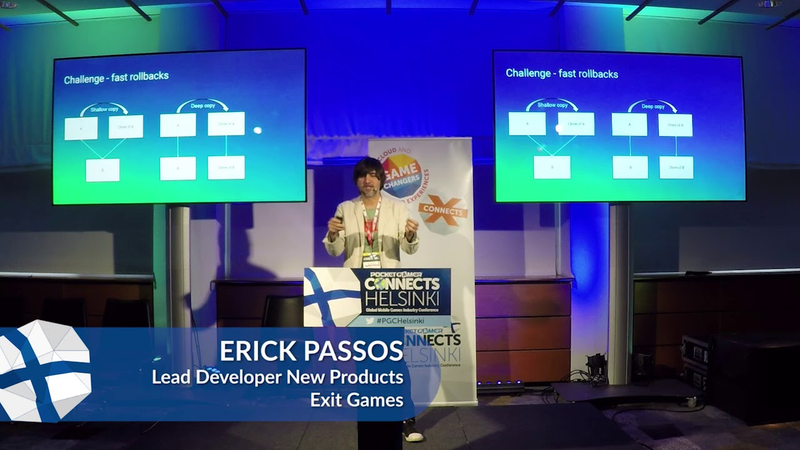
Insights on determinism
Determinism in multiplayer game development offers a framework where game logic is simulated locally across multiple clients, relying on synchronized input exchange rather than state synchronization.
- Deterministic architecture replaces traditional networked state synchronization by simulating game logic locally on each client, relying solely on the exchange of synchronized inputs.
- Modern rollback-based systems improve upon traditional lockstep models by enabling immediate local simulation and using heuristic prediction to manage remote input latency.
- To achieve the sub-millisecond performance required for seamless rollbacks, developers must abandon standard object-oriented deep copying in favor of memory-aligned structures and native memory copying (memcopy).
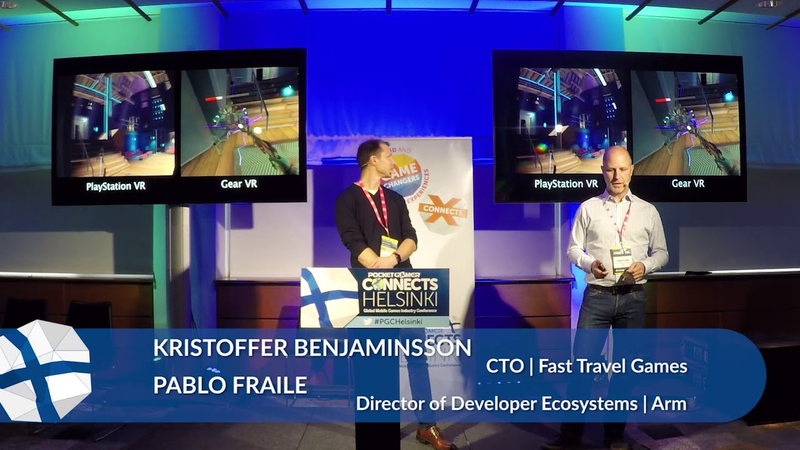
Lessons learnt from converting parts of Apex Construct from PSVR to mobile Gear VR
The collaboration between Fast Travel Games and ARM demonstrates the technical feasibility of porting high-fidelity console virtual reality experiences to mobile platforms.
- Fast Travel Games and ARM successfully ported the console-based Apex Construct to Gear VR, proving that high-fidelity VR experiences can be optimized for mobile hardware.
- The development team achieved significant performance gains by reducing polygon counts by 40%, moving from 2.4 million to 1.4 million triangles.
- To manage GPU load and draw calls, the team replaced standard surface shaders and implemented custom tools for occlusion culling and mesh merging rather than relying on engine-default batching.

How to make Your First Game TODAY! - (Unity 3D)
Unity 3D serves as a robust entry point for aspiring developers, offering a comprehensive suite of tools for rapid prototyping and game creation.
- Master the Unity interface by utilizing the hierarchy, inspector, and project windows to organize assets and establish 3D environments.
- Implement movement by manipulating the Rigidbody component via user input, using the FixedUpdate method to ensure consistent physics behavior across different hardware.
- Use the SerializeField attribute to expose variables, allowing for real-time adjustments and faster iteration directly within the Unity editor.
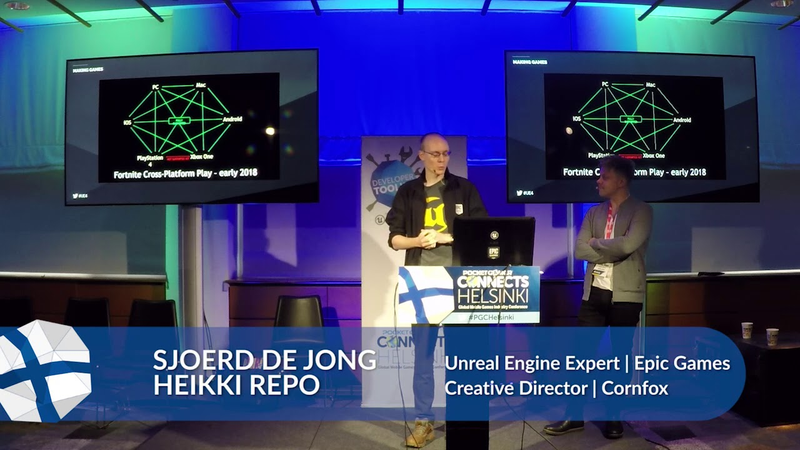
Unreal Engine and the future of mobile games
The future of mobile gaming is defined by the transition toward high-fidelity, cross-platform experiences that provide players with seamless connectivity across consoles, personal computers, and mobile devices.
- Mobile gaming is shifting toward high-fidelity, cross-platform experiences that offer seamless connectivity between mobile devices, PCs, and consoles.
- Unreal Engine enables developers to deploy console-quality titles on mobile hardware by overcoming previous technical limitations and democratizing high-end development.
- Optimization for mobile hardware requires addressing strict memory and draw-call constraints through automated level-of-detail generation, material instancing, and platform-specific texture compression.

Fast Iteration for Far Cry 4 - Optimizing Key Parts of the Dunia Pipeline
The development of Far Cry 4 necessitated a fundamental overhaul of the Dunia engine pipeline to address the productivity bottlenecks that plagued previous projects.
- By implementing a central build cache that shares object files between users, the team reduced full rebuild times for the PC release target from 40 minutes to under 58 seconds.
- The pipeline was optimized for massive parallelization, utilizing a 32-core machine to spawn over 1,000 processes simultaneously for efficient task distribution.
- To eliminate redundant data distribution, the team implemented a slicing system that breaks packages into parts, hashes them using MD5, and only distributes the specific parts that have changed.

Write a Game Engine? - WHY and HOW.
Developing a custom game engine is a complex undertaking that offers significant advantages in architectural control, specialized functionality, and educational depth, though it carries substantial risks and development overhead.
- Custom engine development is primarily recommended for those pursuing careers in engine engineering or hobbyists prioritizing technical mastery over the rapid production of games.
- The primary advantages of proprietary engines include total architectural control, the ability to tailor systems to unique project requirements, and the avoidance of restrictive licensing agreements associated with commercial engines like Unity or Unreal.
- Building a custom engine requires significant investment in 'invisible work,' such as creating boilerplate code for window initialization, graphics API setup, and developing custom toolchains like level editors and asset importers.
Tools-Based Rigging in Bungie's Destiny
Bungie’s approach to character rigging for the Destiny franchise centers on a modular, Python-based architecture designed to overcome the limitations of traditional, static animation pipelines.
- Bungie developed a modular rigging system for Destiny using Python and Pymel in Autodesk Maya, utilizing object-oriented programming to manage thousands of animation files efficiently.
- The rigging architecture relies on 'rig components'—independent, reusable Python classes that can be added or removed from a character's rig dynamically without breaking existing animation data.
- To maintain agility during engine development, the team implemented a 'rig template' system that assembles these modular components into complete control rigs for characters, vehicles, and props.

Global Illumination in Tom Clancy's The Division
The Snowdrop engine utilizes a sophisticated, probe-based global illumination system to facilitate dynamic lighting within the expansive, open-world environment of Tom Clancy's The Division.
- Ubisoft Massive utilized a Precomputed Radiance Transfer (PRT) system within the Snowdrop engine to achieve dynamic global illumination, allowing for a full day/night cycle without the need for static light maps or UV unwrapping.
- The system organizes light probes into 2D grid sectors of 64x64 meters, typically containing 300 to 400 probes, with a maximum capacity of 1,000 probes per sector.
- To manage memory and performance, the engine stores sky visibility per probe and uses irradiance bricks to define light influence, resulting in a total lighting data footprint of approximately 1 gigabyte.

Math for Game Programmers: Parallel Random Number Generation
Parallel random number generation is a critical challenge in game development, particularly for multi-threaded CPU applications and GPU-based simulations.
- Traditional serial random number generators like Linear Congruential Generators (LCG) are unsuitable for parallel environments due to poor statistical quality, short periods, and an inability to maintain consistency across varying thread counts.
- Cryptographic hash functions, specifically the Tiny Encryption Algorithm (TEA), provide a superior alternative by treating random number generation as a stateless mapping problem rather than a sequential state-based process.
- Using TEA-based generation allows developers to map inputs like thread IDs or vertex data directly to random outputs, eliminating the need for shared state or inter-thread communication.

Photorealism Through the Eyes of a FOX: The Core of Metal Gear Solid Ground Zeroes (Sponsored)
Kojima Productions developed the proprietary Fox Engine to establish a new standard for photorealism in the Metal Gear Solid franchise, specifically targeting the transition to physically based rendering (PBR).
- Kojima Productions developed the proprietary Fox Engine to transition the Metal Gear Solid franchise to a physically based rendering (PBR) pipeline using a linear space workflow.
- The engine achieves photorealism by integrating raw photographic data and 3D scanning of physical sculptures and environmental objects to create accurate models.
- The deferred rendering pipeline utilizes a G-buffer to manage complex material properties, including subsurface scattering, anisotropic specular highlights, and view-dependent roughness.

Temporal Reprojection Anti-Aliasing in INSIDE
Temporal Reprojection Anti-Aliasing (TAA) serves as a critical post-processing solution for the game INSIDE, addressing the visual instability caused by the title’s side-scrolling camera movement and complex geometric detail.
- The TAA implementation for INSIDE on Xbox One achieves a performance cost of approximately 1.7 milliseconds at 1080p resolution.
- The system utilizes a 16-sample Halton 2-3 sequence to jitter the view frustum, allowing for the recovery of sub-pixel information.
- To prevent ghosting and smearing, the engine employs neighborhood clipping, which clamps history samples to the 3x3 pixel color space of the current frame.

Nuts and Bolts: Modular AI From the Ground Up
Modular artificial intelligence architecture prioritizes the creation of small, reusable, and loosely coupled components to enhance code stability and streamline development workflows.
- Modular AI architecture improves stability and development efficiency by decomposing complex systems into small, reusable, and loosely coupled components.
- AI logic should be strictly separated into three functional areas: sensing (translating raw data to world state), deciding (triggering behaviors), and acting (executing behaviors).
- Using polymorphism and factory patterns allows modular components to function across diverse architectures, including finite state machines and hierarchical task networks.