Game Engines reports and market data
Documents

Enabling Creators: The Unreal Ecosystem | PGC Digital #1
The Unreal ecosystem functions as a comprehensive support framework designed to democratize high-end game development by providing creators with professional-grade technology, financial backing, and distribution infrastructure.
- The Unreal ecosystem provides independent developers with the same professional-grade tools and technology used in large-scale internal projects like Fortnite.
- The Epic Games Store supports developer profitability by offering a competitive 12 percent revenue share model.
- The Unreal MegaGrants program provides direct financial capital to support game development, educational initiatives, and open-source projects that demonstrate technical viability.
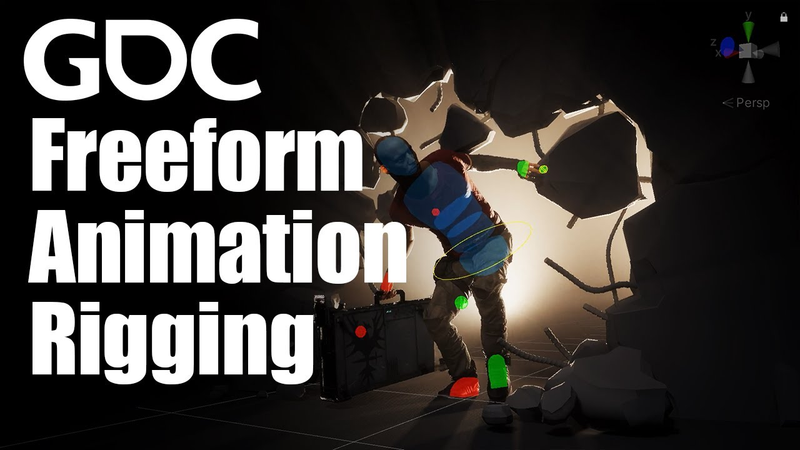
Freeform Animation Rigging: Evolving the Animation Pipeline
Modern animation pipelines are undergoing a fundamental shift toward freeform rigging, a methodology that prioritizes non-destructive, in-scene modifications over traditional, rigid workflows.
- Freeform rigging decouples control rigs from skeletal structures, allowing animators to dynamically adjust character proportions and rig configurations without losing existing animation data.
- The shift toward modular, reusable rigging systems replaces monolithic, one-size-fits-all workflows, enabling artists to iterate on complex motions independently of technical support.
- Bi-directional motion transfer facilitates the seamless movement of skeletal data into control rigs and back, supporting efficient refinement of motion capture through keyframe reduction and layered animation.
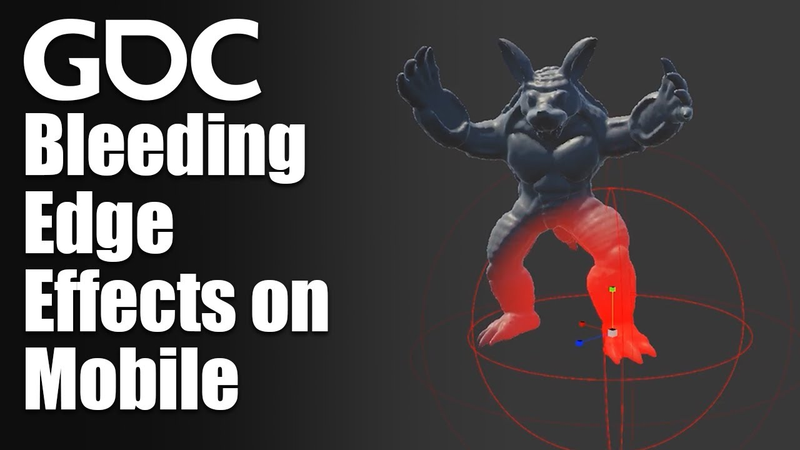
Bleeding-Edge Effects on Mobile
This presentation outlines technical strategies for implementing high-fidelity visual effects (VFX) within the performance constraints of mobile hardware.
- High-fidelity VFX on mobile hardware is achievable by offloading complex simulations to the GPU and utilizing modular shader functions to maintain performance.
- Persistent, interactive fluid simulations, such as blood trails, are implemented using a texture ping-ponging technique between two render textures.
- Dynamic UV space masking utilizes a dilation shader pass to eliminate UV seams and ensure seamless coverage across mesh surfaces.

Democratizing Real-Time Filmmaking Technologies for Indie Game Developers
The democratization of real-time filmmaking technologies represents a significant shift in content creation, driven by the convergence of cinema and game engine capabilities.
- Real-time rendering technology has reached a level of quality that approximates pre-rendered cinematics, allowing independent developers to achieve visual fidelity previously restricted to major studio productions.
- The shift toward virtual production is driven by the convergence of game engine capabilities and affordable, consumer-grade hardware that replaces expensive, bespoke studio equipment.
- Virtual cinematography and performance capture tools allow creators to digitize actor movements and emotions while viewing rendered scenes interactively.

How many game objects are in my Steam game? | Let's Play Neversong Episode 5
This analysis examines the technical architecture and development process of the 2D indie game Neversong, specifically focusing on scene management and object hierarchy within the Unity engine.
- A single forest level in Neversong contains approximately 2,400 total game objects, with roughly 1,200 objects actively loaded into memory at any given time.
- The game utilizes a scene management strategy where a significant portion of the 2,400 objects remain disabled in the Unity hierarchy until triggered by specific gameplay events.
- The project's architecture relies on a complex hierarchy of prefabs, static objects, and parent-child relationships to manage the density of assets within individual screen boxes.

3 GAME DEV TOOLS used for my Steam game! | Let's Play Neversong Episode 3
The development of the title Neversong centers on a streamlined technical workflow that prioritizes modularity and visual cohesion.
- The development workflow for Neversong relies on a core stack of Photoshop for asset design, Spine 2D for character animation, and Unity as the primary game engine.
- Technical efficiency is maintained by prioritizing reusable, generic scripts over object-specific code to ensure a modular and scalable architecture.
- Spine 2D event triggers are integrated directly into the Unity environment to synchronize complex character animations with particle effects and audio cues.

What's an actual Steam game look like in UNITY? | | Let's Play Neversong Episode 2
This analysis examines the technical development and design philosophy behind the indie game Neversong, utilizing the creator’s own development environment to illustrate core mechanics.
- Game feel is achieved by integrating event-driven programming where Spine 2D animation keyframes trigger specific Unity scripts for particle emissions and randomized audio pitch variations.
- Environmental audio immersion is managed through Unity audio snapshots, which apply location-specific reverb to voice acting based on the player's immediate surroundings.
- Combat responsiveness is enhanced by physics-based feedback, such as implementing specific bounce effects triggered by downward sword swings.

RIPPING OPEN my Steam game in Unity | Let's Play Neversong Episode 1
This analysis examines the development and technical architecture of the indie game Neversong, a 2.5D adventure title developed in the Unity engine.
- Neversong achieved its 2.5D visual style by rendering the game world in orthographic mode and using custom scripts to simulate parallax through Z-axis manipulation.
- The development team targeted a goal of 50,000 Steam wishlists ahead of the game's May 2020 launch to ensure commercial viability.
- Character and object animation relies on Spine 2D rather than traditional 3D cloth physics, while environmental interactions like vines and elevators utilize custom physics scripts.
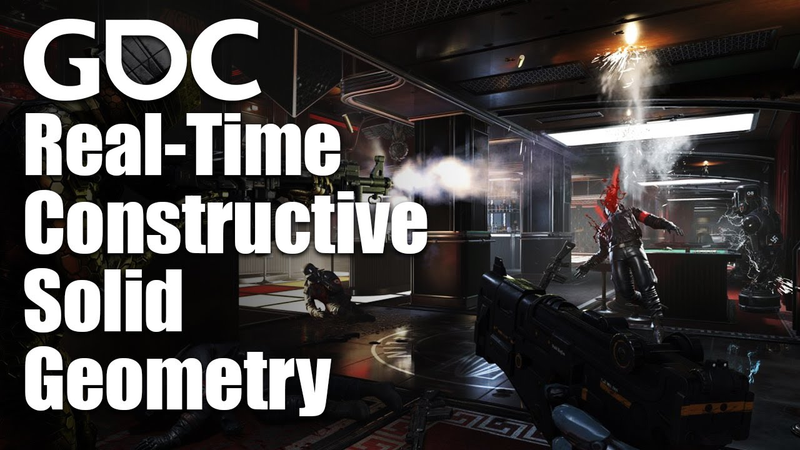
Geometry in Milliseconds: Real-Time Constructive Solid Geometry
Constructive Solid Geometry serves as a foundational methodology for game level design, facilitating rapid prototyping and iterative workflows by allowing designers to manipulate geometry in real-time.
- Modern CSG implementations have shifted from inefficient Binary Space Partition (BSP) trees to per-brush computation, treating individual convex brushes as the primary unit for real-time processing.
- The system utilizes boolean operation lookup tables and routing tables to categorize polygon pieces against brush planes, effectively determining which surfaces are discarded and which remain visible.
- To minimize redundant data and optimize processing, the framework encodes branching paths into indexable structures and utilizes row caching.

Substance 2020 Updates with Jeremie Noguer & François Cottin | Game Dev Unchained Episode 224
The gaming industry is undergoing a period of rapid expansion, fueled by increased player engagement and the widespread adoption of real-time 3D technology.
- Real-time 3D technology is expanding beyond gaming into automotive, luxury goods, and architecture to accelerate design iterations and reduce production costs.
- The industry is shifting from standard physically based rendering to complex material properties, including clear-coat layering, subsurface scattering, and realistic cloth simulation.
- Production-ready automation, specifically AI-driven tools for photogrammetry, UV unwrapping, and texture cleanup, is enabling teams to scale asset creation without increasing headcount.
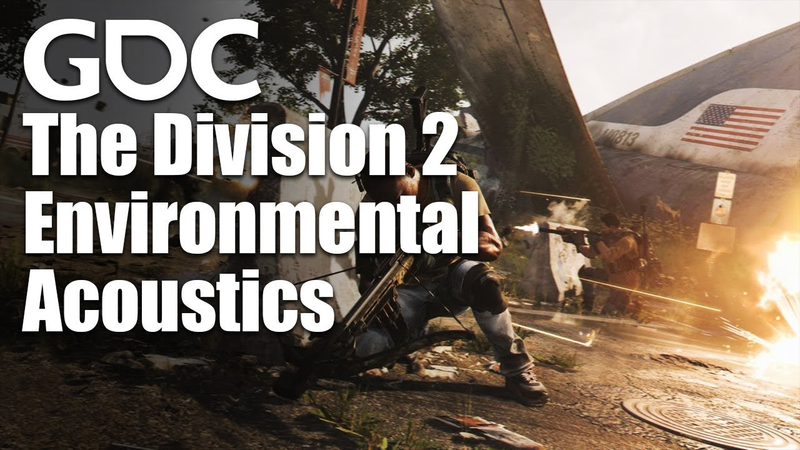
Finding Space For Sound: Environmental Acoustics in Tom Clancy's The Division 2
The development of Tom Clancy’s The Division 2 prioritized a sophisticated approach to environmental acoustics, leveraging the Snowdrop engine to create a dynamic, responsive soundscape.
- The Division 2 utilizes a real-time, raycast-based acoustic system within the Snowdrop engine to replace resource-heavy, material-filtered audio processes.
- This streamlined collision model enabled the procedural generation of impulse responses and ambient room tones across more than 2,500 distinct interior spaces.
- The system employs 'bubble space' metrics, using rotating raycast patterns and a double-buffered broadcast module to adjust weapon audio and reverb based on horizontal and vertical clearance.
A Cost-Benefit Analysis: Is That New Tech Worth It?
A cost-benefit analysis (CBA) serves as a critical decision-making framework for game developers and technical artists to determine the financial and operational viability of implementing new technology.
- A cost-benefit analysis (CBA) provides a data-driven framework to evaluate new technology by comparing it against the baseline of existing workflows to ensure ROI and productivity gains exceed implementation costs.
- Direct costs for new technology must include hardware, software licenses, and labor hours, while indirect costs must account for overhead such as workstation maintenance and administrative support.
- Risk assessment should be integrated into the analysis using techniques like the Monte Carlo method to account for uncertainty, inflation, and opportunity costs.