Game Development reports and market data
Documents

The Secret of Eternal (Product) Life: Lessons from J.R.R Tolkien and John Madden
Achieving long-term success in the video game industry requires a fundamental shift away from the pursuit of fleeting technical spectacle toward the cultivation of deep, iterative, and culturally resonant experiences.
- Long-term franchise success is achieved by prioritizing consistent gameplay refinement and accessibility over the pursuit of cutting-edge technical spectacle.
- Developers should avoid 'creeping featurism' by focusing on core mechanics, which allows products to endure beyond the lifecycle of a single console generation.
- Drawing from J.R.R. Tolkien’s methodology, developers must establish a coherent, well-defined cosmology before launching sequels to ensure narrative consistency.

Marginal Mechanics and Red Herrings - Why So Weak? - Extra Credits
Game designers often include seemingly weak or useless mechanics, abilities, and gear in their titles for specific strategic reasons rather than mere oversight.
- Designers intentionally include weak or useless mechanics to serve as red herrings, learning aids, or marginal mechanics rather than as a result of poor balance.
- Red herrings force players to analyze and filter suboptimal choices, which helps them recognize the value of superior mechanics without relying on explicit tutorials.
- Marginal mechanics are categorized into specific-case tools for niche scenarios and combinatoric mechanics that only gain power when paired with specific builds.

Continuous World Generation in No Man's Sky
No Man’s Sky achieves a seamless, galaxy-wide exploration experience through a custom C++ engine designed to handle real-time, procedural world generation.
- No Man’s Sky utilizes a custom C++ engine that balances procedural generation with artistic control by prioritizing developer-facing tools over purely autonomous algorithms.
- The engine simulates terrain on a sphere using an octree structure projected onto a cube, which eliminates flat-plane wrapping artifacts and manages complex gravity and coordinate systems.
- To optimize performance and memory, the system employs dynamic levels of detail and a multi-threaded job system that offloads generation tasks across diverse hardware.

Raising the Bar: 2016's Accessibility Advancements
Accessibility in the gaming industry is defined as the systematic removal of environmental barriers that prevent individuals with medical conditions from participating in digital play.
- Approximately 22 percent of the United States adult population lives with a disability, representing a significant market demographic for the gaming industry.
- Accessibility is shifting from niche consideration to a standard expectation, as evidenced by advanced features in high-profile titles like Uncharted 4, including color-blind symbolic indicators and motor-impairment assistance.
- Industry progress is increasingly driven by platform-level and engine-level solutions, such as system-wide button remapping on consoles and Steam, which remove the need for individual developer intervention.

The Flash Games Postmortem
Flash technology served as the primary catalyst for the modern independent game industry, offering a low-barrier, cross-platform environment that enabled rapid prototyping and global distribution.
- Flash served as the primary catalyst for the modern independent game industry between 2006 and 2011 by providing a low-barrier, cross-platform environment for rapid prototyping and global distribution.
- The professionalization of the Flash ecosystem was driven by platforms like Mochi Media and Kongregate, which introduced revenue-sharing models, transparent bidding, and analytics that enabled developers to pursue full-time careers.
- The industry hit a critical turning point in 2010 when Apple rejected Flash on mobile platforms due to performance and security concerns, triggering a shift toward social gaming and mobile-native development.
Game Studio Management: Making It Great
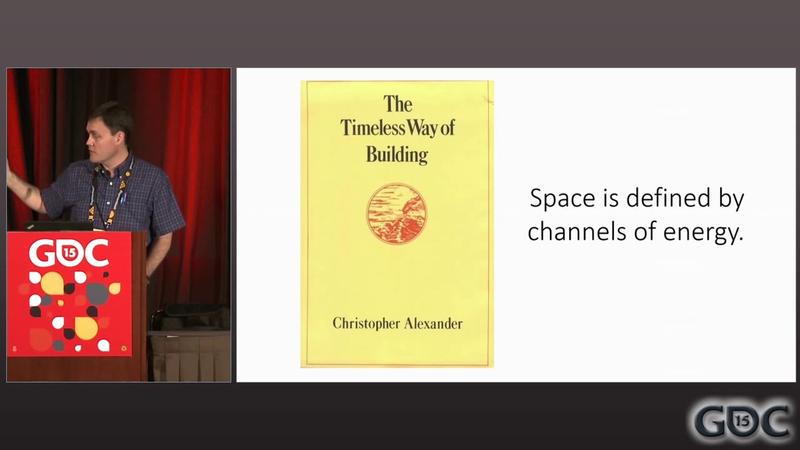
Effective game studio management functions best when organizations are treated as complex information networks rather than rigid hierarchies.
- Treat game studios as complex information networks rather than rigid hierarchies to ensure critical data flows efficiently across projects, processes, and people.
- Categorize all internal communication into distinct buckets of facts, opinions, and emotions to design deliberate systems that prevent project delays and morale degradation.
- Prioritize team social dynamics, such as conversational turn-taking and diversity, over individual IQ to foster collective intelligence and innovation.

UX Methodologies for Holistic Product Design
This analysis outlines a holistic approach to User Experience (UX) design in game development, emphasizing the role of the UX designer as a synthesizer of goals across engineering, product management, and game design.
- UX designers function as central synthesizers who align engineering, product management, and game design goals to prevent communication silos.
- The design process should prioritize lightweight, iterative outputs—such as box-wireframes and information architecture flows—over high-fidelity visual polish to maintain flexibility.
- Physical, large-format printouts of design maps serve as a critical reference point for cross-disciplinary teams to resolve misunderstandings and reduce development delays.

Lessons Learned from Creating a Virtual Reality Engine
This presentation outlines the development process and technical lessons learned from building a custom virtual reality (VR) engine, known as the Horror Engine.
- The 'Horror Engine' project demonstrates that integrating a secondary 'social screen' allows non-VR users to manipulate environments, fostering collaborative and inclusive gameplay experiences.
- Building a custom engine from scratch using C++, DirectX 11, and Windows sockets provides a deeper understanding of rendering pipelines and hardware integration compared to relying on pre-built plugins.
- Successful engine development requires rigorous pre-planning, specifically the use of visual flowcharts to map data flow and class relationships before writing any code.

Designing with Physics: Bend the Physics Engine to Your Will
This presentation addresses the common challenge of achieving solid, responsive physics in indie games without requiring custom engine development.
- Combat 'floatiness' by increasing gravity beyond realistic levels, as the issue is a design-driven limitation of default engine settings rather than a purely technical failure.
- Improve simulation stability and perceived weight by implementing significant mass ratios between objects rather than using uniform mass defaults.
- Mitigate tunneling and jitter in fast-moving objects by reducing the fixed time step and enabling continuous collision detection.
Rules of the Game: Five Techniques from Quite Inventive Designers
Successful game design hinges on rigorous iteration and the early implementation of functional systems rather than reliance on abstract concepts.
- Prioritize functional systems and 'pizzazz' during prototyping to validate core mechanics and communicate project potential to stakeholders early.
- Utilize early visualization tools like flowcharts and heat maps to identify logic errors and system imbalances before formal playtesting commences.
- Design enemy variety through distinct movement patterns, timing, and counter-mechanics rather than superficial aesthetic changes to ensure each encounter requires a unique strategic response.

It Takes Two to Tango: Integrating UX Research and Production at EA
Electronic Arts transformed its approach to user experience research by shifting from informal, designer-led playtesting to a rigorous, integrated professional discipline.
- The 2010 cancellation of NBA Elite served as the primary catalyst for EA to transition from informal, designer-led playtesting to a rigorous, integrated user experience research discipline.
- Effective research requires an embedded model where researchers function as core project members rather than external consultants to ensure insights align with production constraints.
- EA utilizes statistical tools like confidence intervals to help developers differentiate between stable game features and those posing high-risk, polarized outcomes.

Legends of Game Design
The evolution of the video game industry from its inception in the late 1970s through the late 1990s reflects a transition from experimental, individual-driven development to a sophisticated, large-scale commercial enterprise.
- The video game industry evolved from an experimental, individual-driven field in the late 1970s into a large-scale commercial enterprise by the late 1990s.
- The transition from coin-operated arcade machines to home console and PC platforms allowed developers to move beyond hardware constraints and prioritize immersive, high-quality player experiences.
- Independent studios like id Software were instrumental in this era, pioneering 3D gaming technology and establishing rapid development cycles.