Game Design reports and market data
Documents

'Root': A Usability Postmortem
The design of Root demonstrates that usability in complex, asymmetric board games hinges on the precise alignment of visual iconography, physical feedback, and instructional architecture.
- Usability testing is critical because players interpret design elements based on context; for example, players misidentified a mouse icon as a teapot or ghost, and assumed a storage box size was a functional limit rather than an aesthetic choice.
- Visual design elements must be distinguishable at all scales; the 'Root' mouse icon failed because its most identifying feature—the whiskers—were too small to be legible when the icon was scaled down on the game board.
- Context-dependent information can be misinterpreted if it mimics other game systems; players confused a victory point reminder for a prompt because all other board elements were active prompts, necessitating a move of that information to a separate overview card.

Don't be a Victim of Dark Patterns! - Game Design - Extra Credits
The concept of dark patterns in game design refers to user interface and experience elements that intentionally or unintentionally obscure, subvert, or impair a player’s autonomy and decision-making.
- Dark patterns are user interface and experience elements that intentionally or unintentionally impair player autonomy, often sitting at the intersection of creative design and consumer protection law.
- Regulators, including the Federal Trade Commission, are actively targeting deceptive practices such as predatory monetization of children, bait-and-switch pricing, misleading loot box odds, and difficult subscription cancellation processes.
- Ethical lines are crossed when design techniques—such as environmental guidance or random number generation—are repurposed to manipulate engagement for financial gain rather than enhancing the player experience.
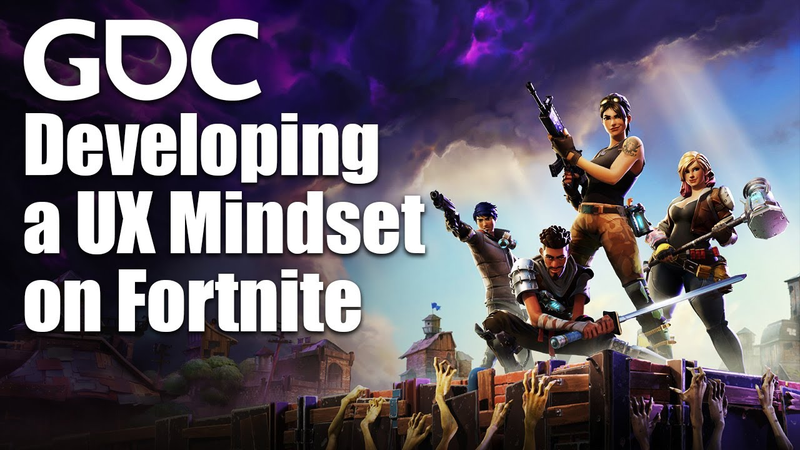
Developing a UX Mindset on Fortnite
Adopting a user experience mindset in game development functions as a collaborative philosophy rather than a rigid set of rules, requiring teams to integrate testing early to mitigate the risks associated with human cognitive limitations.
- UX testing should begin as early as possible, even with low-fidelity prototypes or paper models, to identify design friction before costly implementation.
- Human perception is subjective and limited; for example, approximately 8% of the male population is colorblind, necessitating that critical information is never conveyed through color alone.
- Cognitive load should be minimized by offloading memory tasks to the UI, such as pinning crafting recipes or providing on-screen prompts for interactable objects, rather than forcing players to memorize data.

Beautiful Game Music With YOUR MOUTH and A FEW CLICKS.
Creating atmospheric, unsettling, or ethereal game audio is achievable using accessible, free software like Audacity.
- High-quality, atmospheric game audio can be produced using free software like Audacity, eliminating the need for expensive professional digital audio workstations.
- The PaulStretch effect is the primary tool for transforming short, recognizable vocal recordings into elongated, ambient textures.
- Applying significant reverb with high wet gain settings is essential for blending stretched audio into a cohesive and immersive soundscape.

Research Methods to Improve Live Game Retention, D1 to D100
Games user experience research serves as a critical bridge between raw telemetry data and actionable design improvements, specifically targeting the enhancement of player retention from the first day through the hundredth.
- Improving player retention from D1 to D100 requires a mixed-methodology approach that combines quantitative A/B testing with qualitative insights to identify the 'why' behind churn.
- Mobile titles like Design Home and Cooking Dash successfully improved retention by using granular funnel tracking to pinpoint specific usability hurdles.
- Longitudinal research tools, such as ten-day diary studies, are essential for observing player behavior over time and refining complex late-game systems.
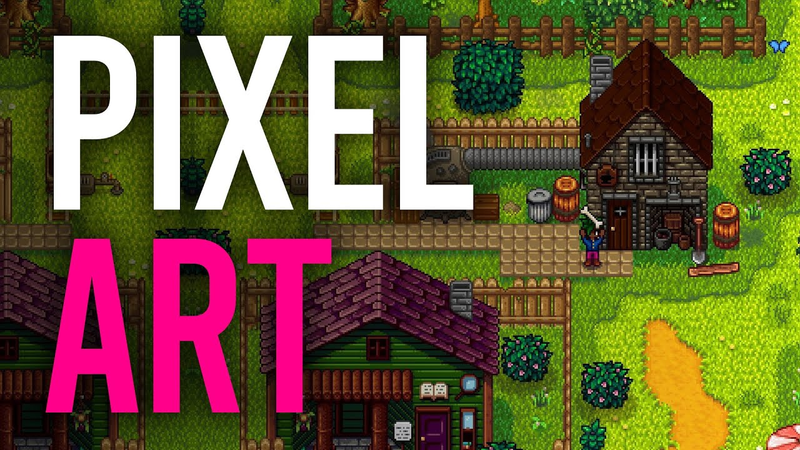
How to draw PIXEL ART GAME CHARACTERS (PS TUTORIAL)
This guide outlines a professional workflow for creating pixel art game characters using Adobe Photoshop, emphasizing technical setup and artistic principles to ensure high-quality, readable assets.
- Configure Photoshop for pixel art by setting image interpolation to 'nearest neighbor' and disabling anti-aliasing on all tools to maintain sharp, clean edges.
- Use the pencil tool exclusively instead of the brush tool to prevent unwanted softening of pixels.
- Standardize character assets within a square canvas, typically ranging from 16x16 to 32x32 pixels, to ensure consistent detail levels.
The Invisible Escape Room: Adapting Jack Ryan for Alexa
The development of interactive voice-based experiences, exemplified by the Jack Ryan Alexa project, requires a fundamental shift from traditional turn-based narrative structures toward open, exploration-focused gameplay.
- Voice-controlled narrative design requires avoiding direct or rhetorical questions, as the game must signal the player's turn through context rather than standard conversational prompts.
- Alexa skills impose strict time constraints, requiring users to respond within 10 seconds before the microphone shuts off and the session terminates.
- Developers must account for the 'parser problem' where the gap between natural language input and the game's addressable logic creates user frustration; using broad prompts like 'what do you want to do next?' helps manage this, though it increases the risk of false positives.
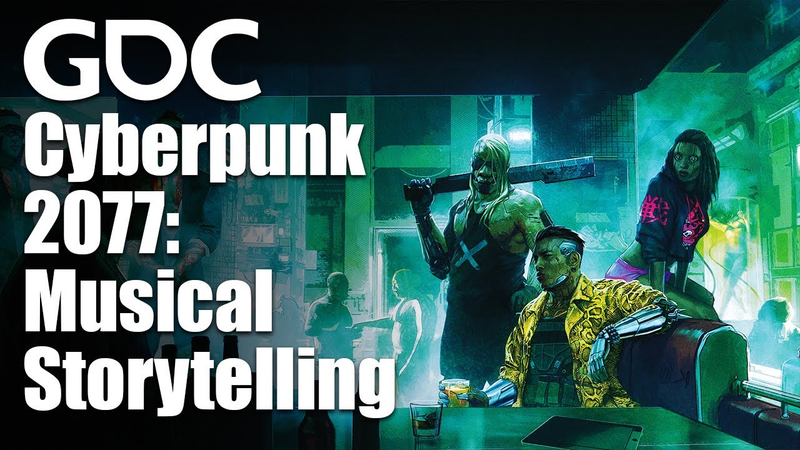
Immersing with Music: Approaches to Musical Storytelling in 'Cyberpunk 2077'
The musical architecture of Cyberpunk 2077 centers on the strategic use of bespoke, hand-placed audio assets to foster deep player immersion within a dystopian, first-person narrative.
- The development team adopted a 'hand-placed' music strategy, ensuring every piece of score, source, or diegetic music was intentionally positioned to maintain narrative control over the player's experience.
- To maintain high production quality for minor quests without excessive manual composition, the team edited existing cues and processed them through cassette tapes at half-speed with analog effects, allowing them to generate over one hour of ambient assets in a single day.
- The composers utilized short, flexible musical motifs as 'glue' to illustrate narrative arcs, ensuring themes were simple enough to be adapted across various contexts and quest lengths.

LUTious Color: Grading for Games
Color grading serves as a powerful narrative tool in game development, allowing creators to evoke specific emotional responses and establish visual consistency.
- Color grading must be treated as a deliberate, rule-driven narrative tool rather than a corrective measure for poor asset quality.
- Developers should establish a structured 'rule set' for hues, shadows, and highlights to ensure visual harmony and consistency across varying lighting conditions.
- Effective grading requires a research-based approach that references historical palettes, film stocks, or specific artistic styles to guide player perception.

HOW TO DRAW 2D CHARACTERS IN PS (10 MINUTE TUTORIAL)
This tutorial outlines a streamlined, ten-minute workflow for creating 2D game characters in Adobe Photoshop, emphasizing accessibility for developers regardless of their prior artistic experience.
- Use a T-pose reference image as the foundation to establish accurate character proportions before beginning the construction process.
- Construct character silhouettes using basic geometric shapes like circles and rounded rectangles to prevent visual clipping during future animation cycles.
- Select character colors based on the intended game environment to ensure sufficient visual contrast and ensure the character remains distinct from the background.

What I Learned After 10 YEARS of Game Dev
Drawing from a decade of experience in the independent game industry, this analysis outlines five core principles for achieving commercial success as a full-time developer.
- Prioritize marketability by letting marketing strategy dictate game design before production begins to ensure the project has a clear, viable audience.
- Build an audience early by cultivating a following across social media, Steam wishlists, and email lists to facilitate direct communication during product launches.
- Adopt a modular asset workflow to significantly reduce production time compared to traditional, bespoke, hand-drawn development methods.
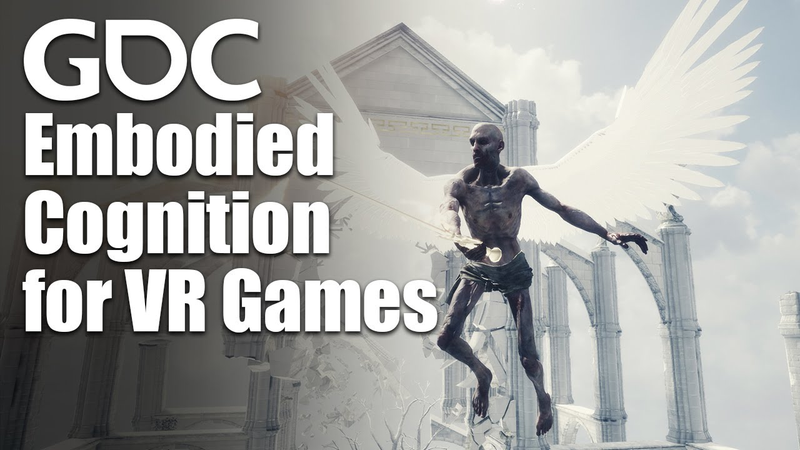
Beyond Gamification: Embodied Cognition for VR Games
The design of immersive virtual reality experiences relies on the integration of embodied cognition, where physical movement and kinesthetic engagement replace traditional controller-based inputs.
- Prioritize embodied cognition by replacing traditional controller inputs with naturalistic physical movements, such as leaning or specific hand gestures, to enhance player mastery and role-playing.
- Align virtual object interactions with real-world muscle memory by utilizing the cognitive science concept of 'marking,' where virtual items act as props that guide intuitive physical actions.
- Design haptic feedback using normalized animation curves to modulate intensity, treating the feedback with the precision of musical dramaturgy rather than relying on complex audio waveforms.