1 free read left. Create a free account for unlimited reading + AI research.
Create free account
Brain, UX & Design with Celia Hodent | Game Dev Unchained Episode 227

Key insights
5 takeaways- 01UX design functions as a bridge between developer vision and player perception by applying cognitive science to mitigate subjective bias and ensure intuitive mechanics.
- 02Developers should foster intrinsic motivation by applying Self-Determination Theory, which focuses on satisfying the psychological needs for competence, autonomy, and relatedness.
- 03Immersive technologies like VR and AR require a shift away from traditional heads-up displays to address physiological mismatches between visual stimuli and the vestibular system that cause motion sickness.
- 04The industry must prioritize ethical development and inclusive hiring practices, such as remote work models, to ensure games remain equitable and accessible to a global audience.
- 05Inclusive design is a functional necessity to prevent systemic exclusion, requiring developers to account for diverse user backgrounds and physical characteristics like skin tone.
Ask AI about this video
Transcript
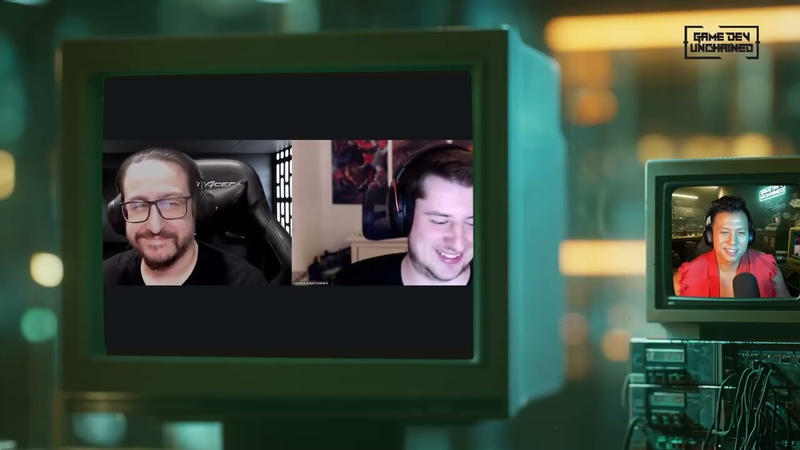
I [Music] what's up everybody welcome to another episode of game dev Unchained the number one podcast about game development in the lifestyle thereof I am your host Brandon fan and I have a special guest with me Celia Celia I'm doing ok how about you good good good as good as we can be in this horan team yeah so this is actually part of podcast where I ask our guests which is yourself to introduce yourself to your audience out there who you are where you from and where you hidden ok so my name is Celia I am French originally and I have a PhD in psychology and in the past over 10
years now I've worked in the game industry I started at Ubisoft in France in Paris then I moved to Ubisoft in Montreal then I moved to the kazars I worked on a bunch of Star Wars games I never saw the light of day like Star Wars 1313 and then after Disney shut down LucasArts this is when I moved to Epic Games and 2013 and I became the director of user experience at epic and I worked at the studio level so I worked on Unreal Engine and I worked on a bunch of games on different platforms including fortnight's I worked very closely with a fortnight team and I left epic in October 2017 and ever since then I've I'm independent consultant and I spread the youth love everywhere I can to explain what UX is all about what we why we need to have some knowledge and cognitive science to to make better games and why it's important to shift to
the perspective of our players to make better games and that's that's pretty much in a nutshell who I am and what I'm doing yes UX is actually a subject that I have very little knowledge about if you can expand on that a little bit further to help educate the masses and why it's important for game to them of course yeah so you acts it's becoming very trendy but a lot of people when we say UX they think UI so the user interface UX is largest UI UI is a big part of the of the UX of course but UX is it's basically to shift from our own perspective as a game developer to adopt the perspective of the player because when you when you create a game you have you know your own what we call mental models so you have your your own things you know your your own thoughts and and
you have you have your plan in your head and you know where you're headed and so when you develop the game of course you have to implement all these ideas that you have in a system that has constraints you are using a specific engine to make the game and you don't have infinite money or the time and you don't have a lot of people to do that and so all of these constraints are shaping a little bit your ideas as you implement them and then fast forward you ship the game and the players are coming over where their expectations of the game if they heard of your game and they're gonna they're gonna figure it out and they're gonna make up their own mental models and what they believe the game is all about only through interact the interaction with the image of of your game of the system so everything that they can perceive and interact with so of course it's gonna be DUI so the the elements on
screen it's gonna be the arts it's gonna be in a design so I mean the music so we have the controls through all of that the players are gonna have a specific experience of the game and what we're trying to accomplish is make sure that this experience that they are having is the one that the game developers want it for them so it's about making sure we align that because we ultimately like we're making games for other people that of course we most game dealers they they make games also because they enjoy it and they want to apply it themselves but we make games for other people that don't know all the of the game that don't you know they can be in our mind so we have to convey a lot of elements to players and we try to ensure that these elements are properly conveyed so they can intuitively get on board the game without having to read countless instructions that are boring and so and then experience what they what we want them to experience so if you make a horror game you want players
to you know be stressed out and and you know have jump-scares if you're making a tactical game you want players to engage into tactics to make a collaborative game you want players to have fun as they collaborate with others so this is really what we're trying to accomplish what we're trying to do is what players are experiencing and to do that we adopt what we call a us a UX approach which is basically understanding a little bit how the brain works and how people perceive things because we are all different and we are all biased and so we all perceive things differently and so it's hard for game developer to detach themselves from their own perception and understanding of the game to adopt the one of their players and so this approach is all about that it's bringing the science so cognitive science and the the framework like looking into principles of
usability the ability of the game to be used but also engage ability the ability of the game to be engaging is a game is not just a tool when you you know this discover a new app or download a new tool for work you need to you need it to be usable you want to be able to understand it simply you know without being like what the hell is is not working where you need to click this is line Twitter is boring and we get angry and assertive about problems so we look into that for a games but it's not it's not enough because games are not a tool we it's the whole point is to interact and have fun as we interact with the system so there the engage ability part is really crucial it's important for any tool that we develop of course but for gay it is the whole point to be engaged in this activity so it's important also to take into account you know motivation how we get motivated to to do certain
activity or kyumin's what they like to do emotions you know gain flow make sure that we onboard them in an intuitive and in the non boring way and we allow them to quickly understand how the game works and and be able to enter that flow and when you're super into the game and you're just having fun so it's all of that and to accomplish that well throughout the development process we use a scientific method which is insuring as much as we can that we're not falling for our own biases because we're humans and when we look at a situation whether it is making games or participating and building a society we look at it through our own lens and so we're we're missing out on how other people perceive things and we all perceive things in a different way so it's it's by using the scientific method
it's it's allowing to we remove as much as possible our own subjective biases so we can look at what's the problem what are the problems in the game objectively as objectively as possible and so that we can concentrate on the the main problems that are happening and we can fix it so we can again offer the experience I wanted to offer to players that's it's a mindset if you will and and it's if you have if you're dubbed this mindset comes with a bunch of tools and framework and principles and methodology to help you get there yeah I definitely understand it more for sure I think I was first introduced to this idea of UX by valve was kind of extending their their ideas of input they were experimenting with emotional
input as part of it like they were measuring the kind of devices for heartbeats to help with of the scares varying out the gameplay and this was a few years ago where I finally felt like the industry was having a turning point where they were going beyond the story and the visual output so if anything I feel like our medium is getting responsible or expecting to be responsible for how we communicate to others as visual fidelity matures and we're progressing as an industry there's a lot of expectations that we are feeding into the player and what they walk away were from it is more more than just watching a movie then then reading a book I feel like we
get to the point where I always compare to the matrix we use a RvR we have all these senses are kind of put into a system for virtual feedback it's a lot more grander than any other type of mediums it's the input of the pliers to move forward so without that input there's no game so that's the reason why players need to understand what's going on and make me have choices and and and through these choices they can experience something that is fun is this a space that has been growing because of technology or has it been because of more demand in other sectors no it's
been there for quite a while it is it was not called UX at the beginning but it was called human factors psychology like even objects like if you have a bottle of water and you try to open it you know you have this this little things that to help your grip to open the bottle and the bottle is usually narrower at this at the middle so you can hold it that's thinking about user experience it's thinking about how we can make that object more easy to use so you can more easily open it up to do what you're want to do which is drink doors as an example that is often used as if if you see a door with a handle you're gonna expect to grab the handle and pool and sometimes some doors needs they need to be pushed even though they have that handle but that's a bad user experience because they are signal is something
that is actually not the way they work and so that's annoying because you would start bullying like oh I need to push and so this is the same principle but of course with computers it's it's shifted a little bit it was not physical objects it was all through screens and and and this is when we started to call it human-computer interaction so making sure that humans can understand how to cut you can interact with computers you know like the mouse is a good example of a big step forward to interact with a computer and make it easy for for people like the icons the iconography the little windows to interact with the computer and I'll just having to to to type code about having an interface so that you can accomplish the goals with the computer without having to code because that people don't know how to code so all of that is making music streams better in terms of its usability
but if you think about Apple I was saying hello to their users that's about engage ability because now you have a connection with the computer it's not just a computer it's a bad computer saying hello to you so it's building up emotion or a thing I could be iPhones and that the fact that it's it's super slick that for the first time that it came out it's it it did not compete against the blackberry because they had better or more functionalities but it was more interesting to use like emotional to use just one button and then everything is on the touchscreen all of that is UX all of that is thinking about the experience of the year and Apple is a very good example because the person who coined the term UX was actually VP of Apple at some point in school then Don Norman and is a UX designer and he's got a great degree in the kind of science as well and he
coined that term because he wanted a term to account for the whole experience and ones that I have with a product but from the first time they hear about it to the time that they maybe need help with a customer service so it's not just interacting with the object itself or interacting with the game itself is the first time you hear about it or if you go to an Apple soul I think about the experience in an Apple store like everything is made to make you feel that you're special and all the the stuff is really looking good and people coming to you and immediately they get you check out all of that experience is really thought through and then you unboxing a Mac is part of the experience and onboarding the with the Mac and the Mac is telling you what to do and it's a really a cool process that now a lot of other companies are catching up with but it's it's it's very different from what we were used to it you had to look at a
manual to figure it out now the system is onboarding you to use it by itself and then you use the system in the game like you downloaded the game like from a launcher like the experence that you have on the launcher as part of the whole experience as well and you play the game and the things that you understand understand if it's fun not fun all that is part of UX but also when you finish playing the game if if you contact me on the community manager on the forums that's also part of the experience that you have with a bigger system like the ecosystem of the the company so all of that is the user experience that's it's very it's very broad and it's not new it's been here for for a while and it's and it's here to stay is it sounds like it goes all the way back since the beginning of interactions and thank you for coming on in educating
yeah definitely definitely huge like we're talking about different interfaces we're talking about even gadgets the human experience beyond this game application it's actually leads into my next question the last couple years we're seeing a lot of game tools are for game thinking or how we interact with things in the game industry can extend it beyond than just making games in entertainment a lot of these other companies are starting to adopt a lot our tools but our way of approaching the problem how has UX kind of helped besides the examples that that you have laid out before us how specifically are they taking us lesson from games to apply a UI UX to their own industry oh you mean how the industry outside games that are using game UX to improve their stuffs is
anything well I actually have a lot of people asking me that question because a lot of companies they won't make their products more engaging and and games are good games are engaging and so they think that they can just like suck up all the good nutrients from games and then just like apply to their platform so what games do well is as good games because they're the kind of games that don't do that well is that you are intrinsically motivated to play the game it's it's not just the badges because this is what I call gamification and a lot of companies outside the game industry they think oh yeah we need just to have badges and that people level up and then that's gonna gain if I the platform yes this sure has a role but that's extrinsic motivation you're just something to get something else it is certainly useful and and we use
that every day and that's cruel and at work and and in products but it's not the essence of game is that really it's that it's what we call an autotelic activity it means that you want to engage with that activity for the pleasure of doing that activity that's not a and there's a theory of what called intrinsic motivation so the things that you do for the pleasure of doing them that is called self-determination theory or as DT for short and this theory explains that we are more motivated to do something when we when this activity satisfied our needs for competence autonomy and relatedness so competence is the need that when we do something we need to see that we're progressing that we're getting better at it they say that you're starting to play the guitar and you're rehearsing yeah that's specific to door whatever and you know the more
you rehearse you see that you're getting better at it that's encouraging that makes you that's not a meaning that miss you engage more than an activity and so it's often skill based that doesn't have to be necessarily that can games if you think of RPGs it's the more you level up the more you have skills are unlocked that artificially makes you more powerful within the system but still you progress and you see that you're progressing and this is the main reason why progression bars are so powerful it's done just because you know that oh I'm gonna soon be a level-10 I'm gonna have a super cool reward but it's also because you see yourself progressing and that's very satisfying in a lot of games catalyzed a lot on on competence because you get better at the game you level up if it's a skill based game the more you you practice the better you're playing it so a lot of games do that very well
whereas sometimes at work or you don't necessarily feel that competent you don't let's say have a lot of feedback or you don't necessarily know how to do things better and so that that's the thing that we can gain from games not just the leveling up thing but ensure that people feel competent into doing what they that activity the second one is autonomy so autonomy is being able to express yourself and to also solve problems the way you want if you look at very big games that are some of them are very offer a lot of autonomy you think about minecraft or I think about GTA it's these are sandbox games it means that you can soul from this the way you want and you can just stick tinker around with with the system and that's very powerful and we love that so now you have a lot of games that are more than linear but oftentimes you
know you can choose your character you can choose your skins you can choose your dance moves so that gives you a way to express yourself so games that are allowing to express yourself are more engaging same thing I work if if you are able to sold approach some problems the way you want it's more engaging than if your boss is telling you all right now I do this and this and that and in that way then I'm telling you you need to do it that's way more path empowering to say okay this is our objective figure way to you know get to that objective in the most efficient way possible then you feeling more empowered because you decide how you're gonna get there you have an objective to reach but you are empowered because you are you have autonomy to how to solve for that problem and the last one is relatedness so we are very social species we need each other to survive in this world and
all people forget about that but we need each other and because of that we love to have activities when we can play with others now a lot of games capitalize on them all any multiplayer game capitalizes on that there's a lot of focus on comparison so competitive games are of course quite engaging but actually cooperation is even more powerful than competition and any even Mike look at sports most sports are team-based sports so yes there's you compete but it's a team so you collaborate with your team and you compete with another team so anytime you have games that allow for that and and making sure that that how you play with others is meaningful so our peachy's aren't very good at that because it's not only you play with some people but everybody has a specific role that they need to play and when they do that properly they feel competent I say
you know you're you're the take and you get all the aggro and and fires thank you or you're the healer and and you kill someone before that person died that person say thank you and you feel competent because of that and everybody has a role to play that's very specific so this is really that the essence of games in ER there's many other stuff but otherwise I'm gonna talk forever but this is something that companies need to understand and this is what games good games do very well and that we need in more products it's not just badges that is are important because they give you you know rewards give you feedback if if you're accomplishing something or you found a treasure it's giving you feedback that you're competent that you did something good in the game so it's that dichotomy extrinsic intrinsic sometimes you know the very the lines are bit blurred because what's really
intrinsic what's really extrinsic you don't necessarily know but if you only focus on extrinsic oh yeah you're gonna do that just to level up and progress it's most of the time it's really not as compelling as having like the bigger picture and make sure that people are intrinsically motivated into doing this activity well speaking of trying to get motivated it's great to kind of great talk about the psychology and more than ever during this covert world a lot of people are facing a lot of these issues or motive of meditation or simply from a job perspective just to interacting with people but doing remote working and more and more people are stuck at home facing issues I think gotta celebrate than we normally would I would love to hear your
thoughts I know this is kind of taking a step back from applications with games I feel like this discussion of this will actually lead back into any creative outputs later yeah yeah so there's a lot of stuff going on the current hurts crisis so yes there's the fact that we a lot of people all of sudden could not interact with other people physically so it's that's also put an emphasis on how technology can bring us together including video games and it's and thank God we had that during the current of arts crisis like a way to see each other and not just have them on the phone we'll see each other and and be able to still have that related that's going because we need it as humans but it's more I mean there's a lot of stress going on and then people losing their jobs and people being sick so there's a lot of stuff on top of just like the the
relatedness hard because it's also proving that remote work works and and we there's a lot of benefit from that it's more inclusive to make sure that we can work remotely rather than having people all the time in the same room so this there was some benefit of some benefit you know what he said was it was emphasizing that there are many things that we're doing in our society is not inclusive and it's not useful it's not good for the environment so we can this it's it's it's happiness seeing these things and hopefully we're not gonna revert probably be back to normal once the crisis is over and we can keep doing that and keep being inclusive and and make sure that people can can collaborate remotely because that works but yeah the stress and the distraction is not just that is the politics and all this stuff what's going on and you know when people dine around and people being sick sorry so it's a
there's a lot of layers there that are contributing to the fact that we were distracted and it's hard to stay concentrated right now mm-hmm yes it's definitely a lot of issues happening at once even with friends who's been remote working for or excited about remote working finding a sudden change of their whole life so on top of being full-time teachers it's it's a lot to ask even for me I've been fortunate enough to be remote working or working from home for about a year before Kove it happened so I'm used to a certain lifestyle even with me being stuck at home longer or or not being able to go outside to do for recreational needs it's three hundred percent way wavy intense then what I was used to so I can't imagine about people who were an office all the time and it's
suddenly being in the spa yeah we're not just working from the home like we we were sheltering in place and and and you know how where we're dealing with a crisis that's there's a big difference so I was not just working from those and yes we could not take a break in and go outside and go have a beer or someone or just like you know in many places that parks were closed so it's hard to regenerate like we need to to be able to unplug and go for a walk it's actually pretty good for for our brains to to uh you know stay sharp and then stay and do the mental health and also be creative it's really important to just go wandering outside and look at nature and when you can't do that and and and for all the people like we're living in like in a small apartment with a lot you know a lot close relatives with them it's it's it's very hard for for many many
people so it's it's yeah now I'm just working from home before we continue this week's episode let's have a word from our sponsor more and more companies are working remotely but parsec for teams let's game makers break free from the CDO and work from anywhere you can use parsec for professional and personal use to connect computers at 60 frames per second Ultra High Definition video streams with super precise inputs for mouse handling and controller support working together is as simple as sharing a link with a teammate you can then share files or view work or even work together in a single program it's the closest thing to being in the same studio I actually use parsec for running G ducts this year and it was the greatest way for me to connect to my main computer and for my team to work with me to deliver the best virtual game dev conference so I definitely see a huge use for remote
working but also playing games with each other the biggest thing with the remote desktop is that there are security concerns however parsec four teams ensures that only people on your team has access to your projects connections are peer to peer and encrypted never touching the back end and futures two-factor authentication and other security measures that gives you a peace of mind so like mentioned before the best use cases using parsec for teams is perfect for level design animation game development play testing and more unless you seamlessly connects programs like unity unreal Maya cinema 4d and others so hundreds of triple-a and indie studios are already using parsec for teams to stay connected to their work so go check it out at parsec gaming comm forward slash teams it seriously is one of the easiest and fastest and reliable remote desktop applications I've ever use and it's perfect for gamers and game developers alike so go check it out in
the link description below now back to this week's episode so what I'm wondering as well as that we're going through a crisis that I haven't faced at least throughout my existence and many people this is the first what I'm wondering coming out of this is what kind of type of things are we gonna expect because we are a creative industry and I know there are many games that have been playing before that are are planning to ship but I wonder what Artur expressions are gonna look like after this and if any if it's gonna be gonna be small celebrative or that's a good question I think we're all gonna be happy to see each other again to the next I don't know whatever mix comforts are we gonna have first this it's gonna be Jeanne see we'll see but of yeah I think hopefully and would it would have
taught us that we take a lot of things for granted and we should cherish that we have and you know connections with people is really important stay healthy is really important having that notion that I love suddenly you know if you start being sick in your life all of a sudden like it's shifting your priorities tremendously and and and it's it's yeah mmm it's it's hey hopefully we have reminded us that a lot of things are precious and we're just taking them for granted mmm I mean other generations went through horrible wars so it was a bit different that we're not missile you stuck at home but uh you know and that often times you know I'm from friend Sarah my family was telling me when you had the curfews and you hear the sirens you have to run to the subway and stay there and and I mean it's yes it's it's
traumatic when we're going through but at least we're not experiencing the horrors of war and being out there and maybe getting shot or seeing someone close as a shot it's so that's the reason why I'm top of that all the the police brutality and and people are just fed up of all of that and it's it's it's it's a moment that we realize that maybe we should reprioritize things a little bit and and and you know humanity is what's the most important this is who we are and so yeah no truth that's the answer that you were expecting but yeah I mean the pros testing and the police brutality I feel like um with every when
we went through two minutes of really stoic rest and of course this it was the spark that really made everyone upset Elyse in the United States on my side I've never been very political or or have enough knowledge to speak on that matter or but it really opened my eyes what truly the government is is able to do in times of need and really exposed a lot of the problems and the problem and the cracks of how we really are alone when things do hit the fan well thankfully we're not going through a world war but because of that I feel like 50 50 plus years of laziness I feel like like in a way we kind of let things went dormant yeah then was pretty much
people oh yeah this is good and then the others you know there's too tired working and making and needs and meets to you know it's just hard to after your days over if you're just trying to get on with your life to new get out there and protest for your for your rights and that's the reason why you have such a status school until you know you have the movements then the it's really the balance is really too off and and there's something happening and you had that 40 million Americans that are unemployed it's and when you're in the quote here is the often times you you don't have any social secure health care and that's really rough that's really rough yeah I think couple with that in the unemployment rate this month too
in the United States have been lifting up restrictions to keep people out of their residency I feel like even without the what has had what has happened a lot of people would have reacted eventually the same way because there wasn't really a long-term plan of out of this pandemic mmm as artists all we can do is be out there in protests and also capture the emotions that is going on right now and express it in a way that is within our medium we are passing on to future generations and give attention to a very powerful way to challenge the status quo there's a lot of very great art pieces are when people were shocked or hated it or because it was challenging them in
their perception and their status quo yeah it's a way to confront a perception that it's not yours like they were saying earlier like we all have theirs their reality and we all have different perceptions of it depending on that background on who you are our culture that's what art is amazing it's it's a way to be able to confront different perspectives rather than just our own and and - you know challenges and then to you know push us outside of our comfort zone and challenge the status quo so yeah all right all right as a immense role to play in there yeah I and I completely agree with you and this is actually a good segue into the next topic that I want to talk about we're talking about human interaction with the world in the virtual world and being able to respond to that and throughout the years what we seen
some stumps within using the controller to nitendo leading the charges with how you interact with the we now there are game pads and of course via our introduction so what are you seeing with this new level of interaction VR and AR with a are being very quiet we're in need of hardware for these tech companies to really fully realize it I think the phone is neat trick but it's not there yet in terms of how VR is getting people excited so I would love to hear your thoughts about that sure yeah every time you have a new technology it's it's you have to learn how to interact and with the system and what's interesting with with these new technologies is they're removing barriers rather than you know and when
we wouldn't play video games before like the Atari I just like when when thumbstick and then when button and that was simple enough and then you know we have like be controllers it's tons of button like over 30 ways of pressing all the buttons so that's less usable and then not even to mention like it's less accessible and the idea of the new technology is to remove these barriers and there is going to be as easy as as I mean at least we're trying to make it as easy as just interacting in in real life so trying to match our conventions that we have in real life into a system is one of the best way to make it usable because then you don't have to to learn how to interact with the system if it's if you're interacting with that system in the same way that you're in you interact with the world and you already know how that works so we're not entirely there yet and and the problems
with VR is you have a lot of gear and you need space so they are as requires less space and the whole point of a are is having it in your part get or on okay glasses so it's it's much easier rather than gearing up and maybe you have haptic feedback in VR and having the gloves and all that but it's much more immersive because we are is really immersing all of your senses it's it's hard to get distracted like with your phone and if you're commuting it's gonna be very easy to be distracted because stuff that's happening you hear stuff you need to go down to that station VR it's just like when you get to the movies even then movies you can check out their phone where people should not do that I have the fear but in VR there's no way to do that because there's no way to get distracted from outside and and humans
are very easily distracted and so the power of ER is is not only all the things that you know you you're really sometimes you really feeling it like you're falling or that you're there you you're really in that environment but on top of that it's really helping Pires focus on what's going on because it's gonna be very hard to get distracted you know on this someone is trolling you and just poking you that's you play but that's the reason why VR rooms are really cool because you had like a whole space and you know it's safe you know that I hurt yourself I think it's gonna be a challenge to get that in people's living rooms of course you're gonna have people gonna have PR but the the I think what's powerful is to have the whole room dedicated to that so that you can be fully immersed and you know it's a safe space you know you know you can't get hurt to really experience it at the
top level but it is creating a lot of new challenges in UX like for example there's a lot of information that we convey in the HUD so the heads of this place all the stuff that's always on screen as you play again in VR it's very hard to do that because it makes people sick because you know you you have more depth when you play in VR so if you have like a overlays brain it's that makes you nauseous so this is complicated to do so it means that we we need to rely more environmental you I already called I Jetta kits it's really part of the environment but if you do that because you don't control the camera if the player just do that and there's something going on here how do you draw attention to the things for the game itself so that's creating a lot of challenges and a are the big challenges is multitasking we can't multitask we're
very terrible at it we believe a kid but we are terrible at it and the the big problem with the with AR is making sure people are not gonna fall or trip on something or like the worse case is get killed because they are distracted by their phone or if they're with the glasses you know they're distracted with what's going on and the interface there and they're not able to focus on the real world and the real word can be dangerous and if you're working and not looking at where you look where you're walking at too so yeah it's just really interesting because it's it's creating new ways to experience things but is bringing new challenges and that's what's fascinating as well it's really interesting yeah and I kind of want to if you can paint a picture of how important the five senses are for full immersion in full
believability and of course with VR you got your visual you got your audio and if people go a little further with haptic feedback but that's not full touch and feel though you can kind of graph or give a percentage of understanding even though we don't need a hundred percent of all our senses which is the ultimate matrix right what is the the measure here that game developers that should be my for think about for a full experience that on me like if that's the case I like how far away are we from the matrix pretty far out so first of all we don't only have five senses yeah you mentioned hectic so haptic is close to touch but we have actually many many more senses that for example you can sense temperature you
can sense your buddy and space this is what we call proprioception so if you close your eyes you are able to without looking at what your head is doing you're still able to touch your nose unless you're drunk but that's another problem but typically we are able to feel our body in space this wonderful proprioception we also have the vestibular system so it is that the inner ear that knows you know if you are upside down oh not upside down and so that's one of the main challenges in VR is because in VR you're gonna have a mismatch between what your eyes are seeing and what your body is experiencing so if in VR for example let's say you're on a roller coaster and you and you just like go down super fast your your brain is gonna say Laurie oh we're falling people like likes hanging there but then your body's like milk I don't you know proprioception or your visceral systems like no I'm standing still this is not what's happening is so this is that min match missile actually I can create nausea
it's the same thing is in your in your car because inside the car it doesn't feel that you're moving that much and then your outsides moving a lot so that's the reason why for example we you tell people to take a bottle of water into if you're feel sick in the car and look at the water moving around as you're you are turning around so that's happening with nausea so these are the challenges that we we have in in VR because we can't get 100% immersion with all the senses because some of the senses proprioception the vestibular system we can't just simulate that we only use like haptic a little bit and but it means that you have to pull near put on a whole suit if you have if you want to have full haptic feedback but full immerse you have full immersion with veal and audio for sure the rest is where it's gonna be
complicated because we have that over 30 senses like maybe not 30 but we have a lot we have more than 20 depending on though how you you categorize sentences and so you're now gonna be able to recreate all of it and be are your your really fully immersive in immersed an instance of visual senses and audio but on the rest so that's the reason why I was telling that Crooms where you have maybe wind coming at you or sometimes in VR spaces you are on something that thing is moving with you like think Star Tours it's like it's like VR because you're all in an environment and you everything completely immersed visually and audio but you're in the thing that is moving even though it's not falling down or speeding up but it's moving enough that it's a much more immersive experience because you have that
proprioception and vegetable system that is matching what you're hearing and seeing and so VR by itself is not gonna be able to do that that's you're gonna have to need more stuff to be able to do it and that's the reason why I I believe I may be early I believe that VR is much more powerful in an environment that it's created for it with more stuff that you can really fully be worse it's still very immersive is just like put the headset on and play for sure you can have fun but it's never gonna be like the level of metrics you're talking about where the VR headset at home no but somewhere far from that I think a lot of these companies that are excited about that prospect or or trying to bridge the gap of location-based and entertainment are trying to do that with that have these vigil spaces with these goggles and you kind of walking through it one subject that I always am interested in but know nothing about is the idea of dreaming right so I feel
like a lot of developers or a lot of tech people behind this technology are eventually trying to drive towards two people or use I mean everybody kind of has their own devices in a way at night when wait we do have total engagement immersion within our subconscious I wonder how much of that we can study to bridge Britt over while we are conscious and trying to achieve that because I feel like I a key that we need to unlock somewhere in there at some point because we can control it it's a
control environment you can some kids they love horror stories because it can control you can put down the book they can you can we can turn off the tablet television they do anyone watch those and now turn it off so your nightmares there you can't control them like some people can like lucid dreaming and that's super interesting but that's the problem with dreams and nightmares it's completely uncontrollable so that's an interesting question I've never really thought of that but it's yeah so we don't even know what dreams are for it's it's there's some notion that it's this is when we consolidates the things that we learn during the day so that's why we need to sleep regularly that's really important for the development of kids of
course but also battled hood we need our sleep because otherwise we're not consolidating all that and if we're tired we're not able to function but beyond that we we don't know what dreams are for and it's so very very serious like the brain overall is still very series so yeah you gonna don't hold your breath I'm experiencing it's gonna take a while before you even understand a bit better what this means in make a whole experience that it's yeah I don't know if I want to experience that by the way sounds really scary one little one last question and I kind of like what the read out there I think
it's a perfect to ask for your your projection of what the next five years or ten years if it has changed with recent events or are on track for achieving great things [Laughter] yeah yeah I mean there's a lot of things like technology-wise super exciting everything is getting so seamless and yeah there's a lot of new things that I'm gonna be able to do experience and that's exciting I'm not sure for on track with what we should be doing because you know at the end of the day we're humans and we need a human connection and we're not on track with inclusion that much I mean that's getting a bit better there's much more effort towards accessibility I know
there's a lot of people super excited about the Last of Us 2 because there are so many accessibility options in that game that's finally I would think that seriously and and we would make it have it but it's so I mean that's still not very broad there's still a lot of games that are not accessible there's still a lot of games I'm not inclusive there so what games are not made with a diverse team and so there we still have a lot of stuff to do when you just talk more about ethics because we are offering all these trying to offer all these experiences and we know that that video can sound video games can have an impact you know everything you experience is that I have an impact on you because the brain is plastic and so by definition that's going to changed you it's gonna change you but some video games can have a good impact and some video games can have a negative impact in some conditions and so we need to to
think a little bit about what is it we're offering and and to think about the ethics of that because we don't talk about ethics enough and we don't talk about our responsibility as content providers it's I mean there's so many things that that make it were saying earlier like art is a powerful way to challenge the status quo venus is an art form and we need to understand what the discriminations we're reinforcing in some games and how we can challenge the status quo because we can it's a powerful medium and and there there should be more reflection about that you know what we're condoning and in the content our game and what we need to challenge so we you know we can
participate as an an art form in a culture to make the world a better place and be more inclusive and unfair so yeah I'm not sure we on track [Laughter] people are talking yeah I love it has to do with the accessibility and making more affordable for people to buy in and check things out as the industry it just feel it definitely is going at a slower pace but especially when it comes to inclusion and I'm guilty of this oh well within the industry we tend to refer friends and friends usually within your same circle and the same people and so if you don't go beyond that to avoid that you're just gonna have the same issues with teach companies and in the end you're just
gonna have the same product that appeals they're very certain people and and I completely agree with you that that our medium is that an extraordinary position to give light and change and bring big issues to to the masses and not being complacent and not you know no just because the you know the are games that you just try to exploit you know some mechanics to make people want to come back and buy stuff and and you have games you just I want to be violent just to be violent there's no necessarily a moral morality discussion happening in the game that there's no game play impact on it you know it's it's it's one thing to portray violence in your game there's nothing to glorify rape or our
brutality against certain populations and which are the problems that exist today and so capitalizing on that is disgusting so if you want to portray that into a nice variety of movies that makes you think about all that that are really interesting but because it's it's not just portraying this violence it's making you think about it and and you know try to get a perspective and again challenge the status quo mm-hmm so yeah this I think we're still because video games are being treated such a set of sub category about form for so long maybe this is the reason why we we don't think of video games I are you know they have something to say and and some games do that and amazing and I love that the them in T developers are doing that way
more and and that certain why I love playing any games because a lot of them are really addressing this thing than talking about difficult things and and you know again challenging us but yeah I think we need more of it yeah I'm very interested to see what happens after it's this pandemic and everything I really do feel remote working is the gateway to lending a lot of these voices to get in these studios without having to be locked down within their geography I think a huge positive step and if anything these studios we're considering doing this are forced to doing this now and they have infrastructure now and if anything they are welcoming talent developers more so than tell people just it's for us to challenge that to say hey Lenny wake up
that's that's that's what the hell and then we'll use the these others ways of telling them that this is actually useful for that so I mean we have another year it feels like yeah it's so gonna be quite challenging I think well we'll see but yeah I mean remote work is it's good I mean it's less polluting and it's allowing it's more accessible again that's so there's there's no reason why we should not embrace that but then you know I I understand the need to be in contact with people I do workshops and I can tell you it's harder to do a workshop remotely it's not impossible but it's hard because I don't get the feel of the room when people get tired so there's there's I mean we again we're human we are used to that but there's no need to have these moments all the time
as we work there's a lot of time in game development really you just like most of the time works where I are death and we're discussing on slack or whatever and discord with people anxious that the room next door yeah so matter if your snicks doors like a thousand miles away I know you can't but you don't know my place not really educating us and okay well thank you
well first of all Thank You Brendan for for having me and yeah like I say jokingly York says iPod it is a philosophy and it's it's really about shifting away from my own perspective to have a thing about how other people are experiencing what you're making so it's important for games it's important for society and it's important for inclusion and so that's the reason why the understanding the science behind it can bring people together and can help breaking the barriers and and understand what systemic racism or sexism is because design is never neutral when you design something people are gonna perceive it in a certain way it's gonna encourage them to interact with it in a certain way in there's an example that is very simple that I love to to talk
about if you're just stuck in your bubble and let's say you're in Silicon Valley and you develop soap dispensers and you're like all why dudes are on you and like all right this sub dispenser works well and you tested with yourself that cool it's ship is working well and then some person with a different skin complexion darker skin tries to use it and it's not working because no one thought of say on different skin complexions this is about breaking bubbles it's about at sincere design that is making it not usable for someone else so that's just a soda Spencer it's the same thing for healthcare it's the same thing for access to opportunities and so we need to redesign that so that it's diverse and accessible and inclusive to all thank
[Music] you [Music]
Summary
User experience design functions as a critical bridge between a developer’s intended vision and the actual perception of the player. By applying principles of cognitive science and the scientific method, designers can mitigate subjective biases, ensuring that game mechanics are intuitive and effectively communicate intent. This discipline transcends simple interface design, encompassing the entire player journey from initial discovery to long-term engagement. To foster genuine intrinsic motivation, developers should move beyond superficial gamification and instead leverage Self-Determination Theory, which emphasizes the psychological needs for competence, autonomy, and relatedness.
The industry is currently navigating significant technical and ethical shifts, particularly regarding the integration of virtual and augmented reality. While these platforms offer unprecedented immersion, they introduce complex challenges, such as the physiological mismatch between visual stimuli and the body’s vestibular system, which often results in motion sickness. Addressing these hurdles requires innovative approaches to environmental interface design and a departure from traditional heads-up displays. Furthermore, the evolution of these technologies necessitates a broader focus on accessibility and ethical responsibility to ensure that immersive experiences do not inadvertently exclude users.
Ultimately, design is never a neutral act, and failing to account for diverse user backgrounds can lead to systemic exclusion. Inclusive design practices are essential for breaking down societal barriers, whether by ensuring technology functions for all skin tones or by diversifying talent pools through remote work models. As artists and developers continue to address shifting global perspectives, the industry must prioritize inclusive hiring and ethical development to ensure that games remain a positive, transformative art form. By centering the user’s diverse reality, developers can create products that are not only usable but also equitable and deeply engaging.





Comments