Game Design reports and market data
Documents
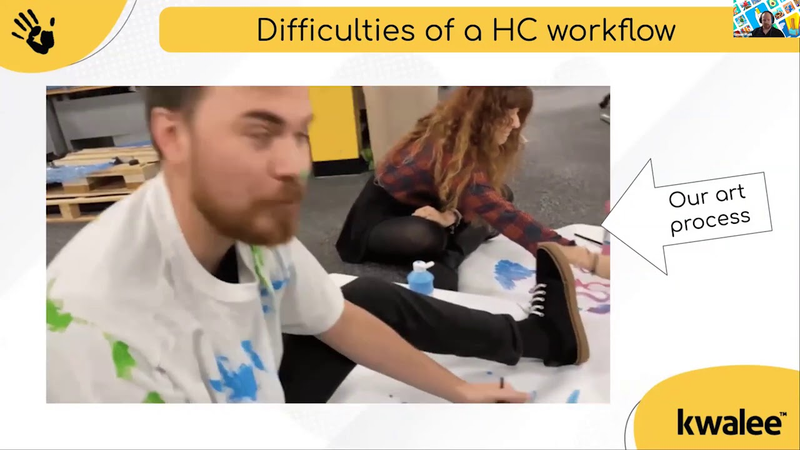
Superstar Session: How Company-wide Creativity Made us a Success PG Connects Digital #2
Kwalee has successfully navigated the transition from mid-core development to the hyper-casual mobile gaming sector by institutionalizing a culture of rapid experimentation and democratic innovation.
- Kwalee successfully transitioned from mid-core to hyper-casual gaming by institutionalizing a democratic, company-wide creative process that has generated over 100 million downloads.
- The studio utilizes 'Creative Wednesdays' to allow any employee to pitch game concepts, which are then vetted through rigorous, data-driven performance metrics.
- Operational strategy prioritizes 'failing fast' by distilling complex ideas into fundamental mechanics to enable rapid prototyping and testing within a few weeks.
Panel: Making Your Craft a Science - How to Replicate the Success PG Connects Digital #2
Achieving consistent success in the mobile gaming industry requires transitioning from purely intuitive decision-making to a disciplined, scientific framework that balances creative vision with rigorous business analysis.
- Transition from intuitive decision-making to a scientific framework by balancing creative vision with rigorous business analysis to ensure repeatable success.
- Implement tiered objective setting to manage project expectations and mitigate the risks associated with potential failure.
- Prioritize the development of a minimum viable product (MVP) to maintain core engagement and prevent scope creep before adding secondary features.
Superstar Session: The Pokerface Explosion – The App that Changed Poker PG Connects Digital #2
The Pokerface application represents a shift in the social gaming landscape by integrating real-time video and audio communication into the traditional poker experience.
- Integrating real-time video and audio into Pokerface increased user engagement time by 20% to 30% compared to non-video alternatives.
- The addition of live communication features extended average session lengths to between 25 and 35 minutes, moving beyond the short, transactional sessions typical of standard digital card games.
- Comunix experienced a tenfold increase in its user base during the COVID-19 pandemic as the platform served as a digital substitute for offline social gatherings.
Panel: What will Inspire the Next Big Thing in Games? PG Connects Digital #2
The gaming industry is currently undergoing a fundamental transformation driven by the convergence of social engagement, cross-platform accessibility, and evolving monetization strategies.
- Future industry breakthroughs will rely on integrating social connectivity directly into the core gameplay loop rather than treating social features as secondary additions.
- Developers are shifting away from traditional, disruptive advertising toward native, integrated monetization models that prioritize user experience.
- Subscription-based services are increasingly used to reshape development cycles and provide greater revenue stability, mirroring the success of streaming platforms.
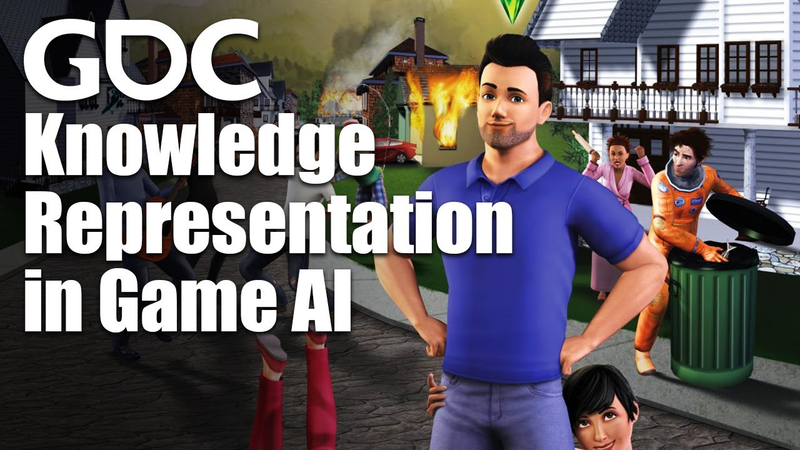
Knowledge is Power: An Overview of Knowledge Representation in Game AI
Effective game artificial intelligence depends less on the sophistication of underlying algorithms and more on the quality and structure of the data provided to agents.
- Effective game AI relies more on the quality and structure of data provided to agents than on the complexity of the underlying algorithms.
- Developers should categorize information into three distinct types: static environmental data, dynamic spatial data, and specific entity details to improve agent reactivity.
- Implementing spatial tools like smart objects, tactical maps, and influence maps allows agents to interpret their surroundings efficiently for complex decision-making.
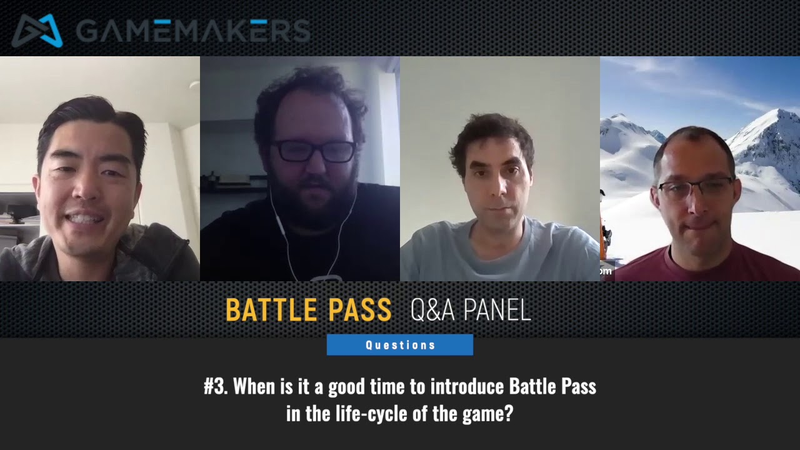
BattlePass Game Design: Q&A With Top F2P Designers and Product Execs
Battle Pass systems function most effectively as engagement and retention mechanisms rather than standalone monetization drivers.
- Battle Pass systems function primarily as engagement and retention tools rather than standalone monetization drivers, requiring a sound core game economy to be effective.
- Developers should target a 70% completion rate for the Battle Pass, as players who finish the progression track show a significantly higher propensity to purchase future iterations.
- Strategic pacing should prioritize accessible early rewards to build player habits, while reserving high-value chase items for the final stages of the progression cycle.
Panel: Machine Takeover - Improving Your Game With Machine Learning & AI - PGCD#2
Machine learning is fundamentally transforming game development by shifting industry standards from static, rule-based state machines toward dynamic, data-driven systems.
- Machine learning is shifting game development from static, rule-based state machines to dynamic, data-driven systems that automate labor-intensive tasks like animation and lip-syncing.
- Advanced implementations, such as the Drivatar system in the Forza series, demonstrate how machine learning allows NPCs to evolve based on player interaction rather than relying on pre-programmed behaviors.
- The industry is democratizing access to AI through tools like the Unity ML-Agents Toolkit and open-source frameworks, allowing smaller studios to implement sophisticated agents without large-scale research infrastructure.

Panel: How Can Monetisation Make Your Game More Fun? PG Connects Digital #2
Monetization serves as a fundamental component of game design that, when executed with precision, enhances rather than detracts from the player experience.
- Monetization should be integrated during the early design phase to ensure revenue strategies function as an extension of the gameplay loop rather than an intrusive obstacle.
- Developers should utilize hybrid monetization models, such as battle passes, subscriptions, and rewarded video systems, to tailor experiences to specific genres and player segments.
- To prevent user burnout and content depletion, developers must implement disciplined ad frequency capping and place advertisements only within positive gameplay contexts.
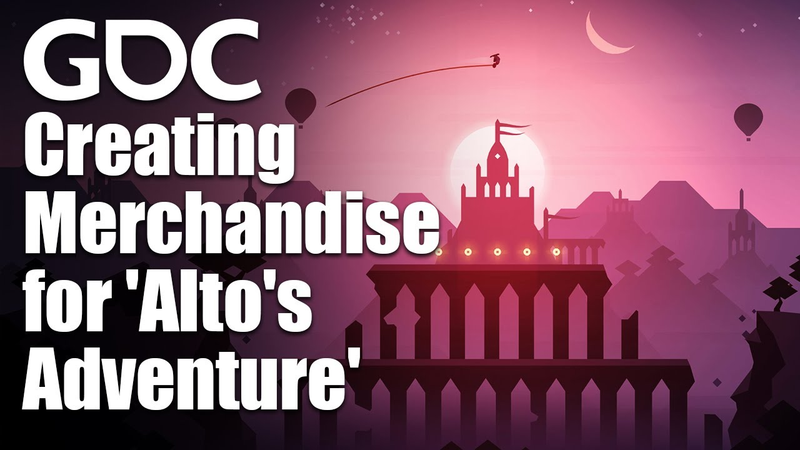
Indistinguishable from Magic: Lessons Learned from Creating Merchandise for Alto's Adventure
Developing merchandise for independent games functions most effectively as a long-term brand-building strategy rather than a primary revenue driver.
- Merchandise should be treated as an extension of the game's universe to build long-term brand value rather than a primary revenue stream, as profitability often takes years to achieve.
- Integrating a 'Gift Shop' directly into the game via SDKs can significantly drive sales, with 57% of Alto's Adventure merchandise sales originating from in-app purchases after the feature's launch.
- DIY e-commerce solutions like Shopify offer higher profit margins and brand ownership compared to third-party partners, though they require more upfront effort and management from the developer.
Battle Pass Game Design: Engagement to Monetization
Battle passes function primarily as sophisticated engagement mechanisms rather than standalone revenue engines.
- Battle passes function primarily as engagement and retention tools rather than standalone revenue engines, as they lack the recurring spending mechanics required for primary monetization.
- Developers should transition from passive reward tracks to active monetization drivers by designing progression hurdles that act as strategic stat checks, forcing players to acquire gear or characters to advance.
- Pricing strategies must be aggressive at launch because the rigid structure of battle passes makes it difficult to increase costs later without triggering significant player backlash.
Designing for Non-Linear Story Discovery in Tacoma
The evolution of narrative design in Tacoma represents a significant departure from traditional linear storytelling, moving away from the static audio diaries popularized by earlier titles toward a dynamic, non-linear experience inspired by immersive theater.
- To support non-linear narrative discovery, the development team utilized a 'hub and spoke' level design, where a central room (like a dining area) allows players to observe multiple concurrent character interactions and choose which threads to follow.
- The team abandoned traditional 'key and lock' progression systems during playtesting because players prioritized finding keys in desktops, causing them to fast-forward through narrative content rather than engaging with the story.
- Level layouts were locked down in 'gray block' format before writing the script, as the physical placement of rooms and furniture dictated the characters' movements and interactions within the AR scenes.
High Resolution Pixel Art and Animation
This presentation outlines a professional workflow for creating high-resolution, fluid pixel art animations, emphasizing the integration of traditional animation principles into the digital medium.
- Integrate traditional animation principles—such as silhouette clarity, frame spacing, and smears—into pixel art to achieve fluid motion within limited-frame constraints.
- Leverage existing skill sets like 3D modeling and vector-based planning to inform pixel art, using vector software for initial rotation and scaling before final pixel-level refinement.
- Optimize production efficiency by 'cheating' through asset reuse, such as 360-degree turnarounds and motion blur, to avoid the labor-intensive process of drawing every frame from scratch.