1 free read left. Create a free account for unlimited reading + AI research.
Create free account
Artists...go into the Light!: Fundamentals of Lighting in Videogames PG Connects Digital #2
Key insights
6 takeaways- 01Apply principles from historical art movements, such as Baroque-style contrast and Impressionist color theory, to establish specific moods and atmospheric continuity.
- 02Use lighting as a strategic tool to guide player attention by highlighting critical gameplay elements while obscuring less important areas through shadow management.
- 03Prioritize artistic intent and emotional resonance over strict physical realism to create immersive environments that effectively serve the narrative.
- 04Treat modern technical tools like real-time global illumination as supplements to artistic fundamentals rather than automated solutions for visual quality.
- 05Balance sunlight, skylight, and reflected light to define spatial depth and rhythm while employing visual shortcuts to maintain performance within platform constraints.
- 06Tailor lighting designs to account for specific platform requirements, such as mitigating eye strain in virtual reality or limiting excessive post-processing effects.
Ask AI about this video
Transcript
all right so our next speaker is a solo speaker actually and they have a power called artists go into the light fundamentals of lighting in video games and joining us we have Daniel from THQ Nordic there is you might go mute that yep there we go brilliant so if you're ready to go with your with your talk I will disappear into into silence once again okay I'm going to share my screen okay brilliant thank you very much Daniel well thanks for coming to this taluk it's called artists go into the light fundamentals of lighting video games so yeah before starting to talk let me introduce myself I'm Daniel I have in I was 10 years working in advertising companies as an art director and the
last 12 years have been working in a video game industry and I work in mobile and console pc games and right now i am serving as a director at the neo TSU nordica studio in barcelona I'm also happened to be an art professor at the University at techno campus and a PhD candidate and working on a thesis about the relationship between art and video games there you have my website but yeah I could say that I'm a keen I'm a kind of a mix profile between Academy approach and where anagon like an industry will die so he spent my life thinking about why with the things and then doing things with my team and two small things before starting taking mine this is a 20 minutes reduced talk about light so I will try to talk about the fundamentals and go straight to the point only to to some basic ideas and as you may have noticed English is not my mother tongue so excuse in advance if I mispronounce or if you find some weird expressions okay let's talk about this talk this
talk is not a tutorial with a magic reside on how to create a super cool amazing illumination for your game neither a compilation of tricks about lighting in unreal or unity and whelmed you may ask why well because every game is a completely different adventure in terms of light and color so there are no magic resides because the software and the technology behind changes every few years and finally because the important thing are the fundamentals and how light can help us to reinforce Asians and memorability consider that we will talk about today so then what is this talk about well this talk will take us back in time to meet some painters who defy the rules and how to use the lights during their age and we will try to remember some of the lessons we learn from them this table will be also a fast overview and some lighting principles that hopefully maybe will foster your curiosity to give learning and improving your skills and finally I will share some thoughts or fast advices and how to approach the
lighting based on my personal experience and how we work at a generic Barcelona studio so yeah first big question what does an artist what an artist does in videogames well that's my definition but I think that helps to create a vision to define visually and aesthetically an idea I think an artist pushes the boundaries of this idea and tries to create something memorable in the eyes of the player and finally we use the art as a tool to emphasize the emotional impact I would like to think and that's a romantic definition I know that an artist must create memorable moments on-screen memories and transmit emotions with his work and something similar worth saying the artists like the symbolist painter mukha 100 years ago the expression of beauty is by emotion the person who can communicating these emotions to the soul of the other is the artist so yes it sounds like a big challenge so which tools do we have to try to accomplish this challenge okay we you
can study for example the psychology of color on the site where or how to use it I can recommend you a book it's called psychology of color by Erik Heller and as a starting point you can start working with a theory of visual perception you can you know you can learn the theory of composition you can try to create a unique or a very appealing Goethe style or you can use the light in a meaningful way something that it's super easy to say but it's super complicated to apply and that's because we are slow learners I mean humanity needed almost 17th centuries to learn that designing and making it lumination I mean character during the composition was a way to increase the dramatic wave of the painting and we can go back to the Baroque ham it masters like Velazquez or Caravaggio we understood that the light was a powerful ally increasing emotions in the b-word are not only an excuse to see the characters and the environments on the painting suddenly the lights had a dramatic propose and here is where our journey to the past the Stars okay the first step
it's obviously the Baroque age let's take a look at this image of Velazquez called Apollo in the forge of Wilton important thing here is how the painter is designing the light of the scene in proposed look the Apollo's crown of mystical light is the light but it's not affecting the rest of characters instead he's choosing to use a light angle from the left to illuminate the feelers and separate them into layers of perception another interesting decision that was not painting the light coming from the incandescent piece of metal between the characters or not using the light coming from the forge in the background but talking about you know the sign light we should meet Caravaggio this painting is called the telling of the Matthew the Italian painter was a master of Cairo school and he used the light and the shadows in a very very dramatic way very high contrast almost no me Thrones only this mystical ray of light coming from outside that cross a Sun illuminates almost everything this is Jesus telling
Levi that he is turned to be named apostille as command they should follow the light I mean they understood the light almost as a binary thing it's like once a series light versus darkness on the contrary the romantic painters were all about softness and subtle shades of color coming from the sky let's take a look at this Frederic painting well I did see fuse and helps to create this coal but at the same time peaceful mood we played a lot with the contrast of a scale on shapes but they understood how the light coming from the sky could improve the mood of their sublime paintings now the shadows the shadows were not black suddenly there were teams by the color of a sky the next step on the evolution were the impressionist painters they were obsessed with understanding exactly how the light worked and the way it affected the difference were faces look at the green shades in the blue dress of the lady with the umbrella and the Manette painting the shades are nothing as of the light reflecting the color of the green plants of the ground so the aside to think about modern concepts like reflecting
light subsurface scattering transmitted light in other words they were the grand grandfather's of global illumination but yeah we haven't seen the evolution of our understanding on how light works but the symbolist painter took the lessons and took the approach to the next level the use light and color to create images that evoke strange State of Mind Muja for example chrimbus in this picture Plains is gloomy and with this atmosphere controlling the light and the color and it's like a dream and doesn't need to have a realistic if light sources it's not important where the light comes from or if the composition has multiple lights the painter now understands exactly how the light works and is assigning the light setup for creating emotions in the big world and he doesn't care about being accurate or realistic important thing here is creating the right mode and the story goes on and on and for sure we can find lessons learn studying the classics in modern films TV shows pictures magazines and of course interactive productions like media memes
so yes you may ask you could say ok I got this I know where we come from but how did I can help me in my game well sure there are more aspects but I would like to stick with those three a good light design can help you in perception mood unbelieva villa t so let's start out perception a good light can help us to identify shapes eliminating them complete or partially also can help to hide details in the intermediate light zones or in the darkness and finally can help us to separate shapes from the background and create layers of perception look at the alien in the picture the important thing about him is his shape and how he separated from the background the light coming from the right upper corner is working as a fill light to uncover some of the skin details but if you think about it almost all the details are hidden there the creators of the alien wanted us to recognize the Shema shape not the small veins or the mask all details of the monster just a symbolic and powerful
shape of the alien so in summary the lights help to perceive and distribute layers of information and this is a moment where you can start asking yourself in there in front of your life design what do I want exactly to show and even more important what do I want exactly to hide it's more important the global shape or there are more important that it tails the next big concept it's the mood you know the light can also help with creating tension love melancholy sadness fear we can define a mood for our scene with the right design of lights and this word can have a strong emotional impact in the viewer and can be more important than the light currents or the realism for example take a look at this picture of Skyfall it will fill with melancholy and sadness the diffused light coming from the sky almost no shadows and the composition it's the classical man versus nature men confronting the inevitable destiny this is not so far from what the romantic painters were doing 200 years ago it's almost the same
approach it's pure Romanticism and talking about mood related to the idea of mood we should talk about continuity and this moment when you start thinking about should we have light continuity between shots or between environments it's more like an artistic decision what will happen if I break the continuity well there are different schools of opinion here but I tend to think that doesn't matter whether light displays or if it changes from Shutterstock as long doesn't break the mood this should be an artistic decision a completely artistic decision but let's take a look at one of the classical and most use examples of light continuity movies okay this is coming from the Lord of the Rings and I'm sure you've seen this example a lot of times before here the light continually is completely broken please take a look at the moon the light coming from the moon this is the video the light from the moon sometimes it's behind Frodo sometimes it's in front of
him by cliking his friends and sometimes it's on site but look how the light it's constantly changing but the mood it's the same so nobody cares if the light continuity is broken because the mood it's always the same the light continuity can be broken but maybe we can see an example of a video game it's a masterpiece is one of my favorite games it's called what remains of a dead faint Jim if you haven't played this please play it's a masterpiece let's see this the game starts with Edith walking to her family house crossing the gray and melancholic forest look look how the gray color eliminates everything even the Sun is the sunlight is almost refused even the sky is kinda green and it is remembering the sadness and the leadership feeling she has for this place but in the end she finds an entrance to the house and now everything starts to look better look the colors in the garage the gold shades the light shafts there are reddish colors the afternoon Sun
filtering and everything is screaming you are home you are safe now it's of course an artistic decision it's the good one and the continuity of the light it's completely broken but it's not important as long as we are creating the right mood another key concept is believability the illumination of the scene doesn't need to be real instead instead should be believable and sometimes being believable could mean not to be completely accurate from a real light source point of view it's an artistic decision but a good light design should work hand with hand with a story and help to create an emotional impact for example take a look at this image it seems real the light design is telling us about a possible window on the right side of the image we can see shadows of trees so we can imagine a garden or at least is typical us a school being located you know in a nice place with three is the afternoon Sun casting light and shadows creating a warm and comfy mood this is real right it's the lights going through the window and the global illumination doing its job right well not exactly this is a
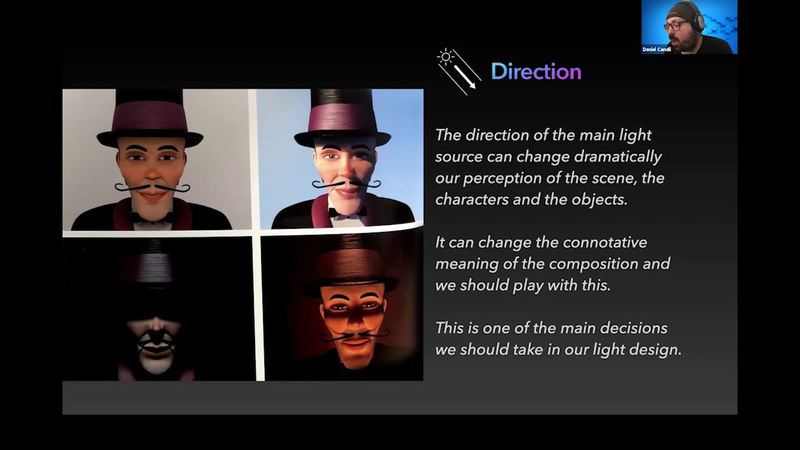
complete the stylet set with diffusers of light of a glide shaft even we have a tree branch hanging from the ceiling casting shadows to the world as we said this light is not real but it's believable and that's the key so now we know where we are and where we're coming from and also how a good design of light can help our creation we're half way in this tall so it's time to go into the light and talk about specific things that can help you in your design of light let's imagine that you're about to start your light design you have references Woodward's the emotion you want to work with if it's pretty clear and the first question start hanging around your head what about the direction of the light and this light is it coming from a natural source or from an artificial source and depending the answer you get the properties of the light will change and our way to approach the world will change to also talking about direction the direction of a main light source can change dramatically our perception of
the scene the characters and the objects it can change if I'm not a tiff meaning of a composition and we should play with this take a look at this guy let's see what kind of extra info cannot ative meaning we can get only with the change in the direction of the light depending on direction of the light we have a funny and harm the solution is on the upper right corner a mysterious Italian mobster closing a deal in a very obscure warehouse in the lower left corner or 90 century New Orleans voodoo practitioner in the lower right corner for sure we can imagine in a lot of different stories but again only this is happening because we're changing the light direction that's crazy and that's a super helpful tool then you should use it but let's talk about the that second question natural or artificial that's the second question that will arise is when you are designing your likes adopem please it's important to remember that you can mix them we can have a natural illumination coming from the Sun and also use some artificial lights to remark and improve the mood as long as they are believable this is talking
about how we understand the natural lighting photos in paintings or in a modern gaming giant like unity or unreal it's the same principle here we have a final render that could be done in real or unity and I'm sure you're familiar with this and you already knew that when you are working with this kind of software it's not only about placing the directional light and see magic happening it's a little more tricky a realistic rendering terms of light happens calculating the light coming from three different sources the light coming from the Sun the light the diffused sky light coming from the atmosphere and finally the rabona reflected light the calculation and multiplication of the three is what is happening each time you pay your light months or if your instance ten called global emission illumination tech light enlighten are supposedly the future in reel five so let's talk about the sunlight the light coming from the Sun it's called directional light in unity and unreal usually it's the first step in your light design even it offers generally the cheapest shadows in terms
of render cost we should know that those shadows are always hard and black it's like when Caravaggio was playing with lights in the baroque this can be handy for an artistic or extreme approach to your elimination where you need super hard and contrasted shadows and you can think about expressionist chairman movies like the cabinet of dr. Caligari or less for r2 or metropolis it does the same approach playing only with the sunlight but you know what happens the shadows are not black the diffuse lighting that comes from the dispersion of photons over the atmosphere it's called skylight in unreal or environment lighting in unity and it's basically the shade of color that comes from the sky and tins are rendered shadows so it's responsible of illuminating them do you remember the romantic painters were part of where we talk about free Eric well they were masters using this light they understood how the light coming from the sky not only the Sun can improve the mood of their landscapes and finally we have the
rebound or reflected lighting this is something that happens when a ray of light can be rebound or obscure fire surface depending on its color it's a complicated concept to explain in 20 seconds but a white object will rebound all the color wavelengths and dark object will observe them this will also happen with the artificial eyes light by the way so take a look at the Abram wrinkle image if the white light impacts against the red surface they rebound that photons will be the red ones when those red photons impacts again with another surface in their way they will let up this nude surface in red this is a super fast not super accurate description but essentially this is radiance the same principle is happening with a green light rebounding from the green grass and illuminating the low part of the ball you remember the impressionist painters well they were the Masters of this rebound or reflected lighting as we said they were the grand grandfather's of global illumination so again the mix of those three light sources is giving us the look of a modern realistic render we should
understand how they are working and decide if we want to use a three or not you're in charge of taking this decision as long it makes sense for the game but the possibilities are there let's go artificial I think for the sake of making things easier in the stall we could separate them in four types actually those are the names that you will find in unreal or unity so at the point light spot light the area light it's called rec light in unreal there are the emissive surfaces let's start with the boy legs you know it's like a bulb light the shadows are costly so take care with this but the activating the shadows is the perfect option to simulate GI or to use a lot of point legs as a feeling light the spot like on the contrary has the shadows are cheaper so it's cool to use this but the cool thing about this life is that we can use gobos or cookies like they were doing in the noir films back in the day the third can fly this area light or red light and usually this is a light that is working more in you
know baked it and the big when you're making light maps and offers a very soft - you look like having a light with a very big diffusers and finally the emissive surfaces you know think about all the small lights of your gadgets and this life can be a missive surface test meeting shining in a specific color or shining using their own texture so those were basically the main light artificial sources but let me tell you what I call the two basic guidelines that will help us in designing that I set up for example an indirect Merriman for me those guidelines that are proposed and multiplicity if we are designing the light running into our environment we should start thinking about the purpose of the space how the people are using the space is it a functional office is it an underground corridor that connects 2/3 of chambers we should find a believable propose for a lighting design let's take a look for example at this living room it has different points coming from the ceiling and also in the mid level with
intention of creating this comfy and pleasant mood the red is yellow to reverse the home-like feeling same way they did in what remains a faded fringe and also the light is projected against the wall to soften the brightness and the shadows something completely different in this kitchen in this case we are looking for a super functional diffuse white light with almost no shadows because a kitchen is a workspace where you have to see perfectly the shape and texture of the food if you don't want to get off your finger so it's important to control the shadows and this takes us to talk about the truth about artificial lights is that we use a lot of diffusers too soft and alive in the shadows because the light of some artificial light it is so strong so bright to look at and the shadows are so hard that it's not a pleasure to see still in the real life use all kind of diffusers and techniques to soften the shadows and light the good news is seen on real opportunity you can do a lot of tricks and change the intensity the range of the light and also deactivate shadows or you can
change the shadow opacity to bear each of the lights with all of this you can even simulate blob illumination light our surfaces and speaking about tweaking each of the lights in the scene we arrive to the second and last key concept the multiplicity in other words we need to learn how to manage an environment with thousands of light sources reflecting and creating shadows and understand this can help us to grate different ambience in the same scene for example let's take a look at this restaurant we have a lot of different light sources boy lights with the futures spotlights projecting against the wall light coming from the ceiling in the kitchen emissive surfaces LED lighting but the important thing is that they are using all of those lights to create three different modes the fancy cons are halogen blue the comfy rest running yellow shades and the white and fictional kitchen sounds good right we can play with a lot of lights dozens of lights but you know that not so fast playing with those ins of Lights creating different ambience in your scene comes with a performance cost I know that today all of us we are use it
to use the further the Lighting's and we can manage a lot of different lights in the scene but it's important to decide which lights will cast shadows or even if it's okay to use all of these lights we don't need every light source in the scene actually being a real light or casting a real shadow remember the video games are smoke and mirrors and let's see this with this an example that happens a lot of times imagine that you have a scene with a docents of scandals in the real world each of those scandals is a light source with the properties of the flame super bright orange or red color but with a super short range of illumination but do we really need to render 12 costly point lies with our shadows what about placing in a unique point light in the middle they activate in the shadows and adjust in the range of intensity the very would see what he wants to steer so the ocean will happen we are respecting the mood we are presenting believable light but using only one point light without even casting shadows so yeah the video games this is super simple demo but you get the idea it's all smoke and mirrors and
all the targets we fulfill with small advices and ideas on how we approach the light at the kitchen table are some others to you but let me share with you some final thoughts that have helped me and the team it's time we need to design the light of a game first step good mood bores and studying solid references is key creating with mood words with light and texture reference it should serve as a mantra as the guideline every time you lost a track of the emotion you want to transmit to the b-word look for inspiration far from medium I mean there's a big world out there study the fundamentals the classical painters read books movies comics architecture magazines as wider rows your own iconography the weather the result you will get analyze the environment you will be working with and create a prototype create a missing stand this is a concept that comes from the theater but you can create a missense am I missing something of all the elements if it's needed also block all using 50% gray as a color texture can be handy to support a type in your game your light setup in your game and ask yourself questions constantly what do you want to
show what do you want to hide is this design guiding the player where the light is coming from is the life helping the narrative or is it playing against narrative and finally all the rules are there to be broken even the ones I told you today because only when to come ISM when recreating the reality in the most perfect way you can imagine it started to make no sense for him he needed to break the rules and struggle what he knew to advance and create something different something better so if the day made something crazy and after a process of thinking and a profound reflection the decision goes for breaking the mood breaking the continuity breaking the propose and you know exactly what are you doing and why are you doing these then go for it break everything you want to break and that's all thanks for being here today and I hope this small talk about fundamentals of I could be any for you if you are developing your own game I always love to see equal wear from people what I have time so feel free to say me your work and let me see what are you doing with the light thanks yes perfect thank you so much for that Daniel that was a really cool
insight I don't think I've I've seen a panel recently that is such a hard focus on one aspect of game design so thank you for that have you got time to stick around and answer a couple of questions in the the Q&A section okay yeah yeah how is the ability to implement ray tracing techniques affected your creative limitations and do you have more tricks to play with now yeah of course a lot of plenty of trees right now I mean it's the dream come true right having ray tracing techniques with global illumination real time I mean the future is right until now I having interesting things we have interesting things at the studio but yeah I'm not sure if I can share this but let's say I'm super excited with the future with a near unreal and new techniques real-time global illumination I mean this can be a really a game-changer because you know
when you're doing a video game they're the worst thing that can happen is are the baking times for me raytrace yeah sure it's the future absolutely okay so as with film can tactical lighting cover a multitude of sins thinking about the t-rex scene in Jurassic Park being a nighttime shoot with a single strong light source that was that was the first question yes I always tend to I always say to mark to the team or to my students at university I mean the light can help can can eliminate things but also can hide things I mean let's play with this I mean you can decide what which partners environment should be lighted at which part should be should be in the dark and those persons that are probably you can you shouldn't work as hard in those in those human parts darker places I mean use a light - exactly - to illuminate them the most detailed parts of the environment
the same way they did with a theater X I mean your example it's it's raped so yeah yeah the Philemon definitely play with the light - to hide their bad things and like the good things absolutely we've got a couple more coming in now we've got designers will often use light to motivate character movement highlighting an area of interests by eliminating it prominently how do you ensure that the demands of the gameplay don't interfere with mood and emotion that's the big question that's a big a fight between design and art right I mean yeah I think there are different kinds of gaming I think there are games that needs to be game and you know design oriented and more game and games that are artistic oriented but when the key is to work can by hand with hand with a design team I mean when I try to create a new limitation for a city for a scene I was like to take the lead of design and and excuse with him and when we arrived to a
common sense common points then we can start again but yeah there's no magic Reserve on this so with your lead the lead of design and me as another director he has a lead designer and we will find a way okay well we've got another fresh one coming in right at the end how does a monochrome color palette change the way you approach lighting a scene is there more emphasis on your department to generate visual excitement yes actually that's that's a good question - well a couple of years ago why I work in a new name that was completely black and white and actually give a talk at GDC about exactly this topic yes you need to push the visual you know the visual rhythm of the scene you need to play with the rules of the visual rhythm and and we need back in the day we prepare the the seamless monochrome palate scene we were pushing the post-process effects sometimes and we don't you know rising down the defects
and we we try to create constantly a rhythm and yes my my advice if you are working on a monochrome video game study the noir movies ok started started studying the Caravaggio playing things for example if you put these paintings in black and white then suddenly you have a new art movie it's always the same I mean go stream and look what Fritz Lang's were doing with the lights I mean it's it's amazing how they were playing with the lights to emphasize the feeling not their realistic part of the light only the feeling in the be work just something I just thought of leading on from that if it was the other end of the spectrum and you were maybe designing a very bright and colorful and sort of aesthetically pleasing game is there any techniques that you can employ to sort of heighten fear or any negative emotions that you would want to have in that game yeah sorry sort of flipping
that on its head if you had a game that was stylistically quite different to a sort of a monochrome game it's very colorful and bright are there any techniques that you could bring in to convey sort of darker emotions in a very bright and pleasing game that's a tricky way so having a baby might and a colorful game but you want to express very dark emotions right yeah I think we should study the symbolist painter sin because they were using a lot of crazy colors and color schemes but the topics away we're talking about we're actually pretty hard but yeah I don't have a trick for this I mean we should I mean there's no magic resides right I mean there's no you only the magic reserve is to sit down and study the things you want to work and look for solid references I mean it was one of the advices prepare yourself look for a lot of information but no I don't have fun massive aside sorry for this no
that's absolutely fine it's just it was something I thought about another question I have as well is what what are the games that sort of have inspired you over the years like when you were getting into designing lighting what games really stood out for you as inspirations mm-hmm only games I mean because my main inspiration always comes from outside the game atmosphere okay into that as well no but going talking about the games I mean I told you it's in the recent years but I was overwhelmed when I played it what it means off I did three inches it's one of my favorite games and I think what David with the color was amazing it's a masterpiece but taking back again I mean you know I come from a academic background so for me the Masters of light is the laughs Keith it's a Spanish painter yeah for me it's one of the most the most important painters of history and also Caravaggio and the impressionist painters it's it's
amazing how they discover all of the modern concepts that are in the global illumination thing they were discovered you know what this crazy guy said we trying to create paintings with little dots of light 2,000 years ago I mean all my references I have a lot of references in movies in for examples I love what Roger Deakins does in the movies you know Roger Deakins you say the master of the silhouettes on the shapes and I don't know I have a lot of reference a lot of I'm a fan a very fun I'm a fanboy of a lot of different people so yeah I can imagine you draw inspiration from just everywhere you can really if you're looking for it yeah it's there is there a danger of losing important details to lighting effects like excessive bloom lens flare etc are you in trouble with would you find trouble losing certain things I mean one of the latest games we released at the studio where we have a well we have a lot of blooming effects
and then we try to fix it yes yes happens yeah I can imagine yeah take care with the post-processing effect I mean we will like to avoid the post-processing effect at the last in the last moment but yeah take care with the post process I've made the mistakes so yeah we've still got questions coming in if it's okay what's something you think concept artists should take into consideration when they paint lighting in 2d images I [Music] think artists should have a technical background I mean I think the best concert parties are people that they are used to work with the Giants and they know what we can do and what we cannot do in real time you know because sometimes the cons are artists they create something amazing something super beautiful I mean I have in there I mean when you sell on paper everything works
but then when you try to translate these to the game you know something happened so for my best advice is okay you are a concept artist so dig in and read out the community learn how light works in the real time in China because in the end of your work will be there so you need to understand how it works mmm yeah for sure with with 4k HD and standard definition to consider as well as using different monitors and and TV settings is there one sort of ideal setup that you prioritize in development and if there is one why would you pick that yeah it's an anonymous person so not I'm not sure who asked that but um yeah I mean what they're trying to say is is that things will look so very different between I guess like a
standard 720p monitor and a 4k monitor so is there something that you would or an ideal technique or or set of tools that you would use to create something that's visually appealing across different resolutions I suppose that's how it could be well I don't think is this I give you a question for this answer I mean every game when you start working on a video game of course you should take in care if you're the final render will be on a screen if the player will be tumor from the screen or we'll be playing in a mobile game how much the play will take on size on screen but I never thought about this I mean no no I even have no I don't have a question and an answer a clear answer for this question I mean yeah I think that's that's a difficult question to answer because you're not gonna have a really set technique to design things that are visually appealing across say like a mobile phone and then a 50 inch 4k screen it's kind
of like exactly it's the thing that maybe we all look for a magic reside but for a super-crazy hyland technique to make things but I think the the technique is try and fail and learn on the way yeah I think that's the only way to do it another thought that I just had is there if you're designing a game that is maybe sort of low poly or not as visually striking or realistic as Z this French if there are things that you need to think about to sort of maximize the use of lighting without using really serious and I guess realistic techniques mm-hmm I think you know from it's different I mean you can work in a very stylized game having a render that is not maybe be the air so you're not aiming for the super crazy realistic rendered textures and these kind of things but in the end elimination techniques are the same I mean you need to understand exactly how
the Sun coming from the the light coming from the Sun works you need to understand how the light coming from the sky words and you need to understand how they're reflected light is working and then you can decide because the realistic render of course will have the three okay we have a three it becomes light from the Sun from the sky and from the reflected light but you're not forced to use a three I mean if you are doing a craziest allistic know our game you can only play with the direct light or maybe if you are if you need something super soft maybe you can play only with a skylight because will be soft shadows and this kind of tint that change everything so it's I think that the basic is to understand the fundamentals of the light and then you should I mean is what I said all the rules that I explained here today then that to be broken you'd only need to understand what are you doing yeah absolutely there's no real set toolbox so or an instruction book for what you're trying to achieve I
suppose this has anything sort of gotten easier over time like the things that you you had to emulate that might have been all the techniques and lighting techniques that you had to emulate maybe in games in like the the late 90s early noughties has is there anything now that you can emulate more realistically now than you could maybe 15-20 years ago yeah first yeah I mean I remember when the games only had one light well light and one shadows coming from one light now we have techniques to run the shadows of 20 40 60 lights that the fret lighting is magic and and the future real fight for the future unity are the future techniques of lighting will be crazy I mean we are trying to emulate the the real world but you know my culture with these days as much as we approach to the realistic illumination we tend to use the realistic illumination on everything and we tend to think that like this is real this is
using global illumination only putting that direction alight and you know letting all the rebound light work it's enough know the light should be design it you need to design the light and you need to know how to play with the light and the use light to emphasize emotions and this kind of thing but yes nowadays we have we have a lot of possibilities of doing crazy stuff with lights but my words is my word I'm worried about this because everyone is trying to emulate super realistic light and maybe it's not the light you need absolutely is there anything that you can do now that you couldn't do it old back then anything that you can put in games or techniques that you can create now that you wouldn't be able to do at all yeah for me the global illumination is the key I mean you know global illumination was her dream 10 years ago and maybe maybe not in their universities or in their resource in the E+ the department research and and development departments but having a
solution of a global illumination solution working on a software like unity or unreal in real time for me this is is a dream come true is they is what I hope we get in the next months in the next years something that really really works in Willow elimination then we can have global admission in mobile games and console games and you know I think this is what him will love to have the next year's mmm so anything that so even now he wish you could do easier things that you could implement into a game or a piece of visual media that isn't completely doable yet but there might be some technology like we're heading into a new Andy Chen there's going to be advances in technology out there yeah the question is it's a lot elimination I mean we are we making this point of I mean the elimination impressionist painters it's like they they understood how to apply this global illumination in the paintings and now we are in the verge of being doing this possible I
mean with raytrace with the new hundred five with the new technology maybe in the future this won't be a dream will be reality so yeah that's my question ten years ago the double emission was a dream right now we are starting to see this toast this dream being real absolutely I think that the more time goes on we're just gonna see so many wild advancements in technology that we couldn't even imagine I suppose we just got another question in the Q&A from Victor saying is there something to take care something to take care about lighting when developing for VR a lot of things yeah the first thing is that probably if you're lighting 4br won't be a real-time light solution probably will be baked right and yeah this is something you can you should take care of and prototype I mean the way we react
when we are inside of you know helmet inside a head you know head helmet this an XDM the light the way we react to the bright lights it's it's difficult I mean for example I have played a lot of video games at the use white light in BR and imagine having a scream of emitting white bright light at 2 centimeters of your Aria it's like you will take a look at you know at the light of your kitchen you will turn on the light or 2 centimeters from your I know right well they are doing some sometimes people do that that's these things and that can hurt so yeah there's a lot consideration about lighting if you're asking for performance take in mind that almost all that I will be baked so if you want to plan to change the day/night cycles it's problematic and prototype and prototype and prototype the use of light if you should find a good balance of create a good illumination that doesn't provoke you
know motion sickness this kind of things okay brilliant I will wrap that one up there's I've kept you longer than we said we were going to keep you but that was that was a really cool insight I'm glad to have had the opportunity to talk to you Daniel thank you so much for for presenting today and I hope you enjoy the rest of PCC yeah thank you thank you for having me brilliant you
Summary
Effective game lighting functions primarily as a narrative and emotional instrument rather than a purely technical exercise. By prioritizing artistic intent over strict physical realism, developers can craft immersive environments that guide player attention and establish atmospheric continuity. This approach draws heavily from historical art movements, such as the dramatic contrasts of the Baroque period and the nuanced color theory of Impressionism, to evoke specific moods. Ultimately, the goal is to create a sense of believability that resonates with the player, even when that requires deviating from the laws of physics to enhance visual storytelling.
Technical execution relies on the strategic balance of sunlight, skylight, and reflected light to define spatial depth and rhythm. Designers must master the art of light multiplicity and shadow management to highlight critical gameplay elements while obscuring less detailed areas, effectively using light to direct the player’s journey. While modern advancements like real-time global illumination provide powerful tools, these should be treated as supplements to fundamental artistic principles rather than automated solutions. Developers are encouraged to employ clever visual shortcuts to maintain performance without sacrificing the intended aesthetic.
Success in this field requires a synthesis of traditional artistic study, cinematic techniques, and iterative testing. Creators must remain mindful of platform-specific constraints, such as mitigating eye strain in virtual reality or avoiding the overuse of post-processing effects. By focusing on the core principles of perception and emotional resonance, lighting designers can transcend software limitations to create memorable, cohesive experiences. The most effective environments are those where lighting is intentionally tailored to serve both the functional requirements of gameplay and the broader narrative vision of the project.





















Comments