Game Design reports and market data
Documents
Designing for Multiple Minds: Crafting the Craft of Player Dynamics
Player dynamics represents an emerging design discipline dedicated to the intentional cultivation of healthy, cohesive social interactions within multiplayer environments.
- Player dynamics is a design craft that requires intentional integration from the ideation phase, rather than being treated as a reactive problem to be solved solely through punishment or the removal of disruptive players.
- Designing for cohesion requires understanding player populations, context, and the 'curse of knowledge'—where developers must avoid creating friction by assuming players inherently understand complex game systems.
- Matchmaking should prioritize aligning player intentions and roles to reduce pre-game friction, as seen in League of Legends' team builder queue and Overwatch's role-selection systems.

What Can I Draw With JUST A MOUSE?
High-quality game environment art is achievable using only a mouse by prioritizing fundamental design principles over specialized hardware.
- Core design principles such as color gradation, layering, and atmospheric depth are more critical to professional game environment art than specialized hardware like pressure-sensitive styluses.
- Artists can compensate for the lack of a stylus by using the Photoshop lasso tool to define foundational shapes and employing motion blurs to simulate atmospheric fog.
- Dimensionality and depth are achieved through the strategic application of inner shadows, blending modes, and layer masks rather than manual brush pressure.
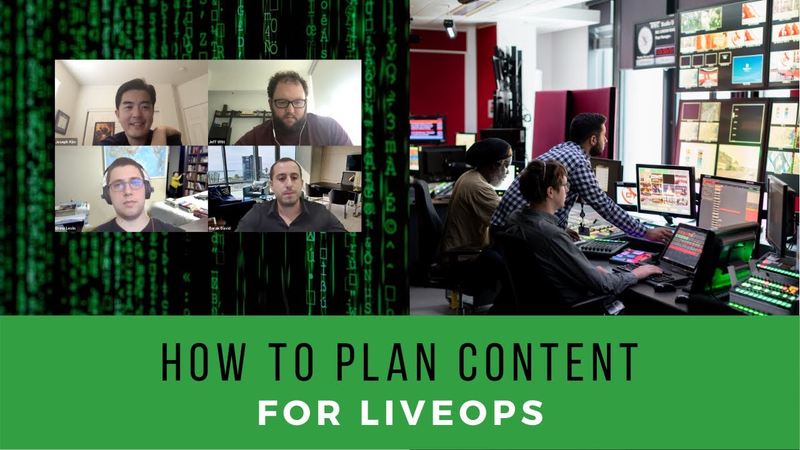
Content and Events Planning for Live Ops Panel | Zynga, Murka, Storm8, Funzio
Live operations strategy centers on the integration of long-term content roadmaps with tactical, data-driven event cycles designed to stabilize game economies and maximize player engagement.
- Live operations success requires separating development teams, who build scalable foundational systems, from dedicated operations teams that manage the daily cadence of content releases.
- Teams must utilize quantitative tools like Sankey charts to optimize user interface flows and balance content consumption rates against currency inflation or resource bottlenecks.
- To prevent revenue cannibalization, developers must define feature-specific KPIs for every event to ensure they drive incremental growth rather than simply shifting existing player spending.
What Online Games Can Learn from the Failures of Social Media
Online games have evolved into essential digital social spaces, yet they currently face significant challenges regarding hate, harassment, and extremism.
- Gaming platforms face a critical safety crisis, with 74% of players reporting harassment and 65% encountering severe incidents like stalking, doxing, or identity-based discrimination.
- Exposure to extremist content is a documented risk, as 23% of players reported encountering white supremacist ideology within gaming environments.
- To avoid the regulatory scrutiny and public distrust currently facing social media, the gaming industry must shift from prioritizing engagement to adopting 'anti-hate by design' principles throughout the development lifecycle.

Liveops: Mapping Player Journeys (Andre Cohen Head of Data Science Tilting Point)
Player journeys function as dynamic, evolving frameworks essential for optimizing game performance, monetization, and retention.
- Linear 'golden path' funnels are often inaccurate because they fail to account for the diverse, non-linear ways players naturally engage with games.
- Data scientists should replace static funnels with state-based visualizations that map players across multiple dimensions, such as retention duration and level progression.
- K-means clustering should be used to identify distinct, multi-dimensional player segments, enabling personalized LiveOps and targeted A/B testing.
Skill-Building Series: Emotion in Game Design (A UX Perspective)
Effective game design requires a sophisticated balance between functional usability and emotional engageability.
- Game design should prioritize 'engageability'—the intersection of motivation, emotion, and flow—to move beyond basic usability and ensure players are actively interacting with the system.
- Effective game feel relies on the 'three C's' (camera, controls, and character), which should be prioritized during pre-production to establish a solid foundation for player interaction.
- Presence and physical reality are enhanced when UI elements feel like a natural part of the game world rather than an overlay, as demonstrated by the loot box design in Fortnite which uses a reactive, thematic 'llama pinata' instead of a generic chest.
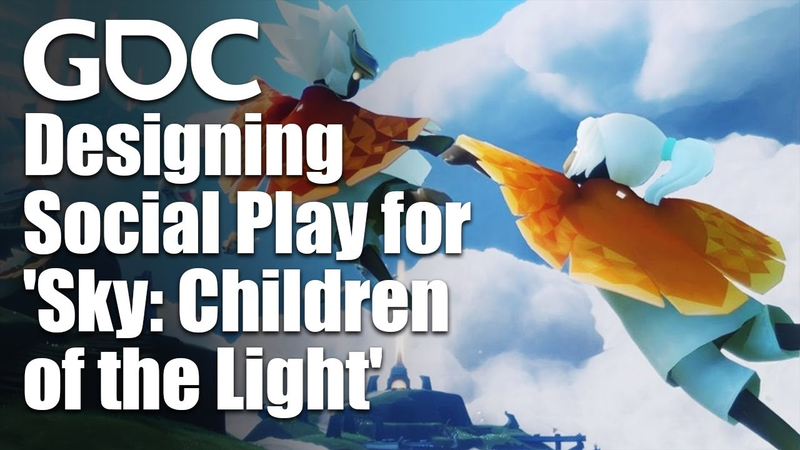
Designing Social Play for Sky: Children of the Light
The design philosophy behind Sky: Children of the Light centers on fostering genuine interpersonal connections by prioritizing empathy and social simulation over traditional goal-oriented multiplayer mechanics.
- Social play is defined as any activity performed near others that encourages the simulation of another person's thoughts and feelings, effectively requiring players to practice empathy rather than just coordination.
- Goal-oriented gameplay often discourages social interaction, as players focused on objectives tend to ignore others; therefore, thatgamecompany places cooperative tasks on optional side paths while keeping main story progression single-player.
- The 'hand-holding' mechanic serves as a core social tool that allows one player to guide another, fostering intimacy and requiring the guide to actively anticipate the needs and interests of their partner.
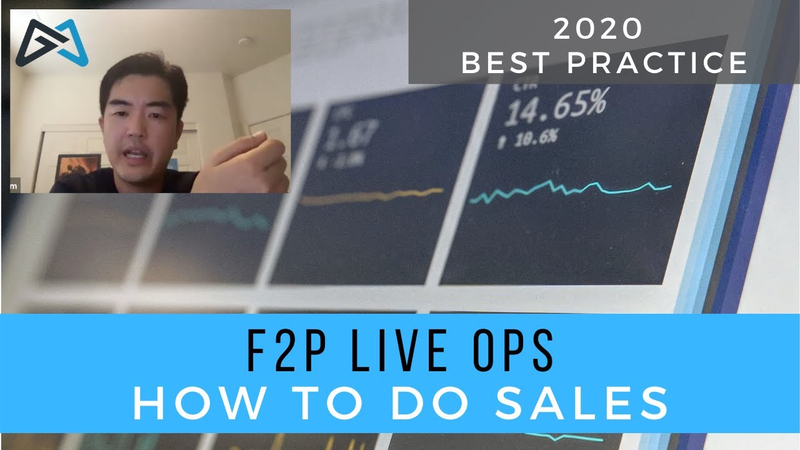
LiveOps - F2P Sales Best Practices 2020
Maximizing player lifetime value in free-to-play gaming requires a transition from static, calendar-based promotional strategies to a dynamic, behavioral-driven framework known as Targeting, Timing, and Offers.
- Transitioning from static, calendar-based promotions to behavioral-driven targeting can increase player lifetime value by 40% to over 100%.
- Utilize RFM segmentation (Recency, Frequency, and Monetary value) combined with machine learning to identify optimal engagement moments, such as progression difficulty or churn risk.
- Avoid generic, deep currency discounts that train players to wait for sales, as these erode long-term revenue and devalue the game economy.
Jumpstarting Your Creativity: From Hobbyist to Professional
The transition from hobbyist to professional game developer is often hindered by a cycle of starting ambitious projects, encountering technical hurdles, and losing motivation before reaching completion.
- Prioritizing the completion of small-scale projects over ambitious, complex ideas is the most effective way to break the cycle of unfinished work and stalled professional growth.
- Finishing projects is the critical metric for development, as evidenced by a shift from zero output to the release of eight projects over a two-year period through disciplined completion.
- Developers should implement strict time constraints, such as two-day or two-month windows, to force the completion of projects and prevent scope creep.
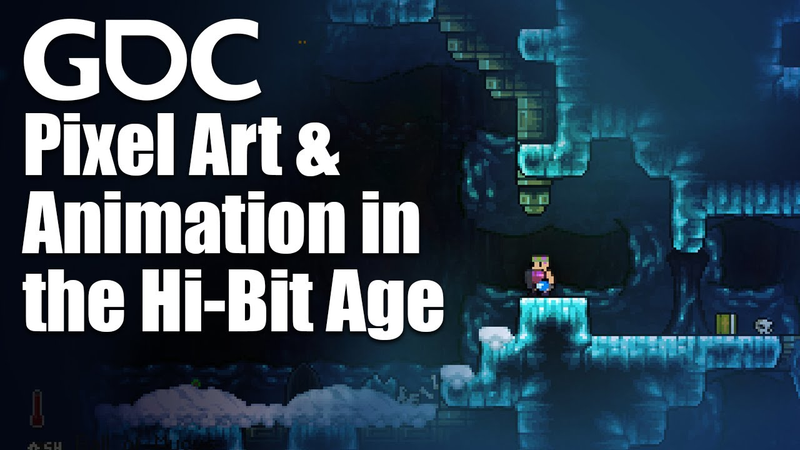
Skill-Building Series: Pixel Art and Animation in the Hi-Bit Age
Hi-bit art represents a sophisticated evolution of traditional pixel art, moving beyond the constraints of legacy hardware to function as a versatile, modern medium.
- Hi-bit art is a modern design evolution that integrates contemporary 3D environments, volumetric lighting, and complex shaders with traditional low-resolution aesthetics.
- Professional compensation for pixel art specialists has stabilized, with standard industry rates typically ranging between $40 and $60 per hour.
- Pixel art functions as a deliberate design tool that enhances gameplay readability and communicates mechanics through established gaming tropes.
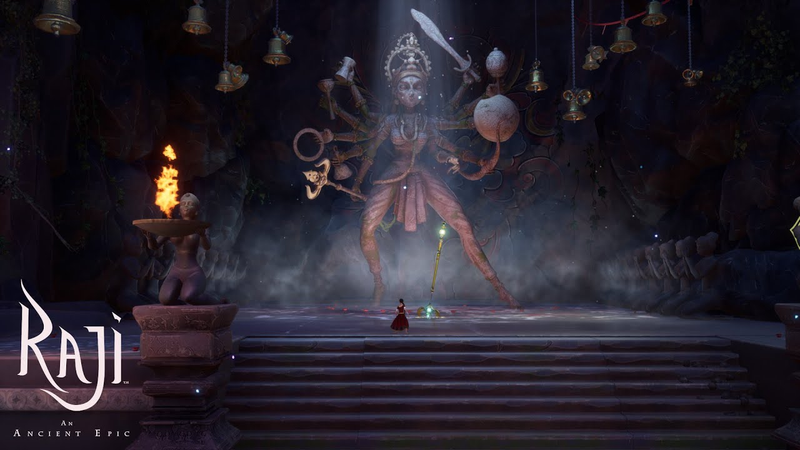
Developing Raji: An Ancient Epic & Crossing the Finish Line | Game Dev Unchained Episode 233
The development of Raji: An Ancient Epic serves as a case study for the burgeoning Indian game industry, highlighting the successful effort to integrate rich cultural narratives into the global gaming market.
- The development of Raji: An Ancient Epic demonstrates the viability of integrating underrepresented cultural narratives, such as Hindu and Balinese mythology, into the global gaming market.
- The project serves as a case study for the maturation of the Indian game industry, driven by increased accessibility to development tools and the rise of local studios.
- The COVID-19 pandemic forced a transition to remote workflows, proving that distributed teams can maintain development momentum without traditional in-office collaboration.
10 Steps To Making a Successful Game
Achieving success in the independent game industry requires a disciplined, multi-faceted approach that balances creative vision with rigorous business management.
- The final 10% of the development process, specifically polishing and bug fixing, is the primary determinant of whether a game launch succeeds or fails.
- Developers should treat projects as businesses from the start by prioritizing low-cost operations and maintaining stable employment until the project achieves profitability.
- Success relies on an iterative development cycle that involves creating prototypes, testing them, analyzing feedback, and refining mechanics to ensure a polished final product.