First-Person Shooter reports and market data
Documents
Differences in Scale vs Differences in Kind - Keeping Players Interested - Extra Credits
Effective game design requires a balance between differences in scale and differences in kind to maintain player engagement.
- Sustaining long-term player engagement requires a balance between differences in scale, such as adjusting health or difficulty, and differences in kind, which involve fundamental shifts in mechanics and pacing.
- Relying exclusively on differences in scale creates a predictable interest curve that inevitably leads to player fatigue.
- Successful design integrates varied experiences—such as stealth, tactical movement, and cinematic sequences—directly into the core gameplay loop to prevent repetition.
Call of Juarez: The Cartel - How Lazy Design Hurts Everyone - Extra Credits
The video game Call of Juarez: The Cartel serves as a primary case study for the dangers of lazy, irresponsible game design.
- Developers have an ethical responsibility to conduct thorough research when depicting real-world tragedies to avoid producing harmful propaganda and reinforcing racial stereotypes.
- Call of Juarez: The Cartel trivializes the Mexican drug war, a conflict that resulted in 40,000 deaths over a five-year period, by reducing it to a sensationalized entertainment product.
- The game features design choices that promote bias, including a specific achievement that rewards players for killing African-American characters.

The Myth of the Gun - Why America Loves FPS Games So Much - Extra Credits
The prevalence of first-person shooters (FPS) in the United States compared to Japan is rooted in fundamental cultural differences regarding the perception of weaponry, conflict, and individual identity.
- The prevalence of the FPS genre in the United States is rooted in American cultural mythology, which frames the gun as a symbol of personal independence and the citizen-soldier as a heroic ideal.
- Japanese martial philosophy, influenced by Shinto and Buddhist traditions, views weapons as extensions of the self, which naturally favors third-person perspectives or internal power-based mechanics over the FPS format.
- In the American FPS, the weapon is conceptualized as an external, replaceable instrument of individual will, whereas the Japanese perspective treats the gun as a tool of last resort for survival.

Mailbag 1 - Questions About the Game Industry - Extra Credits
This overview addresses common inquiries regarding the state of the video game industry as of late 2010.
- The dominance of first-person shooters in 2010 is driven by the commercial success of the genre and the availability of standardized development engines like Unreal, which lower entry barriers for mid-tier studios.
- The perceived decline of the JRPG genre is not a lack of innovation, but rather an over-reliance on a small number of major publishers like Square Enix.
- PC gaming remains a robust market segment when accounting for the growth of MMOs, social gaming, and indie titles, despite challenges related to high technical requirements and costs compared to consoles.
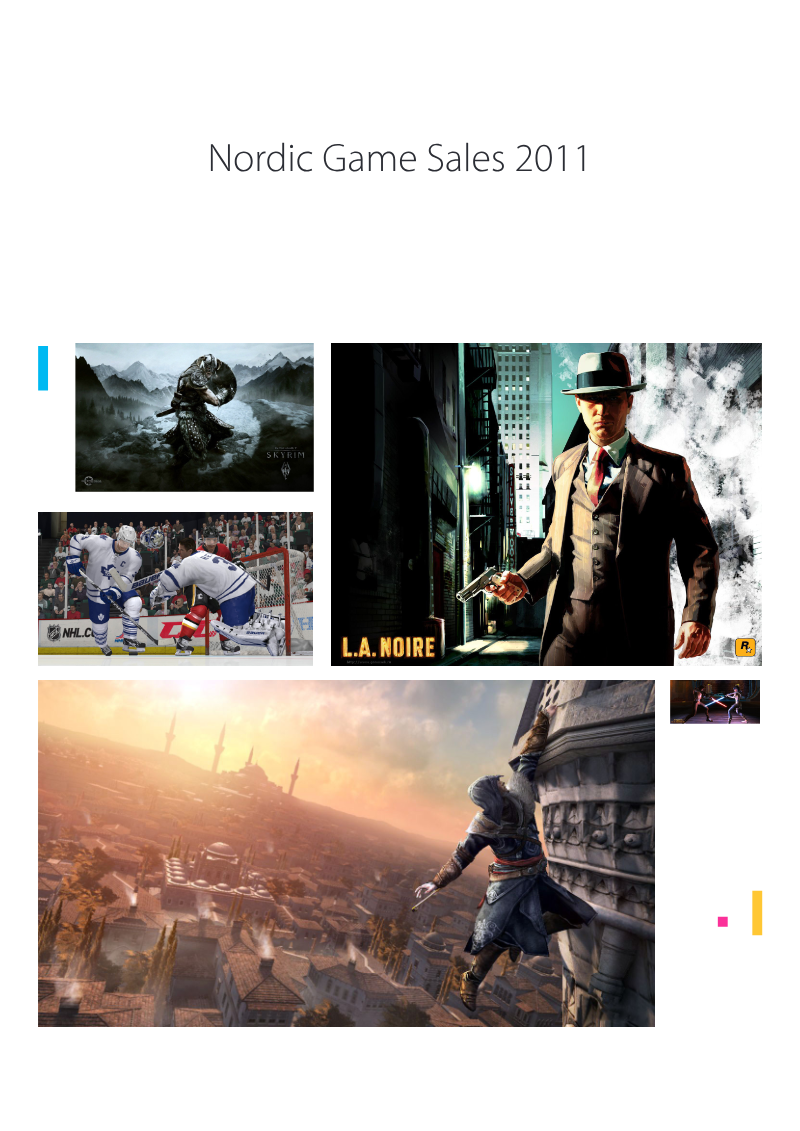
Nordic Game Sales: 2011
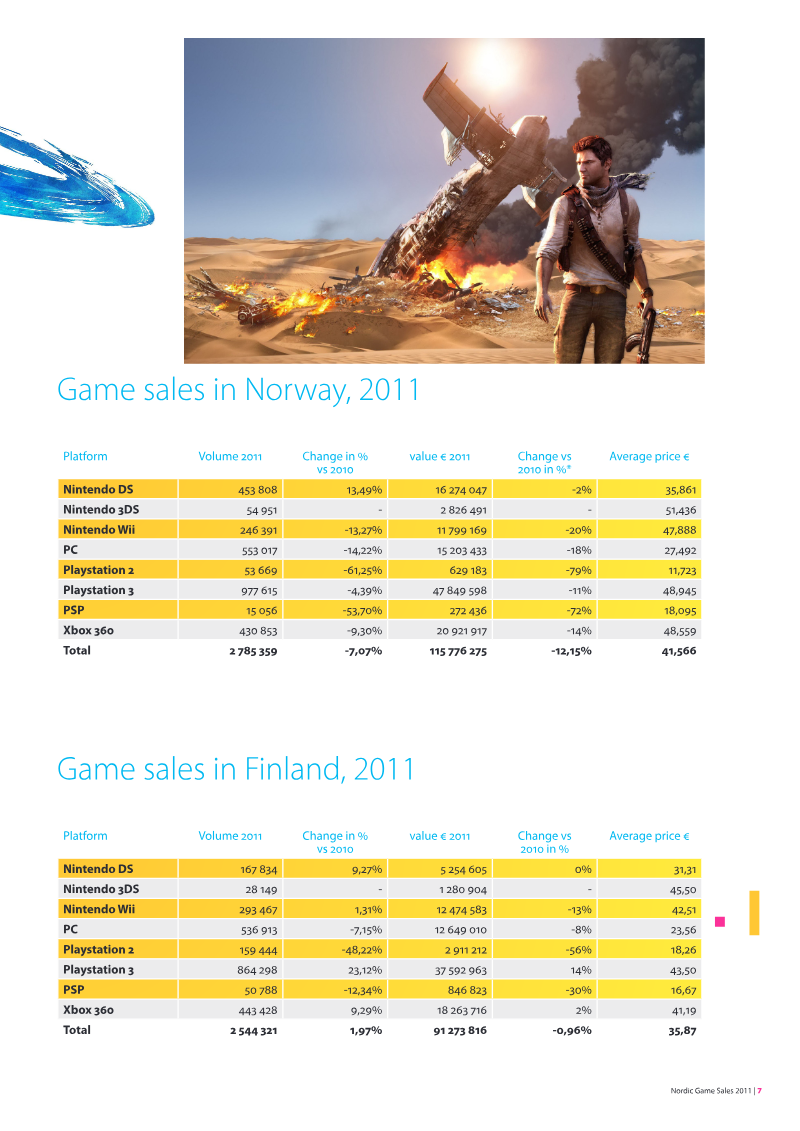
The Nordic gaming market in 2011 experienced a notable transition as physical sales volume and value declined in favor of an expanding digital distribution sector.
- The 2011 Nordic gaming market underwent a structural shift as physical retail sales declined in favor of an expanding digital distribution sector.
- High-definition consoles, specifically the PlayStation 3 and Xbox 360, remained the primary drivers of consumer engagement and physical media sales.
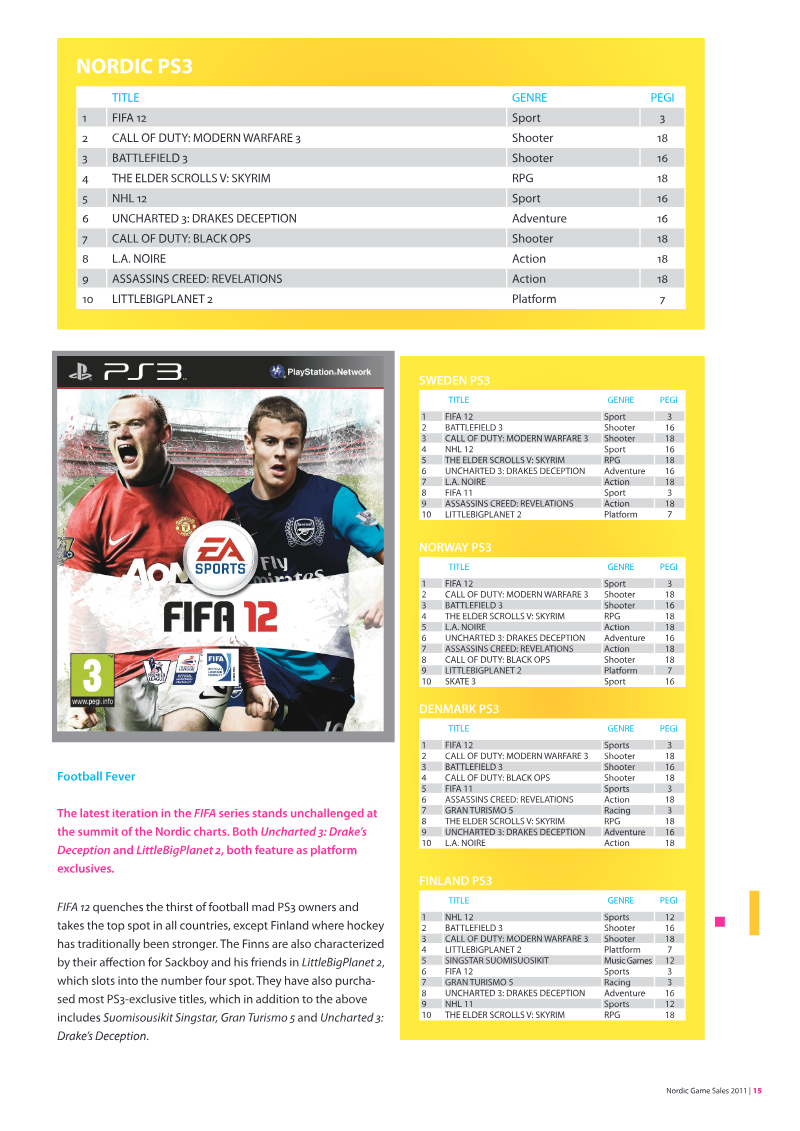
- Market demand was heavily concentrated on major blockbuster franchises, with Battlefield 3, Call of Duty: Modern Warfare 3, and The Elder Scrolls V: Skyrim emerging as the top-performing titles.

The Rise of Battle Royale: An Overview of the Hottest Game Genre
The battle royale genre has emerged as a dominant force in the global gaming industry, characterized by a unique blend of survival, exploration, and last-man-standing mechanics.
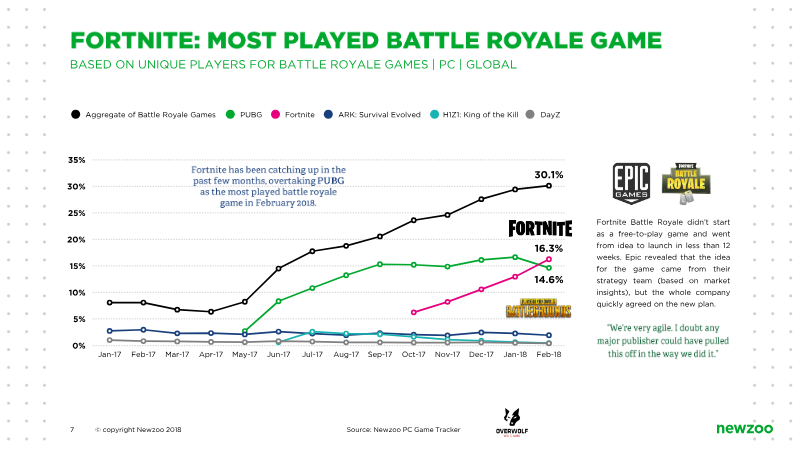
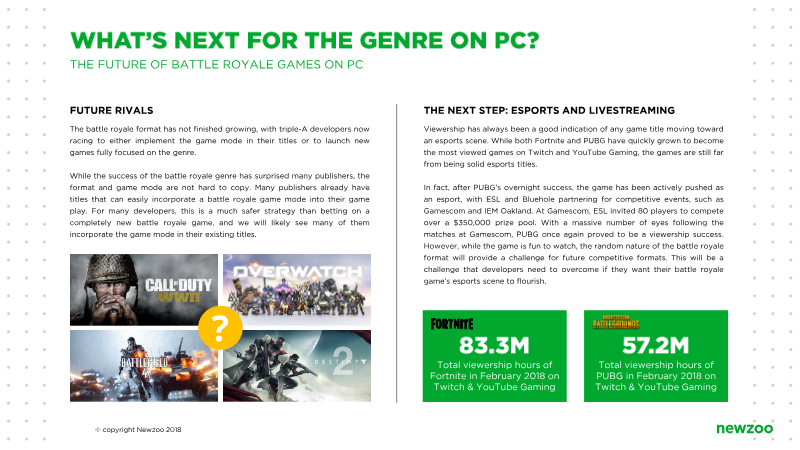
- The battle royale genre has achieved mainstream dominance by distilling survival and shooter mechanics into a highly replayable, spectator-friendly format.
- PUBG and Fortnite serve as the genre's primary anchors, with PUBG maintaining a strong foothold in Asian markets through partnerships with Tencent, while Fortnite captures a broader Western audience via a free-to-play model and cross-platform integration.
- The mobile sector is a primary growth driver, led by publishers like NetEase and Tencent who have successfully launched mobile-optimized versions of major titles to capitalize on mobile-first gaming cultures.