Action reports and market data
Documents
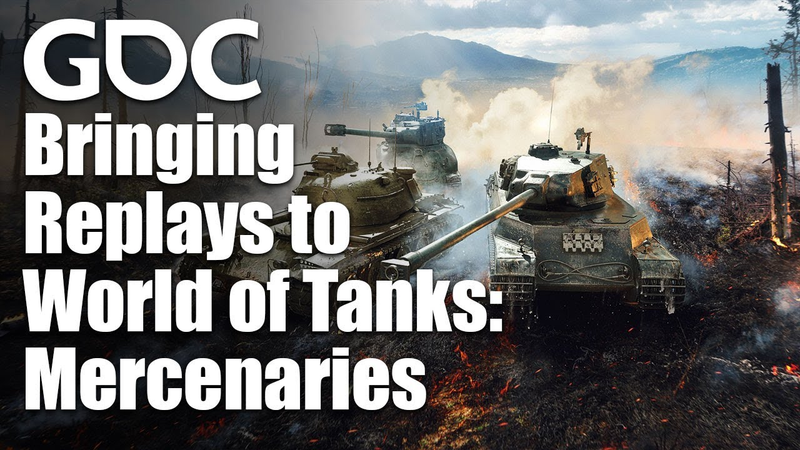
Bringing Replays to World of Tanks: Mercenaries
The implementation of a server-side replay system for World of Tanks: Mercenaries centers on a sophisticated architectural strategy that treats recorded match data as a live network stream.
- The replay system utilizes a 'fake server' architecture that treats recorded match data as a live network stream, allowing the game to leverage existing network code for playback and camera functionality.
- To ensure playback stability and performance, the system decouples gameplay logic from UI timers and employs a tiered message-processing system that discards non-essential packets during time-jumps.
- The architecture uses world-state checkpointing to enable rapid seeking through long matches, preventing the frame spikes typically associated with jumping to different points in a recording.
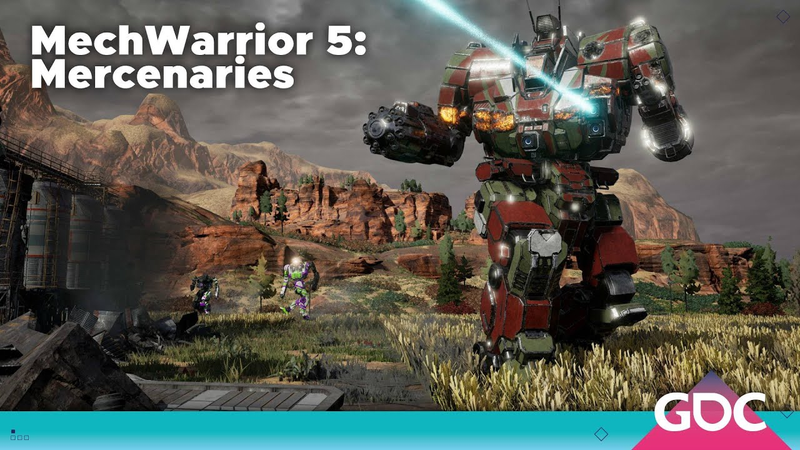
GDC Plays MechWarrior 5: Mercenaries with Piranha Games' Russ Bullock
MechWarrior 5: Mercenaries serves as a modernization of the long-standing franchise, designed to translate the deliberate, heavy combat mechanics of the series into a deep, non-linear single-player campaign.
- Piranha Games developed MechWarrior 5: Mercenaries as a non-linear, single-player campaign, leveraging eight years of technical experience and assets from MechWarrior Online.
- The game features a complex damage model with dozens of distinct degradation states and fully destructible urban environments to simulate the experience of piloting a heavy tank.
- Development efficiency was bolstered by strategic partnerships, including asset sharing and localization collaboration with Harebrained Schemes.
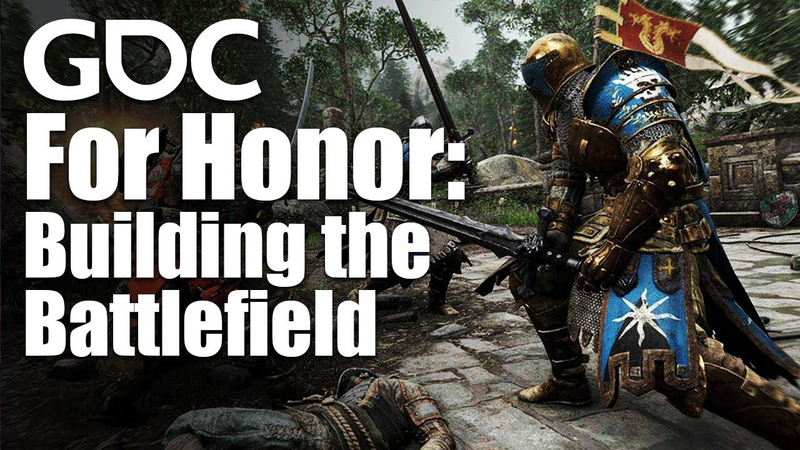
Deterministic vs. Replicated AI: Building the Battlefield of For Honor
The architecture of For Honor relies on a deterministic, input-driven simulation model designed to facilitate high-fidelity, skill-based melee combat.
- For Honor utilizes a distributed peer-to-peer deterministic simulation where only player and AI inputs are transmitted across the network, ensuring all clients reach the same game state without synchronizing complex object properties.
- The game architecture treats AI and human players identically, using a shared 'Katana' state machine tool that allows designers to define character states, movement, defenses, and branching conditions without hard-coding logic.
- To manage large-scale battles with up to 200 actors, the team replaced complex, costly platoon-merging logic with simple flocking rules to handle movement and target acquisition efficiently.
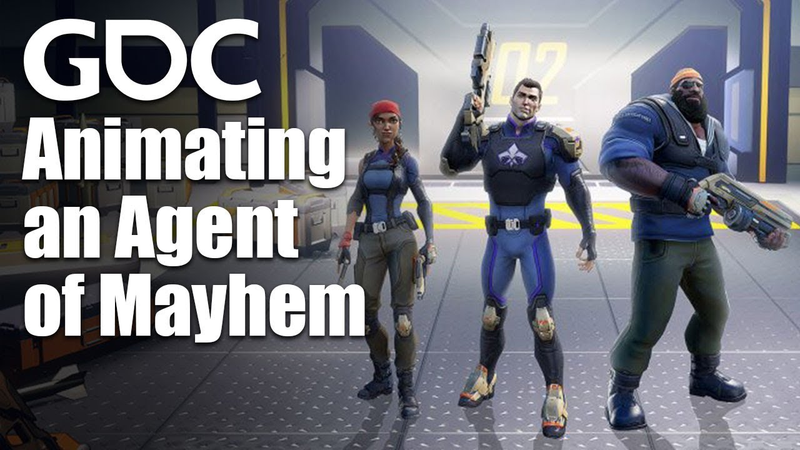
Animating an Agent of Mayhem
The development of Agents of Mayhem centers on a systematic approach to character animation that balances high-fidelity personality with technical efficiency.
- Volition utilized 'character one sheets' to define core traits, gameplay strengths, potential pitfalls, and character secrets, ensuring consistent animation performance without relying on lengthy documentation.
- The animation team categorized movements into 'ordinary' (standard mocap) and 'extraordinary' (exaggerated, stylized) to allocate time efficiently, applying snappy timing and held poses to the latter to match the game's 2D-inspired aesthetic.
- To manage limited resources, the team implemented procedural systems for jump landings and turns, which saved approximately 30% of animation production time by layering arm-only overrides onto existing idle or run animations.
Boss Up: Boss Battle Design Fundamentals and Retrospective
Boss battles function as the definitive microcosm of a game, serving as critical skill gates that synthesize mechanics, narrative, and spectacle into a singular, high-stakes encounter.
- Effective boss design relies on establishing a specific skill, then creating 'negative space'—an environment or attack pattern that forces the player to utilize that exact skill to succeed.
- Boss encounters should provide a 'post-battle' window that allows players to relish their victory, such as the grotesque death animations in God of War 3 or the transition sequences in Mushroom 11.
- Progression tracking can be integrated into the failure state; for example, Cuphead displays a progress bar upon death to show players how close they were to winning, which helps mitigate frustration and potential rage-quitting.
The Journey to Creating SHANK
The development of the action game Shank by Klei Entertainment serves as a case study in independent game production, navigating publisher relationships, and the transition to multi-platform releases.
- Klei Entertainment maintained creative control over Shank by self-funding the initial development, allowing them to present a nearly finished prototype to EA that was visually and mechanically identical to the final product.
- The studio rejected a previous publishing deal to maintain independence and protect the industry's ethical standards, opting instead for a more equitable partnership with EA.
- Development efficiency was high, with the core game concept prototyped in two months and the team working only three weekends throughout the nine-month production cycle due to robust internal tool development.
Unity Mobile Business: 5 things Pixonic does to retain users in War Robots
The mobile game War Robots, a cooperative PvP title with over 100 million installs and 1.5 million daily active users, utilizes a data-driven approach to optimize player retention.
- Pixonic increased War Robots' monthly revenue by 10% by implementing non-intrusive video ads that allow players to replenish ad-watch pools and double post-combat rewards.
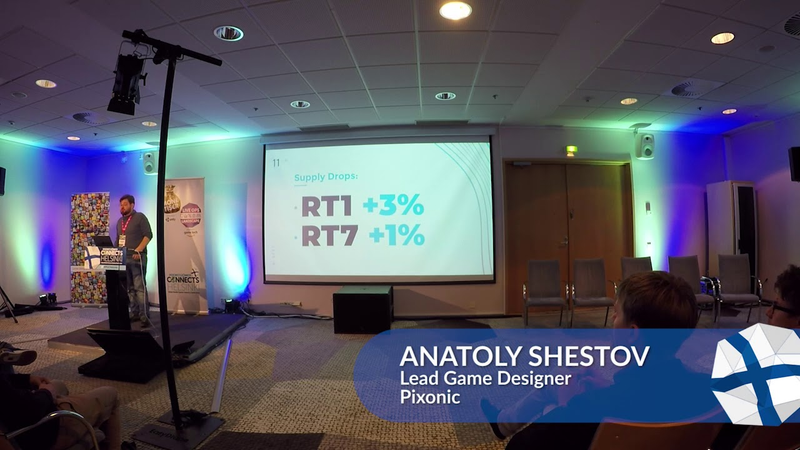
- The introduction of timer-based 'Supply Drops' successfully increased Day 1 retention by 3% and Day 7 retention by 1% by encouraging more frequent, short-session engagement.
- Implementing a 'Battle Rewards' progression system based on skill-based achievements increased Day 1 retention by 2% and fostered higher levels of competitive play.
Wake of Poseidon! - I Analyze Your Indie Games (#013)
The indie game Wake of Poseidon is a twin-stick shooter that utilizes a unique orthographic camera perspective to create a three-dimensional play space.
- The orthographic camera perspective creates significant depth-perception issues, making it difficult for players to track projectile trajectories during high-intensity bullet hell sequences.
- Combat readability should be improved by replacing line-based projectiles with round bullets and shifting focus toward faster projectiles, melee-focused enemies, or telegraphed area-of-effect attacks.
- Visual feedback requires enhancement through clearer hit detection indicators, directional knock-back mechanics, and death animations that react to the specific angle of impact.
Gunkid 99 - I Analyze Your Indie Games! (#012)
Gunkid 99, a twin-stick platformer, is analyzed for its core design mechanics, player engagement strategies, and areas for potential improvement.
- The core weapon-collection mechanic serves as a multi-functional design tool that forces player movement, drives scoring, ensures weapon variety, and maintains high tension via time limits.
- High-quality, responsive controls combined with impactful visual feedback like screen shake and enemy knockback are the primary drivers of the game's satisfying combat loop.
- The progression system, which gates new worlds behind a specific weapon-collection quota, risks player frustration if the difficulty curve is not precisely balanced.
For Honor: From a Great Launch to a Challenging Live Period
The transition from traditional game development to a games-as-a-service model requires a fundamental shift in mindset, moving from the delivery of a static product to the ongoing management of an evolving ecosystem.
- Transitioning to a games-as-a-service model requires shifting from static product delivery to managing an evolving ecosystem, necessitating a move from intuition-based design to rigorous, data-driven balancing.
- Maintaining competitive integrity in live services depends on tracking granular metrics, such as win rates and move-usage patterns, across diverse player skill levels.
- Infrastructure stability is critical to long-term viability, as evidenced by the necessity of transitioning from peer-to-peer networking to dedicated servers to resolve post-launch performance vulnerabilities.
I Still Play Your Indie Games!... #009
The provided analysis examines the indie game Aldarix the Battlemage, focusing on game design principles, balancing, and player experience.
- Improve player onboarding by replacing the initial overwhelming spell selection with a gradual unlocking system to foster better progression and engagement.
- Enhance combat clarity by implementing more impactful damage animations and integrating mana costs directly into the user interface.
- Leverage a limited enemy pool to keep the game easy to learn, shifting the focus of complexity onto the player’s diverse spell kit rather than enemy behavior.
Embracing Push Forward Combat in DOOM
The design philosophy behind the modern DOOM series centers on the concept of push-forward combat, a paradigm shift that rejects the defensive, cover-based mechanics prevalent in contemporary shooters.
- The 'Push Forward Combat' philosophy mandates that players must remain aggressive and mobile to succeed, utilizing mechanics like glory kills to replenish resources rather than relying on traditional cover-shooter mechanics like reloading.
- To maintain high-intensity pacing, developers implemented a three-tier enemy control hierarchy—twitch, falter, and stagger—which allows players to interrupt AI behavior and create openings for finishing moves.
- AI accuracy is intentionally tuned to miss when the player is moving, creating a dynamic where players feel empowered by speed and threatened when standing still, rather than relying on purely random accuracy offsets.