Action reports and market data
Documents
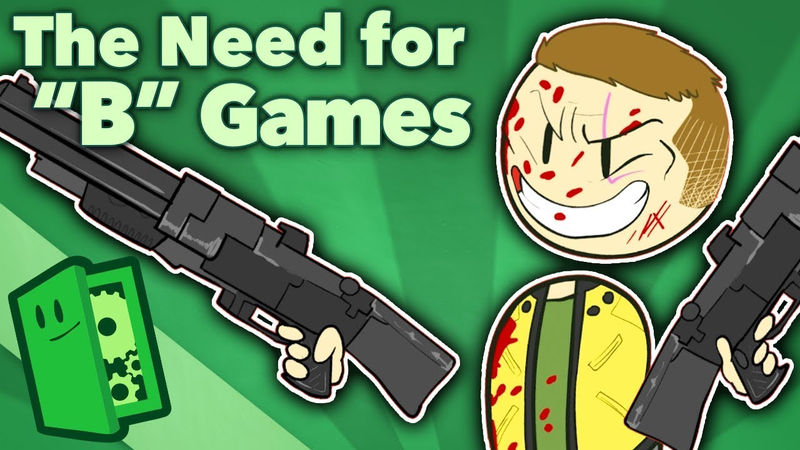
Wolfenstein vs Call of Duty - The Need for “B” Games - Extra Credits
The gaming industry faces a significant disparity in how mainstream titles address sensitive historical and political themes.
- High-budget AAA franchises like Call of Duty often sanitize sensitive historical events, such as the Holocaust, to maintain broad appeal and avoid controversy.
- The 'B-game' model, exemplified by titles like Wolfenstein II: The New Colossus, uses lower budgets and reduced corporate oversight to explore transgressive themes like fascism and racism.
- B-games function similarly to historical B-movies by operating on the industry fringes to push boundaries in political discourse and violence that mainstream productions currently avoid.
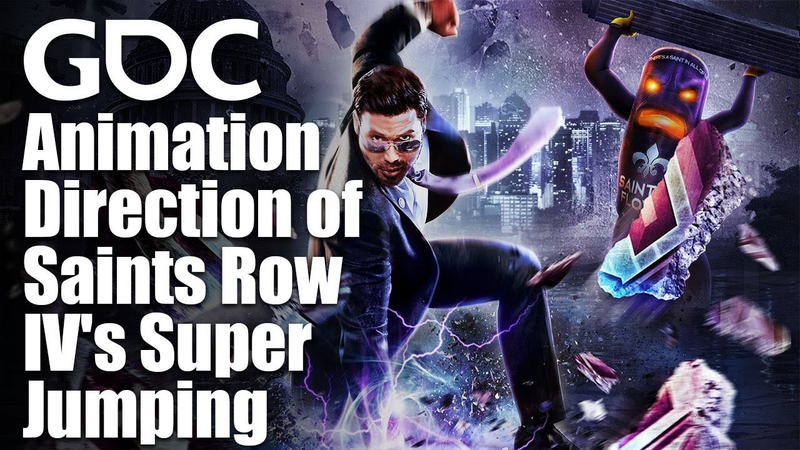
Super Powering the Saints: Animation Direction of Saints Row IV's Super Jumping
The development of the super jumping system for Saints Row IV presented a unique animation challenge: integrating supernatural movement into a franchise defined by a "comfortable and confident" blue-collar aesthetic rather than traditional superhero tropes.
- To maintain the specific 'Saints Row' identity, the animation team avoided traditional superhero tropes—which rely on character-specific posing—in favor of grounded, evolving motions that accommodate any player-customized character.
- The team abandoned initial attempts to capture superhero jump reference footage because the results were either unrealistic or failed to convey a sense of momentum, leading them to instead use Olympic long-jumping as the primary reference for realistic, evolving body mechanics.
- To prevent the animation from feeling repetitive during hours of gameplay, the team implemented a system that blends multiple jump states based on velocity and height, ensuring the character's movement evolves naturally from takeoff to apex and landing.
Dev Log - Meet my Baby!
The core of this minimalist strategy project centers on a resource management mechanic where players control white creatures to combat red enemy units.
- The game utilizes a minimalist two-button control scheme where the left mouse button duplicates player units and the right mouse button triggers explosive attacks.
- Core gameplay centers on balancing exponential population growth against the strategic timing of detonations to clear levels before enemy difficulty scales.
- The prototype features varied enemy behaviors, including static targets and intelligent units that actively hunt player duplication points.
Super Time Force: Solving the Time Travel Paradox
The development of the 2D run-and-gun shooter Super Time Force required solving complex game design paradoxes inherent in time-manipulation mechanics.
- Super Time Force manages time-travel paradoxes by implementing a 'Level Entropy' system that enforces a rule where entropy must always increase, ensuring that past modifications never leave players worse off or enemies better off than in the original timeline.
- The game utilizes a 'Quantum Entanglement' mechanic to resolve causality violations, allowing the game to forcibly reinsert outcomes from past timelines into the current one even if the original cause of an event was altered.
- To solve the 'Quantum Measurement Problem' and maintain control over level flow, the game uses an 'Observer System' that ensures entities only interact with the world when they are deemed observable by the player, preventing unintentional interactions in unvisited areas.
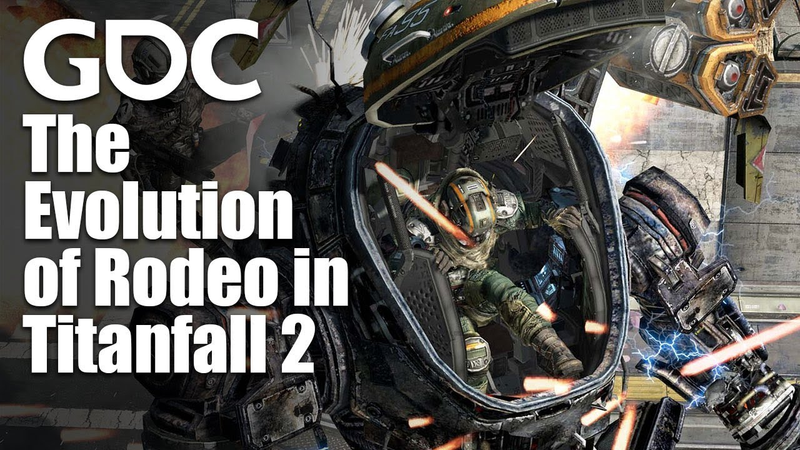
The Evolution of Rodeo in Titanfall 2
The rodeo mechanic in the Titanfall series serves as a critical design bridge between agile pilot movement and armored Titan combat, aiming to capture a cinematic David versus Goliath dynamic.
- The 'rodeo' mechanic in Titanfall 2 was fundamentally redesigned from a long-duration damage-over-time process into a short-duration event centered on stealing and delivering batteries to create a dynamic 'cat-and-mouse' gameplay loop.
- In Titanfall 1, the rodeo sequence lasted 15 to 20 seconds to provide a cinematic experience, but this was shortened in the sequel to prevent the mechanic from feeling like a disconnected minigame.
- The introduction of the 'battery' system in Titanfall 2 allowed for increased team coordination, as pilots could insert stolen batteries into friendly Titans to restore health or shields.
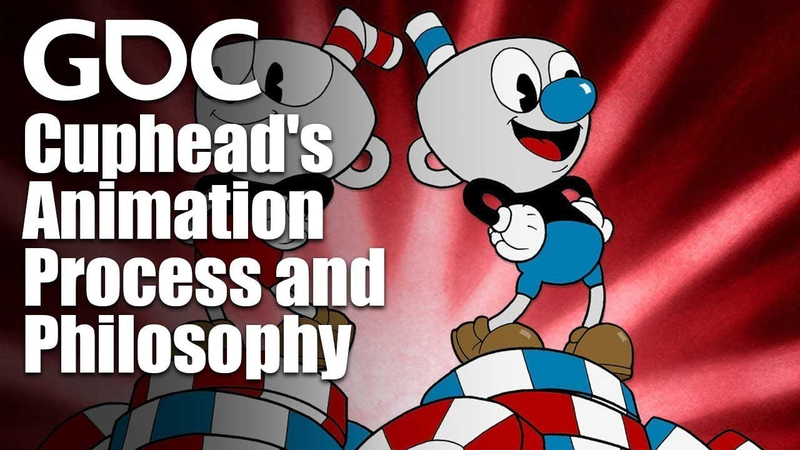
Cuphead's Animation Process and Philosophy
The development of the 2D action game Cuphead is defined by a commitment to the aesthetic and production techniques of 1930s animation.
- Studio MDHR maintains the aesthetic of 1930s animation by utilizing traditional paper-based animation, hand-inked frames, and watercolor backgrounds rather than digital simulations.
- The design process for Cuphead bosses prioritizes simplicity and solid shapes, avoiding overly complex details that would be difficult to animate or rotate in 2D space.
- To ensure technical feasibility, animators create rough blue-pencil sketches before committing to final designs, as the high-stakes nature of paper animation makes late-stage changes labor-intensive.
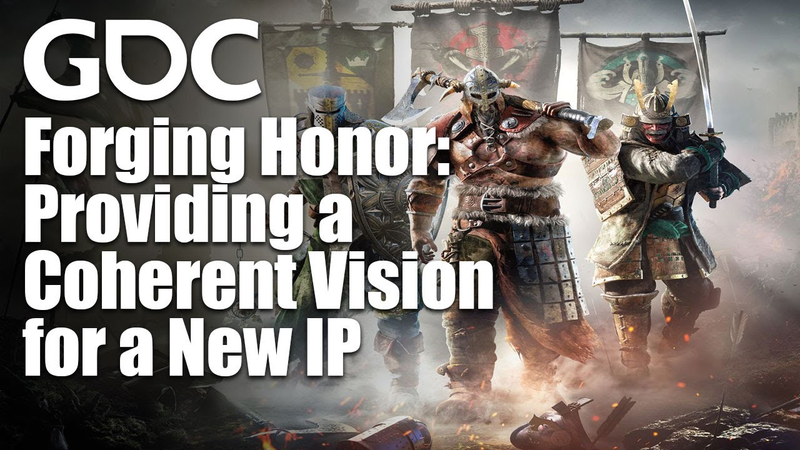
Forging Honor: Providing a Coherent Vision for a New IP
Establishing a coherent vision for a new intellectual property requires shifting the focus of leadership from a singular, initial sales presentation to a continuous, iterative process of communication.
- Pitching is not a request for funding, but a method to signal core values and earn the confidence of collaborators regarding the project's success and meaningfulness.
- To maintain a coherent vision for a new IP, teams should prioritize rapid iteration by building hundreds of prototypes early in development, as seen in the 18-month prototyping phase for For Honor.
- Teams should validate progress through regular, high-stakes internal tournaments every three months using stable builds, which forces developers to prove the game's viability and stability consistently.
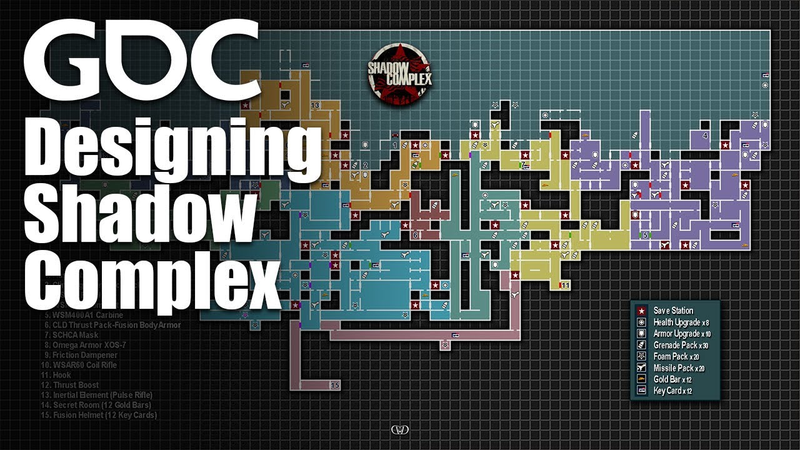
Designing Shadow Complex
Small-scale game development thrives when teams embrace inherent constraints by prioritizing high-quality, focused gameplay over the expansive, resource-heavy scope of traditional retail titles.
- Prioritize unique gameplay experiences over technical development by leveraging existing engines like Unreal, allowing small teams to focus resources on original design rather than building foundational technology.
- Maintain a lean development process by using short, concise design documents—such as the five-page document used for Shadow Complex—to facilitate rapid team alignment and iteration.
- Define a clear core gameplay loop early in development, such as the exploration-combat balance in Shadow Complex, and ensure every feature and asset directly supports that loop to avoid unnecessary bloat.
Controlling Carnage: Effective Side-Scroller Controls on Mobile
The development of control schemes for mobile action games requires moving beyond traditional console-based paradigms to address the unique constraints of touchscreens, specifically the lack of tactile feedback and the physical limitations of thumb reach.
- To mitigate 'thumb drift' and the lack of tactile feedback on touchscreens, developers should implement large, invisible hit pads that leverage muscle memory rather than relying solely on visible buttons.
- Mapping actions to distinct thumb positions—vertically extended, horizontally extended, and tucked—allows players to execute complex inputs like jumping, melee, and ranged attacks without needing to visually monitor the control area.
- Control schemes must be dynamically scaled based on device screen size, with smaller devices requiring more compact layouts to ensure both visibility and ergonomic usability.
Character Balance in Skylanders: More than the Numbers
Character balance in the Skylanders franchise prioritizes the subjective player experience and accessibility for a demographic aged six to ten over traditional competitive metrics.
- Character balance is driven by player perception rather than raw numerical data; if a player perceives a move as powerful due to visual effects or sound design, it functions as powerful regardless of its underlying math.
- In Skylanders: Swap Force, developers managed difficulty by scaling enemy damage output rather than hit points, implementing a 'fair fight' mechanic that grants players a one-second window of immunity after taking lethal damage to prevent frustration.
- The development team prioritized creating characters that players either loved or hated over those that were merely 'okay,' as strong emotional reactions drive engagement and playground discussion among the target demographic.
Galak-Z: Forever: Building Space-Dungeons Organically
The development of procedural dungeon generation for the 2D space shooter Galak-Z highlights a strategic shift from manual level design to a hybrid approach that balances algorithmic generation with hand-crafted content.
- The development team replaced manual level design with a hybrid system using Hilbert curves to map dungeon layouts, effectively preventing backtracking and incoherent intersections.
- The generation process utilizes a low-resolution grid to sample the Hilbert curve, establishing a primary path while designating specific dead ends for treasure and mission objectives.
- A custom room template editor allows designers to paint geometry and enemy paths, which are then populated using cellular automata to create organic, cave-like structures.
Solving Titan-Sized Problems: Evolving Titan Combat in Titanfall 2
The evolution of Titan combat in Titanfall 2 centers on transforming high time-to-kill (TTK) gameplay from a repetitive, bullet-sponge experience into a dynamic, skill-based system.
- Titanfall 2 transitioned from generic, customizable loadouts to distinct, role-based Titan classes inspired by fighting games and MOBAs to foster complex ability synergies.
- The combat model shifted to a high time-to-kill (TTK) system by replacing hit-scan weapons with low-frequency, high-impact projectiles to reward mechanical precision and positioning.
- Developers mitigated the risk of stagnant, unkillable team compositions by removing automatic health regeneration and enforcing unique, character-specific loadouts.