Action reports and market data
Documents
Structure of Networked Action Games | Saturday School #3
The presentation outlines the fundamental architecture required for building responsive, deterministic networked action games.
- Treat game logic as a deterministic simulation function where the current state and player input produce a new state, ensuring consistency by decoupling the simulation loop from the rendering loop.
- Implement a fixed-tick system for physics calculations instead of variable frame rates to maintain a synchronized frame of reference across all clients and the server.
- Use integer-based ticks for state updates to prevent the synchronization discrepancies and floating-point errors common in network-based physics simulations.
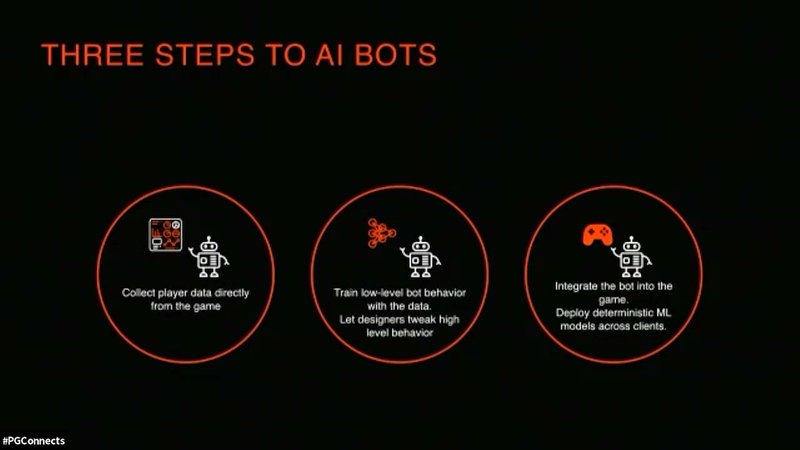
Engaging Bots for Multiplayer Games
The integration of artificial intelligence bots into multiplayer games serves as a critical strategy for maintaining player engagement, ensuring consistent matchmaking, and improving first-time user experience (FTUE).
- Integrating machine learning-driven bots into the game 'Forge and Fight!' resulted in a 50% increase in day-one player retention.
- A hybrid AI architecture—combining finite state machines for strategy and imitation learning for combat—achieves sophisticated bot behavior without the high computational costs of deep reinforcement learning.
- Training effective imitation learning models requires relatively small datasets, often involving less than ten hours of gameplay.
The Gangs Bite Back: Music and Sound of 'Crackdown 3'
The audio design for Crackdown 3 centers on a cinematic cyber trap aesthetic, blending modern hip-hop, electronic bass, and orchestral scoring to mirror the game’s high-energy, futuristic open world.
- The audio engine utilizes a custom, listener-relative raycasting system in Wwise to generate real-time acoustic simulations for over 700 destructible props without manual markup.
- To manage cloud-based physics, the team built a bridge between server-side destruction data and client-side audio that categorizes impacts based on material, mass, and impulse.
- The team maintained audio clarity in a chaotic environment by using Wwise HDR and frequency-domain processing to carve out competing frequencies, rather than relying on traditional volume ducking.
It Just Works: Ray-Traced Reflections in Battlefield V
The integration of real-time ray-traced reflections into the Battlefield V engine represents a significant milestone in adapting deferred rendering pipelines to experimental hardware-accelerated APIs.
- DICE implemented a hierarchical screen-space tracing technique in Battlefield V that reduced the total number of rays required by approximately 40%, significantly improving real-time performance.
- Ray-tracing performance was highly dependent on scene content; complex geometry like wrought iron fences caused ray divergence that made rendering up to four times slower than standard scenes.
- To manage the high cost of ray tracing, the engine uses a hybrid pipeline that combines screen-space tracing with DXR, utilizing spatial and temporal filtering to denoise the resulting output.

Ask Me Anything: Q&A with Yacht Club Games' David D'Angelo
Yacht Club Games operates on a philosophy that prioritizes precise, mathematically defined mechanics to ensure player movement and combat feel intentional.
- Yacht Club Games maintains a team of 24 employees and manages project workflows by holding regular meetings every one to two weeks to track task progress and team capacity.
- The studio designs gameplay mechanics using strict numerical metrics, such as jump height and tile coverage, to ensure consistent level design and satisfying player movement.
- When developing DLC like Plague Knight or Specter Knight, the studio focuses on high-level concepts—such as 'feeling cool' or solving context-sensitive button prompts—to dictate character movement and ability constraints.
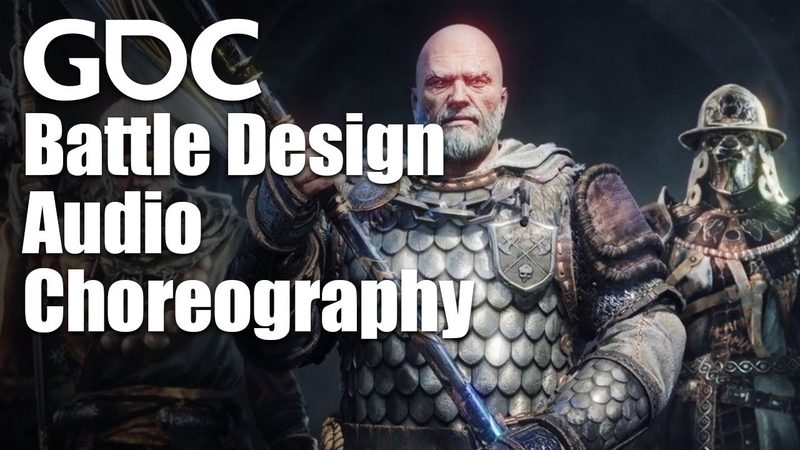
Fighting Legos: Audio Choreography for Battle Design
The primary objective of modern combat audio design is to move beyond simple, binary sound effects toward a system of bespoke, highly specific audio choreography.
- Modern AAA combat design, such as in For Honor, utilizes voiceover sound effects as a core game mechanic to provide players with immediate, consistent feedback that confirms their inputs and helps them learn the game's rules.
- Moving away from traditional 'variety packs'—where random sounds are pulled from a large bank—improves gameplay by creating a highly specific, repeatable audio-to-animation bond that reinforces player actions.
- To achieve this consistency, audio directors must coach voice actors to perform specific, repeatable sounds rather than relying on the long-standing industry practice of recording large batches of varied takes.
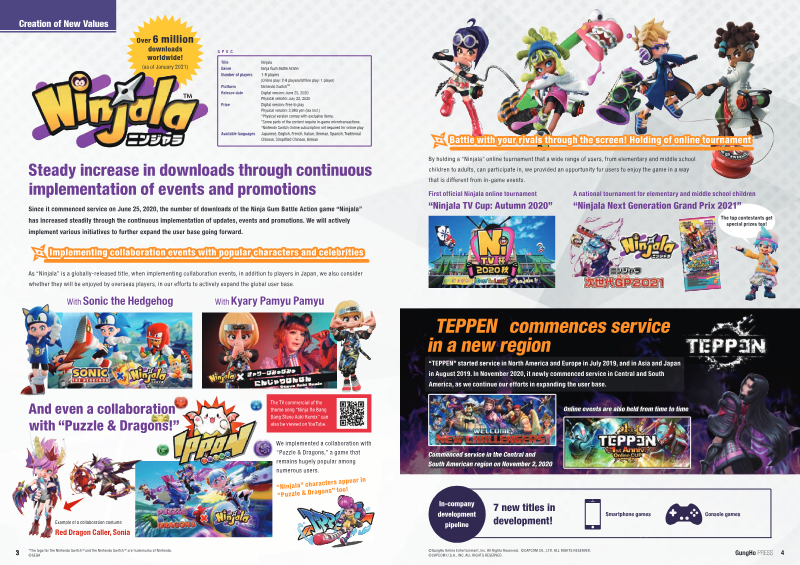
Ninjala: Battle Action Game Overview
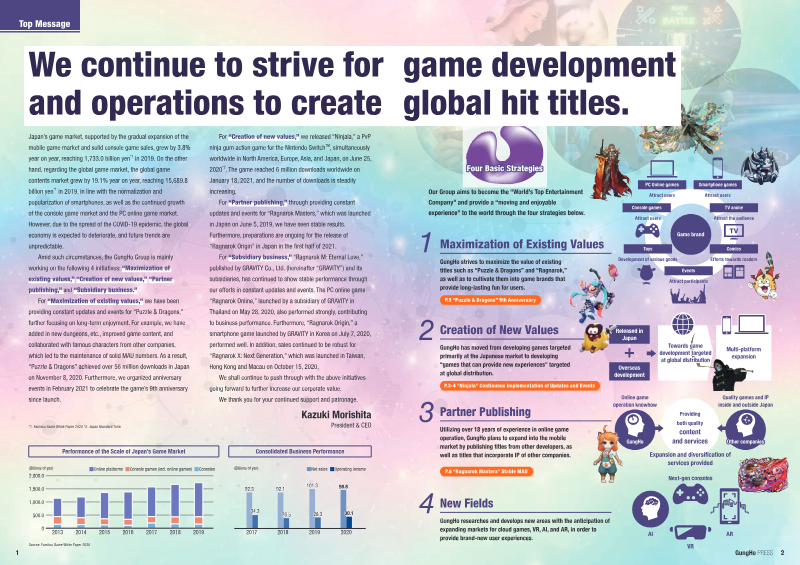
GungHo Online Entertainment pursues a multi-faceted growth strategy centered on the maximization of existing intellectual property and the creation of new, globally distributed gaming experiences.
- GungHo Online Entertainment reported 98,844 million yen in net sales and 30,157 million yen in operating income for 2020.
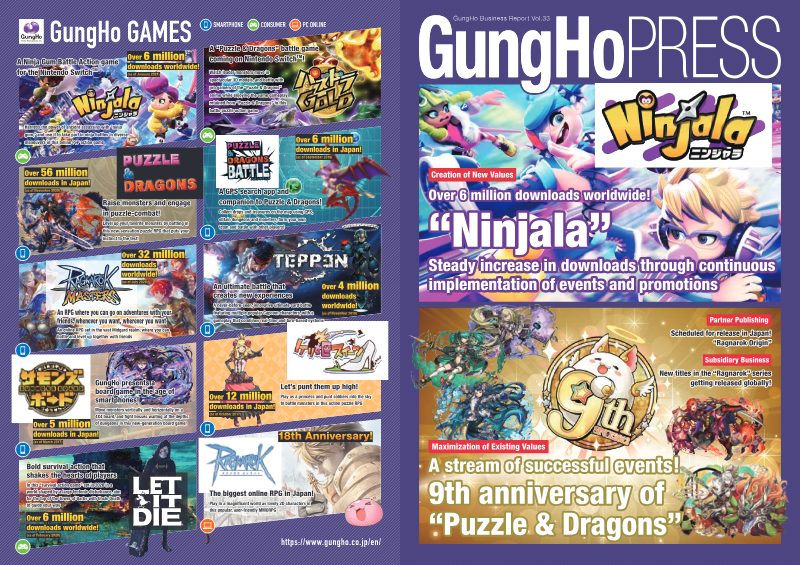
- The mobile title Puzzle & Dragons surpassed 56 million downloads in Japan as of November 2020 and reached its 9th anniversary in 2021.
- The Nintendo Switch PvP title Ninjala achieved over 6 million worldwide downloads by January 2021.
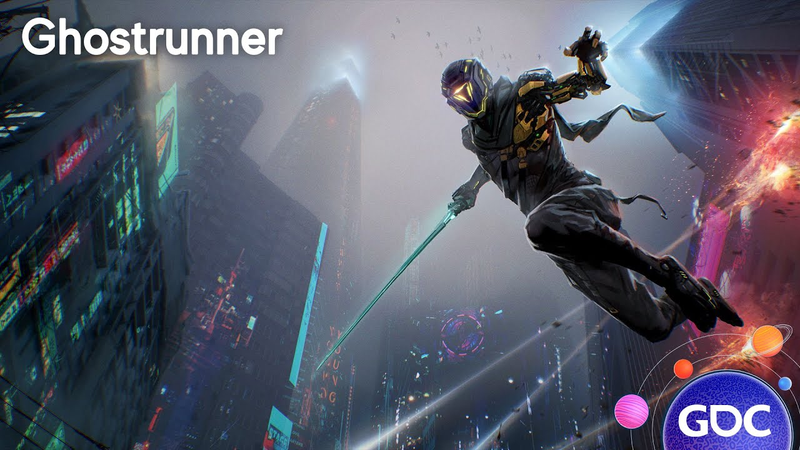
GDC Plays Ghostrunner with One More Level
The development of Ghostrunner represents a strategic shift toward high-fidelity, first-person action, moving away from the studio’s previous top-down design roots.
- Ghostrunner centers on a 'one-hit, one-kill' mechanic, which the developers adapted into a first-person perspective to differentiate the title from traditional action games.
- To maintain gameplay momentum, the developers designed levels to be 'waterproofed'—ensuring fluid movement and navigation while allowing for multiple player-chosen routes without stopping the action.
- Narrative exposition is delivered primarily through in-game dialogue rather than face-to-face interactions, utilizing quieter, non-combat platforming sections to ensure players can absorb the story without interrupting the game's pace.
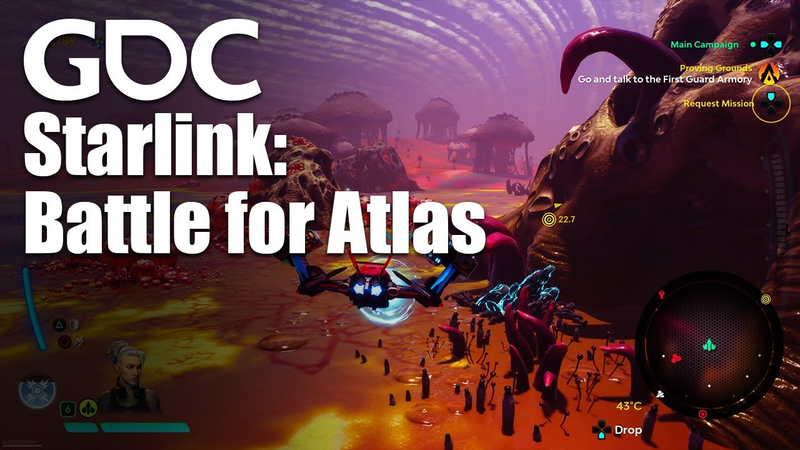
From Game Jam to the Creation of Starlink: Battle for Atlas
The development of Starlink: Battle for Atlas serves as a case study in balancing radical creative experimentation with the rigid demands of AAA production.
- To overcome the challenges of a wide-open innovation mandate, the Ubisoft 'Tomcat' team utilized a two-week iterative cycle consisting of brainstorming, pitching, voting, planning, and rapid prototyping.
- The team scaled brainstorming by starting with individuals, moving to pairs, and then groups of four, which allowed the team to generate hundreds of unique ideas rather than relying on the limited output of individuals.
- The team utilized a 'validate by any means necessary' approach during the one-week prototyping phase, employing diverse methods such as paper prototypes, existing game engines, and physical hardware hacks to prove concepts quickly.
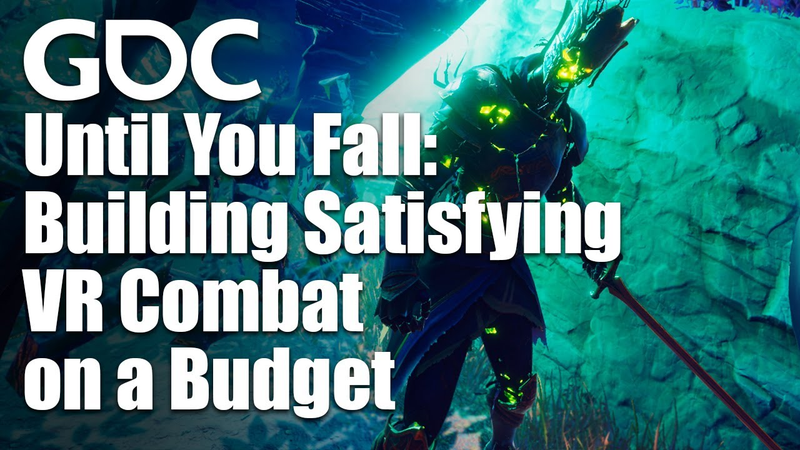
Until You Fall: Building Satisfying VR Combat on a Budget
Effective virtual reality combat design relies on prioritizing the core gameplay loop over high-fidelity, physics-based interactions that often introduce unnecessary friction.
- Prioritize the core player fantasy over universal interactivity by cutting secondary VR features that do not directly serve the primary gameplay loop, such as picking up environmental objects or enemy weapons.
- Combat the 'waggle' effect by mechanically incentivizing exaggerated, high-effort movements, ensuring that the most effective way to play the game is also the most physically engaging and visually rewarding.
- Avoid the 'immersion trap' by establishing a baseline for interaction fidelity and removing any features that fall below that threshold, which helps control development scope and prevents gameplay friction.
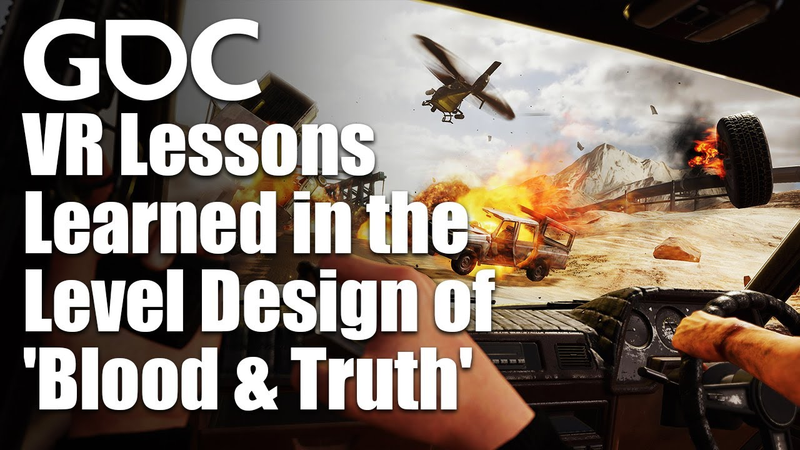
VR Lessons Learned in the Level Design of 'Blood & Truth'
The development of virtual reality (VR) action-adventure titles requires a specialized approach to level design that prioritizes player comfort, spatial awareness, and intuitive interaction.
- To minimize motion sickness, implement easing in and out for movement and vary speed based on distance, as moving short distances quickly is a common comfort trigger.
- Establish strict cover metrics to ensure players can comfortably see over cover, duck to feel safe, and reach interactable items like ammo or weapons.
- Utilize a rail-based traversal system with 'snap zones' to automate approximately 90% of movement, which helps maintain a consistent, comfortable experience for the player.

Can We Make This Button Fun To Press?
The fundamental challenge of game design often centers on transforming mundane actions, such as pressing a button, into engaging and meaningful experiences.
- Game engagement is built on three pillars: impact and reward, challenge, and fantasy.
- Impact and reward are maximized when player actions have lasting consequences rather than temporary effects, reinforced by acoustic, visual, or haptic feedback.
- Long-term engagement is driven by balancing challenge to avoid boredom or frustration, requiring players to utilize timing, positioning, and planning to achieve mastery.