Action-Adventure reports and market data
Documents
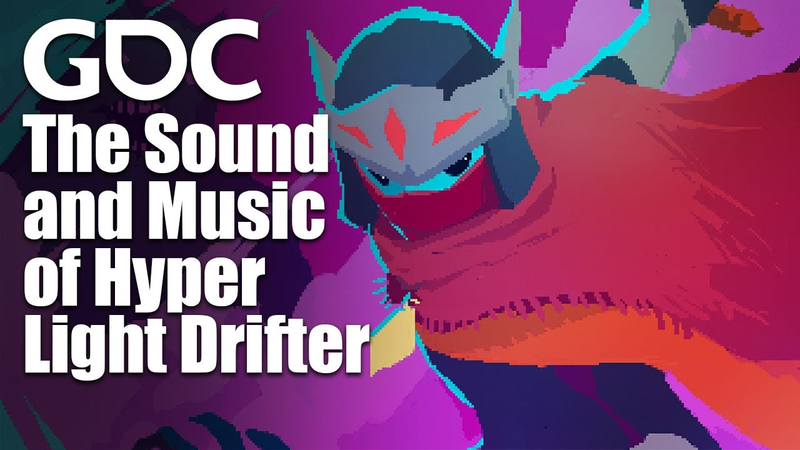
The Sound and Music of Hyper Light Drifter
The audio development of Hyper Light Drifter centers on the creation of a unique, immersive sonic identity through experimental recording techniques and a highly iterative collaborative process.
- The audio team utilized unconventional field recording techniques, such as using a stethoscope modified with a garden hose spigot to record internal body sounds like blood flow, which were then processed and distorted to create ambient textures for boss battles.
- To achieve a unique, 'nightmarish' aesthetic, the developers used a 1950s wire recorder—purchased for $250—to capture and manipulate raw, historical audio, creating distorted textures that predated modern digital recording artifacts.
- The sound design process relied heavily on extreme processing of organic sounds, such as recording the creator's own voice squealing like a pig or using wolf vocalizations, which were then pitch-shifted and layered to create distinct, terrifying creature audio.
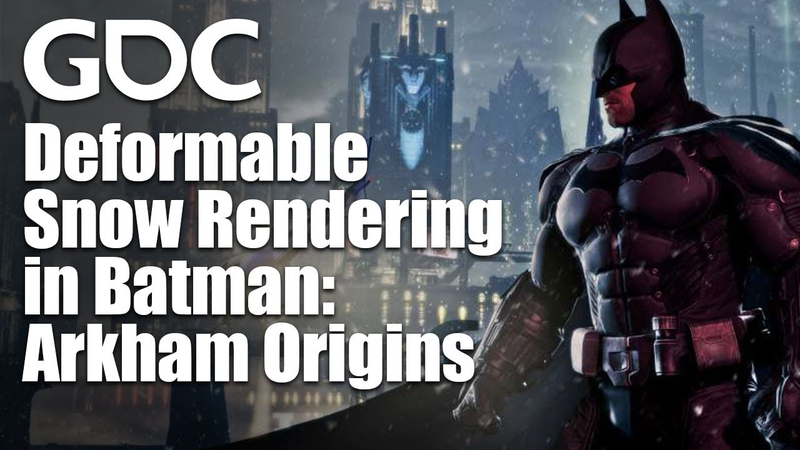
Deformable Snow Rendering in Batman: Arkham Origins
The development of the snow rendering system for Batman: Arkham Origins focused on creating a high-performance, low-memory solution for organic, deformable surfaces.
- The deformable snow system uses a runtime-generated displacement height map technique that avoids expensive raycasting or physics-heavy calculations, making it performant for previous-gen consoles like the PS3 and Xbox 360.
- To manage memory efficiently, the system uses a pre-allocated memory pool and only tracks 'active' surfaces—those within a specific distance of characters—releasing memory for distant surfaces to maintain a strict 2MB budget.
- The technique renders character interactions into a height map, which is then processed via a four-tap bilinear Poisson disc blur to create smooth, organic gradients for footprints, sliding, and fighting movements.
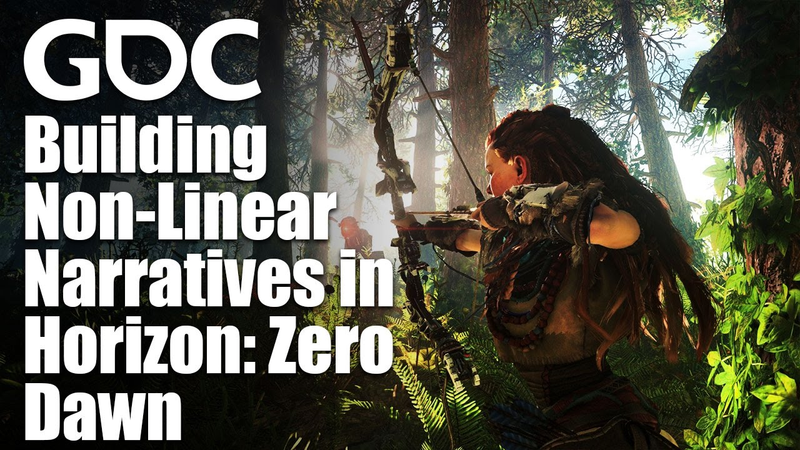
Building Non-Linear Narratives in Horizon: Zero Dawn
The development of Horizon: Zero Dawn centered on establishing a robust quest architecture capable of supporting a vast open-world environment without sacrificing narrative coherence.
- Horizon: Zero Dawn utilized a graph-based narrative framework that treated quest progression as a probability space rather than a fixed sequence to balance player agency with structural integrity.
- The system relied on nodes representing plot points connected by cause-and-effect relationships, using a defined set of core verbs to dynamically manage the locking and unlocking of narrative beats.
- This architecture successfully supported the production of nearly 150 distinct quests and enabled automated features such as the player job system.
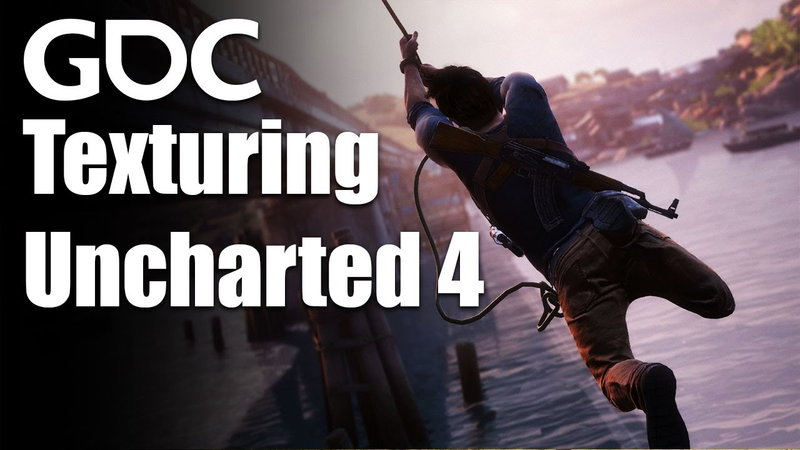
Texturing Uncharted 4: A Matter of Substance (presented by Allegorithmic)
The production of Uncharted 4 marked a pivotal shift in high-end game development by integrating a node-based, procedural texturing pipeline to manage the creation of approximately 3,000 assets.
- Naughty Dog integrated a node-based, procedural texturing pipeline using Substance Designer and Substance Painter to manage the production of approximately 3,000 assets for Uncharted 4.
- The team utilized a modular library of simple, reusable nodes rather than monolithic tools, allowing 80 percent of the game’s assets to be produced within the Substance suite.
- Standardizing the material pipeline enabled seamless collaboration between internal staff and external outsourcing partners while maintaining a consistent artistic vision.
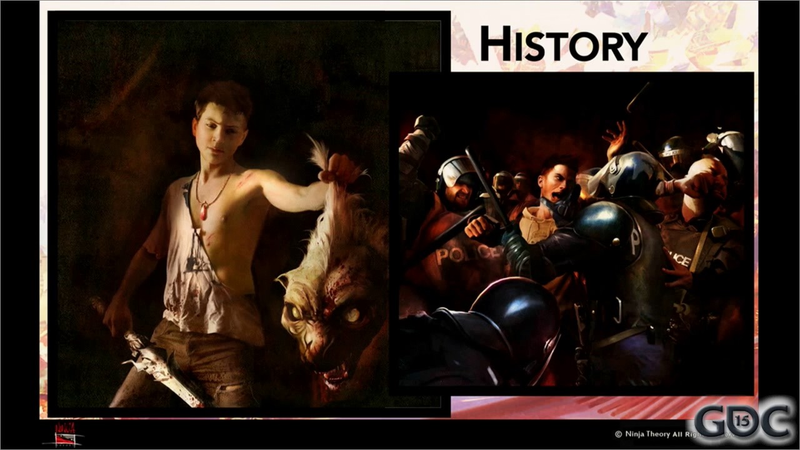
Art Direction Bootcamp: How Being Different Makes All The Difference
In this 2015 GDC presentation, Ninja Theory’s visual director Alessandro Taini outlines a philosophy of art direction centered on the pursuit of originality through unconventional creative processes.
- Art direction should prioritize originality by resisting generic industry tropes and avoiding literal keyword-based brainstorming, which often leads to clichéd visual results.
- Creative teams should derive inspiration from non-gaming sources such as fine art, experimental animation, and real-world materials to ensure a distinct and authentic aesthetic.
- Visual direction should function as a 'digital double' of the creator, incorporating personal history and diverse cultural influences to move beyond derivative design.

Developing Systemic Crowd Events in Assassin's Creed Unity
The development of Assassin’s Creed Unity represents a fundamental shift in open-world design, moving away from static, scripted sequences toward a dynamic, systemic ecosystem.
- The game engine supports up to 10,000 simultaneously interactive NPCs, anchored by over 500 hand-placed crowd stations that provide spatial context for emergent social behaviors.
- Systemic events are built on a modular three-part framework—introduction, challenge, and resolution—which allows for the rapid assembly of diverse, faction-based scenarios.
- To protect narrative integrity, designers use master switches and exclusion zones to tune or disable emergent events in specific areas without compromising mission-critical objectives.
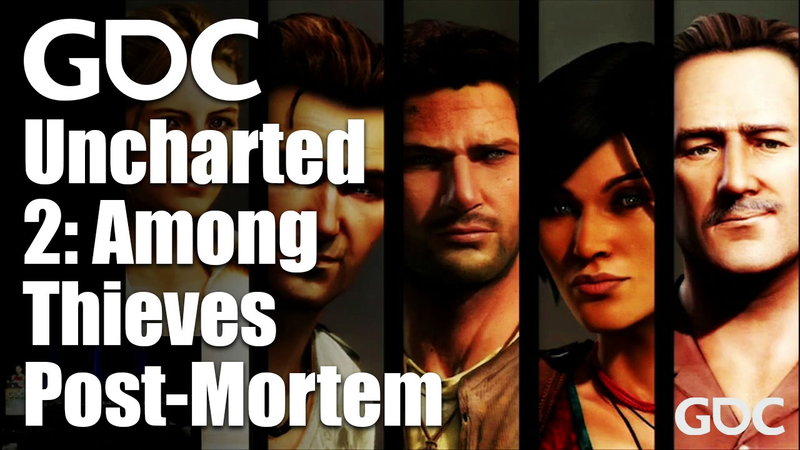
Among Friends - An Uncharted 2: Among Thieves Post-Mortem
The development of Uncharted 2: Among Thieves centered on the ambition to create a playable summer blockbuster, prioritizing character-driven narratives integrated with high-stakes, cinematic set pieces.
- The development of Uncharted 2: Among Thieves relied on a six-month pre-production phase to prototype core innovations like the Dynamic Object Traversal system, which enabled combat on moving platforms.
- Naughty Dog Engine 2.0 leveraged the PlayStation 3's Cell processor to implement advanced graphical features like screen space ambient occlusion and physically correct depth-of-field while maintaining a consistent 30 frames per second.
- The project’s extreme ambition led to a grueling, extended crunch period, prompting the studio to conclude that future development must prioritize disciplined timelines, mandatory time-off policies, and dedicated post-production phases.
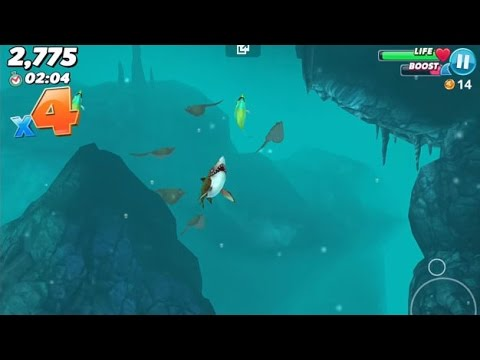
FTUE: Hungry Shark World
Hungry Shark World, developed by FGOL and Ubisoft, serves as a prominent example of the evolution of the long-running Hungry Shark franchise.
- Hungry Shark World, developed by FGOL and Ubisoft, utilizes a core loop of endless survival gameplay where players must consume prey to maintain health and energy while navigating environmental hazards.
- The game features a progression system centered on seventeen distinct shark species categorized by size tiers, allowing players to unlock increasingly powerful predators like the Great White.
- Long-term retention is driven by a robust metagame that includes stat upgrades for speed, bite, and boost, alongside customizable pets and skins.
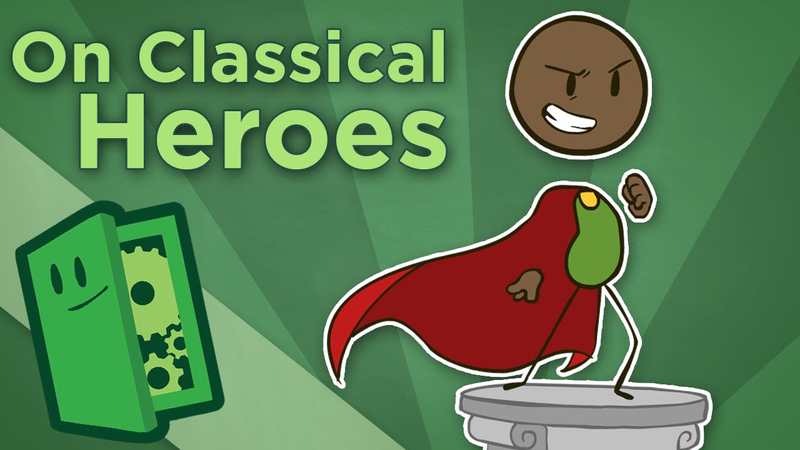
On Classical Heroes - The Power of Failure - Extra Credits
The narrative structure of classical mythology offers a compelling framework for character development in video games, specifically by integrating the concept of inevitable failure.
- True heroism in narrative design is defined by a character's struggle to reconcile extraordinary abilities with their fundamental mortality and limitations.
- Integrating inevitable failure into a game's narrative creates more resonant character arcs than the traditional power fantasy model where protagonists remain omnipotent.
- Classical figures like Achilles, Gilgamesh, and Prometheus demonstrate that a hero's essence is found in the tragic realization that they cannot bend the universe to their will.
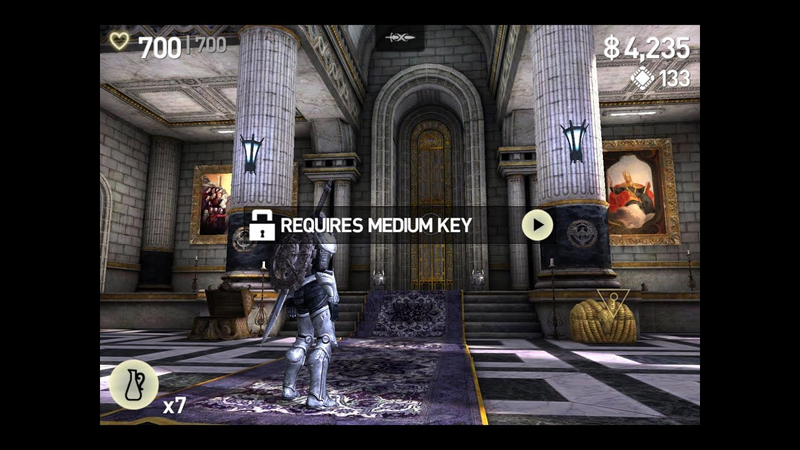
Monetizer: Infinity Blade III
Infinity Blade III serves as a notable case study in the integration of sophisticated free-to-play (F2P) monetization mechanics within a premium, paid-entry mobile game.
- Infinity Blade III utilizes a hybrid monetization model that combines a $7 upfront premium entry fee with an aggressive in-app purchase (IAP) ecosystem typical of free-to-play titles.
- The game employs a dual-hard-currency system using gold and chips, which are non-interchangeable and serve distinct functions like equipment acquisition and time-based crafting acceleration.
- Monetization is driven by a layered architecture featuring inventory stores, consumable items, time-based crafting mechanics, and randomized rewards through prize wheels and key-based chest unlocking.

Press Start CEO Luis Ernesto Parra on its YetiZen learnings
Press Start Studios, a mobile game developer with operations in both Colombia and San Francisco, focuses on bridging the gap between hardcore gaming experiences and the accessibility of free-to-play mobile titles.
- Press Start Studios utilizes a dual-location model, combining Colombian talent and government support with a San Francisco presence to maintain 24-hour development cycles.
- The studio’s 2013 participation in the three-month YetiZen incubator program served as a primary catalyst for refining their investment strategies, corporate scalability, and product design.
- The company’s core business strategy focuses on bridging the gap between hardcore action-adventure gaming and the high-retention, free-to-play mobile market.
Spec Ops: The Line - I: How to Restart a Franchise - Extra Credits
Spec Ops: The Line serves as a critical case study in how to successfully revitalize a dormant franchise by intentionally subverting the conventions of the modern military shooter genre.
- Revitalizing a dormant franchise in a saturated market requires offering a distinct, provocative perspective rather than attempting to replicate the formulas of established industry leaders like Call of Duty or Battlefield.
- The game utilizes the aesthetic and mechanical expectations of the modern military shooter genre to systematically subvert player expectations and deliver a narrative-driven critique of warfare.
- Perceived mechanical flaws, such as banal gunplay and a lack of traditional 'fun,' were intentional design choices used to mirror the grim reality of the game's subject matter and themes.