Action-Adventure reports and market data
Documents
Taking Back What's Ours: The AI of Dishonored 2
The artificial intelligence architecture of Dishonored 2 centers on a data-driven framework designed to facilitate complex, emergent gameplay while maintaining high performance on console hardware.
- Arkane Studios implemented a 'shuffle bag' system for NPC barks to prevent repetitive dialogue, where action lists are shuffled during initialization and again upon completion to ensure variety.
- The AI team utilized a 'Dynamic Space Management' (DSM) system for spatial reasoning, using influence map layers to store and propagate data like danger ratings across a grid to guide NPC movement and search behaviors.
- To coordinate group combat, the team employed a 'crew' system where individual NPCs post requests to join a group based on shared objectives, allowing for emergent behavior while maintaining individual decision-making.
Designing Over the Top - Saints Row: The Third Postmortem
Saints Row: The Third represents a pivotal shift in the franchise’s trajectory, moving away from the inconsistent narrative and gameplay identity of its predecessors toward a unified, self-aware, and intentionally over-the-top experience.
- The development team successfully unified the franchise's identity by pivoting to a self-aware, over-the-top tone after a difficult six-month development reset.
- Rigorous scope management involved 26 scheduled reviews, which resulted in the removal of approximately 4,000 man-days of work to maintain focus on core pillars.
- To align a team where 80 percent of staff were new to the series, the studio prioritized early prototyping, pre-visualization, and cross-disciplinary collaboration over static paper specifications.
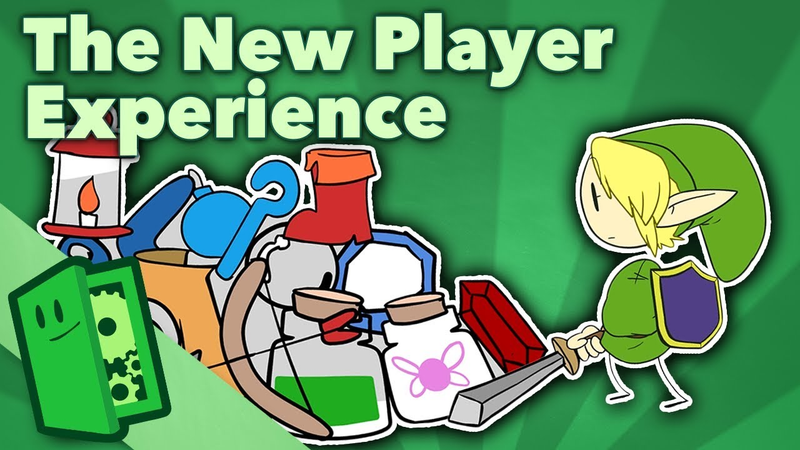
The New Player Experience - Hooks, Tutorials, Rewards - Extra Credits
A successful new player experience is defined by three essential components: the hook, the tutorial, and the reward.
- The first ten minutes of gameplay are the critical window for establishing interest, teaching core mechanics, and securing player retention.
- A successful new player experience relies on the integration of three core components: the hook, the tutorial, and the reward.
- Hooks must capture attention immediately through mechanical engagement, narrative context, or high-quality visual aesthetics.
Creating the Flood Effects in Uncharted 3
The development of flood effects for Uncharted 3 relied on a hybrid approach that combined fluid simulations with optimized, artist-driven mesh and particle systems.
- To optimize performance on PlayStation 3 hardware, the team used skeletal meshes with one joint per vertex, reducing the required joint count by two-thirds by utilizing elongated rectangular polygons.
- The team achieved high-fidelity water surfaces by using a ray-casting technique aligned with the camera’s perspective to extract mesh data from Houdini simulations, effectively eliminating visual artifacts like incorrect overhangs.
- Particle system performance was managed by rendering to a quarter-resolution buffer and replacing standard quad shapes with octagonal ones to overcome fill-rate limitations.
Level Design Workshop: Blockmesh and Lighting Tips
Effective level design relies on the early integration of block-mesh geometry and intentional lighting to establish pacing, scale, and intuitive navigation.
- Prioritize block-mesh geometry in the early development phase to test core movement mechanics and player flow before committing to high-fidelity assets.
- Use intentional guidance principles like consistent shape language, color coding, and landmark placement to reduce reliance on intrusive HUD markers.
- Integrate lighting as a functional navigation tool by treating level geometry as a framing device to highlight critical paths and gameplay interactions.
Waltzing with Blades: The Music of Assassin's Creed Syndicate
The musical direction for Assassin’s Creed Syndicate represents a deliberate departure from the franchise’s traditional, brooding orchestral scores in favor of a nimble, character-driven aesthetic.
- The score utilized a modular, character-driven design featuring solo violin for Jacob and cello for Evie to provide real-time, reactive feedback based on player choices.
- Production shifted from a traditional orchestral style to a Neo-Mendelssohn, chamber music framework to better reflect the sarcastic and intimate tone of Victorian London.
- Technical implementation prioritized grid-based transitions to eliminate cross-fades, ensuring seamless audio continuity across gameplay, loading screens, and cinematics.
Breaking Through: Psychosis and the Making of Hellblade
The independent AAA development model emerged as a strategic response to the escalating costs and creative constraints inherent in the traditional gaming industry.
- The 'independent AAA' model utilizes a lean core team of twenty professionals to maintain creative autonomy and bypass the high costs and constraints of traditional publisher-led development.
- By focusing on digital-only distribution and omitting non-essential features like multiplayer, studios can achieve high-fidelity, character-driven narratives without the bloated budgets of mainstream titles.
- The development of Hellblade utilized in-house motion capture and modular asset design to maintain high production values while reducing overall financial risk.
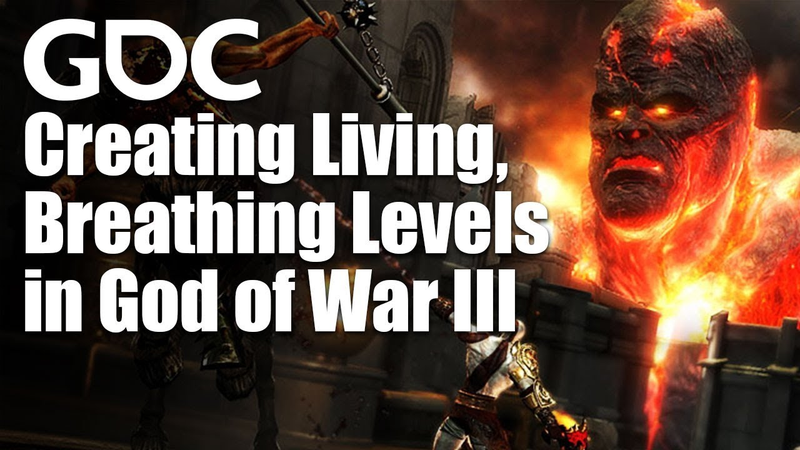
The Titans: Creating Living, Breathing Levels in God of War III
The development of the Titan sequences in God of War III represents a landmark achievement in balancing massive-scale spectacle with interactive gameplay.
- The God of War III development team transformed 500-meter-tall Titans into dynamic, interactive environments rather than static boss arenas, resulting in 25-minute immersive gameplay sequences.
- To overcome technical limitations, the studio developed custom tools to manage collision, camera logic, and entity attachment on moving, animated meshes in real time.
- The project was completed over a nine-month development cycle, utilizing gray-box testing and standardized nomenclature to manage the complexity of large-scale sequences.
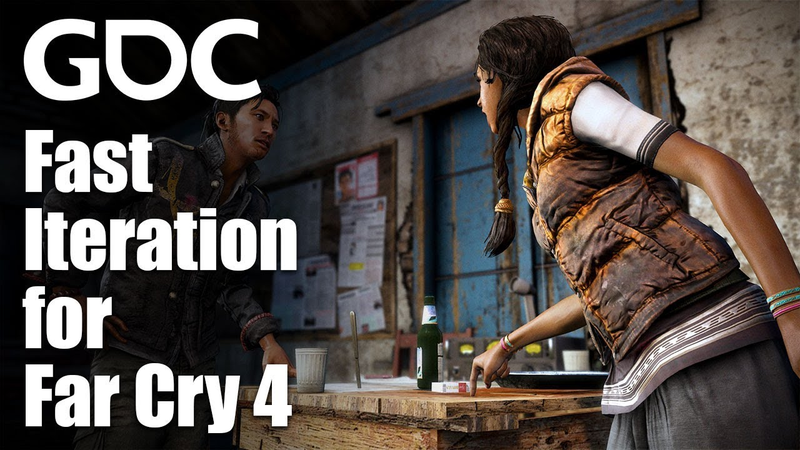
Fast Iteration for Far Cry 4 - Optimizing Key Parts of the Dunia Pipeline
The development of Far Cry 4 necessitated a fundamental overhaul of the Dunia engine pipeline to address the productivity bottlenecks that plagued previous projects.
- By implementing a central build cache that shares object files between users, the team reduced full rebuild times for the PC release target from 40 minutes to under 58 seconds.
- The pipeline was optimized for massive parallelization, utilizing a 32-core machine to spawn over 1,000 processes simultaneously for efficient task distribution.
- To eliminate redundant data distribution, the team implemented a slicing system that breaks packages into parts, hashes them using MD5, and only distributes the specific parts that have changed.
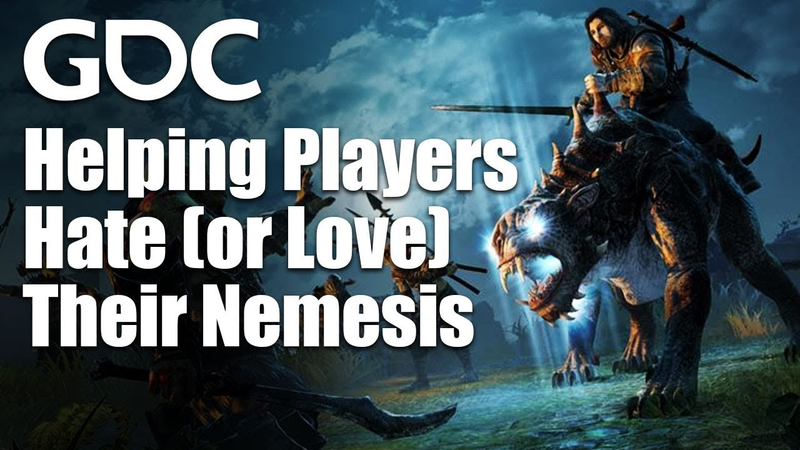
Helping Players Hate (or Love) Their Nemesis
The Nemesis system serves as a foundational design framework for fostering long-term, emotionally charged relationships between players and procedurally generated adversaries.
- The Nemesis system relies on a 'revenge loop' where time progresses after a player's death, forcing them to track down and re-engage enemies who have been promoted or changed by their victory.
- To foster deep antagonistic relationships, developers should aim for multi-encounter arcs; in Shadow of War, approximately 85% of captains are killed in one encounter, while 14% require two and 4% require three or more.
- Designers should prioritize visual impact around an enemy's head and shoulders, as these areas are more memorable to players than other body parts or equipment.

All Style, All Substance: The Audio Journey of the Vanity and Traversal System for Sunset Overdrive
The audio development for Sunset Overdrive centers on the creation of a highly responsive, dynamic soundscape that reinforces player agency and stylistic expression.
- The audio system dynamically shifts from realistic Foley to stylized, cartoon-inspired effects based on the player’s traversal momentum and combo-based 'Level of Awesome'.
- To manage 10,000+ audio assets efficiently, the team replaced manual animation tagging with an event-driven configuration file system.
- The technical architecture supports 29 clothing types and 13 surface interactions while maintaining a strict memory footprint of 2.88 MB.
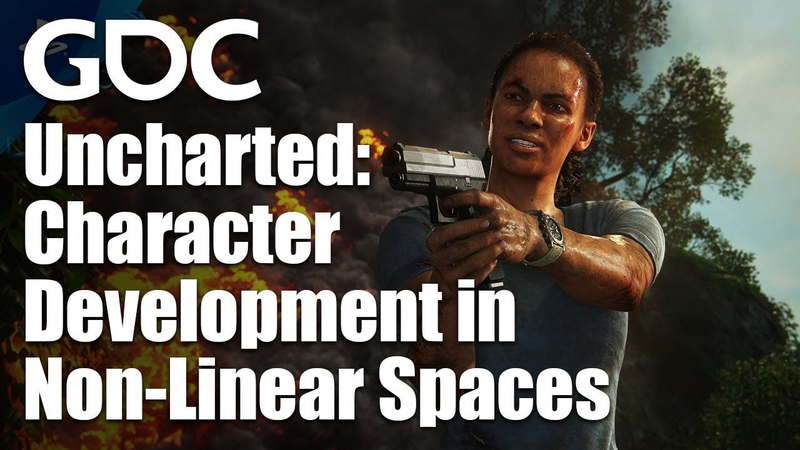
Character Development in Non-Linear Spaces: Uncharted: The Lost Legacy
The development of Uncharted: The Lost Legacy represents a significant evolution in narrative design, specifically regarding the integration of character-driven storytelling within non-linear, open-world environments.
- To maintain a cohesive narrative in non-linear environments, developers anchored critical story milestones to specific, standardized architectural locations that trigger regardless of the player's chosen path.
- The team utilized a modular dialogue system that decoupled incidental interactions from primary story beats, allowing character relationships to evolve organically during free-roaming exploration.
- The narrative architecture employed segmented conversations tied to key landmarks, using neutral dialogue that dynamically shifts based on the player’s progress to ensure a consistent character trajectory.