1 free read left. Create a free account for unlimited reading + AI research.
Create free account
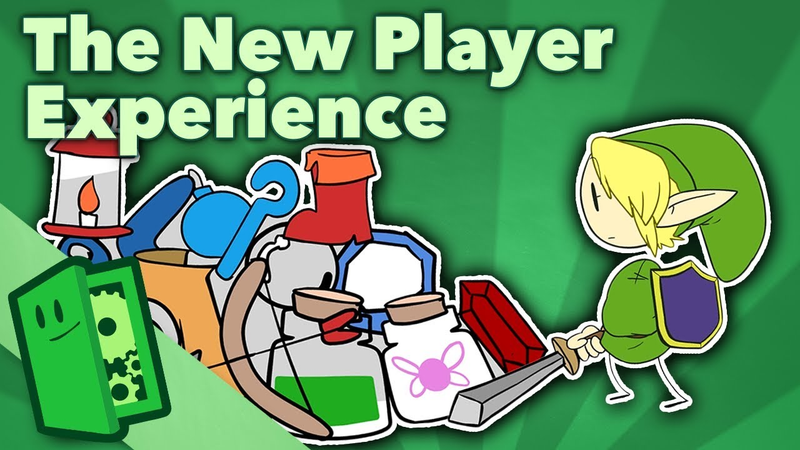
The New Player Experience - Hooks, Tutorials, Rewards - Extra Credits
Key insights
6 takeaways- 01The first ten minutes of gameplay are the critical window for establishing interest, teaching core mechanics, and securing player retention.
- 02A successful new player experience relies on the integration of three core components: the hook, the tutorial, and the reward.
- 03Hooks must capture attention immediately through mechanical engagement, narrative context, or high-quality visual aesthetics.
- 04Effective tutorials should be context-sensitive and integrated into the game world to avoid overwhelming players with isolated, dull lessons.
- 05Pacing the introduction of complex systems is essential to maintaining player momentum and preparing users for future challenges.
- 06Immediate rewards like leveling up or new gear should be paired with long-term goals, such as unfolding mysteries, to sustain motivation after the tutorial phase.
Ask AI about this video
Transcript
So many great games never get noticed because they're great 10, maybe 20 hours in. And with literally hundreds of games coming out every day, we can't afford that. In the first 10 minutes, games have to grab the player, teach them how to play, and get them wanting to come back. This first experience is vital to your game success, yet it's a part of game design that's often not given the time it deserves. So, today we're going to talk about the components of a well-designed new player experience. A good new player experience consists of three pieces: the hook, the tutorial, and the reward. The hook is just that, the part that grabs the player. The part that makes the player know, even if they know nothing else, that this is cool. That this is something they want to experience more of. Now, we've talked a lot about building hooks in other episodes. You can check those out right here. So, in this episode, we're going
to talk about the different types of hooks. The most common types are mechanical hooks, narrative hooks, and visual hooks. Mechanical hooks are things like the first Dracula fight in Symphony of the Night. As soon as the player jumps into the game, they immediately get to do something exciting, big, and epic. Something that feels just like how they'd hoped the game would feel from looking at the box art. Here, the player is hooked by something they do, something that shows them that the mechanics of the game can give them the moments they crave. Just make sure your player lives through your mechanical hook, unless of course you're Dark Souls. Then, there's the narrative hook. This can be as simple as, "Are you a bad enough dude to rescue the president?" to something as mysterious and complex as the opening of Xenogears. It just has to give the player enough context to what's happening on the screen that they're invested and won't feel adrift when we drop them into the tutorial. Lastly, we have the visual hook. Ever
have a moment early in a game where your breath is taken away by what you're seeing? That is the visual hook. It can be an incredible monster, a beautiful vista, or even a character design that just captivates you. No matter what hook you're delivering on, the point of your hook is to get the player excited enough about your game to get through the tutorial. We've also talked about tutorials a lot elsewhere. You can see them or right here. So, we're just going to go over the high-level goals of your tutorial. First, your tutorial needs to ensure that by the end of it, your player knows everything they're going to need for the first few hours of play. And I do mean everything. Something that may be intuitive to you may not be intuitive to everyone, and you don't want your players quitting just because they learn differently than you do. Second, just because you need to teach them everything they need to start the game doesn't mean you need to teach them everything in the game right away. Remember, you can split up your tutorial and teach the players about things
they'll need an hour into your game when they encounter them. In fact, I'm going to go out on a limb here and say that you should. And furthermore, just because you need to teach the player everything doesn't mean that you have to be explicit about everything. Context-sensitive tutorials are your friend. If the player is just running into a wall for 5 seconds, you can pop up a prompt that tells them what the jump button is. Most players will never see it, but for those that need it, it's there. Your tutorial should also be engaging. Just because it's the tutorial doesn't mean that it has to be dull. A great example of this is the old Call of Duty 4 tutorial. It's an exciting training run full of action and time pressure, but also a totally safe replica of the first level that by the time the player completes it, lets the designers know that the player is ready to start the game. Another more recent example of an incredibly engaging tutorial comes from Insomniac Games Spider-Man. Right off the bat, the game seamlessly transitions you from a cutscene, the hook, into
actively controlling Spidey swinging around New York. And even though you're learning how to play the game, the web-slinging is exciting. As is the way they introduce you to combat, gadgets, and get you right into thwarting the Kingpin. It's the tutorial, but it's also just the Spider-Man experience. Remember, just because something is the tutorial doesn't mean it shouldn't deliver on everything you bought the game for. Then there's the reward. The tutorial, no matter how engaging you make it, will be the dip in your interest curve that naturally follows the hook. And that's okay. That's exactly how it should be. But it also means you should reward the player for getting through the tutorial to not only make them feel good about what they've done, but be excited about what's to come. A well-constructed reward here comes in two pieces. The first part is the immediate reward. This can be things like having the player level up for the first time, giving them a new weapon to play with, or handing them an extra life. In fact, it could just be a bunch of explosions and bonus points depending
on the nature of your game. Then there's my personal favorite, the long-term reward. This is the thing that reinforces in the player that they want to keep playing. And it can be things like a narrative hook or the introduction of a mystery they'll want to get to the bottom of. Or like that moment in Fallout 4 when you get out of the vault for the first time, see that incredible view of the wasteland before you, and say to yourself, "Yes, this is where I want to be." Now, the specifics of your long-term reward will vary from game to game quite a bit. But if you can round out your new player experience with a reward that promises something down the road that the player wants to experience, explore, or know, they'll stick around long enough to, and hard air quotes here, get to the good part. So, as you're crafting the beginning of your game, just remember hook, tutorial, reward. And the next time you put down a game shortly after picking it up, ask yourself, was it missing any of those pieces? If so, what was it? How could the experience be saved? Feel free to
tell us in the comments what the best new player experiences you've, well, experienced are. And until next week, I think you know where to find me. Hey, I can see my house from here.
Summary
A successful new player experience is defined by three essential components: the hook, the tutorial, and the reward. In an increasingly crowded gaming market, developers cannot afford to delay engagement, as players often abandon titles that fail to provide immediate value. The initial ten minutes of gameplay are critical for establishing interest, teaching core mechanics, and incentivizing continued play.
The hook serves to capture the player’s attention through mechanical, narrative, or visual means. Mechanical hooks allow players to engage with core gameplay loops immediately, while narrative hooks provide necessary context to prevent confusion. Visual hooks utilize high-quality aesthetics or striking character designs to create an emotional connection. Once hooked, the tutorial must ensure players master essential mechanics without overwhelming them. Effective tutorials are engaging, context-sensitive, and integrated into the game world rather than presented as dull, isolated lessons. By pacing the introduction of complex systems, developers can maintain momentum while ensuring players are adequately prepared for future challenges.
Finally, the reward phase mitigates the natural dip in interest that follows a tutorial. Immediate rewards, such as leveling up or acquiring new gear, provide a sense of accomplishment, while long-term rewards—such as unfolding mysteries or the promise of expansive exploration—sustain player motivation. By balancing these three elements, developers can bridge the gap between the initial excitement of starting a game and the deeper, more complex experiences that follow, ultimately increasing player retention and long-term engagement.














Comments