Action-Adventure reports and market data
Documents
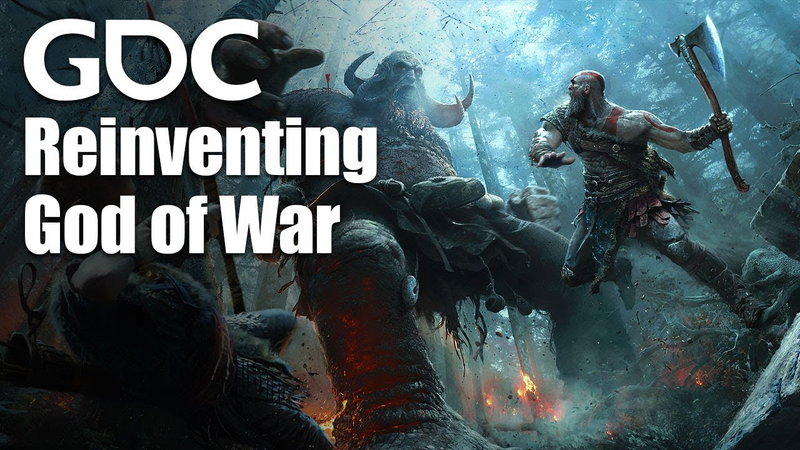
Reinventing God of War
The 2018 reboot of the God of War franchise represents a fundamental evolution of the action-adventure genre, shifting the series from a bombastic, rage-driven spectacle to an intimate, character-focused narrative.
- The 2018 God of War reboot fundamentally shifted the franchise from a spectacle-driven action series to an intimate, character-focused narrative centered on the father-son dynamic between Kratos and Atreus.
- The development team implemented a continuous, no-cut camera perspective, requiring exposition to be delivered through environmental cues and character interaction rather than traditional dialogue.
- To maintain player agency within the cinematic experience, the studio utilized technical solutions like invisible collision bumpers and camera-smoothing algorithms to ensure fluid navigation and combat.

Raji developer interview at GDC 2019
Raji: An Ancient Epic is a fantasy action-adventure game centered on a young protagonist navigating a world rooted in ancient Indian mythology.
- Raji: An Ancient Epic is an action-adventure title set in a world based on ancient Indian mythology, featuring a narrative focused on a protagonist rescuing her kidnapped brother.
- The game utilizes a unique visual health-tracking system that displays enemy vitality through dynamic markers at their feet to provide immediate combat feedback.
- Super.com is publishing the title, leveraging its team of former and active indie developers to support studios within the emerging Indian game development market.
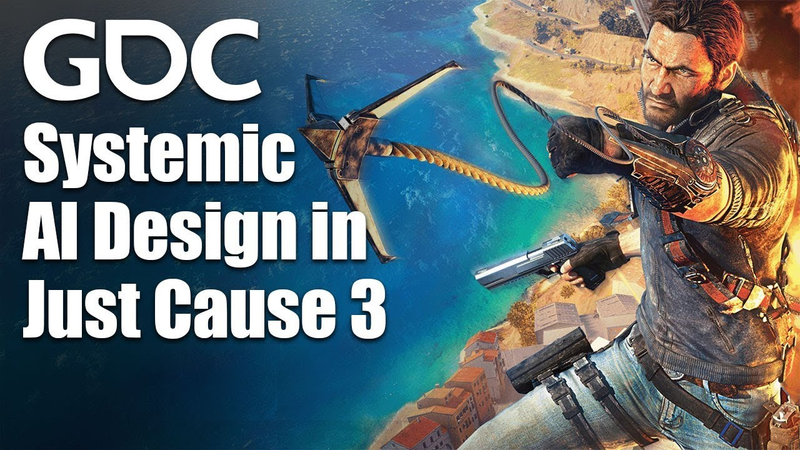
Tree's Company: Systemic AI Design in Just Cause 3
The systemic design of artificial intelligence in Just Cause 3 relies on a modular architecture that balances emergent, open-world behavior with the precise requirements of scripted mission content.
- Avalanche Studios utilized a hybrid AI architecture for Just Cause 3 that combined behavior trees for high-level logic with utility functions to rank and select optimal positions or targets based on environmental variables.
- Content designers were empowered to customize AI behavior by filling out exposed parameters in the engine, which were then dynamically read and utilized by the behavior trees at runtime.
- The team implemented modular 'micro-behaviors' as external tree objects, allowing designers to inject specific tasks—such as flying a helicopter to a point—into the main AI logic without requiring custom programming for every scenario.

Vehicle Audio of Mafia III: Recreating a Classic Era in Automotive History
The audio production for Mafia III centers on the challenge of recreating the authentic mechanical soundscape of 1968 New Orleans within the constraints of a high-octane, open-world action game.
- The development team recorded 30 distinct vehicle archetypes from 20 cars, two trucks, seven boats, and one electric vehicle to populate an expansive 1968 New Orleans setting.
- To ensure high-fidelity audio without environmental interference, the team used a Dyno-pack hydraulic braking system for controlled, silent recording sessions.
- The production scaled 30 original recordings across 90 total in-game car models by utilizing a flexible audio architecture that adapts to real-time physics data.

The Animation Pipeline of Mario + Rabbids Kingdom Battle
The development of Mario + Rabbids Kingdom Battle centered on synthesizing the structured, iconic posing associated with Nintendo characters with the unpredictable, chaotic energy of the Rabbids.
- The animation team unified the distinct visual styles of Nintendo characters and Rabbids by applying rigorous principles of clear silhouettes and lines of action to the chaotic Rabbid designs.
- Developers utilized a hybrid rigging system combining joint-based rigs and automated blend shapes to balance high-fidelity character deformations with the responsiveness required for tactical combat.
- A proprietary Take System built within Maya enabled rapid iteration and organized clip management, utilizing sidecar descriptors and dirty-bit tracking to automate mirroring and file synchronization.
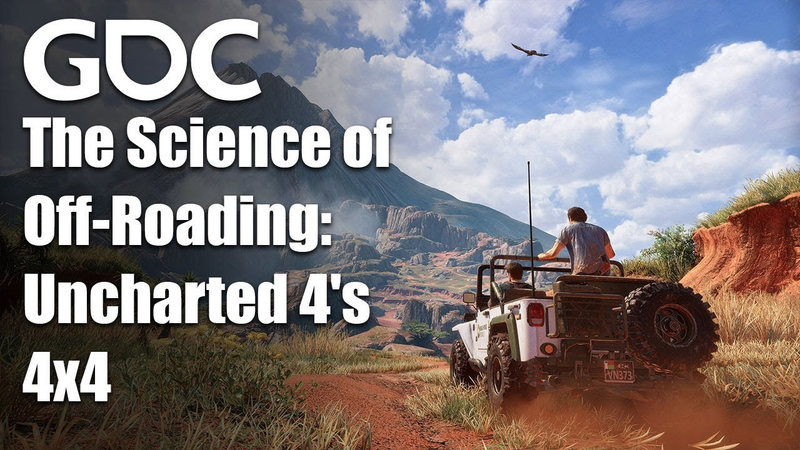
The Science of Off-Roading: Uncharted 4's 4x4
The development of the 4x4 vehicle in Uncharted 4 focused on balancing realistic physical simulation with accessible, fun gameplay mechanics suitable for an adventure title.
- The development team utilized a hybrid physics model built on the Havoc engine, prioritizing accessible, fun gameplay over strict mechanical simulation.
- To eliminate terrain penetration and jittering, the team replaced standard ray casting with shape casting and a multi-point contact system.
- Custom logic was applied to ignore specific surface normals and counter-act unwanted rotations, preventing the vehicle from flipping and maintaining momentum on steep terrain.

Mirror's Edge Catalyst: Evolving and Creating a Style
Mirror’s Edge Catalyst establishes a distinct visual identity by balancing minimalist artistic expression with the functional requirements of an open-world traversal system.
- DICE established a '70/30' design rule for Mirror's Edge Catalyst, where 70% of the environment is based on real-world precedents and 30% is stylized to maintain a distinct, futuristic aesthetic.
- The team utilized a 'less is more' philosophy to create an elegant, minimalist world, intentionally removing visual noise, dirt, and clutter to emphasize clean, pristine shapes.
- To ensure visual consistency, the team defined strong keywords and used mood boards to align the entire development team on the game's core tone and aesthetic goals.
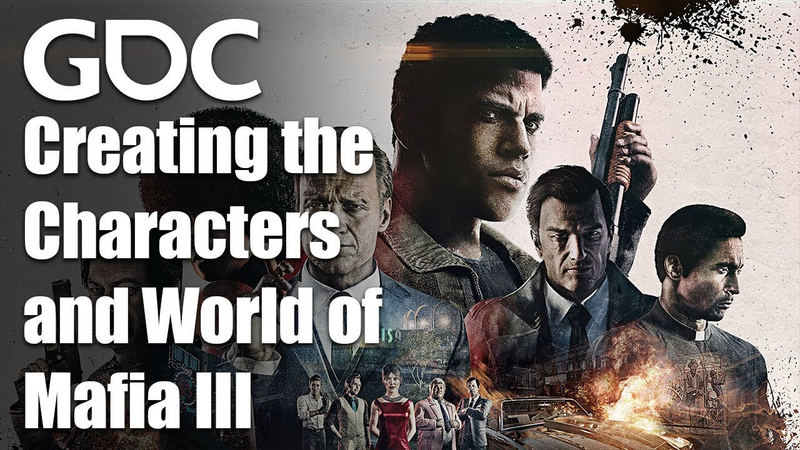
Creating the Characters and World of Mafia III
Mafia III centers on the narrative of Lincoln Clay, a Vietnam veteran navigating the volatile landscape of 1968 New Orleans.
- The narrative of Mafia III is set in 1968 New Orleans, utilizing a documentary-style presentation with archival footage to ground its fictional revenge story in the historical reality of the era's racial and social tensions.
- Developers utilized extensive research from literature, documentaries, and firsthand accounts to ensure historical accuracy in character motivations and systemic world-building.
- The game features a sophisticated police AI that dynamically adjusts response times based on the socioeconomic status of different city districts to mirror systemic disparities of the late 1960s.
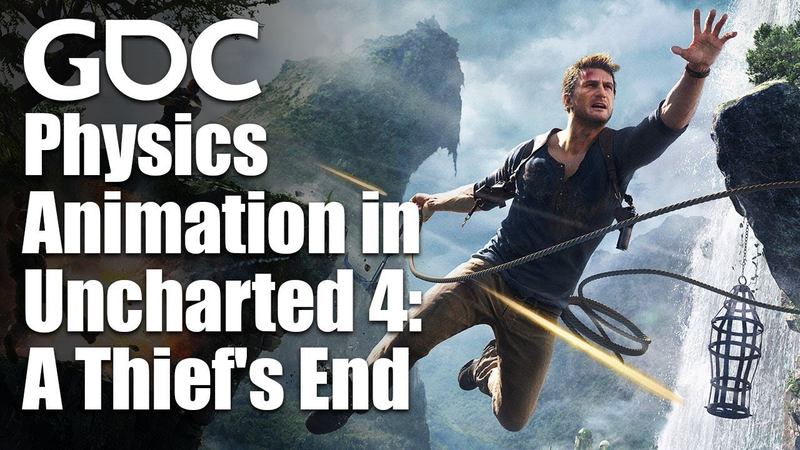
Physics Animation in Uncharted 4: A Thief's End
Uncharted 4: A Thief's End achieves high-fidelity character movement by integrating physics-driven animation with traditional key-framed techniques.
- Uncharted 4 utilizes a hybrid animation system that blends traditional key-framed techniques with physics-driven movement to maintain artistic control while ensuring environmental responsiveness.
- The development team integrated the Havoc physics engine to manage rigid bodies, constraints, and motors, preventing the 'floaty' movement typically associated with purely procedural systems.
- A script-based ragdoll profile system allows animators to independently manage mass, friction, and inertia, enabling nuanced character reactions like independent torso movement during high-speed sequences.
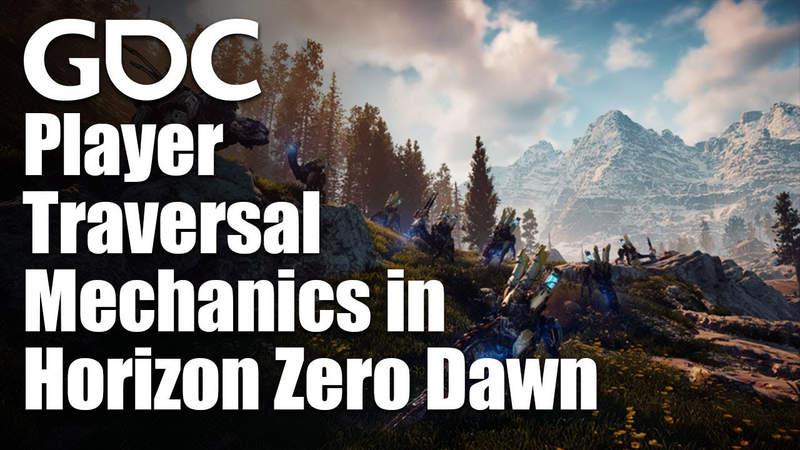
Player Traversal Mechanics in the Vast World of Horizon Zero Dawn
The development of traversal mechanics in Horizon Zero Dawn centers on achieving a balance between fluid, responsive player control and the technical demands of navigating a vast, procedurally generated open world.
- Horizon Zero Dawn prioritizes player agency by utilizing a start-stop movement system that minimizes animation latency, bypassing traditional navigation meshes to ensure high responsiveness.
- The engine employs a physics-based framework with collision probes to calculate stable ground planes, allowing the character to remain grounded on uneven terrain without sacrificing speed.
- Procedural leg adjustments via inverse kinematics and animation warping are used to refine context-aware vaulting animations and prevent visual artifacts across diverse environments.
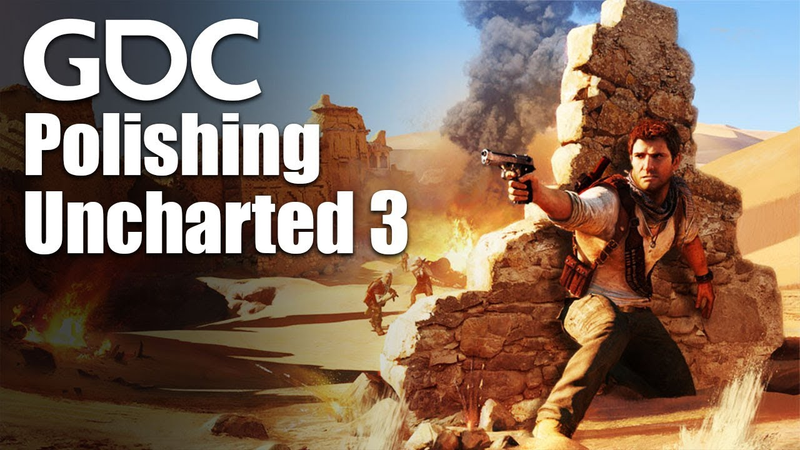
Polishing Uncharted 3
The primary objective of this analysis is to outline the strategies used by Naughty Dog to achieve high-level polish in game development, specifically focusing on the transition from a good product to an exceptional one.
- Naughty Dog allocates 20 to 25 percent of the total development schedule specifically for the alpha and beta polish phases to ensure high-level quality.
- The studio utilizes a rolling deadline system where game sections progress through alpha, beta, and gold stages independently to allow for focused resource allocation.
- Polish is defined as a distinct phase focused on refining presentation and removing imperfections, rather than iterating on core gameplay mechanics which should be finalized earlier.
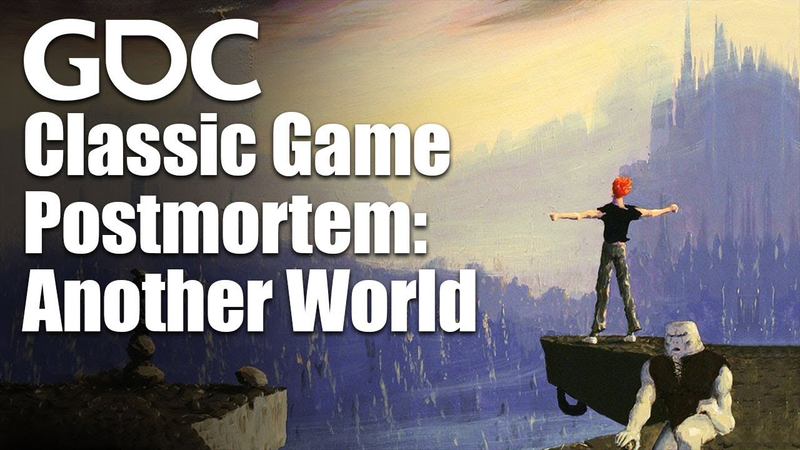
Classic Game Postmortem - Another World
The development of Another World between 1989 and 1991 represents a landmark shift in game design, characterized by a transition from traditional sprite-based graphics to an entirely polygon-based cinematic experience.
- The development of Another World (1989–1991) achieved a cinematic experience by utilizing a custom, proprietary interpreted language that allowed for real-time iteration and a total file size of just 84KB.
- The game transitioned from traditional sprite-based graphics to an entirely polygon-based engine, enabling high-rhythm narrative flow on Amiga hardware despite severe memory and color palette constraints.
- Development relied on an improvisational, chronological approach rather than rigid design documents, allowing the narrative to evolve through experimentation and discovery.