Action-Adventure reports and market data
Documents
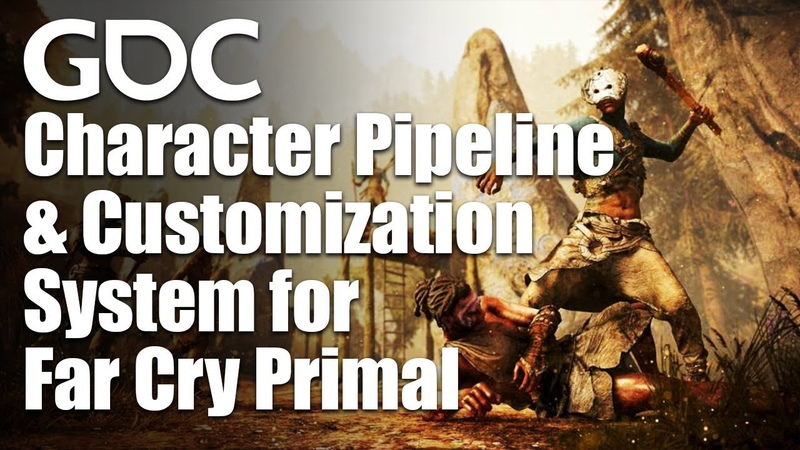
Character Pipeline and Customization System for Far Cry Primal
The development of Far Cry Primal necessitated a fundamental shift in character production, moving away from restrictive, software-specific workflows toward a flexible, cross-platform architecture.
- The character pipeline transitioned from a 3ds Max-centric model to a flexible, Python-based architecture that supports both Maya and 3ds Max, enabling a unified interface for artists.
- The 'Wolfskin' data-oriented system enables real-time asset hot-reloading and modular development, reducing character integration time from hours to minutes.
- A deterministic DNA-based generator replaced random spawning to allow for curated asset combinations, simplified debugging, and seamless integration of gameplay-driven gear upgrades.
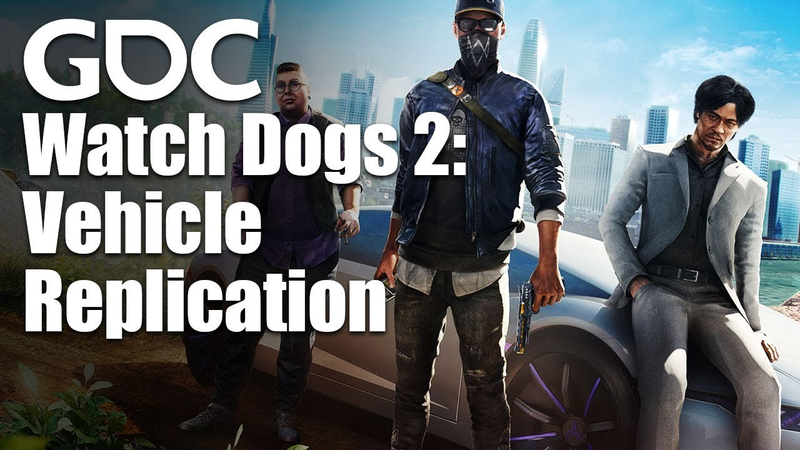
Replicating Chaos: Vehicle Replication in Watch Dogs 2
Achieving seamless vehicle replication in a peer-to-peer multiplayer environment requires a sophisticated balance between network latency management and physics fidelity.
- Watch Dogs 2 utilized a peer-to-peer architecture for its four-player bounty mode, which necessitated distributed authority over entities and created significant challenges for synchronizing high-speed vehicle collisions.
- Vehicle replication relies on projective velocity blending for dead reckoning, which interpolates between local velocity and predicted master snapshots to minimize the spatial gap caused by network latency.
- To mitigate collision discrepancies in a peer-to-peer environment, the team implemented a hybrid approach that allows local physics to simulate impacts for a short duration before blending back into the dead-reckoned trajectory.
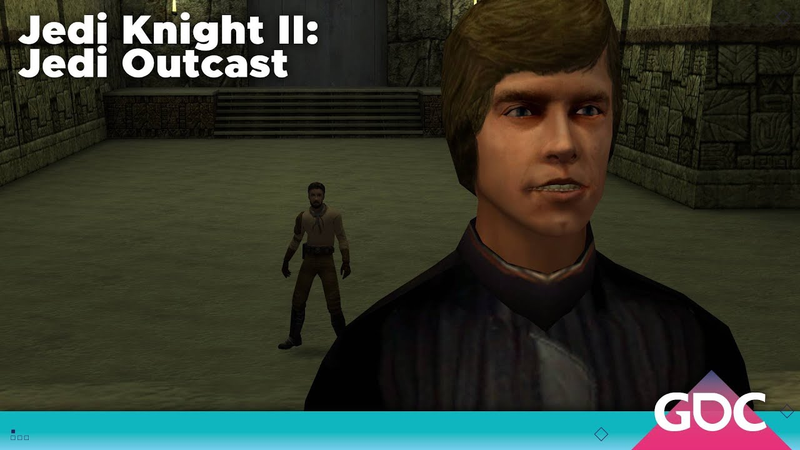
GDC Plays Jedi Knight II: Jedi Outcast with Raven Software
The development of Jedi Knight II: Jedi Outcast represents a pivotal moment in early 2000s action gaming, characterized by a transition from traditional first-person shooters to hybrid combat experiences.
- Raven Software developed Jedi Knight II: Jedi Outcast by hybridizing first-person shooter mechanics with third-person combat systems inspired by Heretic II and Bushido Blade.
- The development team utilized the technical foundation of Star Trek: Voyager – Elite Force to build the game, leveraging proprietary tools like GTK Radiant to manage hardware limitations.
- To ensure performance on early 2000s hardware, the team implemented rigorous asset optimization, level segmentation, and memory-efficient solutions like procedural facial animations driven by audio volume.
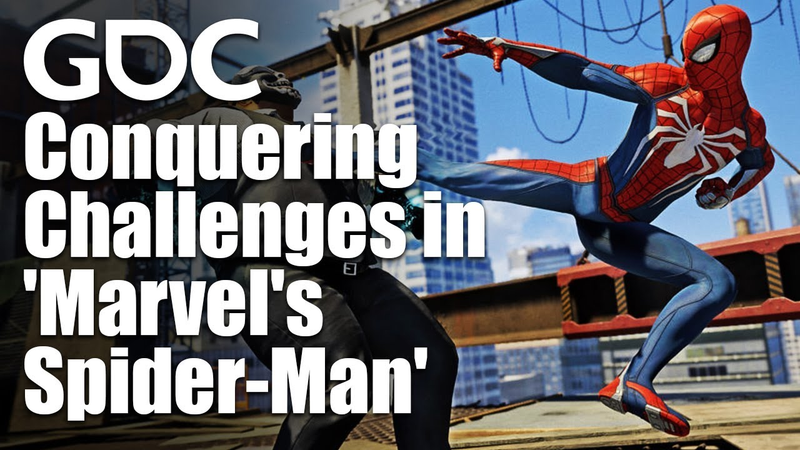
Conquering the Creative Challenges in Marvel's Spider-Man
The development of Marvel’s Spider-Man centered on the ambition to craft a definitive superhero experience that balanced high-stakes action with the grounded, human struggles of Peter Parker.
- Marvel’s Spider-Man achieved record-breaking commercial success as the fastest-selling PlayStation title at launch, moving 3.3 million units within its first three days.
- The development team prioritized the core character tension between Peter Parker’s personal life and his superhero responsibilities to ensure emotional resonance and narrative depth.
- The studio moved away from traditional superhero tropes by reimagining the protagonist as a 23-year-old, focusing on situational humor and authentic character development rather than forced quips.
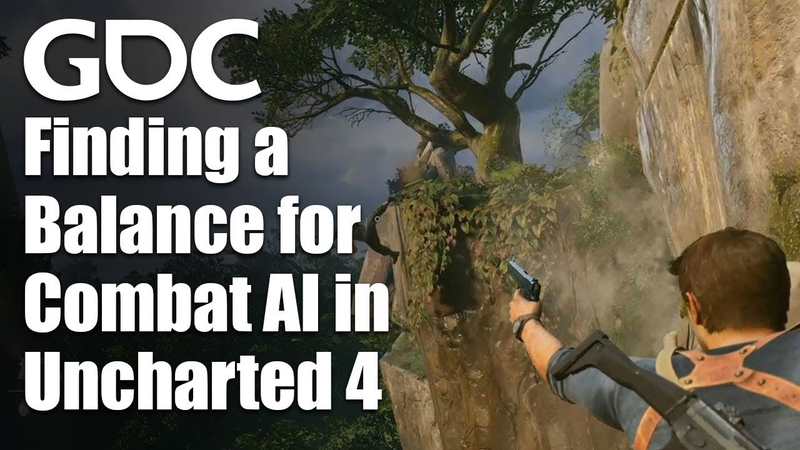
Authored vs. Systemic: Finding a Balance for Combat AI in Uncharted 4
The development of combat AI in Uncharted 4 represents a strategic shift toward a hybrid architecture that reconciles the rigidity of authored scripting with the flexibility of systemic design.
- Uncharted 4 transitioned to a hybrid AI architecture that blends rigid authored scripting with systemic design to accommodate larger, non-linear, and vertical environments.
- Purely systemic, automated AI was rejected because programmatic navigation and heat-based search behaviors failed to deliver the consistent, human-like performance required for the franchise.
- The development team implemented a 'Hard Points' system, where designer-placed objects provide dynamic anchor points for NPC navigation and positioning.
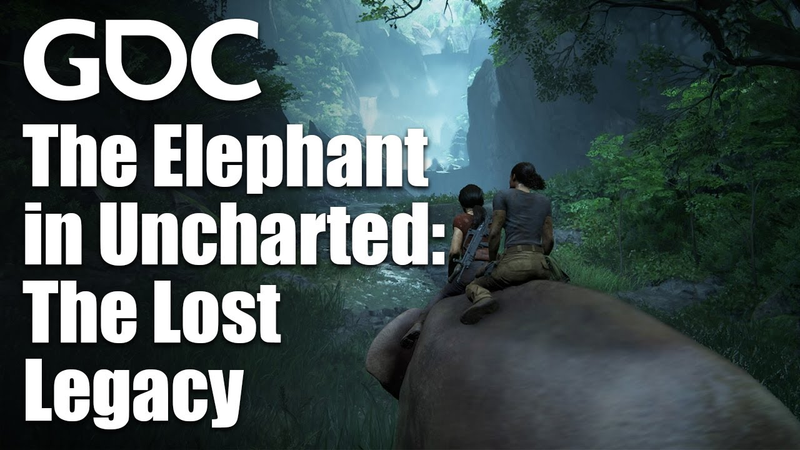
Design vs. Story: How Uncharted: The Lost Legacy Addressed the Elephant in the Room
The development of the elephant-riding sequence in Uncharted: The Lost Legacy serves as a case study in the iterative collaboration between design and narrative teams at Naughty Dog.
- Naughty Dog successfully transformed a static background asset into a core gameplay sequence in 'Uncharted: The Lost Legacy' by responding to playtester feedback requesting interaction with elephants.
- The development team operated under a constrained production timeline of less than one year to deliver a ten-hour game, necessitating a streamlined, cross-departmental workflow.
- To maintain narrative grounding, the team restricted player control to specific splines and replaced standard combat mechanics with subtle interactions like feeding the elephant.
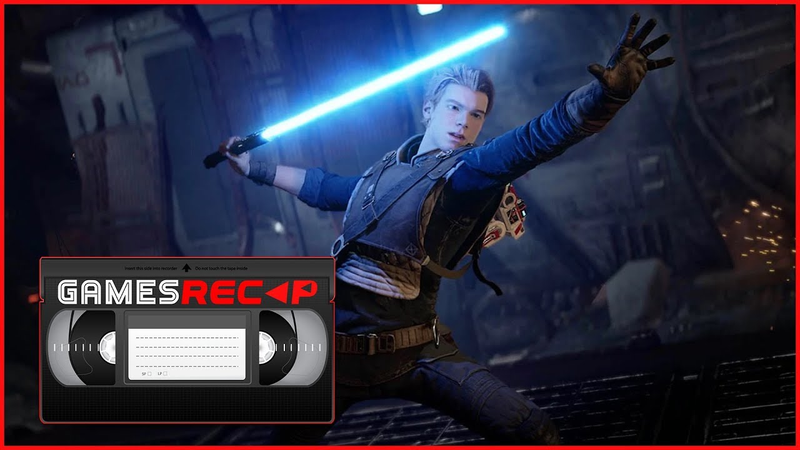
Jedi Fallen Order Not So Bad | Games ReCAP Episode 006
Star Wars Jedi: Fallen Order suffers from a fundamental disconnect between its source material and its execution.
- The gaming industry is shifting away from traditional annual sequel models, such as those seen in Call of Duty, toward persistent games-as-a-service models that prioritize long-term evolution and player mastery.
- Star Wars Jedi: Fallen Order is criticized for a disconnect between its source material and gameplay, specifically failing to capture the tension of lightsaber combat through its reliance on arcade-style mechanics.
- High-quality single-player titles like Elden Ring and God of War remain industry pillars, demonstrating that strong brand reputation is a primary driver of commercial success.
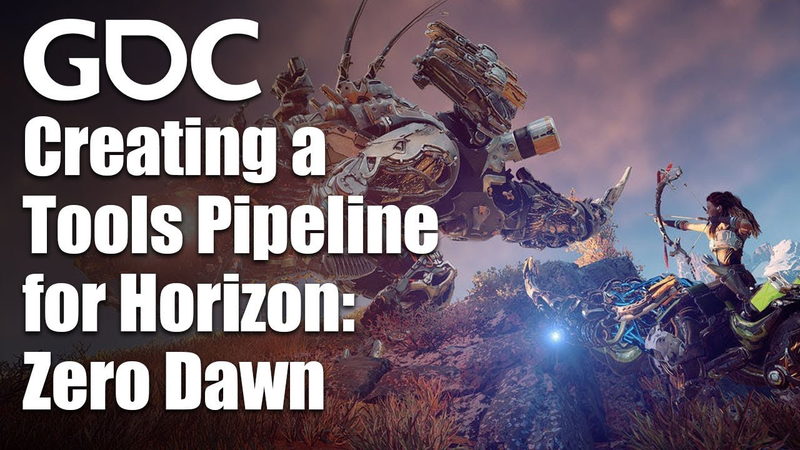
Creating a Tools Pipeline for Horizon: Zero Dawn
The development of Horizon: Zero Dawn necessitated a fundamental overhaul of legacy, fragmented toolsets to address critical inefficiencies and poor user satisfaction.
- The development of Horizon: Zero Dawn replaced fragmented legacy tools with Decima, a unified, engine-integrated environment that ensures the editor experience matches the final game output.
- The architecture maintains system stability by running the editor and game as distinct processes that communicate via a transaction-based system.
- A diffing utility automatically generates undo and redo commands, removing the need for manual command-pattern implementations while ensuring data reliability.
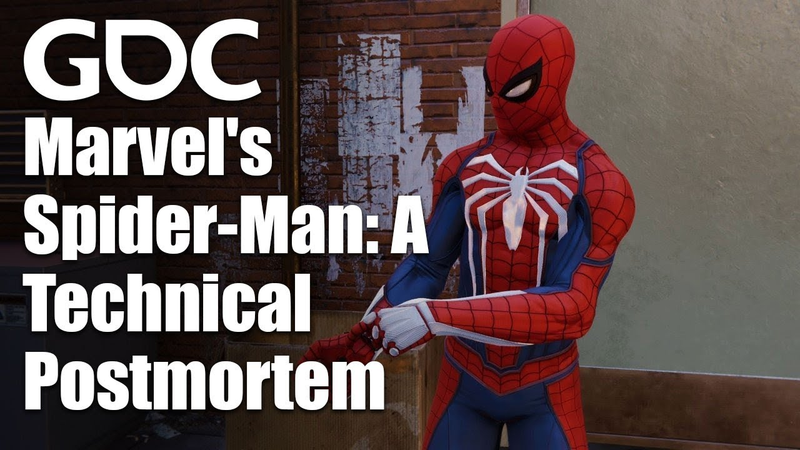
Marvel's Spider-Man: A Technical Postmortem
The development of Marvel’s Spider-Man centered on the challenge of rendering a dense, high-fidelity Manhattan while maintaining a consistent 30 frames per second.
- The development team reduced the memory footprint per city tile from 20 megabytes to under 12 megabytes by implementing advanced asset management and runtime calculation techniques.
- Engineers utilized a grid-based streaming system that loads geometry and textures based on player proximity and velocity to maintain a consistent 30 frames per second.
- The engine manages 600,000 city objects using a 'hibernate' system to ensure visual density without degrading performance.
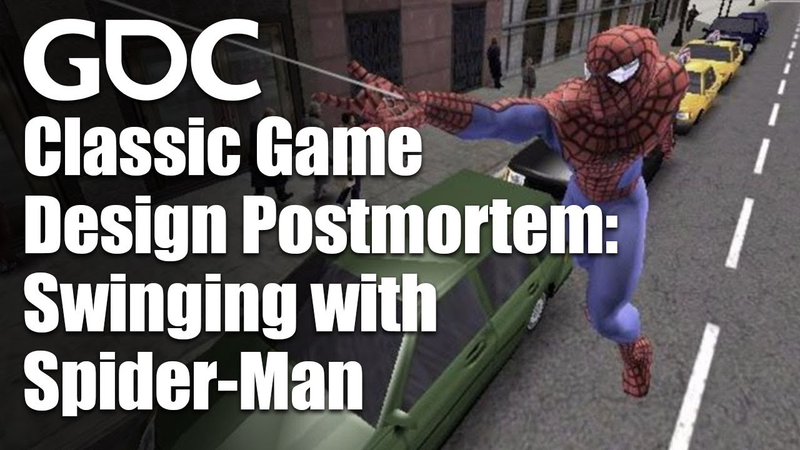
Classic Game Design Postmortem: Swinging with Spider-Man
The development of the Spider-Man 2 traversal system centers on the philosophy that intrinsic motivation—the inherent joy of movement—is the primary driver of player engagement.
- Prioritize intrinsic motivation by designing core movement mechanics that are inherently enjoyable, ensuring the act of traversal itself induces a flow state rather than relying on extrinsic rewards.
- Implement high-gravity movement and mid-air steering to favor the superhero fantasy over strict adherence to realistic physics, allowing for a more dynamic and expressive player experience.
- Utilize invisible 'feelers' to automatically attach to surfaces, which removes the need for precise aiming and prevents the frustration of velocity-canceling stops.
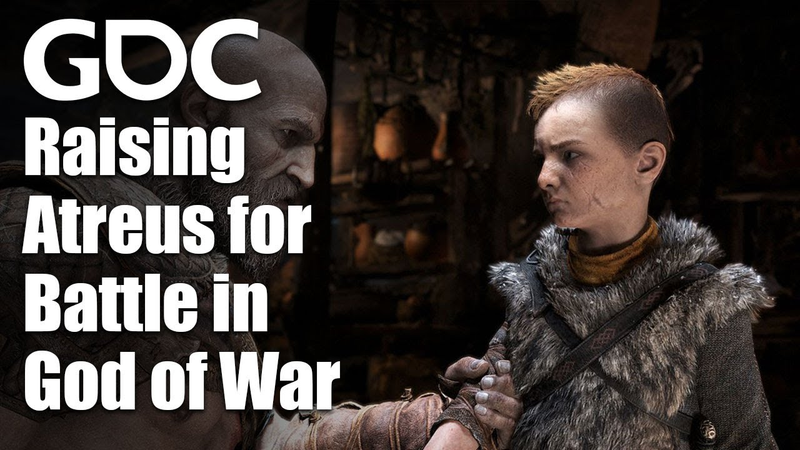
Raising Atreus for Battle in God of War
The design of Atreus as an AI companion in God of War centers on the core philosophy that a partner character must enhance the player’s experience without requiring constant management.
- To ensure Atreus functioned as a reliable teammate rather than a realistic one, the development team utilized 'warping' (teleportation) to position him near enemies instantly, ensuring his combat actions were always timely and responsive to the player.
- The design of Atreus was governed by four core pillars: he must support the player, never hinder the player, ensure all actions are helpful, and require zero babysitting to prevent player frustration.
- To maintain combat flow, the team transitioned Atreus from a traditional archer to a hybrid fighter who uses his bow as a melee weapon, which creates more fluid animations and clearer visual cues for the player.
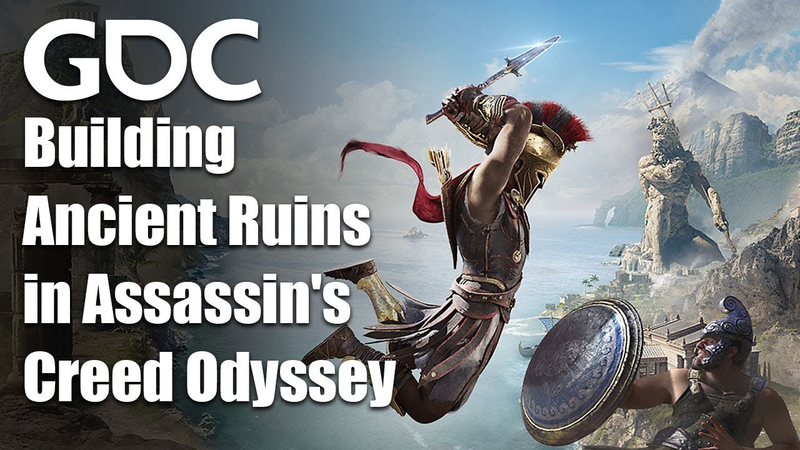
Building a Living World from Ancient Ruins in Assassin's Creed Odyssey
The creation of ancient Greece for Assassin’s Creed Odyssey centers on the synthesis of rigorous historical research and large-scale, modular production techniques.
- The development team managed the massive geographic scope of ancient Greece by coordinating nine global studios under a unified creative vision and a honeycomb design philosophy.
- Production efficiency was achieved through a robust pipeline featuring over 35 architecture kits and 4,000 unique props, supplemented by procedural tools for vegetation and cave systems.
- The project utilized agile two-week development sprints to maintain consistency and alignment across decentralized teams throughout the production cycle.