Report29 pages
Game Developer Survey 2025
The 2025 Game Developer Survey captures the technology preferences and strategic shifts of game studios worldwide, focusing on platform targets, engine adoption, 3D creation tools, backend services, analytics, user‑acquisition solutions, and generative‑AI usage. By segmenting respondents across six studio‑size categories—from solo developers to enterprises with over 100 employees—the survey reveals how development priorities evolve as companies scale and as pricing models change.
Unity remains the most widely used engine, yet studios of all sizes report a notable decline in planned future use, driven by Unity’s revised pricing that introduced a 25 % increase for enterprise licenses and an $2,200 per‑seat fee for pro users. Open‑source alternatives such as Godot and Defold are gaining traction, while Unity’s ProBuilder and SideFX’s Houdini emerge as the fastest‑growing 3D modeling and level‑design tools, especially among studios under 100 employees focused on PC and web titles. Conversely, Adobe’s suite and Autodesk products experience the steepest drop‑offs, with declines ranging from 4 % to 10 % in anticipated usage.
Backend infrastructure shows a shift away from Photon, whose hybrid‑plus offering has sparked a modest decline, toward Edgegap, which leverages bare‑metal and cloud resources to deliver cost‑effective matchmaking. Xsolla’s recent rollout of loyalty programs, regional tiering, and cloud‑gaming integration underscores a broader move toward web‑based delivery and progressive‑web‑app capabilities, particularly in the MENA region. Analytics remain dominated by Google, but Mixpanel records a 120 % surge in interest, buoyed by a new startup‑focused pricing tier that promises over $150 k in value for qualifying studios.
User‑acquisition trends indicate a universal retreat from Apple Search Ads after its shift to a cost‑per‑tap model, while privacy‑centric platforms such as Tenjin and Branch experience rapid adoption, leveraging OpenAI‑enabled features and enhanced compliance tools. Generative AI is employed across a spectrum of development stages—from storyboarding to performance optimization—but studios report a consistent decline in its use for content creation, with smaller teams showing a 7 % drop and larger teams a 5 % reduction.
Overall, the survey highlights a diversification of technology stacks, a cautious response to pricing reforms, and an accelerating embrace of open‑source, cloud‑native, and AI‑augmented solutions as the industry navigates
- Unity remains the dominant engine, but studios are increasingly planning to move away from the platform following a 25% enterprise license price hike and the introduction of a $2,200 per-seat fee for pro users.
- Open-source engines like Godot and Defold are gaining significant traction as alternatives to traditional engines, while ProBuilder and Houdini have become the fastest-growing 3D modeling tools for studios with fewer than 100 employees.
- Mixpanel has seen a 120% surge in interest among developers, driven by a new startup-focused pricing tier that offers over $150,000 in value.
- User-acquisition strategies are shifting away from Apple Search Ads due to its move to a cost-per-tap model, favoring privacy-centric platforms like Tenjin and Branch that integrate OpenAI features.
- Studios are reporting a decline in the use of generative AI for content creation, with usage dropping by 7% among smaller teams and 5% among larger teams.
+2
KonvoyJan 2025
Report224 pages
Gaming 2025 (Epyllion)
The global video game industry has transitioned from a decade of rapid expansion into a period of contraction and market maturation. Following the 2011–2021 growth wave, the sector now faces a "zero-sum" environment characterized by stagnant player spending, plummeting stock values, and a collapse in venture capital. This downturn has triggered an unprecedented wave of studio closures and mass layoffs as publishers move away from risky new ventures to focus on aggressive multiplatform strategies for established franchises. While the industry maintains a higher net headcount than in 2022, the current climate is defined by an oversupply of content competing for limited consumer hours, with the top ten titles capturing 60% of all sales.
Market dominance is increasingly concentrated in "Black Hole" titles and User-Generated Content (UGC) platforms like Roblox and Fortnite. These ecosystems leverage deep social integration and digital entitlements to create a "lock-in" effect that makes it difficult for new live-service titles to gain traction. While the PC ecosystem is gaining momentum over traditional consoles due to its larger libraries and native social tools like Discord, the handheld market is poised for a shift with the impending launch of the "Switch 2" and Valve’s expansion of SteamOS. Furthermore, the rise of high-quality AAA titles from China and localized media in emerging markets is successfully challenging Western dominance by prioritizing domestic cultural themes and lower hardware specifications.
Future growth is expected to be driven by technological innovation and regulatory shifts rather than traditional software sales. Generative AI is being deployed to create autonomous virtual agents and lower development costs, while major publishers are aggressively pursuing programmatic in-game advertising to offset decades of price deflation. Simultaneously, the deregulation of mobile app stores is expected to improve developer margins by 10–20%, enabling new cloud-native experiences and third-party storefronts. By 2030, nearly one billion mobile devices will be capable of running high-fidelity console-spec games, positioning emerging regional markets as the primary engine for the industry’s next economic cycle.
- The industry has shifted to a zero-sum environment where the top ten titles now capture 60% of all sales, forcing publishers to prioritize established franchises over new, risky ventures.
- Market dominance is increasingly concentrated in 'Black Hole' titles and UGC platforms like Roblox and Fortnite, which utilize deep social integration to create high consumer lock-in.
- Future revenue growth is shifting toward programmatic in-game advertising and the deregulation of mobile app stores, which is projected to improve developer margins by 10–20%.
- By 2030, nearly one billion mobile devices will support console-spec gaming, positioning emerging regional markets as the primary driver for the industry's next economic cycle.
- Western market dominance is being challenged by high-quality AAA titles from China that prioritize domestic cultural themes and lower hardware requirements.
+1
EpyllionJan 2025

Report22 pages
Creative Analytics
The mobile advertising landscape in the third quarter of 2023 reveals a shifting environment characterized by a decline in total advertisers but a significant surge in video-centric content. Data indicates that the total number of advertisers fell to 54,900, a 7% year-over-year decrease compared to the 59,000 recorded in the third quarter of 2022. Despite this overall contraction, the gaming, entertainment, and lifestyle verticals maintained upward momentum in advertiser activity. In the United States specifically, the market saw 4.68 billion downloads and $6.5 billion in revenue, with gaming securing the top position in both metrics despite slight year-over-year market drops.
Creative strategies have pivoted heavily toward video formats, which now account for 80% of all creatives, up from 69% in the previous quarter. This growth comes at the expense of static images, while playable ads remain a niche segment at 2% of the market. Analysis of the 15.2 million total creatives shows a heavy platform bias toward Android, which hosts 68% of ad content compared to 32% on iOS. In the competitive US market, top-tier advertisers maintain a massive scale, averaging nearly 54,000 creatives across nine different ad networks.
The rise of User-Generated Content (UGC) has become a central pillar of modern mobile UA strategy. Effective creative execution now relies on organic trends, charismatic creators, and native storytelling techniques. Key findings suggest that successful UGC ads utilize "problem-solution" narratives, text overlays to accommodate sound-off viewing, and sketches that align with brand values. By leveraging creators who mirror the target audience and utilizing cliffhangers or popular music, advertisers are increasingly focusing on engagement and virality to offset the broader downward trend in the number of active market participants.
- Video-centric content now dominates the mobile advertising landscape, accounting for 80% of all creatives in Q3 2023, up from 69% in the previous quarter.
- Total mobile advertisers declined 7% year-over-year to 54,900, though the gaming, entertainment, and lifestyle verticals bucked this trend with continued growth.
- Android remains the primary platform for ad distribution, hosting 68% of the 15.2 million total creatives compared to 32% on iOS.
- In the US market, gaming remains the leading category for both downloads (4.68 billion) and revenue ($6.5 billion), despite experiencing slight year-over-year market contractions.
- Top-tier advertisers are maintaining high-volume strategies, deploying an average of 54,000 creatives across nine different ad networks.
+2
AppticaJan 2025

Report46 pages
Global State of Game Publishing & Marketing 2025 Industry Report
The global game publishing market is entering a period of significant expansion, projected to grow from $117.4 billion in 2025 to $150.7 billion by 2030. This growth is underpinned by a fundamental shift toward cross-platform development and the democratization of publishing tools, which has enabled independent titles to achieve massive commercial success alongside traditional publishers. A 40% increase in multi-platform launches reflects a strategic move to maximize player engagement, while the rise of "publishing as a service" models allows smaller studios to access professional marketing and analytical scale without traditional gatekeeping.
The industry has almost entirely transitioned to a digital-first model, with digital sales accounting for 95% of total revenue. Marketing strategies now prioritize influencer partnerships and transmedia collaborations over traditional retail channels, as 40% of enthusiasts now make purchasing decisions based on creator recommendations. This digital dominance is further reinforced by the rise of Live Service Gaming, which is expected to reach $18.7 billion by 2030. Publishers are increasingly leveraging real-time AI data analytics and community-building initiatives to sustain long-term monetization and player retention in this competitive landscape.
Revenue streams are diversifying rapidly as the market moves away from one-time purchases toward recurring models. While the premium purchase market shows only marginal growth, subscription models are forecasted to surge at a 12.2% CAGR, reaching $21.6 billion by 2030. Additionally, the esports sector remains a high-growth area, driven by sponsorships and media rights. Ultimately, sustainable growth in the modern era requires a player-centric approach that balances technological innovation with community engagement, ensuring that cross-platform strategies and AI-driven monetization can effectively offset rising development costs.
- The global game publishing market is projected to grow from $117.4 billion in 2025 to $150.7 billion by 2030, driven by cross-platform development and the democratization of publishing tools.
- Digital sales now account for 95% of total revenue, signaling a near-total transition away from traditional retail channels.
- Subscription-based revenue models are forecasted to grow at a 12.2% CAGR, reaching $21.6 billion by 2030, while the premium one-time purchase market experiences only marginal growth.
- Live Service Gaming is a critical growth pillar expected to reach $18.7 billion by 2030, supported by real-time AI data analytics to drive player retention.
- Influencer partnerships have become a primary marketing driver, with 40% of enthusiasts basing their purchasing decisions on creator recommendations.
+1
Epic GamesJan 2025
Report117 pages
State of Gaming & Influencer Marketing 2025
The global gaming industry has entered a period of stabilization, with 2024 revenues reaching $187.7 billion and a projected player base of 4 billion by 2027. While mobile gaming remains the dominant sector, accounting for nearly half of all revenue at $92.6 billion, the market is undergoing a structural shift. PC gaming has emerged as a primary growth driver, evidenced by Steam’s record $10.8 billion revenue in 2024 and a historic surge in indie game sales, which surpassed AA and AAA titles for the first time. This evolution is supported by a transition toward hybrid monetization, cross-platform experiences, and a hardware market projected to reach $120 billion by 2028.
Influencer marketing has become an indispensable pillar of this ecosystem, with spending expected to hit $32.55 billion by 2025. The landscape is moving away from raw traffic metrics toward "influence quality," where authentic storytelling and niche engagement take precedence over total follower counts. Nano-influencers, particularly on platforms like TikTok and Twitch, are achieving engagement rates exceeding 10%, significantly outperforming larger creators. While Instagram remains the preferred platform for 90% of brand partnerships, the rise of AI-driven optimization and virtual influencers is reshaping how content is produced and consumed across YouTube and emerging platforms like Kick.
Successful game launches now rely on sophisticated, multi-platform influencer funnels that utilize early access marathons and Twitch Drops to convert awareness into long-term community advocacy. As social commerce expands globally, particularly following its success in Asian markets, the industry is prioritizing long-term strategic planning over short-term user acquisition. The integration of AI tools, augmented reality, and direct-shopping features indicates a future where gaming and creator content are inextricably linked, requiring brands to adopt agile, data-driven strategies to maintain loyalty in an increasingly fragmented global market.
- The global gaming industry reached $187.7 billion in 2024, with mobile gaming remaining the dominant sector at $92.6 billion and the total player base projected to hit 4 billion by 2027.
- PC gaming is a primary growth driver, highlighted by Steam’s record $10.8 billion revenue in 2024 and indie game sales surpassing those of AA and AAA titles for the first time.
- Influencer marketing spending is projected to reach $32.55 billion by 2025, with a strategic shift toward niche engagement and nano-influencers who achieve engagement rates exceeding 10%.
- The gaming hardware market is projected to reach $120 billion by 2028, supported by a broader industry transition toward cross-platform experiences and hybrid monetization.
- While 90% of brand partnerships currently favor Instagram, the industry is increasingly adopting AI-driven optimization, virtual influencers, and multi-platform funnels like Twitch Drops to drive long-term community advocacy.
+1
AAA AgencyJan 2025

Report65 pages
The State of AAA Game Advertising: A Look Back on the Biggest Launches and Trends of the Past Year
The 2023 PC and console gaming landscape was defined by a strategic pivot toward new title launches, which commanded 50% of top advertising expenditures compared to only 20% the previous year. While established live-service giants like Fortnite maintained the highest individual ad spend at $57 million, new AAA releases such as Hogwarts Legacy and Diablo IV dominated the market through concentrated, multi-platform campaigns. Marketing budgets increasingly diversified across a broader media mix; although YouTube remained the primary channel with 35% of spend, platforms like TikTok, Instagram, and Over-the-Top services captured significant market share by utilizing short-form video content to drive engagement.
Success in the AAA sector relied on distinct promotional philosophies tailored to specific business models. Diablo IV leveraged a live-service framework and extensive open betas to generate $666 million in five days, while Starfield utilized its inclusion in Xbox Game Pass to balance traditional sales with subscription-based accessibility. Marketing tactics for these titles ranged from long-term anticipation building to high-frequency social media accolades. Conversely, franchises facing critical headwinds, such as Call of Duty: Modern Warfare III, shifted their focus from celebrity-driven advertisements to influencer-led content and innovative cross-media partnerships with film and music icons to sustain momentum despite declining initial sales.
The industry also witnessed the growing power of transmedia synergy and organic virality. The Fallout television series demonstrated the potential of cross-media adaptations by triggering a sixfold increase in mobile downloads and renewed interest in the legacy franchise. Similarly, Honkai: Star Rail illustrated how mobile-first spending can successfully drive multi-platform engagement. However, the emergence of titles like Lethal Company and PalWorld proved that traditional high-budget marketing is not the only path to success, as viral gameplay and creator-driven interest can achieve millions of sales with minimal advertising investment. This evolution highlights a market where massive corporate spending and organic digital trends coexist as primary drivers of commercial performance.
- AAA advertising shifted heavily toward new title launches in 2023, which accounted for 50% of total ad spend compared to just 20% in the previous year.
- YouTube remains the dominant advertising channel at 35% of total spend, though marketing budgets are increasingly diversifying into TikTok, Instagram, and OTT services to leverage short-form video engagement.
- High-budget marketing is no longer the sole path to success, as titles like Lethal Company and PalWorld achieved millions of sales through viral gameplay and creator-driven interest with minimal ad investment.
- Transmedia synergy is a proven growth driver, evidenced by the Fallout television series triggering a sixfold increase in mobile downloads for the legacy franchise.
- Individual ad spending remains high for established live-service titles, with Fortnite leading the market at $57 million in annual advertising expenditure.
+2
Sensor TowerJan 2025
Report36 pages
Intelligence Top Mobile Games Challenges: A User Acquisition, Ad & Product Monetization Report
The mobile gaming landscape heading into 2025 is defined by the critical difficulty of performing within an increasingly crowded market space. Approximately 41% of user acquisition managers identify market saturation and rising costs per installment as their primary obstacles, driven largely by intense competition from non-gaming entities. This environment has forced a strategic pivot away from traditional acquisition tactics toward sustainable growth rooted in long-term retention and creative iteration. Consequently, the industry is transitioning from a focus on sheer volume to a model centered on maximizing lifetime user value through sophisticated engagement strategies.
Ad monetization and product management sectors face parallel pressures, specifically regarding effective user segmentation and the declining value of electronic cost per mille (eCPM). While segmentation is the most widespread concern for monetization teams, senior executives are particularly focused on innovating new revenue streams to compensate for diminishing ad returns. In the realm of product management, LiveOps development and the accurate assessment of return on investment have emerged as the dominant priorities. Nearly 30% of product managers rank LiveOps as their most significant challenge, outweighing traditional concerns such as game economy balancing or initial prototype testing.
To navigate these hurdles, the industry is moving toward data-driven personalization and revenue diversification. Success in the maturing mobile market now requires leveraging artificial intelligence for audience segmentation and expanding monetization models to include subscriptions and alternative storefronts. By moving beyond simple acquisition hacks and focusing on robust LiveOps and incremental growth through retention, developers aim to stabilize revenue in a volatile privacy-centric environment. This shift underscores a broader industry evolution where deep audience understanding and operational agility are the primary drivers of commercial viability.
- Market saturation and rising costs per installment are the primary obstacles for 41% of user acquisition managers, driven by intense competition from non-gaming entities.
- Product managers are prioritizing LiveOps as their most significant challenge, with nearly 30% ranking it above traditional concerns like game economy balancing or prototyping.
- The industry is shifting away from high-volume acquisition toward sustainable growth models that prioritize long-term user retention and lifetime value maximization.
- Monetization teams are struggling with declining eCPM values and are under pressure from executives to innovate new revenue streams beyond traditional advertising.
- Effective user segmentation is the most widespread concern for monetization teams, necessitating the use of artificial intelligence to achieve deeper audience personalization.
+2
AppLovinJan 2025

Report8 pages
Dynamics of Gaming Deals
The analysis tracks global venture‑capital activity in the video‑game sector from the first quarter of 2019 through the second quarter of 2024, focusing on deals funded by VCs, strategic investors and publishers. It quantifies total capital deployed and deal counts, revealing a rapid expansion from $2 billion across 117 transactions in 2019 to a peak of $5.3 billion in 2021 (186 deals), followed by a sharp contraction in 2022 to $1.8 billion (126 deals) and a further dip to $874 million in 2023 (148 deals). Early‑stage financing remained relatively stable throughout, while the decline was driven primarily by fewer Series A‑plus rounds, creating a scarcity of growth‑stage capital. The report notes a modest rebound in 2024, with new funds entering the market and higher expected returns despite lingering marketing and user‑acquisition challenges.
Geographically, investors increasingly target emerging regions such as South America, Eastern Europe, Southeast Asia and China, seeking cost‑efficient teams and pre‑seed opportunities. Mobile games continue to dominate the funding landscape, yet interest in mid‑tier “AA” titles is growing, reflecting a shift toward projects that promise shorter payback periods and stronger ROI. The pandemic‑driven hyper‑casual boom accelerated user‑acquisition technology, while post‑pandemic privacy changes (e.g., Apple’s IDFA restrictions) and macro‑economic headwinds have dampened overall spend and slowed M&A and IPO activity.
Methodologically, the 2019 figures are derived from the Games Fund team’s synthesis of publicly available sources, while data for 2020‑2024 come from the investgame.net analytical platform. The combined dataset provides a comprehensive view of deal volume, value and regional distribution, supporting the conclusion that the gaming VC market exhibits pronounced cyclical dynamics, with early‑stage resilience and emerging‑region optimism offset by a constrained growth‑stage pipeline and broader economic uncertainty.
- Global gaming VC investment peaked at $5.3 billion across 186 deals in 2021 before contracting sharply to $874 million in 2023.
- The decline in total capital was primarily driven by a scarcity of Series A-plus growth-stage funding, even as early-stage financing remained relatively stable.
- A modest market rebound is underway in 2024, supported by the entry of new funds and expectations for higher returns despite ongoing user-acquisition challenges.
- Investors are shifting focus toward emerging regions including South America, Eastern Europe, Southeast Asia, and China to access cost-efficient development teams and pre-seed opportunities.
- While mobile games remain the dominant funding category, there is a growing investor preference for mid-tier 'AA' titles that offer shorter payback periods and stronger ROI.
+1
The Games FundJan 2025

Report12 pages
Top 10 Hybridcasual Games in Q1 2025: The Great Puzzle Takeover
The analysis highlights a rapid maturation of the hybrid‑casual segment in the mobile gaming market, showing that the top ten titles generated $87 million in net in‑app‑purchase (IAP) revenue in the first quarter of 2025—a 67 percent year‑over‑year increase from the same period in 2024. Puzzle games dominate the revenue mix, contributing 48 percent, while arcade titles account for 45 percent; together they represent more than 90 percent of total earnings. Within puzzles, block‑puzzle titles lead with 71 percent of puzzle revenue, followed by screw‑puzzle (20 percent) and sort‑puzzle (9 percent), the latter posting a 5.6‑times YoY growth. The report covers a global scope of 60 countries, focusing on the period from Q1 2023 through Q1 2025 and concentrating on the hybrid‑casual niche that blends hyper‑casual mechanics with deeper casual‑style monetisation and live‑ops.
Methodologically, the study isolates hybrid‑casual games by filtering the hyper‑casual tag for top‑grossing apps, then examines revenue, download, and release data for each title. Key case studies include Color Block Jam, which achieved $25 million in Q1 2025 after a modest Q4 2024 start, All in Hole, whose eat‑and‑grow model drove a nine‑fold YoY revenue surge and now accounts for 84 percent of its sub‑genre’s earnings, Mob Control, which posted 27 percent revenue growth and introduced “skip tickets” to balance ad and IAP streams, and Screwdom, whose shift to 3D puzzle design generated $3.6 million and set a new benchmark for screw‑puzzle games.
The findings suggest that successful hybrid‑casual titles combine a highly clickable core loop with layered progression, strategic live‑ops, and nuanced monetisation—often leveraging high‑budget user‑acquisition campaigns and viral social media exposure. This convergence of design and marketing is reshaping sub‑genres, lowering acquisition costs, and establishing hybrid‑casual as a dominant, profit‑rich trend in the mobile gaming ecosystem.
- The top ten hybrid-casual games generated $87 million in net IAP revenue in Q1 2025, marking a 67 percent year-over-year increase.
- Puzzle and arcade titles dominate the hybrid-casual market, collectively accounting for over 90 percent of total earnings with a 48 percent and 45 percent revenue share, respectively.
- Block-puzzle games lead the puzzle category with 71 percent of revenue, while sort-puzzle titles experienced the fastest growth, increasing 5.6 times year-over-year.
- Individual title performance highlights include Color Block Jam reaching $25 million in Q1 2025 and All in Hole achieving a nine-fold year-over-year revenue surge through its eat-and-grow model.
- Successful hybrid-casual titles are increasingly integrating deeper monetization strategies, such as Mob Control’s implementation of 'skip tickets' to balance ad and IAP revenue streams.
+2
AppMagicJan 2025

Report87 pages
Understanding Audiences and Designing Better Mobile Games
The analysis establishes that genre is the primary driver of mobile‑game discovery, influencing 49 % of players across nine major markets and outweighing recommendations and advertising. Within this framework, strategy titles deliver the highest lifetime value and revenue per install, a result of dense monetisation layers such as consumable boosts, speed‑ups, loot‑box bundles and limited‑time offers. Player motivations and churn factors differ markedly by genre and region: Japanese action‑RPG/MMORPG users play chiefly for stress relief (47 %) and item collection (37 %), while boredom, repetitiveness and aggressive monetisation trigger attrition, mirroring the experience of over a third of Korean RPG players who abandon games due to pushy in‑app purchases.
Puzzle gamers are predominantly female (≈ 70 %) and older (≈ 60 % aged 35 +), favor short solo sessions, and seek stress relief and time‑killing. A pronounced mismatch exists between their expectations—learning, accomplishment and unique experiences—and current offerings, with only 17‑32 % feeling satisfied, leading to churn driven by boredom, slow progress and intrusive ads. Successful titles mitigate this through frequent live events, special‑event currencies and diverse level‑goal designs, while modest social engagement (20‑30 %) still influences retention. Notably, more than 80 % of U.S. puzzle players and roughly 68 % of Japanese players would return after a 30‑day hiatus if informed of new content, and 30‑36 % cite such updates as a decisive factor. Hyper‑casual audiences in the United States, United Kingdom and South Korea also demonstrate high receptivity to developer communication, exceeding 80 %.
A comprehensive catalogue of core gameplay and monetisation mechanics—battle‑passes, consumable boosts, crafting, limited‑time bundles, VIP tiers, loot‑boxes
- Genre is the primary driver of mobile-game discovery for 49% of players across nine major markets, outweighing both advertising and recommendations.
- Strategy games generate the highest lifetime value and revenue per install due to dense monetization layers including loot-box bundles, consumable boosts, and limited-time offers.
- Puzzle games, which attract a demographic that is approximately 70% female and 60% aged 35+, suffer from high churn because only 17–32% of players feel satisfied with current offerings.
- Aggressive monetization is a primary driver of attrition, causing over one-third of Korean RPG players to abandon games due to pushy in-app purchases.
- Over 80% of U.S. puzzle and hyper-casual players, as well as 68% of Japanese puzzle players, are willing to return to a game after a 30-day hiatus if notified of new content.
+1
NewzooJan 2025

Report46 pages
MiDiA Research Global Games Forecasts 2025–2031
The global games market has transitioned into a phase of structural maturity, with 2025 revenues projected at $236.9 billion. While this represents a 4.6% year-on-year increase, the growth is essentially flat when adjusted for inflation, signaling an end to the era of consistent double-digit expansion. Significant industry catalysts, specifically the anticipated launch of the Nintendo Switch 2 and the release of Grand Theft Auto 6, are expected to drive a recovery in hardware and software sales. However, these gains will likely be concentrated among market leaders rather than lifting the broader industry. By 2031, the global player base is forecast to reach 4.02 billion, with long-term growth sustained by premium game sales and advertising as the live-service sector faces saturation.
Software revenue continues to be dominated by in-game spending, which accounts for 69% of the market in 2025. Despite this dominance, premium full-game purchases are regaining momentum as consumers pivot toward high-quality single-player experiences. The subscription sector, while reaching $11.8 billion in 2024, is also maturing; future revenue in this segment will likely depend on price adjustments and the introduction of ad-supported tiers rather than rapid user acquisition. This shift reflects a broader trend where the industry is moving away from saturated multi-game models toward more traditional premium monetization and the expansion of game-based intellectual property into film and television.
Geographically, the Asia Pacific region maintains its position as the largest market by player count and leads in in-game revenue. A significant shift is expected by 2028, as premium game revenue in Asia Pacific is projected to overtake North America, driven by the rising success of high-end titles in China. While North America currently retains its lead in full-game purchase revenue, the global landscape is increasingly defined by regional cultural adaptation and the porting of legacy titles to new hardware platforms. These dynamics suggest a future where growth is driven by strategic price increases and regional expansion rather than the explosive user growth seen in previous decades.
- The global games market is entering a phase of structural maturity with 2025 revenues projected at $236.9 billion, representing a 4.6% year-on-year increase that is effectively flat when adjusted for inflation.
- In-game spending remains the dominant revenue driver at 69% of the market, though the industry is shifting toward premium full-game purchases and the expansion of intellectual property into film and television.
- The global player base is forecast to reach 4.02 billion by 2031, with long-term growth increasingly reliant on strategic price adjustments and regional expansion rather than rapid user acquisition.
- Market recovery in the near term is heavily dependent on specific catalysts, namely the launch of the Nintendo Switch 2 and Grand Theft Auto 6, which are expected to benefit market leaders disproportionately.
- The subscription sector reached $11.8 billion in 2024 but is now maturing, with future growth expected to come from price hikes and ad-supported tiers rather than user base expansion.
+1
MiDiA ResearchJan 2025

Report37 pages
Starfield: How It Achieved 10M Players
The marketing and commercial performance of Bethesda’s Starfield reflects a strategic evolution in digital promotion, transitioning from traditional trailer-based campaigns to a diversified, multi-channel approach. By prioritizing platforms like TikTok, Twitch, and Instagram during the 2023 pre-order phase, the campaign successfully built massive momentum, culminating in the title reaching the top of Steam’s Wishlist and securing over 300,000 followers prior to launch. A critical component of this success was the integration with Microsoft’s ecosystem, specifically leveraging "Day One on Game Pass" messaging and Bing’s AI search capabilities to maximize visibility and accessibility across the Xbox and PC markets.
Upon release, the title became the largest launch in Bethesda’s history, surpassing 10 million players despite a highly competitive landscape featuring major RPG rivals. This achievement was supported by a substantial $21.2 million advertising investment, which ranked second in the RPG category for the year. A significant portion of this budget—over one-third—was allocated to Over-the-Top (OTT) advertising, signaling a shift toward high-impact streaming services. While the game achieved a favorable critical reception with a Metacritic score of 84, user sentiment remained polarized across Steam and Game Pass, and initial Twitch viewership saw a steady decline following the early-access period.
The broader industry context for these findings is supported by digital marketing intelligence that tracks competitor spending, creative messaging, and regional targeting. By analyzing spend patterns across social and digital platforms, the data illustrates how major publishers are increasingly moving away from centralized video platforms toward fragmented, high-engagement social media and streaming services to capture audience attention in a crowded marketplace. This analysis covers the primary 2021 to 2023 launch window, focusing on the global RPG segment and the shifting dynamics of digital ad distribution.
- Starfield reached 10 million players at launch, marking the largest release in Bethesda’s history despite a competitive RPG market.
- The marketing campaign utilized a $21.2 million advertising budget, the second-highest in the RPG category for 2023.
- Over one-third of the total advertising budget was allocated to Over-the-Top (OTT) streaming services, reflecting a strategic shift toward high-impact digital distribution.
- Pre-launch momentum was driven by a multi-channel social strategy on TikTok, Twitch, and Instagram, resulting in over 300,000 followers and the top spot on Steam’s Wishlist.
- Integration with the Microsoft ecosystem, specifically 'Day One on Game Pass' messaging and Bing’s AI search, was critical to maximizing visibility across Xbox and PC.
+2
Sensor TowerJan 2025
Report33 pages
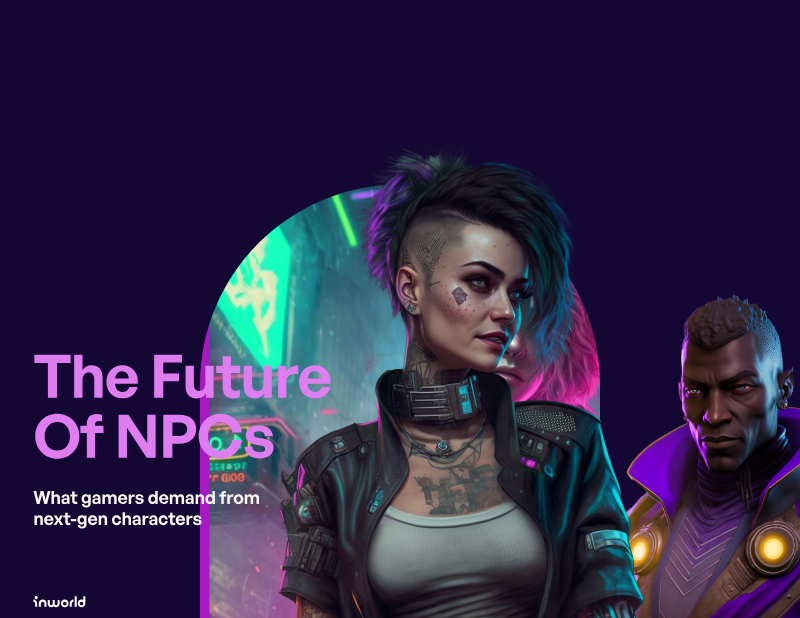
The Future Of NPCs: What Gamers Demand From Next-Gen Characters
The evolution of non-playable characters (NPCs) has failed to keep pace with the rapid advancements in game graphics and narrative complexity, leading to a significant gap in player immersion. While modern titles feature sophisticated world-building, NPC technology remains largely stagnant, relying on repetitive dialogue trees and rigid scripts. Research conducted among 1,002 U.S.-based gamers aged 16 to 50 reveals that while 84% of players consider NPCs vital to the gaming experience, over half are frustrated by repetitive dialogue and an inability for characters to adapt to in-game changes.
The transition toward advanced AI NPCs—characters powered by machine learning, natural language processing, and emotional perception—represents a transformative shift for the industry. Survey data indicates an overwhelming appetite for this technology: 99% of gamers believe advanced NPCs would positively impact gameplay, and 88% believe they would significantly improve immersion. Players specifically desire NPCs with situational awareness, the ability to remember previous interactions, and the capacity for free-flowing conversation. This demand is highest among fans of RPG and sandbox genres, where interaction with the world is a core mechanic.
Beyond enhancing the player experience, the integration of advanced AI presents a substantial commercial opportunity for developers. The findings show that 81% of gamers are willing to pay more for titles featuring intelligent NPCs, and 79% are more likely to purchase a game if it includes this technology. Furthermore, 78% of respondents indicated they would spend more time playing games with advanced NPCs, suggesting a direct correlation between AI sophistication and player retention.
The methodology utilized a 20-minute online survey where participants interacted with demos of advanced AI technology. The sample included a diverse range of players across PC, console, mobile, and VR platforms, spending an average of five to eight hours per week gaming. Ultimately, the data suggests that moving away from scripted dialogue toward dynamic, autonomous characters is essential for studios looking to remain competitive and meet the rising expectations of modern audiences.
- 99% of gamers believe that integrating advanced AI into NPCs would positively impact gameplay, while 88% expect it to significantly improve overall immersion.
- 81% of players are willing to pay a premium for games featuring intelligent NPCs, and 79% report a higher likelihood of purchasing titles that utilize this technology.
- 78% of gamers indicate they would increase their playtime in titles featuring advanced, autonomous NPCs, suggesting a direct link between AI sophistication and player retention.
- While 84% of the 1,002 surveyed gamers consider NPCs vital to the gaming experience, over 50% express frustration with current limitations like repetitive dialogue and rigid, non-adaptive scripts.
- Players specifically demand NPCs capable of situational awareness, memory of past interactions, and free-flowing, natural language conversation, with the highest demand coming from RPG and sandbox genre fans.
+1
Inworld AIJan 2025

Report37 pages
Trends Report 2025
Intrinsic in-game advertising functions as a resilient, year-round engagement channel that maintains steady session volumes even during seasonal lulls in traditional media. While PC and console platforms offer superior immersion and average session lengths of 107 minutes, mobile gaming provides twenty-five times the impression scale and greater gender diversity. Market data reveals a significant strategic opportunity in the first quarter, particularly in North America, where advertising costs drop by over 25% despite high player activity. This period offers a cost-effective window for wellness and travel brands to reach an attentive audience at a lower entry point than the highly competitive fourth quarter.
The effectiveness of this medium is driven by high viewability rates reaching nearly 100% and attention metrics that consistently outperform traditional digital formats. Although the sports genre commands the highest playtime and premium pricing, racing and simulation categories represent efficient alternatives where high engagement intersects with lower costs. Regional performance varies significantly, with European markets offering peak value in the first and third quarters, while the Asia-Pacific region follows a distinct cycle driven by second-quarter demand and localized cultural events.
Beyond visibility, these advertisements generate substantial brand lift, including a 20-point increase in recall and a 6% conversion rate for physical foot traffic. While male players currently report higher brand favorability, female audiences demonstrate stronger purchase intent, suggesting a need for more nuanced targeting strategies. Overall campaign performance remains highly efficient, with conversion costs averaging 21% below established goals. To maximize these returns, advertisers must integrate gaming into their permanent media mix, while developers should align in-game events with high-demand periods and real-world sporting calendars to optimize revenue.
- In-game advertising delivers high efficiency, with conversion costs averaging 21% below established goals and brand recall increasing by 20 points.
- North American advertising costs drop by over 25% in the first quarter, providing a cost-effective window for brands to reach highly active players.
- Mobile gaming offers twenty-five times the impression scale of PC and console platforms, while PC and console environments provide deeper immersion with average session lengths of 107 minutes.
- Racing and simulation game categories serve as cost-efficient alternatives to the premium-priced sports genre while maintaining high engagement levels.
- In-game ads achieve nearly 100% viewability, consistently outperforming traditional digital media formats in attention metrics.
+1
AnzuJan 2025

Report29 pages
InvestGame Q4'24 Report (Unknown Time)
The gaming industry experienced a strategic shift in 2024, moving away from short-term financial arbitrage toward long-term, objective-driven transactions. While the broader market faced a stricter environment characterized by layoffs and the offloading of non-core assets, total deal-making activity remained above pre-pandemic levels. A significant trend emerged in the work-for-hire sector, highlighted by the $2.8 billion Keywords buyout. Additionally, venture capital interest notably pivoted from game development studios toward platform and technology startups, leaving corporate venture arms to fill the gap in studio financing.
The analysis identifies a stabilization phase following the post-pandemic "hangover." Private investments saw a 22% year-over-year increase in funding during Q4 2024, while the M&A market recorded one of its strongest quarters in two years. Although the public market remained volatile, a three-quarter recovery trend in public offerings suggests a gradual reopening of the IPO window. Geographically, North America and Europe led early-stage studio fundraising, accounting for the vast majority of capital raised, while Asian developers dominated new top-tier mobile releases.
The outlook for 2025 anticipates sustained M&A momentum driven by lower interest rates, significant cash reserves among public strategics, and increased private equity involvement. Investment in AI-driven solutions and web3 is expected to rise, fueled by renewed crypto enthusiasm. While high-profile gaming teams will continue to command strong valuations, such deals may become less frequent as investors prioritize "picks and shovels" technology over pure content.
This report covers global gaming industry segments including PC, console, mobile, and hardware, with a specific focus on M&A, private equity, and public offerings. Data is derived from public media, business partners, and market insights, tracking closed transactions while excluding pure gambling and non-gaming blockchain ventures.
- The gaming industry is shifting toward long-term, objective-driven transactions, evidenced by a strong Q4 2024 M&A market and a 22% year-over-year increase in private investment funding.
- Venture capital is pivoting away from game development studios in favor of platform and technology startups, forcing corporate venture arms to become the primary source of studio financing.
- The work-for-hire sector is seeing major consolidation, underscored by the $2.8 billion buyout of Keywords.
- Public markets are showing signs of a gradual recovery, with a three-quarter trend suggesting the IPO window is beginning to reopen despite ongoing volatility.
- Investment strategies for 2025 are expected to prioritize 'picks and shovels' technology—specifically AI and web3 solutions—over pure content development.
+1
InvestGameJan 2025

Report15 pages
Access for All: Expanding Opportunities for Players and Publishers Worldwide
This analysis explores the strategic shift toward out-of-app monetization in the global gaming industry, with a specific focus on Southeast Asia and China. The primary thesis posits that while Apple and Google have historically dominated distribution, publishers are increasingly adopting alternative channels—including third-party web stores, first-party direct-to-consumer platforms, and alternative app stores—to bypass high "take rates" and better serve unbanked populations in emerging markets.
Key findings indicate that out-of-app monetization is already a mature practice in Asia. In Southeast Asia, these channels account for 21% of mobile game revenue, while in China, they represent 53% of the market. Data from 2023 highlights that in the "SEA-6" countries (Indonesia, Malaysia, Philippines, Singapore, Thailand, and Vietnam), 40-50% of the adult population remains unbanked, making the credit card-centric models of primary app stores ineffective. Consequently, gamers in these regions prefer e-wallets, carrier billing, and physical vouchers. A case study of Mobile Legends: Bang Bang in the Philippines demonstrated that a localized promotion using an e-wallet partner led to a 133% increase in daily purchase volume and a 167% rise in transactions.
The scope of the research covers the evolution of digital distribution over the last 15 years, with a forward-looking projection through 2027. It emphasizes the impact of regulatory momentum in the EU, UK, South Korea, and Japan, where new legislation is forcing primary stores to allow alternative payment systems. Methodology relies on Niko Partners’ 2023 market model, gamer surveys, and proprietary data from Coda Payments. The findings conclude that publishers who fail to localize their monetization and discovery strategies risk losing significant market share to regional competitors who offer more flexible, lower-cost payment solutions.
- Out-of-app monetization is a dominant force in Asia, accounting for 53% of the mobile gaming market in China and 21% in Southeast Asia.
- In the SEA-6 region, 40-50% of the adult population is unbanked, rendering traditional credit card-centric app store models ineffective for a large segment of potential players.
- Publishers are increasingly bypassing primary app stores to avoid high take rates and to implement localized payment methods like e-wallets, carrier billing, and physical vouchers.
- Localized payment strategies drive significant growth; a case study of Mobile Legends: Bang Bang in the Philippines showed a 133% increase in daily purchase volume and a 167% rise in transactions via e-wallet partnerships.
- Global regulatory pressure in the EU, UK, South Korea, and Japan is mandating that primary app stores allow alternative payment systems, accelerating the shift toward decentralized distribution.
Niko PartnersJan 2025

Report8 pages
Tower Defense Games - Industry Snapshot
Tower Defense games represent a high-performing sub-genre within the casual arcade category, characterized by exceptional monetization and engagement depth. Analysis of 2020 industry data reveals that the top 5% of Tower Defense titles significantly outperform related sub-genres like Idlers, Platformers, and Board Games in financial efficiency. Specifically, these top-tier games achieve a conversion rate of 3.83%, more than double that of their closest competitors, and maintain an Average Revenue Per Daily Active User (ARPDAU) of $1.66. This financial strength is further evidenced by an Average Revenue Per Paying User (ARPPU) of $83, suggesting a highly committed and spending-prone player base.
Engagement metrics for the genre are equally robust, with top-performing titles commanding an average daily playtime of 130 minutes. While Day 1 retention sits at 40%, slightly lower than some competing sub-genres, Day 7 retention remains competitive at 15%. Geographic performance varies by metric; Italy leads in Day 7 retention at 39%, while France sees the highest daily playtime at 210 minutes. China stands out as the most lucrative market for conversion, reaching a rate of 8.7%.
The success of the genre is attributed to its accessible core mechanics, high replayability, and the ease with which developers can integrate meta-features such as PvP modes, daily challenges, and RPG elements. These features allow for significant meta-game shifts with minimal content overhead. Notable titles entering the market in 2020, such as Rush Royale and Towerlands, exemplify the trend of blending traditional defense mechanics with strategy and role-playing elements to drive long-term player investment. This data is derived from a network of over 134,000 integrated games and 1.8 billion monthly cross-title players.
- Top-tier Tower Defense games achieve a 3.83% conversion rate and an ARPDAU of $1.66, significantly outperforming Idlers, Platformers, and Board Games.
- The genre sustains a highly committed player base with an Average Revenue Per Paying User (ARPPU) of $83 and an average daily playtime of 130 minutes.
- China is the most lucrative market for the genre, reaching a conversion rate of 8.7%, while France leads in engagement with 210 minutes of daily playtime.
- Retention metrics for top titles show a 40% Day 1 rate and a 15% Day 7 rate, with Italy notably achieving a 39% Day 7 retention rate.
- Successful 2020 titles like Rush Royale and Towerlands demonstrate that blending traditional defense mechanics with RPG elements and PvP modes drives long-term player investment.
+2
GameAnalyticsJan 2025

Report26 pages
Newzoo Puzzle Games Report: Mobile Game Genre Insights
Produced through a partnership between Newzoo and Pangle, this analysis examines the global mobile puzzle game market with a specific focus on the divergent trends between Western and Eastern territories. The study covers major markets including the United States, China, Japan, and South Korea, utilizing 2020 revenue data and 2021 consumer insights. By comparing market dynamics, monetization strategies, and player demographics, the research aims to provide actionable intelligence for developers seeking global expansion.
Findings indicate that the United States is the world’s largest mobile puzzle market, followed by Japan and China. While classic match-3 mechanics remain dominant globally, the genre is evolving through "meta" elements like narrative and decoration. A significant regional distinction exists in monetization: Western titles rely heavily on in-app advertising (IAA) and simple economies, whereas Eastern titles—particularly in Japan—integrate deep character collection, progression, and gacha mechanics, leading to higher in-app purchase (IAP) revenue. Data shows that while Western players demonstrate a higher tolerance for frequent ad breaks, Japanese players prefer longer sessions with fewer interruptions but show a greater willingness to pay for additional functions and aesthetic enhancements.
Demographically, puzzle gamers across all regions skew female and are typically full-time employees with mid-to-high income. However, Eastern players tend to be younger and more highly educated than their Western counterparts. The methodology relies on Newzoo’s proprietary Global Games Market Report and Consumer Insights, supplemented by a case study from Japanese developer Translimit. The analysis concludes that success in the puzzle genre requires localized user acquisition strategies, such as performance-based A/B testing and region-specific ad creative optimization, to navigate the distinct cultural expectations of the global mobile audience.
- The United States is the world's largest mobile puzzle market, followed by Japan and China.
- Western puzzle games rely heavily on in-app advertising (IAA) and simple economies, while Eastern titles—especially in Japan—prioritize deep character collection and gacha mechanics to drive higher in-app purchase (IAP) revenue.
- Western players demonstrate a higher tolerance for frequent ad breaks, whereas Japanese players prefer longer, uninterrupted sessions and show a greater willingness to pay for aesthetic enhancements and additional functions.
- The global puzzle genre is shifting from classic match-3 mechanics toward the integration of 'meta' elements, such as narrative-driven gameplay and decoration features.
- While puzzle gamers globally skew female and are typically full-time employees with mid-to-high income, Eastern players are generally younger and more highly educated than their Western counterparts.
+2
NewzooJan 2025

Report28 pages
Newzoo Hypercasual Mobile Game Genre Report: Eastern vs Western Markets
Hypercasual mobile games represent a significant and evolving segment of the global gaming industry, accounting for 36 of the top 100 downloaded mobile games in 2021. While the genre is characterized by simple mechanics and high accessibility, it has faced increasing competition, leading to a shift toward hybrid-casual models. These newer titles incorporate meta-features and live operations to improve player retention, which typically falls below 10% by the seventh day for standard hypercasual titles.
The market demonstrates distinct regional variations, with hypercasual games enjoying significantly higher popularity in Western markets like the United States and United Kingdom compared to Japan and South Korea. In 2021, runner and racing subgenres overtook simulation and puzzle titles as the most downloaded categories. Demographically, hypercasual players across key markets skew male, are often full-time employees with mid-to-high incomes, and are younger than the average mobile gamer.
Monetization remains primarily driven by in-game advertising, with interstitial video identified as the most adopted format, followed by rewarded videos and banner ads. However, hybrid monetization is rising, with developers increasingly offering in-app purchases for ad removal or exclusive content. Data from 2021 indicates that the hypercasual sector is highly dynamic; only eight of the top 36 hypercasual titles from 2020 remained in the top rankings the following year. To maintain growth, publishers are leveraging broad targeting strategies that are less affected by privacy changes like IDFA and are utilizing sophisticated retention optimization tools to acquire loyal users.
- Hypercasual games accounted for 36 of the top 100 most downloaded mobile games in 2021, though the sector is highly volatile with only eight of the top 36 titles from 2020 remaining in the top rankings the following year.
- Standard hypercasual titles struggle with retention, typically seeing less than 10% of players return by the seventh day, which is driving a strategic shift toward hybrid-casual models that incorporate meta-features and live operations.
- Runner and racing games became the most downloaded subgenres in 2021, surpassing the previously dominant simulation and puzzle categories.
- Hypercasual games are significantly more popular in Western markets like the U.S. and U.K. compared to the Japanese and South Korean markets.
- Monetization is shifting from a reliance on interstitial, rewarded, and banner ads toward hybrid models that integrate in-app purchases for content or ad removal.
+1
NewzooJan 2025

Report33 pages
Power of Play: 2025 Global Video Games Report
Across more than twenty national markets, the majority of gamers report that playing video games reduces stress and enhances happiness, with 70‑90 % indicating lower stress levels and 57‑91 % feeling happier. Respondents also cite diminished anxiety and isolation, while parents observe a positive shift in relationships with their children, ranging from roughly one‑third in Sweden to nearly four‑fifths in Nigeria. Mobile devices dominate the landscape, accounting for 60‑96 % of play sessions, and online multiplayer emerges as the most prevalent social mode.
In the United Arab Emirates, United Kingdom and United States, surveys of roughly three thousand gamers reveal consistent benefits: about 70‑80 % experience reduced stress and increased well‑being, and roughly two‑thirds of parents note improved parent‑child interaction. Genre preferences diverge, with UAE players favoring teamwork, collaboration and creativity, whereas UK and US gamers gravitate toward problem‑solving, critical‑thinking and cognitive‑skill development. Approximately half to sixty percent of participants perceive gaming as supportive of career‑related or hobby pursuits, and a similar share report enhancements in professional competencies.
Research spanning multiple sectors demonstrates that video‑game‑based training yields measurable gains in cognition, decision‑making speed and technical performance. Gamers outperform non‑gamers in robotic‑surgery simulations, emergency‑response drills and retail‑seasonal‑sales scenarios, with meta‑analyses confirming statistically significant improvements in perception, attentional control and procedural accuracy. These outcomes translate into higher job performance, reduced error rates and stronger return on investment, prompting organizations such as NASA, the U.S. Air Force and elite sports teams to integrate game‑based platforms into their training pipelines.
- Video games provide measurable professional benefits, with gamers outperforming non-gamers in robotic surgery, emergency response, and retail simulations due to improved cognition, decision-making speed, and attentional control.
- Organizations including NASA, the U.S. Air Force, and elite sports teams have integrated game-based platforms into their training pipelines to reduce error rates and improve return on investment.
- Mobile devices are the primary gaming platform globally, accounting for 60–96% of all play sessions.
- A majority of gamers across more than twenty national markets report significant mental health benefits, with 70–90% experiencing reduced stress and 57–91% reporting increased happiness.
- Approximately 50–60% of gamers report that gaming supports their career or hobby pursuits and enhances professional competencies.
+1
Video Games EuropeJan 2025