
Wolfenstein 3D
GameBy id Software · Released May 5, 1992
Wolfenstein 3D is a first-person shooter presented with rudimentary 3D graphics and a follow-up to the top-down infiltration game Castle Wolfenstein. The game is broken up into levels, each of which is a flat plane divided into areas and rooms by a grid-based pattern of walls and doors, all of equal height.
Connections
Each row is a game or company named alongside Wolfenstein 3D, each column a document, oldest first. A mark means that document names it. Select a row to see those documents.
About the game
- Released
- May 5, 1992
- Developer
- id Software
- Publisher
- Apogee Software
- Genres
- Shooter
- Platforms
- DOS
- Links
- Wikipedia
Game data from IGDB.com
Documents about Wolfenstein 3D
How LORT Rode the Chaos to a Top 5 Steam Launch in 2026
The analysis examines the successful early 2026 Steam launch of the co-op action roguelite LORT, while contextualizing broader industry trends through the Game Developers Conference (GDC) 2026 State of the Game Industry survey.
- Big Distraction’s co-op roguelite LORT achieved a top-five Steam debut in early 2026, selling 281,000 units within its first two weeks of Early Access.
- The industry is experiencing significant volatility, with 50% of companies conducting layoffs in the last 12 months and 28% of professionals reporting job losses over the past two years.
- LORT’s commercial success was driven by a strategic $10 price point and a low-six-figure investment in targeted influencer marketing campaigns.

This Is Why Your Indie Game Will Fail
The primary driver of commercial success in the video game industry is the presence of a unique, distinctive hook that differentiates a title from existing market offerings.
- Commercial success in the modern game industry is primarily driven by a unique, distinctive hook that differentiates a title from existing market offerings.
- Games lacking a clear, defining hook are considered derivative and face a significantly higher risk of failing to achieve viral success or financial viability.
- A game's defining hook does not need to be present at the start of development; for example, the iconic bullet-time mechanic in Max Payne was only introduced halfway through production.
Classic Game Postmortem: Wolfenstein 3D
This retrospective on the development and marketing of the seminal PC title Wolfenstein 3D chronicles the strategic evolution of iD Software during the early 1990s.
- The iD Software team achieved rapid development cycles by releasing multiple titles, such as Commander Keen 4, 5, and Catacomb 3-D, which allowed them to master game mechanics before building Wolfenstein 3D.
- The developers secured the Wolfenstein IP for $5,000 by purchasing the rights from an individual who had acquired the assets of the defunct original publisher, Muse Software.
- iD Software successfully utilized a shareware distribution model that generated $50,000 per month, a figure that caught the attention of industry peers like Sierra.

The Early Days of id Software
The founding of id Software marked a pivotal shift in PC gaming, driven by a breakthrough in smooth, pixel-by-pixel scrolling that enabled the creation of the Commander Keen trilogy.
- Between the early 1990s and mid-1990s, id Software produced 28 games in five and a half years, including industry-defining titles like Wolfenstein 3D, Doom, and Quake.
- The studio pioneered the modern game engine licensing model, which was catalyzed by a technical breakthrough in smooth, pixel-by-pixel scrolling used in the Commander Keen trilogy.
- Development efficiency was maintained by a strict policy of not reusing code between major projects, ensuring every title was built on a fresh, optimized foundation.
'Doom:' A Classic Game Postmortem
The development of Doom, initiated in late 1992, represents a pivotal evolution in first-person shooter design, transitioning from the rigid, military-themed architecture of its predecessor, Wolfenstein 3D, toward a more abstract and atmospheric aesthetic.
- Released on December 10, 1993, 'Doom' revolutionized the first-person shooter genre by shifting from the rigid architecture of 'Wolfenstein 3D' to complex, non-orthogonal environments enabled by Binary Space Partitioning trees.
- The development team prioritized high-speed, skill-based gameplay over complex narrative or inventory systems, utilizing NeXT workstations to achieve technical performance that exceeded contemporary hardware limitations.
- The project was defined by a lack of formal pre-production and significant internal creative friction, which led to key personnel changes and the abandonment of external collaborations like a proposed 'Aliens' project.

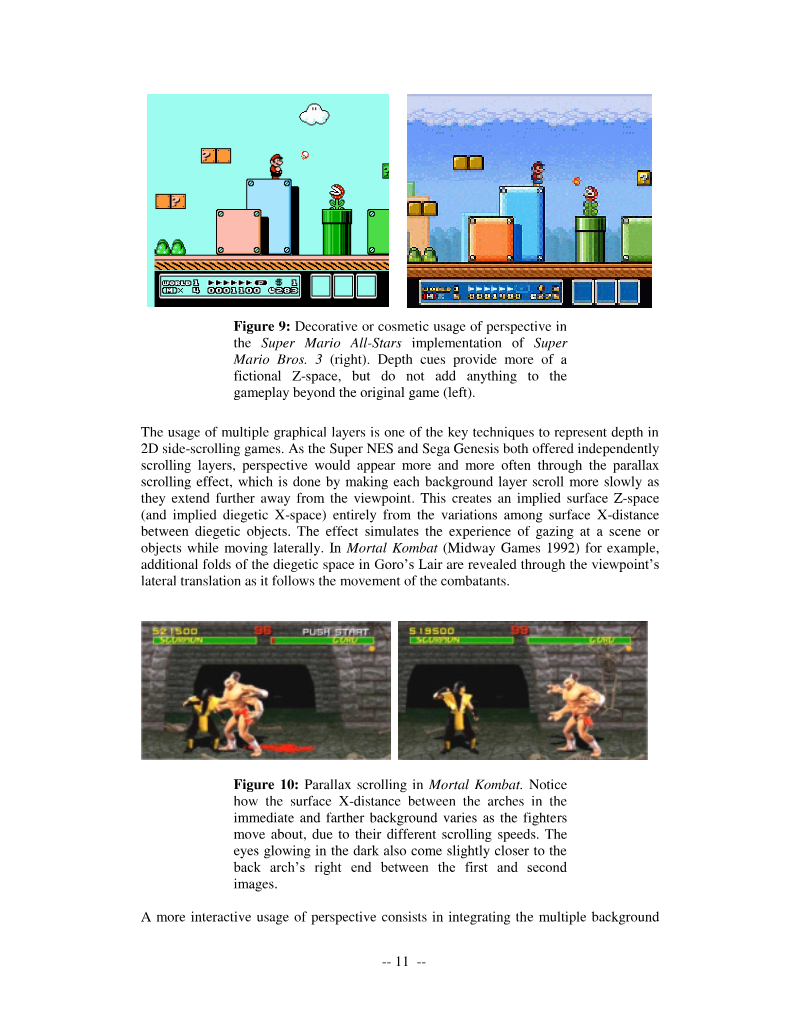

From Euclidean Space to Albertian Gaze: Traditions of Visual Representation in Games Beyond the Surface
This paper argues that the visual analysis of video games has been dominated by perspective, the mathematical "simulation of the gaze" descended from Alberti, and that this emphasis obscures the wider repertoire of representational traditions games actually draw on.